Paul LaMarre has transformed Port of Monroe against all odds
Monroe, MI – In eight years, Paul C. LaMarre III has transformed the Port of Monroe from a virtually dead place, used just to dump off coal for a utility company to one of the fastest growing and most vibrant ports on all the Great Lakes.
He’s opened new docks on the River Raisin leading to Lake Erie, built railroad spurs, and brought in vast amounts of new business — and won award after award for doing so.
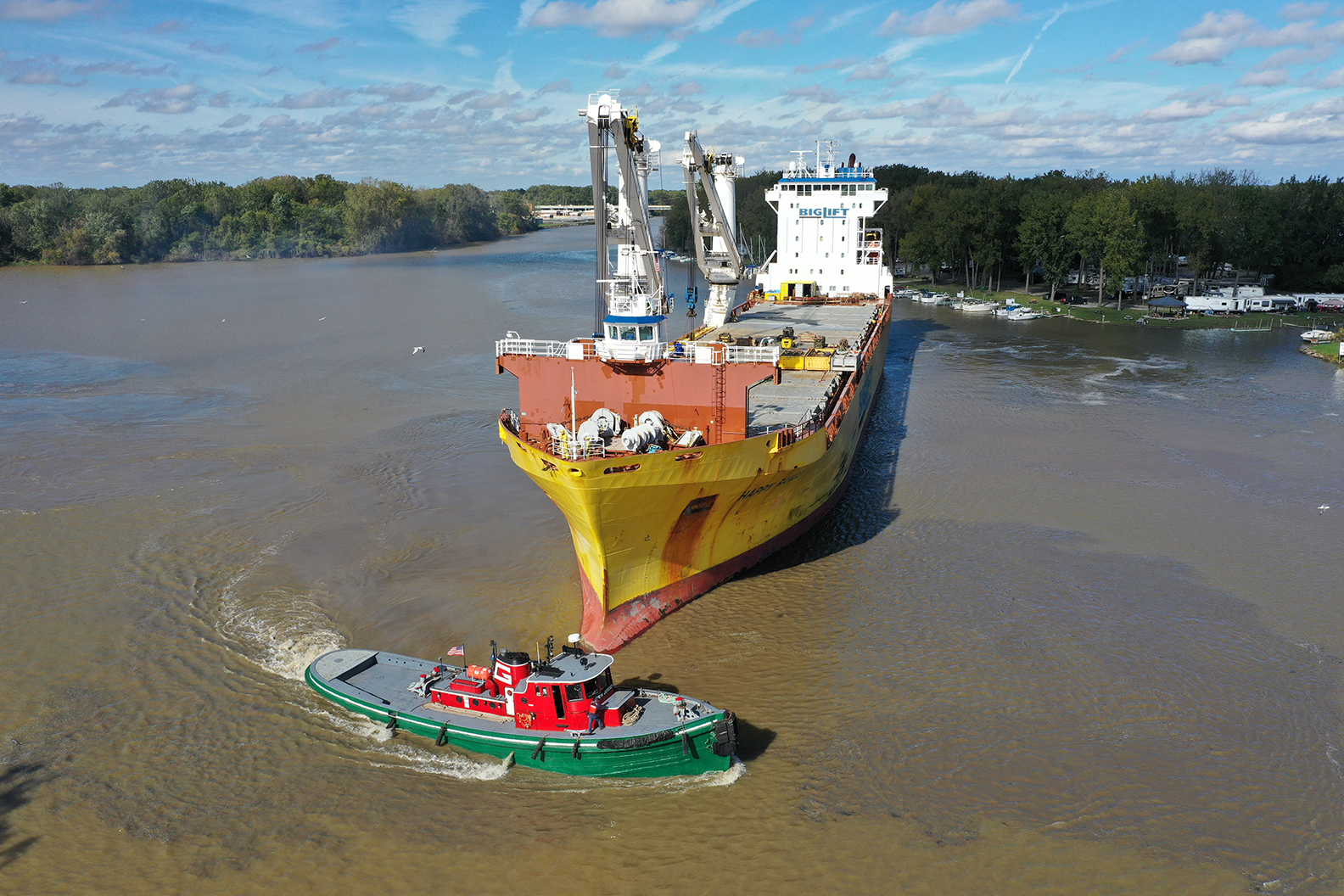
The most expensive single item ever shipped on the Great Lakes, a huge, $60 million part for a generator for the Fermi II nuclear power plant, came in via his port in 2019.
But he’s done it all with one hand tied behind his back. For some reason, the Detroit office of CBP, the U.S. Customs and Border Protection Agency, does not allow the port to accept shipments of international maritime containers — a rule that applies to no other port in any other state. Technically, it also applies to the port in Detroit, but that port is really controlled by the Moroun family, who also own the Ambassador Bridge and a vast trucking empire.
CBP provides technical aid to the Moroun-controlled port, but nothing to Monroe. When Mr. LaMarre went to Washington to meet with Trump administration officials, other sources at that meeting indicated they were anything but helpful.
But there is a new administration now, Democrats control the U.S. Senate — and Michigan’s newly reelected U.S. Sen. Gary Peters gets it. Like Mr. LaMarre, he is a former officer in the U.S. Navy.
He also is outraged about the way Monroe’s port has been treated. On Aug. 16, he came to visit the Port of Monroe and brought the acting commissioner of CBP, Troy Miller, and also a grant for $770,983 to help the port upgrade its cargo screening infrastructure.
That, Mr. Peters said, should be enough for the CBP commissioner in Detroit to drop the restrictions against Monroe, which, he noted, “undermines Michigan’s economic competitiveness.”
For years, Mr. Peters has pressed CBP for answers as to why Monroe is being held to a different set of standards. But things are markedly different now: In January, the senator became chair of the U.S. Senate Committee on Homeland Security.
“Wouldn’t every state like to have one of their senators as head of Homeland Security?” the 40-year Mr. LaMarre said. He added that the CBP official in charge of the Detroit office had never visited the Port of Monroe once in eight years. After the senator and the head of customs visited, “he was here twice in one week.”
“Look. This is a nonpartisan issue. The port is apolitical. We need to be apolitical,” Mr.
LaMarre said. “Everything we do here is and needs to be in the best interests of the citizens, especially of Monroe.”
Indeed, those who know him say Paul LaMarre would much rather be clambering on board a freighter to check out cargo than sitting in a conference room. But when the senator and the head of Customs and Border Protection came to visit, he didn’t mince words.
“It is my goal today to ensure that the Port of Monroe and the state of Michigan receive fair and consistent treatment, and the semantics of whether a wood crate is a container are not an [excuse] for withholding fair and equitable treatment to the public we both serve,” Mr. LaMarre said.
Monroe is not a wealthy city, he noted — far from it. “We are a distressed community. You cannot compare a private border crossing owned by a multi-billionaire [the Moroun family] to a public terminal that is relentlessly trying to revive economic activity for the benefit of the citizens just beyond our gates. And yet [Customs] provides nearly every resource at its disposal with the state of Michigan to serve the operation of the for-profit billionaire at the taxpayers’ expense while treating a public port as second class.”
He said that as “a former naval officer, I understand the necessity of protecting our nation,” but said the port was already doing everything it can to minimize the risks.
There’s little doubt that Mr. LaMarre has not only revitalized Monroe’s port, which was created in 1932, but has taken it to levels never-before imagined. The St. Lawrence Seaway awards an annual pacesetter award to one of the many ports it serves; Monroe has won six out of the last eight years. The largest windmill manufacturer in the nation has made Monroe its main port.
What’s frustrating, however, is that the Monroe area lost $14.3 million in economic activity on one deal alone “because CBP suddenly claimed a crate is a container. The idea that every crate coming into the Port must have a hole cut into its side upon arrival so customs officers can look inside is inconsistent with the screening and inspection of crated breakbulk cargo anywhere else in the world.”
Few can match Mr. LaMarre’s knowledge of ports or the Great Lakes. He grew up in a maritime family; both his father and grandfather had careers on the lakes.
Prior to taking the Monroe job, he was manager of maritime affairs for the Toledo-Lucas County Port Authority.
Before that, he applied for the vacant position of executive director of the Willis B. Boyer, an ancient freighter that was a neglected and closed museum ship in Toledo. Naturally, he restored it. When he took the job as port director in Monroe, it had been vacant for 34 years. “I must love a challenge,” he said.
No one would deny that. He admits, however, that he wishes the U.S. government wouldn’t give him quite so hard a time.
Jack Lessenberry – Toledo Blade
Museum offering Labor Day free admission to union members
Toledo, OH – The National Museum of the Great Lakes will open its doors FREE on Labor Day (Monday, Sept. 6) to all union members and union retirees.
“The museum recognizes the importance of honoring the American labor movement and the works and contributions of laborers to the development and achievements o the United States,” says the museum’s Executive Director Chris Gillcrist.
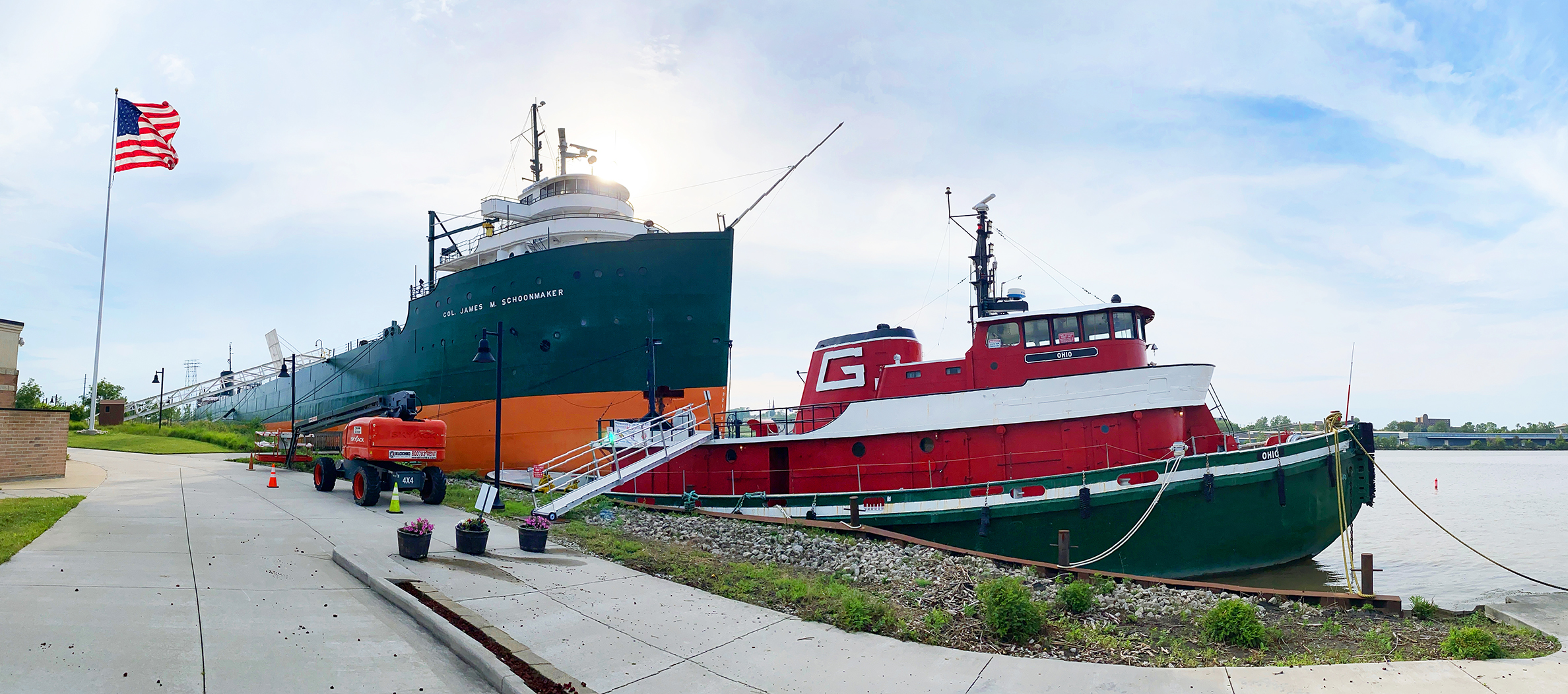
Labor Day is also the last day of the museum’s temporary exhibit Jim Hoffman: The Photographic Life of Toledo’s Original Boatnerd and the final day of Freighter Golf—a putt-putt hole-in-one challenge aboard the Col. James M. Schoonmaker Museum Ship. Both the temporary exhibit and putt-putt challenge are included with museum ship admission.
Tickets can be purchased ahead of time online at nmgl.org, however reservations are not required. Proof of union membership will be requested upon arrival.
ADMISSION
FREE: Current & Retired Union Members (with proper identification)
$17.00 (Museum & Ship) / $11.00 (Museum Only) – Adults (18-64)
$16.00 (Museum & Ship) / $10.00 (Museum Only) – Seniors (65+)
$14.00 (Museum & Ship) / $8.00 (Museum Only) – Youth (6-17)
FREE – Children 5 and under, GLHS/NMGL Members