Container shipping crisis an unmet opportunity on Great Lakes
Toledo, OH – The St. Lawrence Seaway could help save Christmas by bringing decorations, Santa suits, dolls, video games, and scooters to retail outlets in the United States and Canada. The global container shipping crisis that has ships piling up at massive West and East coast ports is presenting an opportunity for Toledo and other Great Lakes ports.
But local and federal officials in both the United States and Canada must change their mindset and act quickly if they hope to impact this year’s holiday season. An executive order from President Biden might be required to jump-start the process.
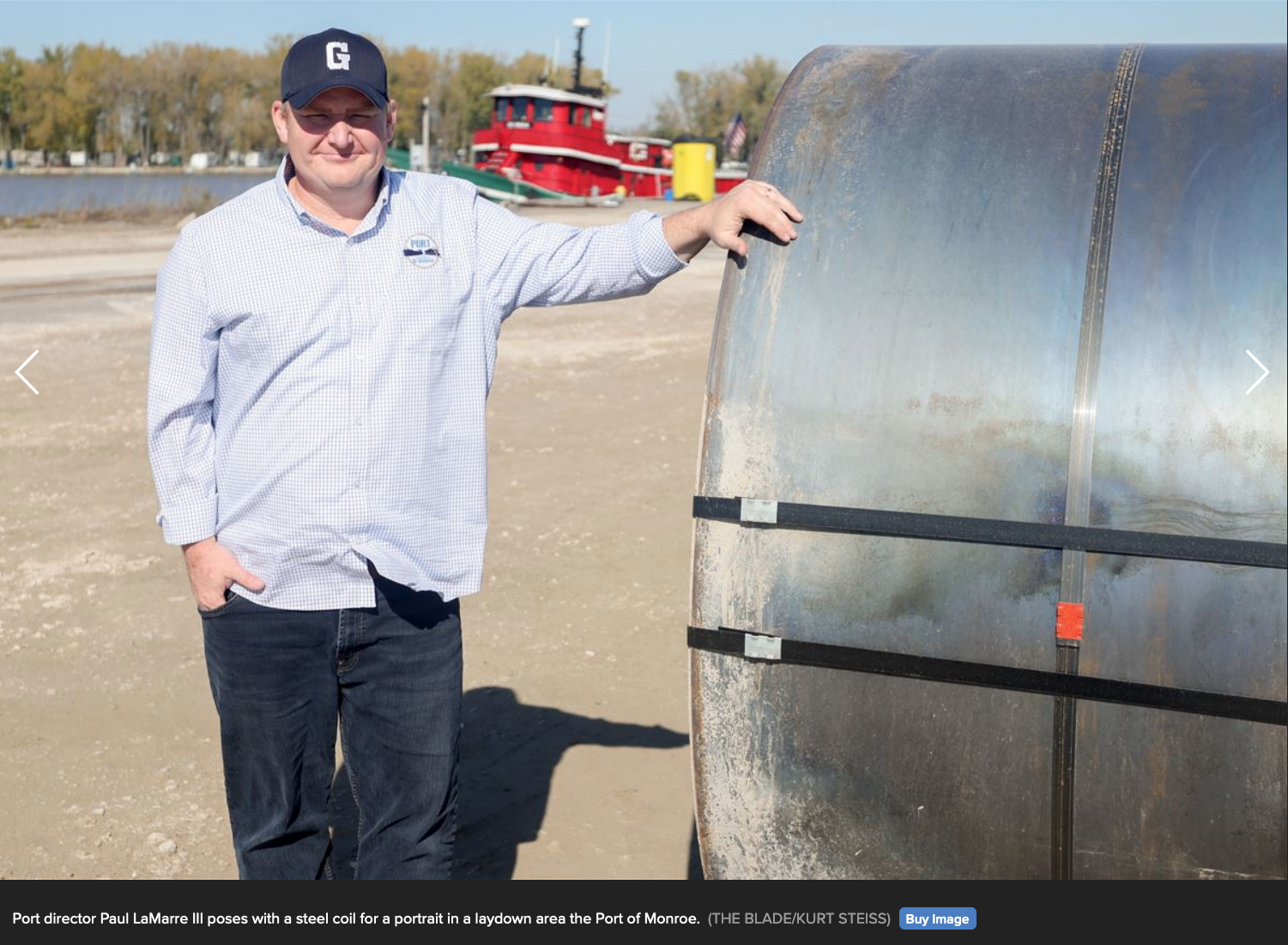
“It is unconscionable that the most utilized shipping method in the world — the container — is not being utilized on the Great Lakes,” said Paul C LaMarre III, director of the Port of Monroe, whose agency has recently expanded into handling container ships. “We need a buy-in from all parties and need everyone to realize this is a viable opportunity.”
U.S. Rep. Marcy Kaptur (D., Toledo) said the crisis of delivering needed consumer goods to the heartland from international producers has revealed a lack of leadership.
“The ports are not working on this and they have a very narrow view of their job,” Ms. Kaptur said. “Their vision is locked into the old model of the original Seaway corridor when the global market is moving to multimodal connects of sea-rail-highway for on-off load cargoes.”
“Toledo has those assets,” Ms. Kaptur said. “If leveraged with capabilities across other Great Lakes ports in Canada and the U.S., the system could be much more robust.”
Professor Paul Hong, a global supply chain expert at the University of Toledo, said the time to make the case for Great Lakes ports is now.
Outside coastal ports such as Long Beach/Los Angeles, Savannah, Ga., Charleston, S.C., and Newark/New York, heavily loaded ocean-going container vessels are stacked to the horizon because of worker shortages and other complications in the troubled supply chain.
It means shortages and delays in delivering electronics, holiday decorations, household cleaning materials, semiconductors, and pharmaceuticals — not to mention toys for under the Christmas tree.
Shoppers in the Toledo area and throughout the country increasingly face empty shelves. Parents and grandparents in search of Scruff-a-Luvs rescue pets, DC Comics action figures, or TeeTurtle Octopus Plushies might come home empty-handed.
“I could only find two things at one place, and I snatched them up,” said Pam Smith, a Toledoan who started her holiday shopping early in anticipation of the extreme shortages.
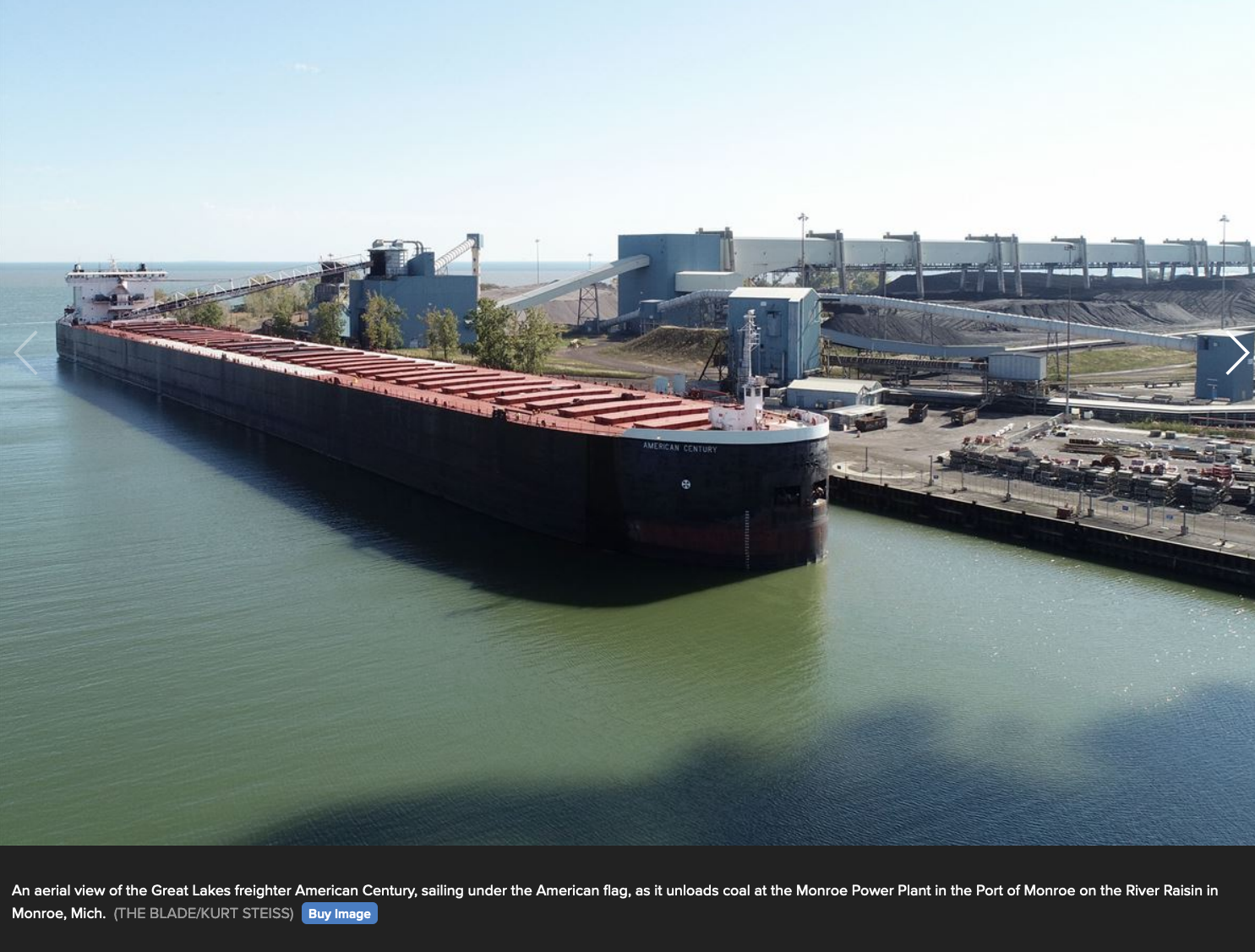
The Seaway is touted as “the shortest route to the heartland of North America” and since the Great Lakes region collectively would rank as the fourth-largest economy in the world, this could be a strong link in the supply chain that is not being fully utilized at this crucial juncture.
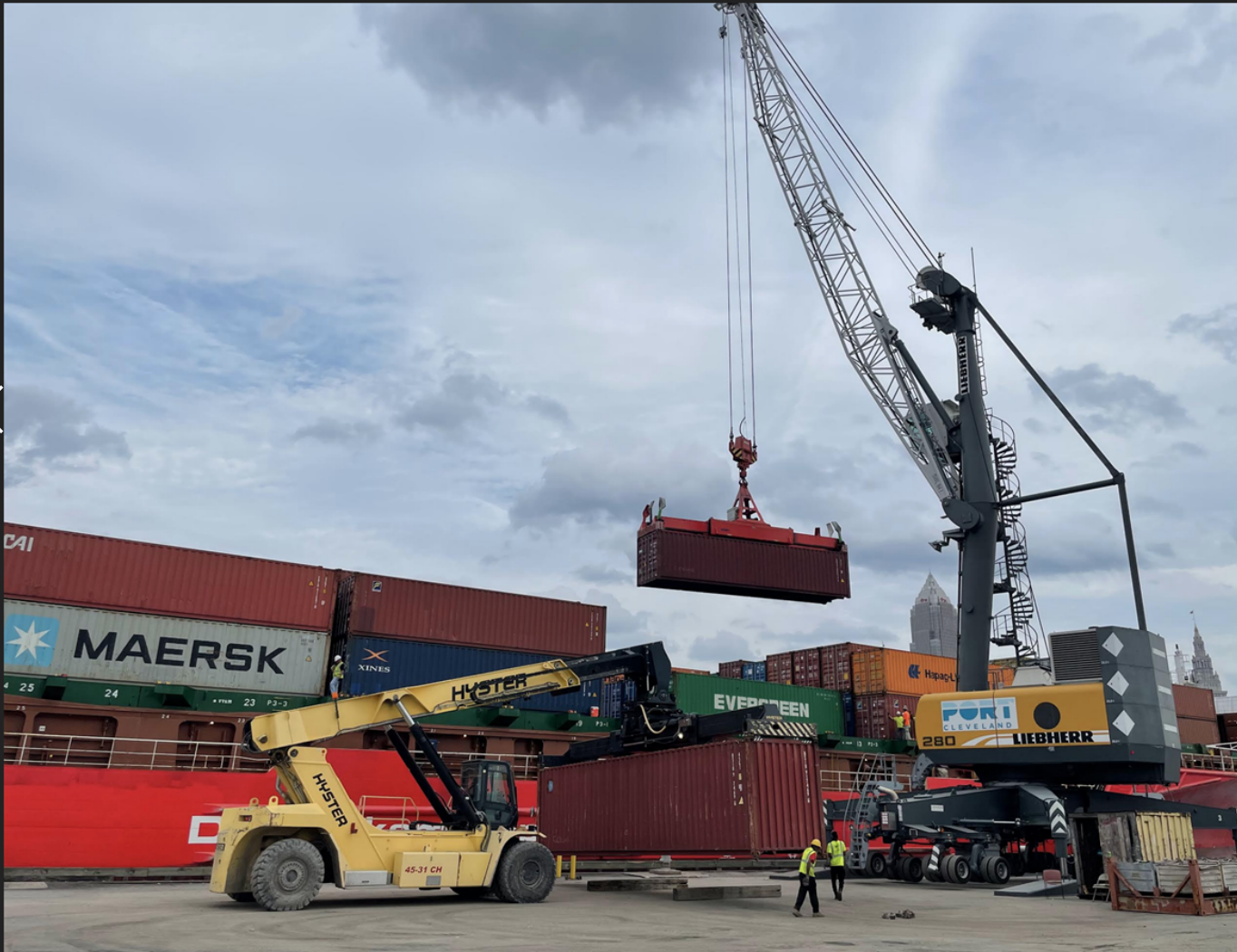
The Great Lakes boasts a busy bulk shipping trade, but it has very little containerized cargo. Nine years ago, Cleveland recognized the potential and installed a container port, now reported to be making a modest profit after having subsidized a European shipper, Spliethoff Group of Amsterdam, to use the port.
The Port of Monroe is constructing one now, in hopes of starting to unload container ships by 2023. “I absolutely believe that the Great Lakes and the St. Lawrence system are a major part of the solution to getting goods to the heartland of America,” Mr. LaMarre said.
David Gutheil, chief commercial officer of the Port of Cleveland, said Cleveland’s success shows there is an opportunity for the Great Lakes ports.
Mr. Gutheil said a container shipping industry existed on the Great Lakes in the 1970s, and since the Port of Cleveland started handling containers about eight years ago, that business has more than doubled in volume.
As the only port on the Great Lakes now handling containers, Cleveland is looking into feeder services in Halifax, N.S., and Montreal where containers could be off-loaded from the huge ocean-going ships and transshipped down the St. Lawrence Seaway via smaller vessels and dispersed throughout the Great Lakes region.
“We’ve proven you can save transit time by moving materials on an all-water route,” he said, adding that after initially using combination bulk cargo/container ships, Cleveland recently added a container-only vessel that handles “anything you can think of” including auto parts, foodstuffs, and manufactured goods on its United States to Europe and return routes.
Read more and view images at this link: https://www.toledoblade.com/local/transportation/2021/10/24/container-shipping-crisis-an-unmet-opportunity-on-great-lakes/stories/20211015111/?fbclid=IwAR3WIP5wbpISn60OV5rTe3pEXntgxFaF9yEguI31NeYLR59awqFOh6J60kk
Whitefish Point Edmund Fitzgerald memorial event will be virtual
The annual Edmund Fitzgerald memorial event, which takes take place every November 10 at Whitefish Point, will be a closed event in 2021. Due to current COVID conditions in the Eastern Upper Peninsula, only Fitzgerald surviving family members, USCG and GLSHS personnel will be attending. The event will be live-streamed
Great Lakes Shipwreck Museum
Chicago Maritime Museum receives million-dollar endowment
Chicago, IL – The Chicago Maritime Museum has recently received $1,000,000 for a new endowment fund. Announced during the annual “Waterways for All” fundraiser, the endowment will provide an income stream that can be used to fund operations and projects.
The donation was made by Capt. Dave Truitt, who currently serves as chairman of the Maritime Museum. As noted by museum officials, it is the largest gift in the museum’s history and “is the start of sustainable operations funding to allow the museum to focus on providing our patrons and visitors with engaging maritime exhibits and lively educational events.”
The Chicago Maritime Museum, located on the River Level of the Bridgeport Art Center opened in July of 2016. The museum offers visitors a chronological walk through local maritime history including the eras of French fur traders, sail and steam-powered vessels, modern commercial Great Lakes frigates, recreational sailing and the Ralph and Rita Frese Canoe Collection.
Designed by renowned architect and Maritime Museum board member, Dirk Lohan, the 10,000-square-foot museum serves as a window into Chicago’s maritime history. Its newly restored lobby includes interactive storytelling about the importance of the city’s waterways by key founders of Chicago. The museum also plans to create an exhibit of the adventures of Chicago-born Captain Bill Pinkney, the first African-American sailor to solo-circumnavigate the globe via the five great capes.
Association for Great Lakes Maritime History
Video shows Goderich Salt Mine in operation
https://player.vimeo.com/video/601848200?h=95aa1154bf