Interlake’s new U.S.-built Mark W. Barker launched at Sturgeon Bay
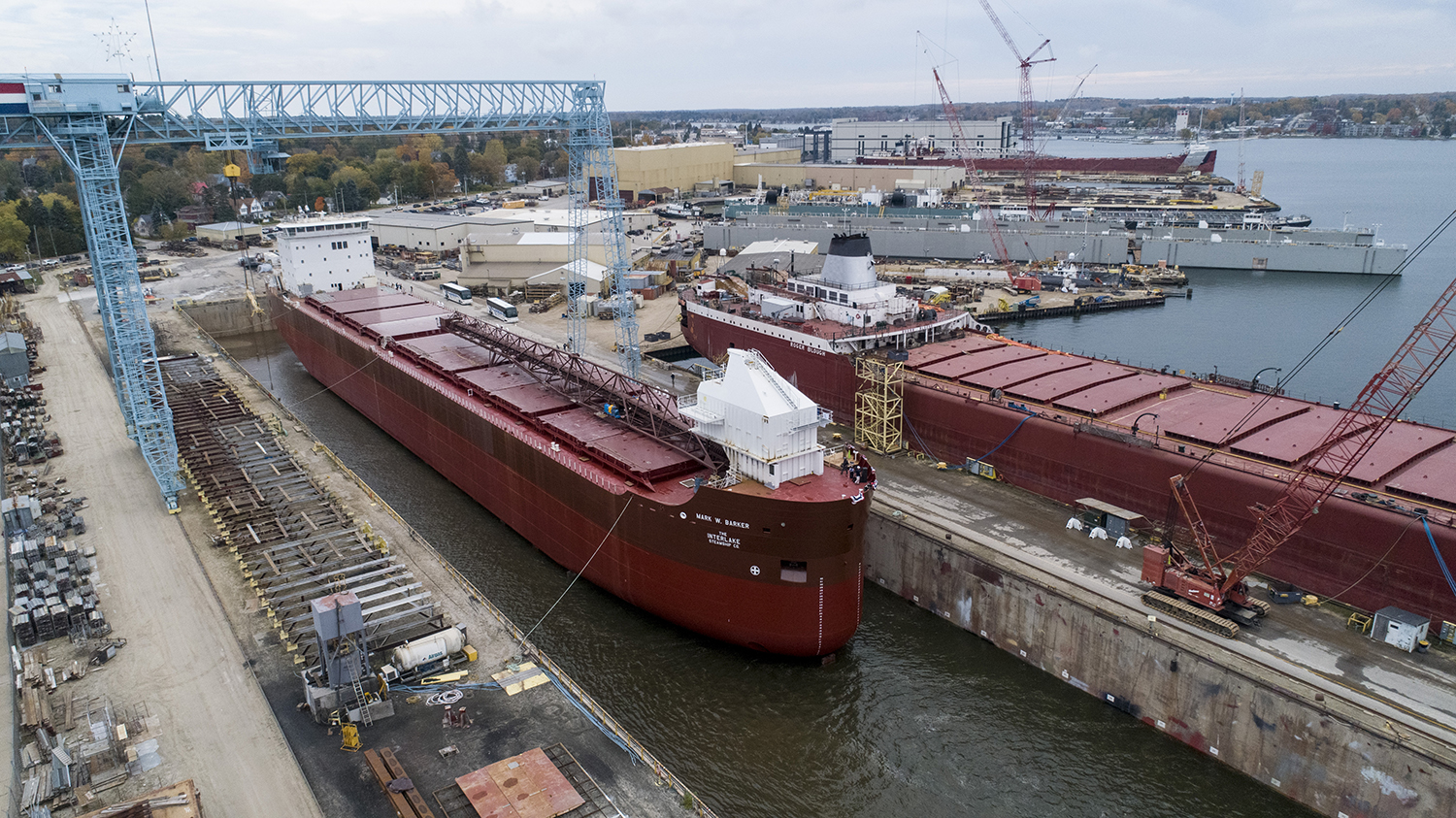
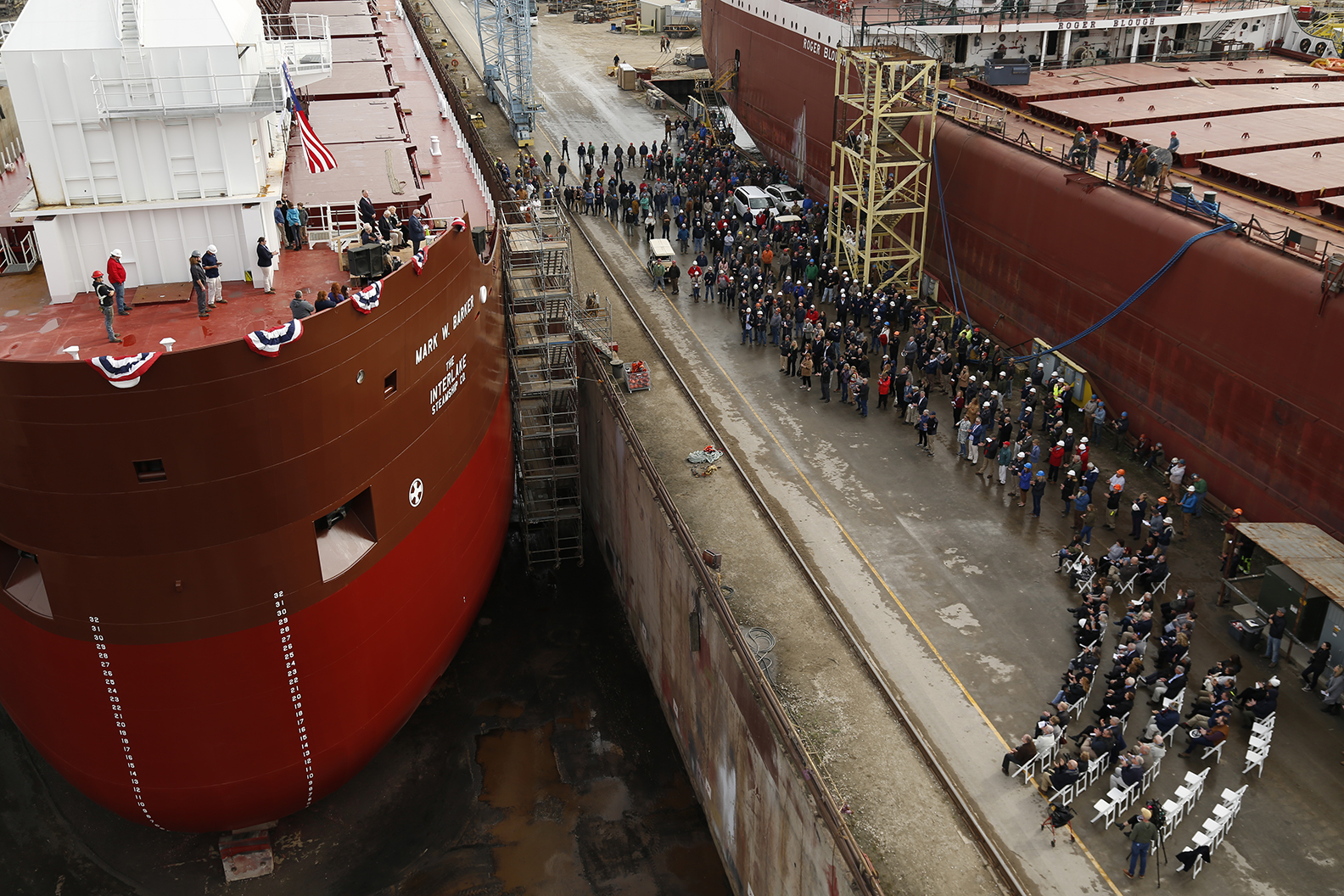
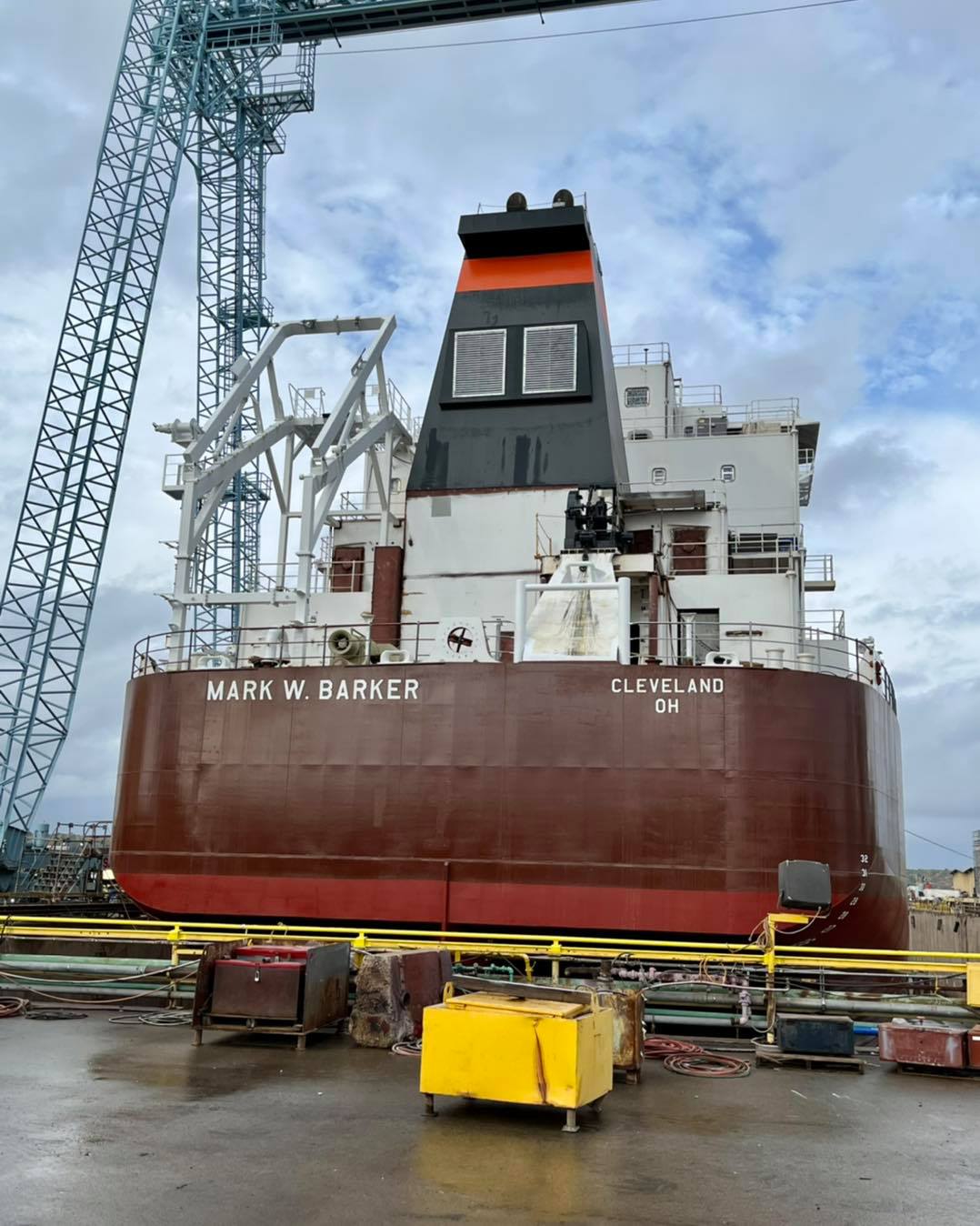
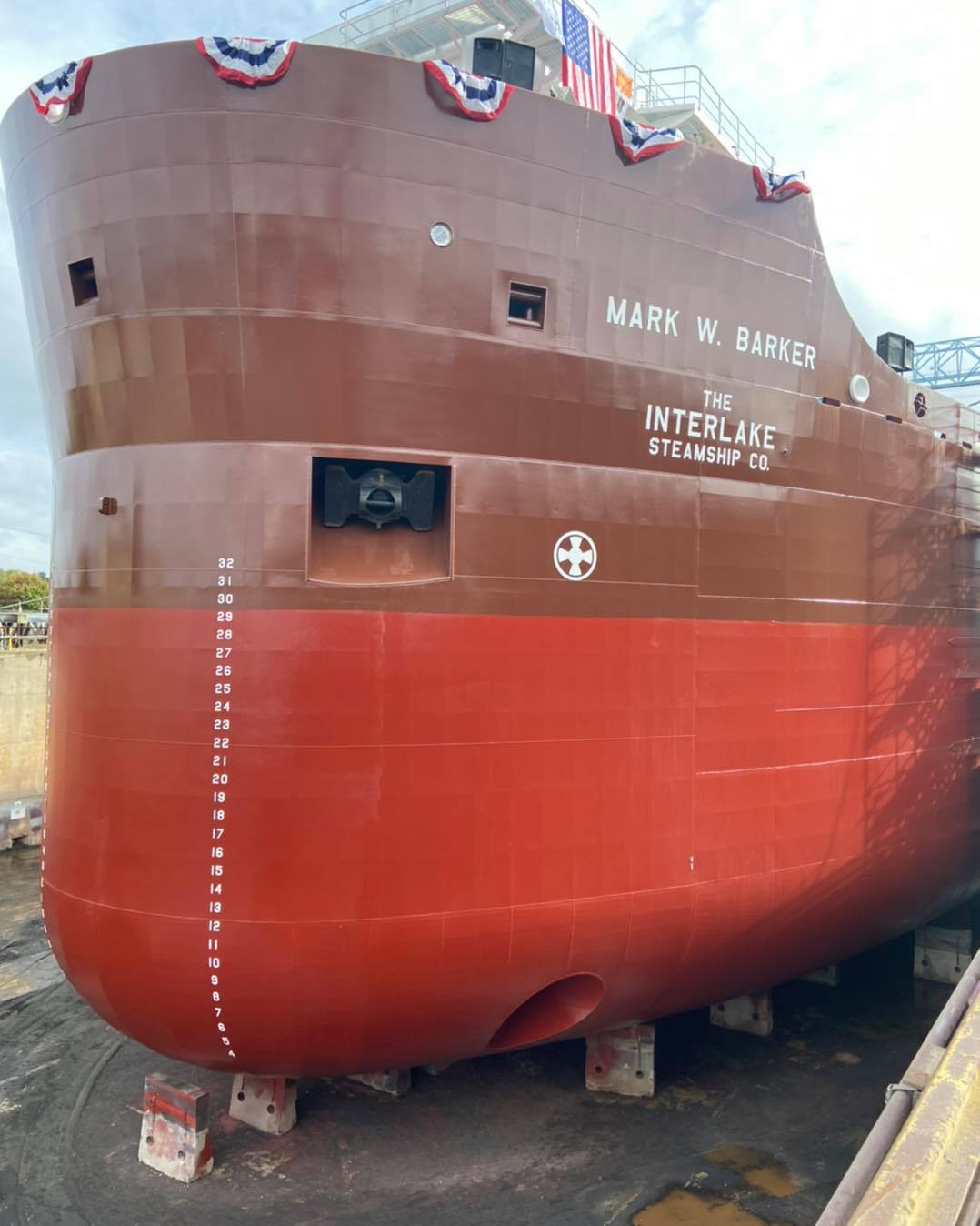
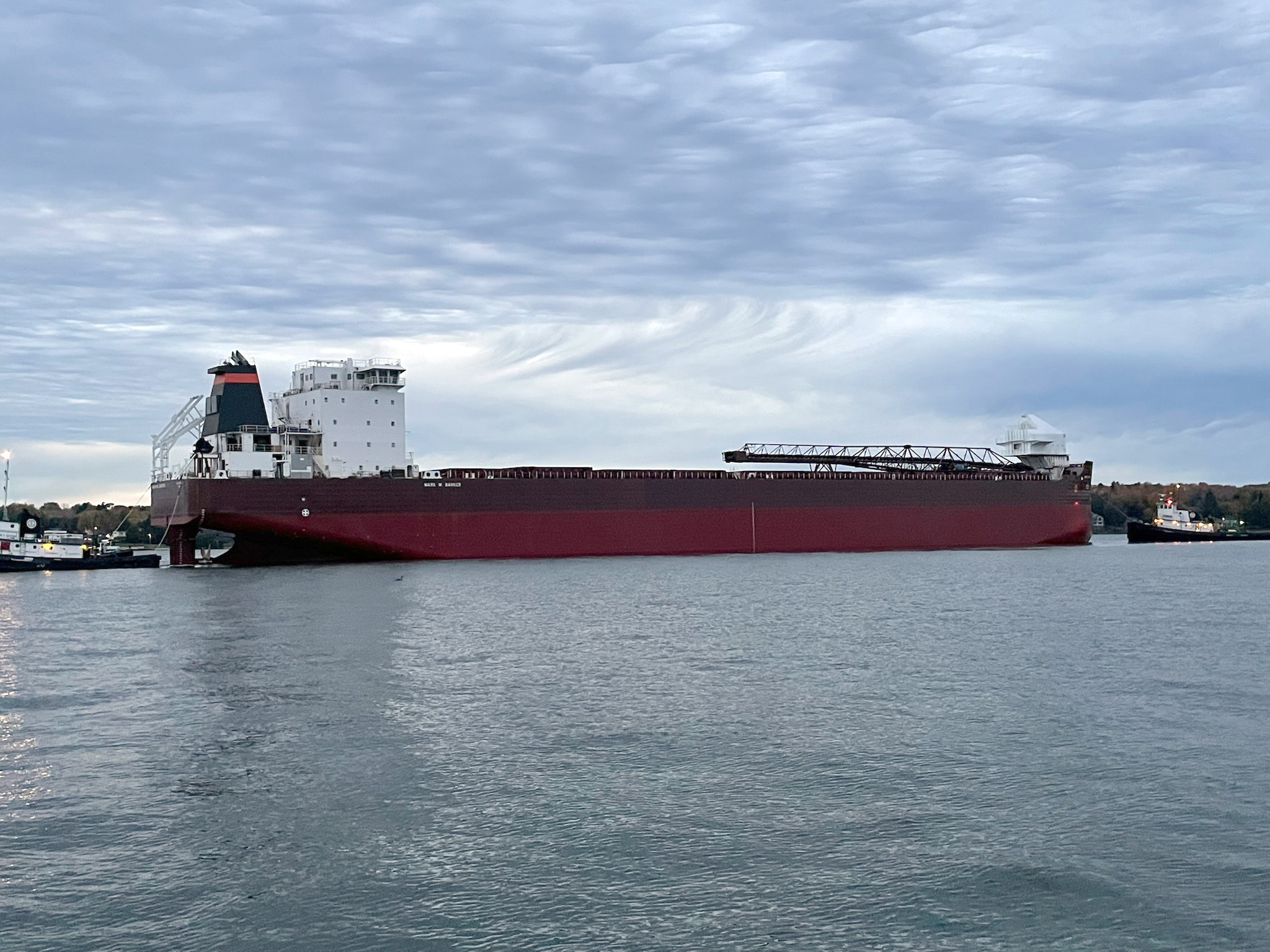
Sturgeon Bay, WI – Fincantieri Bay Shipbuilding and The Interlake Steamship Company hosted a launch ceremony Thursday, marking the latest milestone for the new 639-foot M/V Mark W. Barker.
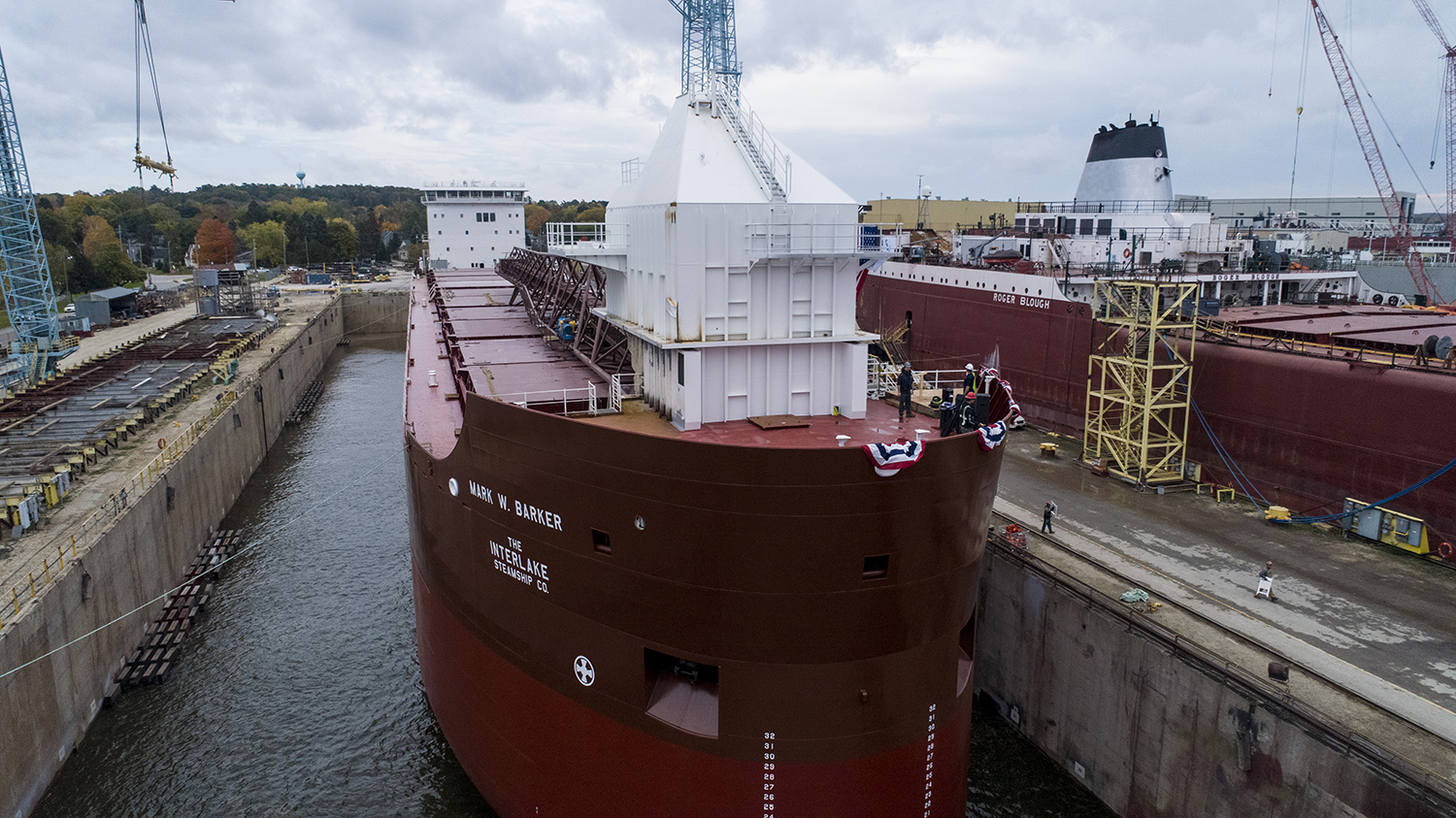
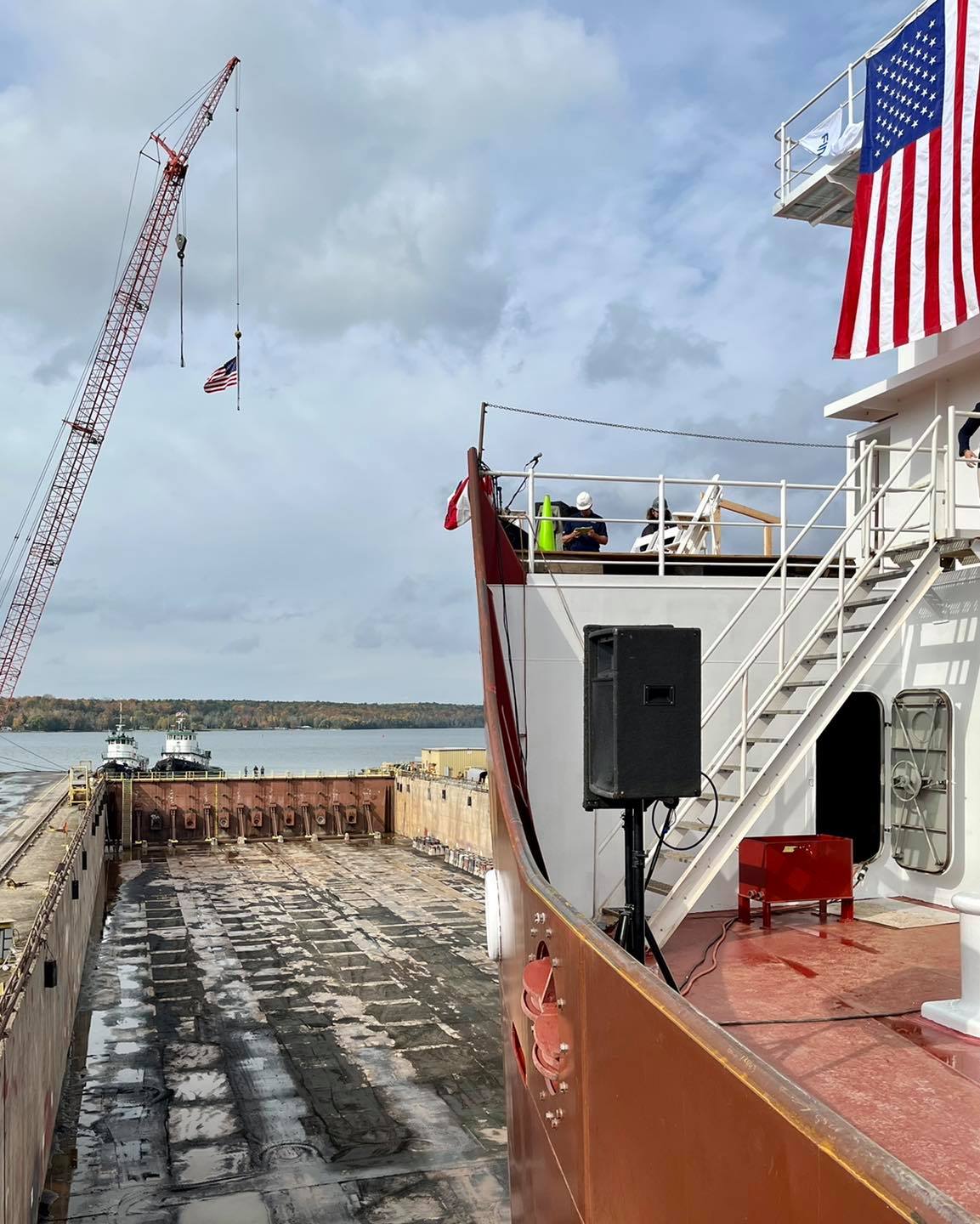
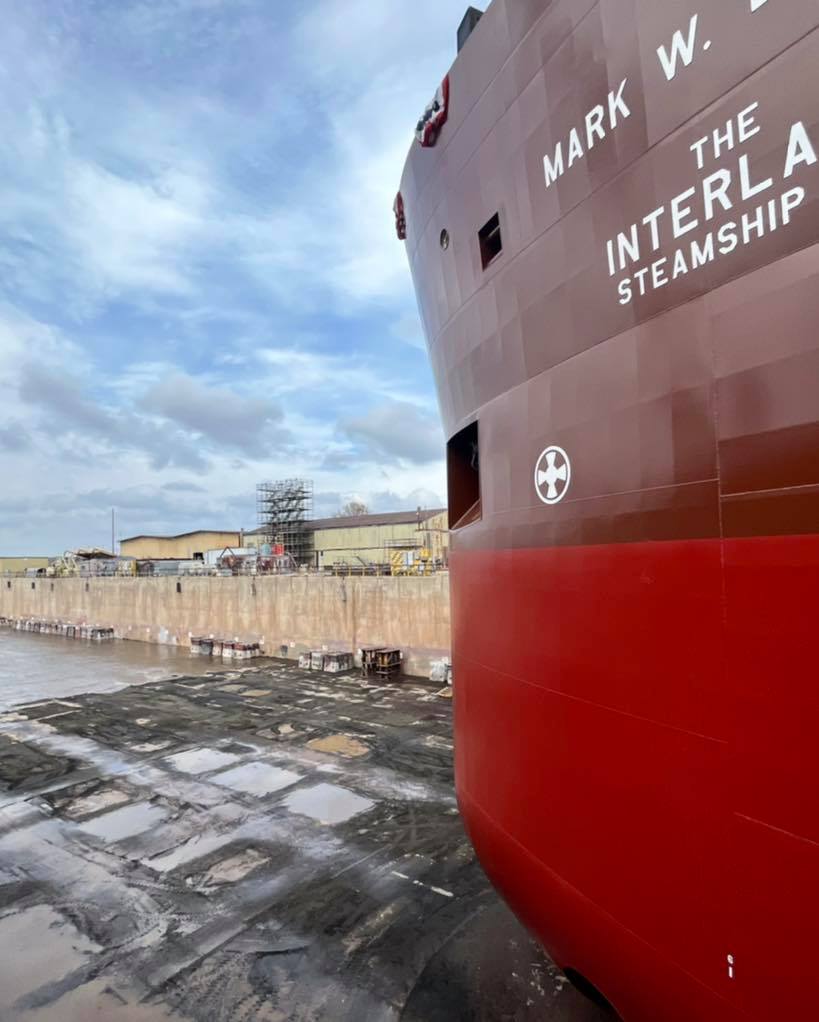
The first U.S.-flagged Great Lakes freighter to be built on the Great Lakes in nearly 40 years, the M/V Mark W. Barker – while still under construction – was “launched” or otherwise floated in the water in the large drydock at the Sturgeon Bay shipyard.
A formal maritime tradition, a launching ceremony honors the first time a boat is transferred from land to water. The public event is a way of celebrating and blessing the new ship and its crew to bring it good fortune on its future voyages.
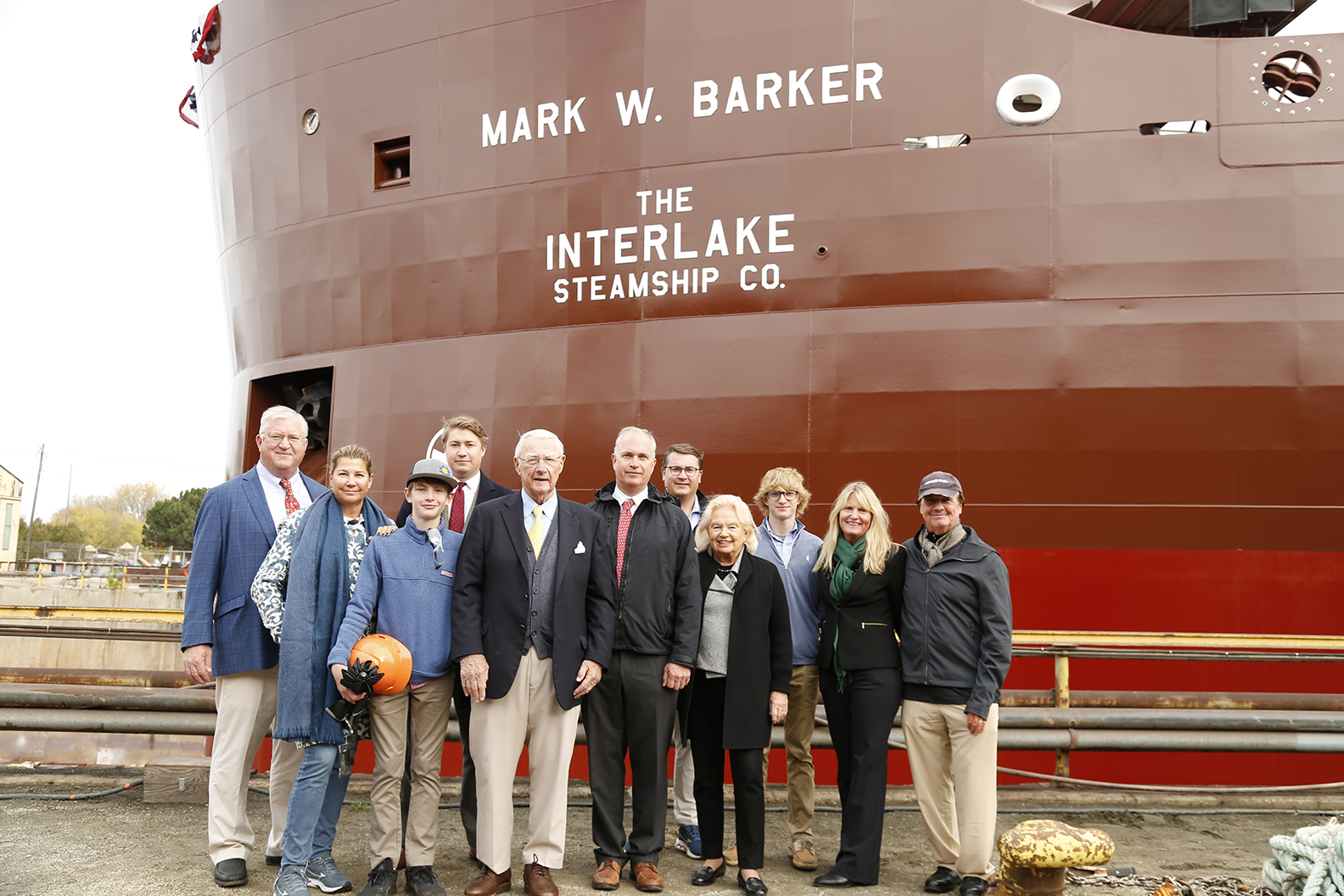
“Today is truly gratifying for our company to commemorate the first time the completed hull of our new ship has touched water,” said Mark W. Barker, President of The Interlake Steamship Company and namesake of the new vessel, which is the first new ship constructed for the maritime company since 1981.
Fincantieri Bay Shipbuilding’s Vice President and General Manager Todd Thayse invited all the shipyard crews to attend the short ceremony.
“It is a proud day for the men and women of our shipyard to celebrate the progress made on the M/V Mark W. Barker,” Thayse said. “Sharing this launch ceremony with the Interlake Steamship team along with Helen and Ian Sharp makes this day even more special.”
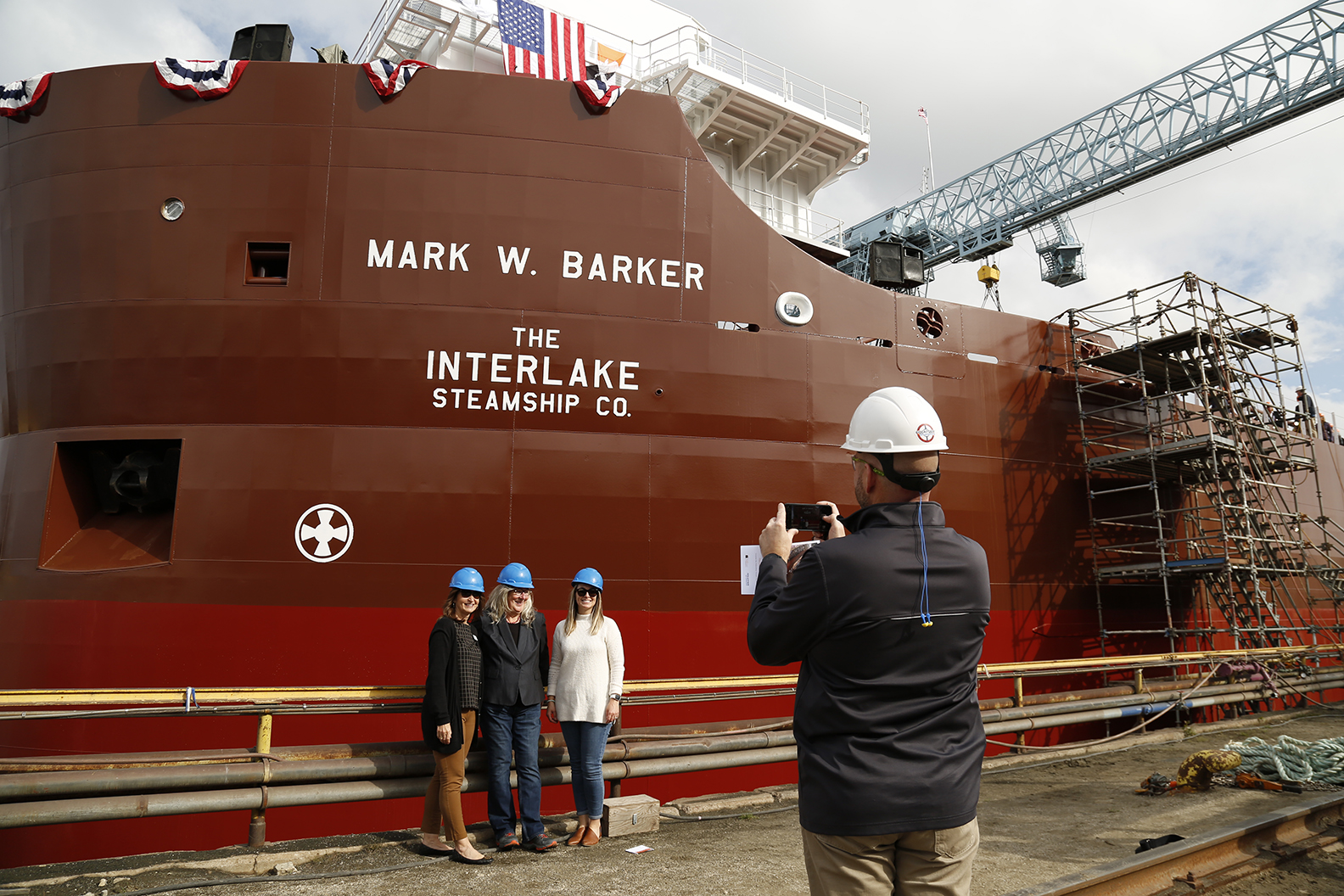
Interlake’s office staff was in Sturgeon Bay to be a part of the launch celebration. For many, it was their first time in a shipyard.
“We are dedicating this historic launch of our new ship to the men and women who have been building these Great Lakes vessels on our freshwater shores for more than 100 years,” said James R. Barker, Chairman of The Interlake Steamship Company. “We honor all of the skilled professionals who have worked countless hours, day in and day out, year after year, behind the scenes constructing these tremendous bulk carriers. Their workmanship and talent are welded into every seam of these vessels that go to sail long productive lives on the Lakes, safely carrying mariners and the raw materials that are the building blocks of America.”
In particular, James R. Barker pointed to the contribution of Ian Sharp, Interlake’s Director of Fleet Projects, who spearheaded the design of the new build in-house from its conceptual phase to today. Sharp, a native of Scotland, has contributed his talents in ship design and shipbuilding to create a legacy that includes dozens of vessels throughout his more than five-decade career.
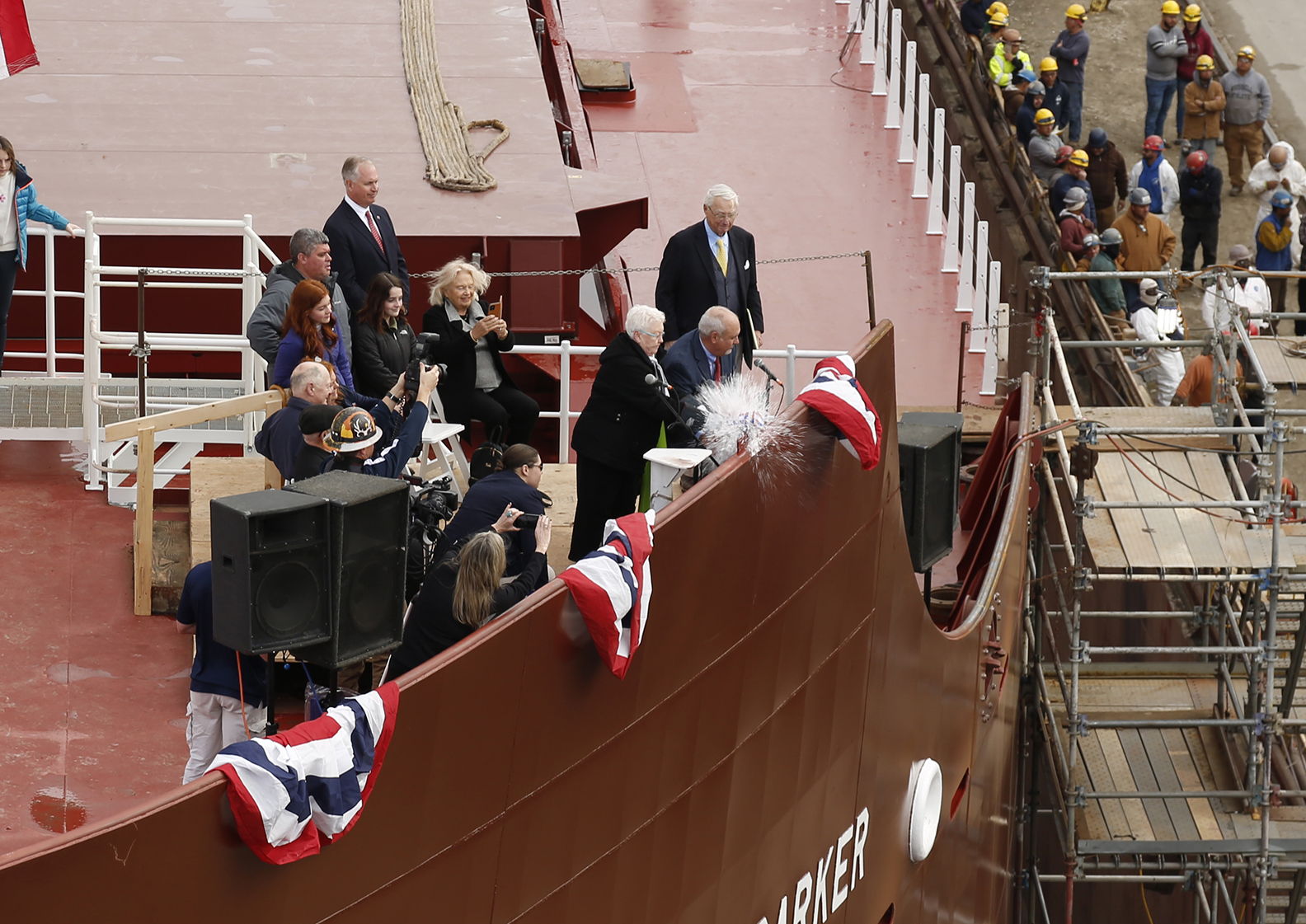
His wife and chief supporter of 56 years, Helen Sharp, was selected as the honorary launch sponsor.
“Motor Vessel Mark W. Barker, your family name is strong, you are built strong by hard-working men and women and you will work strong. May God bless you and all who sail with you,” said Helen Sharp as she broke the ceremonial bottle of champagne against the bow of the ship just above the vessel’s nameplate.
Tugs in the shipyard blew congratulatory salutes, and then shipyard workers opened the valves in the dry dock to let water flow in. The process of floating the boat took about six hours.
President and CEO of Fincantieri Marine Group Dario Deste offered his congratulations to the teams at Bay Shipbuilding and Interlake. “Well done,” said Deste. “May this vessel demonstrate not only the importance of commerce on the Great Lakes but also the power of partnerships between two tremendous companies.”
The ship is expected to be complete and underway in Spring 2022. In the meantime, interior work on the vessel’s accommodations and mechanical and engineering systems continues.
The new River-class, self-unloading bulk carrier is believed to be the first ship for U.S. Great Lakes service built on the Great Lakes since 1983. Measuring 639 feet in length (78 feet W, 45 feet H, 28,000 DWT), the ship will transport raw materials such as salt, iron ore, and stone to support manufacturing throughout the Great Lakes region.
The Interlake Steamship Company, Fincantieri Bay Shipbuilding, and Bay Engineering jointly designed the bulk carrier, complete with advanced vessel and unloading systems automation. The carrier is being built by FBS’s nearly 700 skilled trade workers and will generate business for partnering contractors, vendors, and suppliers. Major partners for the project include American Bureau of Shipping (ABS);ArcelorMittal, Bay Engineering (BEI); EMD Engines; Caterpillar; EMS-Tech, Inc., Lufkin (a G.E. Company), Kongsberg and MacGregor.
Interlake Steamship Co.
View images in the photo gallery
View a news report and video of the Barker launch at this link: https://fox11online.com/news/local/launch-ceremony-held-for-new-great-lakes-carrier-ship-in-sturgeon-bay?fbclid=IwAR1JqKA3b4Zj5QqRcPsIliqdAxEjaULrAsobzVSpAq9fKO03QdcCLgz0ZCw
New Simcoe Island ferry to be built at Hamilton shipyard
Kingston, ON – The government of Ontario announced a big investment in a small island near Kingston on Thursday. The Ministry of Transportation will be giving Frontenac County $3.3. million for a new ferry for Simcoe Island.
The ferry will be built at Heddle Shipyards in Hamilton, and will bring with it 24 local jobs during construction, according to a news release from the MTO.
The ferry is expected to be in service by late 2022 and will allow for up to three times more vehicles than the current ferry. The vessel will also be able to carry larger service vehicles, such as fire trucks and vehicles required for maintaining roads and infrastructure.
The current Simcoe Island ferry was first launched in 1963 and is cable operated. It runs from Simcoe Island to Wolfe Island in the spring, summer and autumn.
Ports around Great Lakes on sidelines during shipping crisis
Green Bay, WI – With hundreds of ships stacked up off ports along the east and west coasts, ports around the Great Lakes can’t help alleviate the current supply chain crisis. According to the Port of Green Bay’s director, Dean Haen, it’s due in part to a federal taxation policy on ships sailing the Great Lakes.
“There’s a 1,000 ports in the United States, including 25 fairly decent size ones in the Great Lakes that can’t help in this situation without some changes in legislative policy,” says Haen.
The policy Haen is referring to is the Harbor Maintenance Tax established in the early 1980′s.
“And that was a way to facilitate and pay for dredging and that’s happened, and now we’re fully dredged, but it needs to be tweaked because it’s stopping ways to alleviate congestion and commerce, it’s stopping commerce,” says Haen.
Haen says the tax essentially limits Great Lakes shipping to raw materials destined to one port.
“The way the federal taxation works on these vessels, you get charged on the value of goods at each stop, so if your goods don’t get off until the third stop you’re taxed three times,” explains Haen.
While many of the massive container ships require 50 feet of water, and the Great Lakes’ locks system only provides just over 26 feet, Haen believes adjusting the tax policy and other federal incentives would make it cost effective for smaller container ships to sail into the heart of the Midwest.
“The Great Lakes is the 3rd largest economy if we were our own country around the Great Lakes, so there’s a lot of manufacturing, there’s a lot of consumption that’s happening around the Great Lakes and yet all those goods that are being produced are moving to a coastal port, and other goods coming in to be consumed are also moving into coastal ports and then moved by truck or train to the region. You think about the cost of building a highway, adding another lane, millions and millions of dollars per mile, this water is already here, there’s no infrastructure costs, the docks are there,” says Haen.
As ports around the Great Lakes continue advocating to become a commercial waterborne transport route, known as Short Sea Shipping, the current shipping crisis could be the tipping point to it becoming a reality.
“Truthfully what drives change is a crisis situation like this, legislators start looking for solutions and industries telling them that and now they actually have the desire to push that legislation through,” says Haen.
WBAY
View video at this link: https://www.wbay.com/2021/10/25/ports-around-great-lakes-sidelines-during-shipping-crisis/
Port of Toledo leaders looking into the feasibility of handling container cargo
Toledo, OH – Container ships continue to be held up on the West Coast as the global supply chain crisis continues. Many of the vessels are having to anchor offshore, unable to get into port for weeks at a time.
According to Joe Cappel, the Vice President of Business Development for the Port of Toledo, any issues elsewhere haven’t affected business at the port.
“We are the largest landmass port on the Great Lakes, and also one of the most cargo diverse ports on the Great Lakes,” Cappel said.
And this has been a very good year for the Port of Toledo.
“The 2021 season is one of the best we’ve had in recent years,” he said. “Our cargo tonnage is up over 26% over 2020, which was also a very good year for the port.”
A diverse portfolio has been a big part of Toledo’s ongoing success. That portfolio includes things like grain, iron ore, coal, aluminum, and salt. But as delays continue for container ships on the West Coast, some are asking about the possibility of adding that kind of cargo to the Port of Toledo’s roster.
“It’s really a business case analysis that needs to be done and we are in the process of that,” says Cappel. “We are working with our terminal operator to see if it even makes sense for Toledo.”
Cappel says ports specialize in certain cargo for a reason. “Some other Great Lakes ports see this as an opportunity for them, but every port is different in terms of cargo they handle and what their specialties are.”
According to Cappel, Cleveland is the only American port on the Great Lakes that handles container cargo right now.
“The last time we had a study done, there were well over 7,000 jobs tied to the port and a $1 billion annual economic impact,” says Cappel. “That was before the Cleveland Cliffs project and other improvements we’ve been making, so I am excited to see the new numbers.”
Cappel adds that in order for the Port of Toledo to be able to consider handling cargo containers, there would have to be a multi-million dollar investment to create a specific space at the port. There would have to be enough interest from shippers and local importers to use the service. There would also need to be a U.S. Customs facility.
“Could it be an opportunity for Toledo and the Great Lakes?” asks Cappel. “Moving containers is not something we typically do but it could be an opportunity in the future. But if the Port of Toledo had an ability to do this, it is not likely to impact the West Coast situation.”
In the meantime, the focus will continue to be moving products in and out of Toledo that provides jobs and economic stability for the region.
13ABC. Read the full story here: https://www.13abc.com/2021/10/25/port-toledo-leaders-looking-into-feasibility-handling-container-cargo/