Welland Canal closes for the season with a boost in ship traffic
The Welland Canal is closed after an extended season. The last ship made its way through the locks on Friday, marking the third straight year the season was extended into the new year.
The St. Lawrence Seaway Management Corporation says they finished the year about 10% above the usual amount of traffic. They point to a strong end of the season as iron ore and grain travelled through the canal.
Seaway management expects the canal to reopen sometime in late March.
Icebreaker Griffon to clear Midland ice
Midland. ON – Please be advised that the Icebreaker Griffon is expected to come through Midland Harbour on Wednesday to clear the way for the expected arrival of the Whitefish Bay grain ship. Ice conditions through this area are already very unsafe/dangerous and will be even more so after the Griffon and Whitefish Bay come through. Please stay off the ice!
Michigan Coast Guard boat sails onto National Register of Historic Places
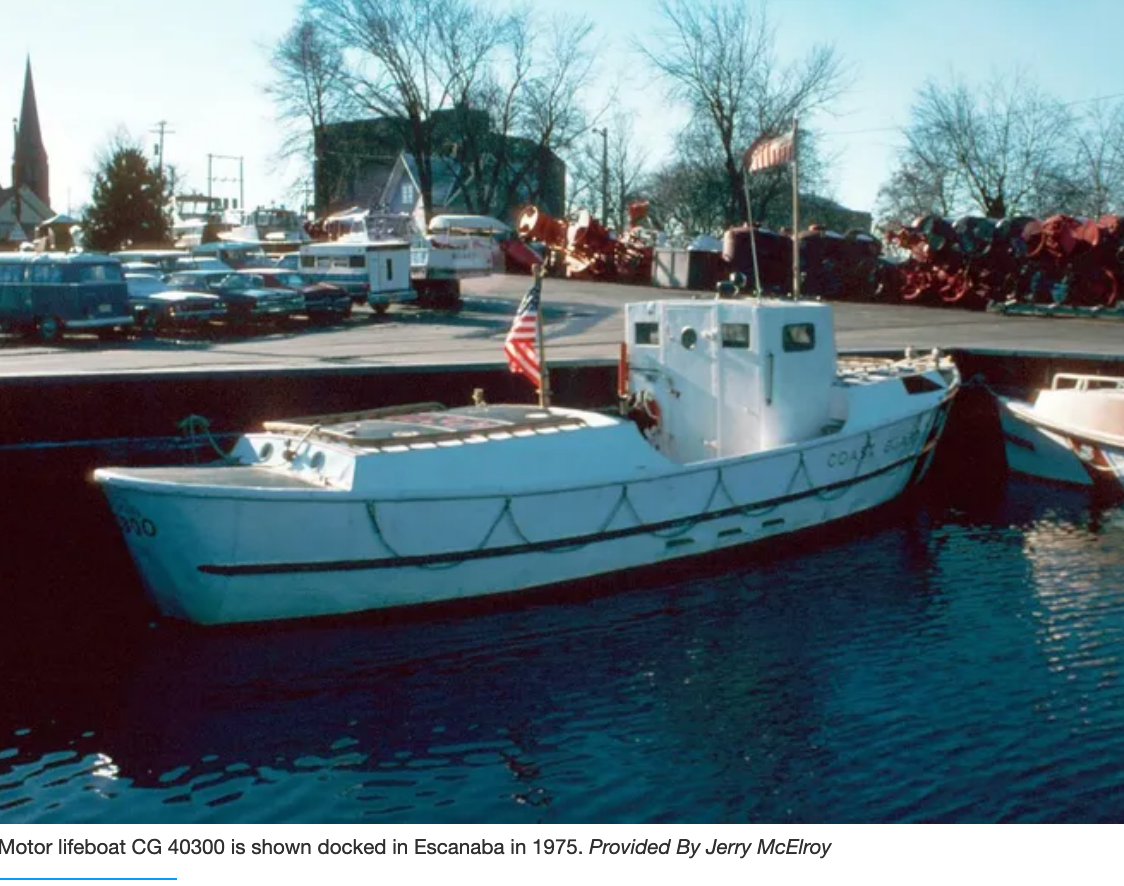
Lansing, MI – For close to four decades, U.S. Coast Guard motor lifeboat 40300 was on duty in Lake Michigan, stationed primarily at the Plum Island Lifeboat Station at the tip of Wisconsin’s Door Peninsula and later in Escanaba.
In 1983, the federal government transferred the boat to the Eastern Upper Peninsula Transportation Authority at Sault Ste. Marie for use as a utility boat and icebreaker.
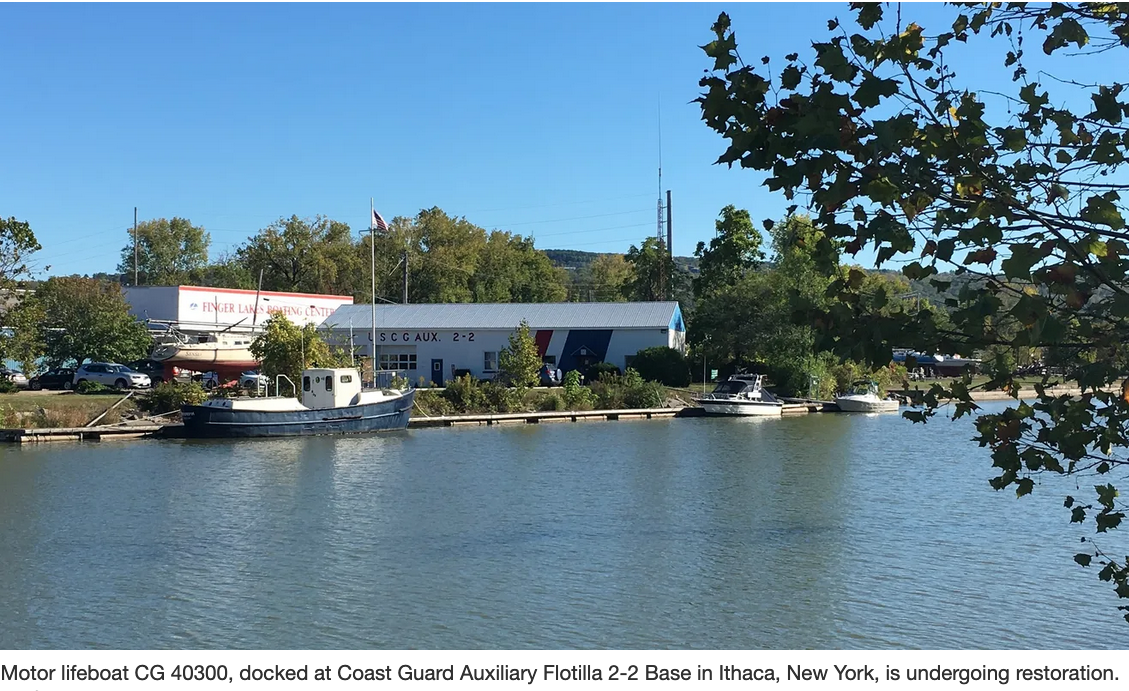
Now at age 81 and in private hands, CG 40300 is berthed in New York’s Finger Lakes region as part of the Coast Guard Auxiliary’s Flotilla 2-2 in Cayuga Lake.
The 40-foot-long steel prototype is among the most recent properties added to the National Register of Historic Places, based on its importance in maritime engineering and maritime history.
CG 40300 was an experiment, the Coast Guard’s first steel motor lifeboat and intended to pioneer the agency’s transition from 36-foot-long wooden craft.
It was built in 1940 “to handle rugged sea and weather conditions with a high degree of stability, great strength of construction, self-righting and self-bailing, and ice-breaking capabilities,” the National Register nomination says. It normally had a crew of four.
The current owner, John Frieman of Owego, New York, said the advent of World War II “killed that project” because steel was in high demand for military needs. He bought CG 40300 from a previous private owner and trucked it from the U.P. to Cayuga Lake in Ithaca, New York in 2017.
“This may be the first steel motor lifeboat in the world,” said the 72-year-old engineer, who has a background in naval architecture and museum conservation. “This is the grandfather of all of them.”
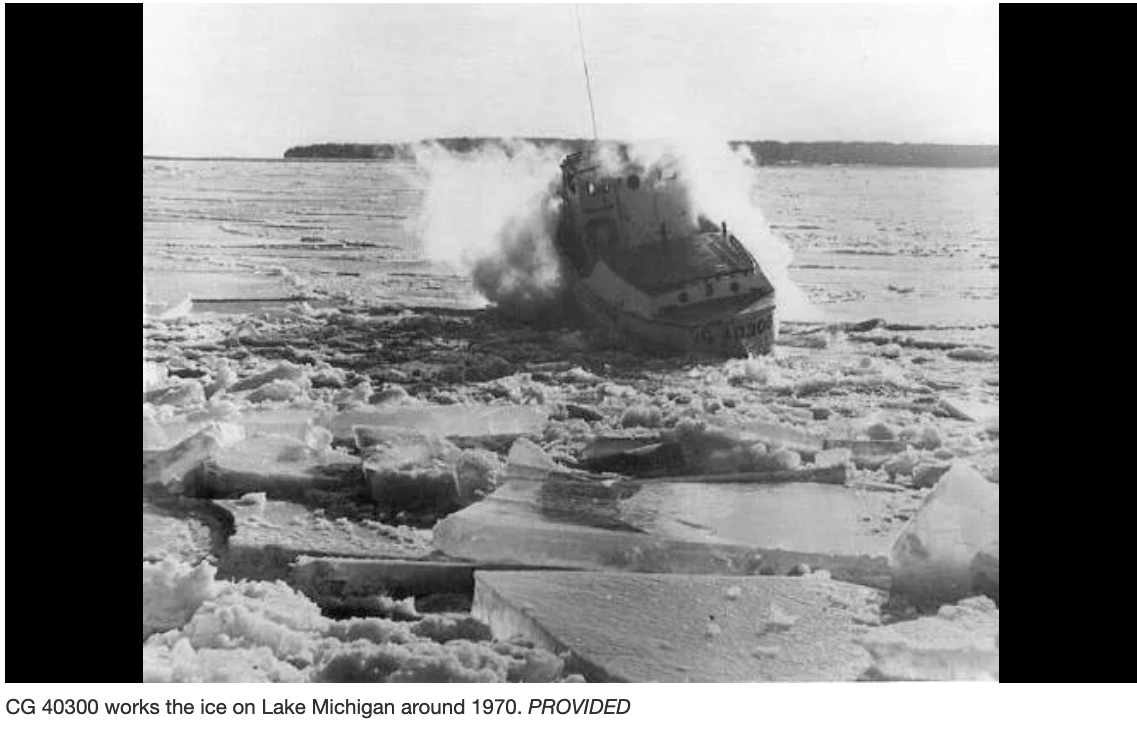
In addition to search-and-rescue activities, CG 40300 carried supplies to lighthouses on Lake Michigan’s Pilot and Plum islands. It wintered at Washington Island, where it broke ice for the local ferry, according to the National Register nomination.
“Sometimes the ice would become too thick for the wooden ferry even after being broken by CG 40300,” it said. “At those times, if there was an urgent need, CG 40300 became the ferry of last resort.”
The National Register documentation includes crew member David Robb’s account of a dangerous mid-1960s operation to help a heavily laden barge buffeted by gale winds gusting 25 to 35 knots. Robb wrote of feeling “the full fury of Lake Michigan on our starboard side. With the pounding of the bow into the waves, it combined into a dizzy corkscrew motion that resulted in some serious seasickness.”
He told of a “bone-chilling cold” from icy waves washing over the crew, of “three hours of hellish misery. The boat exploded over each crest and flopped down on the other side for a dizzying surf nearly out of control. On top of the crests, we screamed to be heard. In the troughs, we could whisper if it weren’t for the roar of the diesel,” he wrote.
Robb was one of three former crew members Frieman interviewed for his research about CG 40300. “They all loved the boat because it was such a solid, stable platform. You go out and know nothing is going to hurt this boat,” he said. “That confidence really helps when you’re going out into really bad weather where the risk is really high.”
The Coast Guard removed it from service in 1979 after 33 years at Plum and Washington islands and three years at the Aids to Navigation Station in Escanaba. Then it worked the Sault Ste. Marie Canal for almost another two decades, Frieman said.
Former authority mechanic Arthur Black of Sault Ste. Marie says it was used when ice prevented ferries from running and described an incident when the wind was pushing it so hard it nearly ended up on Drummond Island. “That thing rolled and pitched,” said Black, who remembers rebuilding the pilot house.
Although in use almost continually since 1940, the nomination said, “There have been few changes, and the boat remains in very good condition.”
Frieman said: “Easily 90% of the boat is original. Considering she was in quite heavy use for the first 60 years of her existence, that’s doing really well. A lot of that is a credit to the Coast Guard, which built the boat and the guys who kept her up during years of service. They never let the boat get rusty.”
Since buying the boat, he’s done a lot of work “as time and funding allows,” including on the wiring and electric system, batteries and wooden features, as well as building a windshield. Painting is ahead, with the aim of restoring it as it was in the 1960s.
Frieman is a Coast Guard Auxiliary volunteer staff officer for marine safety and environmental protection and says CG 40300 draws attention from boaters who stop to see the historic craft and talk about marine safety.
He renamed it Acadia in honor of the hospital ship where his parents met and served during World War II.
The Monroe News
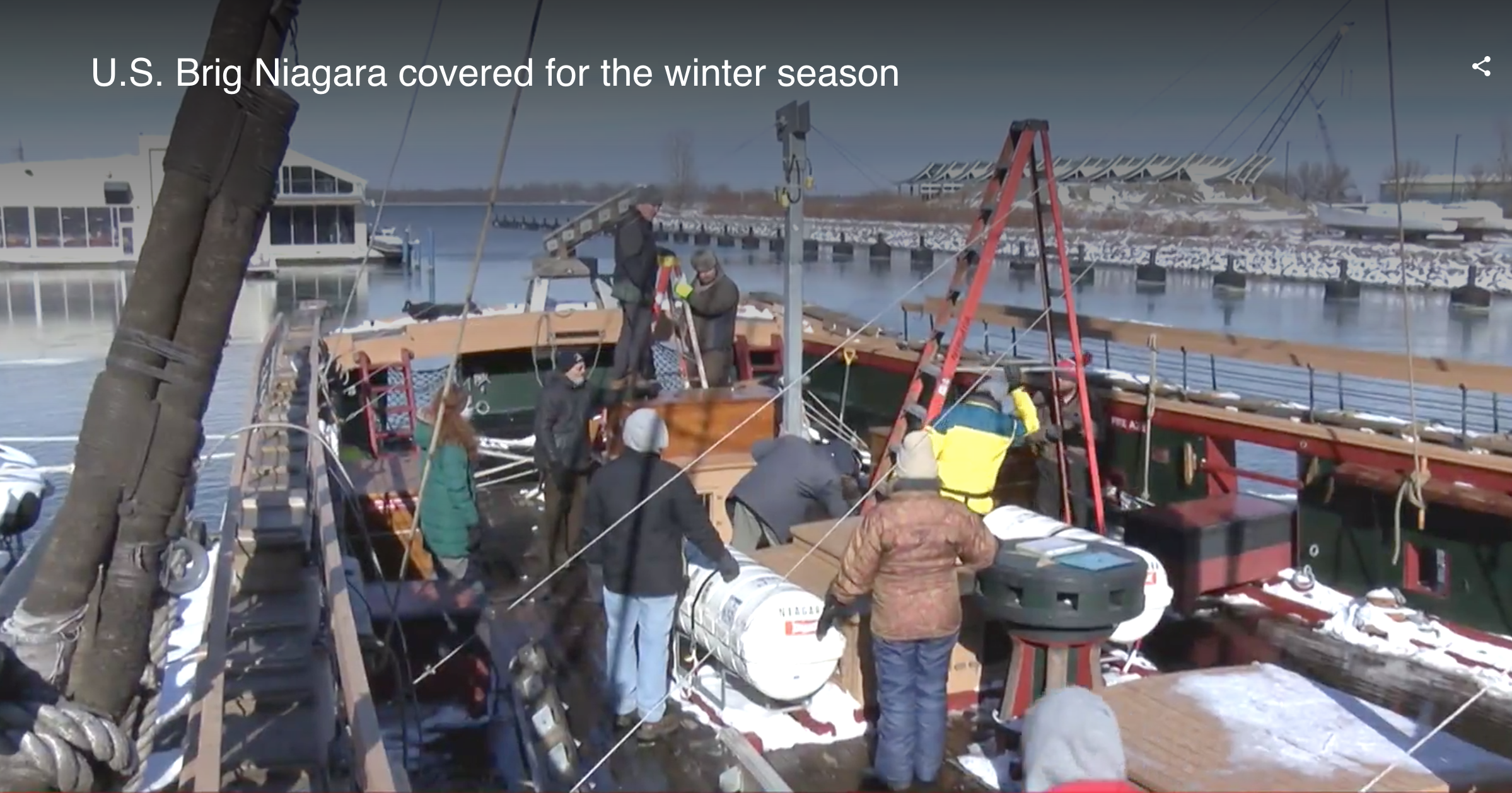
Cover for the U.S. Brig Niagara has been placed on the ship for the winter
Erie, PA – Built on the shores of Presque Isle, the original U.S. Brig Niagara played a major role in defeating the British in the Battle of Lake Erie during the War of 1812.
There has been four reconstructions of Commander Oliver Perry’s ship since the war ended. The fourth version that can be seen in Erie is being covered for the remainder of the winter season.
“Niagara was in the shipyard for about two months at Great Lakes Shipyard in Cleveland. She came back mid-December and now we’re getting the cover on to make sure she’s all buttoned up for the winter,” said Chris Cusson, captain of U.S. Brig Niagara.
View a video at this link: https://www.yourerie.com/news/local-news/u-s-brig-niagara-covered-for-the-winter-season/
Toronto considering all-electric ferry fleet
Toronto, ON – Toronto’s Government and Licensing Committee will consider adding $2.6-million to an existing order to upgrade the fleet of new ferries destined for the Toronto Islands to be fully electric. The staff report — the latest in the city’s ongoing ferry replacement program — is destined for Friday’s committee meeting.
The extra money, bringing the total cost to $4,540,721, is to provide additional design and construction support for the shipbuilder — Concept Naval Inc. of Quebec City — to convert existing diesel-hybrid designs to full-electric. The money will also provide shore infrastructure to support the new fleet of electric ferries.
The move is part of the city’s TransformTO Net Zero Strategy, with plans to achieve net-zero emissions by 2040.
The Toronto Islands are serviced by four primary vessels — the Ongiara , the William Inglis , the Sam McBride and the Thomas Rennie — all between 59 and 87 years old, as well as the 110-year-old side-wheel steamer Trillium. The average lifespan for similar freshwater ferries is 20 years.
The city’s Toronto Islands fleet typically carry about 1.4 million passengers and over 5,000 vehicles annually — with May to Sept, representing nearly 80% of yearly volumes. With the exception of the Trillium, which will continue to operate as a heritage ship, the four primary ferries will be replaced over the next 15 years.
While the total cost of replacing the ferries isn’t yet known, city staff estimate completed designs will run between $23 and $25-million per ship. Delivery of the first ferry is expected near the end of 2025.
Toronto’s foray into electric boats began last month when PortsToronto took delivery of the newly-upgraded Marilyn Bell I, its diesel engines replaced with lithium-ion batteries making it the city’s first 100% electric passenger ferry.
Great Lakes Pilotage Advisory Committee appoints new members
The Coast Guard has announced the appointment of two individuals to serve as members of the Great Lakes Pilotage Advisory Committee.
The Great Lakes Pilotage Advisory Committee operates under the authority of 46 U.S.C. § 9307. The function of the Committee is to make recommendations to the Secretary of the Department of Homeland Security and the Coast Guard on matters relating to Great Lakes pilotage, including review of proposed Great Lakes pilotage regulations and policies. The Committee is made up of members representing the Great Lakes Pilots Associations and specific segments of the maritime industry:
The new members are John D. Baker, Great Lakes Maritime Labor Organizations; and Mr. Paul C. LaMarre III, Great Lakes Port Authorities and Marine Terminals.
Lay-up reports needed
As the end of the shipping season approaches, please send reports of vessel lay-ups to news@boatnerd.net. This will help us compile our annual lay-up list. Include vessel name, date, port and name of lay-up dock. Click here to view the Lay-Up List: https://boatnerd3.jasonbowlerdesign.com/winter-layup-2021-2022/