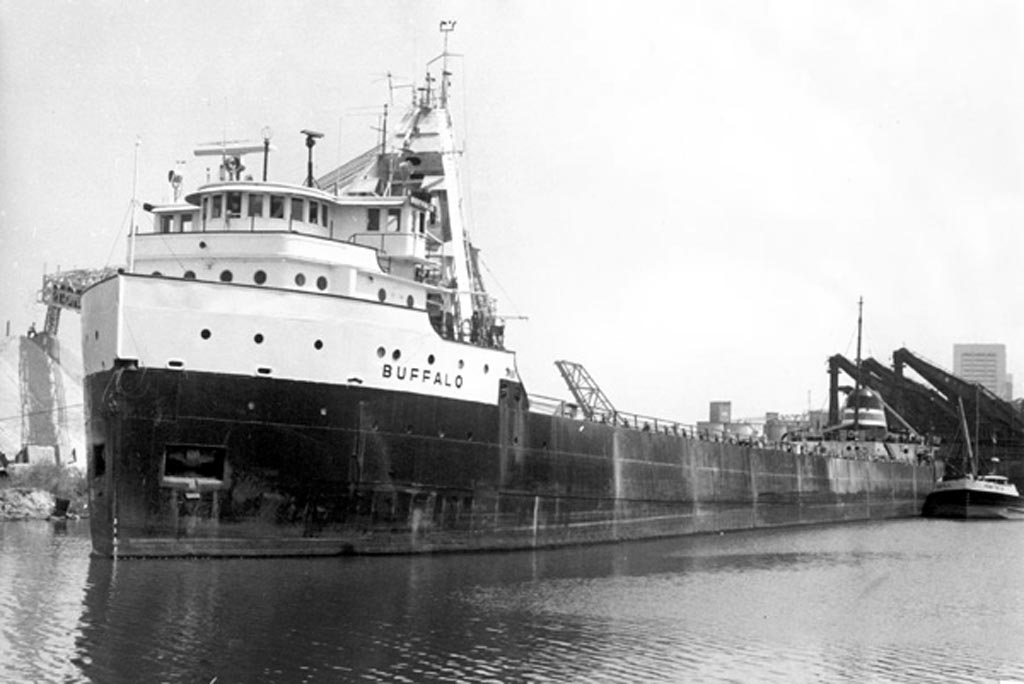
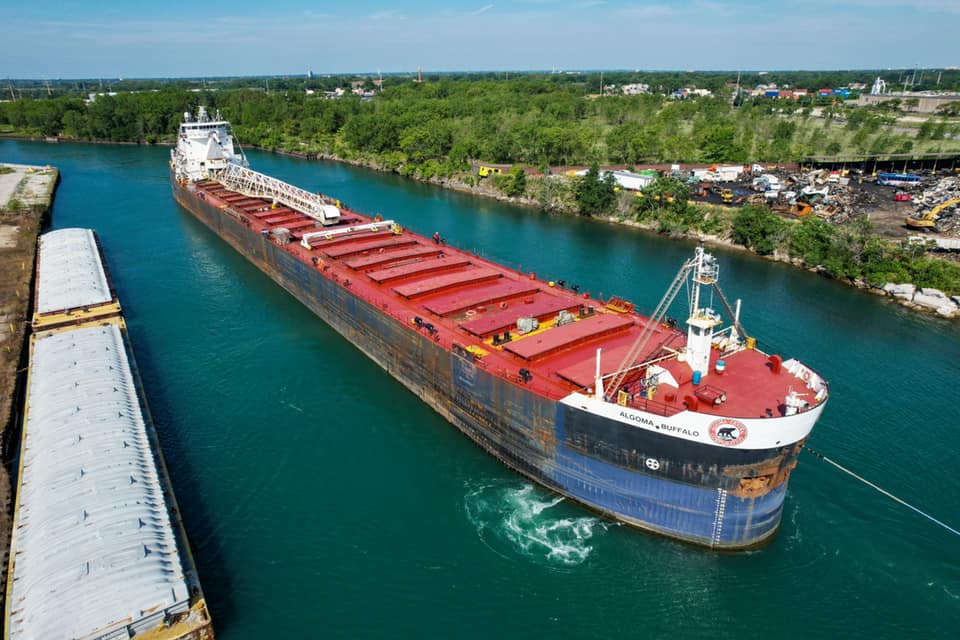
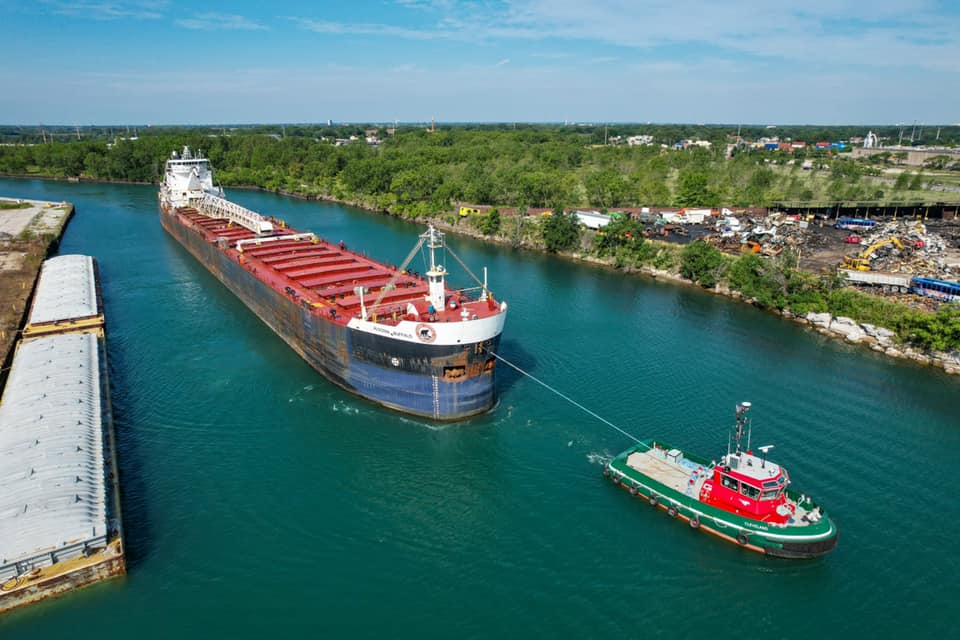
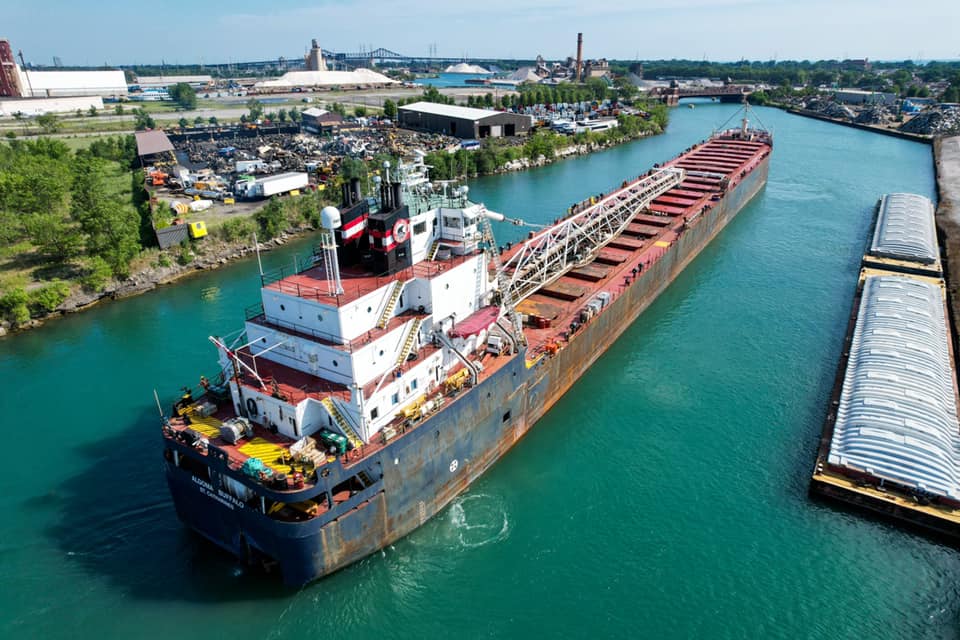
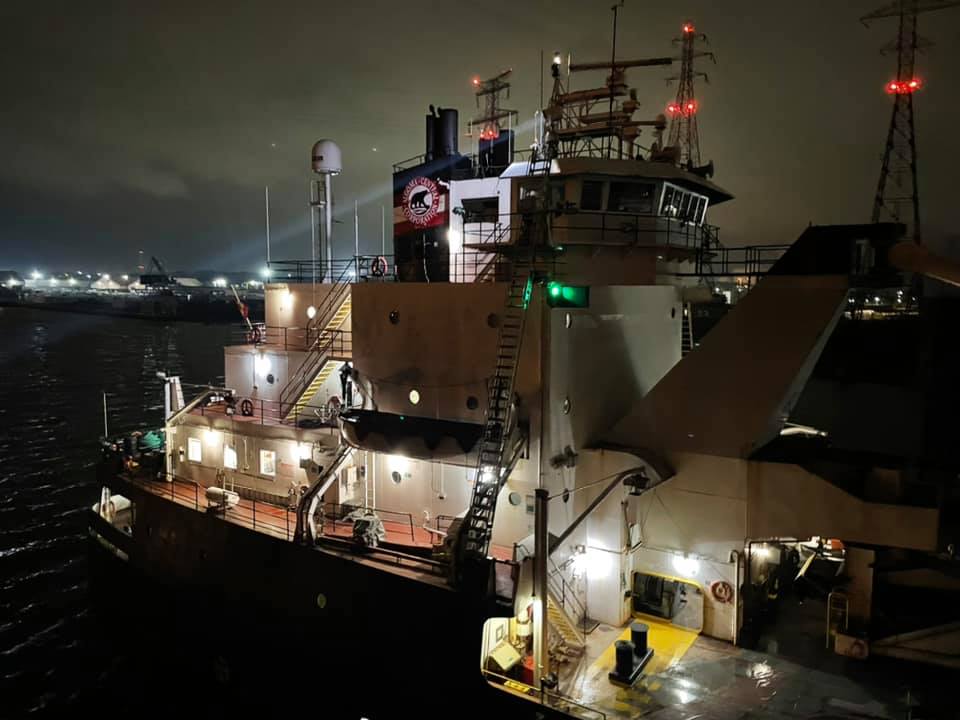
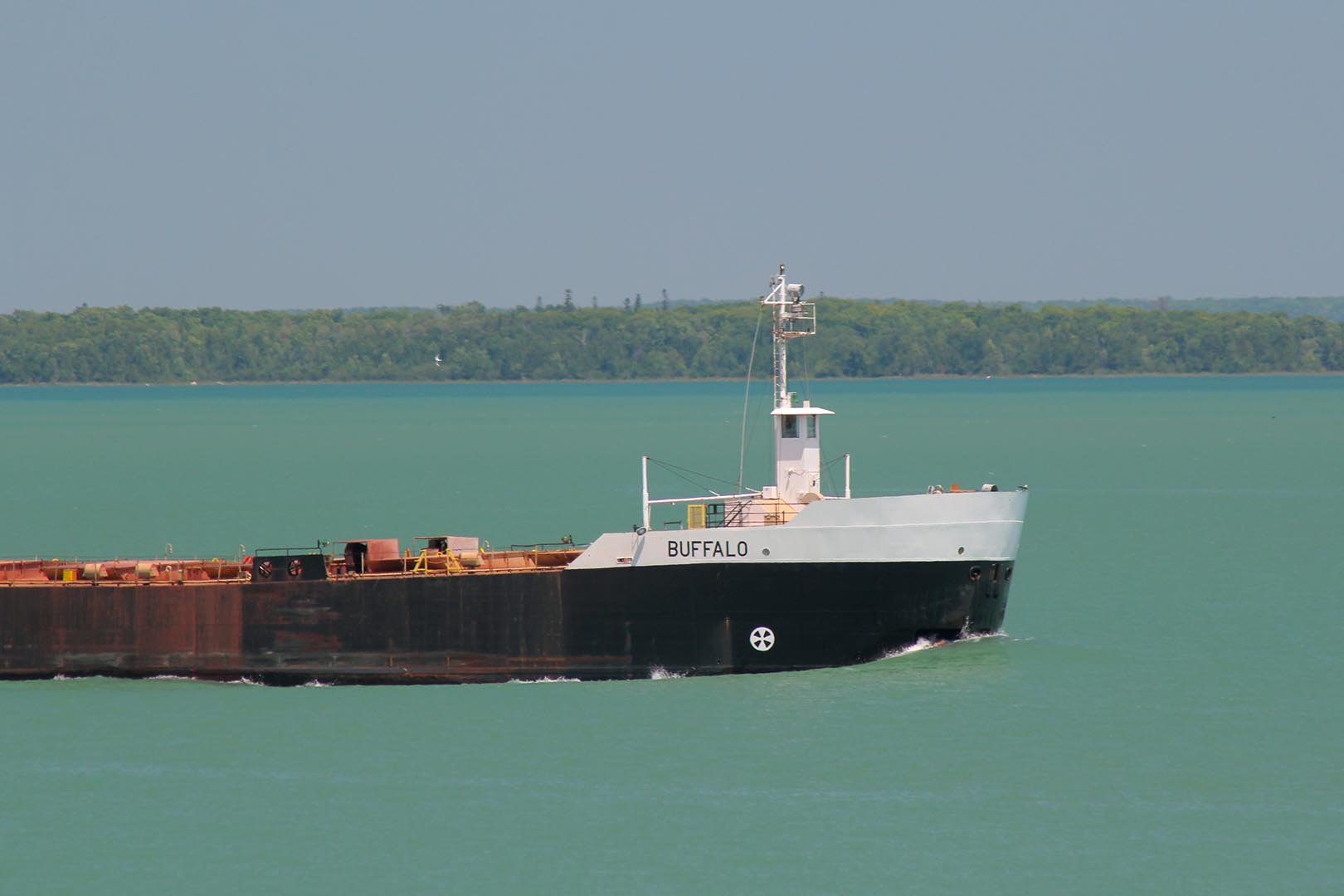
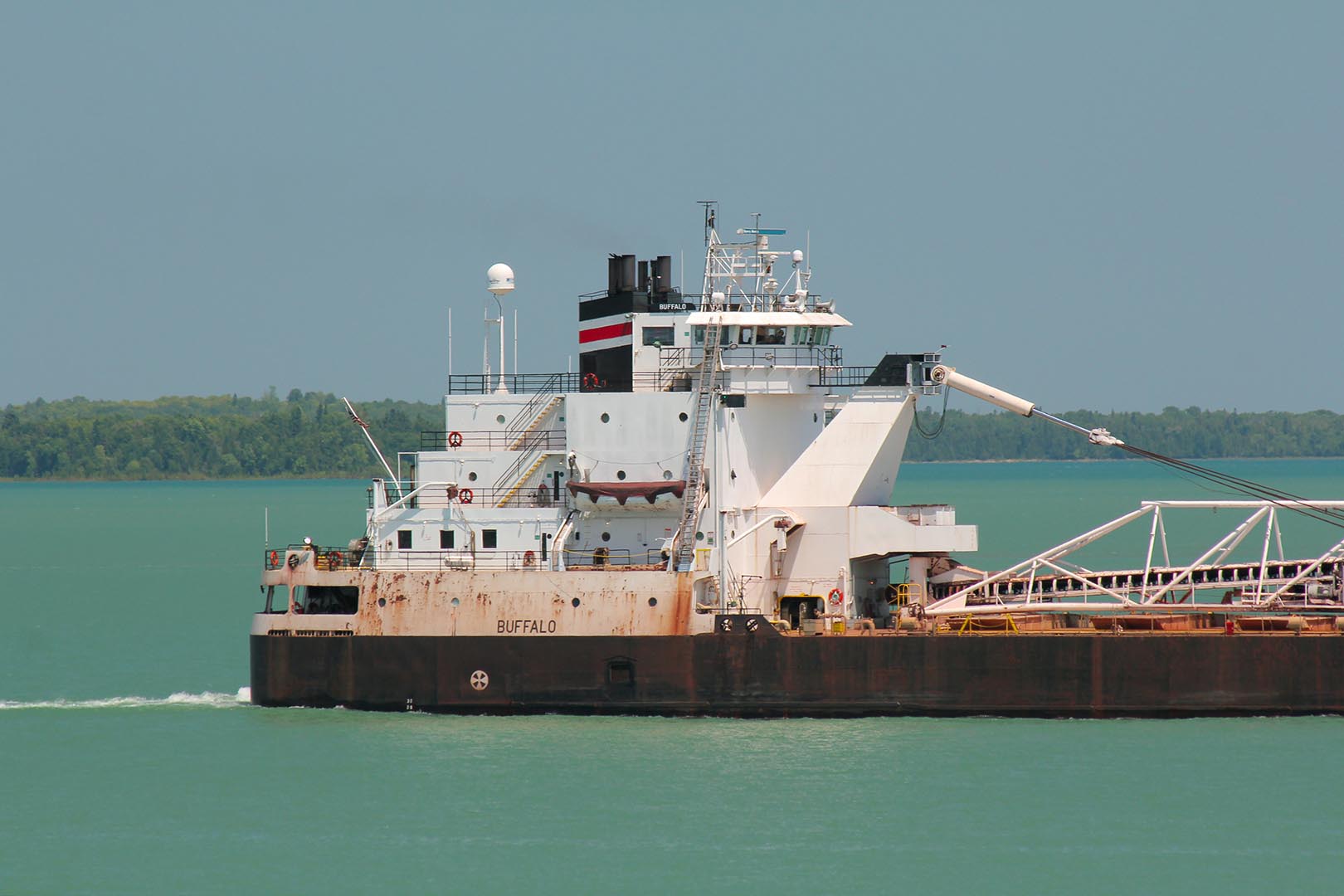
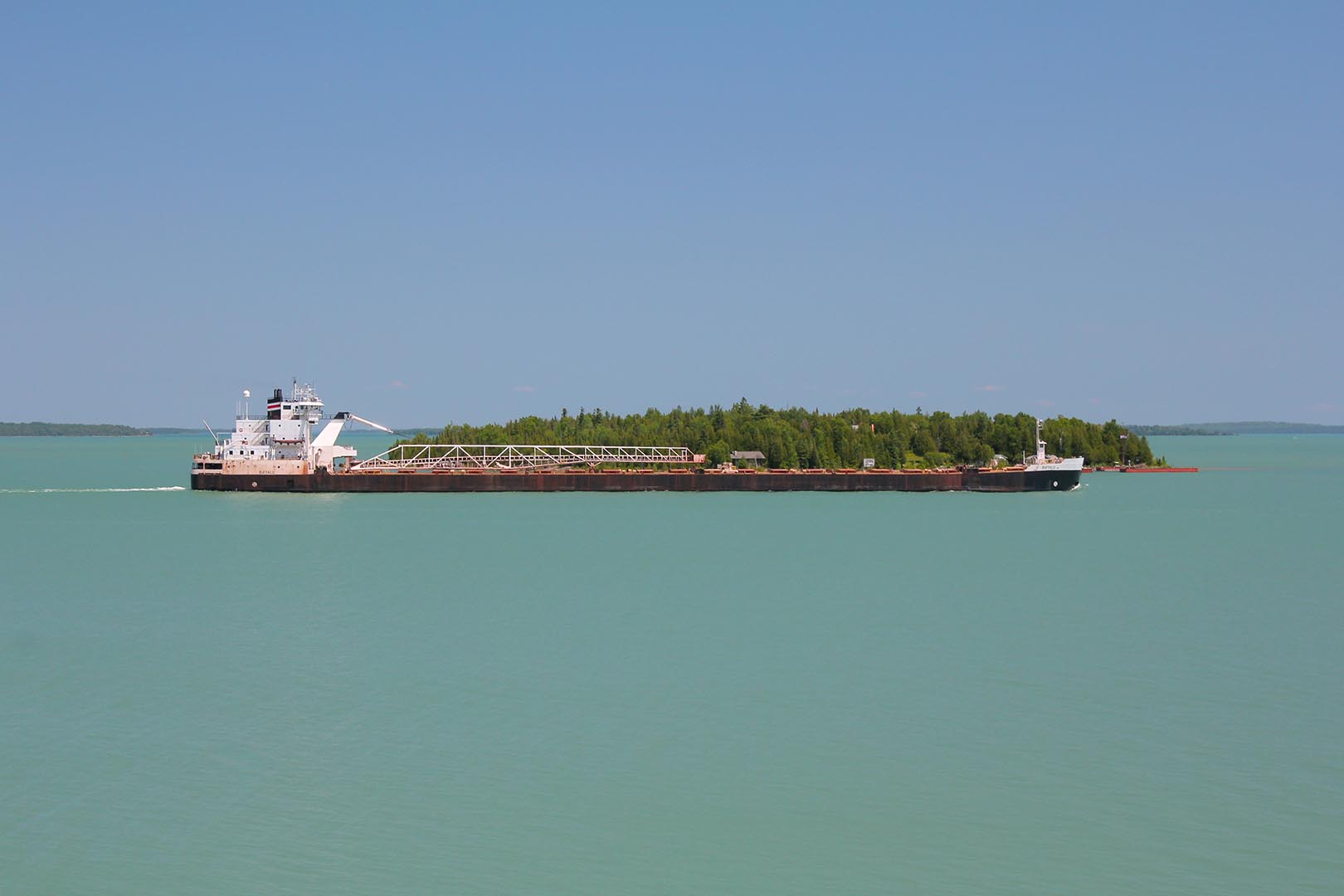
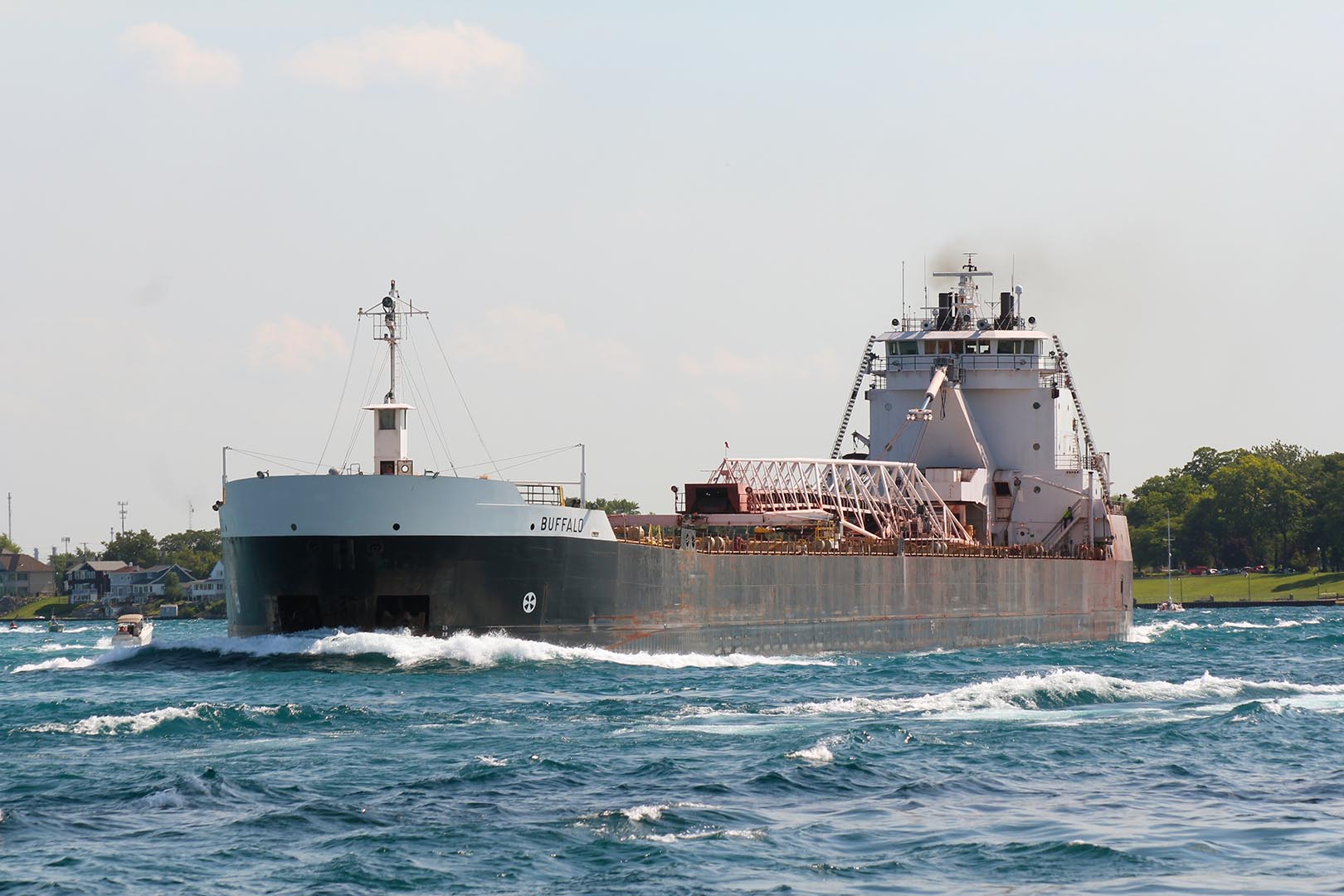
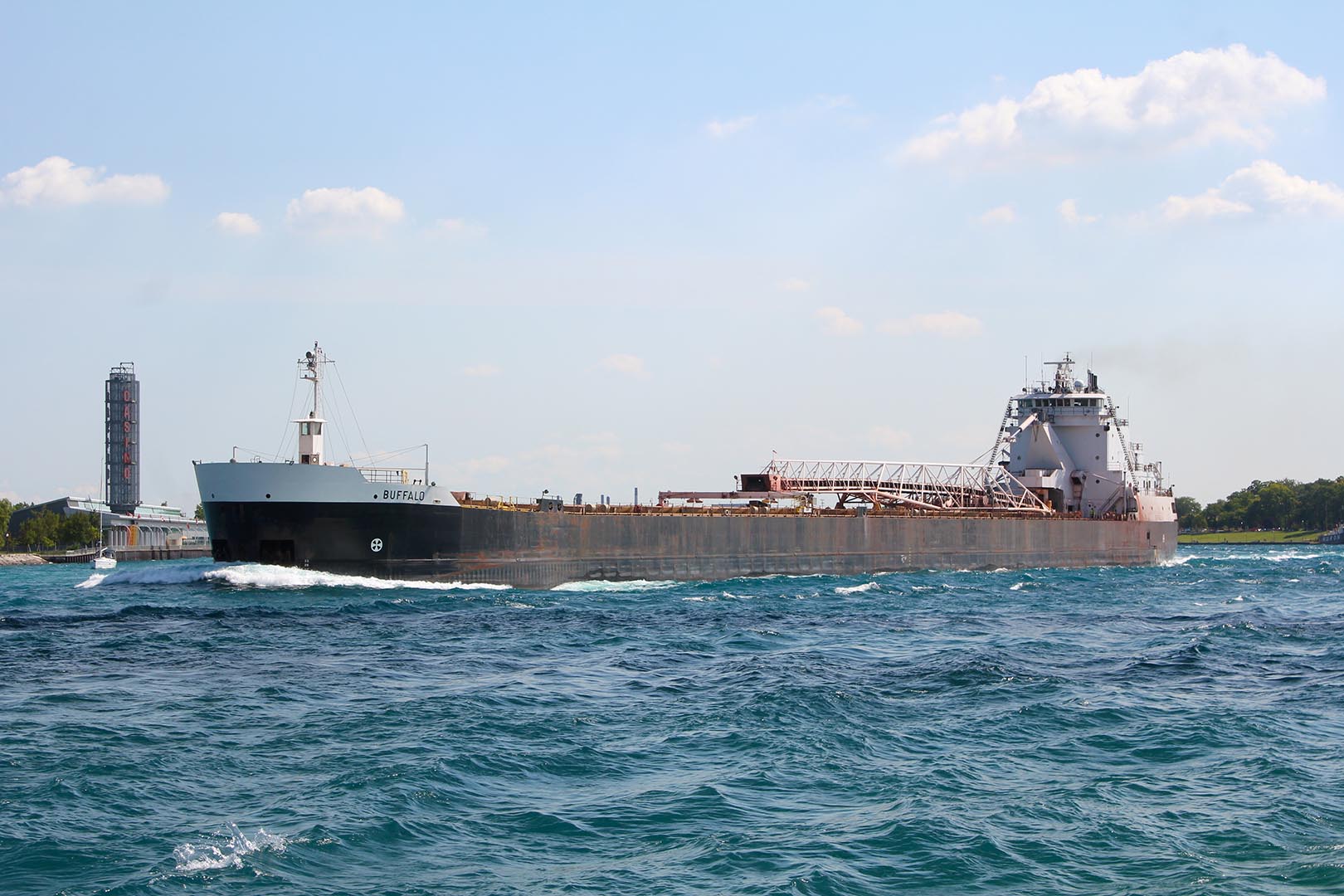
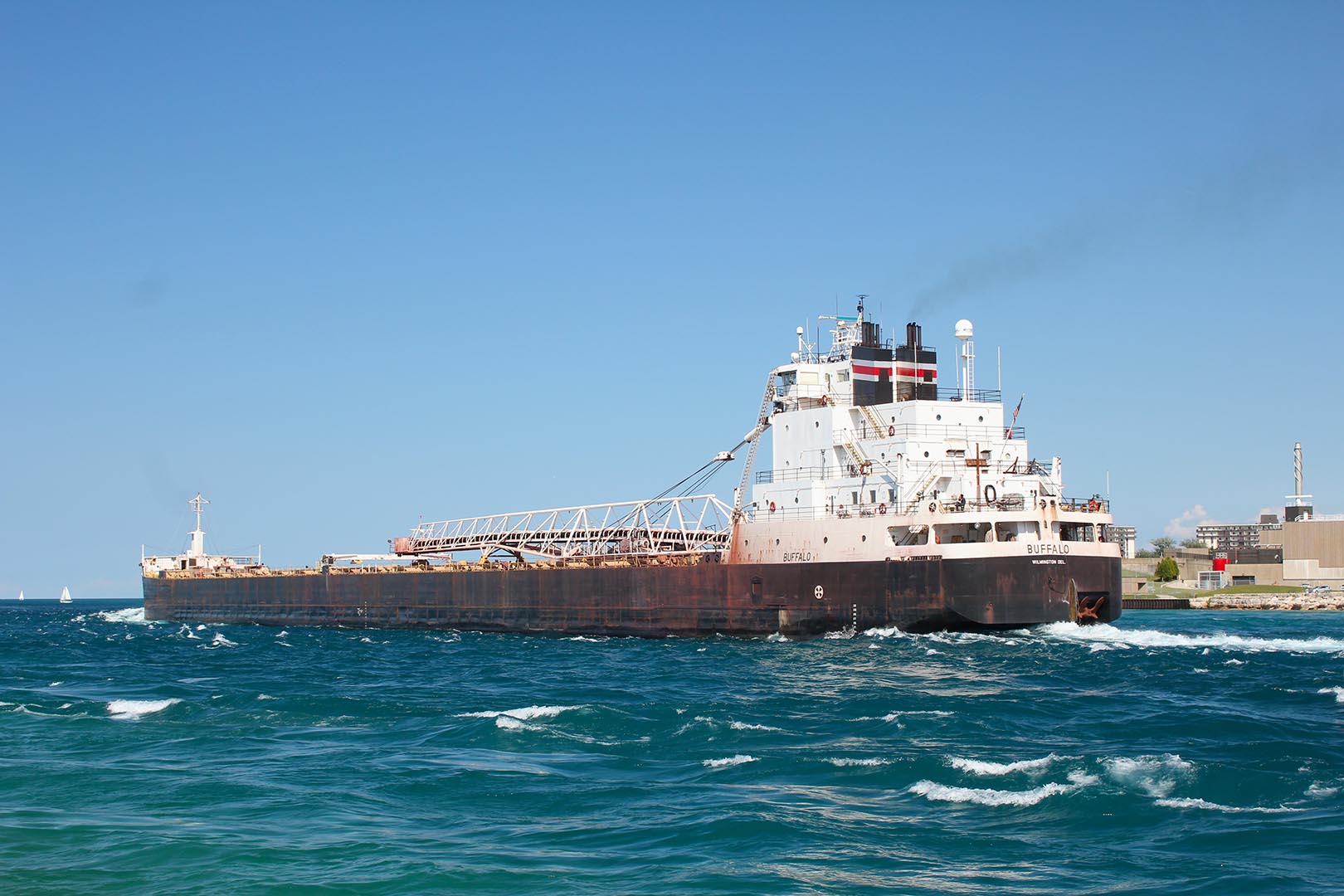
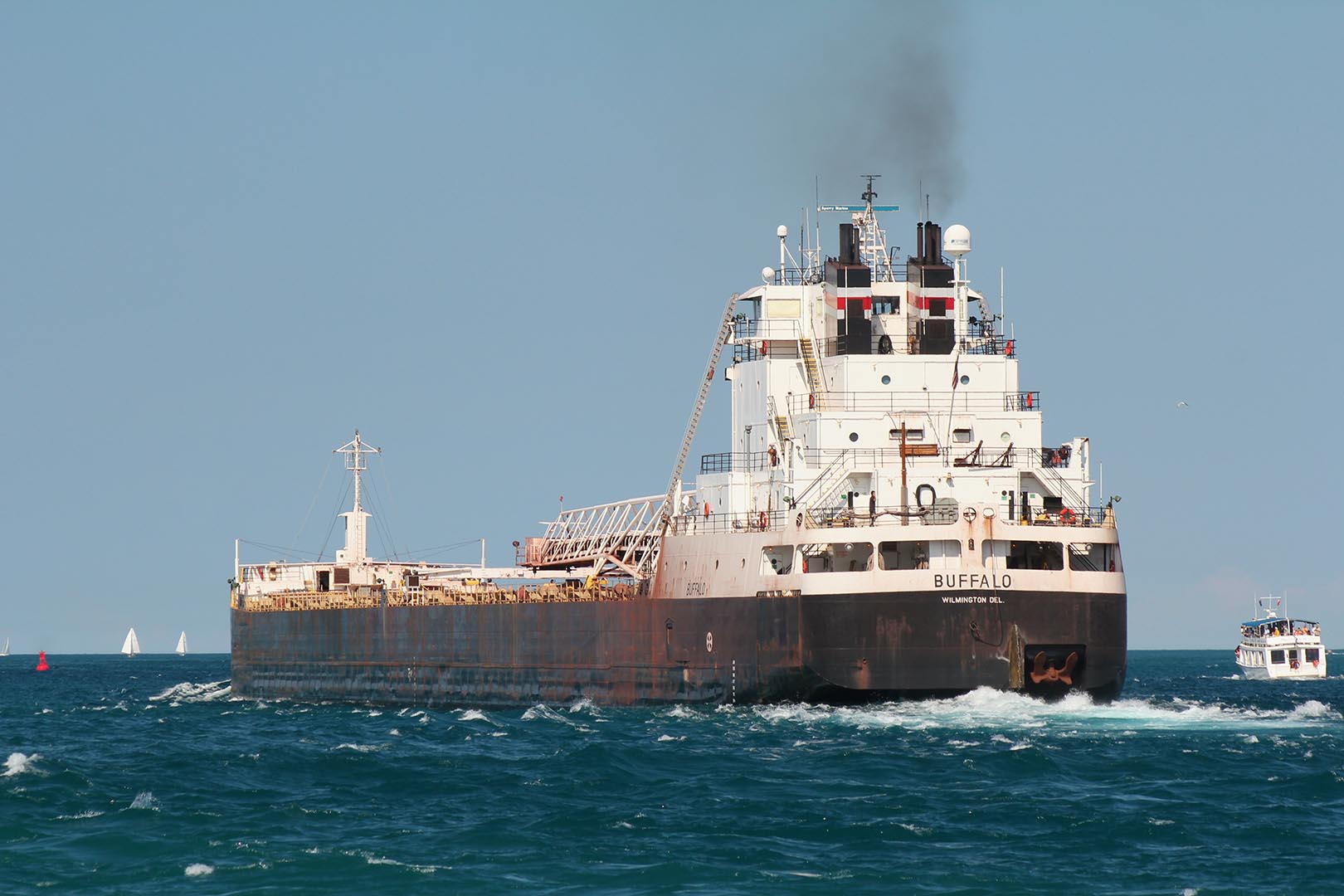
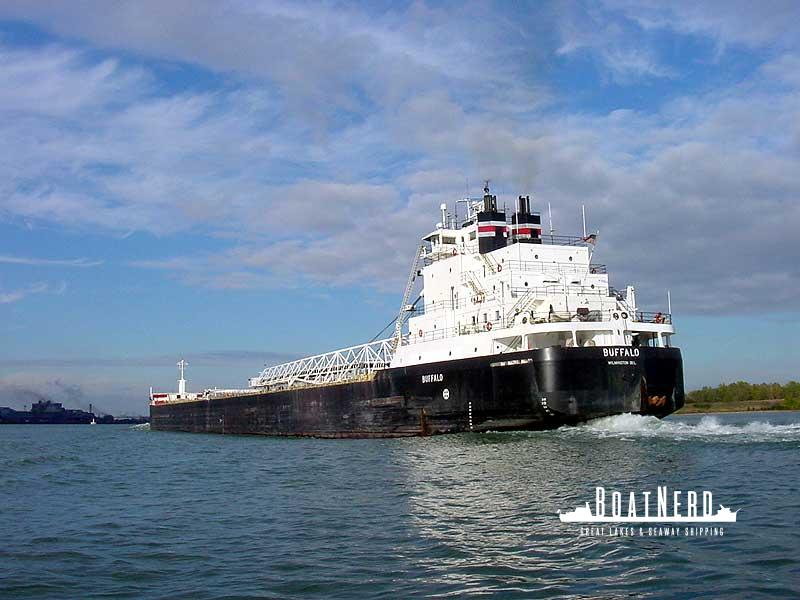
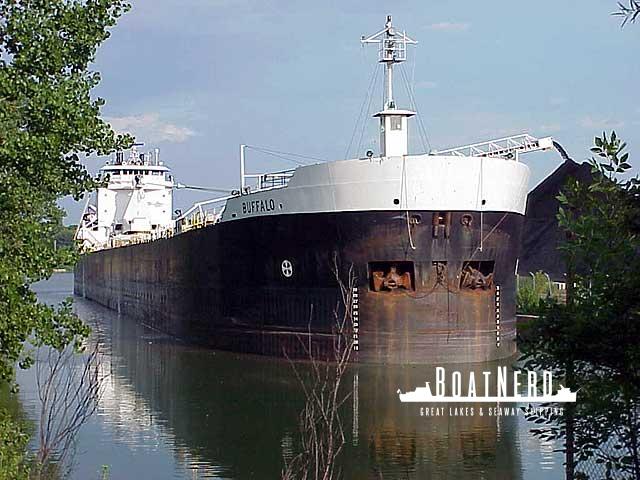
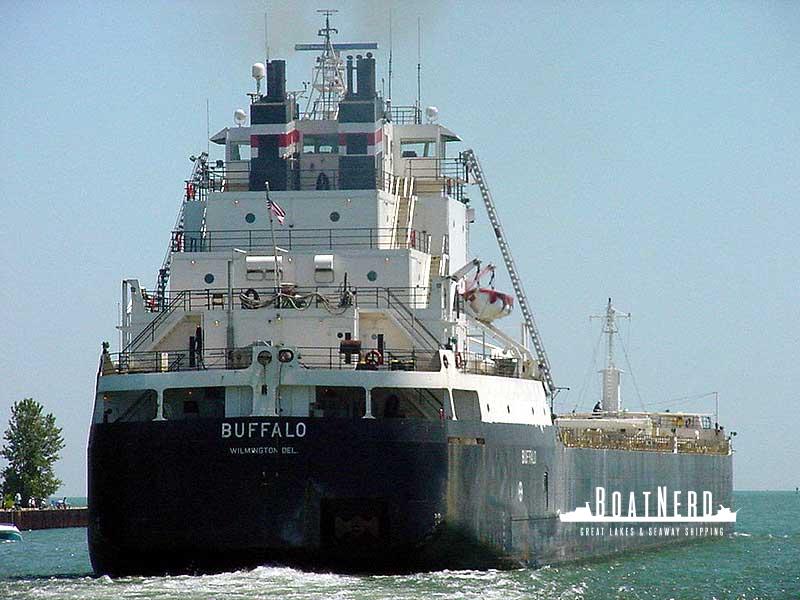
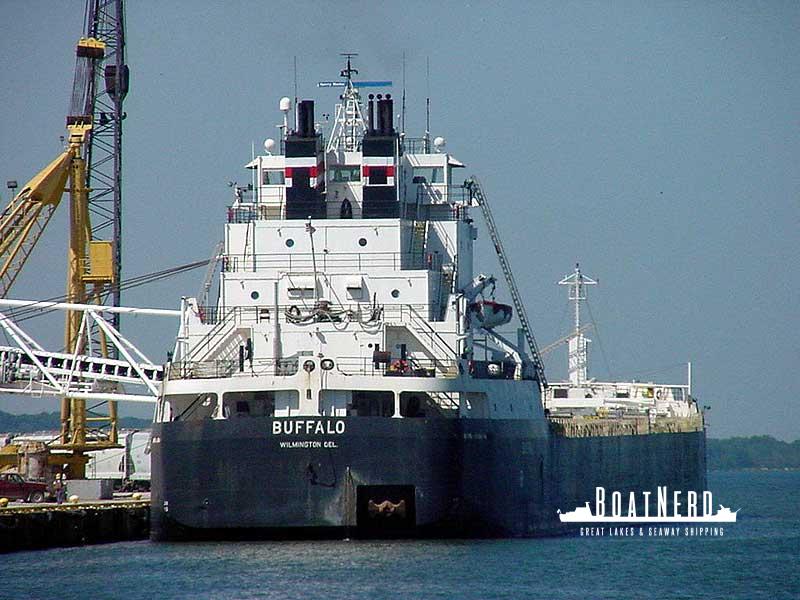
Algoma Buffalo

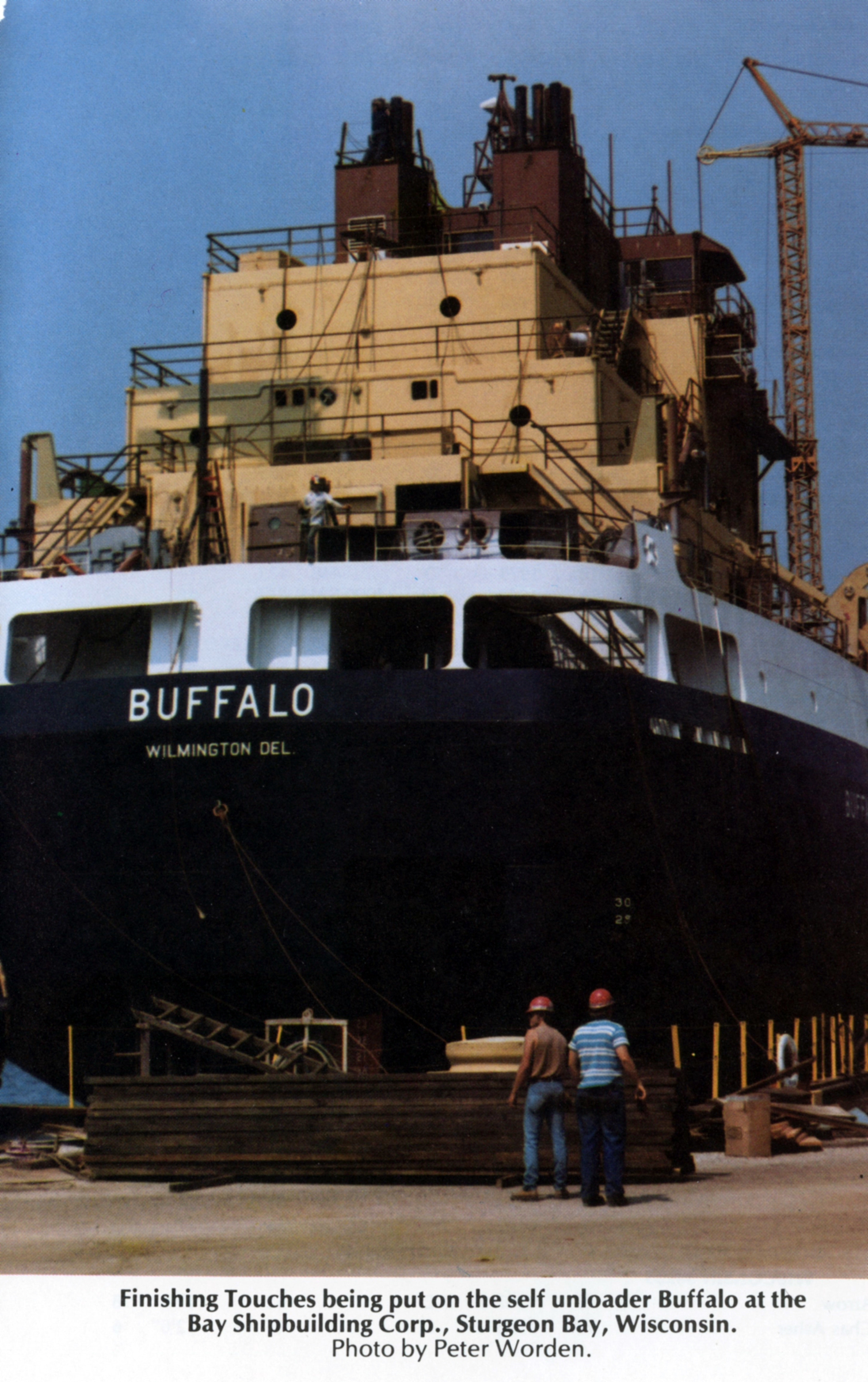
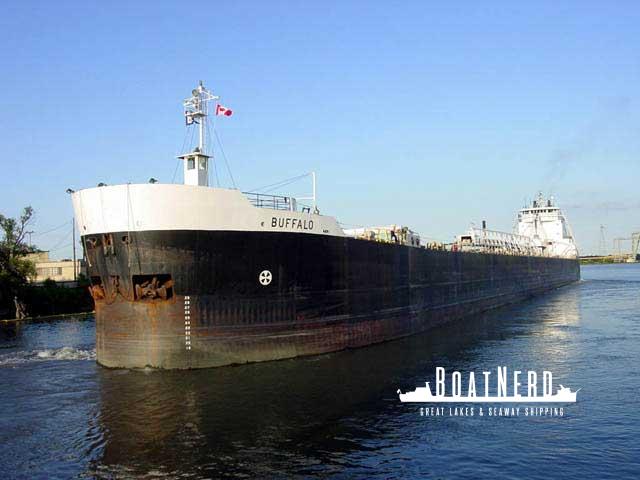
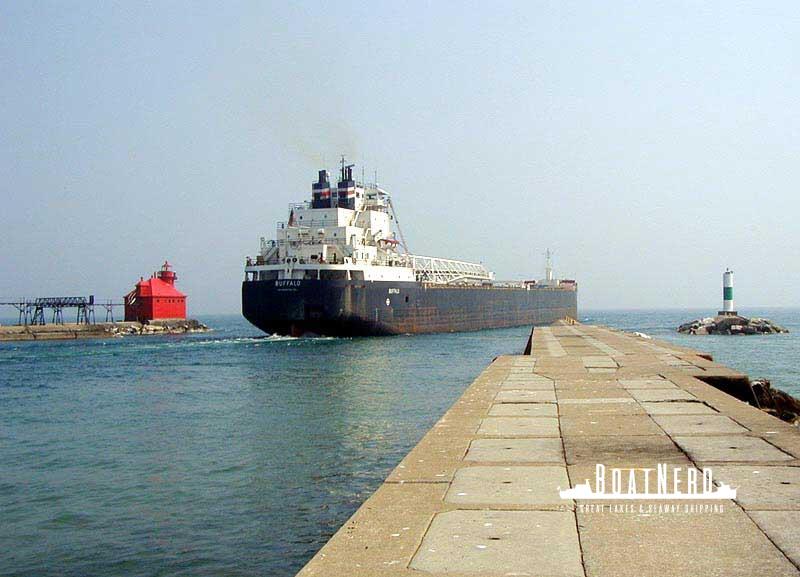
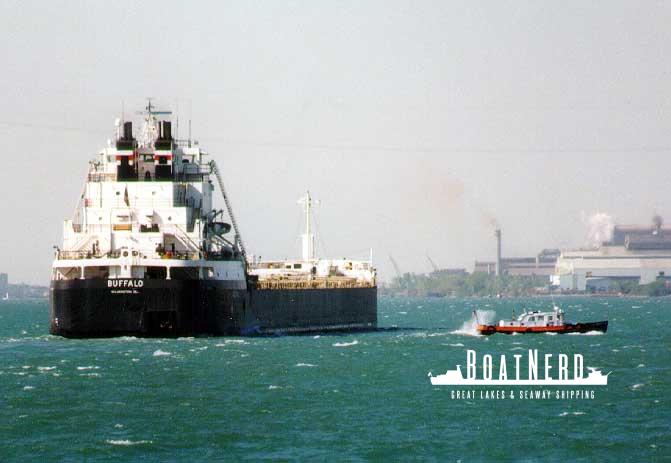
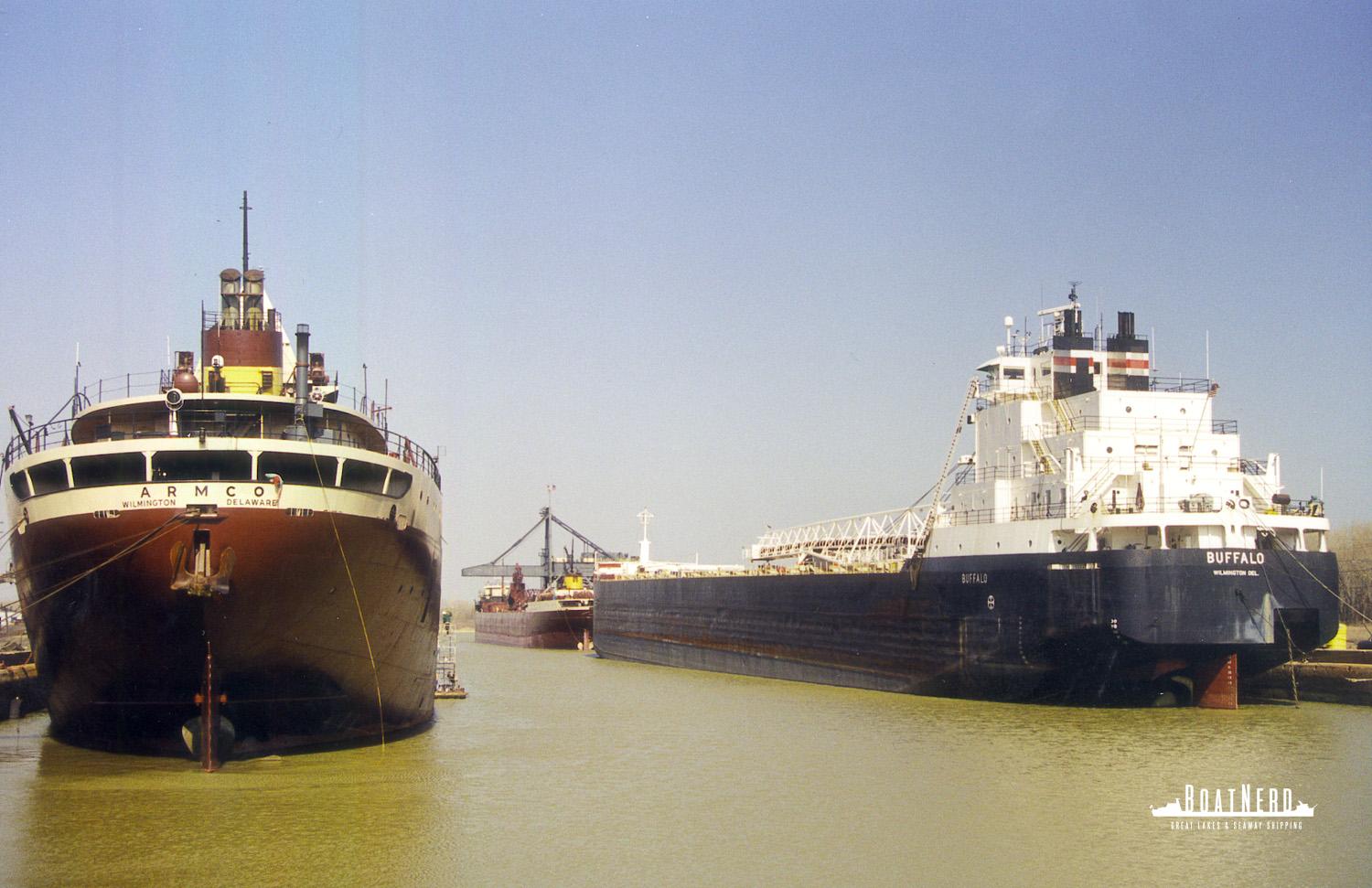
She was launched March 16, 1978 and was christened August 8, 1978. The Buffalo’s sea trials were conducted from August 21 through August 24, 1978. She cleared Sturgeon Bay September 23, 1978 on her maiden voyage to load ore at Escanaba, MI bound for Indiana Harbor.
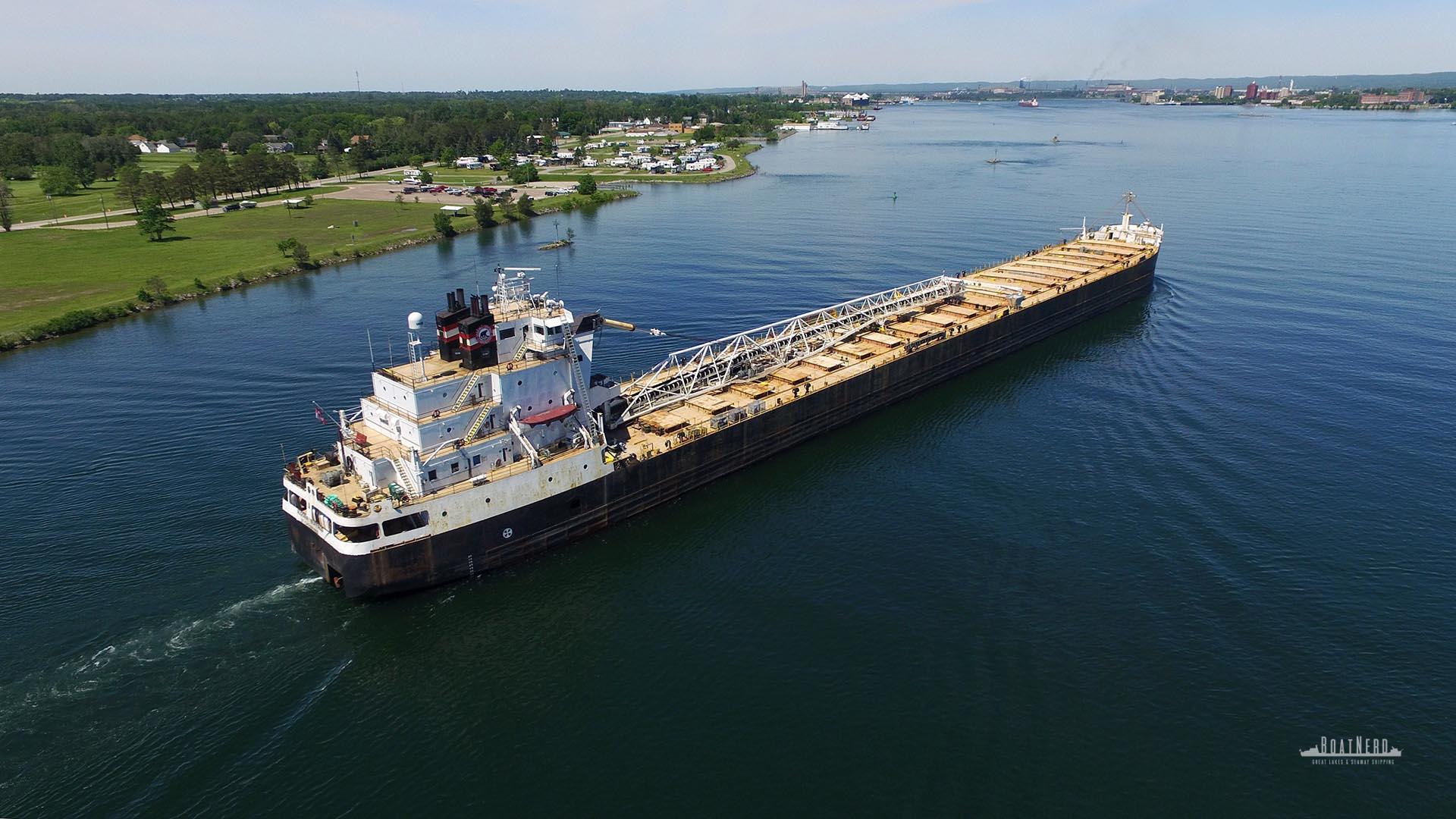
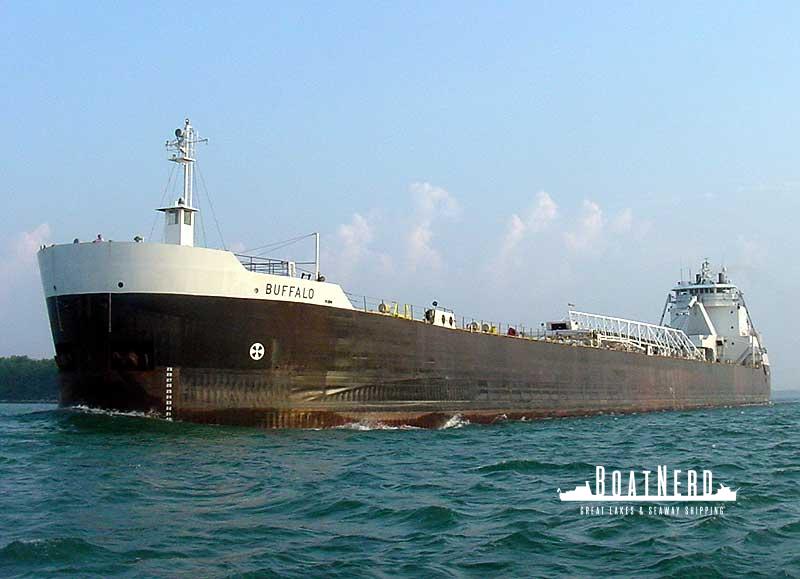
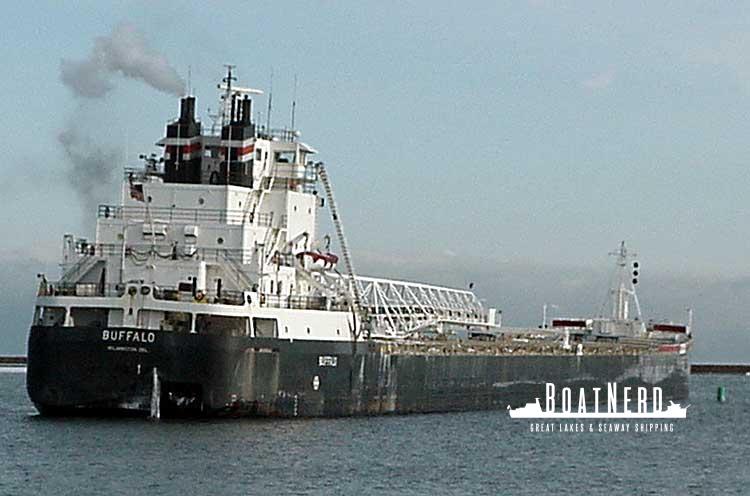
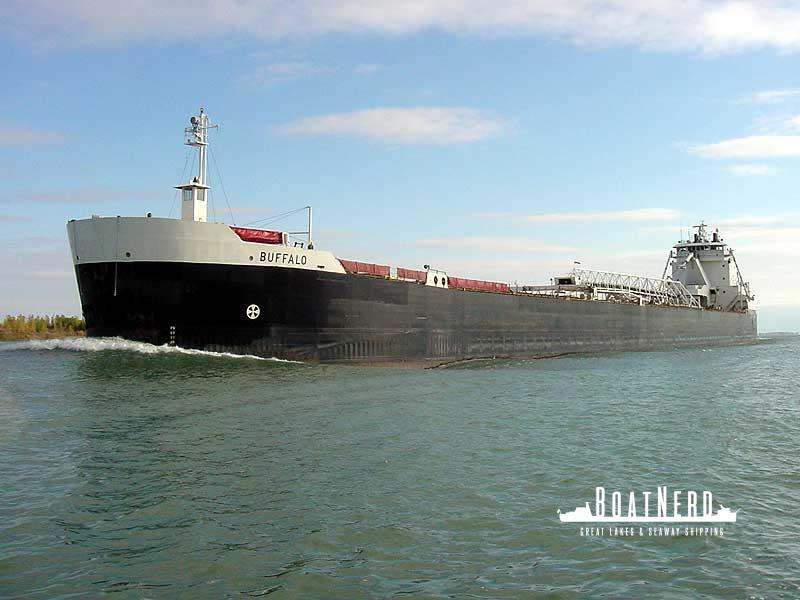
Powered is provided by two 3,600 bhp single acting, two stroke cycle, V-20 cylinder diesel engines, built by the Electro-Motive Division of General Motors Corp., La Grange, IL. Her engines drive a controllable pitch propeller through Falk reduction gears. Her rated service speed is 14 knots (16.1 mph). The Buffalo is equipped with both a bow and stern thruster.
The Buffalo (3) was built under Title XI of the Merchant Marine Act of 1970. This program allowed U.S. shipping companies to construct new vessels or to modernize their existing fleet by government guaranteed financing and tax deferred benefits. The Buffalo was the seventh of ten ships launched for American Steamship under this program. The total cost of the ten ships was more than $250 million. The ten ships were the: Roger Kyes (1973), Charles E. Wilson (1973), H. Lee White (1974), Sam Laud (1975), St. Clair (1976), Belle River (1977), Buffalo (1978), Indiana Harbor (1979), American Mariner (1980) and the American Republic (1981).
On Sunday morning September 6, 1990 at approximately 0800, the Buffalo, traveling upstream on the Saginaw River, passed the Jupiter which was unloading gasoline at the Total Petroleum dock near Bay City, MI. The ship’s passing caused a suction which pulled the Jupiter away from the dock. The aft pilings subsequently broke away and the parting fuel lines caused a spark which resulted in a fire which totally destroyed the tanker. One of the Jupiter’s crew was lost overboard. The U.S. Coast Guard report linked the Buffalo as one of a series of events that led to the disaster but was not the sole cause. The Buffalo was trapped upstream until October 19th when the river was reopened to traffic.
In late 1997 the Buffalo struck the Detroit River Light, located in Lake Erie that marks the entrance into the Detroit River. It was headed from Detroit to Cleveland at the time of the collision in weather conditions reported as clear with waves measuring two to three feet.
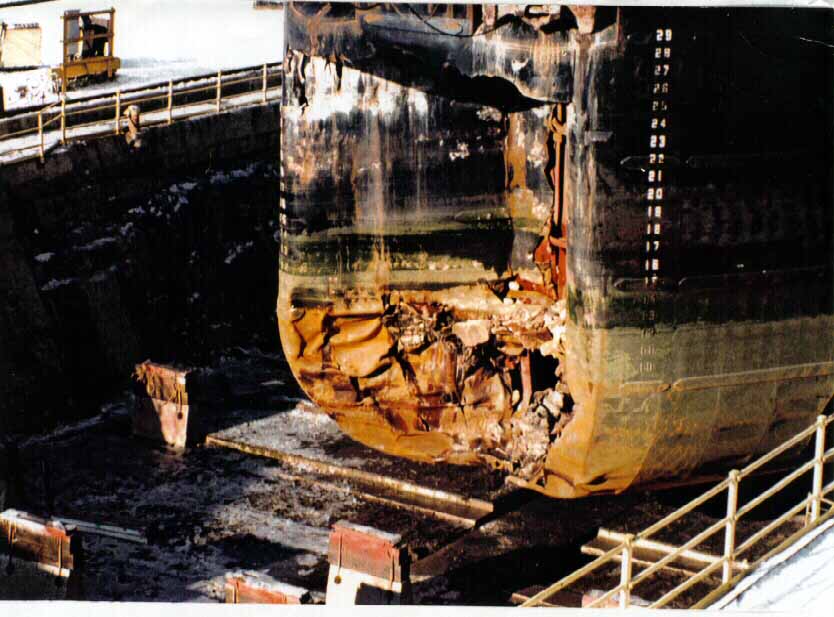
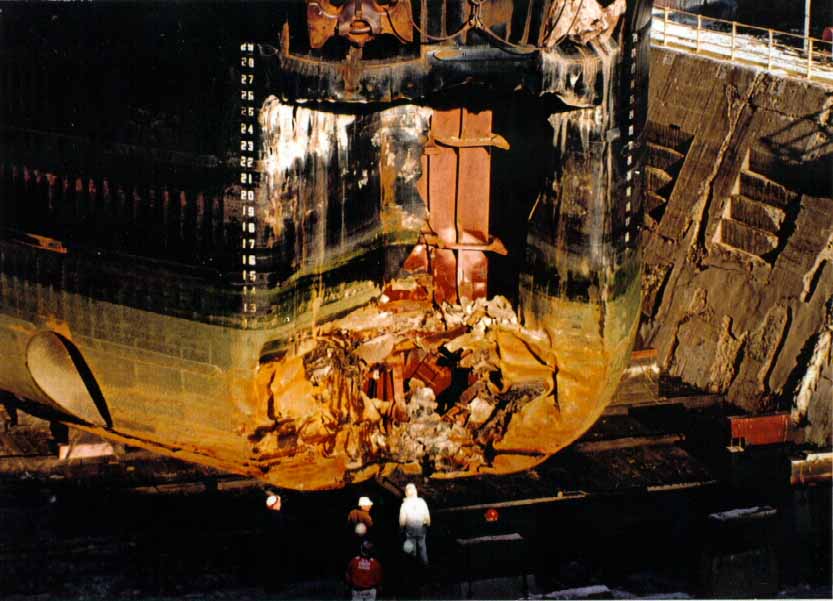
The collision ripped a 25 foot gash across the bow of the freighter which took on water, but was considered seaworthy enough to proceed to the CSX coal dock in Toledo. Damage to the lighthouse was minimal, involving only the structure’s rock and stone foundation.
The Buffalo was sent for repairs at the Toledo ship yard. Once in dry dock the full extent of the damage was reveled, the bow had been pushed in like tin can. In the subsequent Coast Guard Investigation the accident would be blamed on human error.
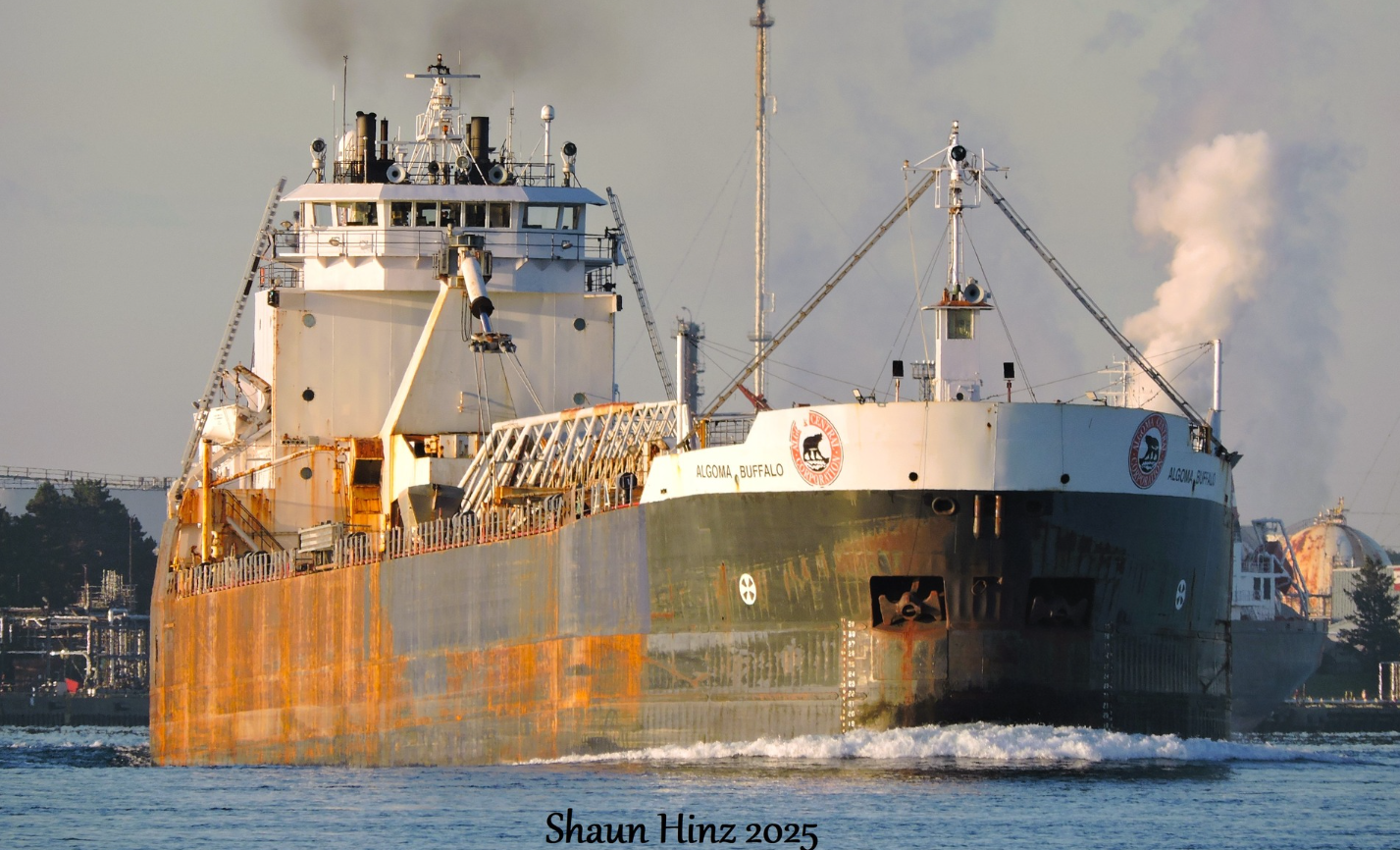
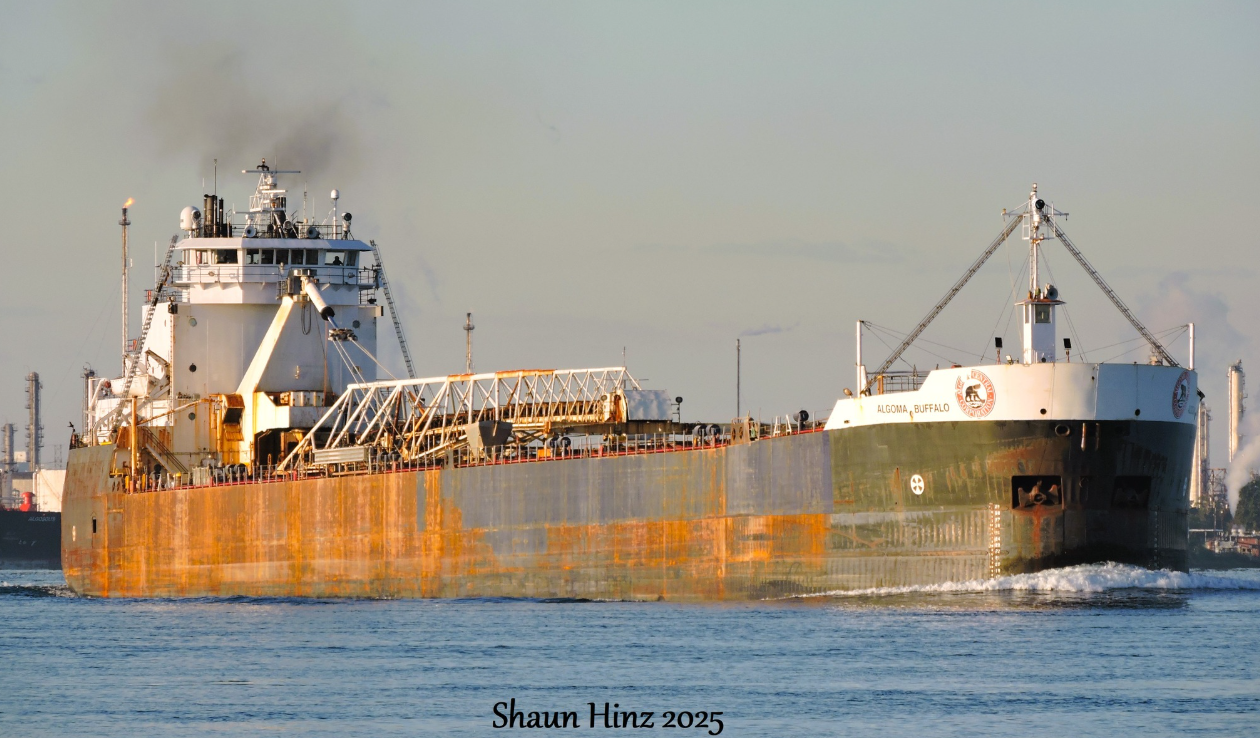
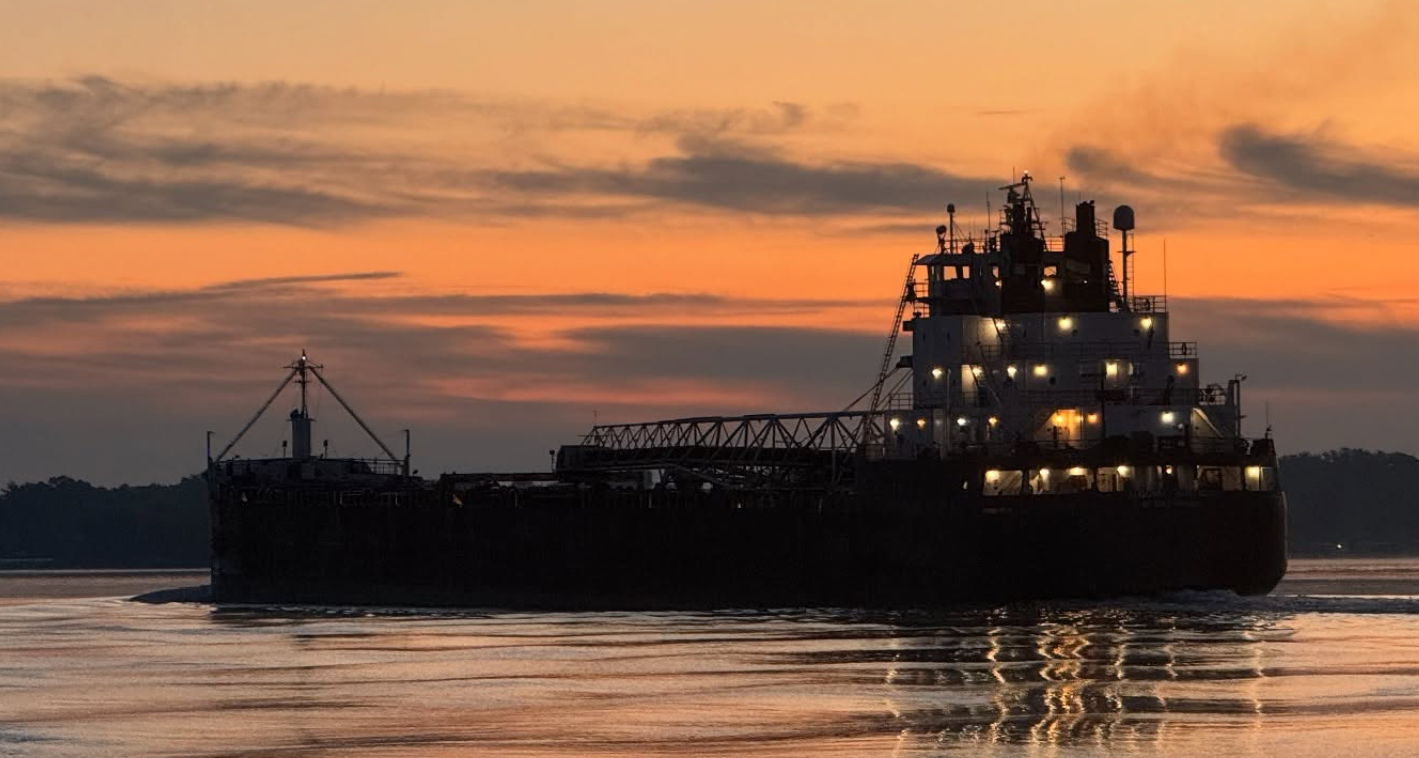
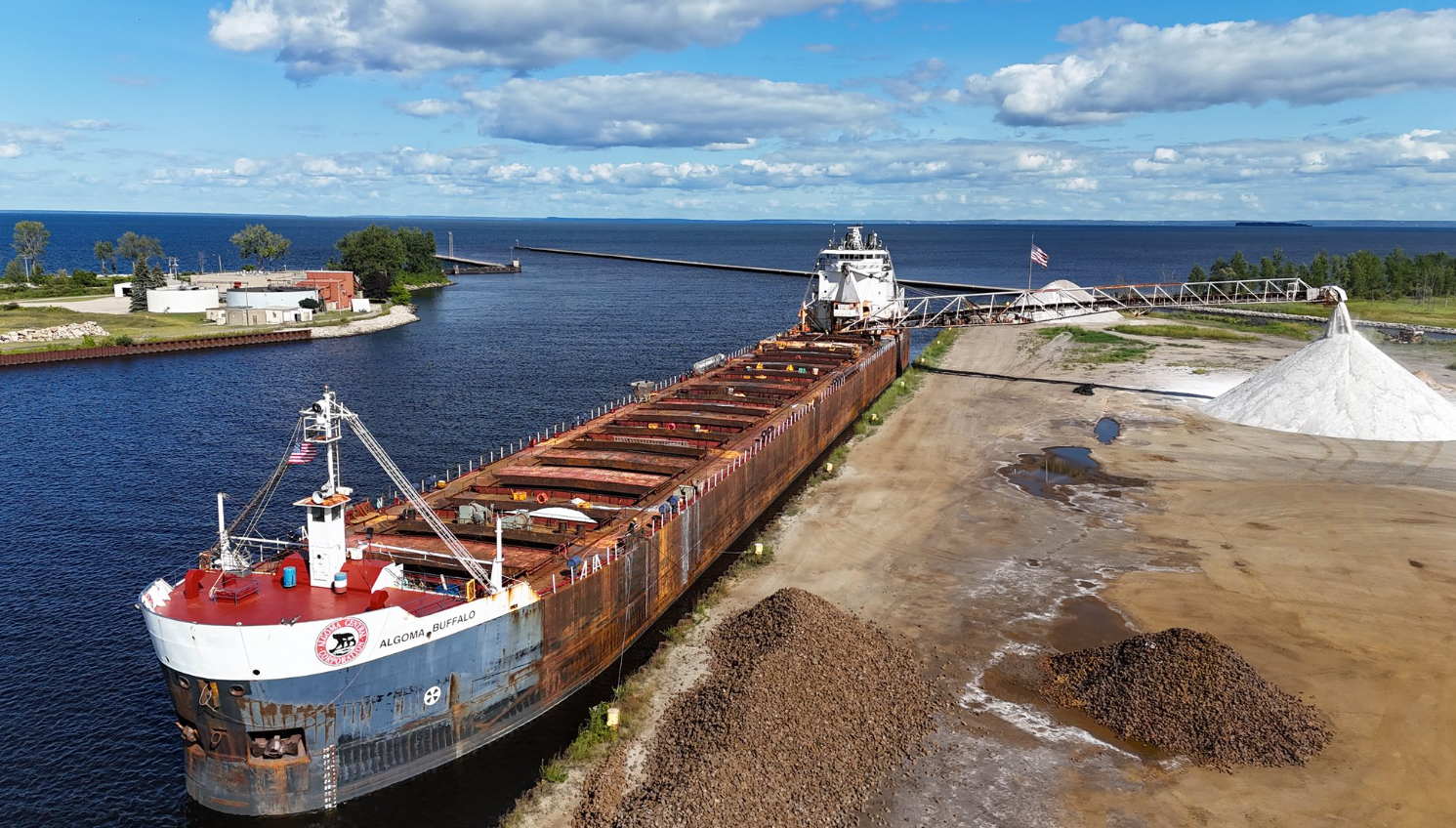
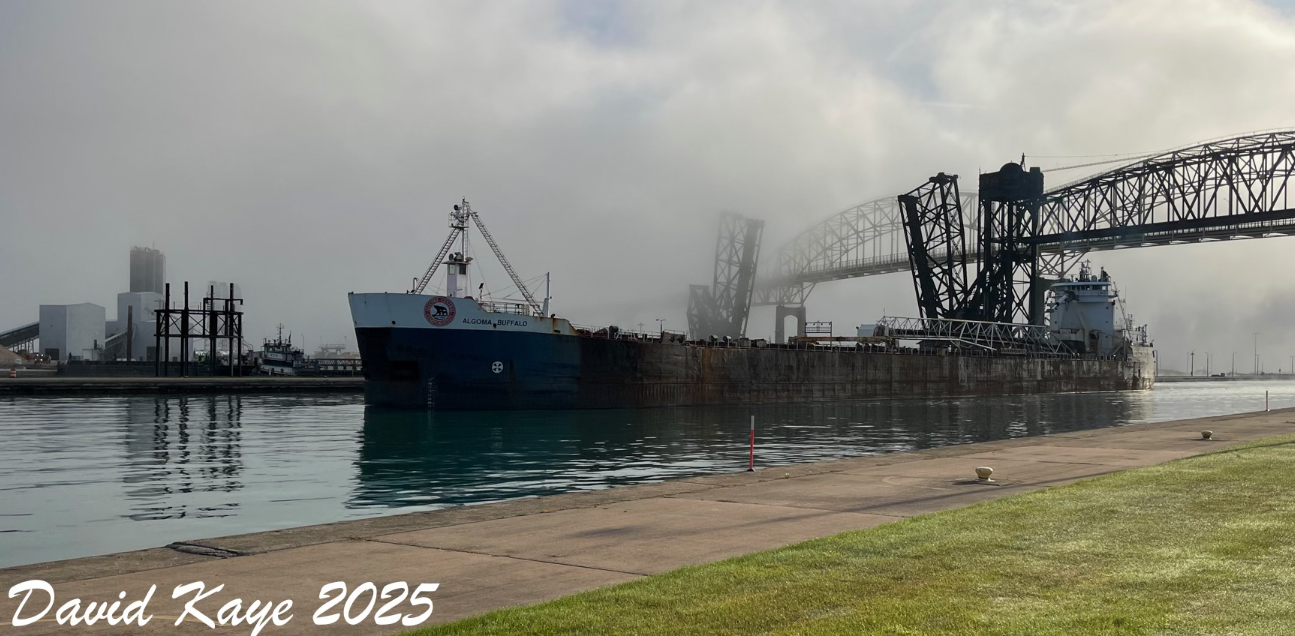
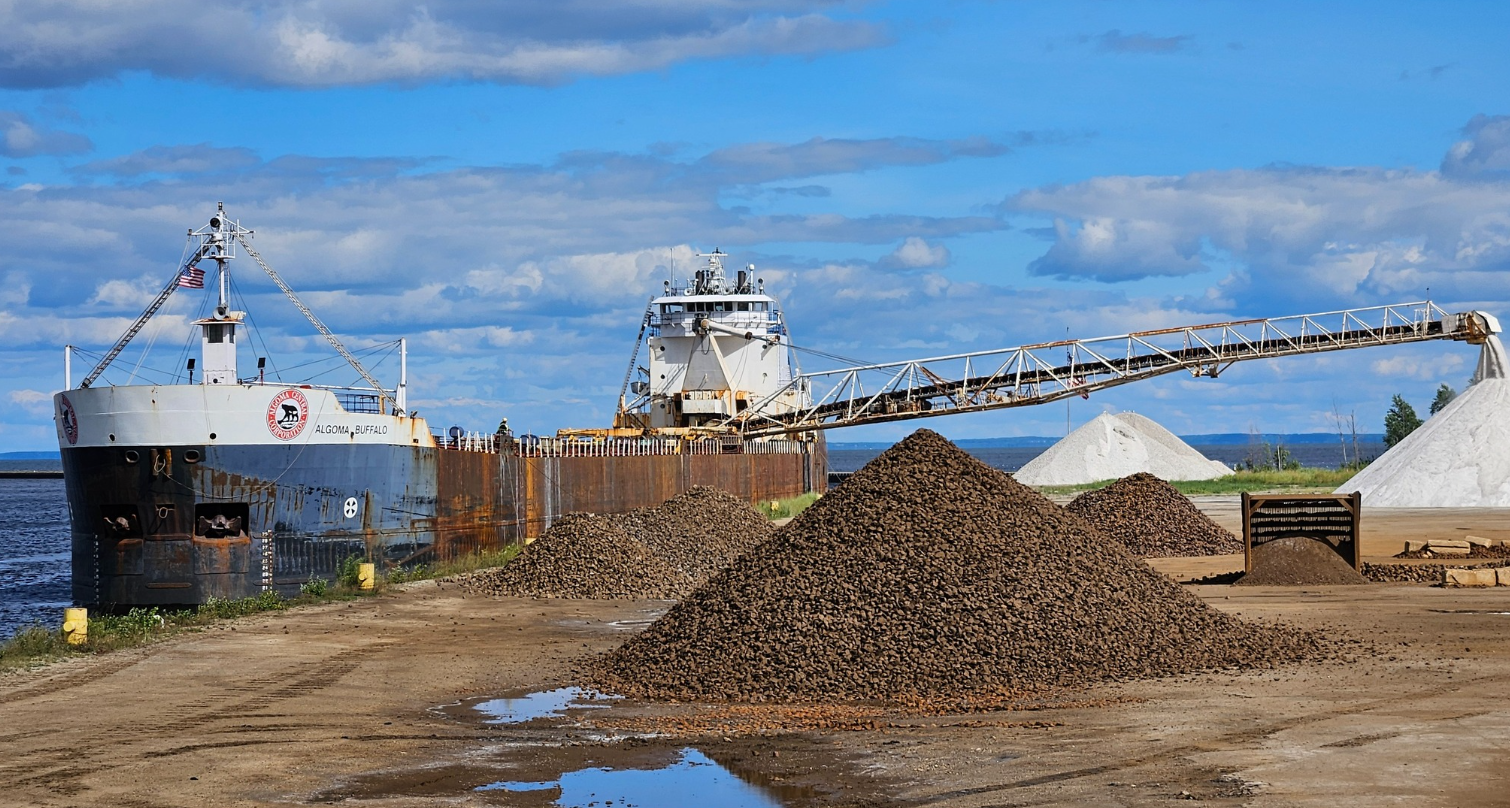
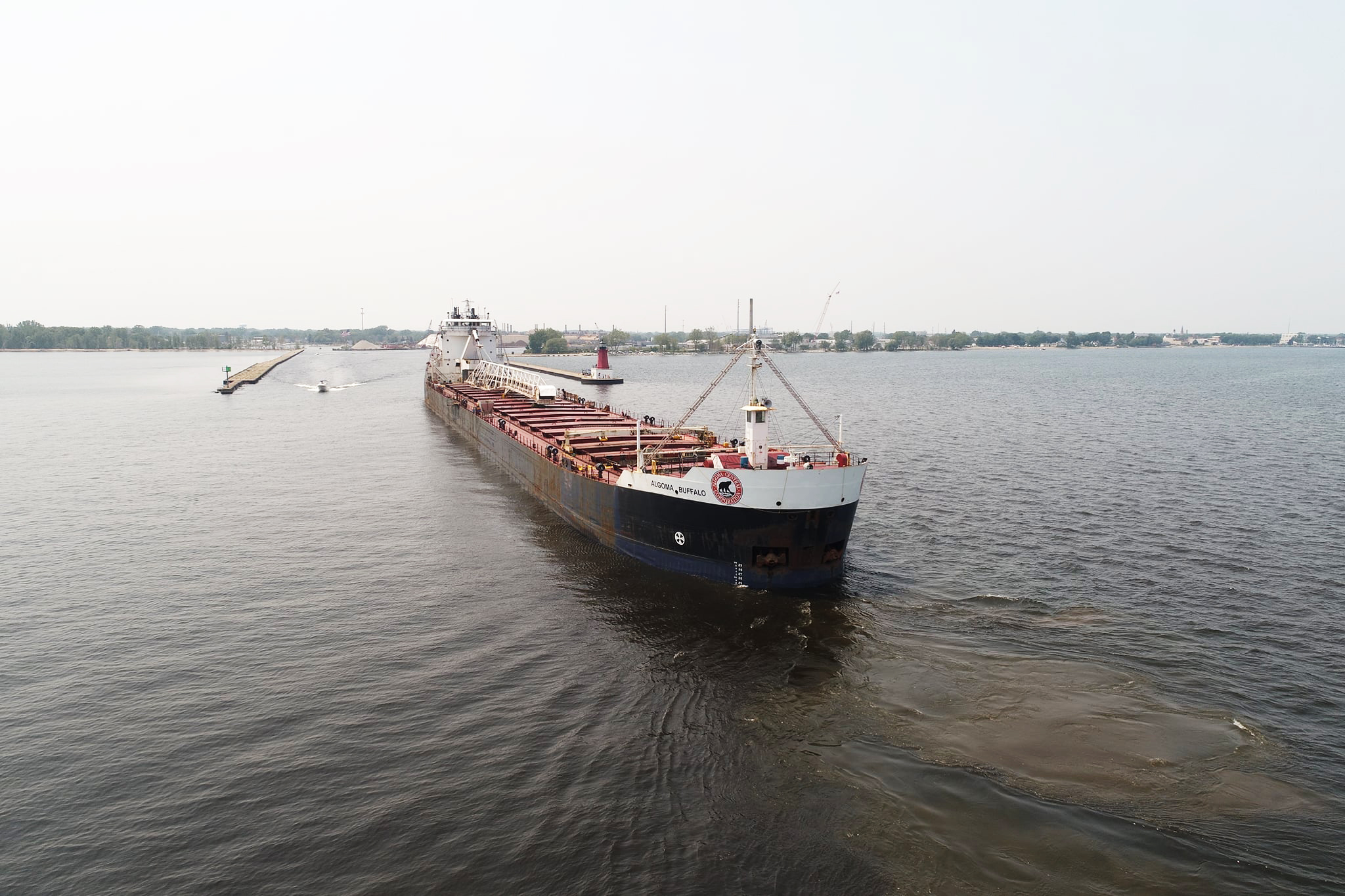
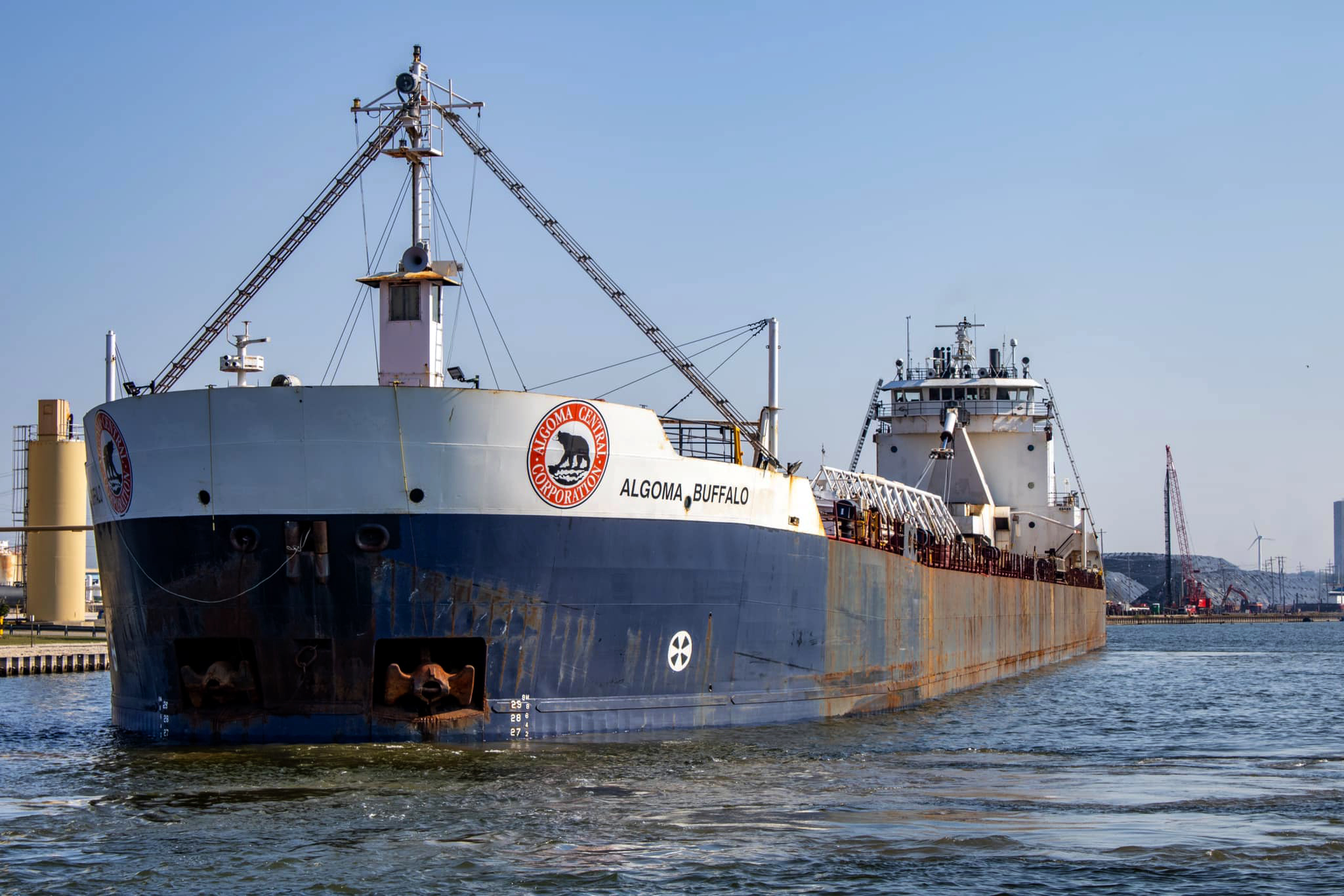
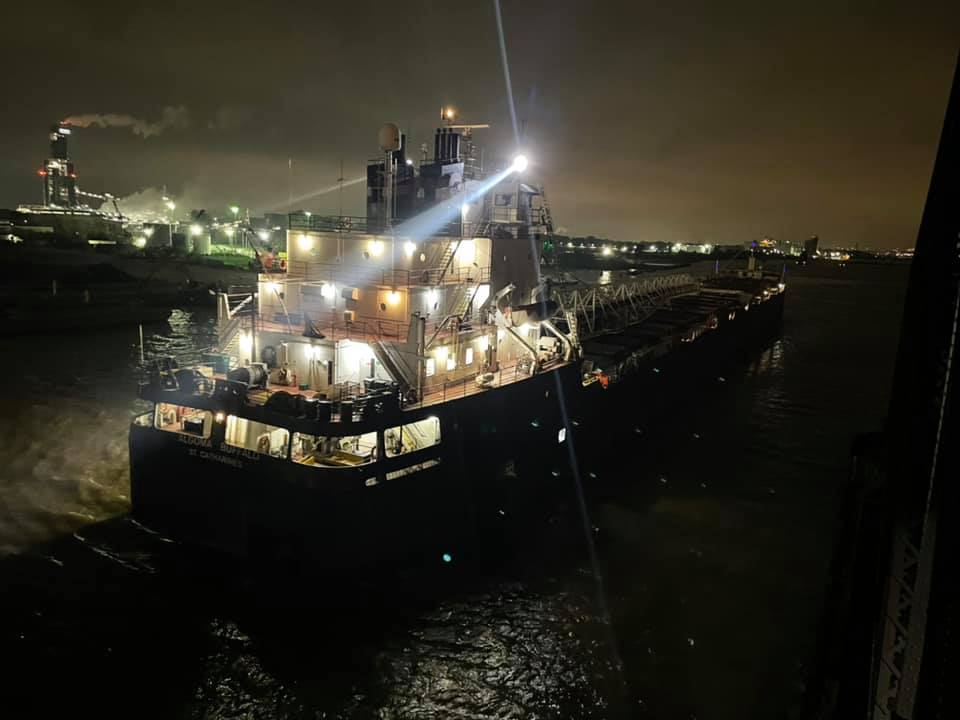
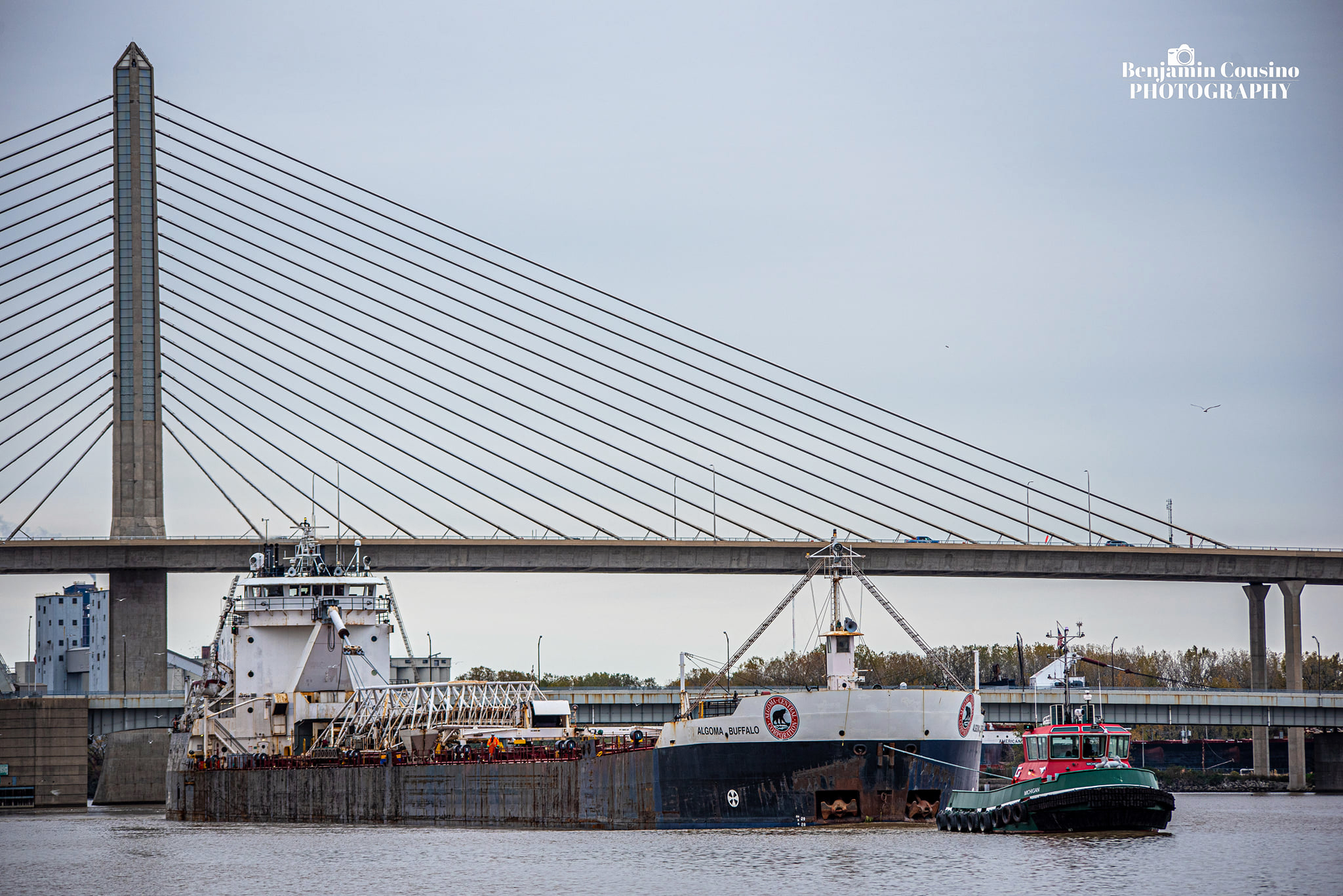
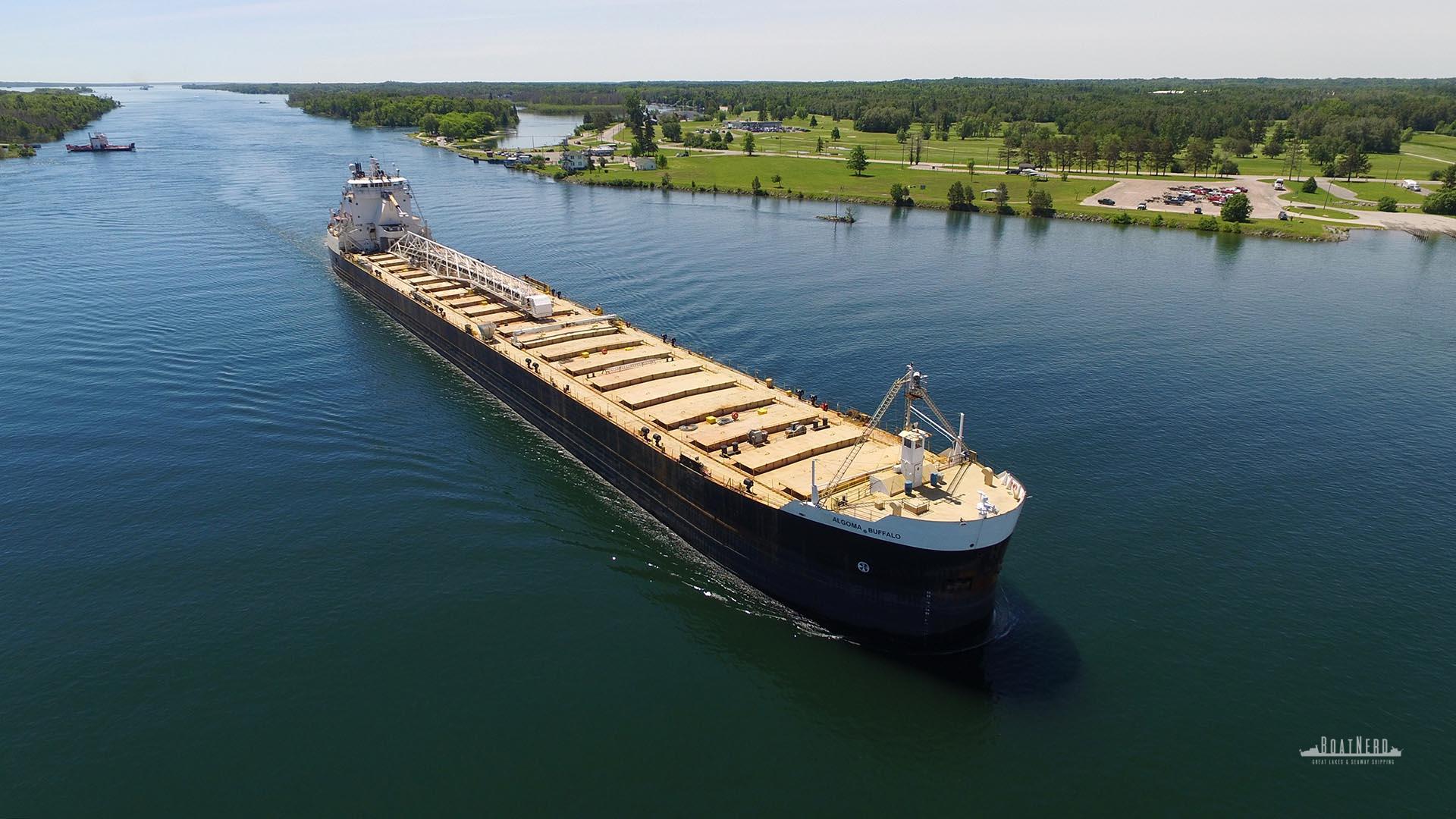
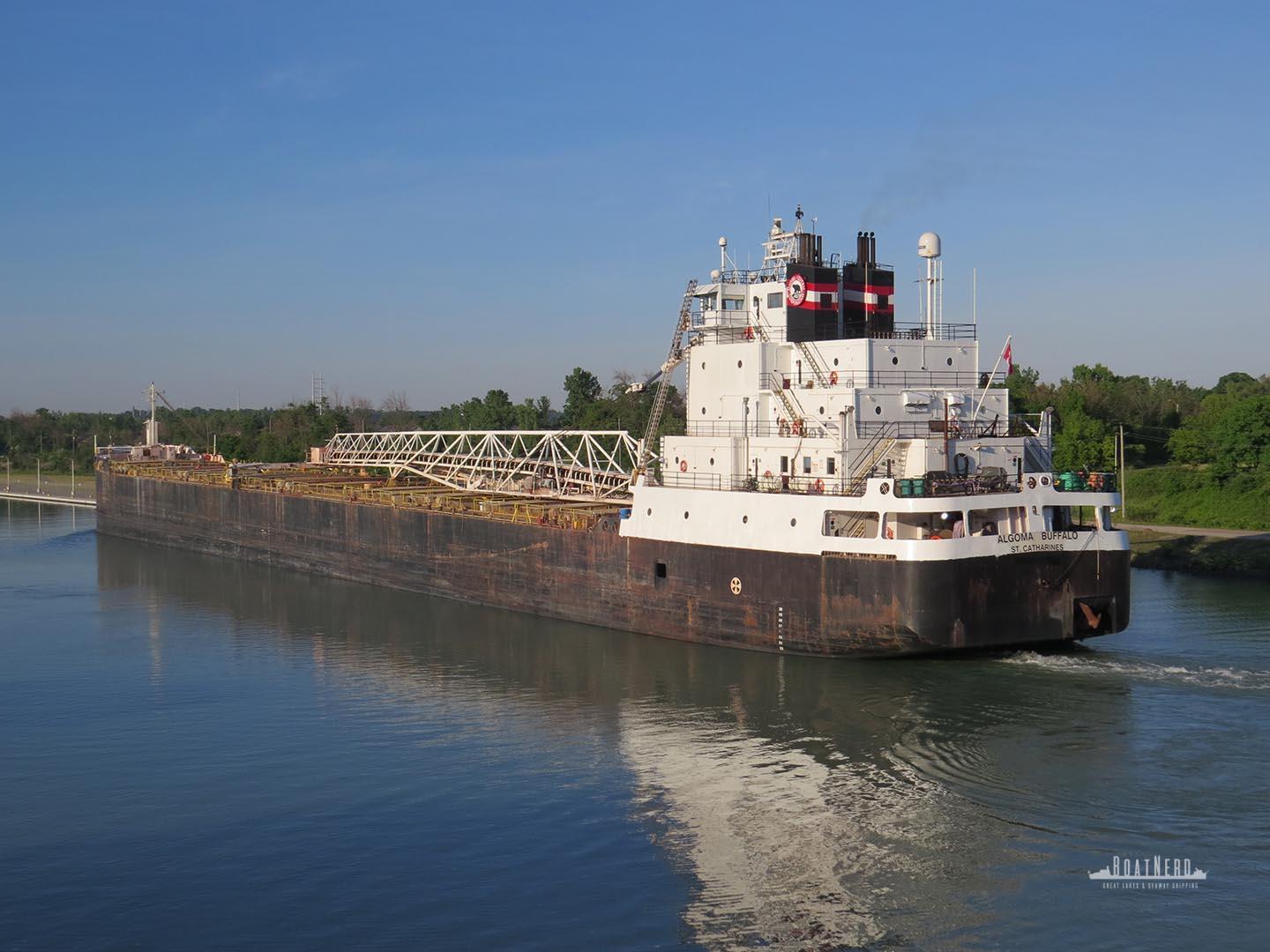
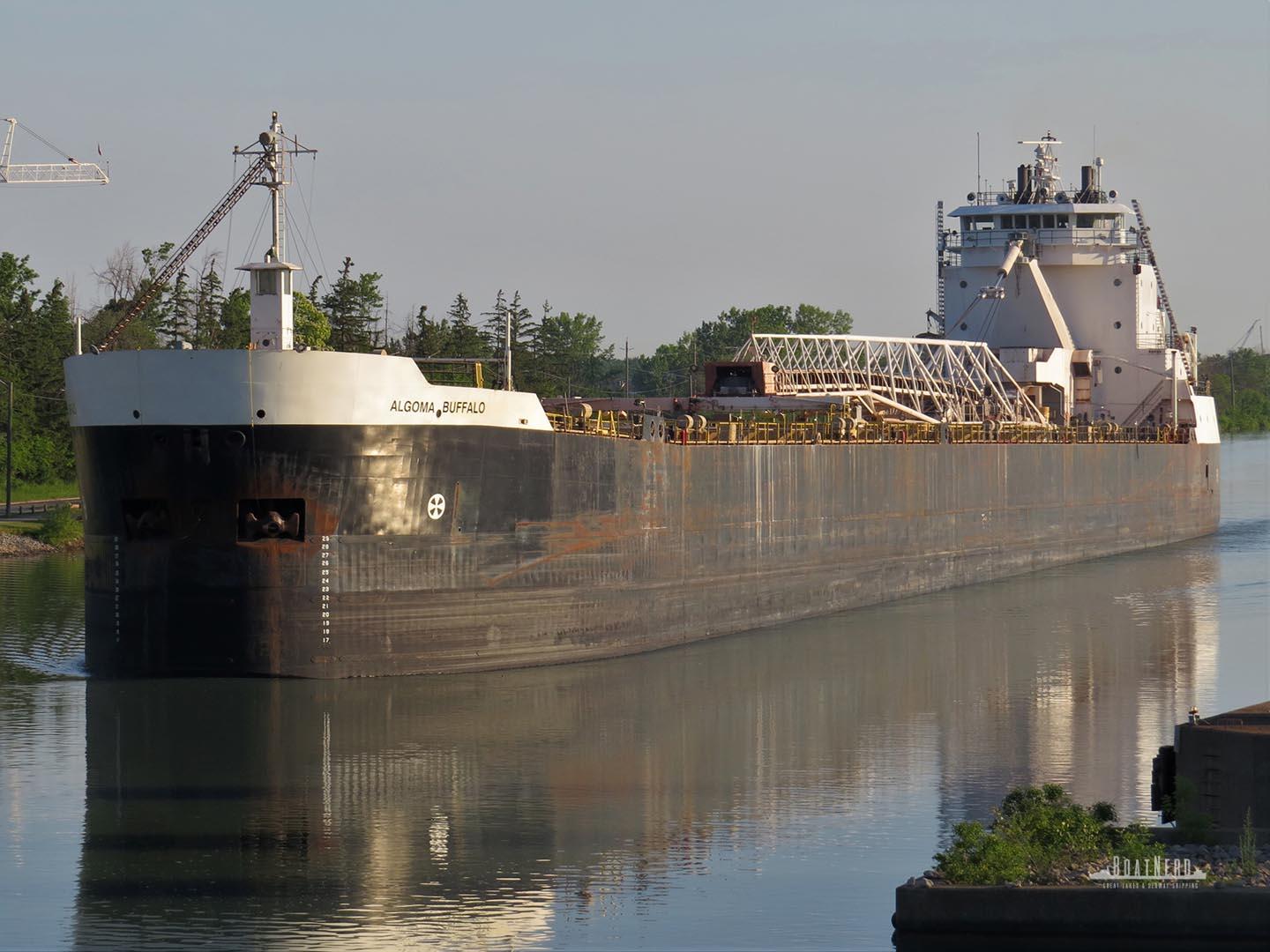
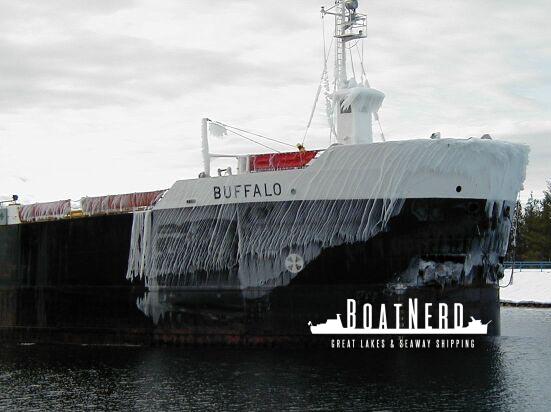
Buffalo laid up at Sarnia, Ont., on December 26, 2017. In late December 2017, American Steamship Co. sold the vessel, along with three others, to the Algoma Central Corp. of St. Catharines, Ont. She will sail in 2018 as Algoma Buffalo.
Written by Glen Kingsford
Vessel Details
| IMO No. | 7620653 |
| Year Built | 1978 |
| Builder | Bay Shipbuilding (Sturgeon Bay, WI, USA) |
| Length | 634’10” / 193.5m |
| Beam | 68′ / 20.73m |
| Depth | 40′ / 12.8m |
| Midsummer Draft | 28′ / 8.53m |
| Unloading Boom Conveyor Length | 250′ / 76.2m |
| Capacity | 24,300 tons |
| Engine Power | 7,200 bhp diesel |
| Previous Names | Buffalo [3] (1978-2018) |
| Previous Fleets | American Steamship Co. (1978-2017) |
Algoma Buffalo (2018-Present)
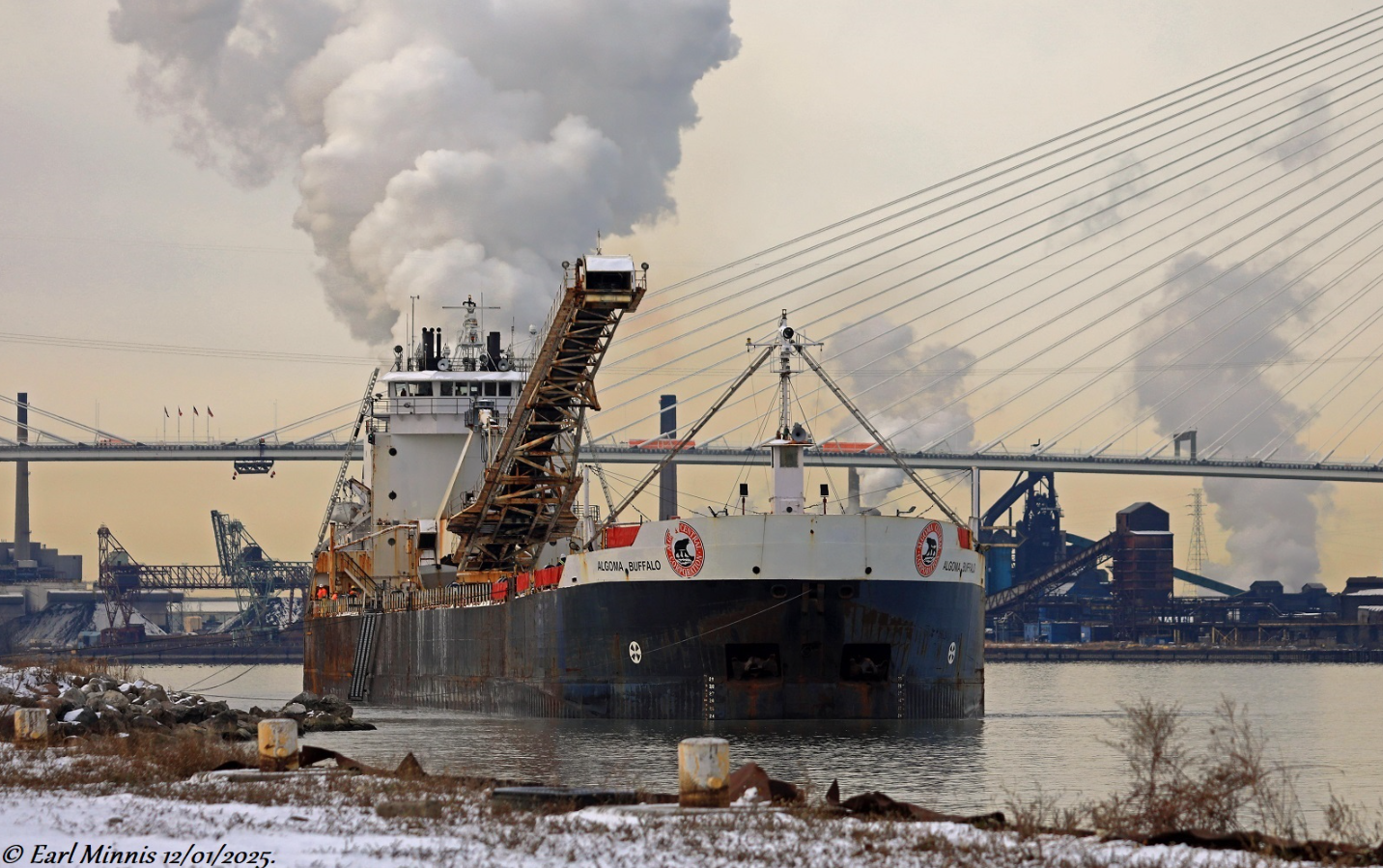



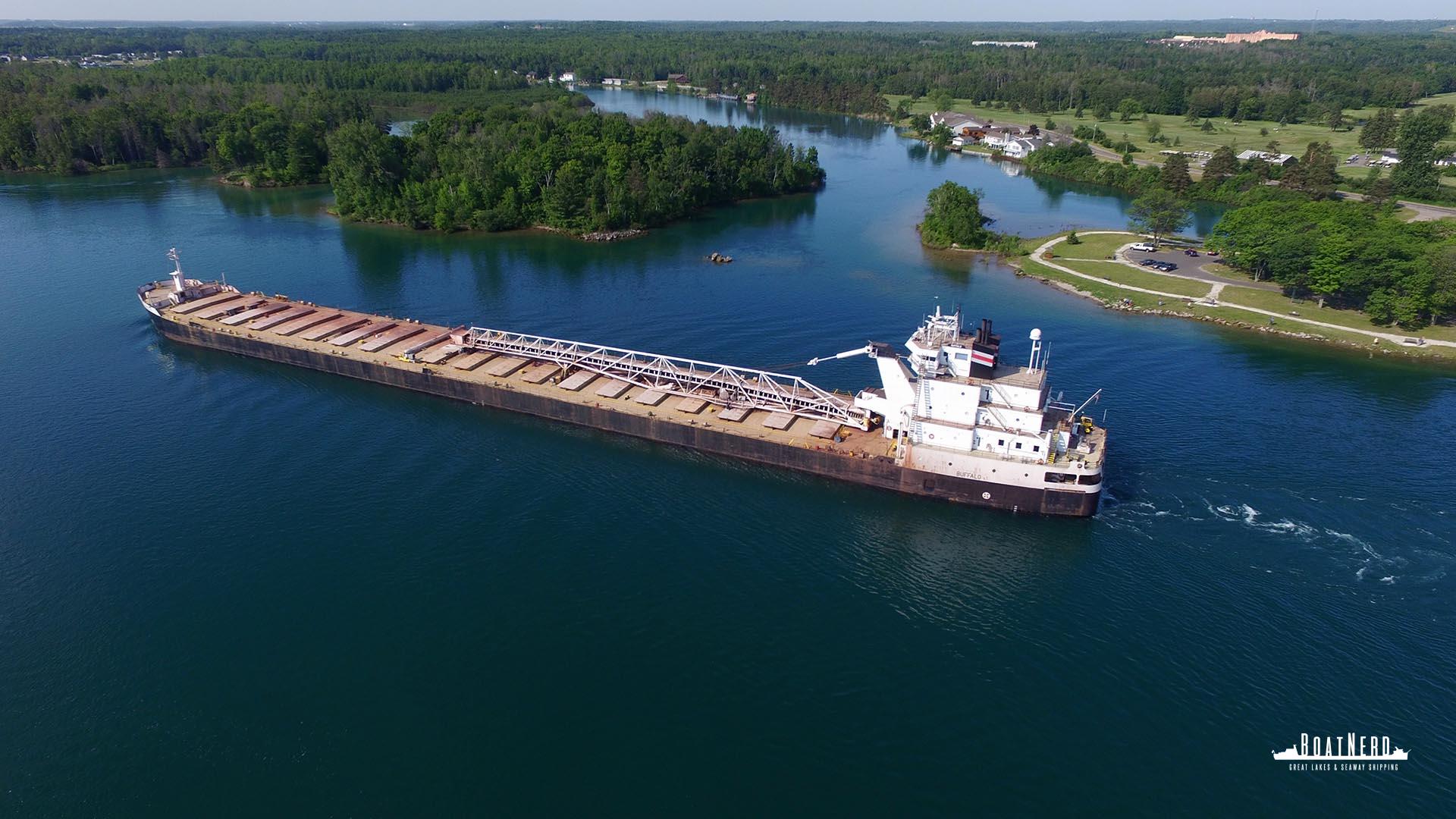
Buffalo (3) (1978-2018)









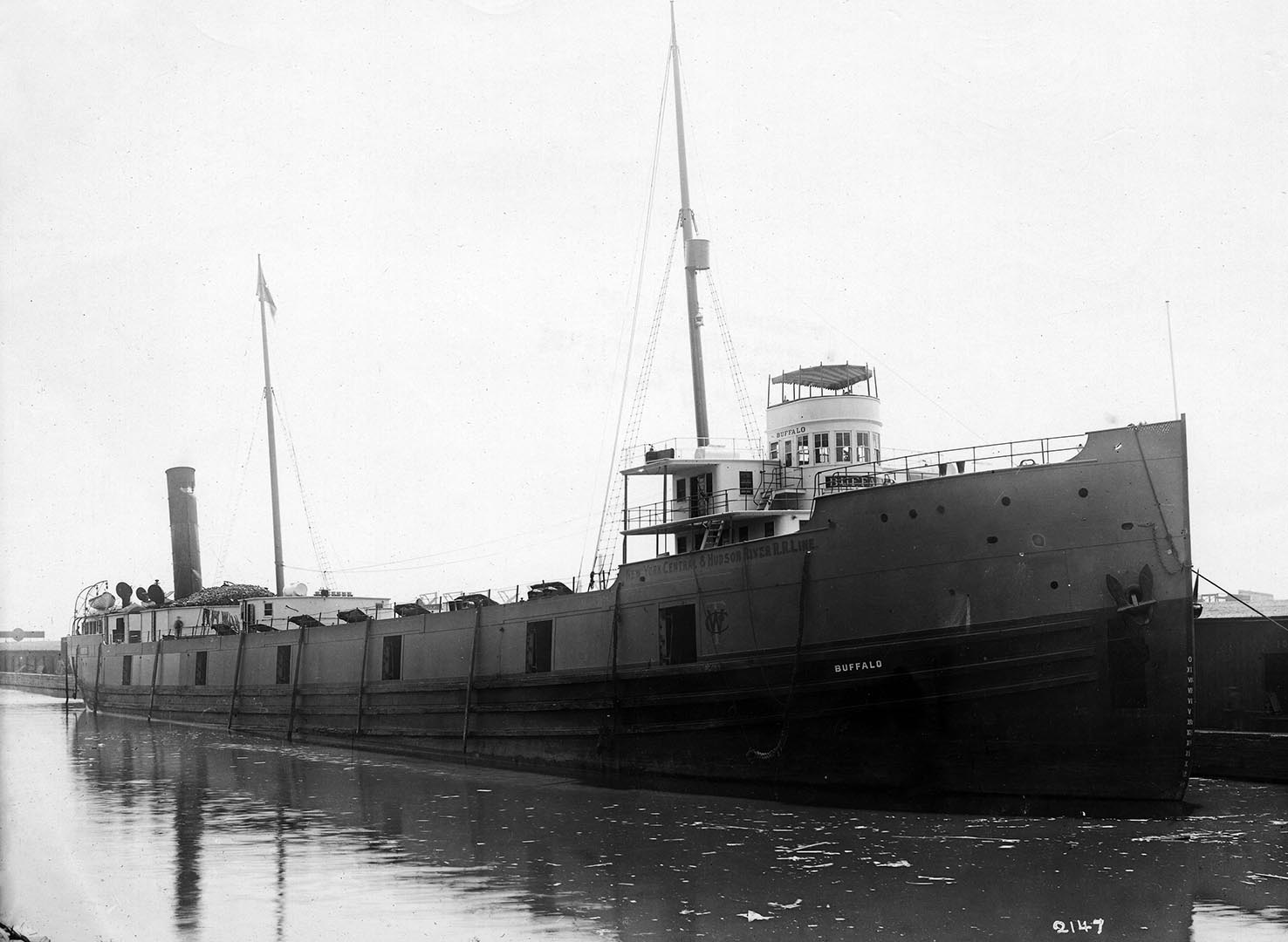
Previous Vessels Named “Buffalo”