U.S. Steel to invest $60 million in pig iron production at Gary Works steel mill
NW Indiana – Not every region steel mill is being disinvested in. U.S. Steel plans to pump capital into its flagship mill, Gary Works.
The Pittsburgh-based steelmaker, one of the largest employers in and industrial pillars of Northwest Indiana that originally founded Gary as a mill town more than a century ago, plans to invest $60 million in pig iron production at the Gary Works mill at 1 N. Broadway in downtown Gary.
U.S. Steel plans to insource pig iron capabilities at the steel mill that stretches across seven miles of Lake Michigan lakeshore in an advancement of its metallics strategy, which has been to diversify steel production between traditional blast furnaces and smaller, more nimble electric arc furnaces. Gary Works will be able to produce up to 500,000 tons a pig iron a year after the investment.
Pig iron is a crucial raw material needed for the electric arc furnaces U.S. Steel has been investing in at its southern mini-mills as it seeks to diversify beyond the integrated steelmaking that long has been its bread and butter.
The operation will supply about 50% of the ore needs at Big River Steel in Arkansas. It also will contribute $50 million in earnings before interest, taxes, depreciation and amortization and deliver a 30% internal rate of return.
The pig iron production should start in the first half of next year. U.S. Steel started the permitting process and expects to soon start construction on the project. It plans to self-fund pig iron production instead of contracting it to manage costs more efficiently at Big River Steel and make Gary Works’ blast furnaces more efficient without reducing their raw steel output.
NW Indiana Times
Ice jams build pressure for Coast Guard to expand Great Lakes ice cutting fleet
Detroit, MI – Justin Westmiller has memorized the recipe for flooding disaster in St. Clair County’s shoreline communities: a cold spell, above-average water levels and a strong north wind. Those are the three ingredients required to create an ice jam so stubborn it will cause the St. Clair River to flood.
“As that ice is coming down the river, it literally will pack itself in until it goes all the way to the bottom and creates an ice dam,” said Westmiller, St. Clair County emergency management director and former member of the U.S. Coast Guard.
Westmiller and the industry group representing U.S.-flag vessel operators on the Great Lakes agree that the U.S. Coast Guard needs to expand its fleet of Great Lakes ice cutters to ease flooding and help commercial vessels navigate frozen waterways.
“Right now, we have an immediate need, and that immediate need is to have another heavy icebreaker,” said Eric Peace, Lake Carriers’ Association vice president based in Ohio.
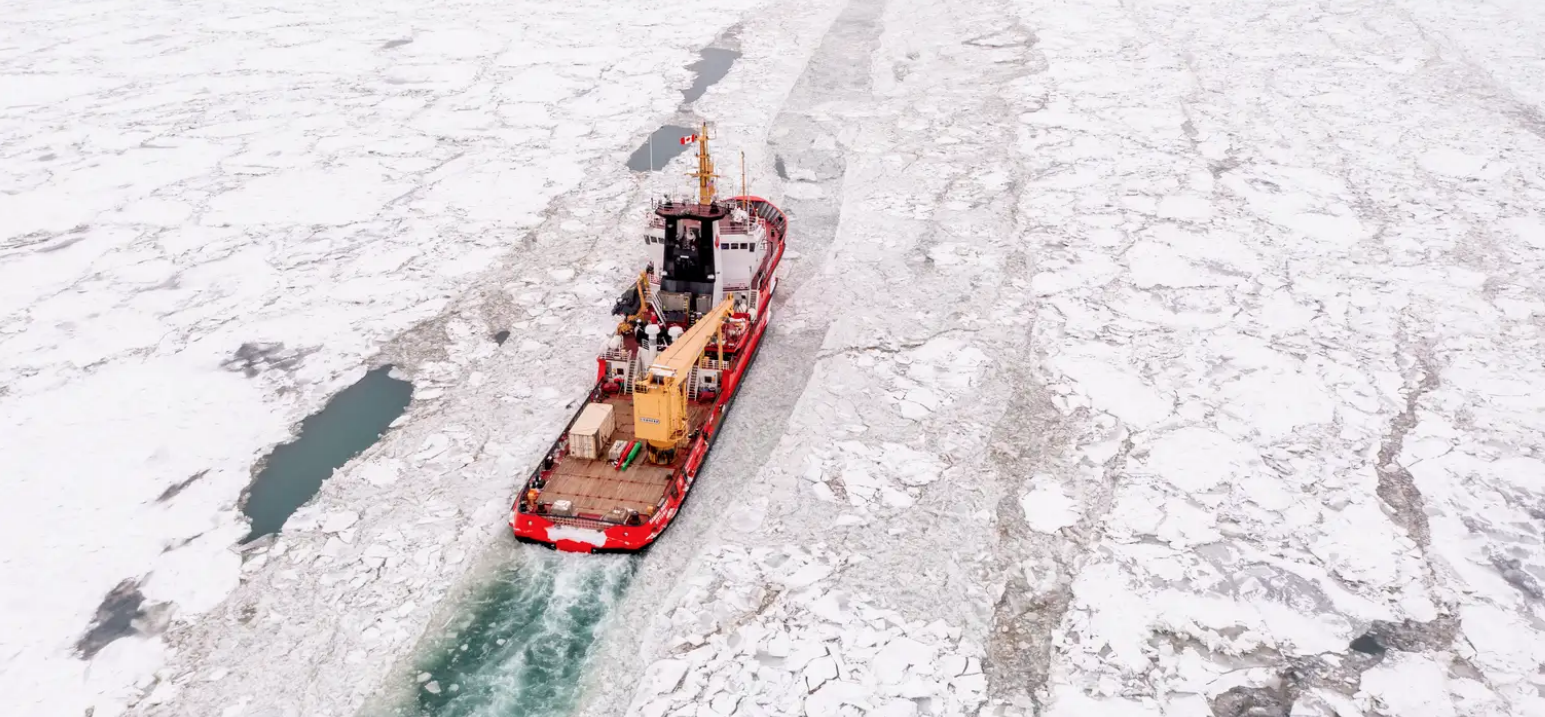
The U.S. Coast Guard has one heavy icebreaker on the Great Lakes — the Mackinaw, a 240-foot vessel that has the capacity to break through heavy ice that usually is stationed in the Straits of Mackinac between Lakes Michigan and Huron. It also has six smaller, 140-foot cutters stationed around the Great Lakes, all built between 1979 and 1988, and two buoy tenders that have some icebreaking capacity.
Icebreakers are often laid up for maintenance, said Brian Smicklas, U.S. Coast Guard Ninth District ice supervisor. “Breaking ice, it’s as hard as you can possibly imagine,” Smicklas said. “If you want to put a vessel through a stress test, take it out to break some ice.”
That’s one reason the Lake Carriers’ Association is pushing Congress to appropriate enough money to the U.S. Coast Guard to buy a new heavy icebreaker, which is estimated to cost about $350 million, Peace said.
The Mackinaw “hasn’t been available,” Peace said. “We definitely need to have some sort of, I would call it backup. We just need to have another one here because the fact is one’s just not capable of covering the distance you have in the Great Lakes.”
The Mackinaw has twice been in for maintenance this winter, Smicklas said.
The heavy icebreaker wasn’t available in early January when St. Clair County’s shoreline flooded, Westmiller said. One of the Canadian Coast Guard’s cutters was the only ship available to respond, he said.
“I’m not blaming the partnership we have with the Coast Guard,” he said. “It’s their resource availability that they inherently struggle with.”
The Build Back Better plan, which has not passed through the U.S. Senate, includes $350 million for a new Great Lakes icebreaker. Funding for a new icebreaker is still pending, Smicklas said.
Peace, from the Lake Carriers’ Association, said the industry also wants the U.S. Government Accountability Office to evaluate U.S. Coast Guard icebreaking operations and use the information to determine the appropriate size of the Great Lakes fleet.
The Coast Guard does not render assistance where commercial icebreaking providers are available, Smicklas said, except on a case-by-case basis if no commercial providers are available and icebreaking isn’t too risky.
Detroit News
Port of Green Bay hosts First Ship Contest
Are you ready to welcome ships back to the Port of Green Bay? Discover Green Bay is teaming up with the Port for the annual First Ship Contest. Check out the prizes and enter your guess here: www.greenbay.com/firstshipcontest