Great Lakes shipping sees strong start to the season led by grain exports
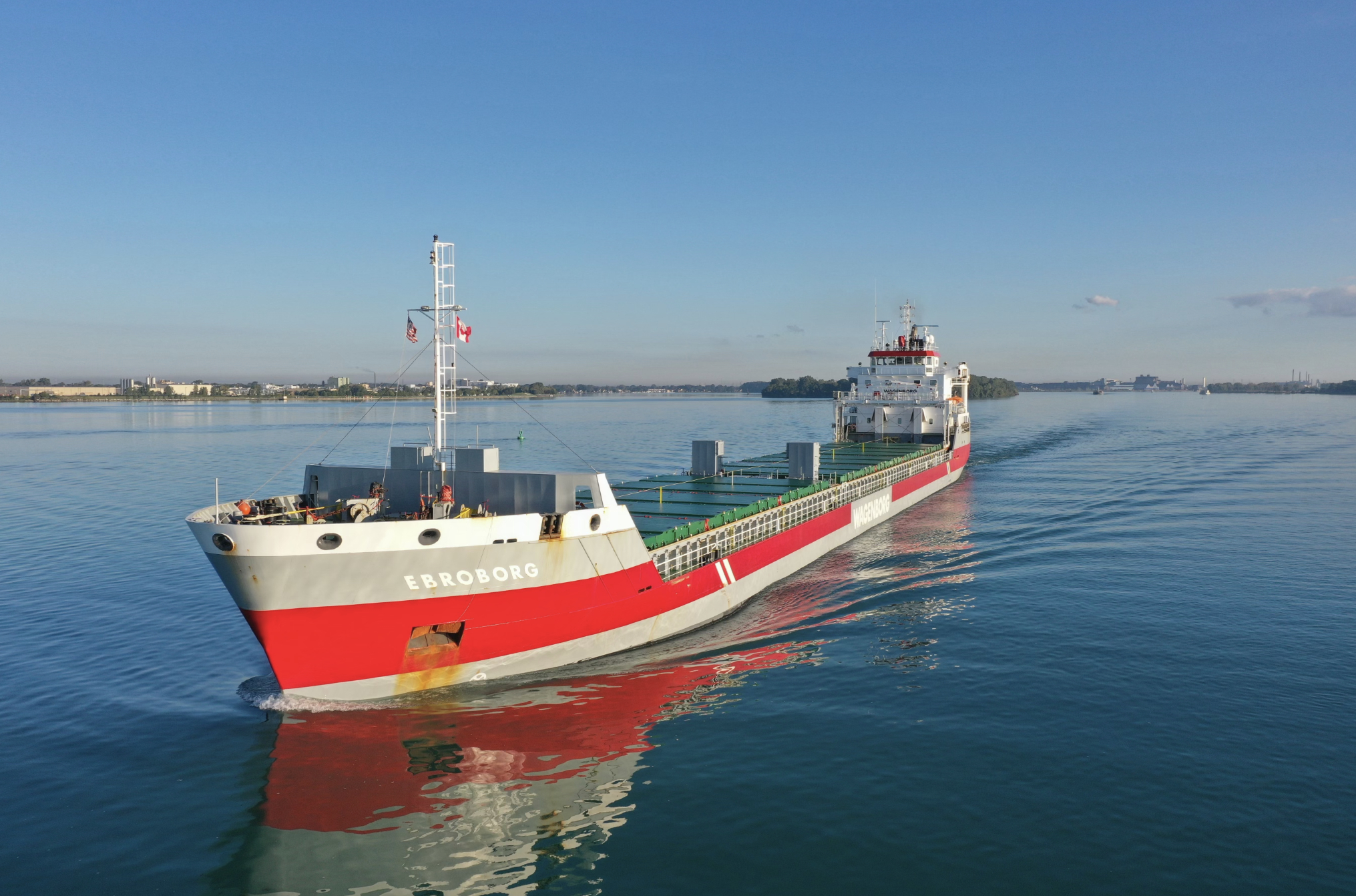
Shipping on the Great Lakes has kicked off with a bang this season as ports in the region step up to fill the global void of grain caused by the war in Ukraine.
The Great Lakes Seaway Partnership (GLSP) said grain exports out of the U.S. through the Great Lakes reached 176,000 metric tons since the start of the season in March, a 175% increase from the 64,000 exported during the same time frame last year. Imports of renewable energy components, particularly wind, are also up.
“In times like this, it is reassuring to see our ports in the Great Lakes St. Lawrence Seaway System working hard to keep the supply chain moving,” Craig H. Middlebrook, Deputy Administrator of the Great Lakes St. Lawrence Seaway Development Corporation said. “The Great Lakes Seaway marine transportation system is critical infrastructure, and remains vital to keeping commerce flowing without disruption in order to support North America’s agricultural, manufacturing, construction, energy, and mining industries.”
Looking at individual ports, the Port of Oswego on Lake Ontario received one shipment of wind equipment from South Korea and two shipments of aluminum from Quebec, while it exported a shipment of soybeans to Ireland. The Port of Oswego has also stepped up to help meet global grain demand amid the war with its first export of the season being 18,000 metric tons of soybeans to Europe, and the port expects more of these exports to be made throughout the season.
“Given the consequences to global food supply amid the war in Ukraine, the rest of the world has had to step up to fill the void.” said William W. Scriber, director of the Port of Oswego. “Here in Oswego, we’re proud to be a major player in helping the world meet its demand for grains.”
The Port of Ogdensburg, also on Lake Ontario, also received a shipment of wind equipment from India, indicating the State of New York as a leading destination for renewable energy material imports.
On Lake Erie, the Port of Cleveland has proved to be a leading importer as seven “salties,” i.e. ocean-going ships that arrive the Great Lakes through the St. Lawrence Seaway, have arrived carrying containerized goods, steel products, and general cargo including machinery. “We’ve worked diligently to improve our operations and increase the capacity across our docks in recent years,” said William D. Friedman, president of the Port of Cleveland. “It’s no coincidence that we’ve positioned ourselves as an emerging port of call for containerized cargoes from across the globe.”
Additionally, the Port of Toledo has been off to a good start in 2022. Through April, 78 vessels have already called upon the Port of Toledo and its tonnage is up nearly 11% over the same period in 2021. Grain, salt, coal and liquid bulk are all outpacing 2021 totals.
“While it is early in the season, there are signs that 2022 will be successful,” said Joseph Cappel, VP of Business Development for the Toledo-Lucas County Port Authority. “Grain and fertilizer are expected to be big movers in 2022 as trade patterns and pricing continue to fluctuate based on various global happenings. If our staple commodities like coal, iron ore and other dry bulk commodities remain consistent, we will have a strong year.”
The Port of Ashtabula, another Lake Erie port, has also been busy so far with inbound shipments of ilmenite sand from Senegal, ferrochrome from Finland, and two shipments of titanium slag from Canada and Norway, according to the GLSP.
Partnering with the craft brewer and food manufacturer Briess Malt, the Port of Manitowoc on Lake Michigan has utilized a new maritime supply chain route to import Danish Barley from Quebec. Previously, these shipments arrived from Thunder Bay but thanks to the new route, Manitowoc can receive barley from Quebec. This has enabled the Port of Manitowoc to increase its malt capacity and give Briess more options for importing the product, according to Paul Braun, the city planner for the City of Manitowoc.
Shipping on the Great Lakes kicked off March 22 with the opening of the St. Lawrence Seaway. The Welland Canal, which connects Lake Ontario and Lake Erie, opened March 24, while the U.S. Army Corps of Engineers opened the Soo Locks in northern Michigan on March 25. The Soo Locks connect Lake Superior and Lake Huron.
In 2021, more than 28 million metric tons of cargo was shipped through the St. Lawrence Seaway from the opening of the waterway on March 22, 2021 through its closing October 31, 2021, an increase of 1.92% compared to the 2020 season. Total transits increased 1.33% to 2,976 vessels through October.
gCaptain
Thunder Bay business district prepares for cruise ship visitors
Businesses in Thunder Bay’s Waterfront District Business Improvement Area are preparing for summer and to receive visitors from cruise ships, the first of which will arrive on May 27.
With seven post stops in Thunder Bay for the 378-passenger Viking Octantus ship and another two port stops for the 210-passenger Ocean Navigator, Thunder Bay will see the most visitors in years. Guests will be welcomed from Tourism Thunder Bay with a staffed concierge tent shipside, from 5-8 p.m. on Fridays and 8 a.m. to 6 p.m. on Saturdays, to help connect guests with attractions, culinary and transportation options.
“We are preparing our businesses so they can be all hands-on-deck when we have people docked here,” said Kara Pratt, co-ordinator of the waterfront district BIA.
“We want to get them pumped up for the new visitors of the city, which is exciting after all of the delays.” Pratt says there is much partnering involved between businesses, the BIA and the city. “It’s going to be a learning experience the whole summer I think, mainly with the first (cruise ship) in May, because everything’s kind of still fluid in terms of pandemic rules. I know our businesses are excited to show off what they can do, what they have in their shops and what the culinary scene will bring.”
From pasta and fresh fish cuisine to giftware and clothing, shoppers can expect the best of Thunder Bay’s home-grown products. Pratt says the BIA has been approved to open up the streets for the summer and a funding boost from the Tourism Development Fund has been provided by the Community Economic Development Commission to help with beautification of the area.
Read the rest of this article at this link: https://www.chroniclejournal.com/news/local/business-district-prepares-for-cruise-ship-visitors/article_f3f9c386-d586-11ec-9ecb-f71bc96c485a.html
The Chronicle Journal
Lighthouse, museum to open this summer
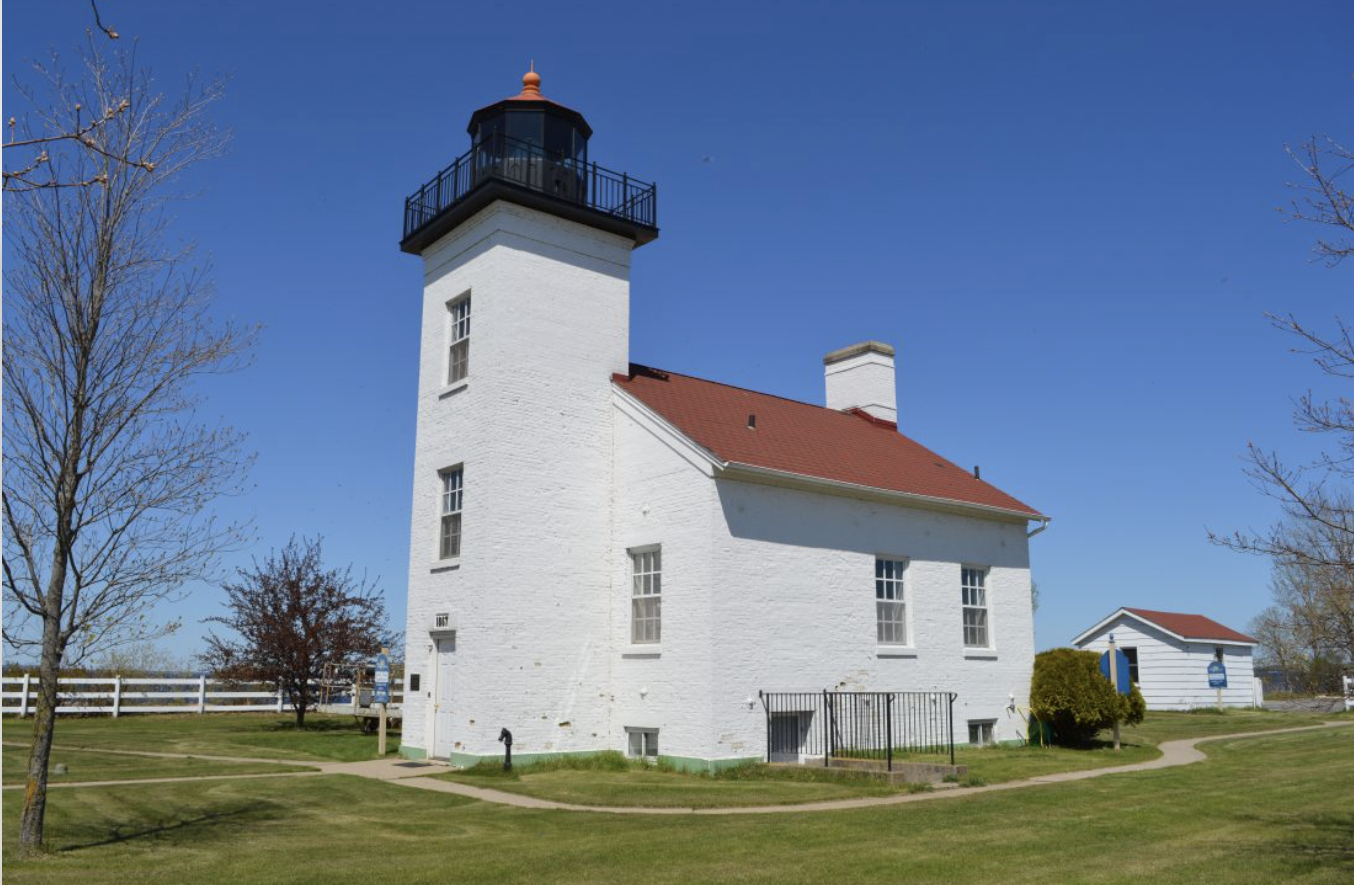
ESCANABA, MI — The Dr. John and Mary Jane Beaumier Museum and historic Sand Point Lighthouse are returning to their normal hours of operation this summer. Set to open on Memorial Day, members of the Delta County Historical Society, a local non-profit organization that works to preserve the history of Delta County, are ready to welcome back tourists and residents.
“We are all here because we like what we are doing and the lighthouse is real special,” Dr. Charles Lindquist, President of the Delta County Historical Society, said. “It is fun to have people come through and talk to them about the history of it, but it’s also fun to see how much they enjoy coming into the lighthouse.”
In Delta County two of the main tourist attractions are Fayette Historic State Park and the Sand Point Lighthouse, which attracts over 6,000 people from throughout the Midwest and Great Plains regions every summer. The demographic consists mostly of families with school-aged children who are looking for summer activities. “A lot of schools are open until the first week of June, so we really don’t see too much traffic until the second week of June,” Lindquist said. “After that, up they come in a steady parade for a couple of months until it slows down around mid-August.”
“People come to the lighthouse to learn. They want to learn the history of the lighthouse,” Lindquist said. “And maybe, hopefully, they want to learn why exactly the lighthouse is here in Escanaba.”
The Sand Point Lighthouse, located on the Delta County Historical Society grounds next to Ludington Park, was constructed in 1867. Fully operational a year later, the lighthouse worked as a navigational beacon to the abundance of ships traveling throughout Little Bay de Noc. “By 1865 the government realized there were going to be a lot of ships coming into the [Escanaba] port to pick up iron ore. Eventually there were five lighthouses in the area,” Lindquist said. “The main lighthouse was here in Escanaba. It coordinated and kept track of all the other lighthouses.”
These ships were transporting iron ore and lumber from Escanaba to large cities like Chicago, Detroit, and Cleveland via Lake Michigan. “Boats would come out of Lake Michigan and there were shoals and sandbars all throughout [Little Bay de Noc],” Lindquist said. “They would get around the Peninsula Point and look for the red light coming out of our lighthouse.”
While the rich history of the Sand Point Lighthouse makes it unique, the fact that tourists are able to enter and tour the space distinguishes it from other lighthouses as well. “A lot of people are lighthouse aficionados. They just love lighthouses,” Lindquist said. “Many lighthouses do not let you come in. But we let you go in the house part, and you can go up the stairs, see the lens, and get a view of the lake.”
When touring the Sand Point Lighthouse, visitors will also be able to view an exhibit room, which is restored to look and feel as if it were still in operation. The entire history of the lighthouse can be found directly in the lighthouse itself, along with the accompanying museum and archives building.
“The Great Lakes are a real attraction in this country. When people are coming from the southwest this would be one of the first places they would stop,” Lindquist said. “We try to make this place very friendly and informative. When people enjoy what you’re doing, it makes you enjoy it especially too.”
The lighthouse is currently undergoing a bit of construction. By drone footage last year, it was discovered that holes in the roof of the lantern room were the reason water was leaking onto the lighthouse’s stairs. The tower face is going through a bit of maintenance as well. After opening on May 30, the Delta County Historical Society plans to keep both the lighthouse and museum open until at least late August. The Historical Society hopes to return to its normal closing date of Labor Day, depending on foot traffic during the later part of the summer.
The museum and lighthouse will be open seven days a week from 11 a.m. to 4 p.m., including holidays. Admission is $3 per person or $5 for a family, which is two or more people. Kids under 14 can enter for free with their families, while kids over 14 will be charged a dollar. Members of the Delta County Historical Society can enter for free.
“Our local history is important in terms of family and community values,” Lindquist said. “People are proud of their community and its history. It is a sense of pride.”
Daily Press
Help wanted: Lake Michigan Carferry
Lake Michigan Carferry is accepting applications for placement in the engine department aboard the historic S.S. Badger. Candidates must possess a Merchant Mariner’s Credential with QMED (Fireman/Oiler/Watertender) endorsement, a current Medical Certificate and a valid TWIC card. QMED will expect to live aboard and stand a 4 hour watch, twice a day, 7 days a week for the remainder of the 2022 sailing season (as soon as possible to Oct 16th, 2022) QMED wage is $28.91p/hr ($43.37 for OT hours). Visit our web site at http://www.ssbadger.com > Join the Crew to fill out an online application or email lbialochowski@interlakems.com for more information.
Time running out for Boatnerd freighter-chasing cruise early bird rate
After going on pandemic hiatus for the last two years, the Annual Boatnerd Soo Freighter Chasing Cruise is back in business!
•When: Friday – June 24, 6–9 pm, rain or shine
•Where: Soo Locks Boat Tours, Dock #2 (next to the Valley Camp)
•Limit: 100 passengers
•Food: Pizza and salad included with paid passage
•General Admission (US funds): Early Bird rate $30.00 each, $35.00 each from June 1-June 17
•Youth Admission (US funds): Early Bird rate $20.00 each, $25.00 each from June 1-June 17. Youth admission applies to those under 18.
This year’s St. Marys River cruise will be aboard a Famous Soo Locks Boat Tours boat on Friday, June 24. Boarding begins at 5:30 pm, and we cast off at 6pm. The cruise is three hours long. We plan to travel through the U.S. Locks, but that may change in order to chase freighters. (NOTE: At this time, we can approach the Canadian Locks, but not transit through them. We can also approach Algoma Steel, but we cannot enter the slip.)
Pizza and salad are included in paid passage. There will be a cash bar on board. You can bring your own food and beverages (no alcohol).
Reservations are a must, as the group is limited to 100 passengers. Reservations (both online and mail-in) must be received no later than Friday, June 17. Buy tickets here: https://tinyurl.com/2p86wujf
If the cruise is not sold out, Angie Williams will take CASH ONLY reservations through the end of the Boatnerd Picnic on Thursday, June 23, at the Procrastinator Price of $40.00 per General Admission ticket, and $30 per youth ticket.
Contact Angie at griffinclawangie@gmail.com or 734-386-0899 if you have questions or wish to reserve without using EventBrite,.
The Boatnerd Picnic will be Thursday, June 23, from 11 a.m.-3 p.m. at Sherman Park, just west of the locks. Bring a dish to pass. Burgers, hot dogs, buns and condiments will be provided by Boatnerd. Free.) Save the date and think early about your travel plans and lodging. The event will be held rain or shine, but lets hope for sunshine!
Events are in conjunction with the U.S. Army Corps of Engineers annual Engineer’s Day (Friday, June 24) open house at the Soo Locks, Sault Ste. Marie, Michigan.