Great Lakes cruises return, with stops in Cleveland
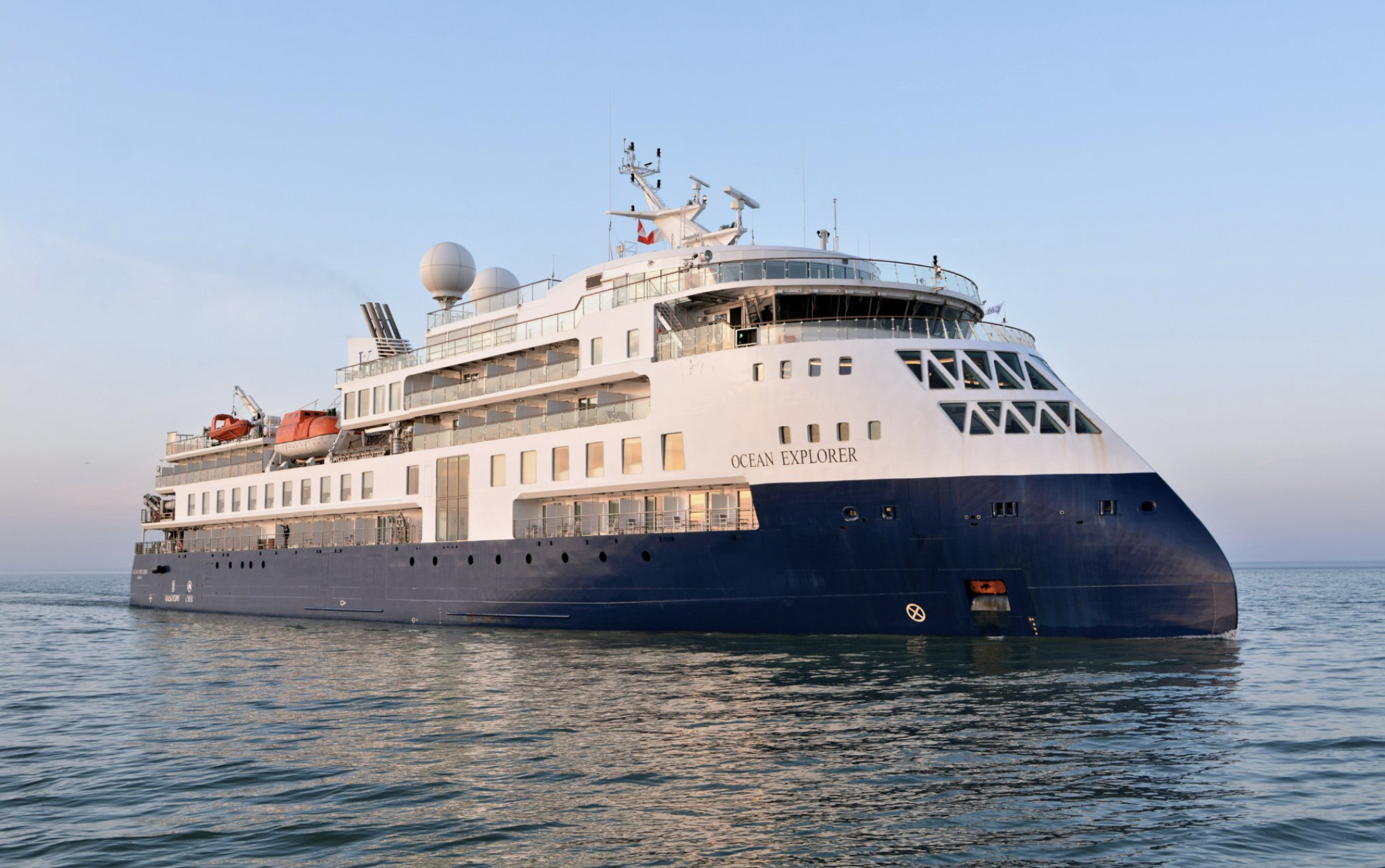
CLEVELAND, OH – Great Lakes cruising has returned to the Port of Cleveland with the first ships dropping anchor in Northeast Ohio last month.
Cleveland has seen a steady increase in cruise ships in recent years, particularly before the COVID-19 pandemic shuttered the industry. The Port expects as many as 50 stops this year as the industry sets sail on another season.
“Cleveland has been rated over the years and still continues to be the number two most popular destination for passengers on these ships,” said Jade Davis, Vice President of the Port of Cleveland. “Each ship that docks here for a single day, passengers get off. They go and visit everything from the Rock and Roll Hall of Fame, the Cuyahoga Valley, Metroparks, Amish Country, downtown, our various casinos, restaurants.”
The Ocean Voyager made a stop in Cleveland this week, part of the American Queen Voyages line. The cruise ship is one of two operated by the line and offers luxury trips with newly renovated interiors and amenities. The ship is on the smaller side, at 285 feet and holds roughly 200 passengers.
“Our ships here in the Great Lakes are sort of confined by the locks that you have to take to get down the St Lawrence River and then get through the Welland Canal and so that necessitates some smaller ships.”
Ships that travel on the Great Lakes will typically have a capacity of 200-500 people, which is much smaller than the larger ocean liners. The Great Lakes cruises offer a more casual experience for anyone who may be thinking about exploring a cruise.
“It’s a high-end cruise is a boutique kind of experience. We go to places where a lot of the larger ships can and cannot go to. And you feel very personalized here with our guests to be we get to know them like almost like family,” said Captain Geir Lilleeng. “It is a more laid back. It’s leisure. And the weather here is we don’t have this season the waves that you will have in the ocean.”
Cruising season on the Great Lakes runs from May through October, coinciding with the St. Lawrence Seaway months of operation. The shipping season runs roughly from March through December. Larger cruise ships started docking in the port of Cleveland in 2017 and the City of Cleveland has made investments into attracting more vessels, including a new customs clearance facility.
“We’re investing a lot of infrastructures to help support this industry. We anticipate being a big part of the industry,” Davis said. “As it grows and looking at having possible origin and destination trips from Cleveland, the port will be here to help facilitate that.”
New this year on the Great Lakes Viking cruises is Cleveland, which has been added to the itinerary for the cruise line that started sailing the region this year. Viking is headquartered in Switzerland and announced its expansion into the Great Lakes in 2020, however, the first stop in Cleveland won’t come until 2023.
News 5 Cleveland
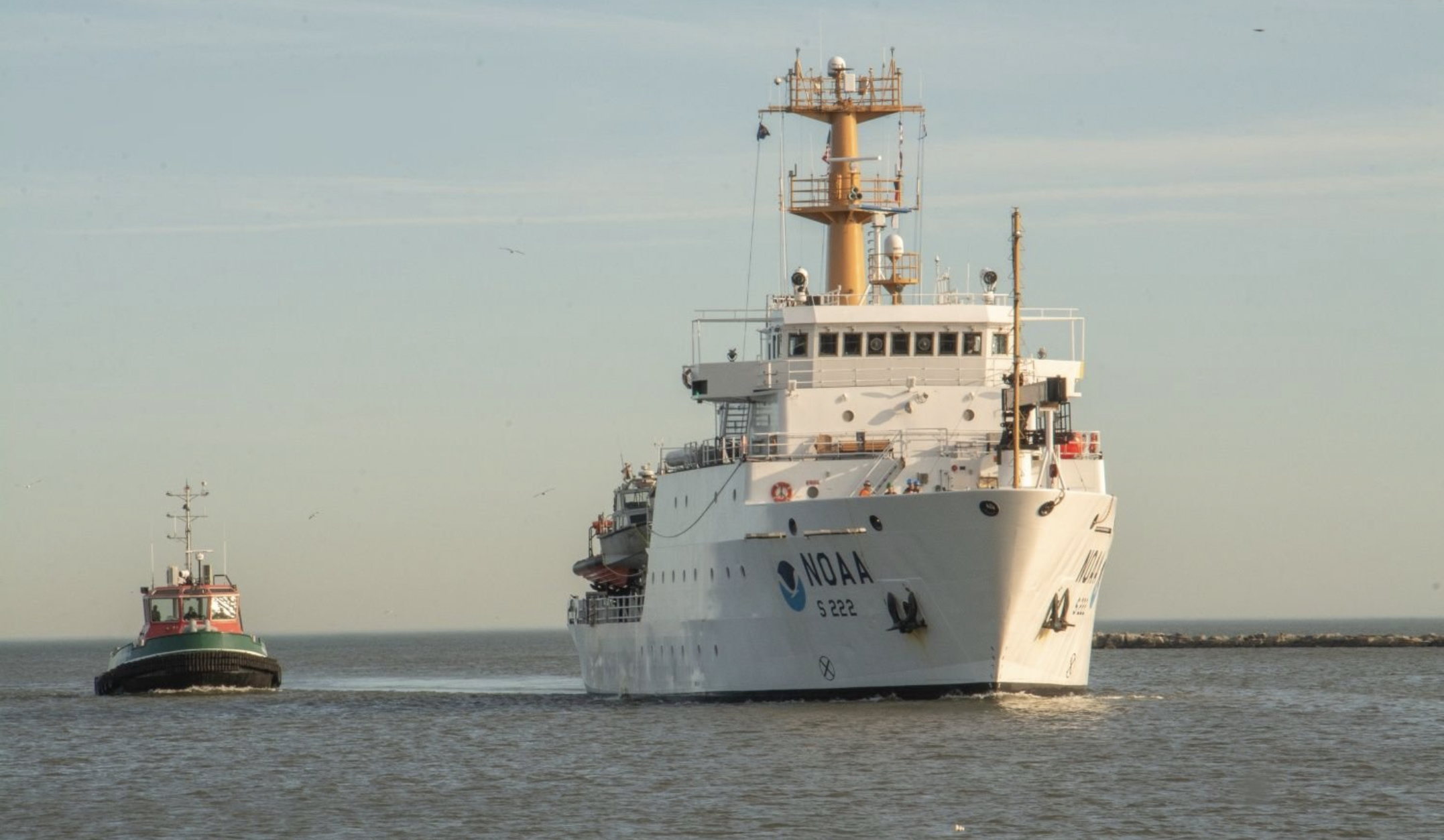
NOAA vessel Thomas Jefferson in Cleveland marking history, mapping Lake Erie
CLEVELAND, OH – For the first time in 35 years, the National Oceanic and Atmospheric Administration (NOAA) has a ship operating in the Great Lakes.
NOAA ship Thomas Jefferson is in port in Cleveland on a mapping mission to help mariners understand what’s beneath Lake Erie. “The ship is a hydrographic survey ship, which is typically ocean mapping, in this case it’s lake bed mapping,” NOAA Ship Commanding Officer Matthew Jaskoski said.
It’s the first time since the 1940s that hydrographic survey data has been collected by NOAA around the Cleveland area. “The information that we had in the 1940s, while it was accurate and good then, might not be the most accurate picture that it is now,” said Lt. Michell Levano, operations officer aboard the Thomas Jefferson.
The Thomas Jefferson, which is one of 15 vessels operated by the NOAA, traveled from Norfolk, Virginia to Cleveland. “It was such a wonderful experience,” Lt. Levano said. The crew of 35 left Virginia on the Atlantic Ocean to the St. Lawrence River, went through Quebec and Montreal, then had to pass eight locks along the St. Lawrence Seaway. The trip across Lake Ontario took the Thomas Jefferson 16 hours, and then a whole day of transit to get through the locks of the Welland Canal.
The ship operates 24/7 for two to three weeks at a time, and then returns to port. “We’re collecting data to update the nautical charts or the maps ships use to get in and out of ports safely,” Lt. Levano said. The updated data is key for Lake Erie because the Port of Cleveland is one of the top 50 U.S. ports, according to Lt. Levano. “We’re out here using modern sonars, modern positioning techniques to do a full bottom coverage of high-resolution data gathering,” said Jaskoski.
The Thomas Jefferson is equipped with multiple sonar systems to map the bottom of the sea floor. The ship also has two 29-foot vessels on board that can drop into the water and be more maneuverable. “We use acoustics to find the depth of the sea floor,” said Lt. Levano. “We send out a signal from the bottom of the ship, it hits the bottom of the sea floor and we wait for that sound signal to return.”
The Thomas Jefferson typically covers the East Coast and the Gulf Coast, but is in the Great Lakes for the first time. Jaskoski told 3News that NOAA planned the mission at least two years in advance. “The bulk of our work is going to be in Lake Erie,” said Jaskoski. The crew will have a small project in the Detroit River that will take about a month, according to Jaskoski. “Our main goal is to find anything that may be dangerous to surface navigation,” says Jaskoski.
The NOAA Ship Thomas Jefferson is scheduled to map the areas surrounding Put-in-Bay and Kelleys Island. For that mission, the water depth will dictate when their 29-foot vessels will have to operate. Luckily, the vessels that can detach from the ship contain the same equipment and are able to gather the same information. “Our most efficient method of running is if the ship is collecting data for 24 hours a day and both launches are going out for about 10 hours a day,” said Jaskoski. “So that gives us about 46 hours of data collected in one 24 hour span.”
The ship and its crew will be on Lake Erie until October, at which point it will travel back to Norfolk, Virginia for the winter.
WKYC 3 Studios
OBPA awaits decision from state on reallocating money from suspended harbor project
OGDENSBURG, NY – The Ogdensburg Bridge and Port Authority is waiting to hear if $5.8 million from New York state originally slated for the suspended harbor deepening project can instead be used to extend a Port of Ogdensburg dock.
In April, the OBPA board passed a resolution acknowledging that financial difficulties are preventing it from moving forward on the $29.5 million harbor deepening project that was initially estimated at $11.4 million. Between the federal funding and a portion contributed by the state Department of Transportation, there’s an $11.4 million gap that the OBPA would have to cover, which it can’t afford. The project would have modified a 300-by-500-foot section of the federal channel to an authorized depth from 19 feet to 27 feet.
Part of that money is $6.1 million from the state DOT that the OBPA in turn gave to the Army Corps of Engineers. OBPA Executive Director Steven J. Lawrence said about $300,000 of it was spent on bid work and design. The corps will return the remaining $5.8 million to the OBPA, which will either give the money back to the state or spend it on the dock expansion, depending on what the DOT decides. The dock expansion would extend a 1,200-foot dock by another 500 feet, which would make more space for ships to load and unload.
“When that money comes back to us … we’ll ask the state what they want to do with it,” Mr. Lawrence said. “The state’s been more than helpful on all our projects. They stepped in at the last minute with this (original amount of) $6.1 million and (the harbor deepening) didn’t happen.”
He says the OBPA is in the process of planning to move forward with the dock work. “We hope to get started on the dock expansion this year,” Mr. Lawrence said.
He said they’re now coming up with cost estimates to see if $13.2 million, most of which is committed grant funding, will cover the entire project.
NNY 360
Army Corps using harbor dredge materials to replenish eroded Lake Michigan beaches
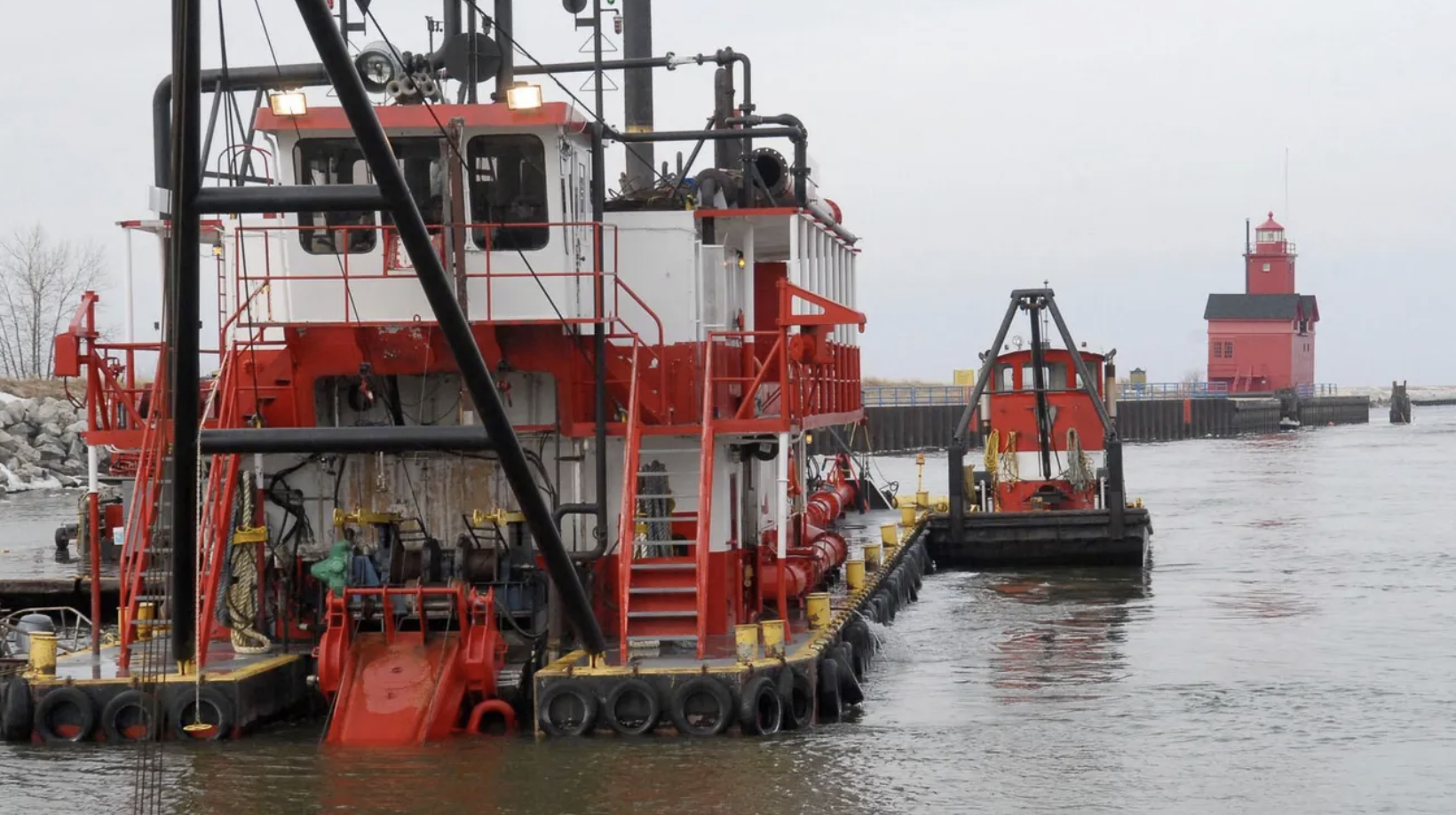
The U.S. Army Corps of Engineers is using harbor dredge material to shore up Lake Michigan beaches this summer.
Four harbors along Lake Michigan — Holland, Grand Haven, St. Joseph and South Haven — were approved for dredging this spring and summer. Materials gathered through the process will be used to “nourish and replenish” beaches that suffered erosion from recent high water levels.
To read about the U.S. Army Corps of Engineers schedule and their plans for dredging, click on this link: https://www.hollandsentinel.com/story/news/environment/2022/05/28/lake-michigan-beaches-getting-replenished-through-harbor-dredging/9958216002/
Holland Sentinel
Boatnerd Survey
Please take a moment to complete our survey. It takes less than five minutes and will help us determine the future of Boatnerd. Thank you.
https://docs.google.com/forms/d/e/1FAIpQLSemHAgTPdt0quMS4WoJOVYHC7aPAExe_M_uQgGa1Kmea8bGcA/viewform