Windsorites reflect on vessel that capsized underneath Ambassador Bridge 60 years ago
DETROIT RIVER – It took months to remove the vessel from the Detroit River
Even though Neil Cornwall was only nine years old, he remembers how big of a spectacle it was when a large freighter capsized on its side in the middle of the Detroit River 60 years ago.
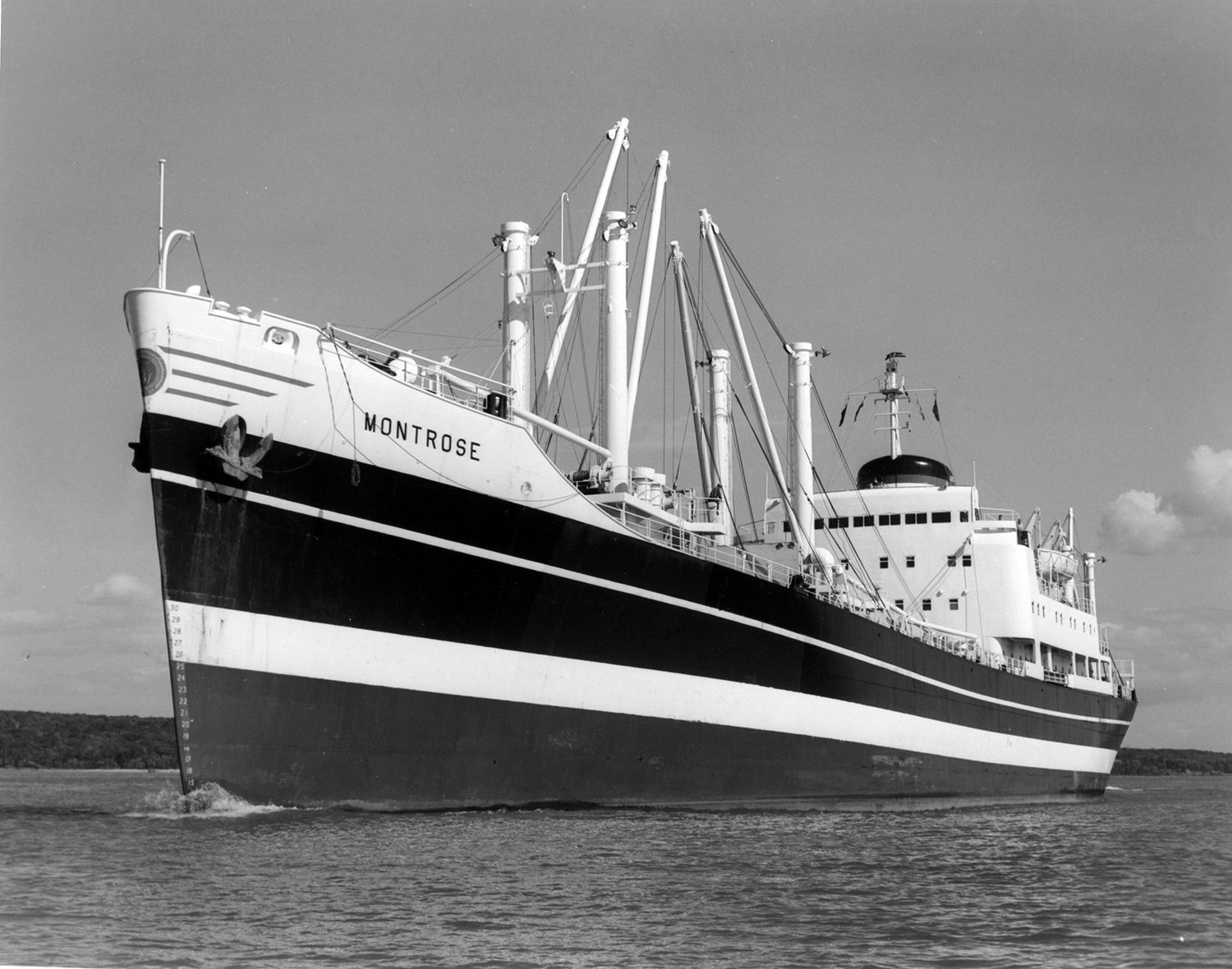
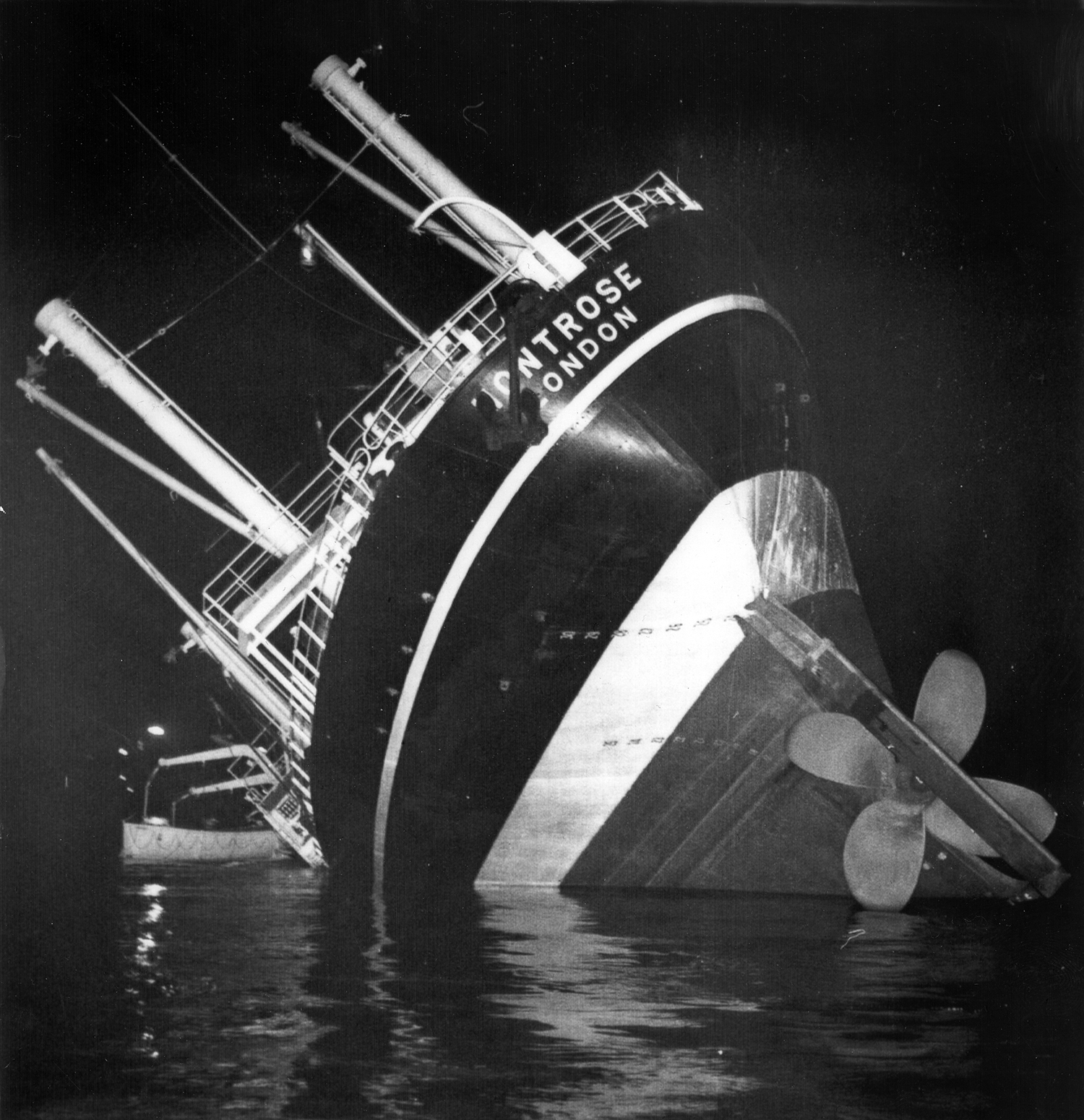
On July 30, 1962, a British freighter called the M.V. Montrose hit a barge in the shipping lane of the Detroit River as it was backing out of the Detroit Harbour Terminal.
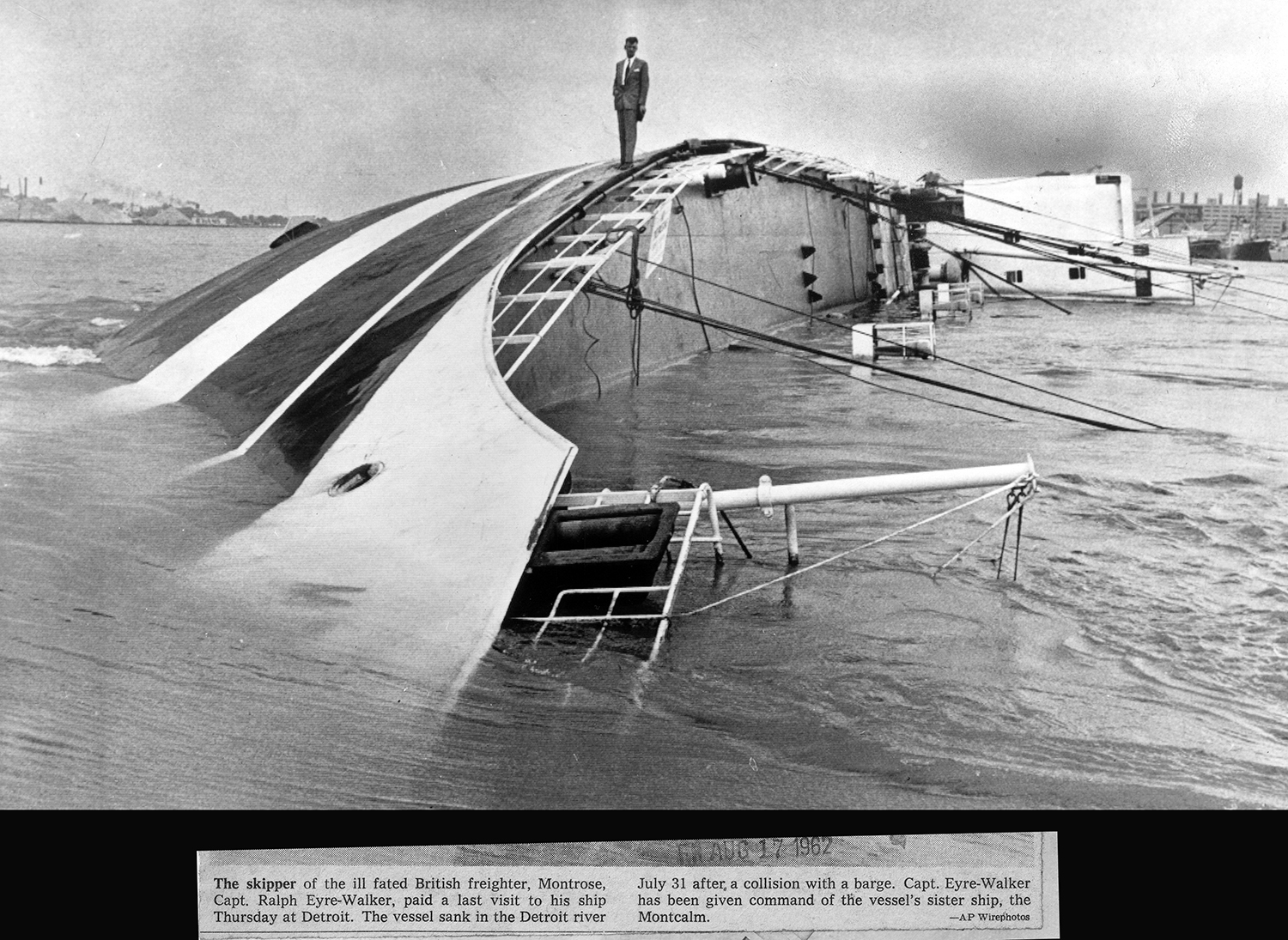
The collision created a huge hole in Montrose’s hull causing water to pour in and the propeller rose out of the water, causing the freighter to become stranded underneath the Ambassador Bridge.
In the months it took for the vessel to be removed from the waterway, it drew large crowds of people from both sides of the border who wanted to take in the unusual sight. “Everybody and anybody wanted to go and see this thing that was sunk in the middle of the river,” said Cornwall, who previously worked at CBC News.
At the time, pedestrians could pay to walk across the Ambassador Bridge and that’s exactly what Cornwall and his brothers did. “It was bizarre. You walked out there and you leaned over and here was this ship literally on its side you can see the hull, you can see there was stuff that had come out of it that was floating around, but it was just a bizarre, bizarre circumstance,” he said.
The 122-metre, 7,000-ton ship was new and cost between $6 million and $8 million. It cost $750,000 to salvage the freighter, which stayed on its side in nine metres of water until October. It left Detroit on Nov. 9, 1962.
Windsor Port Authority harbour master Peter Berry said that although he didn’t experience the Montrose situation first-hand, he’s familiar with the story. “During those times it was much more common for vessels to get into trouble, but for a collision of this type, very, very unusual,” he said. He said it likely slowed down shipping traffic in the Detroit River, but wouldn’t have stopped it completely as it wasn’t large enough to do so.
This event, he said, changed the way ship traffic was managed in that area where they focused more on navigation in the channel. “You can hear now as the vessels go under the bridge, the horns, the three horns as they go by, indicating they are passing underneath the bridge and coming to that turn so everybody’s aware that there’s another vessel or there’s a vessel coming,” he said.
In the end, Berry said the Montrose did sail again under a different name. But, he added, it ended up sinking a second time in Cleveland and that it eventually became a barge.
CBC News
Cruise planners in historic Great Lakes Inside Passage exploration
Planners from six cruise lines participated in what’s being called a historic exploration of the Lake Superior North Shore Inside Passage.
‘This extraordinary and historic navigation exercise took five days to complete and was the first time that a formal commercial investigation has been made of the northern Lake Superior shoreline,’ according to Stephen Burnett, executive director, Great Lakes Cruise Association. Burnett explained the north shore has not seen regular commercial shipping for over 50 years and before the road system was built, the last passenger traffic was in 1942. ‘The absence of commercial traffic is one reason for the rugged untouched beauty of this area,’ he said.
Planners from The Ritz Carlton Yacht Collection, Hurtigruten Expeditions, Ponant Cruises, Lindblad Expeditions and Scenic Cruises took part in this destination development exercise.
Burnett stressed the historic nature of their expedition: ‘There has been zero commercial traffic along this magnificent stretch of coastline and this exploratory trip has actually kickstarted the process.’
Wearing Mustang dry suits the group traveled in an oceangoing rigid inflatable boat and took an active part in recording this cruising opportunity.
This destination research was planned in 2019 but postponed by the pandemic until last week. It was conceived by Burnett, who leads the Great Lakes Cruise Association, an organisation focused on building cruise traffic for Canadian ports on the Great Lakes.
Capt. Sean O’Donoughue was made available by the Great Lakes pilots to lead and record the navigation, and Capt. Greg Heroux from Sail Superior provided daily local tourism input and outlined the cruise tourism potential along the Lake Superior North Shore Inside Passage.
The journey started in Thunder Bay, Ontario, visiting the nearby Sleeping Giant land mass and the abandoned, submerged mine at Silver Islet, in its day the world’s largest silver mine. That was followed by an open water journey to Red Rock, Ontario, and the nearby town of Nipigon to see petroglyphs and hike the Casque Isles Trail, continually charting the depths for cruise navigation inside the many deep water passages of this archipelago.
The journey continued east to the charming village of Rossport, Ontario, and nearby Battle Island where a hike to the working lighthouse was a highlight. The final segment of this exploration was a visit to the Slate Islands with its resident herd of woodland caribou. During the winter months when the straits between the Slates and nearby Terrace Bay freeze over, a wolf pack has been known to cross the ice and hunt members of this herd.
Burnett said the expedition planners were impressed by the extraordinary scenery, the navigable deep water passages and the warmth and curiosity of the residents plus attractions waiting to be discovered.
The trip was an ‘eye-opener for the planners and the host team,’ Burnett told Seatrade Cruise News. ‘We knew we had magnificent scenery, wonderful and unusual attractions ashore. What we did not know was how the guests would react and that was quite amazing.’
Burnett expects at least two new ships coming to the region in 2024.
Seatrade Cruise News
Great Lakes’ water temperatures show Lake Superior is odd lake out
We can usually expect Great Lakes’ water temperatures to mimic the summer air temperatures. This is mostly true this summer, except for Lake Superior.
The following graphs show this year’s average water temperature on each Great Lake. Lakes Michigan, Huron, Erie and Ontario all are amazingly close to the long-term average water temperature. Usually some part of the year has temperatures deviating significantly from the normal. The big deviation from normal really hasn’t happened this year on those four lakes.
Read the full article at this link: https://www.mlive.com/weather/2022/08/great-lakes-water-temperatures-show-lake-superior-is-odd-lake-out.html
MLive.com