Ice Becoming a Factor On Great Lakes, Seaway
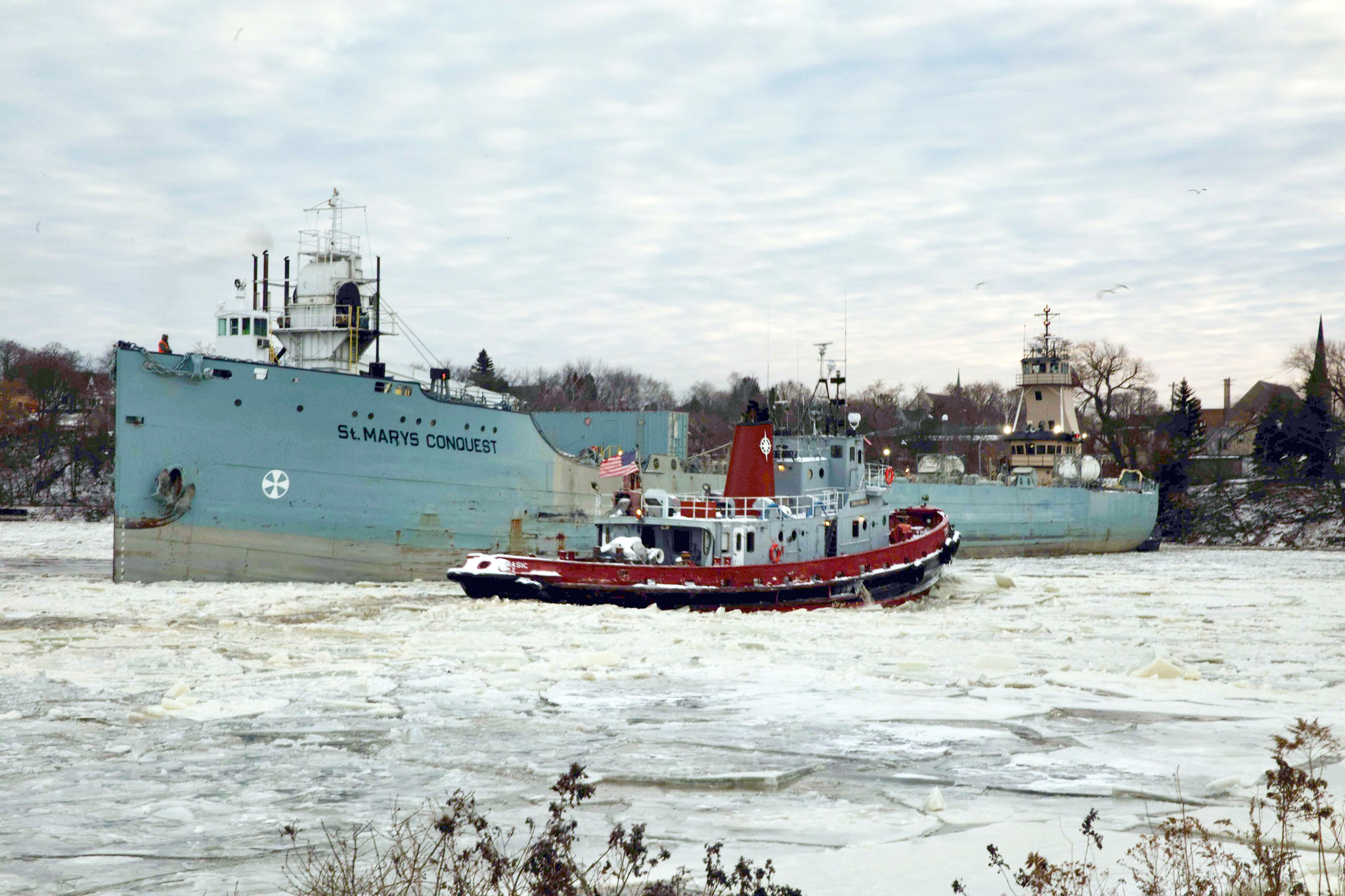
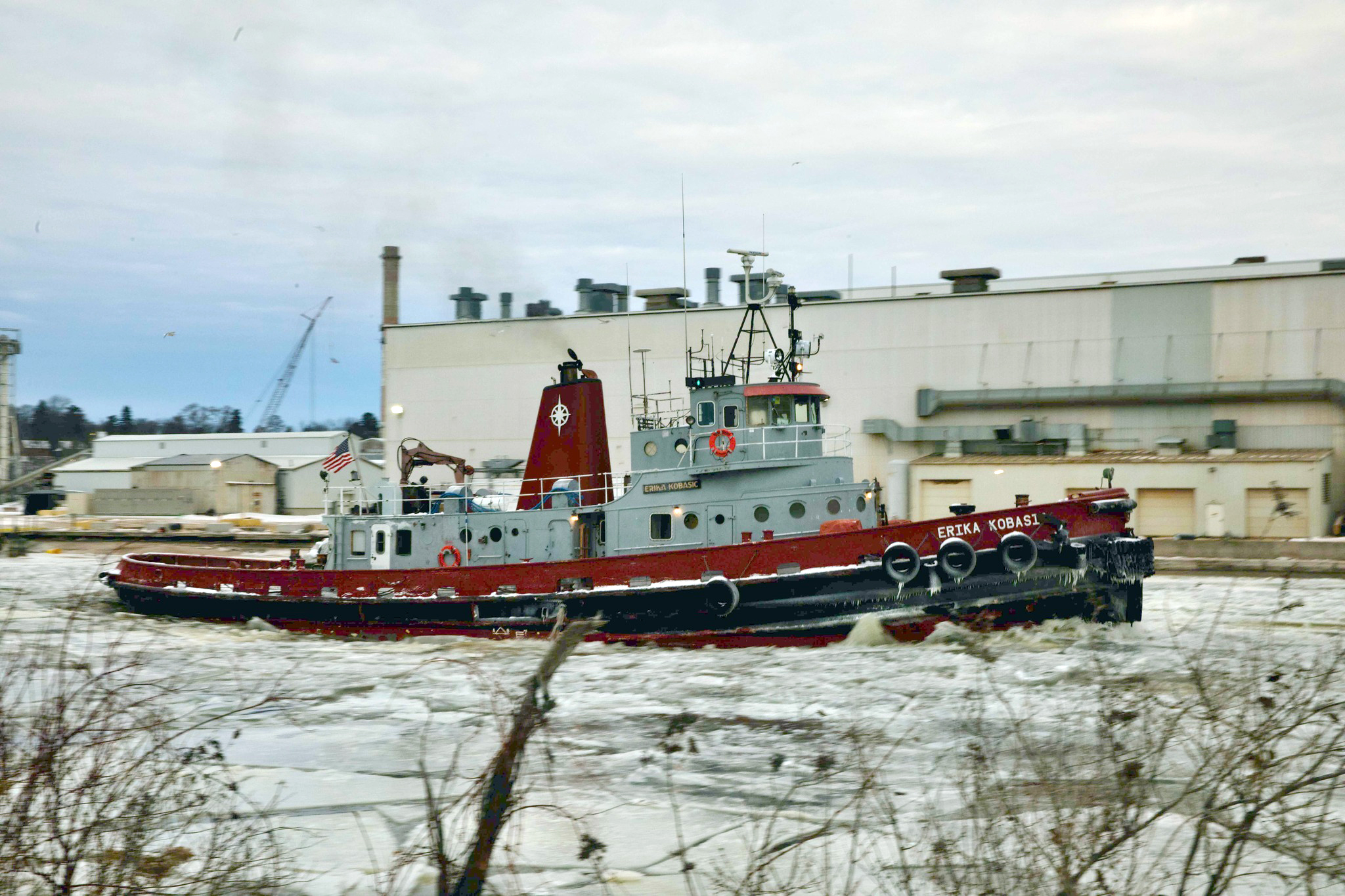
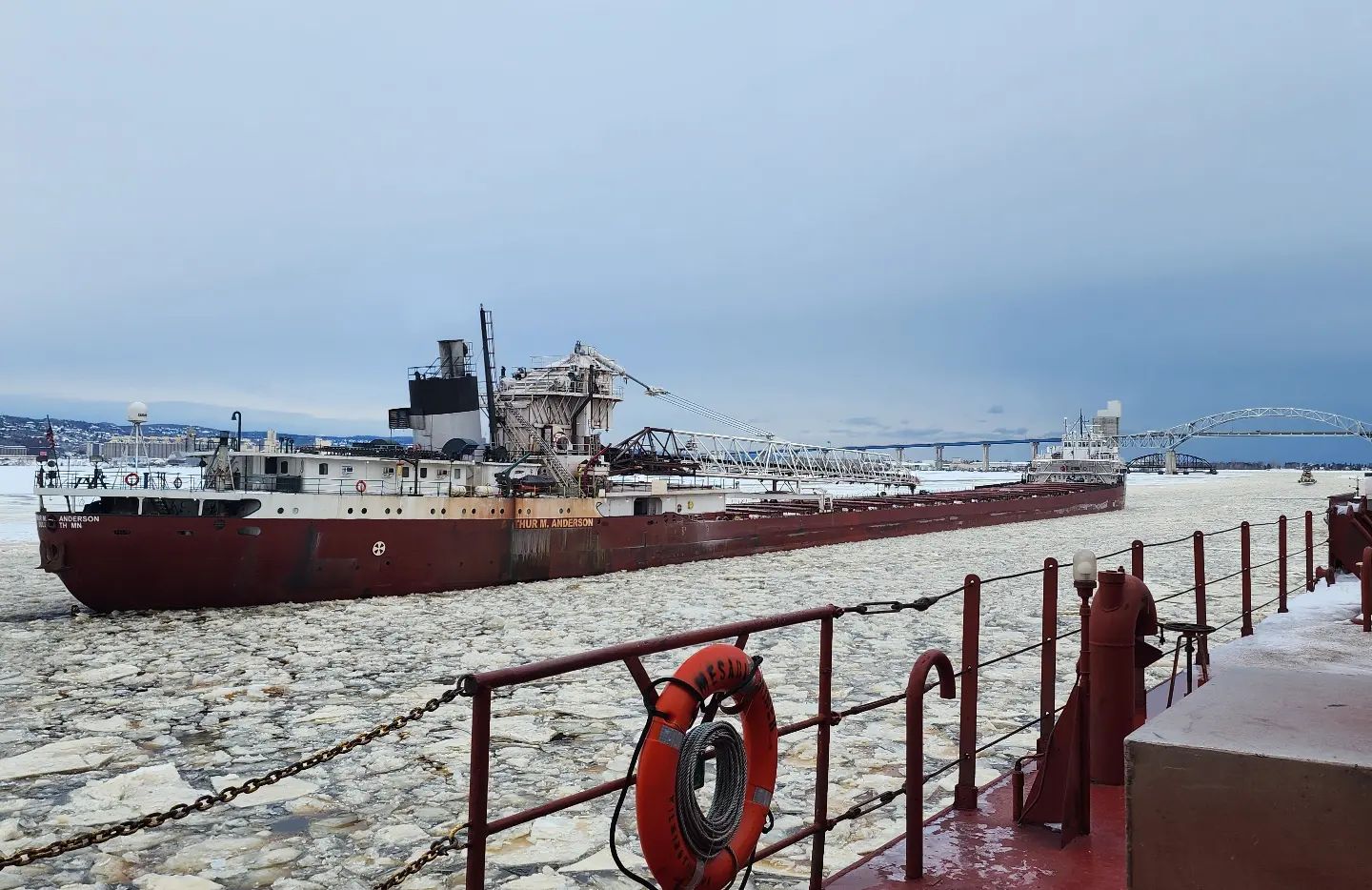
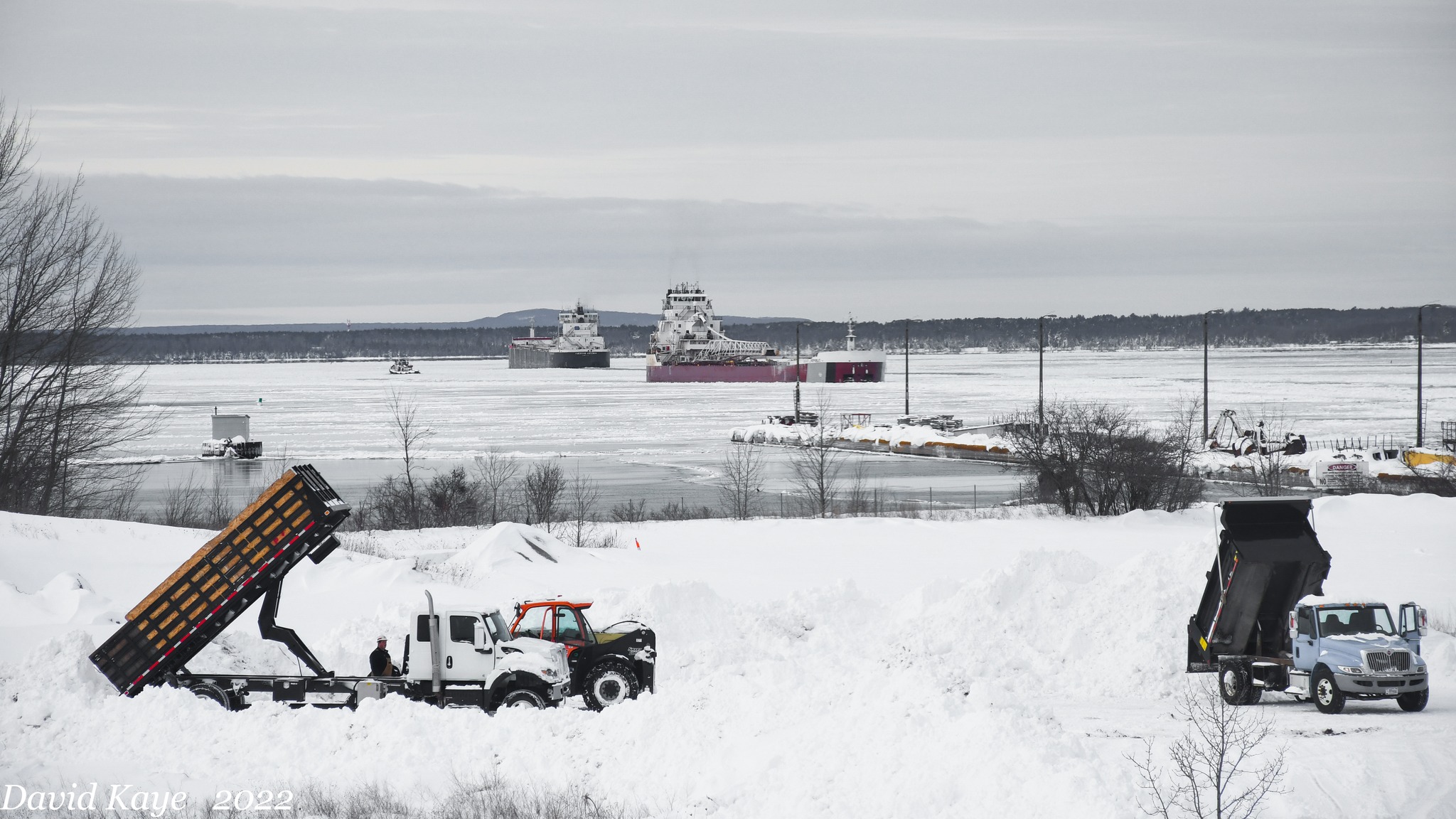
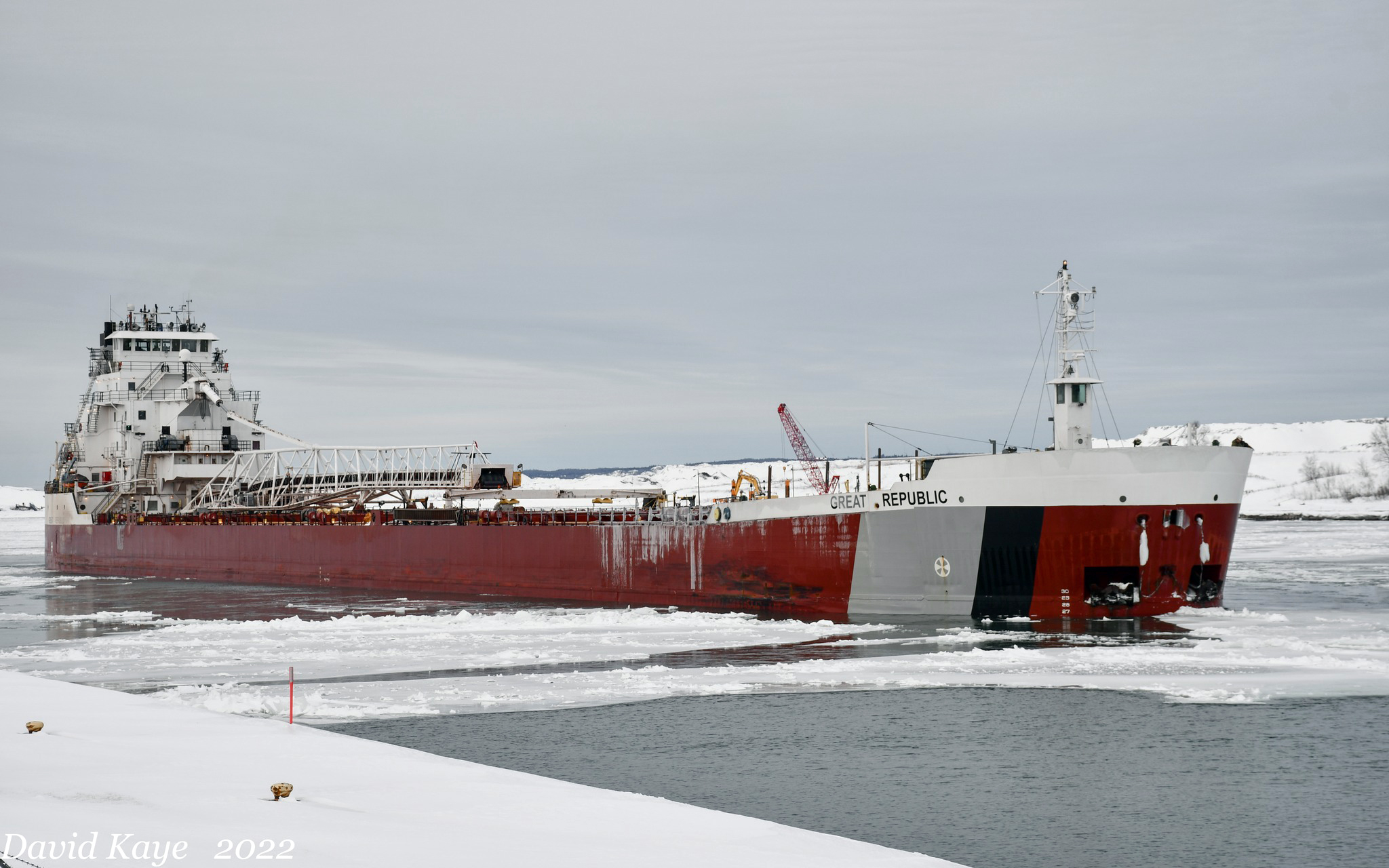
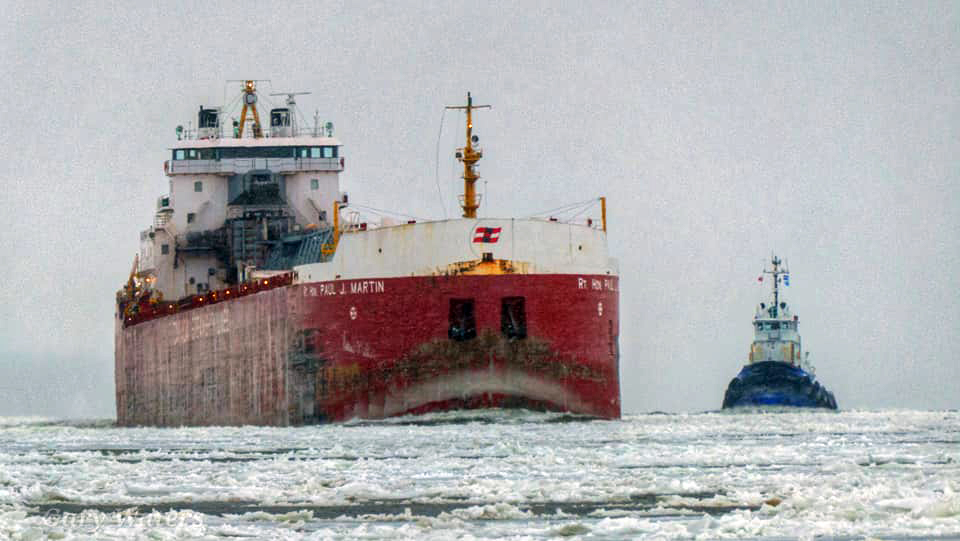
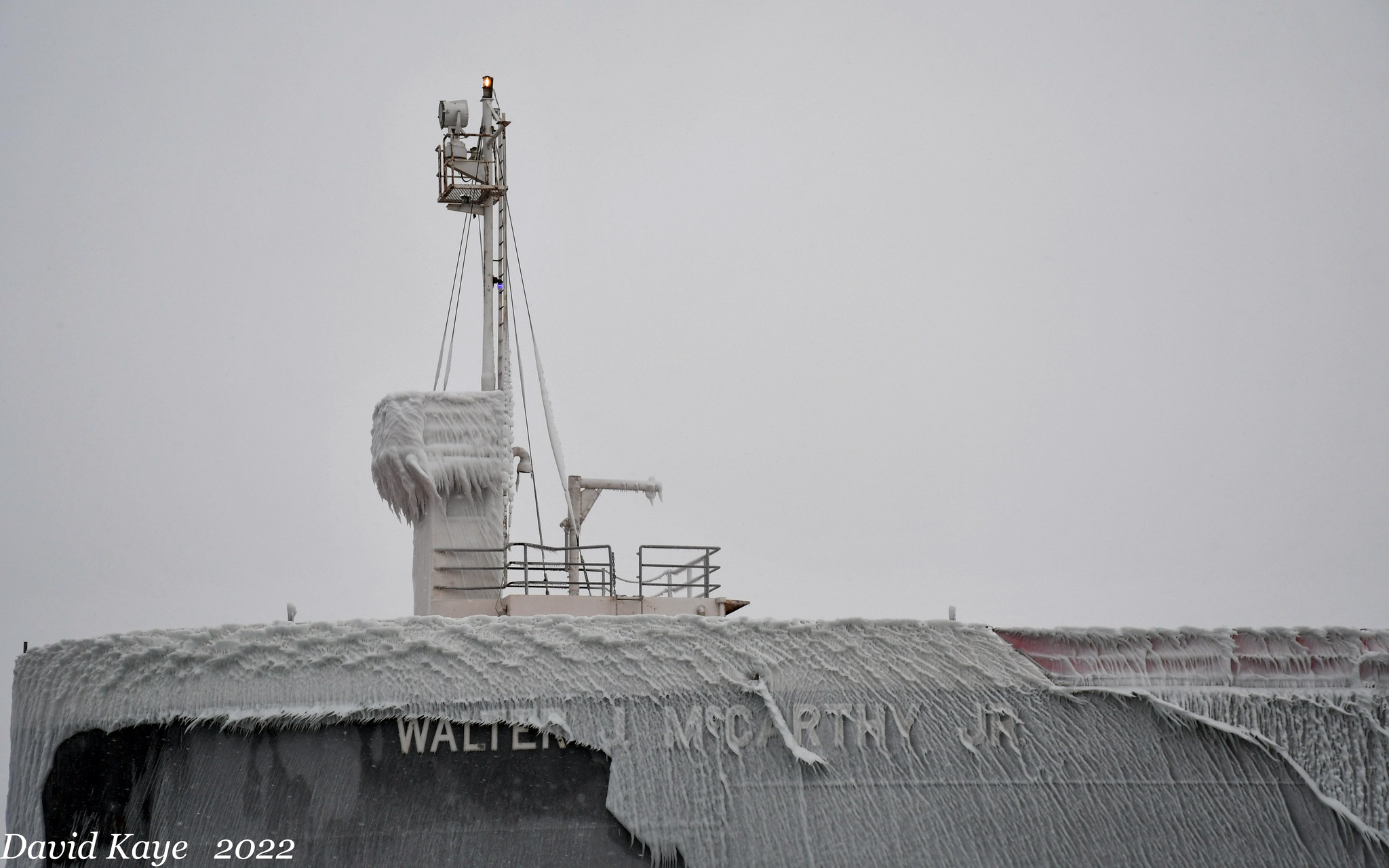
As winter gears up, so is the accompanying ice season, although warming temperatures later this week could stall ice build up, at least for a while.
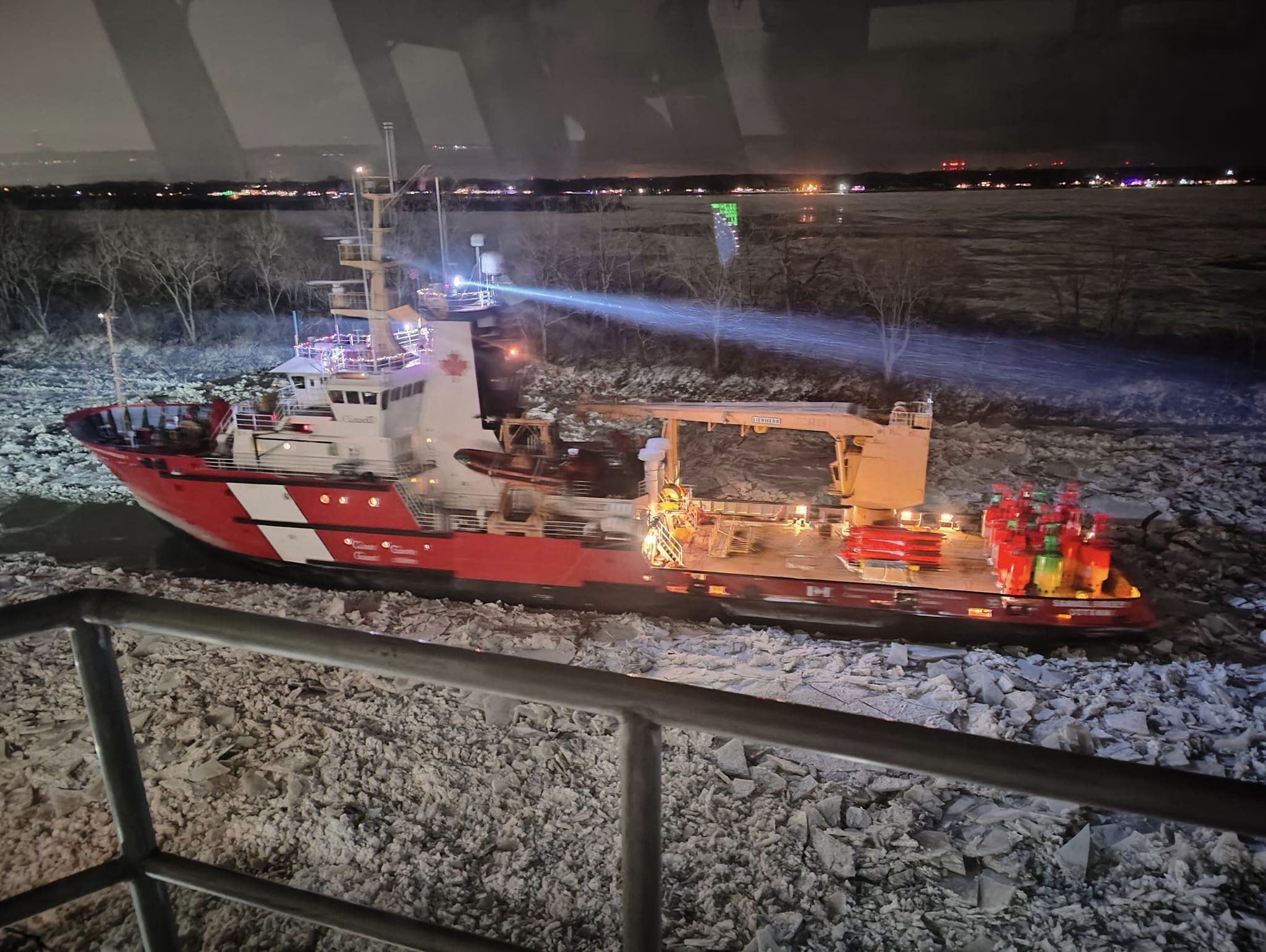
On Monday night, ice in the Amherstburg Channel stopped the upbound barge Menominee/tug Olive L. Moore. The CCG Samuel Risley, as well as two U.S. Coast Guard cutters, freed her Tuesday and several downbound vessels were able to continue their trips. Among those were the tanker Algoma Hansa, headed eventually to Halifax, where she will be sold, and Federal Kushiro, the last saltie of the season from the upper lakes.
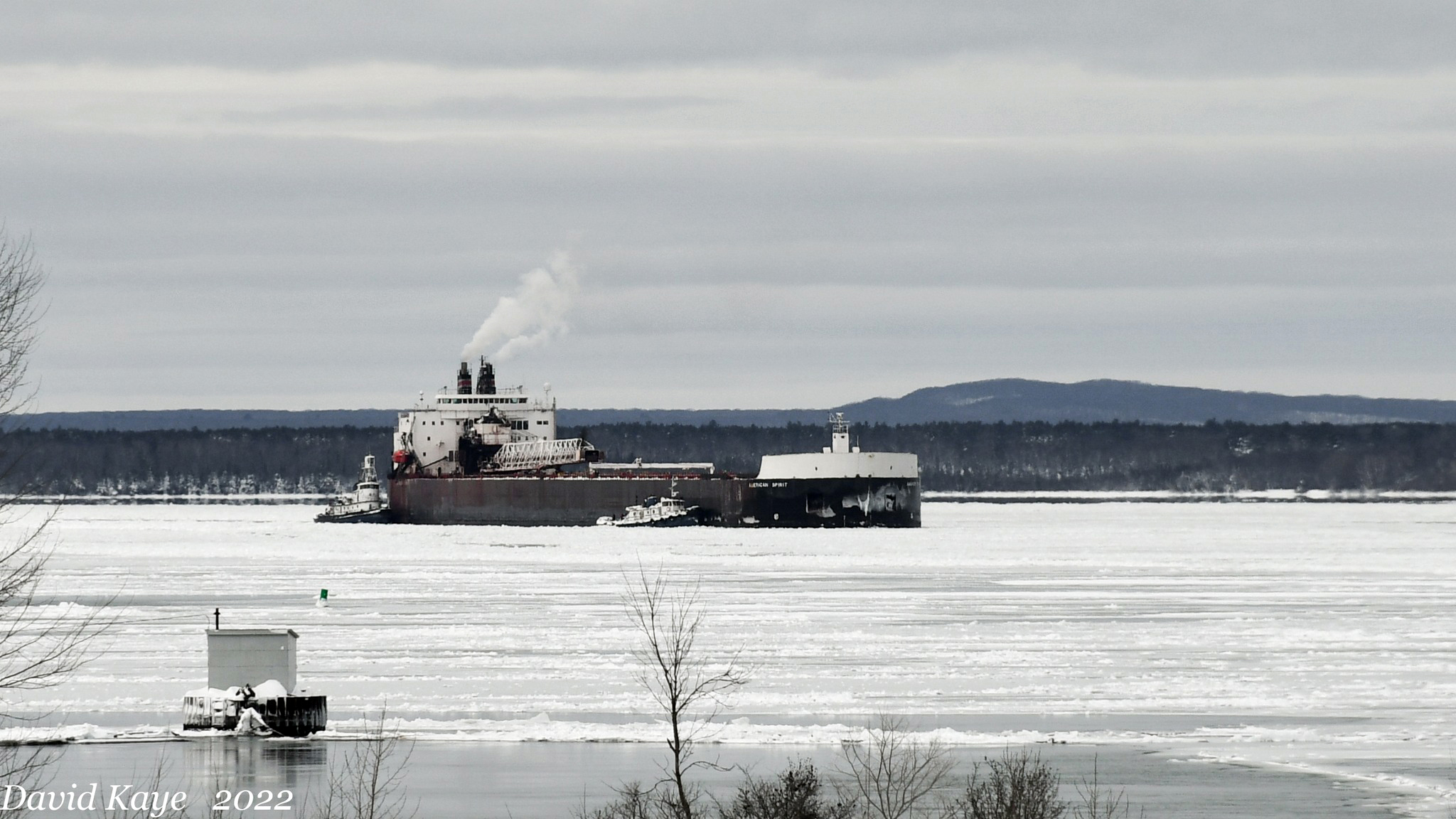
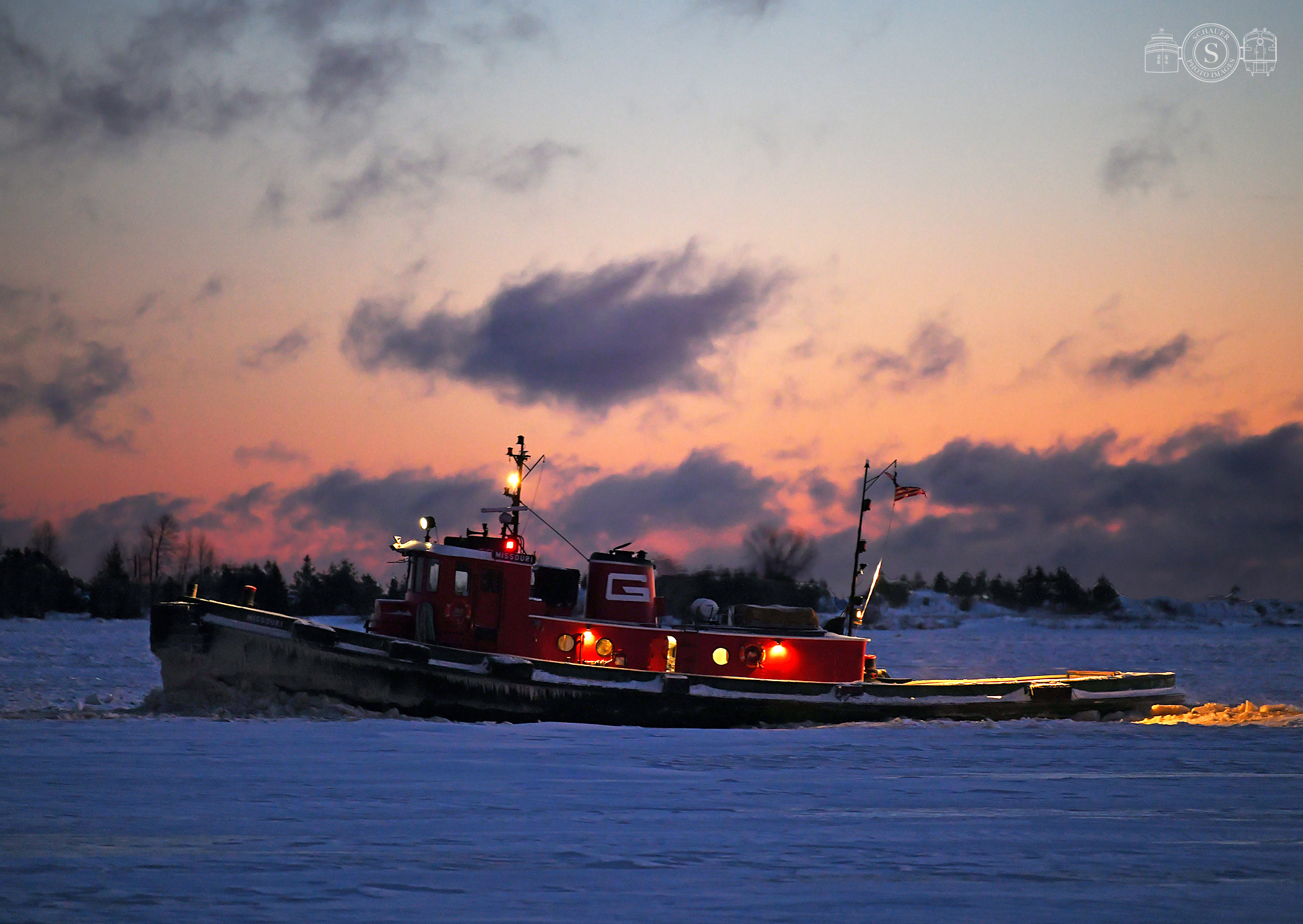
Ice cover has been growing quickly in Duluth-Superior, thanks to a run of sub-zero weather, though vessels are still moving there without much difficulty thanks to tug and icebreaker assistance.
Tuesday morning, Soo Traffic reported refrozen brash and plate ice was about 4 inches thick at Johnson Point at the upper end of Neebish Island, and 2-4 inches of the same from there to Nine Mile Point. Again, traffic was moving without icebreaker assistance.
Aerial footage shows ice formations covering Lake Michigan, including ice pancakes, a phenomenon only seen if temperatures drop to well below freezing for several days. View a CNN video at this link: https://www.cnn.com/videos/
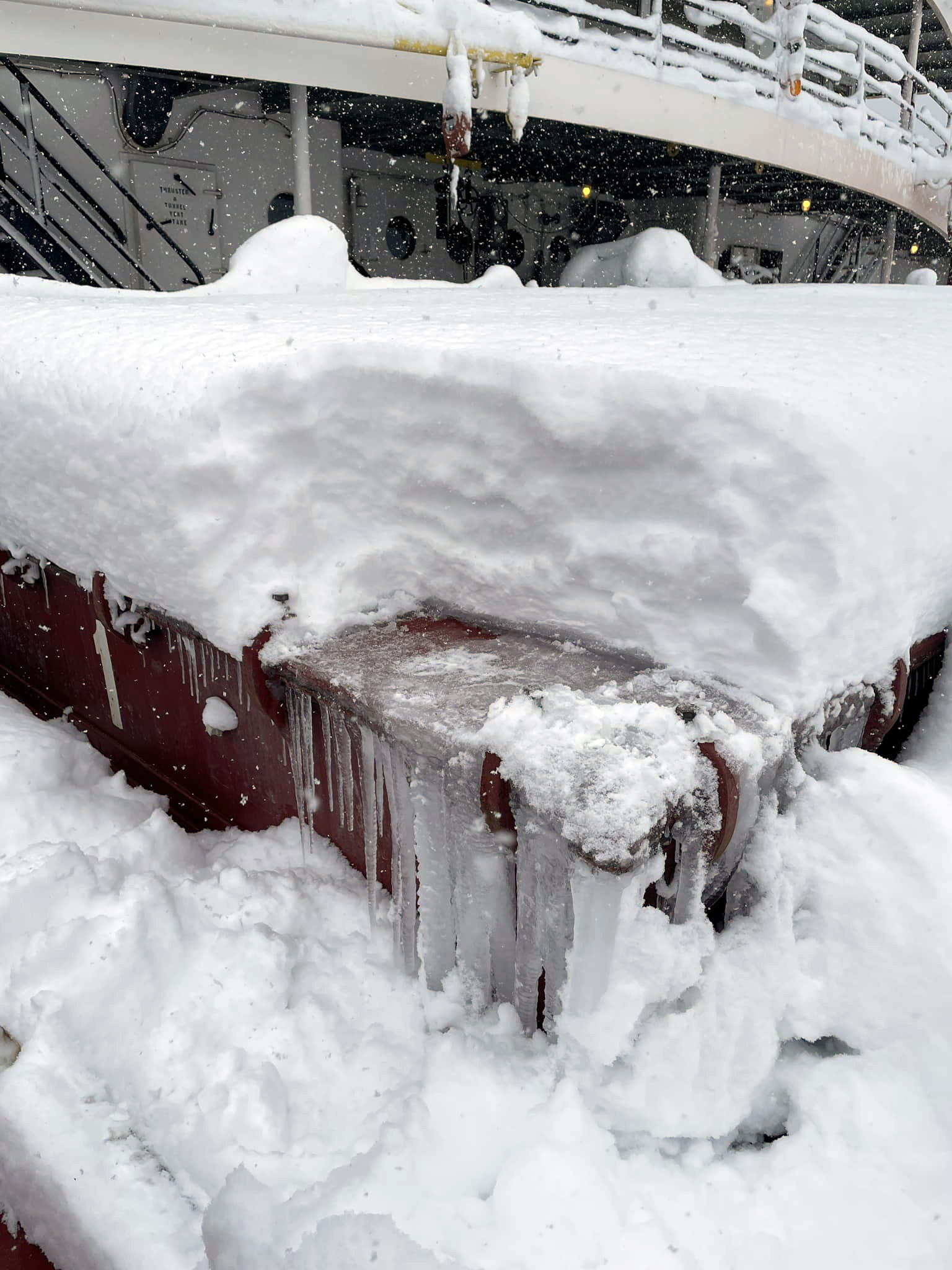
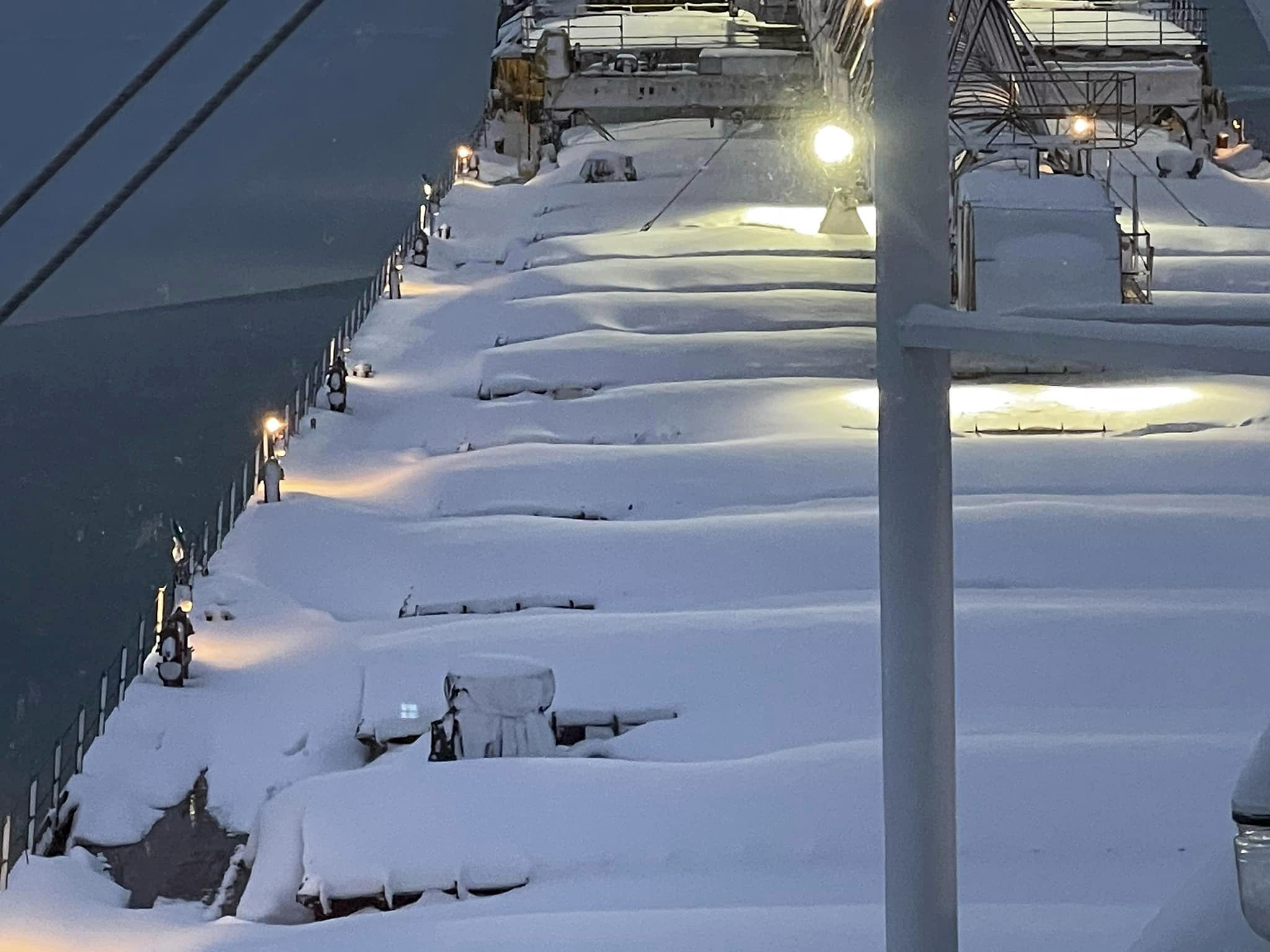
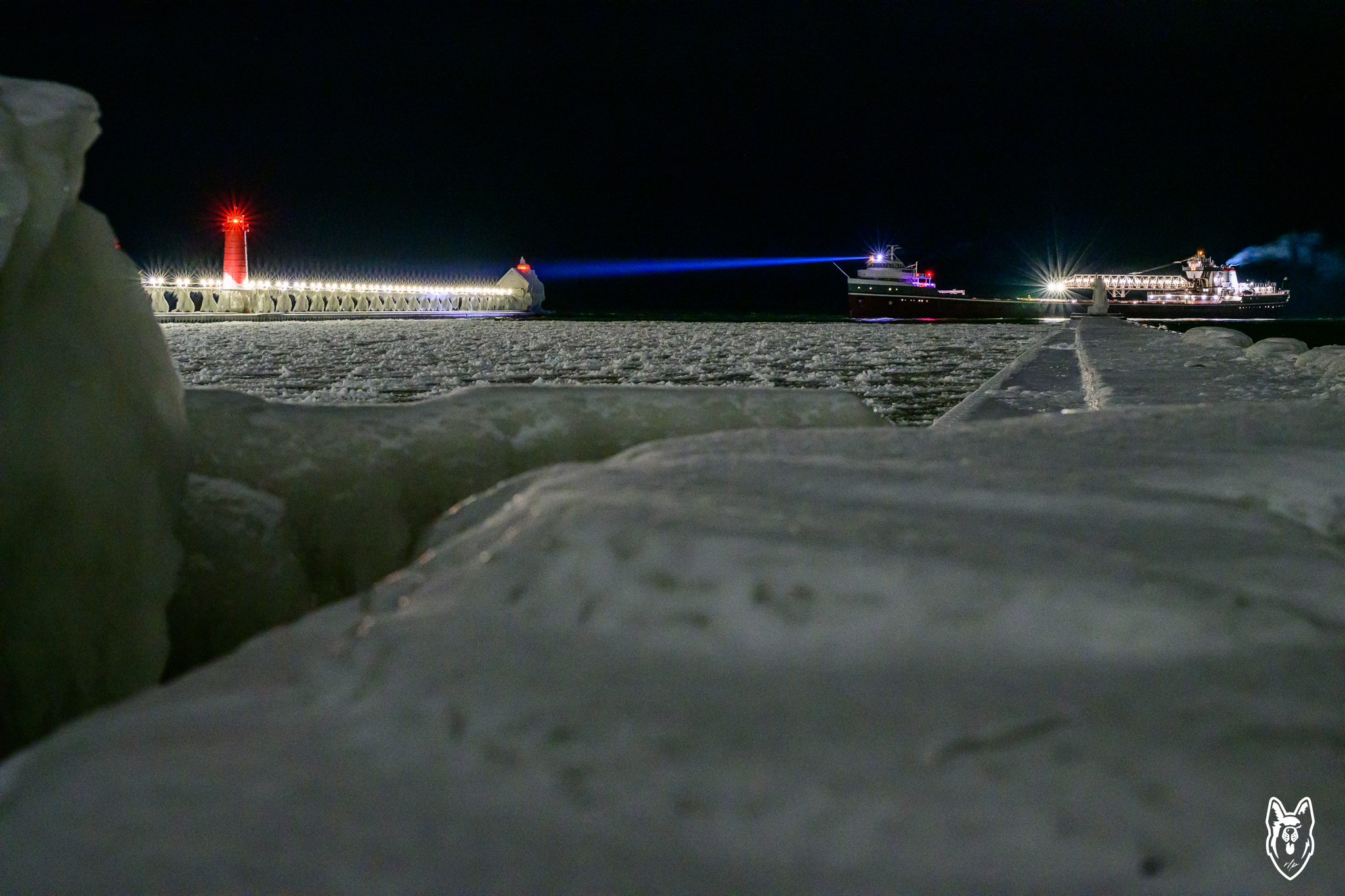
Winter storm Elliot had a huge impact on the Lake Michigan shoreline, both seen and unseen. It added more than just feet of ice to the piers and channels, but also drastically changed the topography of the lake bed. Wilfred Sykes attempted to enter Grand Haven early Tuesday morning but was unable to, likely due to shoaling from the storms of the past weekend. After about an hour of working at it, they headed north to Muskegon, where they encountered more ice but were able to dock and unload.
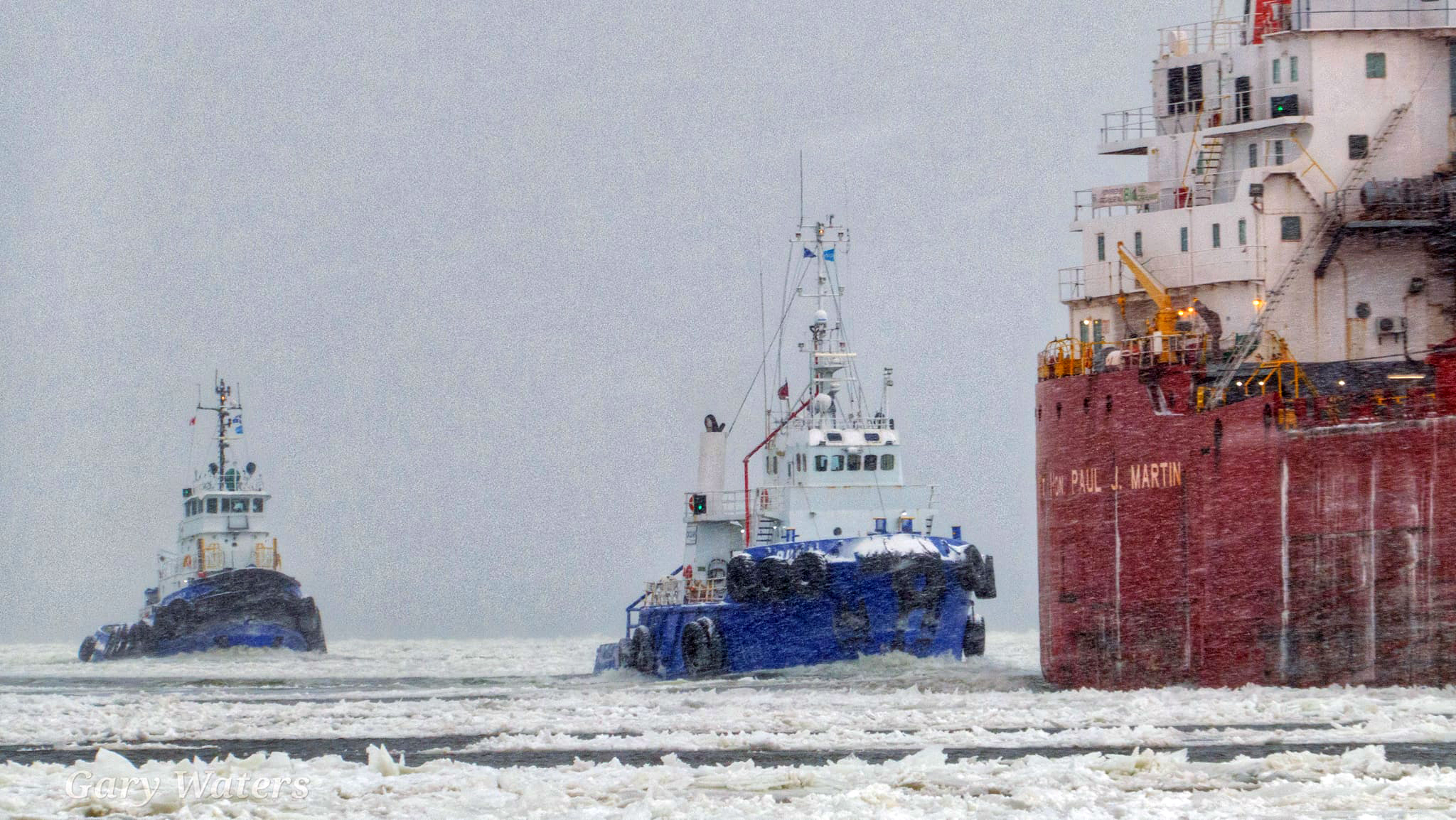
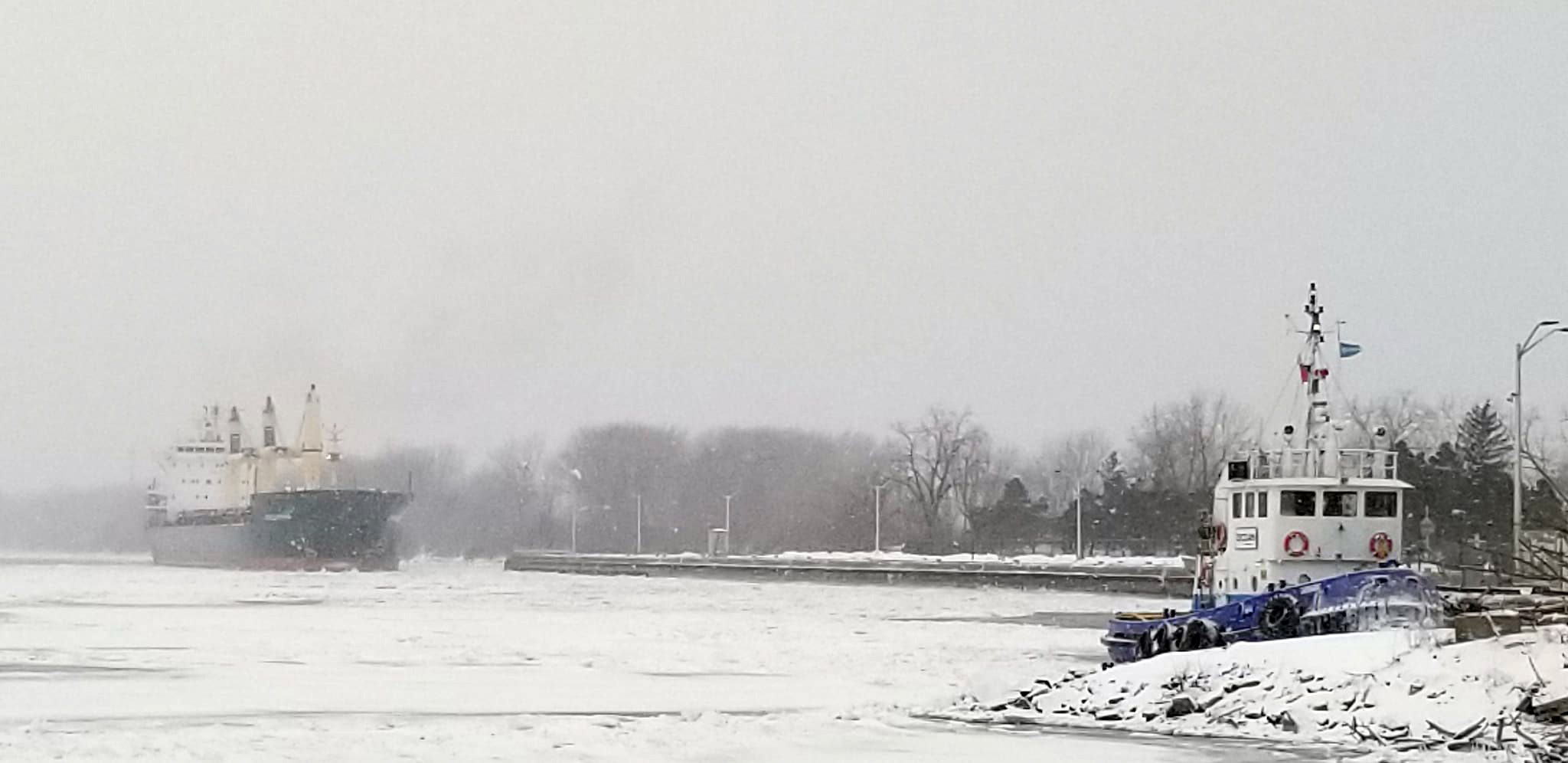
Vessels in the Welland Canal and St. Lawrence Seaway locks are also encountering late December ice. Heavy ice at Port Colborne is causing problems, with tug Vac trying to flush ice between each lockage though Lock 8. The process is leading to about an hour between downbound transits.
CGC Bristol Bay was on her way down to the upper Seaway paired with barge CGB-12001 to decommission buoys for the winter. The new tug Seaway Guardian was on buoy duty with Amy Lynn D but had issues. She will be heading to Heddle Shipyards in Hamilton for repairs,
The saltie Greenwing, stopped since 5 am Tuesday morning a little above the port of Côte Ste-Catherine, left around 9 a.m. Meanwhile, the tug Laprairie is assisting to clear the lock at Côte Ste-Catherine.
From news and social media reports
Grain Exports from Duluth-Superior Headed For Lowest or Second-lowest Year Since 1890
DULUTH, MN – Grain shipments through the Port of Duluth-Superior are lagging.
Through November, 510,547 metric tons of grain had moved through the port on ships so far this season, setting it up to be the lowest or second-lowest season since 1890, according to historical tonnage figures dating back more than 150 years.
Exports of grain by ship have declined for decades, down from a high of 9.2 million metric tons in 1978. Soybeans now go by rail to the West Coast, for example, and the geographic area where grains were harvested before being sent to the port for transport has shrunk, among other factors. But a unique set of circumstances have caused the 2022 decline.
Daniel Rust, associate professor of transportation and logistics management at the University of Wisconsin-Superior, said fewer ocean-going ships coming into the port means less grain leaving the port.
“It’s oftentimes the case that grain outbound is a backhaul. There will be some other commodity coming in like wind energy components, (or) something else — that’s the reason for the vessel to come all the way to Duluth-Superior — and then they don’t want to go out empty. So they pick up a load of grain and head back to the ocean,” Rust said in an interview with the News Tribune.
Both 2019 and 2020 set records for the amount of wind energy components moved through the port, and each year saw 85 total salties arrive (in 2020, 30 of those were for wind parts). But the number of salties arriving fell during the last two years, with 50 salties arriving in 2021 and 54 arriving through November of this year, according to port statistics.
“So with the combination of fewer wind energy components coming in and the rates being high, the owners/operators of vessels say, ‘Why should I come in empty all the way to Duluth-Superior to pick up grain when I can make more money elsewhere?’ I think that’s the bottom line,” Rust said. “A lot of grain here to be exported, but it’s not going out by ship.”
Instead, grain is largely going out by rail, Rust said. Unlike shipping’s tonnage reports, the amount of grain moved by rail is not public.
At the CHS, Inc. grain elevator in Superior, fewer salties were filled with grain this year. Justin Cauley, senior director of transportation at CHS, said the war in Ukraine has disrupted demand. The country is one of the top exporters of grains like wheat, corn and barley.
Cauley said European demand for corn and beans shifted from the Black Sea to the Great Lakes, driving “much more” vessel demand in the Chicago and Toledo ports. If salties are discharging in lakes Michigan, Erie or Huron, then they are less likely to continue to Duluth and Superior, the western-most port on the Great Lakes, to fill up with grain.
Read more and view images at this Duluth News Tribune link: https://www.duluthnewstribune.
New Lock at the Soo Reauthorized at $3.219 Billion
SAULT STE. MARIE, Mich. — U.S. Army Corps of Engineers, Detroit District New Lock at the Soo Project in Sault Ste. Marie, Michigan is reauthorized in the Water Resources Development Act (WRDA) 2022 on Dec 23, 2022. The project reauthorization amount is $3.219 billion.
An authorization sets how much money agencies and programs can receive, and how they should spend the money. This authorization makes it possible for the project to maintain efficient funding eligibility. Due to recent cost increases, the project cost was estimated to exceed the previously authorized spending limit.
“With continued funding, the remaining construction work, valued at $794.5 million could be awarded over the next three years allowing the project to stay on schedule and be completed in 2030.” Deputy District Engineer Kevin McDaniels said.
Since the project’s authorization in America’s Water Infrastructure Act of 2018, the authorized cost changed from $922 million to $3.219 billion. Over the last four years, the project cost has been impacted by labor shortages, supply chain disruptions and material cost increases.
The Corps of Engineers sought consideration of an increased authorized project cost in WRDA 2022 by transmitting the approved Post Authorization Change Report to the House and Senate Authorizations Committees on June 8, 2022. The project received strong bipartisan support while going through both the House and Senate.
A 2015 Department of Homeland Security study estimates a six-month Poe Lock closure would temporarily reduce the U.S. gross domestic product (GDP) by $1.1 trillion, resulting in the loss of 11 million jobs. This Great Lakes Navigation System critical node is essential to U.S. manufacturing and National Security according to the study.
For more information about the New Lock at the Soo project, visit our website: https://www.lre.
Seaway Closing Date Extended Slightly Due To Weather
MONTREAL, QC – As a result of severe environmental conditions impacting navigation, the closing date for the Montreal-Lake Ontario Section has been extended from 12:00 (noon) December 31, 2022 to 12:00 (noon) January 1, 2023.
Mariners are advised that the cut-off date for acceptance of vessel transits under special agreement have been extended as follows:
• Any ship calling in downbound at Cape Vincent before 23:59 hours December 30, 2022, may be accepted to transit the Montreal to Lake Ontario section, under special agreement, operating conditions permitting.|
• Any ship calling in upbound at CIP2 before 04:00 hours December 31, 2022, may be accepted to transit the Montreal to Lake Ontario section, under special agreement, operating conditions permitting.
• Any ship leaving a port within the Montreal-Lake Ontario Section, before 06:00 December 31, 2022 may be accepted to transit the Montreal to Lake Ontario section, under special agreement, operating conditions permitting.
Obituary: John Spooner
John Spooner, age 91, a long-time docent at the William G. Mather museum ship in Cleveland, passed December 7, 2022. Born in 1931 in Rocky River, he was resident of Berea for 56 years. John was a teacher for 35 years, an avid sailor and camp counselor (lovingly known as Capt. John), and served as an interpreter with the US Army in Germany. He was a member of the Christ United Church and a Paul Harris member of Berea Rotary. A memorial service will be at a later time. In memory, a gift to the organization that relates you to John, would be appreciated.