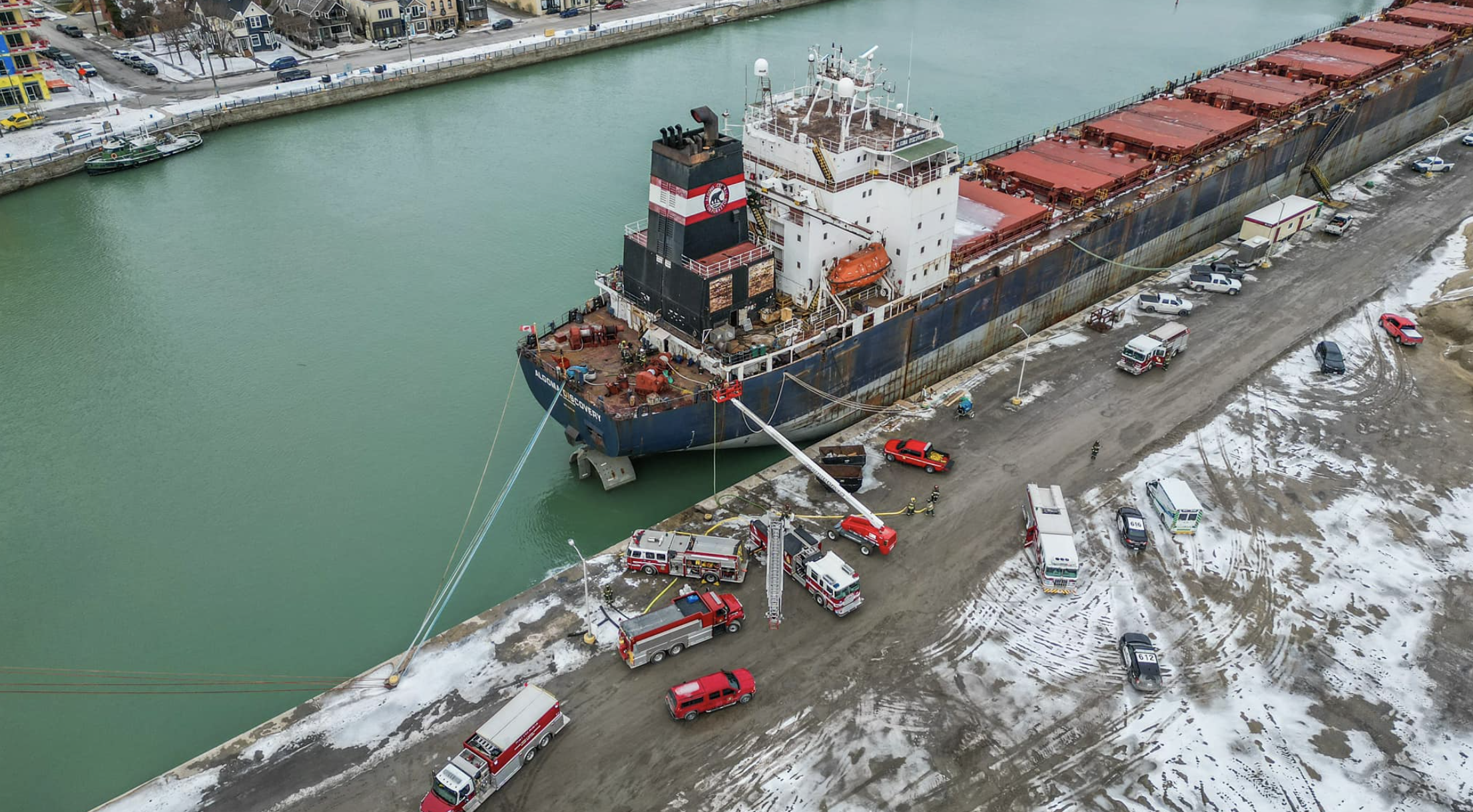
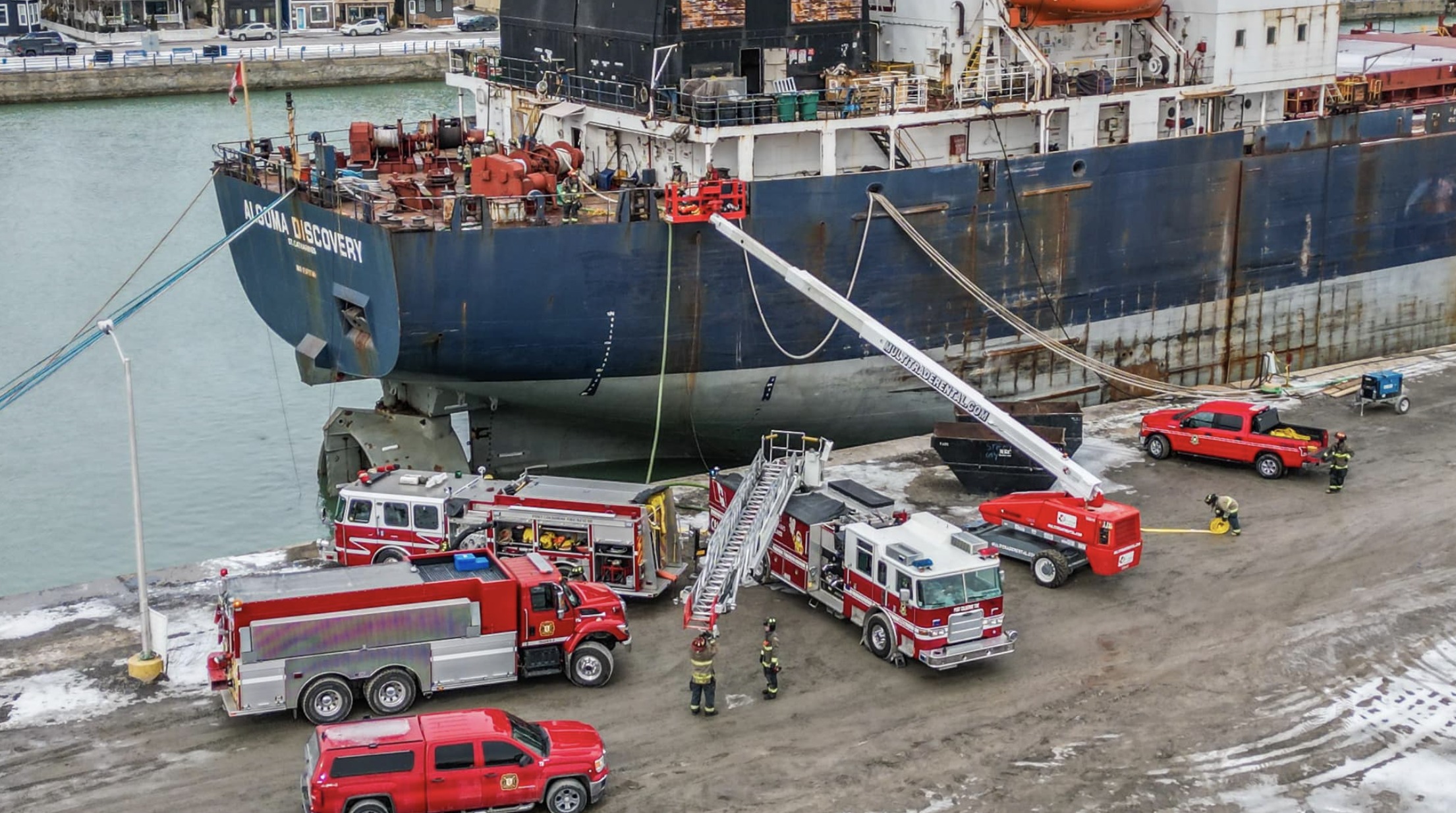
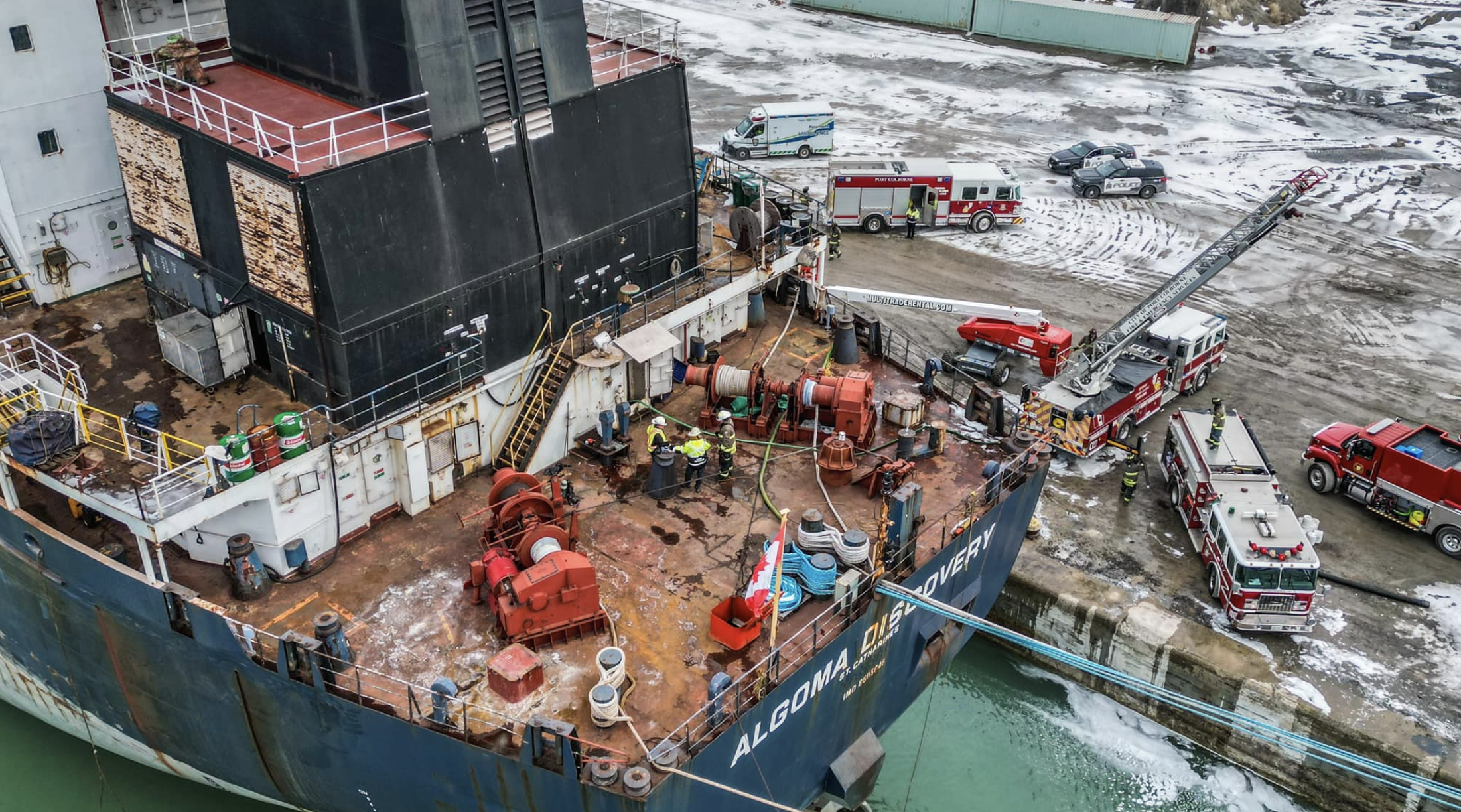
Firefighters extinguish blaze on board Algoma Discovery
A fire suppression system helped starve a diesel fuel fire on board the Algoma Discovery Monday, says Port Colborne Fire and Emergency Services Chief Scott Lawson. Lawson said firefighters were called to the east side of the Welland Canal, at the Sinder Dock, just after 9 a.m. for a reported structure fire.
On scene, they discovered the fire was in the engine room of the 36-year-old bulk cargo vessel built in Croatia, about seven to 10 metres below the main deck.
“The vessel was in various stages of evacuation, and we were told there was a diesel spill down in the engine room. Our crews went down for an initial inspection, but there was heavy smoke in the compartment,” said Lawson, describing the compartment as massive.
Port Colborne’s Aerial 1 was set up as a waterway to feed firefighters on board the 222.2-metre-long laker. Fire departments used Welland Canal for water supply.
“The ship has a fire suppression system for the engine room, and we were able to get them (workers on board) to activate it. Once it was activated, it bought us a lot of time.” Lawson said the system uses carbon monoxide to starve oxygen, which fuels fires, in the room.
“Our crews found a small fire that we put out, and we slowly ventilated the room, so any oxygen we introduced didn’t ignite.”
Welland Tribune
Algoma Central Corp. releases 2022 annual report
Excerpt: Customer demand appears to be strong in the Domestic Dry-Bulk segment in 2023 and we are preparing for the fleet to be fully utilized for the year. Higher grain volumes are anticipated, driven by the return of Western Canada grain crop size and the continued demand for Eastern Canada export grain capacity.
In our Product Tanker segment, we expect customer demand to be steady through 2023, although energy markets remain volatile due to on-going hostilities in Europe. Vessel utilization is anticipated to be strong and we currently expect the newly acquired Algoberta to commence domestic operations late in the first quarter when seasonal demand picks up.
Read the full report here (scroll down to View the Press Release: https://www.algonet.com/investor-relations/?fbclid=IwAR2xFAdUh7z1svEelTWTSe6jwZ6haf7-2Qg–nMtBF1tbs_rrY3bmZRR2DE
Canada tightens ballast water regulations
Canada’s Minister of Transport Omar Alghabra last week announced funding of C$12.5m ($9.2m) to launch the Ballast Water Innovation Program, part of its Oceans Protection Plan. The program, a central component of the Government of Canada’s efforts to advance the implementation and enforcement of the 2021 Ballast Water Regulations, will play an important role in further reducing the spread of aquatic invasive species in the Great Lakes and St. Lawrence River by investing in innovative solutions to ballast water management.
Evidence shows that ballast water management systems are an effective solution in the Great Lakes and St. Lawrence region, said Transport Canada in a press release. However, most ballast water management systems have been developed for warmer, salt-water conditions typically encountered by ocean-going vessels. Great Lakes regional water conditions are cold, fresh and sometimes heavily sedimented. These water conditions can pose a challenge to ballast water management systems in the region.
To address these challenges and prevent the spread of aquatic invasive species, the new program will undertake four initiatives.
It will fund research projects that ensure ballast water management systems are optimized for unique water environments in the Great Lakes and St. Lawrence River; aim to provide innovative solutions to ensure the successful implementation of the country’s new ballast water regulations and prevent the entry and spread of invasive aquatic species in the region; enable the government to deepen its technical expertise relating to ballast water management system issues; and inform Canada’s discussions with the US and at the International Maritime Organization towards more compatible rules and increased environmental protections.
Transport Canada is now accepting applications for research funding from Canadian vessel owners and operators, Canadian port authorities, not-for-profit organizations, public-sector organizations and academia until May 10. Approved projects are expected to begin in 2023.
Canada’s 2021 Ballast Water Regulations address its commitments under the International Convention for the Control and Management of Ships’ Ballast Water and Sediments, 2004 and require the use of ballast water management systems.
Splash247