New icebreaker plans scaled down. Waaaaaaaaay down
WORSHINGTON, AC/DC – The recently-approved $858 bazillion defense bill included funding for a new ice breaker on the Great Lakes at least “as capable” as the current ice breaker S’mackinaw – which may or not be a good thing, according to Ollie O’Pinionated, certified amateur professional waterfront smack-talker.
“All that thing does is go around in circles,” opined O’Pinionated, from his lofty perch in Never-Neverland. “They should really bring back the original S’mack,” he harrumphed.
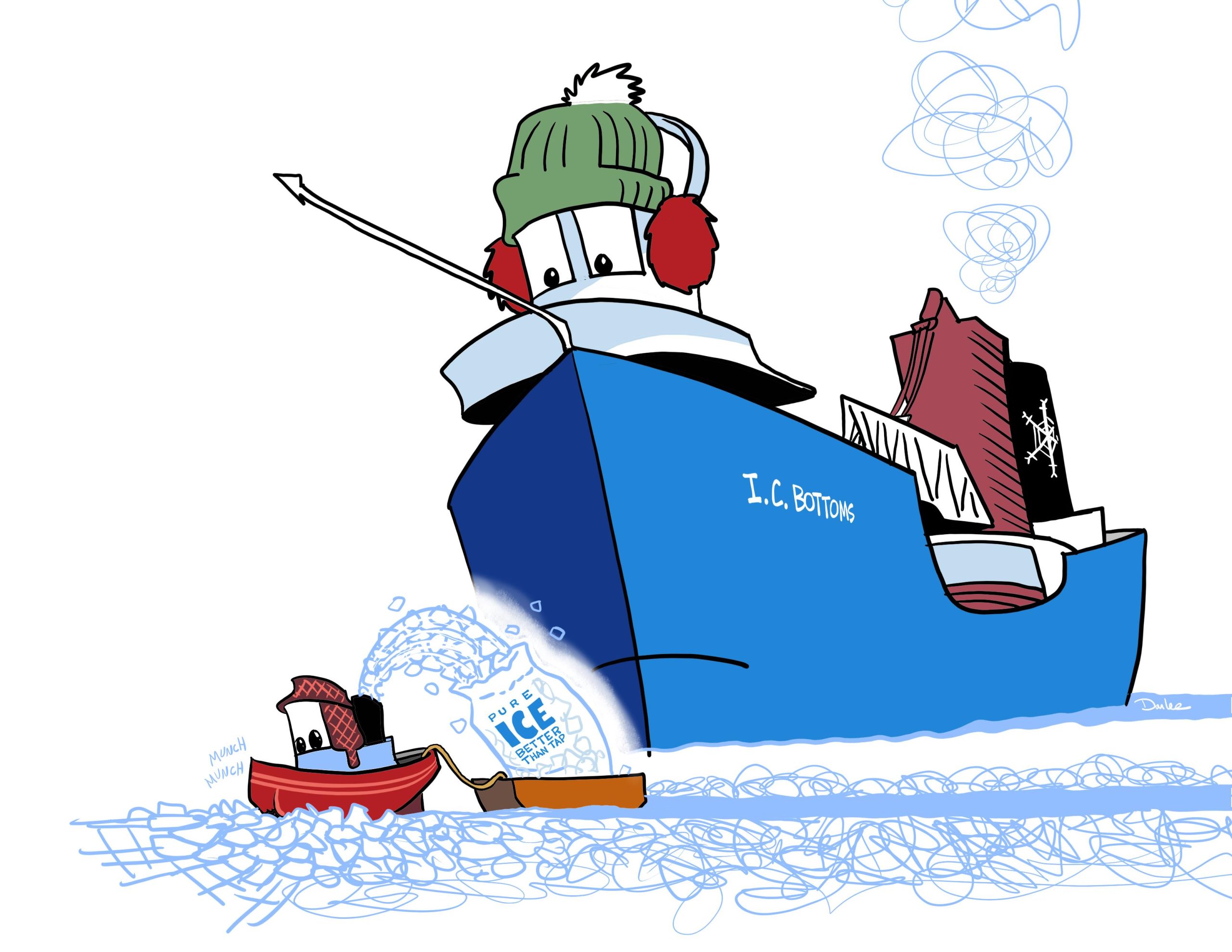
With the new breaker at least 11 years away, however, the USCG has expressed an interest in a simpler, less expensive vessel to help fill the gap. She is expected to be labelled WLBB-30.5 (or 30 1/2) and will likely be dubbed “Really Really Little S’mack” for the time being.
The word on the waterfront is that several northern Michigan helpful hardware places have expressed an interest in building the vessel for the coast guard. “We’re aces at that kind of thing,” said self-proclaimed nuts-and-bolts king Jack Hammer, based at Salt Saint Mary. He added his team has years (and years and years) of construction experience building spare keys for the adjacent Sioux Lox.
Is she coming or going? Even the company doesn’t know
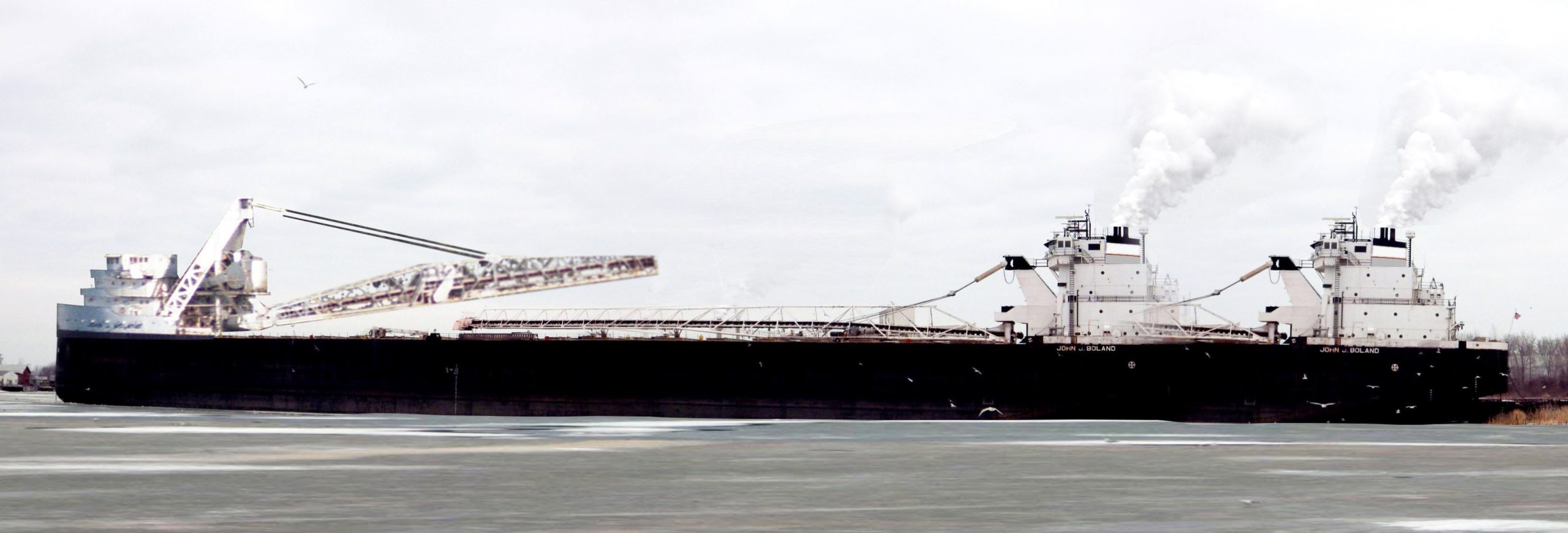
EEEEEERIE, New Pensylhiork – With the acquisition of the former ASC by Bland Ill-logistics, it was announced today that the forebody of LLT’s Saginaw, formerly ASC’s John J. Boland, has been joined with the stern of the former ASC’s John J. Boland, along with a clone of the stern of the former ASC’s John J. Boland which was created in a shipyard accident involving an office copier and a time machine.
The new ship, christened the John John Jay Bollllllland, will position the combined fleet for greater efficiency, said Randy L. O’gistics, chief chief offfficer.
“It can load and unload at the same time,” O’gistics said. “Even better, it can unload the cargo from one hold into the other hold, and vice versa, continually loading and unloading the same cargo. We figure we can get 1,701 trips out of one load.” As of press time, company officials were studying. whether the ship needed to actually sail.”
Barkerbark belches record cargo of ping-pong balls
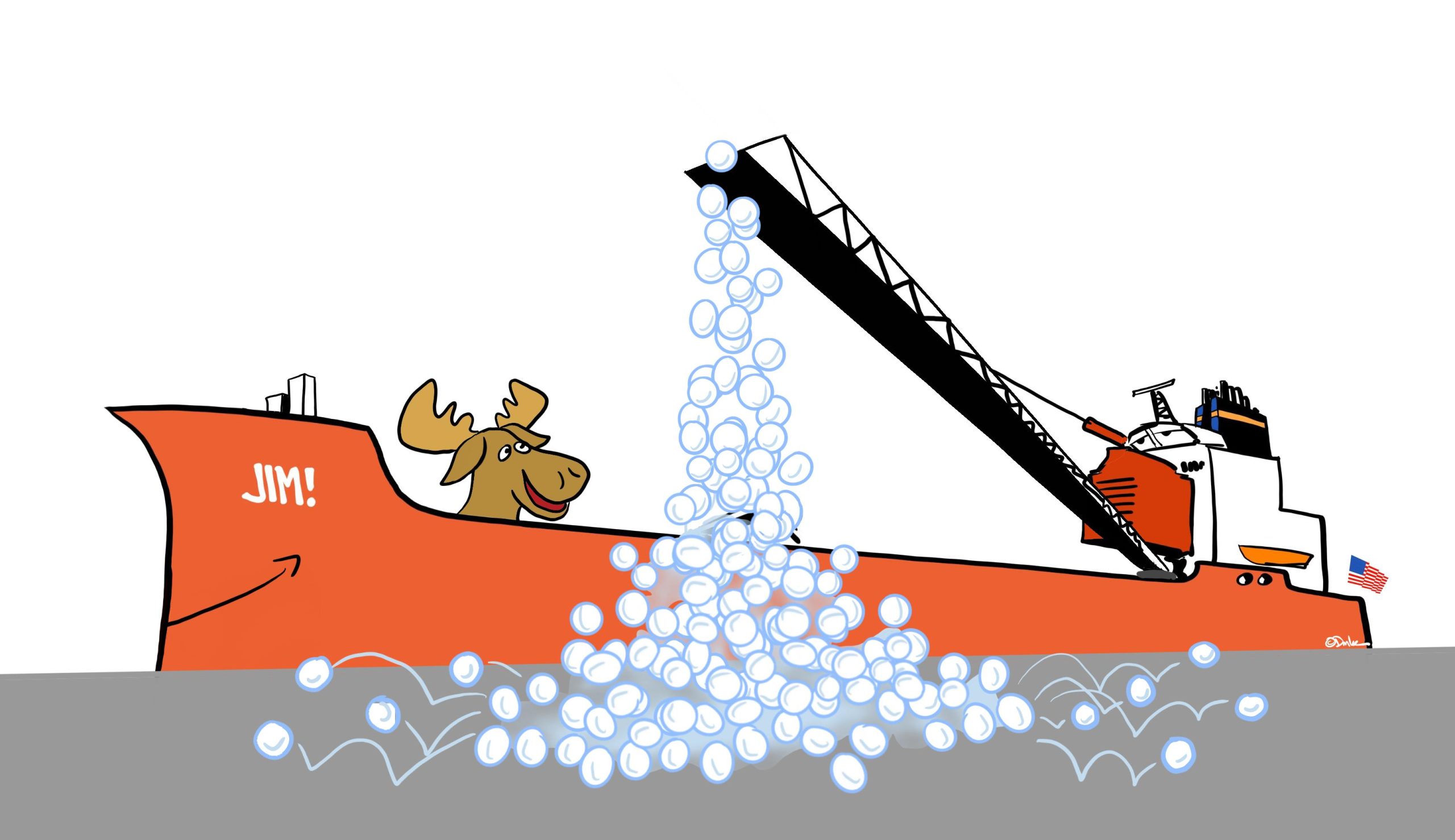
GREENJEANS, Wisnesotagan – A port record was set today when Interflake’s “Big Jim” Barkerbark unloaded a cargo of 1,771,561 Ping-Pong (insert registered trademark symbol here) balls in approximately 30 minutes.
“This achievement represents Interflake’s commitment to finding ever more diverse cargoes,” said “Big Jim” Barkerbark, namesake of the boat. Barkerbark credited relief crewman/utility infielder M.I. Moosey with the idea. “He said he got it from the place he used to work,” Barkerbark said. “Some TV show, I think.”
The cargo presented a unique challenge in navigation. “Stuffed the holds full-to-bursting and hardly got the load lines wet,” said Barkerbark’s relief skipper, Captain Ken Garew. “Wound up ballasting all the way to the top of the tanks and parked a few trucks on the deck just to keep the props and rudders in the water.”
The cargo presented few challenges in unloading. “They should be coming off the tip of the boom any minute now,” said Garew, moments before he was buried under an avalanche of small white plastic spheres.
CRAB-TUGs save time by being built, scrapped in same year
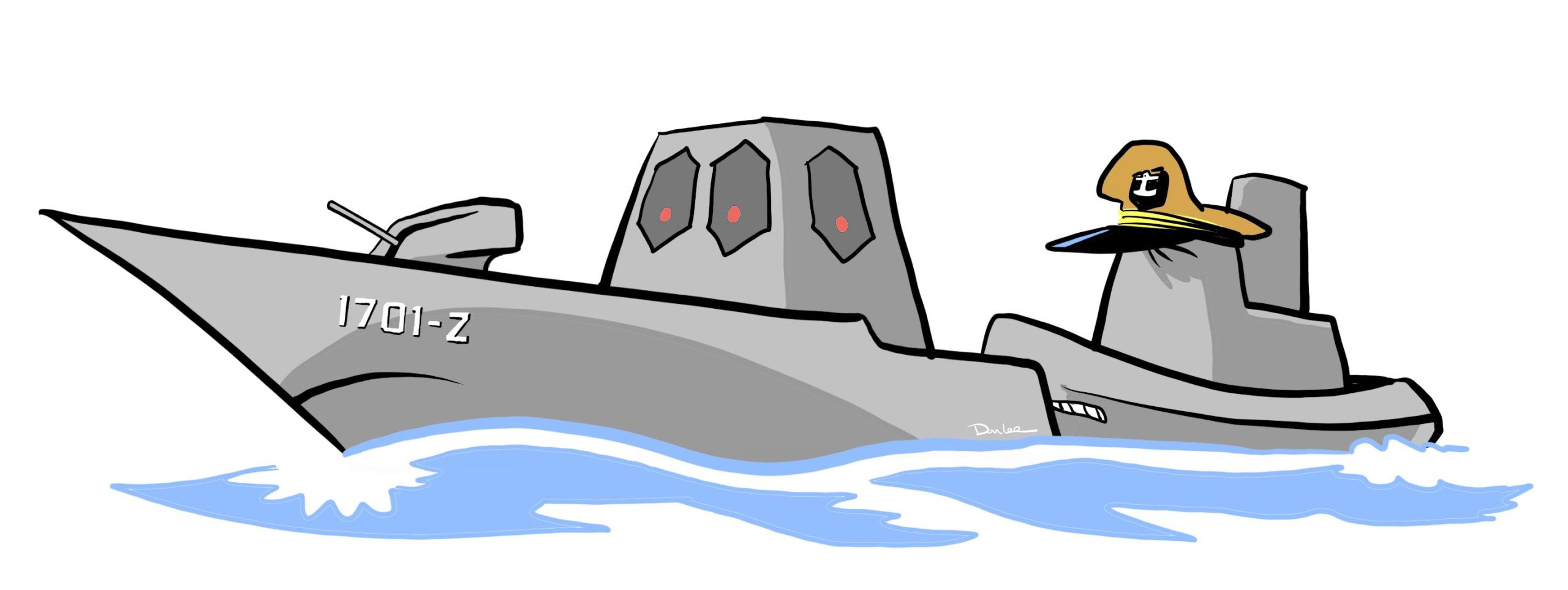
PORT ABULL, Michneconsin – The United States Navy today announced a new partnership with Tincanfactory Shipyards of Port Abull to produce the Navy’s new class of Combat Remote Articulated Barges. “These new, state-of-the-art, cutting-edge surface combatant assets will leverage the flexibility of multiple propulsion options with the cost-cutting measures of separately contained motive power and – what the hell was I talking about?” said Admiral Culler Teevy, chief of the Navy’s Warfare Application Visual Electronics Systems.
Each CRAB will be accompanied by an auxiliary command and propulsion system called a Terminal Unit Guidance. The CRAB-TUGs will replace the Littoral Combat Ships being built, and almost just as quickly slated for decommissioning, at shipyards on the Great Lakes and Gulf Coast.
“Those things couldn’t maneuver worth a damn in tight spots without the help of a tug, so we figured, what the hell, why not just have each unit come with its own TUG?” said Commander Hayle Merrypass, chief of the Navy’s Partitioned Limited Alternative Networking Bureau. “So we just decided to take the concept up a notch, so to speak.”
The CRAB-TUG concept evolved, in a manner similar to, but not quite like, the Skunk Works program that resulted in the Stealth fighter, with a suggestion from the Tincanfactory Ancillary Research and Development Internal Systems Division. “We had proposed to the Navy simply notching and converting the LCS’s slated for decommissioning, including some that were sitting in the building dock at the time,” said “Doc” Torhoo, at the time lord of TARDIS.
“That would have made too much sense – I mean, that would have resulted in a suboptimal implementation of specifically designed technologies,” said Commodore Sykes DeFore, chief of the Navy’s Gadget Utilization Electronic Seagoing Systems. “So we decided to build new.”
The first CRAB-TUGs are expected to enter service in 2026, with decommissioning later that year.
Edward L. Ryerson tunes up for new career in the music biz
CROOKED REEEVR, Oh-High-Oh! – Get your tickets now! The Cuyahoga Cliffs Co. ended months of rumors, speculation and uninformed opinions today by announcing they will be converting the much fawned-over Great Lakes freighter Edward L. Ryerson into a traveling steamboat/concert venue. The rapturously-adored vessel will be entering a shipyard soon for the addition of massive loudspeakers, a stage, mosh pit and deluxe seating in the cargo holds. The vessel’s hatch crane will be used to convert the indoor facility into an outdoor amphitheater on nice summer days and the ballast pumps will be used to turn the mosh pit into a wading pool.
Company spokesperson Mag Netite said the conversion is a wise use of an under-utilized asset. “Once we witnessed the chaos surrounding the November 2022 sale of Taylor Swift tickets, we realized there is more money to be made in entertainment than in iron mining and steel making.” During the peak months of the shipping season, the vessel will visit ports from Duluth to Montreal, providing afternoon and evening concerts. In the off season, the ship will be tied up next to the Rock and Roll Hall of Fame to offer an even more hands-on experience to visitors.
Fast Eddie will provide a spacious and acoustically-pure venue for all sorts of musical acts from county music to symphony orchestras. The owners are currently in negotiation with Spruce Bringsteen to provide concerts on frequent repositioning cruises from port to port. “The Boss is famous for his land-based concerts that can last four hours or more“ said Ms. Netite. “So filling a 8-12 hour cruise from say Cleveland to Detroit should be no problem for the E-Street Band.”
Also under negotiation is a 54th anniversary tour for the Beatles Yellow Submarine album and film. If Sir Paul McCartney and Ringo Starr can be convinced to re-unite, the vessel’s side ballast tanks will be converted into glass-fronted freshwater aquariums.
At least one popular musical act has already been blacklisted from performing on the vessel. Florence and the Machine, which is currently on world tour, have been asked not to perform at the new venue. Nautical engineers expressed concern that lead singer Florence Welch’s thunderous voice and iconic vibrato could literally “shake rivets loose throughout the vessel.” And the owners also expressed concern that Ms. Welch’s preference for performing barefoot might not end well, given the vessels steel decks can reach 140 degrees in the hot summer sun.
Be sure to watch Ticketblaster and the BoatWeird classified pages for future ticket sales.
Kale and kombucha on the menu may help recruit younger sailors
Upper Cholesterol, OH – Trimming the fat, and looking to spice up the appeal of sailing the Great Lakes, the long-standing Saturday night steak dinner on lakers may become a thing of the past.
In a recent interview, crew recruiting specialist Will U. Joinus observed that as older and too-much-salt-using veteran sailors retire, they’re taking the meat and potatoes diets with them. Newer, younger people have demanded healthier, more balanced meals, he said, adding that the industry is going to ridiculous lengths to crew the freighters.
“New alternatives could evolve into new traditions,” enthused Joinus. “For example, who doesn’t like grilled kale, served alongside a nutritious umani soup? Couple that with a fresh smoothie bar and bottomless kombucha and we’re sure to offer an irresistible working environment new recruits will line up to sign on to.”
Bacon at breakfast is also on the chopping block, he added. “Think of all the poor pigs being senselessly slaughtered just because bacon is the perfect pairing with eggs! Oink! The humanity!”
Crew of one the ultimate cost-cutting measure
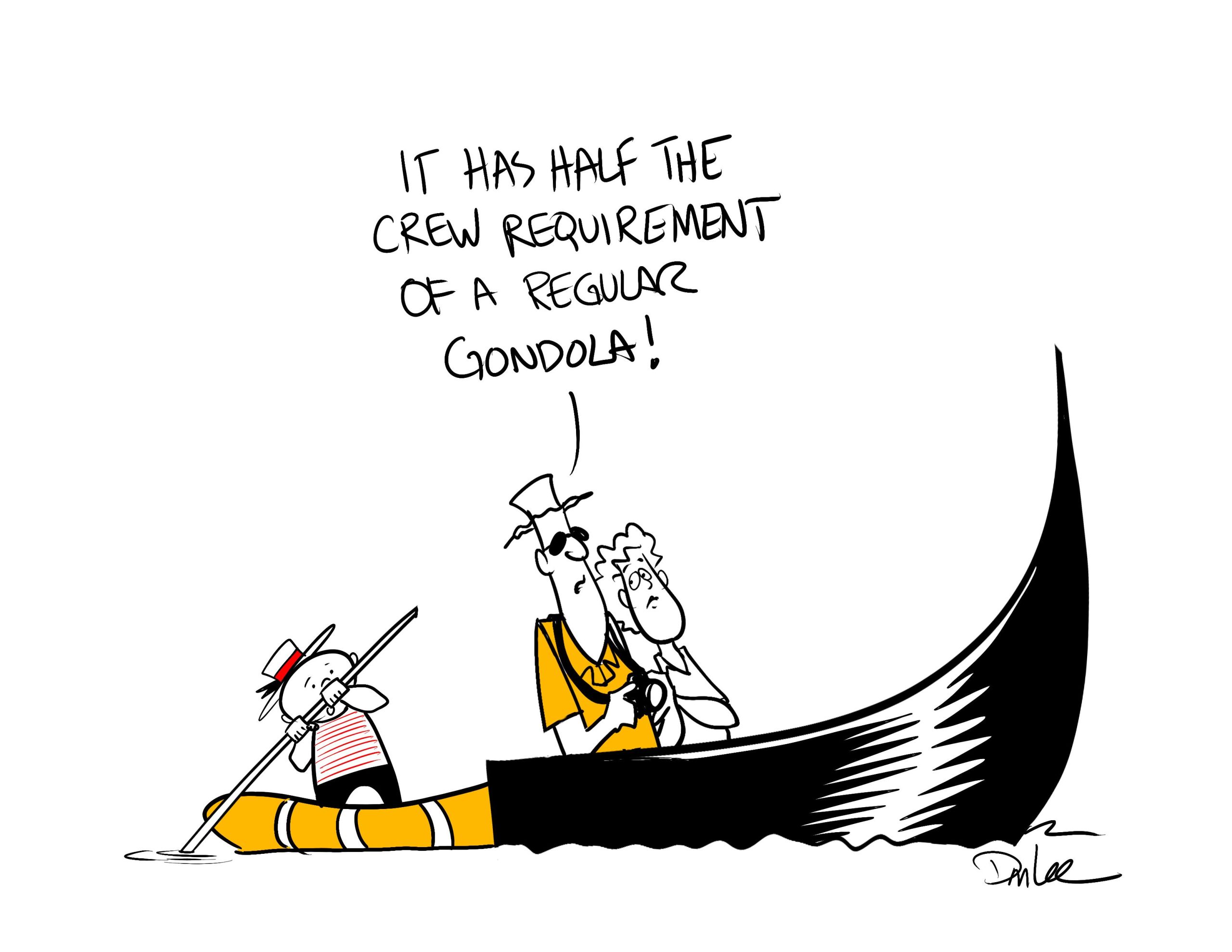
ANOTHER CLEVERLY-NAMED CITY, Minnie-soda: In-Between-Lakes Steamship Co. has announced what is believed to be the second new boat built on the Great Lakes in 35 years. We’ve obtained a sneak preview of the design concept drawings. Built for maximum efficiency and lowest cost possible operation the vessel will feature a crew of one – a multi-talented multi-licensed, multi-tasking combination captain/mate/ chief steward/engineer/wiper/deckhand.
“We are going to save soooooo much money!” chortled J.C. “Cash” Penny-pincher, fleet See-E-Oh.
The vessel incorporates a one-time-only “paint product” and will be built for simple conversion to a museum upon retirement, a one-vessel-fits-all needs design.
Corpse forges ahead with lock connecting Duluth to Lake Agassiz
WISHWASHINGTON – The Corpse of Engine Ears today announced it was ready to award contracts for a new lock connecting Duluth to the sixth, and largest Great Lake, Lake Agassiz.
“Maintaining this vital waterborne commerce link to the largest of our freshwater assets is crucial to the economy and environment of the region, and to the nation and world as a whole,” said Gen. Storrs, commandant of the Corpse.
“Furthermore, it maintains the link between us and our Canadian cousins, and their numerous port cities along the shores of this 170,000-square-mile body of water,” Storrs said.
The awarding of contracts comes after decades of studies, requests-for-proposals, bid and rejected bids, not to mention the shifting attitudes toward the project, hailed as a boon or a boondoggle depending on who was in office.
“But now we’re ready to dig,” said Storrs. “We’ve bought the land, condemned the properties, moved the equipment into place and we’re ready to dig.”
Responding to a reporter’s question about whether the new lock, or even a canal, was necessary because Lake Agassiz dried up thousands of years before the Great Lakes even existed, Storrs said that should not affect the project much at all. “We’ll continue to reevaluate the needs of the project as more information becomes available,” he said.
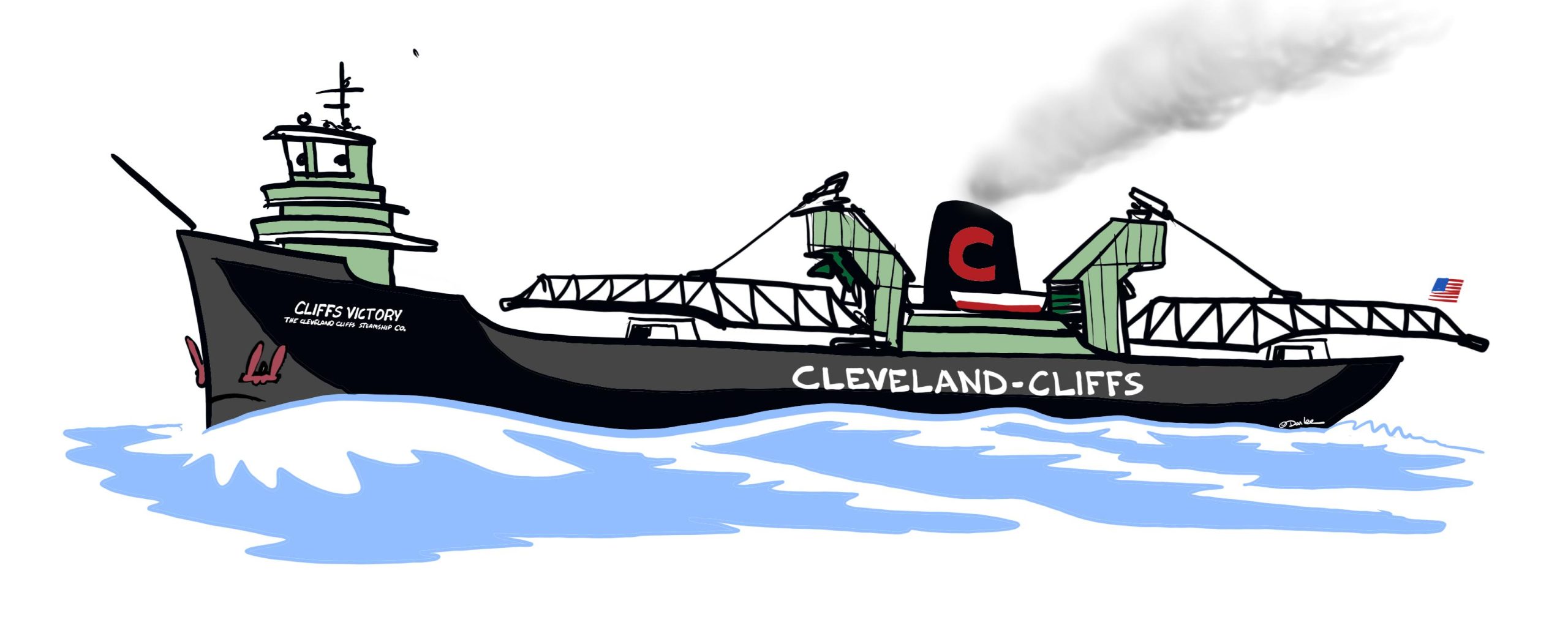
Saavik. Savic? Cliffs Victory? If you get it, you get it. Live long and prosper
“CETI ALPHA SIX, OR MAYBE FIVE – During a lonely, rainy Friday night with nowhere to go and nothing good on the tube, Cliff Cleveland, assistant to the chief assistant designer at Cleveland-Cliffs, undertook a design feasibility efficacy study to investigate the possibility of reconstituting converting the long-ago scrapped Cliffs Victory into a self-unloader.
“Nah,” he said, and headed out to the theater where the latest Star Trek movie was playing. The one with Montalban in it. “Saavik,” he mused, later, in the darkened theater. “Saavik. Savic? What an interesting name.”
Yesterday in Great Lakes History
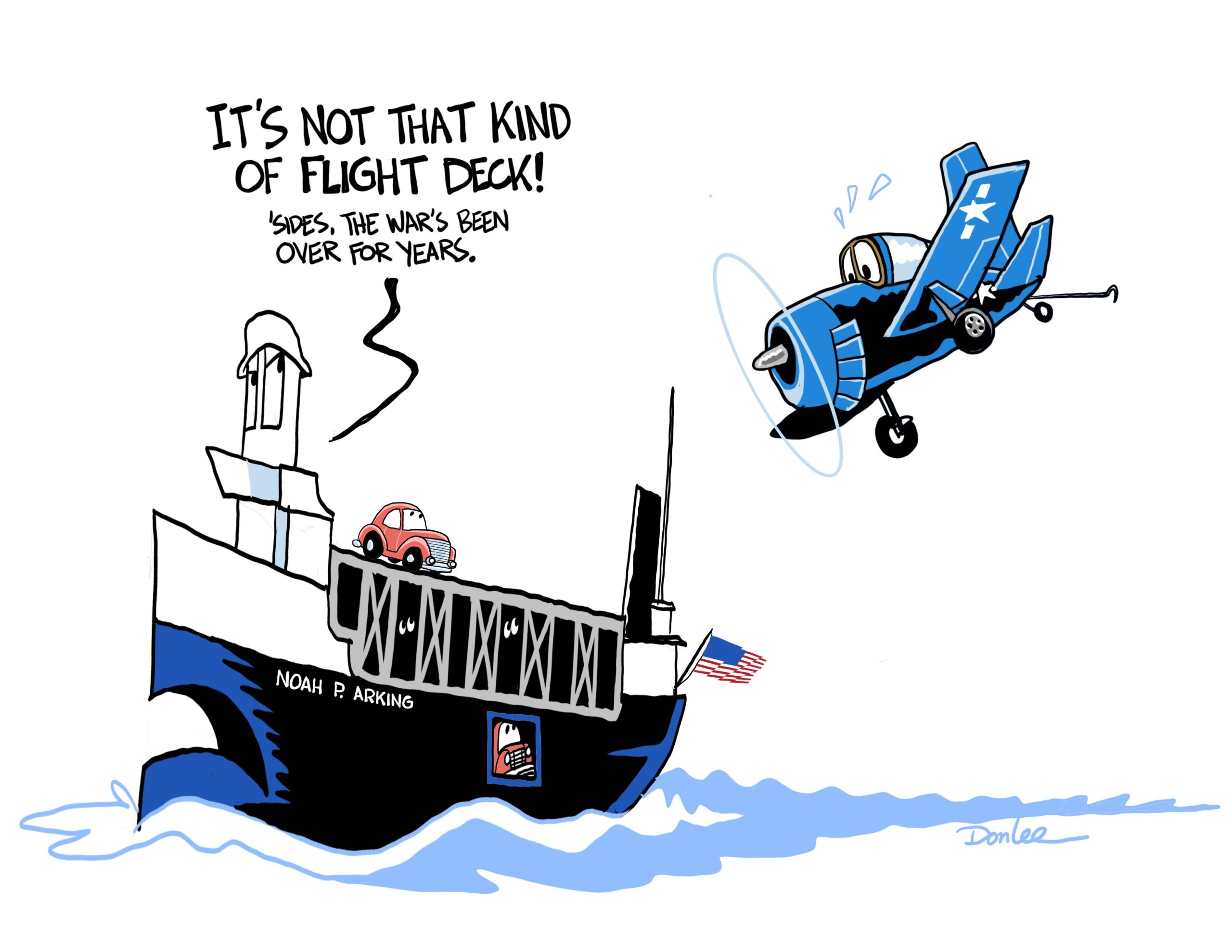
The success of converting excursion boats such as the famous Seeandbee to aircraft carriers to train World War II U.S. Navy pilots led to unexpected confusion after the war ended. The practice of building extra decks on lakes steamers to transport cars offered much flexibility to shipping lines, but the practice of calling the new expanses of relatively unobstructed space “flight decks” caused confusion to post-war pilots.
It has not been confirmed that the advent of tail fins on 1950s cars was simply the result of airplanes attempting to land on the “flight decks” of lakers carrying cars and crews trying to make the best of the resulting mess.
“Fortunately, this was while they were still using propeller planes,” said Otto Karrier, captain of the Parker Lott, one of the ships modified to carry automobiles. “Think of the mess if they’d been using jets. We’d have had to invent the thousand-footer at least 20 years early.”
April Foolishness brought to you by Roger LeLievre, Tom Hynes, Dave Nobbe and Don Lee. The real news continues below.