Door County Maritime Museum to host Know Your Ships author
Know Your Ships boat field guide author Roger LeLievre will travel to Door County May 22 for his first-ever visit, a perfect match for National Maritime Day. Join him at the Death’s Door Museum in the morning for a presentation of the program “Hitchin’ A Ride: An Inside Look at Life on a Laker.”
LeLievre will also stop at Cana Island after lunch to sign copies of Know Your Ships. The day will culminate at the Sturgeon Bay Museum, with LeLievre signing books, and sharing his delightful personal story in the evening: “Because of the Boats: How I Became the Luckiest Boatnerd in the World.”
At noon on National Maritime Day, the tug John Purves will sound a whistle salute to all U.S. Merchant & Commercial Mariners that keep goods flowing. All boaters, tugs, and other vessels in the area are welcome to participate in the salute as well. National Maritime Day recognizes one of our country’s most important industries. Each year, ceremonies and celebrations throughout the country recognize National Maritime Day and the people our maritime nation depends on.
More information can be found here: https://dcmm.org/homepage-featured/national-maritime-day-may-22/
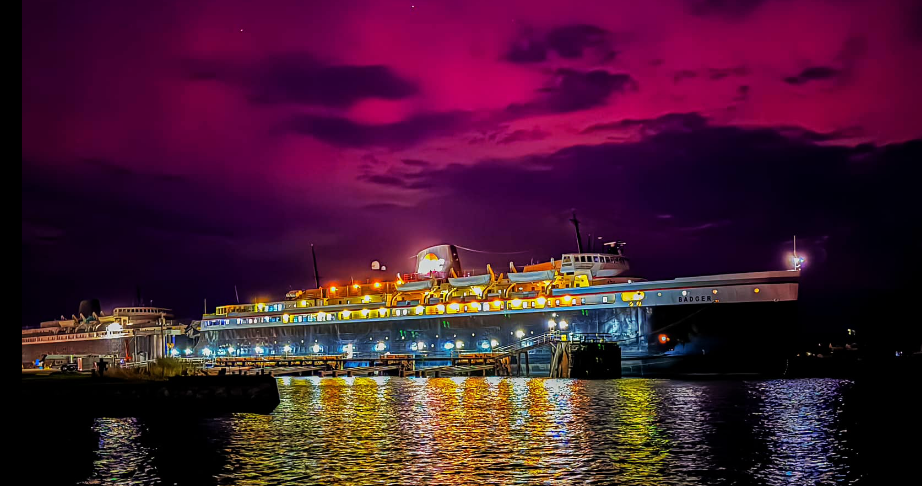
S.S. Badger repairs wrap up ahead of schedule, first trip set for Friday
GRAND RAPIDS, Mich. (WOOD) — The S.S. Badger is back in business.
Lake Michigan Carferry has announced that the iconic boat will make its first trek of the season on Friday. Previously, LMC had planned for the ship to make its first trip on June 14.
“We are thrilled to welcome our passengers back more than a month earlier than originally anticipated,” LMC General Manager Sara Spore said in a statement. “It’s a testament to the dedication of our staff here and the hard work of local vendors to make sure we are ready to go.”
LMC was forced to shut down the Badger last July after part of its port side ramp system failed and needed months of repairs, prematurely ending its 70th season chartering people across Lake Michigan, between Ludington, Michigan, and Manitowoc, Wisconsin.
“With the successful construction of two new counterweight structures for the carferry’s ramp system, the Badger is back, better and stronger, ready to carry passengers and transport freight across our marine highway on Lake Michigan,” she stated.
The Badger, which has been designated a National Historic Landmark, can carry 600 passengers and up to 180 vehicles, including RVs and commercial trucks.
The S.S. Badger was launched in 1953. It was built by Christy Corp. in Sturgeon Bay, Wisconsin.
Evening crossings will start in June. The Badger is also planning three shoreline cruises later this summer: July 4, July 24 and Aug. 21.
Old Lake Michigan shipwreck visible again after burial under sand
By Clara Lincolnhol | May 14, 2024
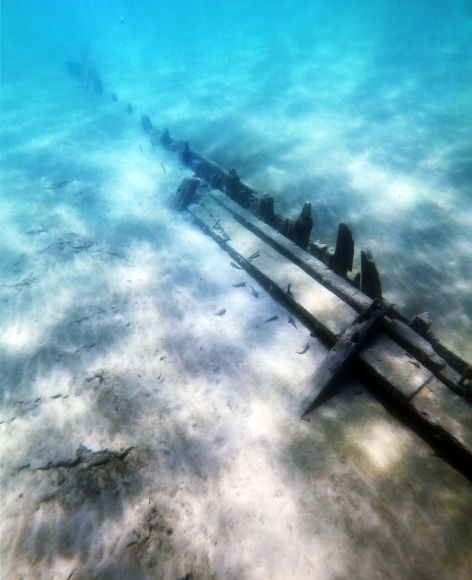
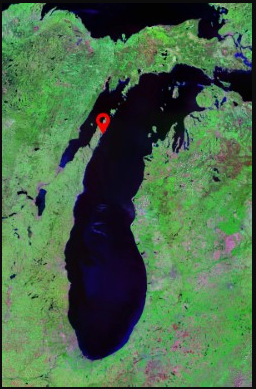
Look fast or you may miss an elusive 170-year-old sunken schooner off the coast of Baileys Harbor, Wisconsin.
The mostly intact shipwreck, which was added to the National Register of Historic Places in early April, isn’t always visible, even though it’s in very shallow waters, said Tamara Thomsen, a Wisconsin Historical Society maritime archaeologist.
The vessel comes in and out of view depending on the cyclical motion of sand in Lake Michigan.
It had been invisible, shrouded in sand for decades, until a tour boat operator spotted it in the late summer of 2021. The Wisconsin Historical Society surveyed the ship the next summer to get it listed as a National Historic Place, she said.
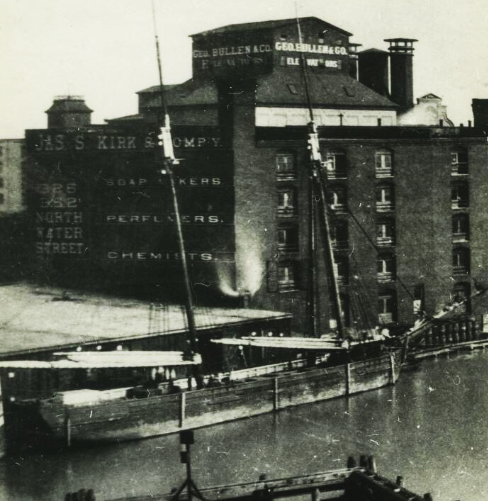
The ship, named Peoria, was built in Ohio in 1854. In its earlier years it hauled lumber on Lake Erie. After the Great Chicago Fire of 1871 the ship mainly traversed Lake Michigan. Peoria and many other schooners were in high demand to transport wood to rebuild the city, Thomsen said.
That’s why Peoria had multiple accidents before its fateful final voyage, colliding with three separate ships on three different occasions. During that time the waters were crowded with large lumbering ships, she said.
“When there’s a big traffic jam on the road today there’s bound to be accidents,” Thomsen said. “It was very much commonplace for (ships) to get struck in the harbor, getting struck coming in or while waiting at the dock or lumber market.”
In 1880 the vessel blew ashore at the Baileys Harbor Lighthouse. Recovering it was initially considered a lost cause, according to Wisconsin Shipwrecks, an informational shipwreck database. However a year later, repairs were made and Peoria set sail once again.
But 20 years later, on November 10, 1901, the ship with a load of lumber was blown over by strong stormy gales in Baileys Harbor. All six crew members scrambled to shore. The ship met its end near where it was beached two decades earlier, according to the database.
The ship’s existence and location has always been local knowledge, although it isn’t always visible. A 1980s Wisconsin diving guide listed the wreck as a place to visit, but when state marine archaeologists searched for it years later to conduct a survey, the ship had been covered by sand, Thomsen said.
The 2021 report meant it was visible again for the first time in over three decades. Maritime archeologists confirmed the ship’s identity using historic documents from around the time it sank.
The wreck is easily accessible and visible for divers, kayakers, anglers and local tour boats. It’s exciting, Thomsen said. “The vantage point of a deck can get a look at not just pieces of the boat but of the whole thing.”
No one knows how long Peoria will remain visible, she said. A large storm could dredge up sand in the bay and cover it up again.
The dynamic process of sand movement in Lake Michigan covers and uncovers shipwrecks, said Adam Bechle, coastal engineering outreach specialist at the University of Wisconsin Madison Sea Grant Institute.
The littoral zone, or the area that extends from the beach to where waves begin to break is where sediment is transported by waves and currents, Bechle said. Water levels and stormy weather impact sediment movement and deposition.
“Waves break at a certain depth,” Bechle said. “As you change water levels, that changes the depth of the water and changes where the waves are going to break, so that changes where sediment is going to be moved around.”
Bechle isn’t exactly sure what specific event moved the sand covering Peoria. But he believes fluctuating water levels in Lake Michigan “probably caused quite a bit of sand movement and sandbar migration which may have made conditions right for the ship to get uncovered.”
The National Register of Historic Places is “the official list of the nation’s historic places worthy of preservation,” according to the National Park Service, which administers the register. It includes “objects significant in American history, architecture, archeology, engineering and culture.”
Objects on the register, like the Peoria shipwreck, receive additional state and federal legal protections.
Make Your Plans Now for Soo
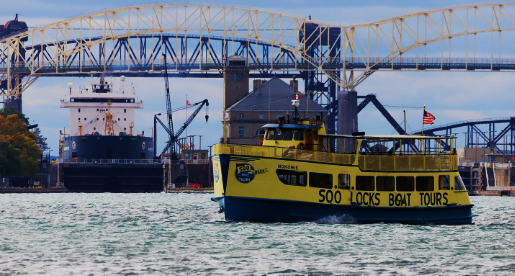
Boatnerd Picnic, Freighter-Chasing Cruise
Join us for the Annual Boatnerd Picnic and Freighter-Chasing Cruise on the St. Marys River during the annual Engineers Day weekend at Sault Ste. Marie June 27-38. Find details on both events here: https://boatnerd3.jasonbowlerdesign.com/boatnerd-soo-gathering-june-27-28-2024/—