St. Lawrence Seaway Cargo Movements Show Positive October Uptick
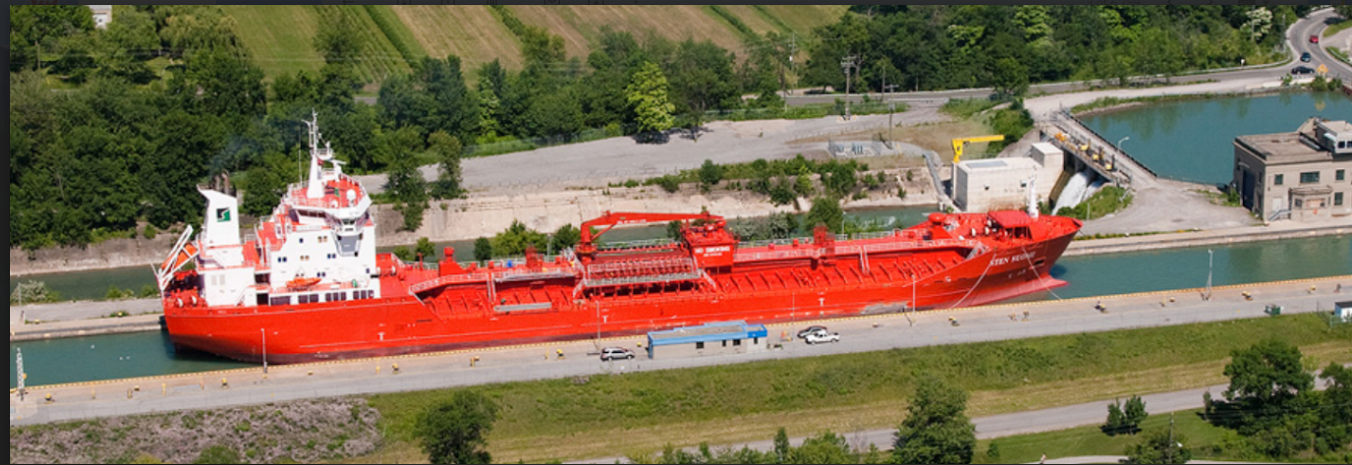
CORNWALL, ON / WASHINGTON D.C. (November 13, 2024) – The St. Lawrence Seaway reported its October performance figures, with cargo shipments reaching 28 million metric tons since the start of the navigation season. Although this represents a slight decrease compared to the same period last year, October saw a positive uptick over September’s results, underscoring the Seaway’s vital role in supporting the North American supply chain.
“In October, the Seaway System saw a noticeable increase in cargo movements,” said Adam Tindall-Schlicht, Administrator, Great Lakes St. Lawrence Seaway Development Corporation. “These next few months are typically the busiest of the Seaway’s navigation season. The harvest is in, and U.S. export grain is moving through Great Lakes ports and the Seaway,” said Tindall-Schlicht. “As global demand increases, we anticipate this upward trend in outbound grain shipments to continue through the end of the year.”
“Trends across major cargo segments indicate continued demand in key sectors. Grain rose by 11% year-over-year, driven by robust agricultural exports, while potash increased by 12%. We anticipate a strong finish to the season,” said Jim Athanasiou, President and CEO of The St. Lawrence Seaway Management Corporation.
“As we approach the close of the navigation season on January 5 in the Montreal-Lake Ontario section and January 10 in the Welland Canal, the St. Lawrence Seaway remains committed to meeting market needs and supporting growth in North American industries,” added Mr. Athanasiou.
St. Lawrence Seaway Management Corporation
Toledo museum celebrates the Christmas Tree Ship’s legacy
On November 23, 1912, the schooner Rouse Simmons sank while carrying Christmas trees. Known as the Christmas Tree Ship, its captain, Herman E. Schuenemann (a.k.a. “Captain Santa”), was known for giving trees to families in need.
The story of the ship’s history and captain is the inspiration behind the National Museum of the Great Lakes annual Community Giveback Event—The Christmas Tree Ship, presented by The University of Toledo Medical Center. Enjoy free museum admission all day long and make memories that last a lifetime! Watch Santa arrive at the museum’s dock aboard a Geo. Gradel Co. tugboat delivering a Christmas Tree into your hands or the hands of someone in need.
Community Giveback Day Itinerary
10 AM – 5 PM: Museum Admission Free All Day
11 AM: Enjoy the East Toledo Holiday Parade
1:15 PM: Watch the Ship’s Journey to the Museum via Livestream
1:30 PM: Santa Arrives to the Museum’s Docks
1:45 – 3:45 PM: Meet and Greet with Santa
Not able to join in person? Tune into our Facebook page around 1:15 p.m. for a livestream of the ship’s journey down the Maumee River. Get a tour of the Christmas Tree Ship, learn more about the story that inspired our event, and meet the individuals onboard, including Santa!
Read more here: https://nmgl.org/event/christmas-tree-ship24/
Federal funding for Windsor’s Sterling Fuels to bring biofuels to the Great Lakes shipping industry
Chris Campbell
CTV Windsor News
Updated Nov. 12, 2024 5:52 p.m. CST
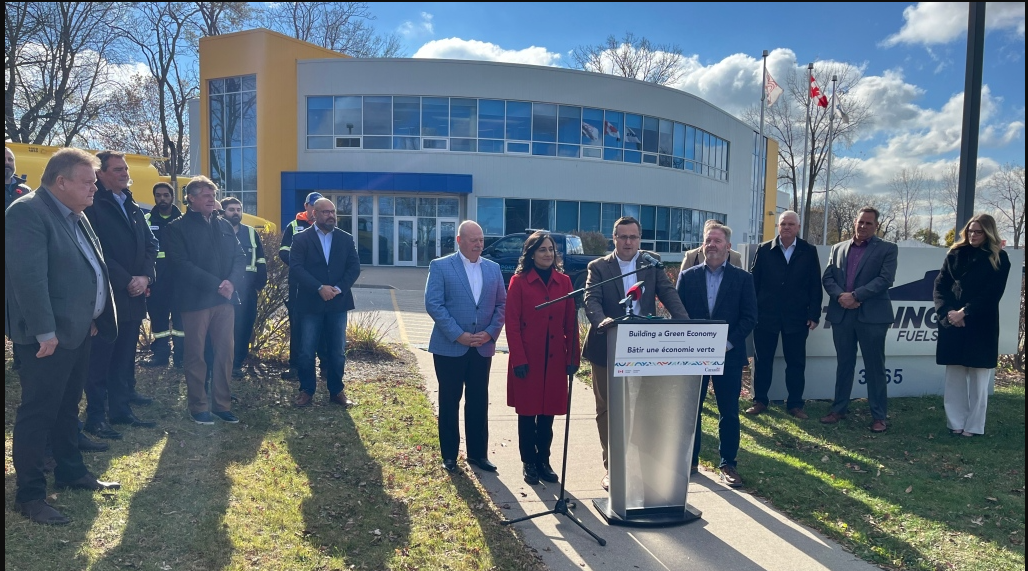
The federal government announced on Tuesday it’s investing over $25 million towards four Ontario projects, funded under the Green Shipping Corridor Program, including a multi-million-dollar project at Sterling Fuels in Windsor.
Minister of Transport Anita Anand said the funding was meant to establish green shipping corridors and reduce emissions across the Great Lakes region, while supporting shore-power and alternative fuel solutions in the marine sector.
“We need to do what we can to lower emissions, and we need to ensure that the marine transportation sector is sustainable at the same time,” Anand said.
“This is good news for the economy. This is good news for the environment. And this is recognition that in order to grow your economy, you need to have a plan for environmental protection and sustainability.”
Officials said decarbonizing the marine sector is a crucial part of the Canadian government’s climate action plan. By upgrading port infrastructure and promoting the use of cleaner technologies in vessels, they said Canada is leading the way in reducing the environmental impacts of shipping.
“Our ports are essential gateways to Canada’s economy,” Anand said in a news release.
“These innovative projects will help us protect our planet, build a greener economy for Canadians, reduce emissions and keep our communities connected.”
According to Anand, the money will go towards projects in Windsor, Hamilton, Port Colborne and Port Algoma Sault Ste. Marie.
Sterling Fuels will receive up to $4.9 million in funding as part of a $10 million project to reconfigure existing infrastructure in Windsor and build additional fuel infrastructure at its facilities in Hamilton.
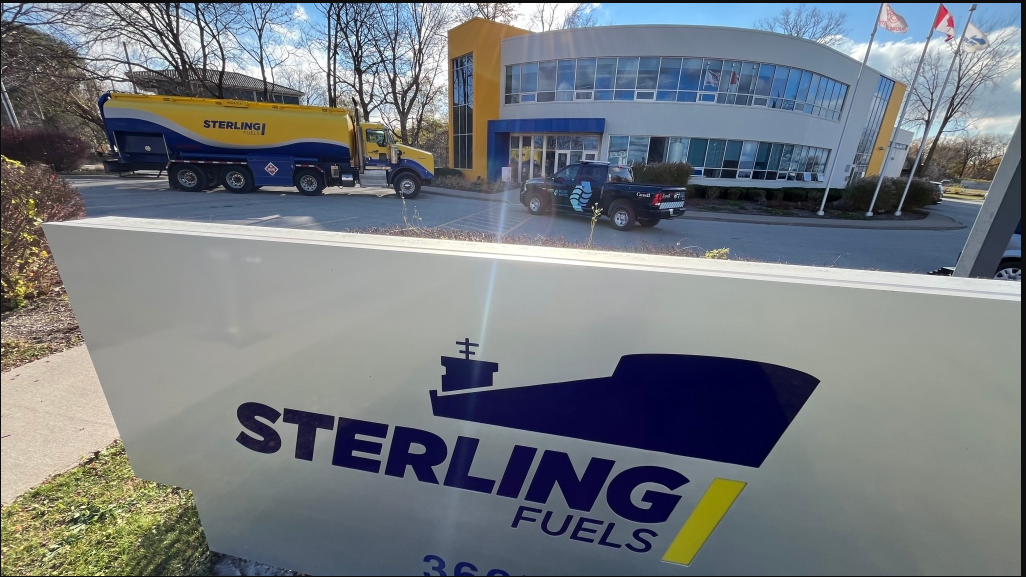
The project will see $6 million invested in the Sterling Fuels facility in west Windsor on Russell Street along the Detroit River, to bring biofuels to the market for use by vessels in the Great Lakes shipping industry.
Sterling Fuels President Peter Kelly noted work has already begun at the Windsor facility and could take a couple of years to complete.
“Our Windsor facility is strategically positioned at the prime location for fueling Great Lakes vessels traveling north to get their cargoes,” Kelly explained.
“On Windsor Port Authority property, Sterling will add infrastructure to receive biofuels by rail into existing storage tanks. This new infrastructure, along with utilizing existing capabilities, will allow Sterling to customize various fuel blends, specific to the requirements of each vessel.”
Kelly continued, saying marine diesel currently being used is like normal truck diesel. The new fuel they are moving to is soybean-based, reducing emissions by around 80 per cent.
“It’s not only important for our organization, but I think it’s important for the entire marine industry in particular, because it now builds the infrastructure so that we can bring biofuels to the market and make them a sustainable fuel of the future,” said Kelly.
Windsor Port Authority President and CEO Steve Salmons welcomed the announcement, saying there’s been $150 million invested in the future expansion of Port Windsor over the last two years.
“This is huge,” Salmons exclaimed.
“It’s a huge advancement in the decarbonization of our economy, of transportation and getting the right product at the right place to the right people to utilize this incredible technological advancement.”
Transport Canada awards funds for biofuel projects
River challenges could shift shipping demand to Great Lakes
November 12, 2024
By Jake Zajkowski, OCJ field reporter
When thinking of grain shipment, the Mississippi River system, ports on the Gulf Coast and the Pacific Northwest often come to mind — locations closest to U.S. agriculture trade partners around the world.
However, the Great Lakes region and its farmers benefit from a unique, efficient shipping trade route from the heartland of America to the Atlantic Ocean: the St. Lawrence Seaway. Despite often being overlooked, the seaway has consistently played a crucial role in global grain trade, reaching from Duluth, Minnesota to Baie Comeau, Québec in Canada.
In 2023, nearly 10.5 million tons of grain — roughly 424 million bushels — was exported through the St. Lawrence Seaway, according to tonnage reports from The St. Lawrence Seaway Management Corporation. The seaway provides a streamlined, direct supply chain for exporters, ensuring quicker transit times and reducing logistical complexity.
“Grain is inspected, elevated into silos and sometimes loaded directly onto a vessel. It doesn’t get any more direct than that—field to vessel with minimal handling,” said Joe Cappel, vice president of business development at the Toledo-Lucas County Port Authority.
Ports like in Toledo are well positioned and close the farmgate. This waterway excels in bulk grain shipments, leveraging the region’s extensive port network.
“Usually, there’s less transloading of the material as well, with Great Lakes ports being closer to the fields,” Cappel said.
Toledo is one of four main U.S. grain ports on the Great Lakes, with The Andersons and Archer Daniels Midland (ADM) at the heart of its operations. Both companies have facilities at the Port of Toledo, supporting grain producers across northwest Ohio. Headquartered in Maumee, The Andersons has a storage capacity of 32 million bushels in the Toledo area, while ADM’s 28 grain silos along the river provide nearly 9.8 million bushels of storage.
“There is a lot of opportunity to do more on the Great Lakes. We are nowhere near our capacity, while these coastal ports are bumping up right against it,” Cappel said.
For Toledo, export numbers typically remain consistent year to year. However, 2023 saw a decline to only 1 million net tons, a 32% decrease from 2022. Data recorded during August 2024 from the Toledo Port Authority shows nearly 182,000 short tons exported, down 67.4% from the same period last year.
Port leadership anticipates much more grain movement out of current storage, given the strong Midwestern supply expected this harvest season. The busiest time for the port is October through December, while Great Lakes shipping is largely halted from Jan. 1 to March 1.
In 2024 so far, the Port of Toledo has seen seven overseas vessels and 259 lake vessels carrying various products, including coal, grain, iron ore, petroleum and dry bulk items, according to Toledo Port Authority.
This month, the Lower Mississippi River (LMR) has faced reduced barge drafts and tow sizes due to low water levels, worsening in October from drought conditions despite high supply across the Corn Belt. According to the USDA, 60% of grain — wheat, soybeans, corn — moves through the Mississippi River via barge, posing a potential threat to future marketing strategies.
According to the National Weather Service, the low-water threshold begins at -5 feet below zero gauge. For the Mississippi River at Memphis, Oct. 28 is predicted to reach -9 feet below the river standard. DTN Ag reports that for each foot the river level decreases, a barge’s cargo must be cut by 200 tons, increasing costs while shipping less freight downriver.
Although no reports have yet emerged, if river terminals stop taking grain, costs could be passed down to farmers, weakening local basis prices for producers.
This challenge may create opportunities for Toledo, raising the question of how the Great Lakes could step in for export officials.
“If exporters ever wanted to switch from shipping containers through coastal or river ports, they could certainly consider bulk shipping through the Great Lakes,” Cappel said.
The open storage availability of the St. Lawrence Seaway is not a new development. In 2022, severe drought on the Mississippi River limited barge routes. At the same time, port strikes along the U.S. East Coast in early October disrupted container shipments of agricultural products.
Great Lakes shipping routes remained unaffected.
Ports like Toledo play a key role, often serving as backups during disruptions, helping relieve congestion at major U.S. ports and adapt to global trade shifts by efficiently rerouting goods. The region faces plenty of global demand, holding capacity and farmers who can meet the demand, said Peter Hirthe, international trade specialist for the St. Lawrence Seaway Development Corporation.
“This year, the demand for U.S. wheat is back up due to its quality,” Hirthe said. “On the U.S. side, we’re up about 55% (exporting) because of significant overseas demand for U.S. wheat.”
And it is not just corn, wheat and soybeans in Toledo anymore. There are shifts to oats, canola, alfalfa and byproducts like distillers’ dried grains and soy meal.
However, high shipping costs, the need for empty container ships to travel into the Great Lakes and domestic demand to crush beans in-state for biofuels present trade-offs. Shipping faces capacity challenges because there aren’t enough empty ships available. Unlike barges on rivers, ships on lakes need to arrive with cargo to transport grain cost-effectively, complicating the search for available vessels, Hirthe explained.
“We really need more ships coming in. It’s really the imports that typically drive the export capacity of the lakes,” Hirthe said. “To take more out, you need more coming in so that the ship is in the lakes and can be filled.”
While shipping rates can be higher, Toledo’s central location offers flexibility. Operators can ship by water, rail to the Gulf or truck domestically, with profitability varying each year.
“We’re trying to grow inbound utilization — more ships — and look for new products and supply chains. With new factories in the Midwest, we could make some of those factories bring in products to support them or more,” Hirthe said.
It’s not just exports to markets in Europe or Northern Africa — agricultural products are also imported into Toledo for local food processing. Great Lakes ports serve as strategic hubs for grain storage between the U.S. and Canada. The Great Lakes provide access to 16 key trade ports in the region, including four that handle grain, with major hubs in Duluth, Minn.; Milwaukee, Wisc.; Oswego, New York; and the Port of Toledo. For example, Mondelez, the largest soft wheat flour mill in North America, located in Toledo, supplies Nabisco bakeries across the continent.
The Toledo-Lucas County Port Authority and St. Lawrence Seaway Development Corp is working to bring shipping capacity to the lakes and companies like the Andersons develop end-user demand. Both could be creating increased opportunity for farmers in northwest Ohio and agriculture trade for the region.
“The local basis price is driven by end-user demand our goal is to build strong opportunities for farmers in our core markets, such as in Northwest Ohio,” said Blake Haudan, vice president of trade and processing for The Andersons. “As demand increases, the Port of Toledo has become more attractive for moving grains through the Great Lakes.”