Explosion damages Superior grain elevator
The Superior Fire Department responded to the report of an explosion at the Vitera Grain Elevator Monday evening. This happened at 400 Main St. on Connor’s Point at 6:20 p.m.
All the workers were evacuated and accounted for. The Fire Department says there was no active fire found except several smoldering hot spots, which crews extinguished.
In a press release, Superior Fire says the explosion happened in the basement of the plant and traveled up and through the loading tower. There is damage to the structure along with the bells and hatches over the belt. The grain elevator was said to be in normal operation during the time of the explosion.
Crews left the scene of the grain elevator at 8:44 p.m.
The cause of the explosion is under investigation. All three Superior Fire engines and the Battalion Chief responded. Viterra employees, Superior Police, and Mayo Ambulance also responded.
WDIO
New marine sanctuary spotlights a ‘submerged museum’ on Lake Ontario
By Anna Barnes | November 16, 2024
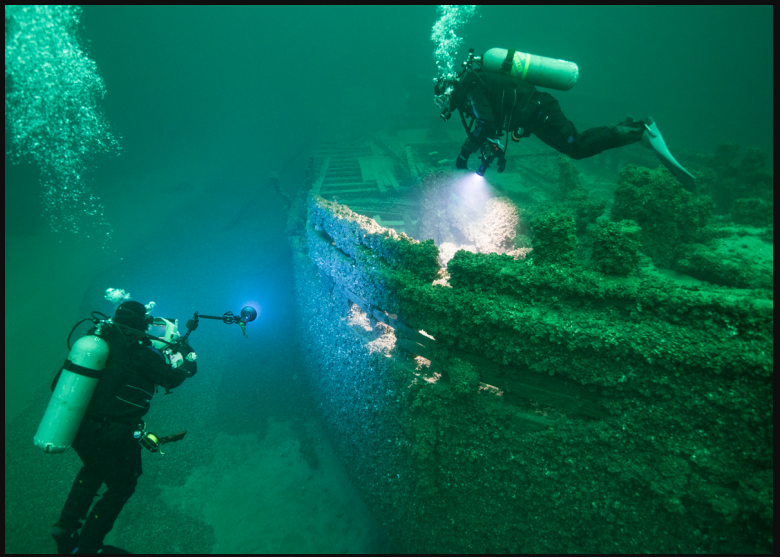
After seven years of planning, a new marine sanctuary now protects a portion of Lake Ontario rich with history and shipwrecks. The community-driven designation aims to benefit the area through preservation, economic development and conservation.
The National Oceanic and Atmospheric Administration designates marine sanctuaries to preserve sites with national significance, such as important archeology, culture or marine life.
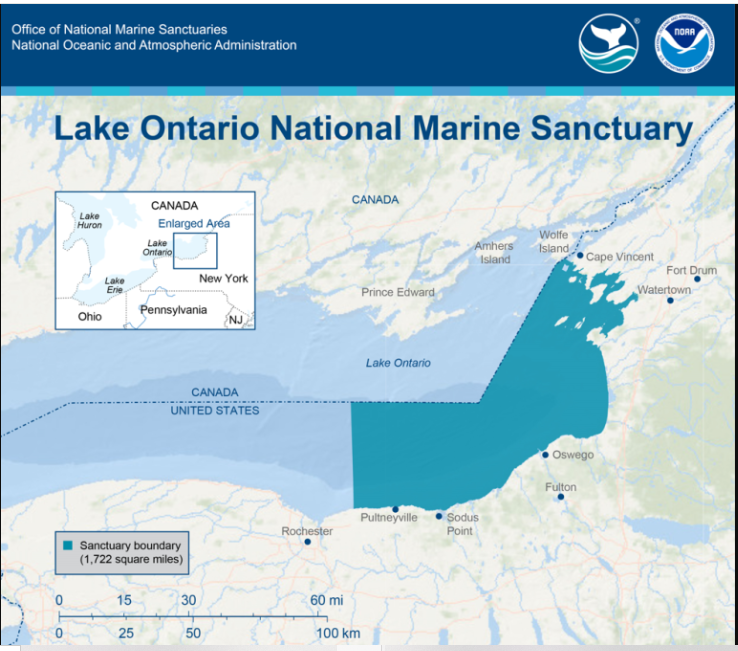
The new sanctuary, established in June, covers a large swath of eastern Lake Ontario bordering New York’s Oswego, Jefferson, Cayuga and Wayne counties, according to NOAA.
NOAA selected the area for its historic, cultural and archaeological significance, referring to it as the gateway between the Great Lakes and the Atlantic Ocean.
The sanctuary is the first in New York and the third on the Great Lakes. The others are on Lake Huron’s Thunder Bay in Michigan and Wisconsin’s Lake Michigan coast.
The four counties bordering the preserve, along with the State of New York, nominated the area for sanctuary status in January 2017. NOAA then opened the nomination for public comment and incorporated that feedback into a management plan and environmental impact statement.
“It’s a deliberative process that does take time but we’re very proud of the number of times or the engagement we have with the public to get feedback on our proposal,” said Ellen Brody, Great Lakes regional coordinator for NOAA.
The agency considered three options for the sanctuary boundary, with the largest encompassing 1,786 square miles, 63 known shipwrecks and a portion of the St. Lawrence River. NOAA ultimately chose a smaller sanctuary that excludes the river and covers 1,722 square miles with 41 known shipwrecks.
NOAA selected the smaller boundary because commenters were worried about diver safety and navigational challenges for vessels in the St. Lawrence River, which is known for unpredictable weather, according to the management plan.
Boundaries: NOAA excluded the St. Lawrence River from the sanctuary after hearing public comments concerned with the safety of divers and shipping channel navigation. CRED: NOAA
While preserving the area’s many shipwrecks was a primary purpose for setting aside this portion of Lake Ontario, that’s just one reason for creating a marine sanctuary, Brody said.
“People do think mostly about shipwrecks but it could be Indigenous history,” Brody said. “It could be the remnants of old docks and piers, you know, prehistoric, so it is a broad definition of historic resources.”
Recognizing Indigenous history was among the goals for establishing the Lake Ontario sanctuary, and NOAA included tribal groups in its designation process, Brody said.
“These were historically Onondaga Nation lands,” she said. “We worked with the Onondaga Nation throughout the designation process as their reservation lands are south of the sanctuary around Syracuse.”
She said it’s NOAA’s intent to tell the area’s history beginning before the European settlement of the Great Lakes. Lake Ontario’s cultural history goes back farther than the other two sanctuaries on the Great Lakes and its shipwrecks are older than theirs are, Brody said.
NOAA calls the sanctuary a “submerged museum” because the cold, fresh water of Lake Ontario has done a great job of preserving the wrecks.
Brody said the history is important to tell in a designated marine sanctuary because it’s much harder for people to go diving than it is to hike a trail at a national park, for example.
“We are hoping to have some kind of NOAA presence, whether it’s some type of visitor center or programming along the coast of the sanctuary to tell these stories,” Brody said. She said it takes time for NOAA to get infrastructure settled after the designation.
Michael Pittavino, the curator of the H. Lee White Maritime Museum in Oswego, said the museum had personnel involved in the nomination process to help justify the designation.
“Our objective is to preserve, promote and share the regional history of Lake Ontario with particular emphasis on its maritime significance,” Pittavino said. “A designation of a heritage-based sanctuary really just enables our organization or organizations like ours to be at the forefront of that interpretation.”
He said the sanctuary has potential to grow the local economy and create new opportunities for the museum.
“Increases in tourism, visitation and cultural institutions just leads to a healthier atmosphere, a healthier financial standing,” Pittavino said.
Alpena, Michigan, has attracted more tourists since NOAA established the Thunder Bay National Marine Sanctuary in 2000. The Great Lakes Maritime Heritage Center consistently receives around 100,000 visitors per year, said Sarah Morrison, the center’s media and outreach director.
Pittavino said he has already noticed an increase in awareness and interest in the cultural resources the Lake Ontario designation is meant to protect. While the shipwrecks have taken the spotlight, interest has also grown in land-based activities like the museum’s tours of the nearby Oswego lighthouse.
“Long-term we hope to see an increase in awareness in all sorts of issues related to that body of water,” Pittavino said.
Great Lakes’ water temperatures are very warm for November, still 60 degrees on one lake
All of the Great Lakes are running warmer than normal. It’s no surprise the Great Lakes are warmer than normal since our air temperatures have been warmer than normal for quite some time.
The biggest Great Lake’s average surface water temperature is 46.9 degrees. This may sound cold for swimming, and it is cold – but not for Nov. 17 on Lake Superior. The long-term average for Nov. 17 is more than 3 degrees lower: 43.4 degrees.
Read more at these MLive links:
Toledo museum celebrates the Christmas Tree Ship’s legacy
On November 23, 1912, the schooner Rouse Simmons sank while carrying Christmas trees. Known as the Christmas Tree Ship, its captain, Herman E. Schuenemann (a.k.a. “Captain Santa”), was known for giving trees to families in need.
The story of the ship’s history and captain is the inspiration behind the National Museum of the Great Lakes annual Community Giveback Event—The Christmas Tree Ship, presented by The University of Toledo Medical Center. Enjoy free museum admission all day long and make memories that last a lifetime! Watch Santa arrive at the museum’s dock aboard a Geo. Gradel Co. tugboat delivering a Christmas Tree into your hands or the hands of someone in need.
Community Giveback Day Itinerary
10 AM – 5 PM: Museum Admission Free All Day
11 AM: Enjoy the East Toledo Holiday Parade
1:15 PM: Watch the Ship’s Journey to the Museum via Livestream
1:30 PM: Santa Arrives to the Museum’s Docks
1:45 – 3:45 PM: Meet and Greet with Santa
Not able to join in person? Tune into our Facebook page around 1:15 p.m. for a livestream of the ship’s journey down the Maumee River. Get a tour of the Christmas Tree Ship, learn more about the story that inspired our event, and meet the individuals onboard, including Santa!
Read more here: https://nmgl.org/event/christmas-tree-ship24/