Ship still stuck in St. Lawrence River near Morrisburg
MORRISBURG — Grounded for over a week, the Algoma Central ship – Tim S. Dool – remained lodged on a shoal near Crysler Marina, east of Morrisburg, on Friday.
The nearly 60-year-old grain ship hit the shoal around lunchtime on Nov. 23. Since then, recovery efforts have seen water levels on Lake St. Lawrence temporarily raised to see if the ship would dislodge itself. A second salvage effort involving three tugboats also failed to budge the ship.
A new plan is underway to transfer some of the grain off the ship to other ships, so that the ship may become more buoyant and release from the bottom. All salvage plans must be approved by Transport Canada.
Nicole Giroux-Laplante with the St. Lawrence Seaway Management Corp. said in a statement that a lightering plan in the works.
“A lightering plan is being finalized and is expected to be submitted for review shortly,” she said. “Once the plan is finalized, operations are not anticipated to begin until next week.”Tug Robinson Bay departs Massena for shipyard work
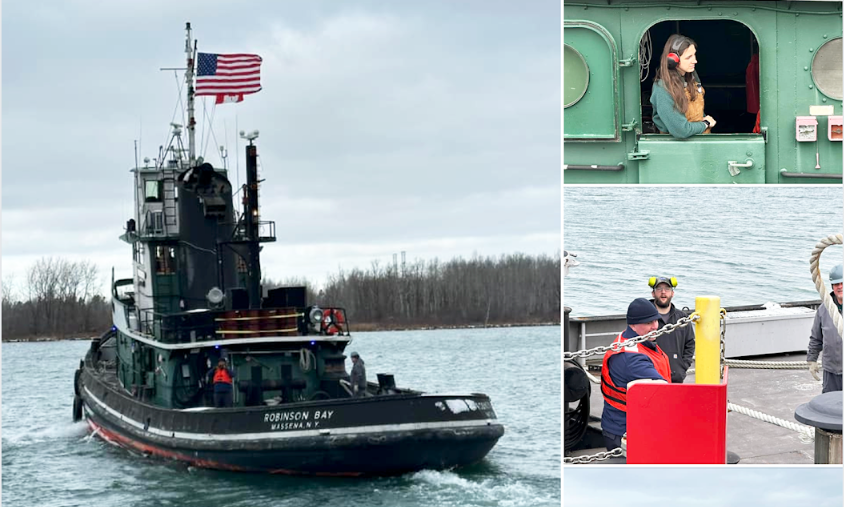
The Tug Robinson Bay has left the GLS Marine Base in Massena, NY, for the last time Friday morning. A Great Lakes Maritime Academy crew is underway to Cleveland, Ohio (with a stop in Clayton, NY) with her to receive a shipyard maintenance period and removal of the upper pilot house this winter. Next spring when put back in the water she will travel to her new home in Traverse City, MI, to allow maritime cadets to learn towing, ship handling and engineering processes onboard the historic vessel.
Cornwall Standard Freeholder
Great Lakes region hit hard by steel
industry pollution, report finds
By Great Lakes Echo
By Joshua Kim
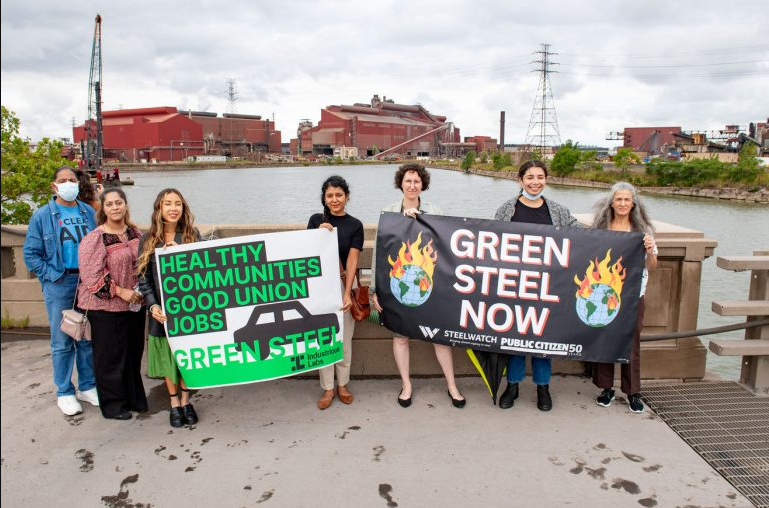
Pollution from coal-based steel production causes hundreds of premature deaths each year, with people in the Great Lakes region bearing much of the burden, according to a recent report.
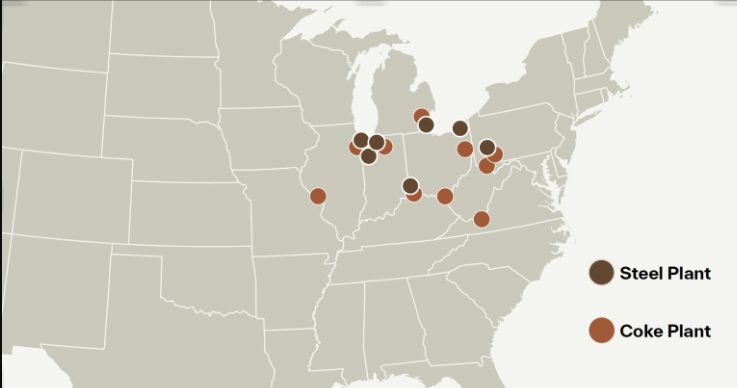
The nonprofit research group Industrious Labs looked at 17 coal-based steel plants and coke facilities operating in the United States and the health and environmental problems they cause in surrounding communities.
Emissions from these facilities include pollutants linked to significant health and environmental problems, including nitrogen oxides, sulfur dioxide, fine particulate matter and lead.
Together their pollution is responsible for as many as 892 premature deaths per year, according to Industrious Labs. Those emissions also trigger around 250,000 cases of asthma symptoms annually, are linked to cancer rates 12% to 26% higher than the national average and result in up to $13.2 billion in annual health care costs, the report says.
The group based its results on an Environmental Protection Agency computer model that uses self-reported industry data.
“Communities don’t have access to this type of information,” said Hilary Lewis, the steel director at Industrious Labs. “By doing this report, we are giving people who live closest to these facilities, who are most impacted, who are most likely to be experiencing these health harms, a tool in advocating for cleaner alternatives.”
All but one of the country’s coke plants and all of its operating coal-based steel plants are located in Great Lakes states, according to the report. Coke is a fuel derived from coal that is used in steelmaking.
That includes U.S. Steel’s Gary Works, the largest steel processing plant in the country. Pollution from the facility puts residents of Gary, Indiana, among the 10% of Americans who are most at risk of developing asthma and low life expectancy, according to the report.
“The steel mills dominate what goes on here,” said Carolyn McCrady, a member of Gary Advocates for Responsible Development, a local environmental advocacy group. “They are still pumping out all that stuff into our air, our water, and our land and so that is a huge issue that we have to deal with.”
Residents cannot plant gardens in their yards, swim in Lake Michigan or fish in certain parts of the lake because of the toxic substances released by Gary Works into the surrounding areas, McCrady said.
Despite these challenges, McCrady said Gary residents remain optimistic about their city’s future.
She said she hopes that Nippon Steel, which agreed in 2023 to purchase U.S. Steel, will be more open to joining the industry’s transition to “green” steelmaking. President-elect Donald Trump, however, has threatened to block the Japanese company’s acquisition of U.S. Steel.
One of the biggest changes in the industry is the decreasing use of coke-burning blast furnaces, Lewis said. Instead, some facilities are switching to direct reduced iron technology that operates at lower temperatures and can run on natural gas or hydrogen. The latter fuel can be produced with renewable energy sources.
In an emailed statement, U.S. Steel media relations representative Andrew Fulton said the company “is aware of the study and is still reviewing the information contained in it.”
Fulton said U.S. Steel employees work to make steelmaking as environmentally conscious as possible and that the company is on track to working to reduce its greenhouse gas emissions.
Tug Robinson Bay departs Massena for shipyard work
The Tug Robinson Bay has left the GLS Marine Base in Massena, NY, for the last time Friday morning. A Great Lakes Maritime Academy crew is underway to Cleveland, Ohio (with a stop in Clayton, NY) with her to receive a shipyard maintenance period and removal of the upper pilot house this winter. Next spring when put back in the water she will travel to her new home in Traverse City, MI, to allow maritime cadets to learn towing, ship handling and engineering processes onboard the historic vessel.
St. Lawrence Seaway Ship Watchers Network – Nathan Jarvis
MHSD’s Ahoy & Farewell III book documents 30 years of laker history
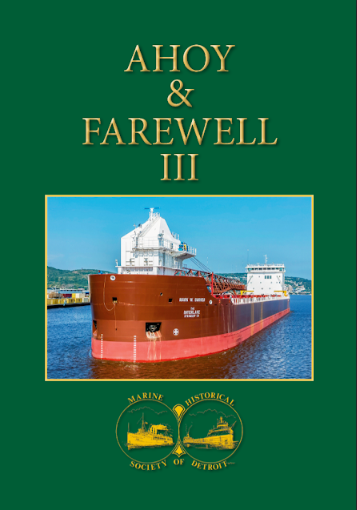
Ahoy & Farewell III, the third installment of the Marine Historical Society of Detroit’s long-running series marking the MHSD’s 80th anniversary, is now available. The book documents the vessels we welcomed, and those to which we had to bid farewell, during the last 30 years. This 308-page, hardcover book features many color photos, with multiple images of each vessel referenced.
In a departure from the MHSD’s previous volumes, the nearly 308-page, hardcover book includes color photos, with multiple images of every vessel. The book’s authors are marine historians William Moran and Viktor Kaczkowski, and Know Your Ships publisher Roger LeLievre.
“Putting the book together has been a much greater challenge than any of us had expected,” Kaczkowski said. “With the influx of foreign-built new and used tonnage, writing the histories required a lot more research to ensure the information was correct, particularly due to the wide variety of languages that came into play.”
Order Ahoy & Farewell III now at MHSD.org.