Tim S. Dool lightering now underway
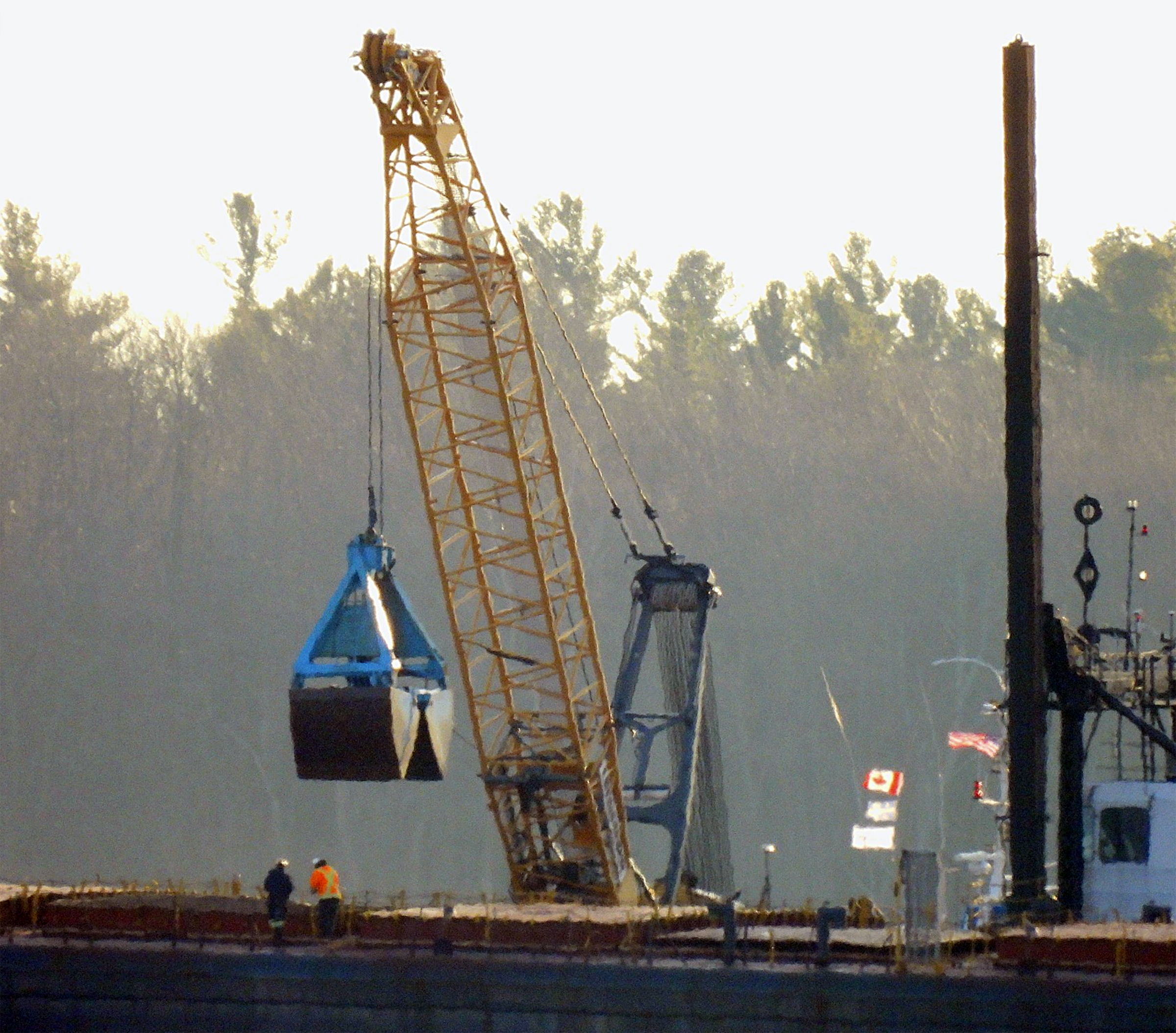
CLEVELAND — Cargo operations and subsequent refloating attempts for the motor vessel Tim S. Dool began December 12 and could continue for several days.
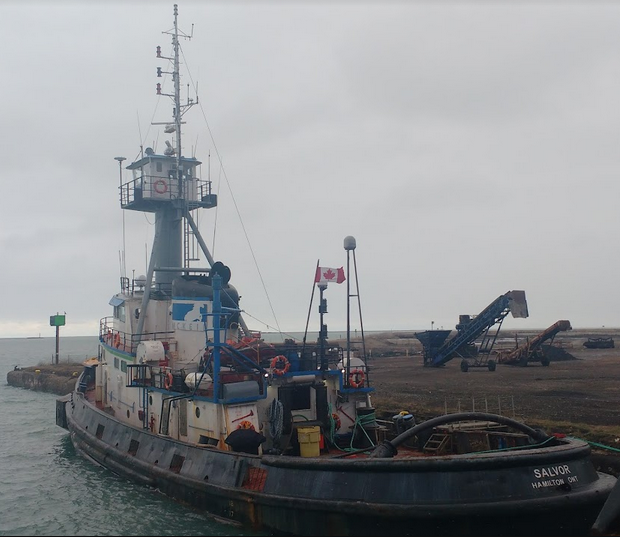
The Tim S. Dool was en route through the St. Lawrence Seaway with a load of wheat grain when it ran aground in U.S. waters southwest of the Eisenhower Lock, near Massena, NY, on Saturday, November 23. There continues to be no report of injury or pollution.
The vessel is located outside of the navigation channel, but cargo operations will involve speed restrictions in the vicinity of Tim S. Dool. There will also be several hours of closure for a portion of the St. Lawrence Seaway once sufficient wheat is lightered from the vessel and refloat operations begin.
The U.S. Coast Guard, Canadian Coast Guard, Great Lakes and St. Lawrence Seaway Development Corporation and St. Lawrence Seaway Management Corporation are working closely to minimize disruption to the maritime transportation system and ensure direct communication with commercial vessels that may be impacted.
USCG, Pat English
Water levels continue seasonal decline
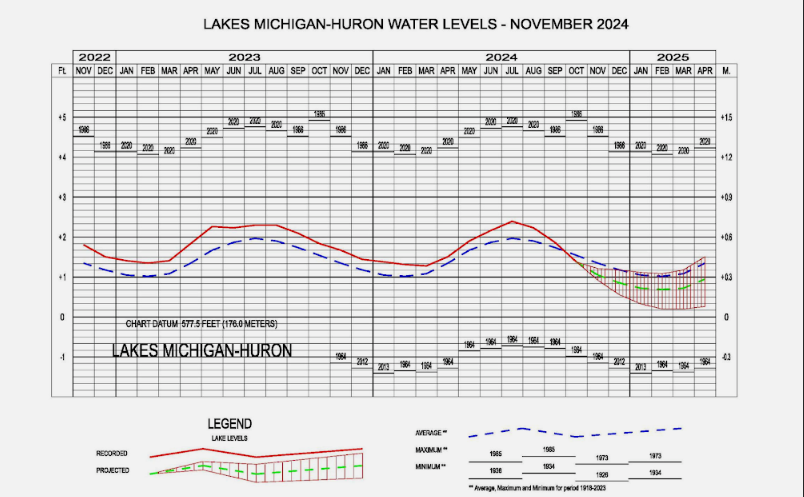
During November all of the Great Lakes continued their seasonal decline. The western half of the basin received higher than average precipitation, while the eastern half experienced below average precipitation.
The monthly mean water level for Lakes Michigan-Huron dropped four inches from October to November, which was three inches below its long-term average November level. This is the second consecutive month that the lake level has been below average. However, it’s still more than two feet above its record low November level.
[See Chart in Gallery below]
U.S. Army Corps of Engineers, Detroit District
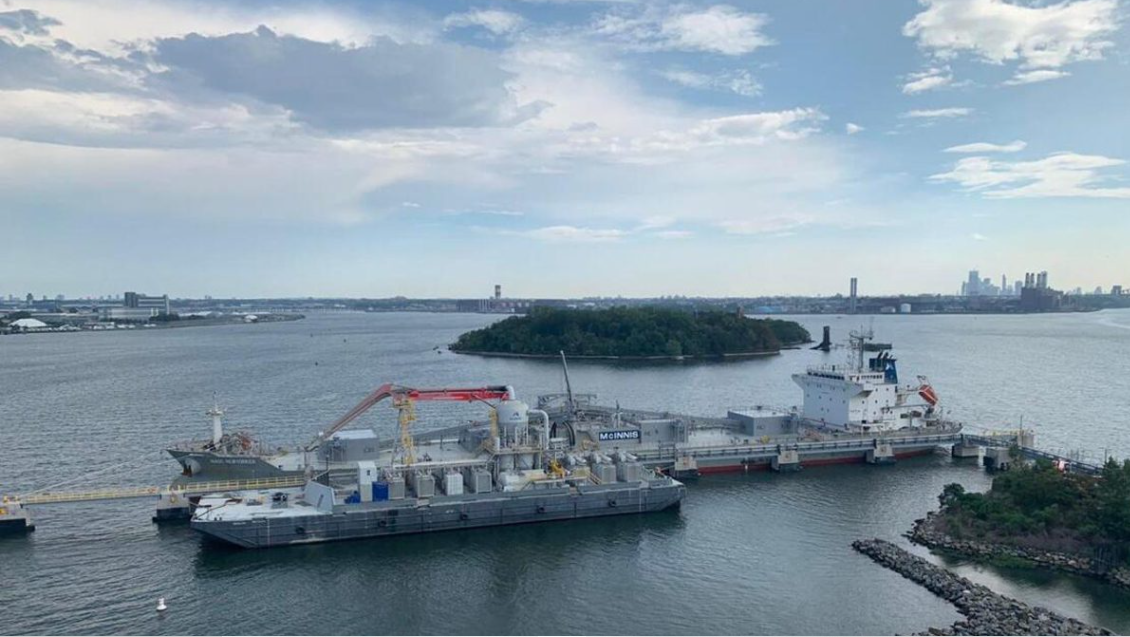
Climeon Signs Order With NovaAlgoma For Heatpower 300 Installation On Groundbreaking Cement Carrier
PRESS RELEASE: NovaAlgoma Cement Carriers (NACC) has placed an order for Climeon’s HeatPower 300 system, an Organic Rankine Cycle (ORC) waste heat recovery technology, to be installed as Owner-Furnished Equipment (OFE) on the new-build NovaAlgoma 38,000 DWT methanol dual-fuel cement carrier, under construction at Zhejiang Xingle Shipbuilding in China. This RINA-classed vessel will set a new benchmark for sustainable shipping in the cement industry.
The HeatPower 300 unit will generate up to 300 kW of sustainable electricity on board the world’s largest cement carrier by harnessing low-grade waste heat from the engine cooling water and exhaust gases. By reclaiming energy that would otherwise be lost in conventional operations, this solution reduces fuel consumption and emissions, directly supporting NACC’s sustainability objectives.
“We are thrilled to collaborate with NACC on this pioneering vessel, which marks the first cement carrier to feature our HeatPower 300 system,” said Fredrik Thoren, EVP and Head of Marine at Climeon. “This collaboration underscores the flexibility of our technology in delivering both environmental and economic benefits across a broad range of vessel types.”
“At NACC we’re committed to setting a standard for sustainable, energy-efficient operations,” said Francesco Costagliola, Technical Director at NovaAlgoma. “Integrating Climeon’s waste heat recovery technology not only supports our sustainability goals but also provides a practical way to meet increasingly stringent environmental regulations while enhancing operational efficiency.”
This installation supports the maritime industry’s transition to cleaner, more efficient technologies and fuels. Climeon’s HeatPower 300 captures engine waste heat, regardless of fuel type, providing both immediate and lasting economic and environmental benefits for NACC’s dual-fuel vessel. This partnership highlights Climeon and NACC’s shared commitment to advancing sustainability in the cement shipping sector.
gCaptain
McKiel Marine has fitted propeller shafts
on 122 ships that ply the Great Lakes
By Pepper Parr
December 9th, 2024
BURLINGTON, ON – Few would describe Burlington as a significant part of the marine industry – most would see that as part of what Hamilton is.
There are two organizations in Burlington that are major players in the marine industry – they work together. One makes things that sea going ships use and the other owns ships that ply the Great Lakes.
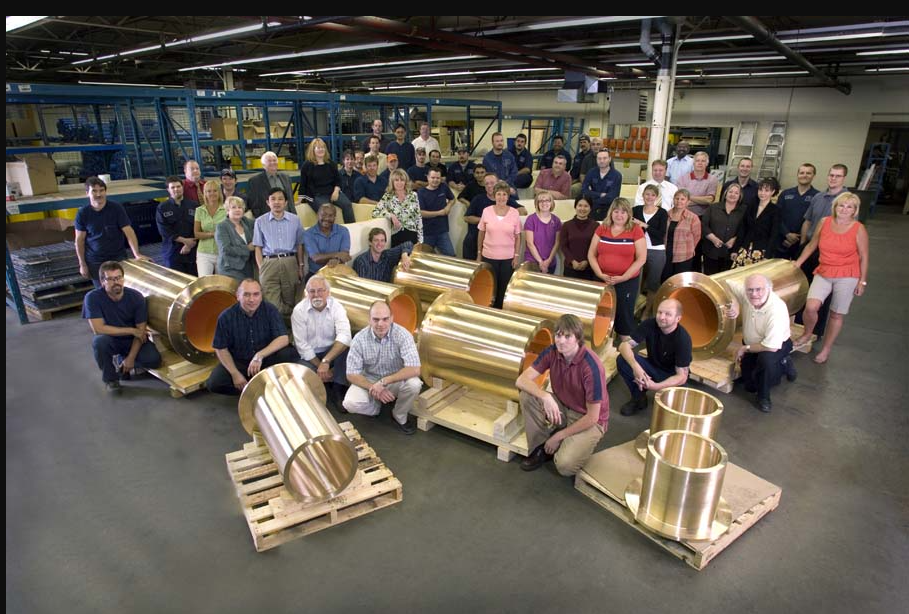
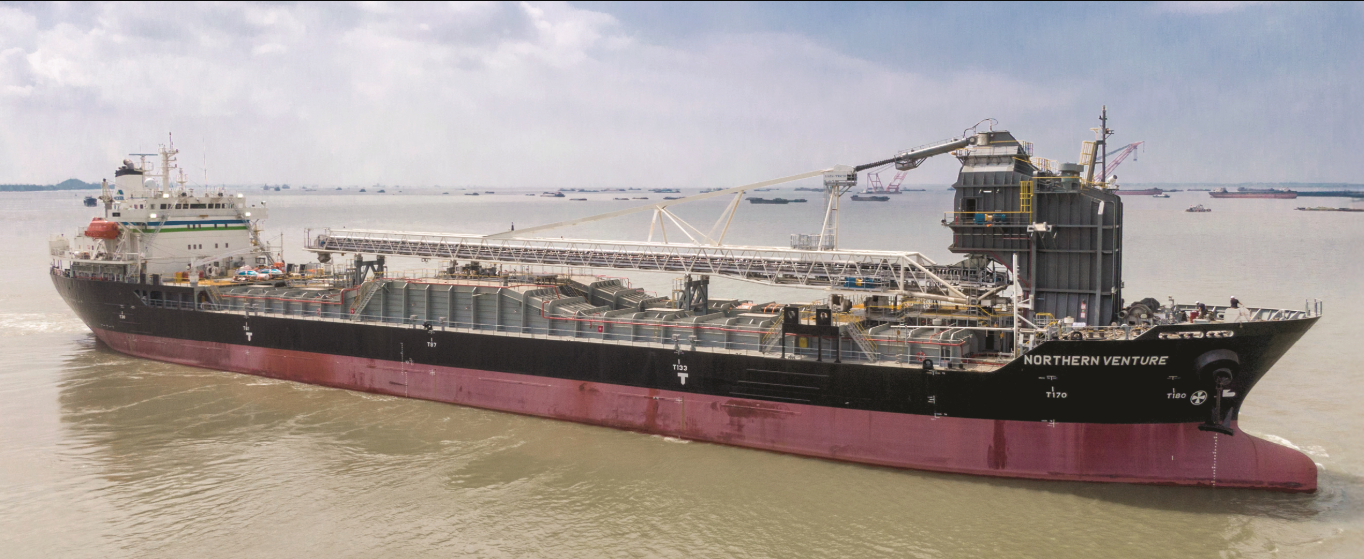
Thordon Bearings has delivered COMPAC water-lubricated propeller shaft and SXL rudder bearings to replace oil- and grease- lubricated bearings onboard McKeil Marine’s bulk carrier Northern Venture as part of a major refurbishment project.
Established in 1956, Canada-based McKeil Marine provides marine transportation along the St. Lawrence Seaway, the East Coast, and Canadian Arctic with its diversified fleet of tugs, barges, workboats and vessels, including bunkers, cement carriers, and tankers.
The shipowner acquired the 155m (508.5ft), 19,651dwt Northern Venture in 2022. The self-discharging River Class vessel has a forward mounted discharge boom and a single point loading system which allows all four holds to be loaded via shuttle conveyors from a single deck-mounted hopper.
The conversion to water-lubricated propeller shaft and grease-free rudder bearings was made to ensure the vessel does not discharge oil or grease into the Great Lakes, said Andy Vary, Director of Technical Operations at McKeil Marine. “It’s part of our continuous commitment to our people, our customers and the communities in which we operate.”
The retrofit included COMPAC bearings for the vessel’s 409mm (16.1in) diameter propeller shaft along Thordon’s Water Quality Package to ensure a clean water supply to the bearings. Thordon grease-free SXL rudder bearings were also supplied for the bulker. This installation was undertaken in summer 2023 at COSCO’s Nantong Shipyard in China, with the vessel operational on the Great Lakes in December 2023.
McKeil Marine is a returning customer for Thordon Bearings. The world’s first Thordon water-lubricated propeller shaft bearing was installed on a Great Lakes tug owned by McKeil Marine in the late 1970s.
Following this conversion, many other Great Lakes operating vessels converted to Thordon, helping to raise the profile of the Burlington, Ontario-headquartered company across the global shipping industry.
Thordon’s COMPAC propeller shaft bearing is constructed from a cross-linked polymer alloy that offers a low breakaway friction resulting in quiet and smooth operation. The material’s abrasive resistance is much greater than traditional laminated materials. The visco-elastic nature of the material also improves the hydrodynamic performance of the bearing leading to longer wear life, and as the material is homogenous, it provides consistent low wear and friction properties.
To promote early formation of a hydrodynamic film between the propeller shaft and bearing, the lower (loaded) portion of the bearing is smooth, while the upper half of the bearing incorporates grooves to allow water lubricant/coolant to flow. A key benefit of the water-lubricated propeller shaft system is that it negates the need for a damage-prone aft seal.
José Duarte, Marine Business Development Manager – North America, Thordon Bearings, said: “As an added environmental benefit, Thordon’s COMPAC system has been shown to lead to fuel savings and reduced emissions. Compared to oil-lubricated bearings, at rated shaft speeds viscous friction is lower with water.”
The Thordon Water Quality Package is designed to supply sea or lake water to the propeller shaft bearings for lubrication and cooling and to condition the water by removing suspended solids.
Thordon’s SXL rudder bearings operate without grease above and below the waterline, offer high abrasion resistance and can also withstand high shock loads, improving the wear life of the bearing.
Thordon has been actively supporting shipowners such as McKeil Marine, Algoma Central, American Steamship, CSL, Lower Lakes Towing and Interlake Steamship for over three decades. More than 120 vessels sailing the Great Lakes have Thordon’s water-lubricated components.
MHSD’s Ahoy & Farewell III book
documents 30 years of laker history
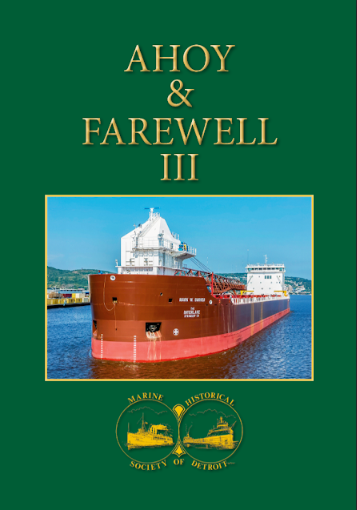
Ahoy & Farewell III, the third installment of the Marine Historical Society of Detroit’s long-running series marking the MHSD’s 80th anniversary, is now available. The book documents the vessels we welcomed, and those to which we had to bid farewell, during the last 30 years. This 308-page, hardcover book features many color photos, with multiple images of each vessel referenced.
In a departure from the MHSD’s previous volumes, the nearly 308-page, hardcover book includes color photos, with multiple images of every vessel. The book’s authors are marine historians William Moran and Viktor Kaczkowski, and Know Your Ships publisher Roger LeLievre.
“Putting the book together has been a much greater challenge than any of us had expected,” Kaczkowski said. “With the influx of foreign-built new and used tonnage, writing the histories required a lot more research to ensure the information was correct, particularly due to the wide variety of languages that came into play.”
Order Ahoy & Farewell III now at MHSD.org.