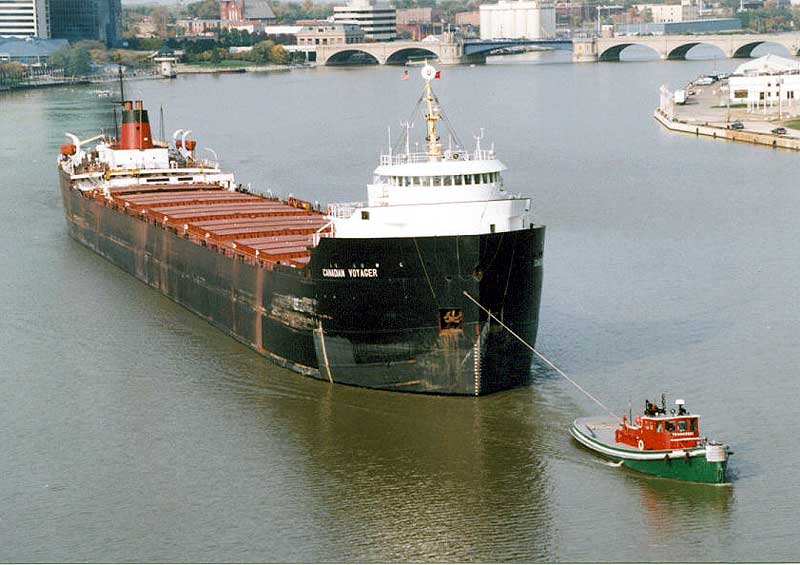
Bill Calls for $14.6B in Coast Guard
Cutters, New Great Lakes Icebreakers
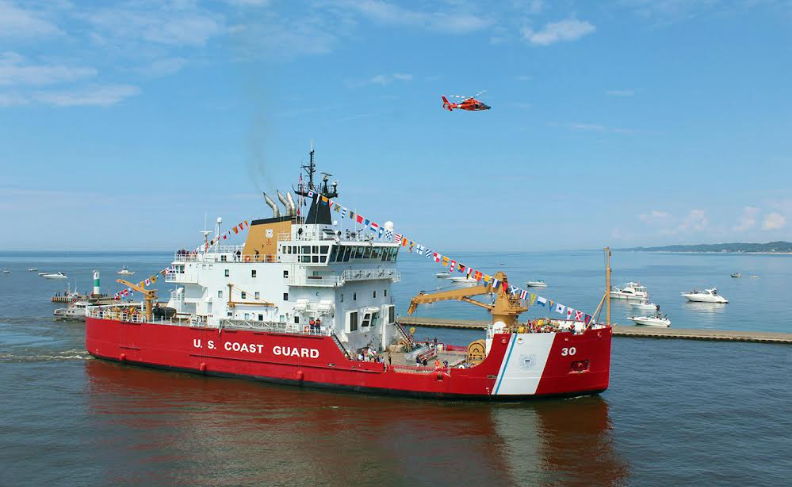
The Coast Guard could see $14.6 billion in new cutters as part of a massive supplemental that could almost double the service’s Fiscal Year 2025 budget, according to the text of the reconciliation bill reviewed by USNI News.
Included in the Republican-led funding proposal is money for almost 30 new cutters ranging in size from the 154-foot Sentinel-class Fast Response Cutter to the 460-foot Polar Security Cutter, according to a source familiar with the proposed buy.
Those include:
Three or more Arctic Security Cutters and an unspecified number of Great Lakes icebreakers for $5.03 billion.
Two Polar Security Cutters and advanced procurement for $4.3 billion.
Eight Heritage-class Offshore Patrol Cutters for $4.3 billion.
Up to 15 Sentinel-class Fast Response Cutters for $1 billion.
The last icebreaker for the Great Lakes, Mackinaw, was built in 2005.
The supplemental is more than the Fiscal Year 2025 Coast Guard budget request of $13.8 billion and more than 10 times the cutter budget of $1 billion in current budget proposal. The new cutters are part of an overall $22.5 billion supplemental to the Coast Guard’s bottom line that also includes $3 billon for new aircraft and billions more for shoreside infrastructure, according to the bill. If ratified, the Coast Guard has 90 days to submit a proposal with timelines for deliveries.
Boosting the Coast Guard has been a White House priority with President Donald Trump calling for as many as 40 new icebreakers. In addition to the funding for the existing Polar Security Cutter and the new Arctic Security Cutter, the bill included language that would open the option for cutters to be built at foreign yards. Under U.S. law, the Coast Guard needs a presidential “national interest” waiver to build in a foreign yard.
USNI News reported that both Canadian and Finnish yards responded to an April request for information from the Coast Guard for the Arctic Security Cutter work.
Trump has said in public statements he was interested in building some icebreakers in Finland, including during a meeting last month with Finnish President Alexander Stubb.
Specifics for what amounts as a supplemental for the service comes as the Coast Guard is in the middle of what acting commandant Adm. Kevin Lunday has called a “death spiral.”
“America is demanding more of the Coast Guard today, we are less ready than at any other time in our history since World War II. We have been on a readiness spiral, personnel and material,” Lunday said last month at the Sea Air Space symposium.
Safety zone established near Soo Locks
hydro plant to protect mariners
SAULT STE. MARIE, Mich.- U.S. Army Corps of Engineers, Detroit District, are permanently closing a small portion of the Soo Locks Hydro Plant tail race to ensure the safety of all mariners.
A safety zone extending 150 feet downstream of the U.S. Government Hydroelectric Power Plants has been established. Signs will be posted at the east end of the closed safety zone to notify all mariners of the safety restricted area.
“We’re excited to welcome anglers back to the tail race this year, and safety is our No. 1 priority,” Soo Locks Operations Branch Chief Jeff Harrington said. “The safety closure will be permanent as needed to comply with Engineer Regulation 1130-2-520. The area immediately downstream of the power plant has many boils and whirlpools, making it unsafe for vessels.”
The tail race is part of federal property and therefore must adhere to federal safety standards. Beginning April 29, the safety zone will close to all vessel traffic except at the specific direction of the Chief Lockmaster.
“Infrequent New Lock at the Soo construction activities are anticipated in the tail race through 2025 and will have the right of way due to size of vessels,” New Lock at the Soo Chief Mick Awbrey said. “Mariners are urged to exercise vigilance and caution around floating plant work vessels.”
SooLeader
First cruise ship of the season arrives at Port Milwaukee
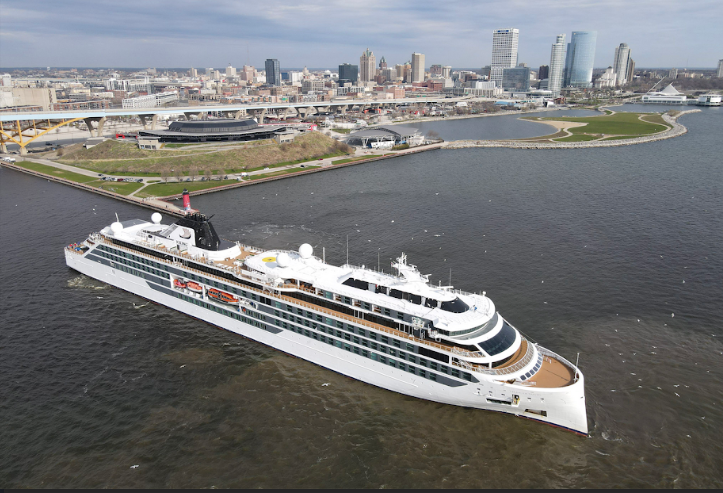
The first cruise ship of the 2025 season has arrived at Port Milwaukee. The Viking Octantis docked at Port Milwaukee around 10 a.m. Monday. This marks the fourth consecutive year that Octantis has arrived as the inaugural cruise ship.
Port Milwaukee says it is expecting 22 cruise vessel calls this season, with a total of 44 itineraries in Milwaukee, between late April and mid-October. There will be five companies with six vessels. Port officials estimate 11,000 global passengers will visit Milwaukee this season.
According to Cruise the Great Lakes, 22,000 passengers will cruise the Great Lakes this year. That is an increase of nearly 10% compared with 2024. The region’s economic impact is projected to exceed $230 million, up 15% from last year.
Cruise tourism is also expected to grow in Milwaukee next year as construction of the South Shore East cruise dock begins this spring. That new cruise dock will likely be operational for the 2026 season, which is already expecting around 18,500 global passengers.
WISN
Cleveland welcomes first cruise ship of packed 2025 season
CLEVELAND — On Tuesday morning, the Victory I cruise ship pulled into the Port of Cleveland, kicking off the 2025 Great Lakes Cruise Season.
The voyage marked a return for the vessel after a one-year absence, as it had undergone an ownership change and a new name.
The 286-foot-long Victory I and its twin ship Victory II were completely refurbished during the downtime. It’s the maiden stop on what promises to be a busy 2025 season. “This is going to be a record year for us,” said David Gutheil, Interim Port President and CEO. “We’ll have 55 cruise calls this year, a big jump from last year, which was low 20s.”
The 10-night Victory cruise takes passengers across the five Great Lakes as they travel from Toronto to Chicago.
“Welcome to the windy city,” said Harry Doer, visiting from California with his wife Kay. He wasn’t confusing Cleveland with Chicago but rather referring to the heavy winds that greeted them as they docked. They’re not complaining, at least it was a warm wind.
“It’s actually been nicer than we thought,” said Kay. “Yeah, we thought it would be colder, but it’s not at all,” added Harry.
It’s their first trip across the Great Lakes; for the Rices of Syracuse, it’s their second. They love it, though maybe their children don’t.
“We just decided, you know what, with these kids all grown up, we’re going to spend their inheritance as fast as possible,” Eileen Rice joked.
And studies have shown they’ll leave part of that inheritance here, with each passenger spending an average of $150 during their roughly 12 hours in port. Tour buses wait to take them to places like the Rock and Roll Hall of Fame, the Art Museum, Cuyahoga Valley National Park, and, for Jim Estomo of Los Angeles, the Crawford Auto Museum.
“I understand that’s quite a deal because I’m into cars, so I can hardly wait to see it,” he said. “The cruise has been excellent, I’d recommend it to anyone. We’ve seen some great places along the lakes and in the cities. It’s really been quite an experience.”
Jim’s a first-time visitor from Los Angeles. We ran into a lot of Californians on this cruise, making their first visit to Cleveland. For Peter Knego, it’s a return visit following a cruise stop here in 2017.
“Actually, I was blown away by Cleveland. I had no idea. Everybody told me Cincinnati’s the best city in Ohio, I like Cincinnati a lot, but Cleveland has that incredible cemetery, great museums, I love the Mather, which I’m going to go over and see in about 15-20 minutes. Rock and Roll Hall of Fame. You guys have great restaurants,” he said, adding. “You should hire me to work for your chamber of commerce.”
And that’s what makes the 10,000 visitors expected to come into the port this summer so important because many will be experiencing Northeast Ohio for the first time and research by Destination Cleveland has shown that if you can get someone here for the first time you are very likely to send them off as ambassadors of the city.
News5 Cleveland
Viking passengers learn from scientists conducting research while cruising Great Lakes
ALPENA — In its fourth year of visiting Alpena, the Viking Octantis cruised into Thunder Bay on Saturday, bringing in 372 guests and 261 crew members, including scientists who conduct research while traveling the Great Lakes and around the world.
The cruise ship anchored in Thunder Bay, and guests came in on the passenger tenders, traveling under the 2nd Avenue Bridge in the Thunder Bay River, and docking behind the National Oceanic and Atmospheric Administration’s Great Lakes Maritime Heritage Center, which houses the Thunder Bay National Marine Sanctuary administrative offices.
Dr. Damon Stanwell-Smith is the head of Science and Sustainability for Viking Cruises, a Norwegian cruise line that offers international expeditions. Stanwell-Smith is based in Cambridge, United Kingdom.
“We want to make it engaging and fun and exciting, as all good science communication is,” Stanwell-Smith said. “We’re all professional scientists, and so we have a joint mission both to ensure our guests have an amazing experience, but also continuing to work with our partner scientists.”
He said the guests, many of whom are retired, well-educated Americans, enjoy learning about science while cruising the Great Lakes.
“The vast majority of my work is related to our expedition ships, which are both vessels for guests to go sailing on and having expedition adventures, and also our state-of-the-art research platforms,” Stanwell-Smith said. “We have … a professional science team on board, and we also work with various partner institutions, most notably, of course, National Marine Sanctuaries.”
Jason Hayden is the chief scientist on the Viking Octantis. He is from the Cape Town area of South Africa. “I am in charge of all the science operations on board,” Hayden said. “We have a number of different projects.”
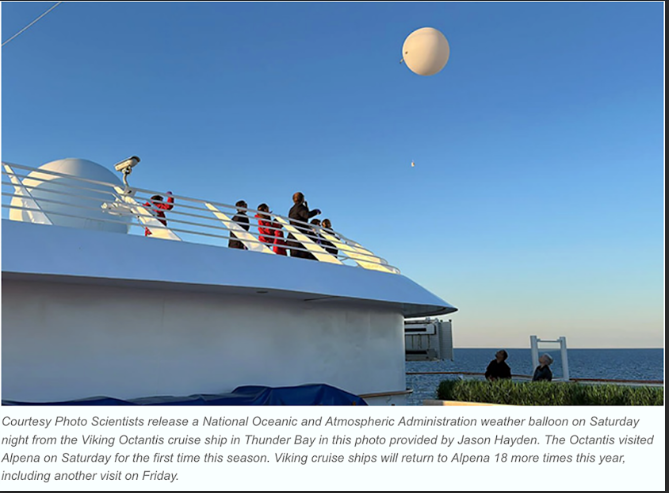
One of those projects is partnering with the National Weather Service to release weather balloons into the stratosphere, which they did on Saturday night in Thunder Bay.
“The weather balloons are for the U.S. National Weather Service,” Stanwell-Smith said. “And that relationship, also, was established through our relationship with NOAA.”
He said they launch weather balloons all over the world.
“When we’re in North America, especially this region, this contributes to the weather forecasting and climate modeling for the National Weather Service,” Stanwell-Smith said. “As far as I understand, we are the only civilian vessels in the world that are National Weather Service weather balloon stations.”
“We do a lot of science on board, not only here, but everywhere we sail, all over the world, so from Antarctica all the way here, into the Great Lakes, and now, into the Arctic, as well,” Hayden said.
They also conduct research using baited remote underwater video systems.
“We have these instruments we put down on the lake bed that measure fish biodiversity, biomass, and behavior,” Hayden said. “So, we have a lot of different scientific programs happening all at the same time, which is really exciting to do, all in this area.”
Hayden said Viking guests enjoy watching the science projects, such as the weather balloon launch held on Saturday.
“It is extraordinary,” Stanwell-Smith said. “When we put a weather balloon up, it goes up, 20 miles up into the stratosphere, and it starts as the size of a beach ball and ends up the size of an RV.”
He said guests who view the weather balloon launch and other science then feel like they have a better understanding and connection with the research being done.
“It changes their perception of how weather forecasting works,” Stanwell-Smith said.
“They have a sense of ownership to the science that’s happening on board,” Hayden added.
Stanwell-Smith said science is underway on every expedition. “For us, that’s a really important part of the guest experience,” Stanwell-Smith said. “We have a 400-square-foot laboratory on board, as well, that guests can get involved with.”
He said all the science is used for research purposes. “We don’t do anything for show,” Stanwell-Smith said. “This is genuinely data … being used for NOAA’s mission, for support of the Sanctuary, for the Weather Service.
“We’re the thinking person’s cruise, not the drinking person’s cruise,” Stanwell-Smith said, adding that fine dining, drinks, and amenities are a part of the Viking cruise, but their guests tend to appreciate a more educational environment. “That translates into travel for the intellectually curious.”
The Viking ships visit Alpena because of a partnership with NOAA.
“We first established a relationship with NOAA in 2020,” Stanwell-Smith said. “And that was with NOAA GLERL (Great Lakes Environmental Research Laboratory) in Ann Arbor, covering the Great Lakes. And then, through that initial conversation, we started a conversation with the Marine Sanctuaries, specifically Alpena, because it’s also a lovely stop for us.”
He added that in addition to the research opportunities in Lake Huron, guests enjoy visiting the city and going on various excursions in Northeast Michigan.
“I first came here in 2022,” Stanwell-Smith recalled, noting that it was April when he visited Alpena. “I’ve been lucky enough to come relatively regularly ever since … One of the things that we’ve been particularly grateful for is that we’ve also had a science retreat here in the summer of 2023, in the facility here, bringing the scientists from the different vessels together, and we’re planning to do it again.”
That science retreat is scheduled for June in Alpena.
“Yes, we’re a cruise ship,” Hayden said. “We have an amazing spa, and everything you could imagine, from amazing food to a snow grotto … But, we’re also an expedition vessel, which we have designed specifically to come here. We fit — just barely squeeze — through the Welland Canal, to be able to get here,” Hayden said of the ship canal in Ontario, Canada, which is a part of the St. Lawrence Seaway and Great Lakes Waterway. “We are specifically designed to go to hard-to-reach places … We’re not just a cruise ship. We’re not just an expedition vessel. We are a fully capable research vessel.”
Viking cruise ships will return to Alpena 18 more times this year, including another visit on Friday. Both the Viking Octantis and Polaris will be in Alpena on the same day on June 21.
“We love coming to Alpena,” Stanwell-Smith said. “It feels like it’s thriving … We get fantastic feedback from the guests. The guests love coming, so long may it continue.”
“In Antarctica, we say that when you’ve been to Antarctica, you return an Antarctic Ambassador,” Stanwell-Smith said. “Because you love what you know, and you protect what you love. And I would hope that we are creating Alpena Ambassadors, too.”
The Alpena News
U.S. Sen. Todd Young wants more American
ships to set sail. Could Indiana benefit?
INDIANAPOLIS, IN – First it was chips. Now, it’s ships.
Indiana U.S. Sen. Todd Young on April 30 reintroduced bipartisan legislation, known as the SHIPS Act, that intends to revitalize shipbuilding in the U.S. and close the ship vessel gap between America and foreign adversaries, such as China.
The SHIPS Act also intends to cut red tape for U.S. vessels participating in international commerce, provide financial incentives for domestic shipbuilding and invest in future maritime workforce jobs. The effort will make its way through Congress in two parts: the SHIPS for America Act and the Building SHIPS for America Act.
Young and bipartisan colleagues Arizona Democratic Sen. Mark Kelly, California Democratic U.S. Rep. John Garamendi and Missouri Republican U.S. Rep. Trent Kelly first pitched the SHIPS Act in December 2024. The bill, which was introduced at the end of the last Congress, did not move past its initial introduction.
The reintroduced SHIPS Act might have more momentum than it did four months ago, due to support from the White House and priorities of President Donald Trump’s administration. In addition to imposing widespread tariffs, Trump on April 9 signed an executive order calling for the restoration of “America’s maritime dominance.”
“Our bill will revitalize the U.S. maritime industry, grow our shipbuilding capacity, rebuild America’s shipyard industrial base, and support nationwide workforce development in this industry,” Young said in a statement. “This legislation is critical to our warfighting capabilities and keeping pace with China.”
SHIPS Act and the CHIPS Act
The reasoning behind the SHIPS Act mirrors Young’s push for the 2022 CHIPS and Science Act, which sought to boost U.S. production of semiconductors, also known as microchips. Young has long claimed that U.S. chip production will benefit the country’s national security.
The CHIPS Act brought significant investment to Indiana, including company SK hynix’s plans to build a $3.8 billion chip packaging facility in West Lafayette.
While Indiana isn’t a coastal state, there could still be opportunities for investments in the Hoosier State. Indiana has ports to the south near the Ohio River and to the north on Lake Michigan, which international ships can access through the other Great Lakes.
At a press availability following an April 10 event in Bloomington, Young told reporters a key way Indiana might benefit from the SHIPS Act is by producing steel or other part-manufacturers that could add to shipbuilding efforts.
“On ship building, more steel comes out of U.S. Steel here in the great state of Indiana, than any other state, so there are real opportunities to provide inputs like steel,” Young said on April 10. “You’ve got Rolls Royce and Cummins and various other component manufacturers that also employ Hoosiers and there are opportunities there should this ship-building initiative have an opportunity to become law.”
Indianapolis Star
William G. Mather Centennial celebration, May 23, 2025
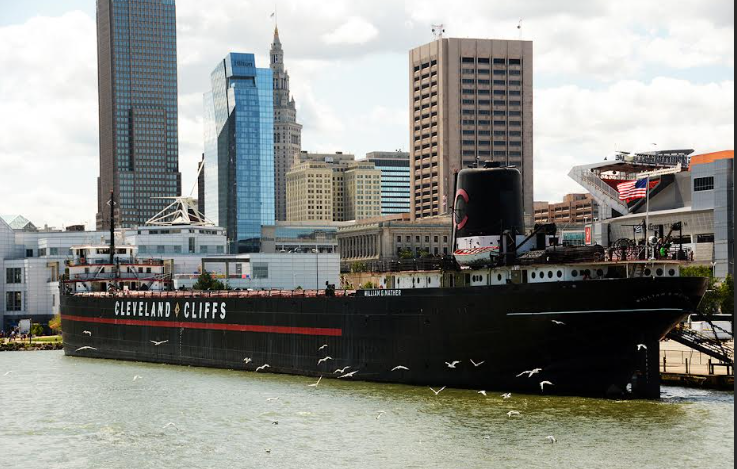
CLEVELAND, Ohio – Cross the ramp into the cargo hold of the Steamship William G. Mather and step into Great Lakes history. The 618-foot retired freighter opens for public tours on Saturday, May 3, and celebrates 100 years on lakes Erie, Huron and Superior on May 23, 2025.
Once the working flagship of Cleveland Cliffs, Inc., the Mather is now docked behind the Great Lakes Science Center. There it serves as a museum where guests explore an expansive deck, huge cargo holds, the brass-and-oak pilot house, time-frozen guest quarters and a four-story engine room.
During its active days, the Mather made seven-day roundtrips between Cleveland and Duluth, Minn., 35 times a year. The voyage took three days to reach Duluth, one day to unload cargo and three days to return to Cleveland with the raw materials for steel production. It required 111,000 gallons of fuel to make the trip.
These delivery materials were used to produce the steel that built this city and earned it the nickname “the ship that built Cleveland.”
While the ship was all about industry, it occasionally hosted Cleveland-Cliff employees as a reward for service years. Guest cabins were available for these and other special guests.
On the Mather’s official centennial, the science center will debut a new exhibit – “Steam and Steel: Propelling the Future of the Great Lakes.” The presentation will examine the past, present, and future of Great Lakes shipping and tie in the Mather’s contributions.
Guests visiting this exhibit will experience what it was like to steer the Mather, load and unload cargo, and use an automatic identification system to view all shipping action in real-time on the Great Lakes. They’ll see models of ships and the monstrous Hulett unloaders once used to transfer materials to shore.
Additional displays will show off the Mather’s historic firsts. For example, the ship was an early adopter of radar on the Great Lakes as well as dual propeller bow thrusters and automated boiler systems.
Those who tour just the Mather have three options:
Self-guided Tour – These are available during normal operating hours. Tickets are free for members, $8.95 (youth) and $10.95 (adult) for nonmembers.
Guided Tour – Held at 12:30 p.m. daily, guided tours are first-come, first-served. Reservations are not required. Tickets are free for members, $8.95 (youth) and $10.95 (adult) for nonmembers.
Hard Hat Tour gives a deeper look into the inner workings of the ship, going where the other tours do not. Hard Hat Tours are held on select Saturdays and Sundays. They require advanced registration with a separate ticket. Tickets are $35 for members, $45 for nonmembers.
Admission to the Steam and Steel exhibit is included with general admission to the Science Center. Tickets to tour the Steamship Mather are additional. For more information on planning your visit or to purchase tickets online, visit GreatScience.com.
Cleveland.com
Two groups offer raffles for trips on the Edwin H. Gott
The Lake Superior Marine Museum Association and The Soo Locks Visitors’ Center Association are raffling off a round-trip cruise on the 1,000-footer Edwin H. Gott.
Visit these websites or see fliers in the gallery below.
https://www.facebook.com/photo/?fbid=1052918876872355&set=a.458641912966724
https://www.lsmma.com/