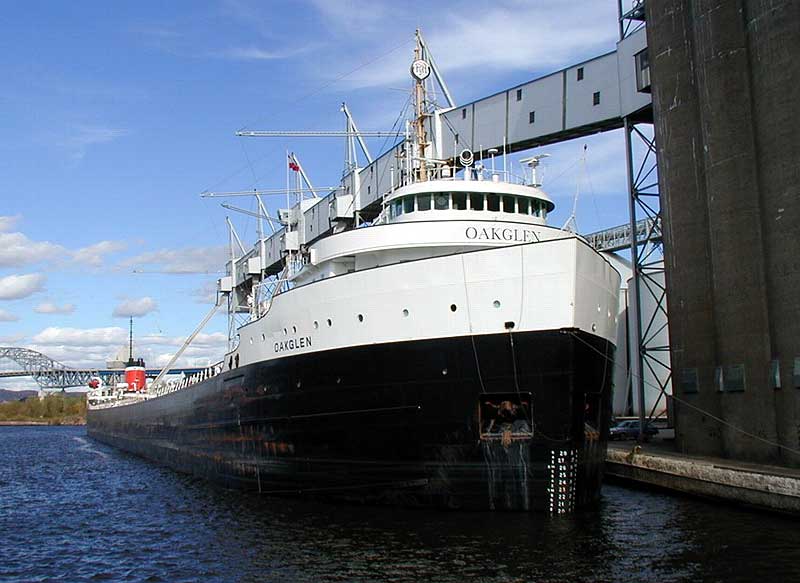
OBITUARY: Canadian Shipowner Scott Misener
Scott Angus Misener, born in London, Ontario, in 1938, passed away peacefully at Toronto Western Hospital on January 30, 2025. He was the son of Ralph Scott Misener and Eleanor Jean Misener.
Scott was an integral part of the family shipping company Scott Misener Steamships, which was established by his grandfather, Captain Scott Misener. His passion for shipping on the Great Lakes was well-known and he carried on the family legacy with pride and dedication, ultimately serving as the Chairman of Misener Holdings.
Scott is survived by his children, Pamela Jane Misener and Richard Scott Misener, and partner Sally Schultz. He was predeceased by his sister Heather Logan and brother Peter Misener. He is survived by his brother and friend, Paul Misener.
His contributions to his family and community and legacy in the shipping industry and many other ventures will never be forgotten.
Private family arrangements have taken place; a memorial will be held at a later time celebrating his remarkable life and to remember the joy and love he brought to the world. For those who wish, the family requests donations be made to MS Canada (Multiple Sclerosis) or a charity of their choice in Scott’s honor. Online condolences may be made through www.turnerporter.ca.
Sweden clears cargo ship Vezhen after
undersea cable damage investigation
Swedish authorities have lifted the confiscation of the cargo ship Vezhen following an investigation into the breakage of an undersea fiber optic cable between Sweden and Latvia on 26 January, according to a report by Swedish Television (SVT).
The Swedish prosecution authority confirmed that the inquiry found no evidence of sabotage. “The investigation now clearly shows that it is not a case of sabotage,” the agency stated.
Vezhen, built in 2022, has been a Great Lakes and Seaway visitor.
Senior prosecutor Mats Ljungqvist from the National Security Unit explained that while Vezhen was responsible for damaging the cable, the incident resulted from poor seamanship, faulty equipment, and adverse weather conditions rather than intentional misconduct.
The damaged fiber optic cable, which connected Latvia and Sweden’s Gotland Island, was among several recent incidents involving disruptions to undersea communication and energy infrastructure in the Baltic Sea.
Initially, Swedish authorities seized Vezhen on suspicion of sabotage, detaining the vessel in the southeastern port of Karlskrona. The bulk carrier, sailing under the Maltese flag and operated by a Bulgarian company, was escorted to port as part of the criminal investigation.
With no signs of deliberate wrongdoing, the ship has now been cleared to resume its journey, SVT reported.
ScandAsia
Tariffs could affect Great Lakes shipping
DULUTH — Tariffs of 25% against sales of goods from Canada and Mexico that were set to take effect on Tuesday have been placed on hold for at least 30 days to allow for further negotiations. As the diplomatic saber-rattling temporarily subsides, area businesses and residents continue to prepare for the possibility that new barriers to North American trade may spring up in the weeks to come.
Northland interests have much riding on how those pending trade talks go.
Tony Barrett, emeritus professor of economics for the College of St. Scholastica, said that if illegal border crossings and the flow of fentanyl into the U.S. are the true rationale for the sanctions, as the Trump administration maintains, the issue likely could be addressed shortly and with minimal economic disruption.
But if the nature of the trade dispute becomes muddier, he suggested the consequences could be far worse. “If the dispute becomes protracted, nothing economically positive will come from it,” Barrett predicted.
Given the current configuration of auto-making operations, with parts and vehicles flowing throughout North America, he said economists project the proposed 25% tariffs could add about $3,000 to the cost of a new vehicle purchased in the U.S. In turn, Barrett noted that higher prices for new vehicles would likely bleed into the domestic used-car market, too.
“Things like this work their way out down the food chain,” Barrett said, explaining that the expense will be passed forward.
“It will end up costing consumers more,” he said. “The idea that the exporting countries will pay the tariffs simply is not true. It would be nice to believe that, but they won’t.”
The Great Lakes and St. Lawrence Cities Initiative issued a letter “to the growing chorus of American and Canadian leaders who oppose the prospect of a harmful trade war between our two countries.”
“The economic engine of the Great Lakes and St. Lawrence River Region supports over 50 million jobs that our residents count on,” the letter said. “The livelihoods of millions cannot be put at risk by putting these jobs in jeopardy.”
Deb DeLuca, executive director of the Duluth Seaway Port Authority, said her staff is also closing tracking developments.
“Duluth-Superior is a world port, and global trade is part of our lifeblood,” she said. “Anything that inhibits free trade is generally a negative for the port, with the exception of policies that protect against foreign steel-dumping.”
DeLuca noted close ties between port cities on both sides of the border.
“Regarding Canada and the U.S. specifically, Duluth-Superior would likely suffer from tariffs imposed by either country,” she said. “Cargo volumes between our port and Canada total in the millions of tons each year, spread across categories like iron ore, lumber, salt, grain and general cargo. Almost a third of the iron ore that sailed from Duluth-Superior during the 2024 navigation season went to Canada.
“Our northern neighbor is a major trade partner,” DeLuca said. “and the net economic result of a trade war between Canada and the U.S. would likely be more negative than positive for our port.”
Nevertheless, Eric Peace, vice president of the Lake Carriers Association, which represents U.S.-flagged operators of the Great Lakes fleet, suggested the short-term effects of the proposed tariffs would likely be minimal on his organization’s members. In fact, he predicted it could lead to more business for its members, as carriers are called upon to move more domestic salt by way of water — shipments that nearly all involve Canadian salt shipped by Canadian vessels.
However, he acknowledged that a protracted trade dispute could prove more disruptive to the domestic automobile industry, potentially weakening demand for steel and slowing shipments of taconite.
Forest products could also take a hit, with the U.S. importing about one-third of its softwood lumber from Canada and relying heavily on its paper-making capacity, as well.
Forum Communications Co., the Fargo, North Dakota-based owner of the News Tribune, buys all of its newsprint from Canadian paper makers and would feel the direct impact of the proposed tariffs.
Aaron Becher, Forum Communications’ vice president of newspapers, said that if the threatened tariffs take effect, “It will present us with greater cost challenges that we will need to manage carefully.”
Duluth News Tribune