1854
1854: BOSTON (wooden propeller, 134 feet, 259 tons, built in 1847 at Ohio City, Ohio) was bound from Chicago for Ogdensburg, New York, with pork, corn, whiskey and produce. On Lake Ontario, about 20 miles off Oak Orchard, New York, she collided with the bark PLYMOUTH and sank in about 20 minutes. No lives were lost. The crew and passengers made it to shore in three lifeboats. The boat that the captain was in sailed 50 miles to Charlotte, New York.
1862
1862: CONVOY (two-mast wooden schooner, 130 feet, 367 tons, built in 1855, at Buffalo, New York) was sailing downbound on a dark night on Lake Erie with 18,000 bushels of wheat when she collided with the empty bark SAM WARD and sank quickly in 12 fathoms of water. Her wreck drifted along the bottom, and during the shipping season, several vessels collided with her.
1900
1900: The freighter PRINCETON (Hull #302) was launched at Lorain, Ohio, by American Ship Building Co. for the Pittsburgh Steamship Co.
1922
1922: The wooden passenger and freight carrier CARIBOU went aground in the North Channel of Georgian Bay near Richards Landing.
1923
1923: The wooden steamer W.J. CARTER, en route from Oswego to Cobourg with a cargo of coal, began leaking and sank in Lake Ontario 20 miles south of Point Peter. Nine crewmembers were rescued by the KEYPORT.
1929
1929: The newly-built canaller C.H. HOUSON was in a collision with the collier WABANA off Cap au Saumon on the St. Lawrence in heavy fog. The investigation of the accident was critical of the operation of both vessels. The former served in the Misener fleet, becoming b) PAUL MANION in 1949, and was scrapped at Deseronto, Ontario, in 1961.
1943
1943: The JOHN T. HUTCHINSON was delivered to the Buckeye Steamship Co. (Hutchinson & Co., manager) of Cleveland, Ohio. The HUTCHINSON was part of a government program designed to upgrade and increase the capacity of the U.S. Great Lakes fleet during World War II. In order to help finance the building of new ships, the U.S.M.C. authorized a program that would allow existing fleets to obtain new boats by trading in their older boats to the Government for credit. The vessel was the ninth Maritimer and fourth of the six L6-S-A1 types delivered. “L6” meant the vessel was built for the Great Lakes and was 600 to 699 feet in length. The “S” stood for steam power, and “A1” identified specific design features.
1949
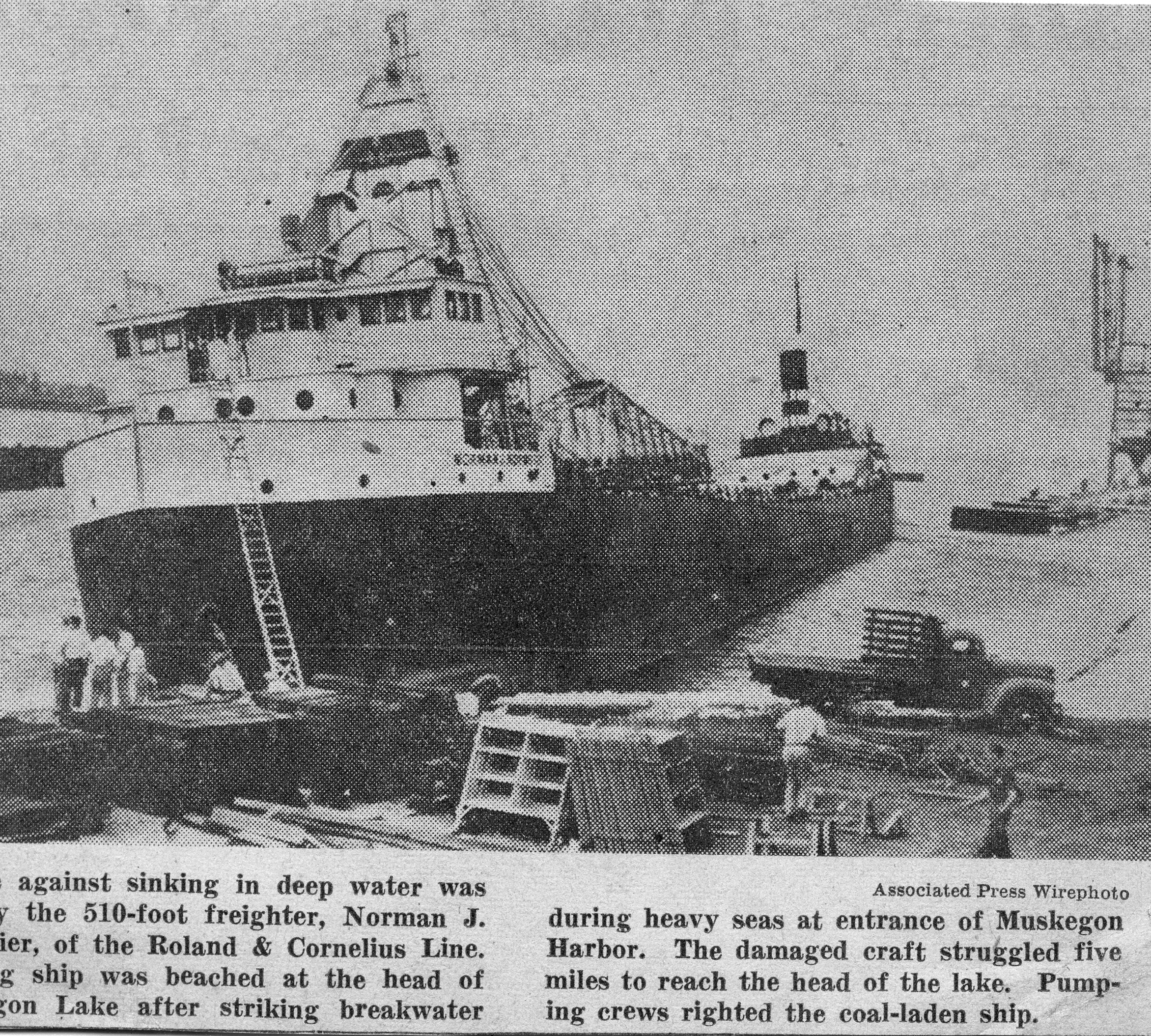
1949: NORMAN J. KOPMEIER was holed by an underwater obstruction entering Muskegon with a cargo of coal from Chicago. The vessel had to be beached and almost capsized. It was later refloated and repaired. The ship last sailed as e) PINEDALE in 1976 and was scrapped at Hamilton in 1981.
1952
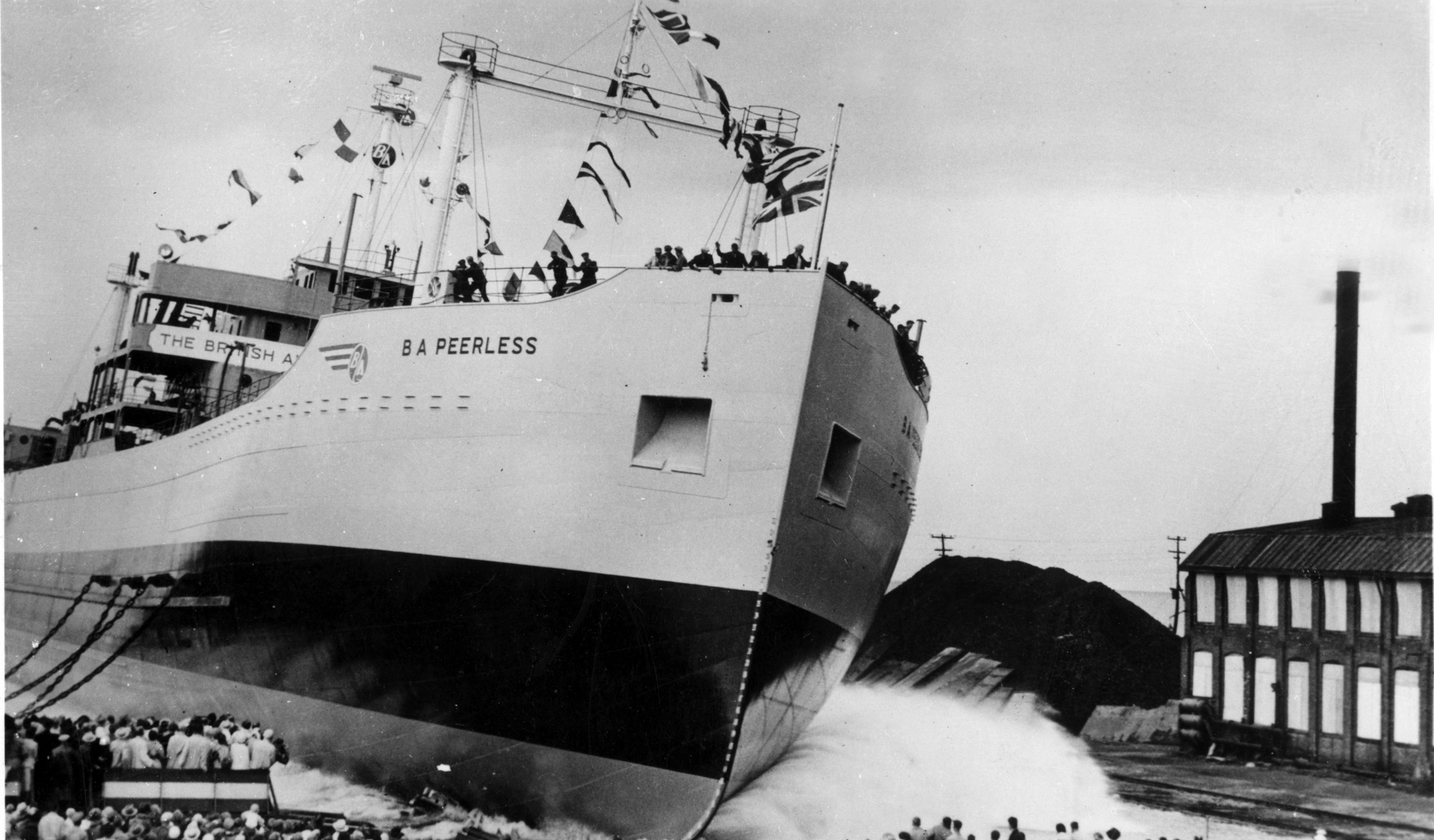
1952: B.A. PEERLESS (Hull #148) was launched at Collingwood, Ontario, by Collingwood Shipyards Ltd. for British American Transportation Co. Ltd. Renamed b.) GULF CANADA in 1969 and c.) COASTAL CANADA in 1984.
1961
1961: After loading a cargo of scrap steel for Japan on its first visit to the Great Lakes, the Greek freighter MIHALIS ANGELOS ran aground leaving Toronto harbor. The ship had been one of the “Empire Class” ships of World War II, being built as a) EMPIRE MASEFIELD. It arrived at Kaohsiung, Taiwan, for scrapping as f) GLORIA on December 6, 1967.
1973
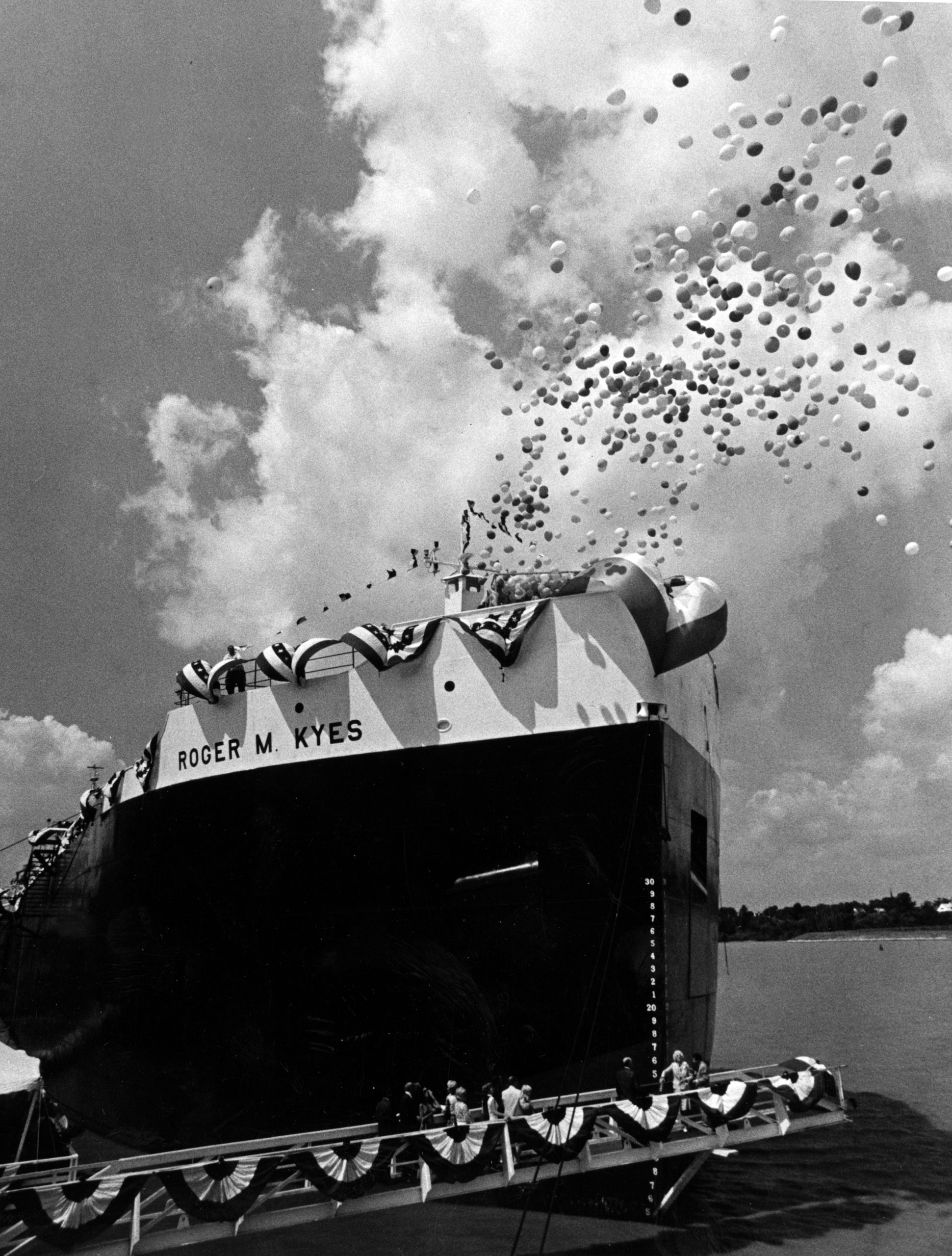
1973: The ROGER M. KYES (Hull #200) was christened at the American Ship Building Co.’s Toledo, Ohio, yard by Mrs. Roger Kyes for the American Steamship Co. Renamed b.) ADAM E. CORNELIUS in 1989.
Data from: Skip Gillham, Joe Barr, Dave Swayze, Mike Nicholls, Father Dowling Collection, Ahoy & Farewell II and the Great Lakes Ships We Remember series from the Marine Historical Society of Detroit. Compiled by Roger LeLievre.
-
- Norman J. Kopmeier news article. Roger LeLievre collection
-
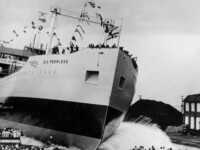
- B.A. Peerless launch. Peter B. Worden collection, MHSD
-
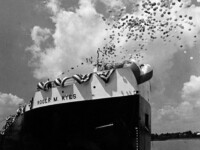
- Roger M. Kyes on christening day. Press photo, Roger LeLievre collection