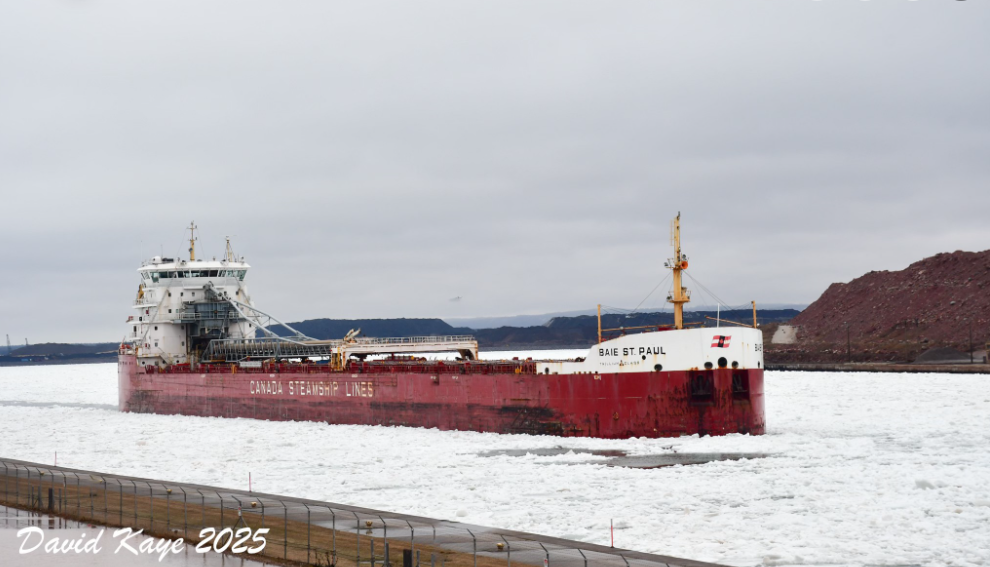
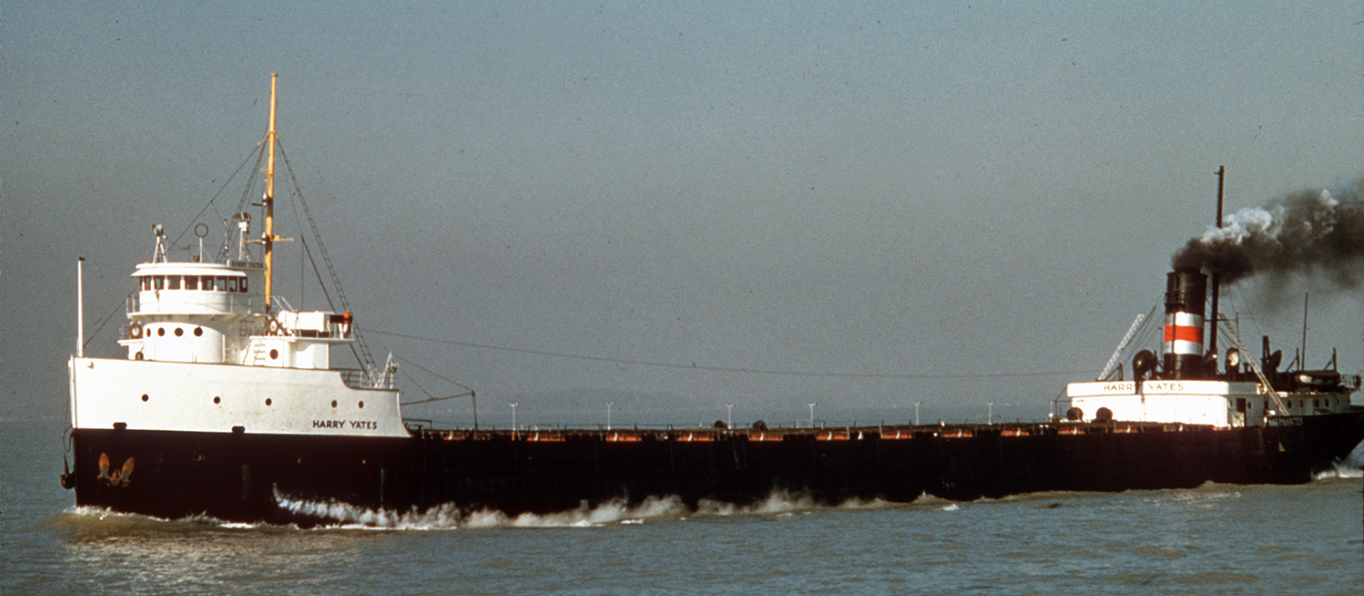
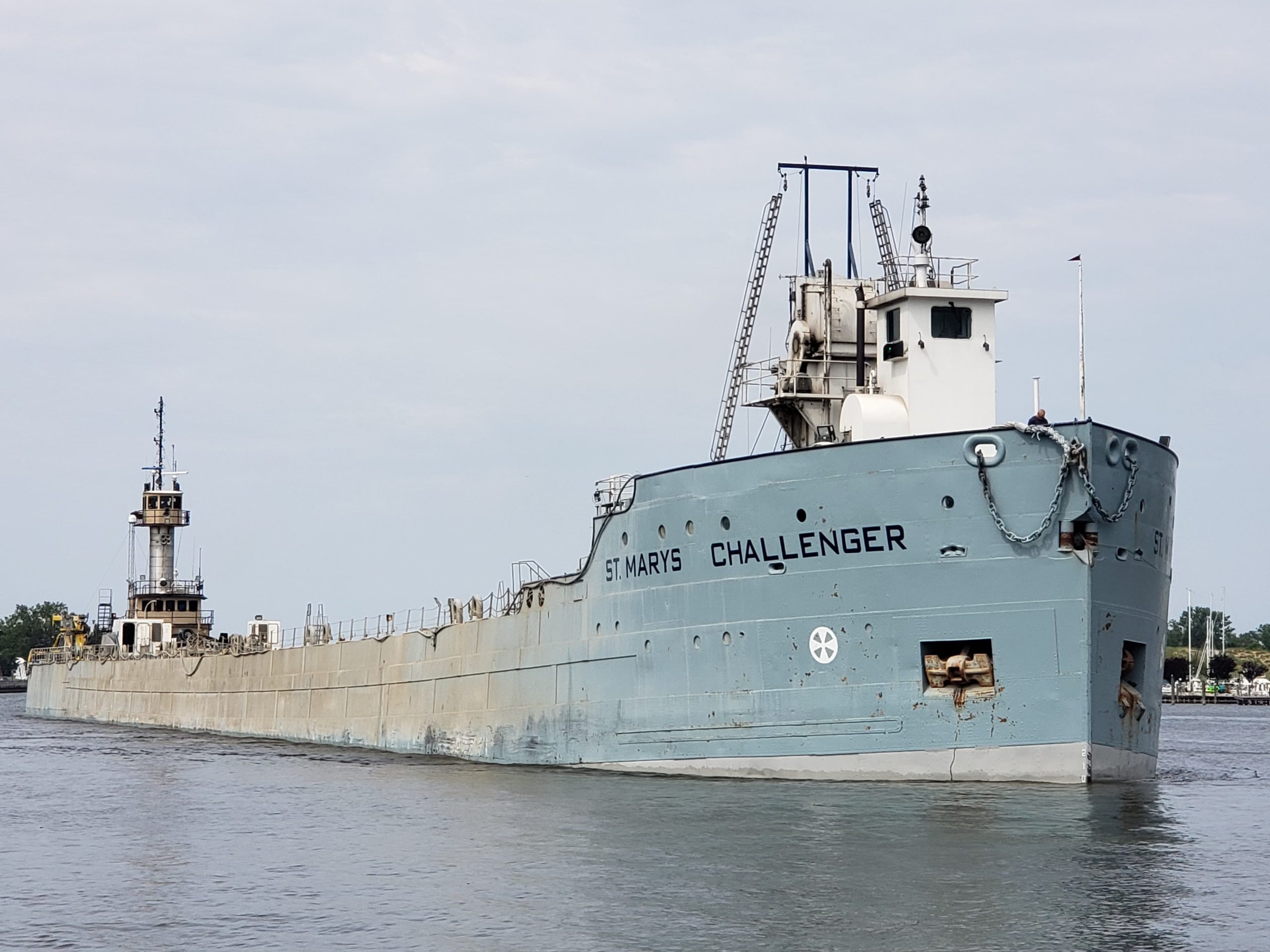
The 2025-2026 winter layup list is now up and running at https://boatnerd3.jasonbowlerdesign.com/winter-lay-up-list-2025-2026
Seaway season extended to Thursday
Due to ice and the large number of vessels awaiting transit, the closing date of the Seaway has been extended to Jan. 8. It had originally been scheduled to close Jan. 5.
At 7:30 Tuesday morning, approximately 20 ships were still expected at the St. Lambert Lock.
Since 1959, the river portion of the Seaway has closed just 9 times in the month of January, 8 of those coming since 2013. The 2017 season ended after ice caused havoc at the US locks.
[Michael James Folsom, Rene Beauchamp]
Poe Lock down till Tuesday afternoon
The Poe Lock at the Soo will be closed from 8 a.m. to 5 p.m. Tuesday for maintenance involving divers. Stewart J. Cort locked down in the early morning after having difficulty with ice in the lock. She was followed by American Century. Edwin H. Gott is moored in the upper approaches awaiting reopening while American Spirit will find a good place to stop in the ice. John G. Munson was just around Whitefish Point at 8 a.m., with Wilfred Sykes also approaching.
Monday evening the upbound Saginaw came to a stop in the ice at Stribling point at the north end of Neebish Island. At 9 a.m., USCG Katmai Bay was on scene to assist. American Integrity was upbound near Lime Island.
Temperatures are near 30 with some fog. The Soo Locks close for the season Jan. 15.
[Know Your Ships]
Icebreaker Vincent Massey at Midland
Canadian Coast Guard icebreaker Vincent Massey is at Midland, ON, to assist the Thunder Bay. The Massey is expected to head to Thunder Bay, ON, next.
South Channel in Straits of Mackinac
to close Jan. 8 due to ice
The Coast Guard Sector Northern Great Lakes is scheduled to close the South Channel in the Straits of Mackinac between Lake Michigan and Lake Huron at 11 a.m. on Thursday, Jan. 8.
According to the Coast Guard, the closure is due to expanded ice coverage in the area. The channel, located between Cheboygan and Bois Blanc Island, will remain in effect until ice is no longer a concern. Any ship traffic in the area can continue to use the Round Island Passage, on the northern side of Bois Blanc Island.
[USCG]
Atlantic Huron arrives at scrap yard
On Monday morning, the Canada Steamship Lines’ Atlantic Huron arrived in Sheet Harbour, Nova Scotia, under her own power, where she will be scrapped.
Sheet Harbour is emerging as a center for responsible ship recycling in Canada, with local company R.J. MacIsaac Construction handling the dismantling of vessels like the former CCGS Hudson, MV Holiday Island, and Deep Panuke PFC, focusing on safe, environmentally compliant practices that maximize local economic impact and follow international standards for hazardous material management, setting a new example for the industry.
James R. Barker is first winter arrival at Sturgeon Bay
James R. Barker is first vessel to arrive for winter layup at Sturgeon Bay, WI. Tugs Jimmy L and Donald Sarter assisted her with the spin at Sherwood Point (the big boats need to turn around and back into the yard, six miles). She is expected to go right into the drydock.
[Rosann Hollinger]
Seaway to close Jan. 8; upbound traffic resumes at Beauharnois Lock
After several days of delays caused by heavy ice and one-way downbound traffic, upbound movement has finally resumed at the Beauharnois Locks. The Seaway will now close Jan. 8.
Tanker Algonova was first to make the passage Monday en route to Sarnia. Following closely behind, tug Wilf Seymour and barge Alouette Spirit were also underway, heading upbound to Hamilton.
With freezing conditions causing repeated issues in the lock chambers and requiring slow, staggered transits for downbound vessels, this progress marks a significant shift in momentum.
[Janey Anderson]
Frozen waters cause serious supply
chain issues across the Great Lakes
The delays are caused by the U.S. Coast Guard having equipment issues and unpredictable weather.
Rowyn Schneider
TOLEDO, Ohio — Winter may have come early for the Great Lakes this year, but neither the U.S. nor the Canadian Coast Guard can keep traffic moving through the ice.
The lakes’ frozen waters are currently impacting commercial traffic between ports across the Great Lakes in places like Toledo, Sandusky, as well as ports in Michigan and Minnesota. The delivery of cargo like iron ore, stone, coal, cement, and other dry bulk materials like salt, grain, and sand are being impacted by these delays.
The United States Coast Guard (USCG) usually conducts ice-breaking operations every year, but it has run into some issues this year.
According to a press release issued by the Lake Carriers Association, the sudden onset of winter has caused the USCG to prioritize removing buoys and navigational equipment in lake waters before they get damaged by ice. The only heavy ice breaker ship in operation under the USGC, the Mackinaw, has been working with several other ice-breaking tug boats to move this equipment.
“The U.S. Coast Guard is focused on their acquisition of Arctic Security Cutters, yet they can’t even keep our internal domestic waters open. This is a major national security problem if steel mills in the U.S. cannot have a reliable supply chain during the winter” stated Jim Weakley, President of the Lake Carriers’ Association.
Canadian ports along the lakes are also fighting frozen waters, but the Canadian Coast Guard (CCG) has three icebreaker ships to help carry out its ice-breaking operations. The CCG has only had access to two of its heavy icebreaker ships this year, as the third ship, Samuel Risley, has been stuck at port in Sarnia, Ontario, due to an engineering problem.
Crews from both the USCG and CCG have been working hard to clear pathways for cargo ships, but these delays will negatively affect commercial traffic this year.
Toledo Blade