1877
1877: The 46-foot tug RED RIBBON, owned by W.H. Morris of Port Huron, MI, burned about 2 miles below St. Clair, MI. Captain Morris ran the tug ashore and hurried to St. Clair to get assistance, but officials there refused to allow the steam fire engine to go outside the city. The tug was a total loss and was only insured for $1,000, half her value. She had just started in service in May of 1877 and was named for the reform movement that was in full swing at the time of her launch.
1892
1892: The wooden propeller VIENNA sank in foggy Whitefish Bay on Lake Superior after being hit broadside by the wooden steamer NIPIGON. The latter survived and later worked for Canada Steamship Lines as b.) MAPLEGRANGE and c.) MAPLEHILL (i), but she was laid up at Kingston, ON, in 1925 and scuttled in Lake Ontario in 1927.
1893
1893: HATTIE EARL (wooden schooner; 96 feet; 101 gross tons; built in 1869 at South Haven, MI) was driven ashore just outside the harbor of Michigan City, IN, and pounded to pieces by the waves. No lives were lost.
1895
1895: ARCTIC (two-masted wooden schooner; 113 feet; 85 gross tons; built in 1853 at Ashtabula, OH) was rammed and sunk by the steamer CLYDE in broad daylight and calm weather. ARCTIC was almost cut in half by the blow. The skipper of CLYDE was censured for the wreck and for his callous treatment of the schooner’s crew afterward. Luckily, no lives were lost.
1900
1900: LULU BEATRICE (two-masted wooden schooner; 72 feet; 48 gross tons; built in 1896 at Port Burwell, ON) was carrying coal on Lake Erie when she was wrecked on the shore near the harbor entrance at Port Burwell in a storm. One life was lost, the captain’s wife.
1901
1901: HUDSON was last seen dead in the water with a heavy list. The steel package freighter had cleared Duluth, MN, the previous day with wheat and flax for Buffalo, NY, but ran into a furious storm and sank in Lake Superior off Eagle Harbor Light with the loss of 24–25 lives.
1906
1906: CHARLES B. PACKARD hit the wreck of the schooner ARMENIA off Middle Island on Lake Erie and sank in 45 minutes. All on board were rescued, and the hull was later dynamited as a hazard to navigation.
1937
1937: The large wooden tug G.R. GRAY (ii) of the Lake Superior Paper Co. got caught in a storm off Coppermine Point on Lake Superior working with GARGANTUA on a log raft and fell into the trough. The stack was toppled, but the vessel managed to reach Batchawana Bay and was laid up. The hull was towed to the Soo in 1938 and eventually stripped out. The remains were taken to Thessalon, ON, in 1947 and remained there until they caught fire and burned in 1959.
1946
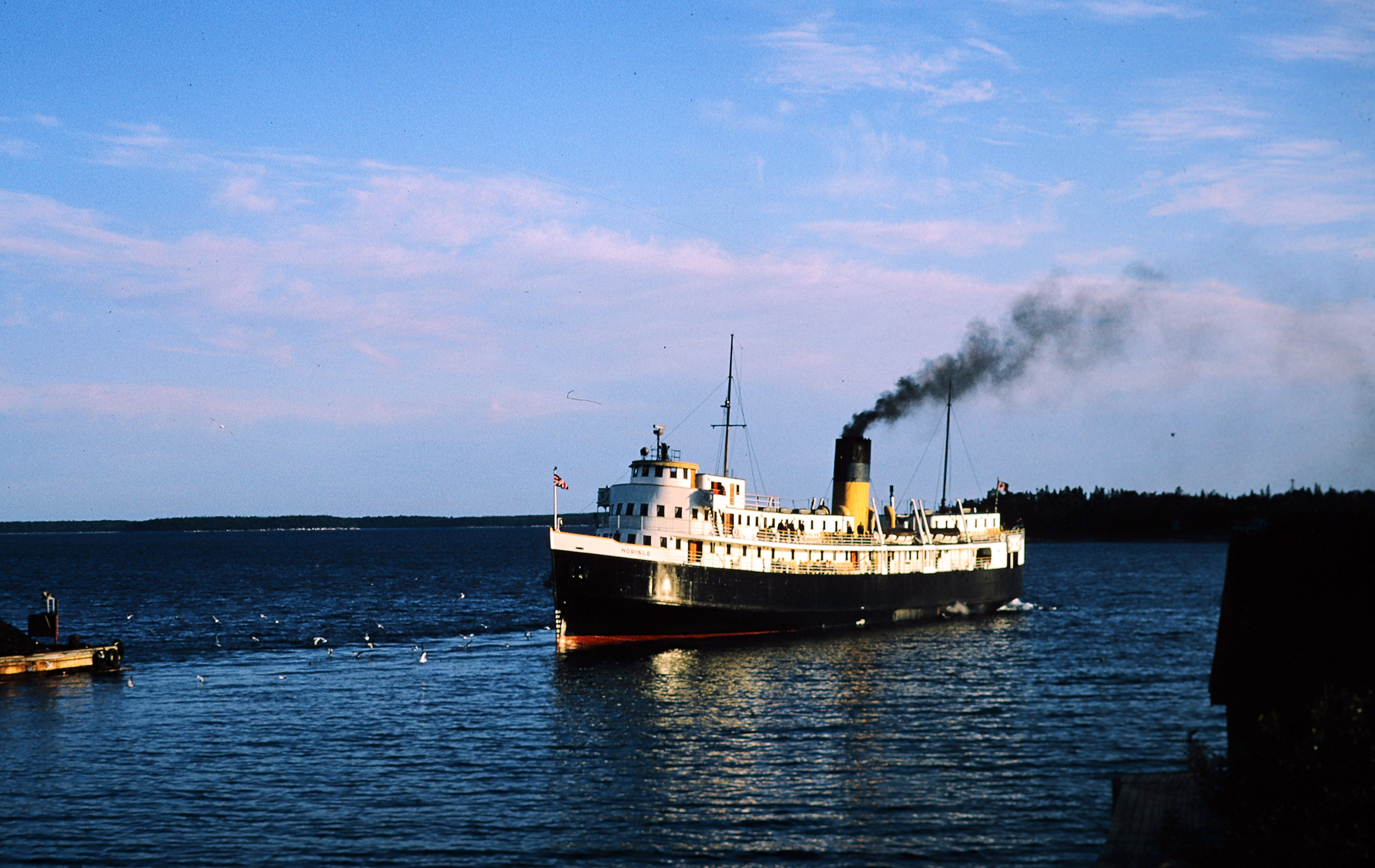
1946: The NORISLE went into service as the first Canadian passenger ship commissioned since the NORONIC in 1913.
1952
1952: CASON J. CALLAWAY departed River Rouge, MI, for Duluth, MN, on her maiden voyage for the Pittsburgh Steamship Co.
1975
1975: BJORSUND, a Norwegian tanker, visited the Seaway in 1966. The 22-year-old vessel began leaking as b.) AMERFIN on this day in 1975 en route from Mexico to Panama and sank in the Pacific while under tow off Costa Rica.
1982
1982: Parrish & Heimbecker Ltd. purchased all nine of the Soo River’s fleet for a reported CAD $2.5 million, and all nine returned to service, although only four were running at the end of the season.
1990
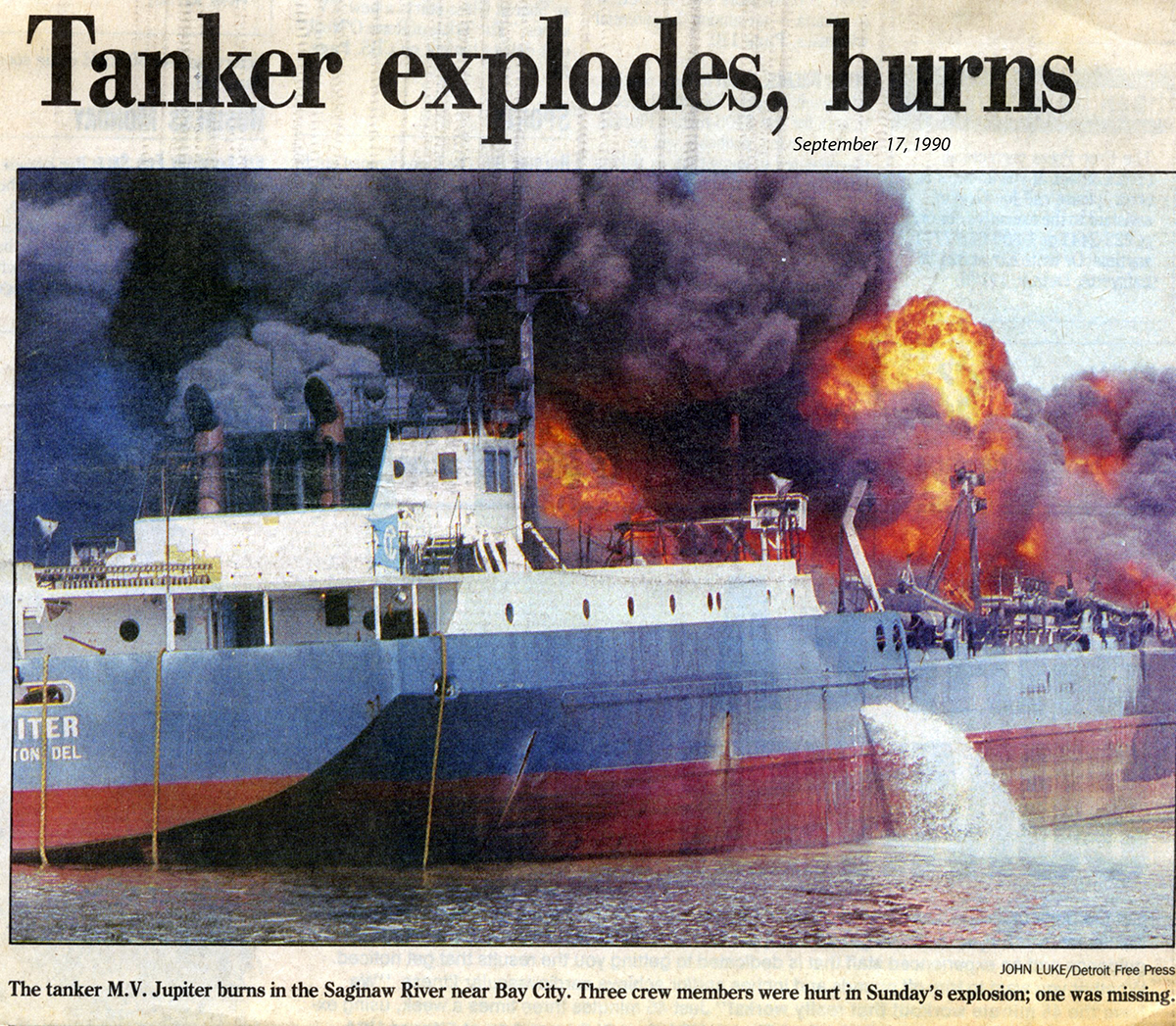
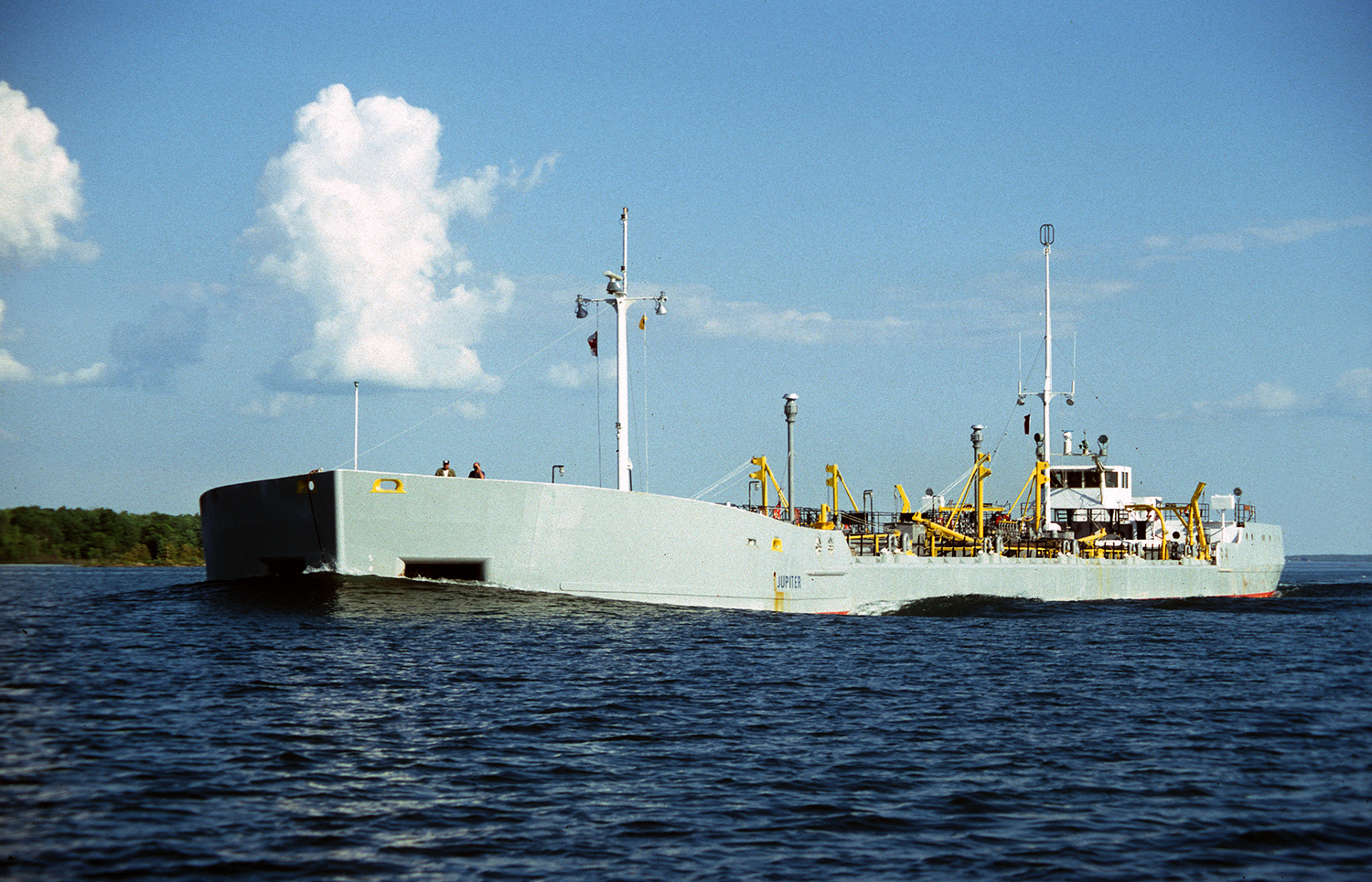
1990: At about 08:30, the inbound motor vessel BUFFALO passed close by while the tanker JUPITER was unloading unleaded gasoline at the Total Petroleum dock in the Saginaw River near Bay City, MI. As the BUFFALO passed, the dock’s aft pilings broke off and the fuel lines parted, which caused a spark and ignited the spilled fuel. At the time, 22,000 barrels of a total of 54,000 barrels were still aboard. Flames catapulted over 100 feet high, filling the air with smoke that could be seen for 50 miles. The fire was still burning the next morning when a six-man crew from Williams, Boots & Coots Firefighters and Hazard Control Specialists of Port Neches, TX, arrived to fight the fire. By afternoon they extinguished the fire, only to have it re-ignite that night, resulting in multiple explosions. Not until Tuesday morning on the 18th was the fire finally subdued with the assistance of the U.S. Coast Guard’s USCGC BRAMBLE and USCGC BRISTOL BAY. The tanker, which was valued at $9 million, was declared a total constructive loss, though the engine room was relatively untouched. Unfortunately, the fire claimed the life of one crew member, who drowned attempting to swim ashore. As a result, the U.S. Coast Guard closed the river to all navigation. The river was opened to navigation on September 19 after the Gaelic tugs SUSAN HOEY and CAROLYN HOEY towed the JUPITER upriver to the Hirschfield & Sons Dock at Bay City (formerly the Defoe Shipyard) where a crane was erected for dismantling the burned-out hulk. Her engines were removed and shipped to New Bedford, MA, for future use. The river opening allowed American Steamship’s BUFFALO to depart the Lafarge dock where she had been trapped since the explosion. JUPITER’s dismantling was completed over the winter of 1990–1991. Subsequent investigation by the NTSB and U.S. Coast Guard and the findings of a federal judge all exonerated the master and BUFFALO in the tragedy.
2005
2005: A fire broke out aboard the tug JAMES A. HANNAH above Lock 2 of the Welland Canal while downbound with the barge 5101 loaded with asphalt, diesel, and heavy oil. St. Catharines, ON, firefighters helped extinguish the blaze.
Data from: Skip Gillham, Joe Barr, Dave Swayze, Father Dowling Collection, Jody L. Aho, James Neumiller, Ahoy & Farewell II, and the Great Lakes Ships We Remember series from the Marine Historical Society of Detroit. Compiled by Roger LeLievre.
-
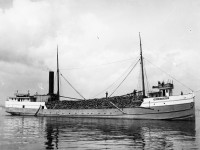
- Charles B. Packard. Peter B. Worden Collection, MHSD
-
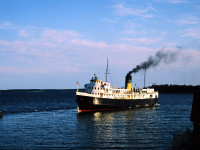
- Norisle at Tobermory, ON, in June 1966. Robert A. Zeleznik Collection
-
- Jupiter in July 1976. Roger LeLievre
-
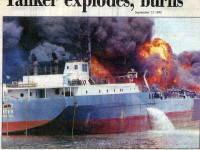
- Press photo of the Jupiter ablaze on the Saginaw River.