Introducing: The Mark W. Barker
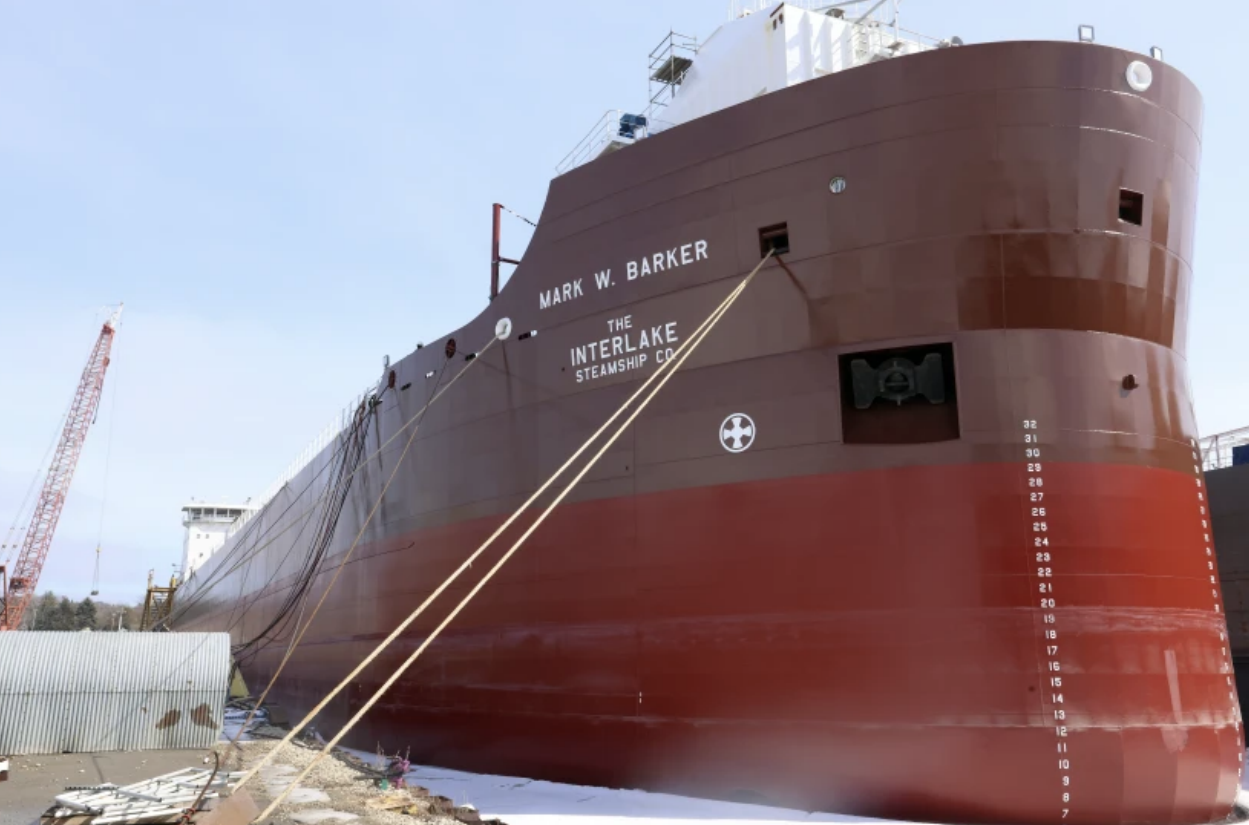
Sturgeon Bay, WI – Scheduled to launch its working life later this year, the Mark W. Barker will enter sea trials soon this spring. It’s the first Great Lakes ship to be built by an American company since 1983, which marked the end of a lengthy boom time that included the arrival of the immense 1,000-footers.
Duluth News Tribune reporter Brady Slater, photographer Steve Kuchera and digital producer Samantha Erkkila visited Fincantieri Bay Shipbuilding on Lake Michigan’s Sturgeon Bay to tour the new vessel and see what makes it different from a standard bulk-cargo hauler like those built four decades ago.
Read the story and see images at this link: https://www.duluthnewstribune.com/introducing-the-mark-w-barker?fbclid=IwAR2fH9E3imZY4ymwtxuMxvOeY6F3M9yJUJQmq3pJkM0HE69IeSGvS301w4E
Tall ship Denis Sullivan won’t sail in 2022 while Discovery World explores options for its future
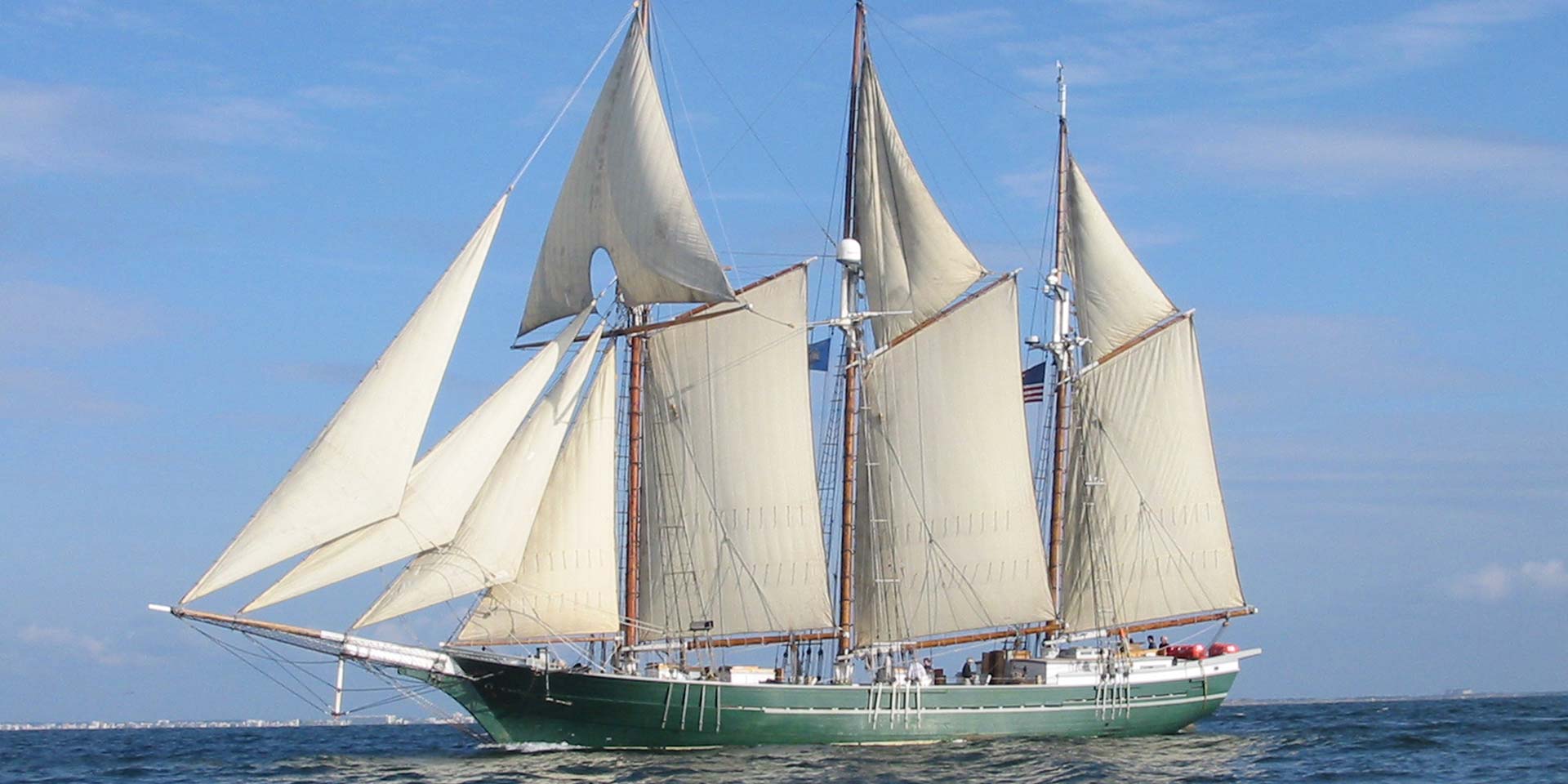
Milwaukee, WI – Tall ships fans will have to wait at least one more year to see the S/V Denis Sullivan sailing on Lake Michigan again.
The 137-foot ship — the world’s only replica of a 19th-century three-masted Great Lakes schooner — will remain docked at Discovery World again this year, according to museum President and CEO Bryan Wunar. And its future at the museum is being reevaluated as Discovery World begins the process of seeking ways to use and care for the ship.
The decision to not sail this year was mostly a product of the Sullivan not having a captain.
In February 2021, Capt. Tiffany Krihwan, who had been the ship’s captain since 2008 and Discovery World’s director of marine operations since 2014, accepted a new job as captain of the schooner Ernestina-Morrissey at the Massachusetts Maritime Academy.
When Krihwan became the Denis Sullivan’s captain in 2008, she was one of only a handful of female tall ships captains in the industry; today, women represent 10% of all tall ships captains. In 2019, Krihwan won the Tall Ships America Sail Trainer of the Year award, which is given to a member “who has made a significant contribution to sail training through the demonstration of leadership by means of empowerment and inspiration.”
After not sailing in 2020 due to the COVID-19 pandemic, Krihwan and Chief Mate Jonny Slanga — the ship’s only year-round crew, who are responsible for maintenance of the boat in the winter — were furloughed indefinitely in October of that year. With the future of the Sullivan uncertain, both pursued new opportunities in 2021.
As Discovery World began talking to those other organizations, they also began exploring other possibilities for the Sullivan.
“Right now, as we’re going through this period, we’re exploring — is the approach that we’ve used in the past, is that the right approach? Are there other organizations that we need to be working with? Are there opportunities to sort of share resources with other partners?” Wunar said. “So right now, rather than just simply moving forward with the thought of, let’s go back to where we were, maybe the path forward looks a little bit different.”
Wunar doesn’t know what that path looks like, but they started their exploratory process with Tall Ships America, a nonprofit focused on North America’s maritime heritage. Through that organization, Discovery World began looking at what other groups similar to theirs do with their tall ships — from some that operate the ships year-round to others that only have dockside programs to others whose entire focus is maritime education and history.
The process has Discovery World thinking about new opportunities for the ship, including some that other organizations might take on.
Simultaneously, the museum is undergoing a strategic planning process to be completed by the fall, according to Wunar. “It’s giving us a chance to sort of redefine what is our scope of content. … How do we engage people from communities that we have not had a direct impact on and that, in some cases, have been historically excluded from STEM education opportunities?” he said. “So as we go through that and redefine that scope, there’s that chance for us to think about not just the Sullivan, but all of the kinds of resources we have here. … What are the things that are very uniquely Discovery World, and then how do we use that to make sure that everything we do is guided by our educational mission, and that we’re not just adding on side projects, but instead, they all try to meet some of those common goals.”
.
Manistee namesake vessel’s final port is Canadian scrapyard
Port Colborne, ON – The M/V Manistee has made its final voyage, arriving under tow last week to a scrapyard in Canada. Lower Lakes Towing Ltd.’s bulk carrier departed from Toledo, OH on March 29 and arrived at the Marine Recycling Corp. scrapyard in Port Colborne Ontario the following morning.
The nearly 80-year-old ship had been laid up at the former Hocking Valley Dock in Toledo for more than five years, before being escorted by McKeil Marine’s tug, Beverly MI to its final destination.
The voyage was delayed, however when the Manistee ran aground while traversing the Maumee River in Toledo. “…social media reports from the area around noon reported that the Manistee had gone aground near Grassy Island at the mouth of the river,” stated a March 28 update from boatnerd3.jasonbowlerdesign.com/. Eventually, the Beverly MI managed to release the Manistee and the ships resumed their voyage.
Marine Recycling Corp. moved another ship, the former St. Clair, to accommodate the massive vessel’s arrival.
Among the largest ships to bear the name Manistee, the 676-foot bulk carrier was built by Great Lakes Engineering Works, River Rouge at a cost of $2.2 million, according to boatnerd3.jasonbowlerdesign.com/.
Ordered by the U.S. Maritime Commission during World War II and launched in 1943, this laker was originally christened the Adirondack. Predominantly a coal-carrying vessel, the ship would undergo a number of name changes as it passed between owners. It was rechristened Manistee in March 2005.
The ship visited Manistee for 10 years under the name Manistee, delivering coal to TES Filer City Station in March 2005 to August 2015 when it delivered sand and aggregate for Reith-Riley. It went into permanent layup at Toledo the same year.
Lake levels drop drastically for 2nd straight year
The past few years we’ve been plagued by record high waters on the Great Lakes. The Lake Huron shoreline in the ABC12 viewing area has seen its fair share of erosion and flooding because of that, especially during storms. Record high water levels were routinely exacerbated by high winds blowing onshore. Those winds created an additional water rise, at times on the order of several feet, inundating our lake shore region.
Record rainfall in 2019 and 2020 was largely the cause. Not only in Mid-Michigan experience wet conditions but “upstream” areas did as well. Lake Superior being just such an area. Lake Superior drains through the St. Mary’s River into Lakes Michigan-Huron. Therefore, above average rainfall up north, in addition to our own record rain, can lead to water rising twice as fast on the Great Lakes to the south.
Thankfully, in 2021, we saw a substantial drop in water levels. But, is that trend continuing? The answer is yes, and in fact, even faster than last year!
Every week the US Army Corps of Engineers releases water level data for all five Great Lakes and Lake St. Clair every week. The data for the week of April 1st, 2022 is as follows.
Lake Michigan-Huron experienced a decline of 15 inches in water level in the past year – Lake Superior fell about 11 inches. The year before brought about an 11 inch decline on Lakes Michigan-Huron and about 8 inches or so on Lake Superior.
The record high for water, in April, in Lakes Michigan-Huron was set back in 2020. As of April 1st, 2022, we are 29 inches lower. That is a massive drop in water levels in two years. Beaches will be expansive this summer for all to enjoy!
Ever since 2020, many areas to the north saw annual precipitation fall around 10 inches. That’s a lot less water being put into the Great Lakes Watershed. Whereas in 2019, much of the area experience record rain in the fall, winter, and spring for a second year in a row.
Currently, there drought conditions have developed across much of the Lake Superior and Lake Michigan regions due to the lack of moisture.
Doing some fun math, we can calculate how much water was removed from Lake Huron due to natural processes. The lake has a surface area of 23,012 square miles. We know that one square mile equals 640 acres. Therefore, the coverage of the lake is 14,727,680 acres.
One inch of water across an acre equates to 27,154 gallons. The lake being down 26” as of March puts the totals gallons lost at 706,004 per acre. Now, we simply multiply that by the 14,727,680 acres and hope our calculators don’t melt. The number we get, just for Lake Huron, is an astounding loss of 10,397,800,990,772 gallons. Yes, that’s TRILLIONS. Or, more than 10 million millions. Crazy, huh?
Putting it in a way more folks might understand, that would be equivalent to over 14 million Olympic sized swimming pools.
The US Army Corps of Engineers also releases a forecast through the season. Granted, it is totally dependent on how much rainfall the whole Great Lakes Basin receives, but it’s possible water levels could be below average by this fall if the current trend continues