Dredging to begin this week at St. Joseph Harbor
Army Corps of Engineers expect project to be done by late August
By TONY WITTKOWSKI HP Local News Editor 7 hrs ago
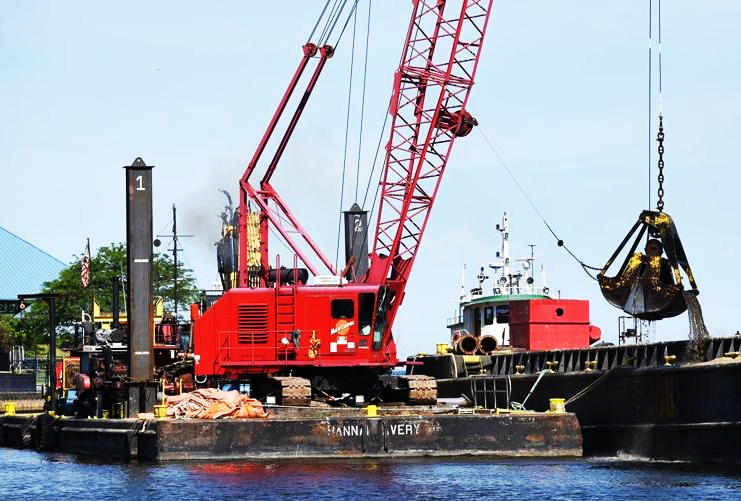
St. JOSEPH — The U.S. Army Corps of Engineers will begin dredging near the entrance of the St. Joseph Harbor this week, the agency announced Wednesday.
The project, which would require the removal of about 29,500 cubic yards of shoaling, is expected to be completed by late August. While the project is expected to begin Thursday, Brandon Hubbard – a spokesperson for the Army Corps, Detroit District – said the start date is weather dependent.
“They are in place out there on the river now,” Hubbard told The Herald-Palladium on Wednesday. “When the weather is good to go, they will start.”
The Army Corps maintains about 1.5 miles of federal navigation channel to a depth of up to 21 feet in the St. Joseph Harbor entrance and river channel, as well as 18 feet in the turning basin. About 40,000 cubic yards of shoaling have been removed annually from the mouth of the St. Joseph River, which allows access for the U.S. Coast Guard and larger commercial vessels.
The King Company of Holland has been contracted to complete the $693,000 project, which is funded from the 2024 Fiscal Year President’s Budget.
Workers removed about 20,000 cubic yards in 2022 and 102,000 cubic yards in 2023 from the harbor.
“St. Joseph Harbor is a critical southern port in the Great Lakes Navigation System and dredging it is an important part of our annual maintenance program,” said Liz Newell Wilkinson, the operations manager at the Grand Haven Office of the USACE, in a news release. “We thank the public for their patience as we work to keep the harbor safe and open.”
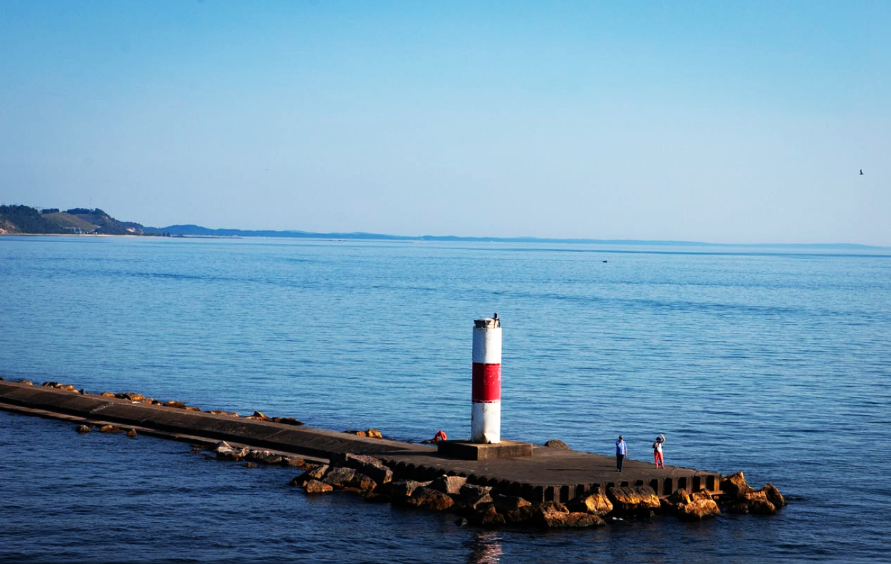
Dredging material will be placed for beach nourishment at the state-permitted area south of Park Street and extending southward about 3,000 feet through Lions Park to the St. Joseph Water Filtration Plant.
The public is asked to avoid active dredging and placement locations during the work, as well as any areas marked with orange cones and caution tape.
While the pumped material has been tested to ensure clean and safe placement on the beach, the pipes and the outfall of sand at the beach create quicksand-like conditions during active pumping.
Hubbard said bulldozers and other heavy machinery will be used to grade the new material into place on the beach.
Contact: twittkowski@TheHP.com, 932-0358, Twitter:
@TonyWittkowski
Bay Shipbuilding Delivers US’ Largest LNG Bunker Barge to Crowley
July 31, 2024
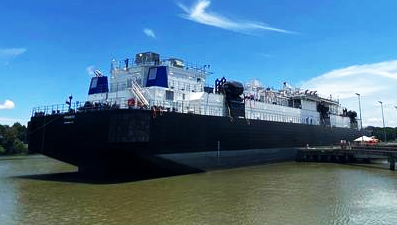
Crowley on Wednesday announced it has taken delivery of the liquefied natural gas (LNG) bunker barge Progress, the largest U.S. Jones Act-compliant vessel of its kind, after construction was completed at Fincantieri Bay Shipbuilding in Sturgeon Bay, Wis.
The Progress will expand access to cleaner energy for ship operators at the Port of Savannah, Georgia, upon final commissioning there this month. Shell NA LNG, LLC, (Shell) signed a long-term agreement with Crowley to operate the barge, providing another fueling location to ships using LNG.
Designed by Crowley’s engineering services group, the 416-foot-long barge has a capacity of 12,000 m3 (3.17 million gallons). Progress’ technologies include capability developed by Shell and Crowley’s engineering services group to flexibly deliver LNG to various types of LNG containment systems.
“The Progress LNG bunker barge sets a new standard for quality and capability to serve the energy needs of the shipping industry,” said James C. Fowler, senior vice president and general manager, Crowley Shipping. “LNG offers a safe and reliable solution for ocean carriers that advances the transition to lower emissions. We congratulate the people whose dedication and hard work in designing and building this world-class vessel allowed us to reach this milestone for the U.S. industry and our customers.”
“Fincantieri Bay Shipbuilding continues to be an industry leader in building LNG bunkering barges. We take tremendous pride in seeing another FBS-built vessel leave Sturgeon Bay to its new operational home port. I am proud of the work of our entire Fincantieri Bay Shipbuilding team,” said Jan Allman, vice president and general manager of Fincantieri Bay Shipbuilding.
LNG is the lowest carbon fuel currently available to shipping at scale, emitting up to 23% less greenhouse gas (GHG) emissions (well-to-wake) compared to very/ultra low sulfur fuel oil.
Shipbuilding • LNG • Barges • Bunkering
Know Your Ships Publisher Chosen for Historic Interpretation Award
The Association for Great Lakes Maritime History has selected Roger LeLievre, Editor and Publisher of the book Know Your Ships, to receive the 2024 Joyce S. Hayward Award for Historic Interpretation.
This award is presented annually to an individual who has made a major contribution, over many years, to the interpretation of Great Lakes maritime history in furtherance of the goals of the association. He was nominated for his commitment, since 1994, to editing and publishing the annual boatwatching field guide Know Your Ships.
Other accomplishments include his 21-plus years as president of The Marine Historical Society of Detroit and editing of The Detroit Marine Historian since 2011 (receiving the group’s Historian of the Year Award in 2006), as well as his volunteer work with the website boatnerd3.jasonbowlerdesign.com/ and the Soo Locks Visitor Center Association.
The award will be presented at the Association’s Awards Dinner in September at Buffalo, NY, as part of the AGLMH’s 2024 Annual Meeting & Maritime History Conference co-hosted by the Buffalo Harbor Museum and the Buffalo Maritime Center.
Association for Great Lakes Maritime History
On Lake Michigan, a coal-fired steamship and ferry eyes a clean-energy future
August 1, 2024
Kelly House (Email)
Michigan Environment Watch
2024 Michigan EV road trip, Great Lakes
As the nation’s last coal-fired steamship, the SS Badger has long been a source of both wonder — and controversy
Now, the Badger’s new owners hope to transition the ship from coal to an emissions-free energy source
Options abound, from hydrogen to batteries. But as always, money poses a barrier
LUDINGTON — Nearly every summer day for decades running, the SS Badger steamship has transported hundreds of passengers across Lake Michigan in vintage splendor.
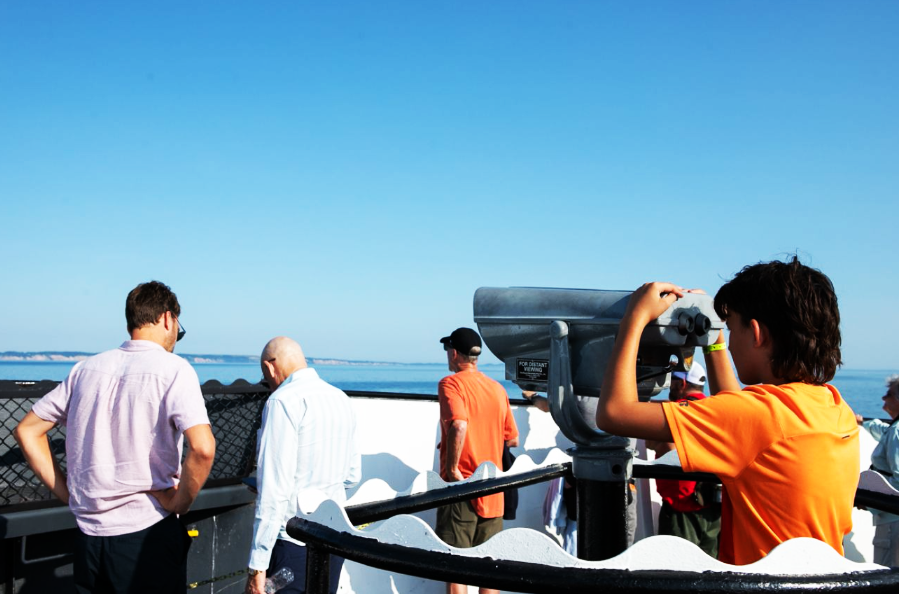
On the open deck, sunbathers lounge with drinks in hand. Inside, families play bingo, watch movies or enjoy hot dogs, popcorn and live music while traveling between Manitowoc, Wisconsin, and Ludington at a leisurely pace of 18 miles per hour.
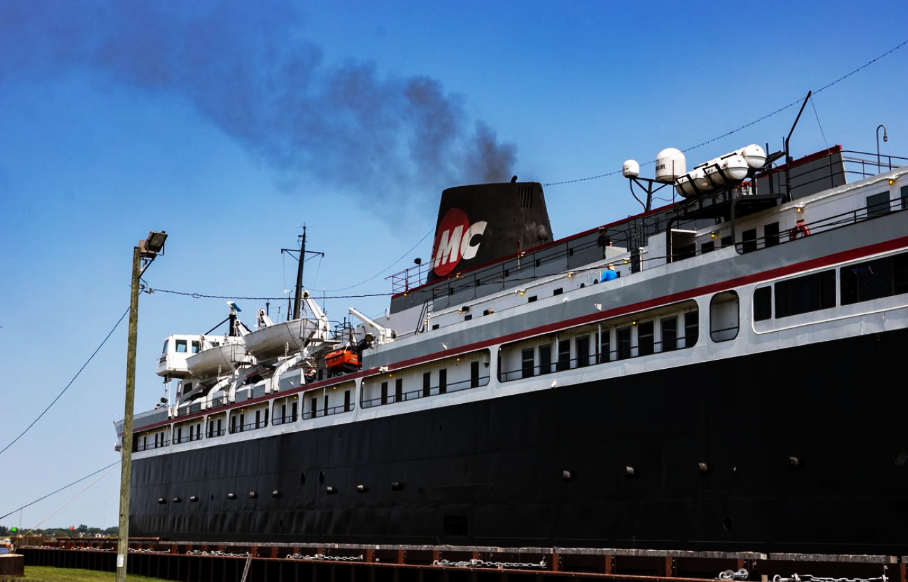
And overhead, black soot billows from the 72-year-old ship’s smokestack, while workers sweep up coal ash in a sweltering boiler room below deck.
As the last coal-fired steamship in the country, the SS Badger is both a cherished symbol of the Great Lakes’ maritime heyday and a stubborn vestige of its polluted industrial past.
Now, its owners hope to make it a trailblazer of the clean energy future.
Interlake Maritime Services, an Ohio-based company that bought the Badger in 2020, is studying ways to convert it to emissions-free energy. By 2026, company officials hope to have a blueprint for replacing the coal-fired system with something far better for the environment.
That system, “has stood the test of time, and it will stand the test of time,” said Mark Barker, Interlake’s president. “But at the same time, looking at where the world’s going, at the end of the day, coal is not the cleanest fuel.”
History of a ship
The Badger wasn’t always a tourist vessel.
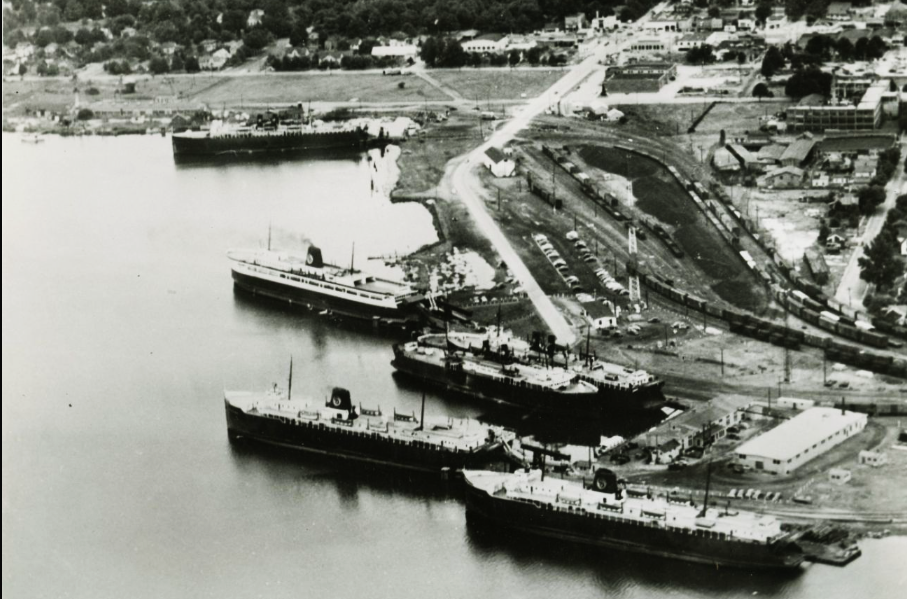
Built in 1952, it spent four decades ferrying railcars between Michigan and Wisconsin for the Chesapeake & Ohio Railway Co. — a shortcut that avoided Chicago’s overcrowded railyards.
At the time, the 410-foot Badger was the biggest ship in a car-ferry fleet that numbered seven in Ludington alone. And from the moment it was built, its coal-fired boilers were outdated.
By the 1950s, other ships were already transitioning to oil. The C&O Railway chose coal for the Badger because it was already burning and transporting coal on its rails.
“The coal burning has, in many ways, been to the Badger’s detriment since day one,” said Nathan Wietrzykowski at the Port of Ludington Maritime Museum.
Yet despite its antiquated energy system, the Badger outlasted all of its contemporaries.
By the 1980s, railroad advancements made it easier to transport freight around the lake, rendering railcar ferries obsolete. While other railcar ferries vanished, the Badger found new work shuttling tourists, automobiles and commercial trucks.
Today, it’s the only car ferry still navigating the Great Lakes — and the last coal-fired steamship in the nation.
Fans of the ship marvel at the antique technology, the leisurely ride (the Badger takes four hours to travel 60 miles across the lake) and the onboard bingo games that have survived the advent of wireless internet and satellite television.
People view it as “a last defiant relic of a past era,” said Wietrzykowski.
And in Ludington, it’s both a point of pride and an economic driver. Downtown restaurants plan for “the Badger rush” when the ship docks at 7 p.m. Residents gather on front lawns and fishing piers to greet it.
For some passengers, the coal is part of the appeal.
“It’s a throwback,” similar to riding on a steam locomotive, said 72-year-old Mark Bielski of Chanhassen, Minnesota. “I like the simplicity.”
But the ship’s fuel source has long been a source of conflict.
It takes so much effort to get the boilers going, they stay on even when the Badger is docked. The smoke plume contains planet-heating greenhouse gases along with particulate matter, sulfur dioxide and other pollutants.
Decades ago, the city of Milwaukee battled the Badger over its air emissions. More recently, the ship’s former owners spent years sparring with environmentalists and the EPA over the million pounds of coal ash it dumped in Lake Michigan every summer.
Following a 2013 consent decree, the ash is now captured in containment bins instead.
“The ultimate solution, of course, was to stop burning coal,” said Howard Learner, executive director of the Chicago-based Environmental Law & Policy Center, but “the prior management was just stubborn in its refusal.”
In the years since, many things have changed.
Climate change has been getting worse. Michigan has passed laws to shift the state toward clean energy, and public concern over fossil fuel pollution has intensified.
And the Badger has gained new owners with a different philosophy.
Interlake employs an environmental stewardship manager, and has been working to reduce the carbon footprint of its entire 12-vessel fleet.
“Obviously, decarbonizing is hard to talk about, with the elephant in the room being a coal-fired ferry,” said Katie Wells, Interlake’s manager of environmental stewardship and quality.
It won’t be easy
On modern diesel ships, it’s relatively easy to install scrubbers that strip pollutants out of the exhaust. Decarbonizing the Badger will be more difficult.
“It’s so distinctly different from a modern platform,” Wells said. “There really is not a way to just up and change from coal to diesel.”
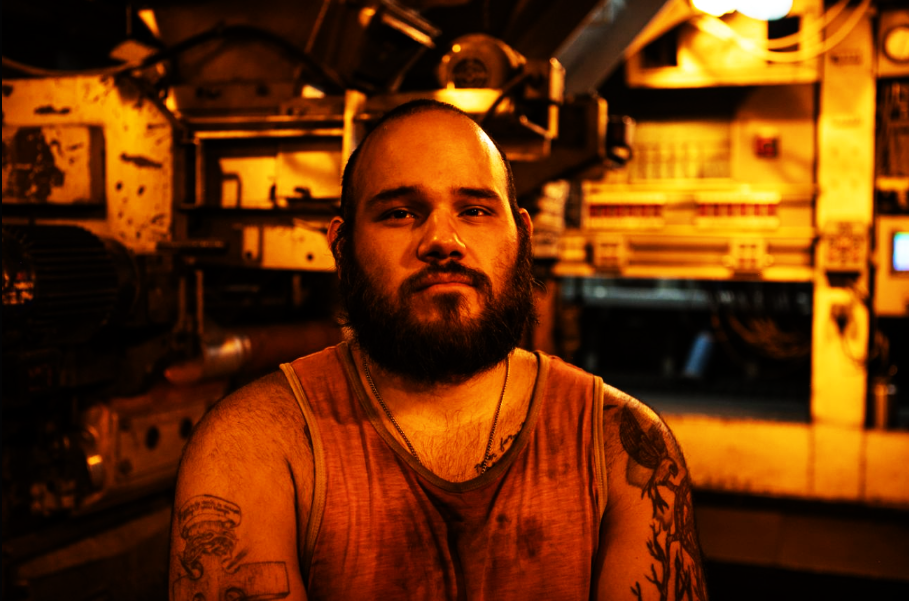
Walking into the Badger’s engine and boiler rooms feels like walking back in time. It’s loud, hot, and sooty.
Unlike modern ships that are highly automated, the Badger’s energy system requires a full staff: In the boiler room, a fireman and a coal passer tend to the fires, sweep up ash and maintain machinery that superheats steam to power the ship’s two hulking engines, which are nearly three stories tall. Three more workers keep watch in the engine room.
A chief engineer oversees it all.
“There’s a lot of pride in doing what we do, and keeping the traditions and history alive,” said Chief Engineer Andy VerVelde. “Everybody works as a team. We suffer in the heat together. We troubleshoot the problems together. We overcome the challenges and keep the boat going.”
Ships in the Great Lakes and St. Lawrence Seaway (which connects the lakes to the Atlantic Ocean) emitted 1.6 million tons of carbon dioxide in 2021. That’s roughly as much as 350,000 passenger vehicles.
But international, national and state regulators are pushing the industry to become emissions-free by 2050.
Companies are exploring everything from alternative fuels like hydrogen and biofuels to new powering systems like fuel cells, batteries and modern wind power that looks nothing like a traditional sailboat.
But greening the maritime sector setting isn’t as easy as, say, switching to electric cars.
For one thing, ships are far bigger. They often must travel long distances between refueling. And in the Badger’s case, it needs power not just for propulsion, but for keeping the burger grills hot, the stateroom lights on and the toilets flushing.
“Every service aboard the ship ultimately comes from the steam plant,” VerVelde said. “The lights, the drinking water, the everything.”
A testbed for a greener maritime sector?
The first step toward a greener Badger is figuring out what’s possible. A $600,000 grant from the U.S. Department of Transportation is funding the study, which should be complete by mid-2026.
Barker, the Interlake president, envisions turning the Badger into a testing grounds for greener technologies that could be deployed industrywide.
Ideas include powering the ship with diesel, methanol, hydrogen, fuel cells or even batteries powered by onshore electricity. The company is also looking into carbon capture systems that could zero out emissions if the ship continues to run on fossil fuels.
In some ways, the Badger is a natural candidate for experimentation. Its fixed, relatively short 60-mile route makes electrification more realistic, because the Badger could theoretically recharge a battery during daily trips to the dock.
On the other hand, Wells said, “I can’t imagine the size of the battery you would need.”
Company officials insist they’re under no regulatory obligation to switch fuels. Cost will likely determine whether they do, and Wells said the price tag would be “several millions, at least.”
The company is hoping to secure federal funding.
The idea of a Badger without coal is bittersweet for some, said Wietrzykowski, the maritime historian and Ludington resident.
“But at the end of the day, what really matters the most is the continuation of the ship itself,” he said. “And what matters to the local economy is the continuation of the service across the lake.”
If you go…
The SS Badger
Where: Ludington to Manitowoc, Wisconsin
When: Twice daily in the summer. See a detailed schedule.
How long: 4 hours
How much: Adult one-way tickets are $88. Bringing a car adds $96. See full fare details.
For a higher-speed trip across Lake Michigan:
The Lake Express
Where: Muskegon to Milwaukee
When: Twice daily in the summer. See a detailed schedule.
How long: 2.5 hours
How much: Adult one-way tickets are $111.50. Bringing a car adds $121. See full fare details.