Icebreaker shortage slows deliveries to Alpena, other ports
Alpena, MI – A shortage of U.S. Coast Guard icebreakers slowed cargo destined for Great Lakes ports last month.
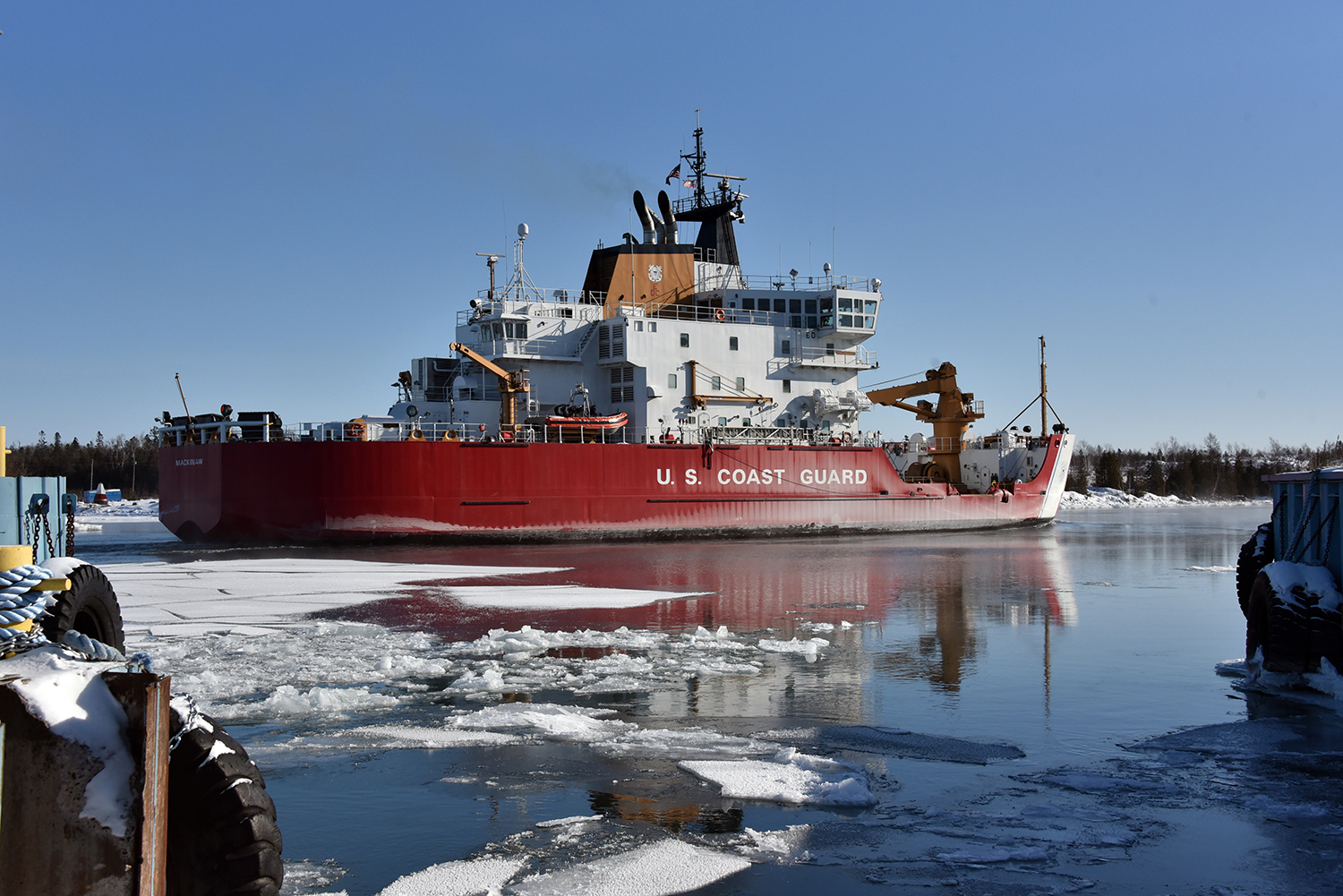
January ice trapped sailors on freighters trying to get through the Soo Locks – including crew members from Alpena, Rogers City, and the surrounding area – as breakdowns forced the Coast Guard to remove icebreakers from service, according to Eric Peace, secretary of the Great Lakes Maritime Task Force.
Every ship delayed in the Soo, the Sault Ste. Marie passage between Lake Superior and the lower Great Lakes, means a delay for those waiting for the goods onboard the freighters, from salt for slippery roads to raw materials to build infrastructure, Peace said.
A provision in the federal Build Back Better Act, which passed the House but has stalled in the Senate, would allocate $350 million for the construction of a new Coast Guard icebreaker for the Great Lakes.
Meanwhile, 20 voyages and 750,000 tons of carrying capacity for iron ore, coal, and cement were delayed in January because the Coast Guard lacked the capacity to keep up with Great Lakes ice, Peace said.
Coast Guard cutters lost a total of 68 icebreaking days in the first weeks of January because of equipment fires or engine breakdowns, in addition to scheduled maintenance. At one point in January, five of eight Coast Guard icebreakers were simultaneously unavailable because of mechanical failures.
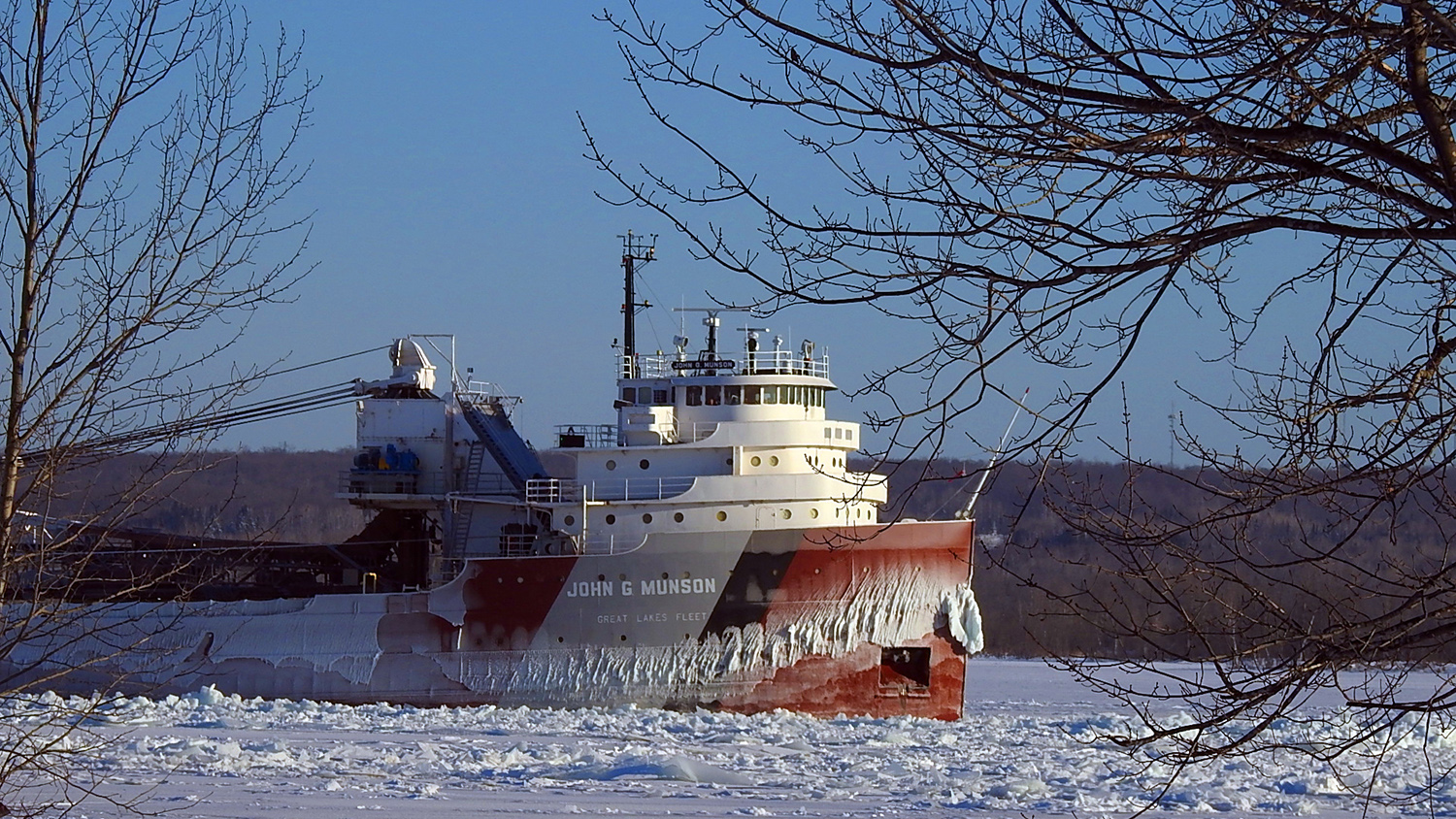
Icebreakers were unable to dislodge the freighter American Century, the last upbound ship of the season, when it got stuck in ice in the St. Mary’s River on its way to the Soo Locks, delaying three ships trying to leave Lake Superior before the locks closed for winter maintenance on Jan. 15.
That forced the U.S. Army Corps of Engineers to begin draining the locks for maintenance a day later than planned, and “a day late to the Army Corps is a big deal,” Peace said.
The Army Corps closes the locks from Jan. 15 until March 25 each year, performing needed maintenance on the locks in a tight timeframe so shipping operations can resume as quickly as possible to keep the country’s flow of commerce moving.
Tugboats like the tug Manitou, which frequents Thunder Bay to break ice for vessels headed for the Lafarge Alpena harbor, ensure freighters and barges reach small piers, docks, and harbors but are not built to withstand the heavier ice in the middle of Great Lakes and in federal navigational channels, Peace said.
In addition to slowing the transportation of cargo and potentially threatening dock workers’ jobs, lack of icebreakers can endanger vessels and the people aboard them. In past years, ice has sliced ships open and caused collisions, Peace reported.
One Canadian vessel was nearly forced aground in the Straits of Mackinac by ice this year, with the closest Coast Guard icebreaker more than 12 hours away.
The freighter Alpena, too, struggled in ice near the end of the season as it tried to get through the Straits of Mackinac on its way to Thunder Bay, according to Peace.
With Great Lakes temperatures at record-breaking warmth this fall, ice breaking did not begin until December 29 this season, two weeks later than usual.
Alpena News
Port of Cleveland sees 69% increase in tonnage in 2021
Cleveland, OH – Cleveland’s port was well used in 2021 amid ongoing supply-chain issues across the U.S.
The Port of Cleveland on Thursday reported a 69% increase in tonnage across its docks compared to 2020. The port said significant increases in goods both in and out of containers, and iron ore shipments to the Cleveland-Cliffs Cleveland Works steel mill, drove the increase.
The general cargo terminal – which includes steel, containers, project cargo, salt and cement – saw 649,324 metric tons go across the docks, a 57% increased from 2020. It’s the second-highest total in 10 years, slightly behind 2015 numbers. The bulk terminal, where iron ore and limestone are delivered, saw a 71% increase over 2020 with 6,943,139 tons.
The Port said shipping container volume also doubled. “Our cargo volumes bounced back in a big way in 2021 across the board, which indicates business is up at regional firms that depend on our Port,” said William Friedman, president and CEO of the Port of Cleveland. “We are particularly pleased to see containerized cargo grow significantly because we’ve worked for years to position Cleveland as an alternative to congested coastal ports.”
The Port expanded its iron-ore tunnel and its main gate at the general cargo facility in 2021. It also reactivated its foreign trade zone.
According to the port, cargo owners used Cleveland as a new solution to avoid coastal ports, which have been backed up in the last year. The Cleveland port is the only one on the Great Lakes with container shipping.
Cleveland.com
Lack of Coast Guard icebreaking disrupts supply chain and delays Soo Lock dewatering
Cleveland, OH – Despite a relatively mild and delayed onset of winter in the Great Lakes, U.S.-flag lakers were hampered by a lack of Coast Guard icebreaking assets. A total of 750,000 tons of carrying capacity for iron ore, coal and cement were delayed. 20 voyages were delayed for a total of 325 hours.
“The inefficiency introduced into the Great Lakes Navigation System by inadequate Coast Guard icebreaking resources impacts the carriers, their customers and the entire North American Manufacturing supply chain,” said Jim Weakley, President of Great Lakes Maritime Task Force, and the Lake Carriers’ Association. “The men and women of the U.S. Coast Guard do the best they can with the resources they are provided. Unfortunately, they do not have enough icebreakers to keep the system operating efficiently.”
Budget reconciliation legislation now being considered in the U.S. Senate would provide the Coast Guard with funding for an additional Great Lakes icebreaker.
Even though the M/V American Century cleared the regulatory check-in point in time to meet the scheduled closing of the Army Corps Locks in Sault Ste. Marie, MI (Soo Locks), it became beset in the St.Marys River. Coast Guard icebreakers were not able to free the vessel in time for its planned transit through the Soo Locks, which connect Lake Superior to Lake Huron and beyond. This delayed the downbound lockages of the last vessels leaving Lake Superior, including the Coast Guard Cutter Biscayne Bay. Since the vessel normally stationed in Duluth, Minnesota, the Coast Guard Cutter Alder, is on the East Coast for an overhaul, there are no icebreakers on Lake Superior during the lock closure. The ice-induced vessel delays forced the Army Corps of Engineers to begin lock dewatering operations a day later than planned.
Typically, the icebreaking season begins on December 15th each year; however, this year Operation Taconite, which marks the official beginning of icebreaking operations in the Northern Great Lakes did not begin until December 29th. From December 15th until January 15th, the scheduled closure date of the Soo Locks, the U.S. Coast Guard had four of its nine Great Lakes icebreakers in scheduled overhaul, scheduled maintenance, or unscheduled maintenance periods. At one point in January, five of its eight icebreakers operating on the Great Lakes were simultaneously unavailable due to mechanical failures. A total of 68 icebreaking cutter days were lost due to equipment fires or engine breakdowns.
“The lives of the professional women and men sailing aboard lakers, the safety of the vessels and the protection of the environment depend on adequate Coast Guard icebreakers,” said John Clemons, Great Lakes Maritime Task Force’s Vice President and with American Maritime
Officers, AFL-CIO. “In recent years, vessels have been sliced open, forced aground or collided with each other because of inadequate icebreaking resources. In fact, one Canadian laker was almost forced aground in the Straits of Mackinac by ice this year. The closest Coast Guard icebreaker was over 12 hours away. Fortunately, the vessel was able to free itself after struggling for several tense hours.”
Even though the Soo Locks officially closed on January 15th, as of January 27th, the last U.S.-flag laker was just arriving to its winter layup birth. Vessel delays were experienced in ports and in connecting rivers and waterways. In addition to a lack of operational vessels, the Coast Guard is hamstrung by metrics it uses to allocate resources and determine mission performance standards.
“The Port of Duluth-Superior is the Great Lakes’ top port by tonnage and one of the nation’s top 20, but the Coast Guard doesn’t consider its waterways as ‘Tier I’ for icebreaking purposes. This is troubling given that Minnesota’s docks along the western edge of Lake Superior provide
the iron ore to produce 80 percent of the nation’s first-pour steel. The Head of the Lakes is a vital link in North America’s domestic steel production supply chain,” said Deb DeLuca, executive director, Duluth Seaway Port Authority.
Lakers need to move cargo in the winter to ensure that stockpiles are large enough to sustain the regions steel mills, power plants and industrial facilities to survive the closure of the Soo Locks
from January 15th to March 25th. During the closure period, lakers need to make it to their winter homes for maintenance. A few vessels will continue to operate in lakes Huron, Michigan, and Erie. They primarily move road salt and petroleum products during the lock closure period.
Eric Peace, Lake Carriers’ Associations’ Vice President and an experienced icebreaking sailor noted “Adequate icebreaking not only supports the Great Lakes Navigation System, but it also prevents flooding. Last February, we saw extensive flooding because of an ice dam in the St. Clair River. At the time the lone “heavy” icebreaker operated by the Coast Guard was not available because it was undergoing repairs. We need to build an additional Great Lakes icebreaker and pass the Great Lakes Winter Commerce Act.
“Both are needed to establish a track line, protect homeowners and keep commerce moving.” Sudden or extreme cold temperatures can upset the natural flow of the rivers that feed into or are part of the Great Lakes. In addition to the Detroit and St. Clair rivers, this often happens along the Lake Erie shoreline. Flood warnings have already been posted once this year for the St. Clair River and are bound to persist with heavy ice and snow already present in the area.
Great Lakes Maritime Task Force