Port director looks back, advises
successor, on winds of trade and politics
DULUTH, MN – Next week, the shipping season concludes at the Port of Duluth and Superior, and with it, the impending retirement of the facility’s executive director.
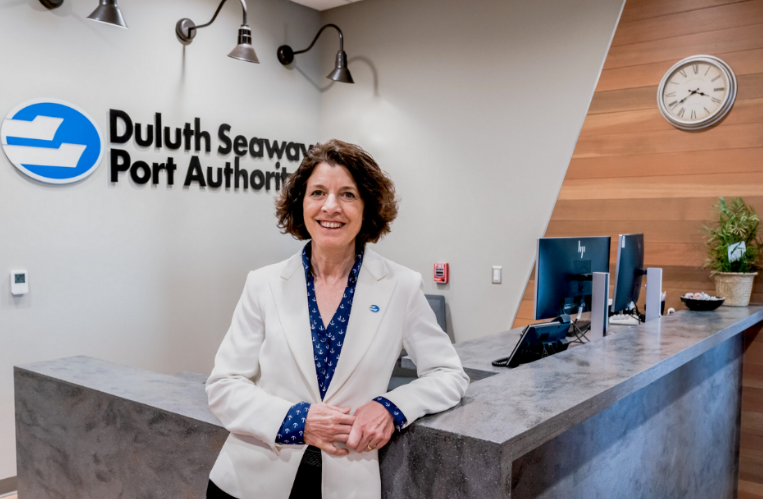
Deb DeLuca is leaving the job after nearly seven years at the helm and a decade in management of the facility hailed as the largest freshwater port in the world.
Much of her tenure included the pandemic, which upset supply chains globally and regionally, including shipments in, out, and through Duluth and Superior. But she and her staff weathered through, noting four straight years of increased tonnage.
Stay informed on the latest news
“We’ve improved the infrastructure at the terminals, predicated on the vision of growing a multi-modal hub that can keep our regional industries competitive in the global marketplace,” said DeLuca, whose retirement will be effective in May.
That worldview may pose a challenge for her successor if tariffs proposed by President-elect Donald Trump come to fruition, especially those targeting Canada and Mexico. DeLuca, who is the first woman to lead the port, spoke about navigating those trade and political winds with WPR’s Robin Washington on “Morning Edition.”
This conversation has been edited for clarity and brevity.
Robin Washington: At the end of each shipping season, you usually give us a wrap-up and forecast for the coming year. How about an assessment for the last six years?
Deb DeLuca: From a personal standpoint, it’s been the highlight of my career. It’s also been a period of growth for our terminal. Coal tonnage dropped over the past 10-plus years, and we’ve been looking to increase cargo diversity to offset that.
RW: One of your predecessors was the late Adolph Ojard, who hailed from a family of tugboat captains. Your background was a little different.
DD: It was indeed. Port authority directors come from a wide variety of backgrounds, because it’s a position that requires a diverse skillset. My education was in biochemistry, molecular biology and environmental chemistry and public policy flowing out of that. I worked in state government, local government and the private sector before coming to the port authority.
RW: The port achieved the ability and certification to handle container cargo in the last few years.
DD: Yes. We worked with Customs and Border Protection to develop the capability to handle containers at our terminal, both from a rail and road perspective. We are the second port on the Great Lakes to do so. We started handling those containers in 2022 and the next year added regular liner service between Duluth and Antwerp. We also had enough shipments from the Mediterranean to have liner surface coming out of that region. And we have a much greater reach within North America than we expected, with cargo coming from as far away as the Pacific Northwest and getting delivered to Alberta.
RW: Related to that geography, you’re leaving as the new administration comes in with president-elect Trump’s threatened tariffs on Canada and Mexico. What’s your advice to your successor for navigating the trade and political winds?
DD: Tariffs are definitely a delicate balance for the Great Lakes and for our port. They’re a double-edged sword. In the case of foreign steel dumping, which was something that was truly happening, tariffs helped support domestic steel production, which increases demand for Minnesota iron ore that makes up about 55 percent of our total tonnage.
But tariffs can also lead to retaliatory trade actions by other countries, which can hurt our port because it tends to reduce exports of key cargoes like grain. In terms of advising my successor, I’d encourage staying deeply involved in port trade associations and keeping in touch with our congressional representatives.
RW: What’s been the most intriguing or interesting experience you’ve had — maybe looking out your office window and saying, “What’s that?”
DD: Oh, my! We have some really interesting pieces of general cargo move through our terminal. The massive wind turbine parts that come to our terminal and get sent off to their final destination, and the logistics of having to do so through street intersections and onto the highway — that’s an eye opener.
Wisconsin Public Radio
Duluth Aerial Lift Bridge receives makeover funds
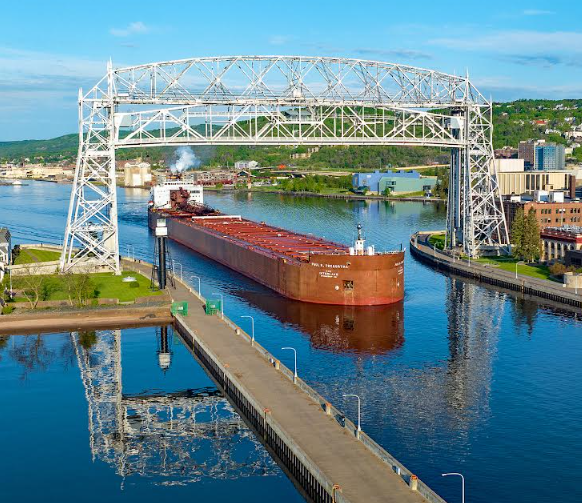
WASHINGTON – U.S. Senators Amy Klobuchar (D-MN) and Tina Smith (D-MN) announced that the U.S. Department of Transportation (USDOT) has awarded $11,200,000 for the Duluth Aerial Lift Bridge. The grant, provided through USDOT’s RAISE program, will rehabilitate this historic bridge, including surface preparation and repainting, lead abatement, replacement of deteriorated sections, miscellaneous structural steel repairs, repairs to spalled and delaminated concrete, and replacement of the bridge sidewalks.
It builds on the $1,500,000 in total funding secured for the Aerial Lift Bridge’s pedestrian walkways by Senators Klobuchar and Smith in Fiscal Years 2022, 2023, and 2024.
“The Duluth Aerial Lift Bridge is a landmark and a vital part of Duluth’s transportation system,” said Klobuchar. “It is not only a critical link for drivers, but also supports essential infrastructure such as water, sewage, natural gas, electrical, and data services, and provides ships key access to the Twin Ports. With this grant, the City of Duluth will make critical infrastructure improvements to make the Aerial Lift Bridge resilient for generations to come.”
“The Duluth Aerial Lift Bridge is an iconic and historic piece of infrastructure that has connected communities and supported local businesses for over a century,” said Smith. “Securing resources for projects like this is important for strengthening Minnesota’s infrastructure and economy. This funding will support the critical repairs and upgrades needed to ensure the bridge remains operational for years to come.”
“The City of Duluth is thrilled to receive this $11.2 million RAISE grant from the US Department of Transportation,” said Duluth Mayor Roger Reinert. “The Aerial Lift Bridge isn’t just a bridge – it’s a cherished Minnesota icon, a significant entryway to the Port of Duluth-Superior, and a critical point of connection for residents and visitors alike. Along with funding from our State partners, this RAISE grant almost completes funding for this $20M project. Thank you to our congressional delegation and the US Department of Transportation for recognizing how important this project is to our city and region.”
“This RAISE grant is crucial to the completion of much needed and deferred improvements to the Aerial Lift Bridge–an historic landmark and gateway to the port,” said Duluth Public Works Director Jim Benning. “In one fell swoop, the City of Duluth will replace pedestrian walkways, replace the bridge deck, apply new protective paint to the bridge, and make other structural improvements. We are grateful to our federal partners for their support of this infrastructure, crucial to both vehicular and maritime traffic.”
RAISE grants can be used by communities across the country for a wide variety of transportation projects with significant local or regional impact. The Bipartisan Infrastructure Law, which Klobuchar and Smith supported and was signed into law in 2021, delivered a 50 percent increase in the amount of available funding for the RAISE grants, as well as resources for improving the state’s roads, bridges, public transportation, and water infrastructure.
Shipments of iron ore down in December
CLEVELAND – Shipments of iron ore on the Great Lakes totaled 4.6 million tons in December, a decrease of 4.5 percent compared to a year ago. Shipments were just slightly above the 5-year average for the month.
The year-end total for the iron ore trade stands at 49.8 million tons, a decrease of 2.5 percent compared to 2023. Compared to the trade’s 5-year average, 2024 iron ore loadings were up 3.8 percent.
Lake Carriers’ Association
Algoma Innovator closes Welland Canal until spring
The St. Lawrence Seaway, including the Welland Canal and its eight locks in Port Colborne, Thorold, and St. Catharines, closed for the season Friday.
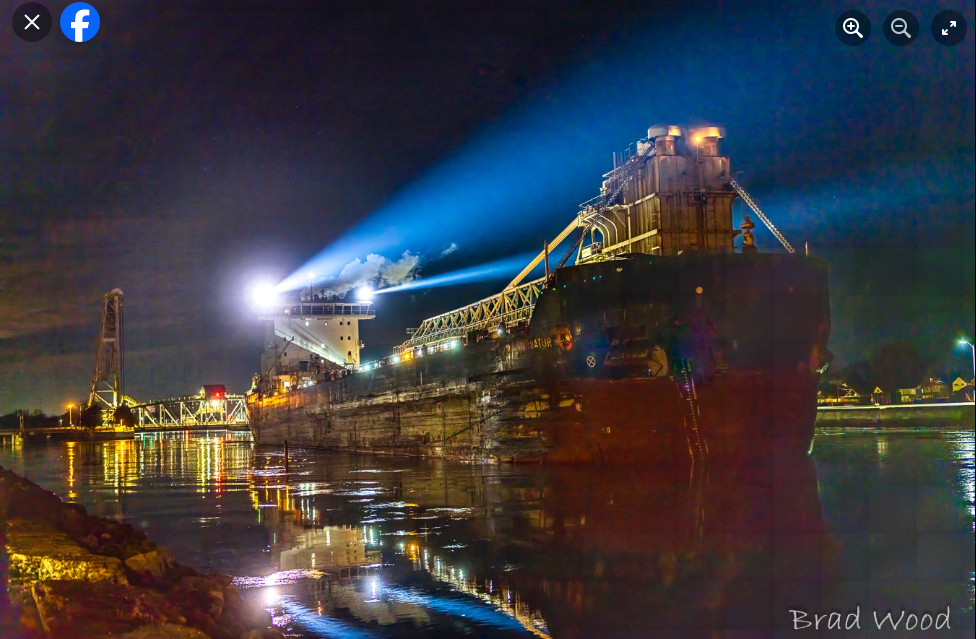
The Algoma Innovator was the last freighter to leave the canal into Lake Erie this year. She passed under the Clarence Street bridge (Bridge 21) at about 4:30 am Friday morning.
Although the canal will stay closed until spring, some ships may receive special permission to transit after the official closure.
During the winter, the St. Lawrence Seaway Management Corporation will carry out infrastructure maintenance projects, leading to temporary closures of several Welland Canal bridges for both motorists and pedestrians.
Welland News