Port of Cleveland receives $5M state grant to repair,
upgrade lakefront iron ore conveyor system
CLEVELAND, Ohio — The Port of Cleveland announced Monday that it has been awarded $5 million from the state of Ohio to help upgrade a critically important tunnel and conveyor system at its Cleveland Bulk Terminal dock on Whiskey Island.
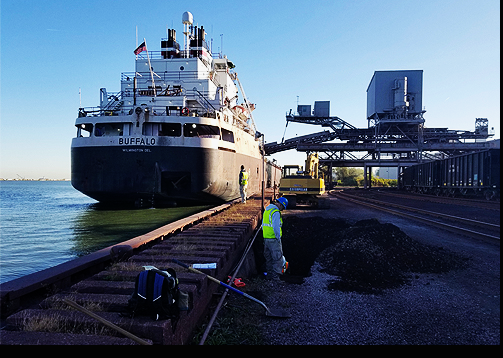
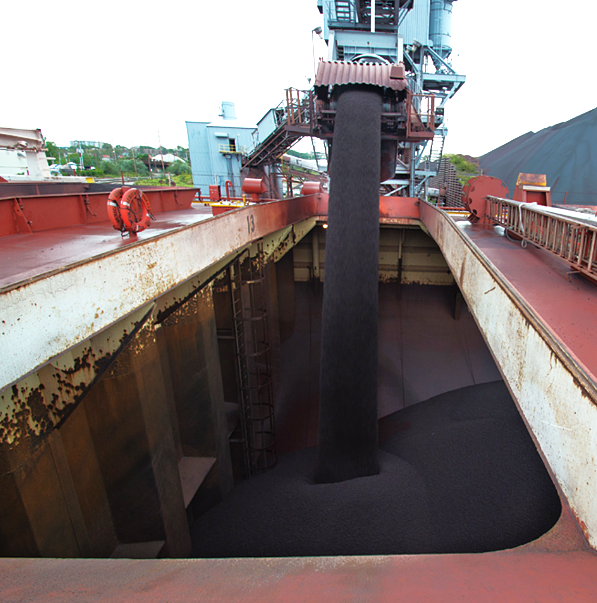
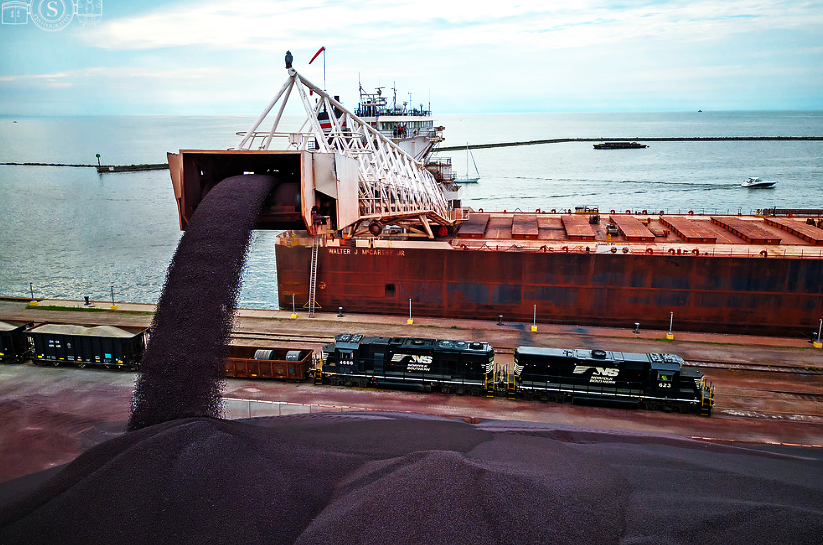
The terminal, located west of Wendy Park and east of the Westerly Wastewater Treatment Plant, receives mountains of taconite iron ore pellets from big lake carriers and enables the material to be transferred to smaller vessels able to navigate the Cuyahoga River.
Taconite is mined in the Mesabi Iron Range in Minnesota before shipment through the Great Lakes. The tunnel system is part of the transfer process onshore in Cleveland.
Pellets move connected conveyer belts and a tunnel before they’re loaded onto river carriers for transport to the Cleveland Cliffs steel plant upriver in the industrial Flats south of downtown.
The full cost of the repairs to the tunnel and conveyor system aren’t known yet, said Port spokesperson Nancy Lesic. The Port acquired the iron ore terminal in 1997 and has invested millions of dollars in its lakefront bulkhead and material handling equipment.
The Port said Monday that the original section of the terminal’s conveyor system was relocated from Lorain in 2003. It includes a concrete tunnel under massive dunes of taconite stored on the dock.
The tunnel and conveyor system were extended in 2021, expanding the Port’s capacity and allowing for taconite pellets to be blended. The original section of the conveyor system is near the end of its life and needs to be rehabilitated, the Port said.
Repairs and reconstruction will take place during at least two six-week periods from January to mid-February in 2025 and 2026, when the Soo Locks connecting Lakes Superior and Huron are shut down, the Port said.
Cleveland.com
Historic Lake Superior lighthouse sold at auction 5 years ago is available once again
SUPERIOR, WI – A historic Lake Superior lighthouse that a Californian won at auction five years ago with dreams of converting it into a quiet getaway — and possibly even a vacation rental — is now being offered for free to a government agency or nonprofit that agrees to maintain it.
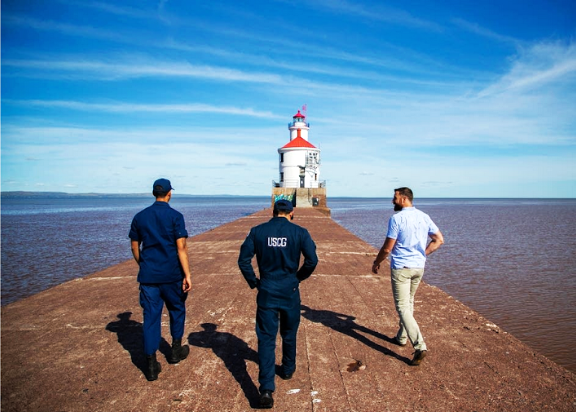
The 56-foot-tall structure stands sentry at the tip of Wisconsin Point in Superior, Wis. It was built in 1913 to help guide ships into the Duluth-Superior harbor.
It’s been off the market since 2019, when Steven Broudy, who at the time was an executive for a tech company in San Francisco, agreed to buy the lighthouse, sight unseen, after winning it at auction for $159,000.
“The thing about a lighthouse that always appealed to me is, on the one hand, there’s something about staring out at a body of water that’s really calming and soothing,” he told MPR News. “And then on the other hand, I don’t know, it feels like it’s a fortress of solitude.”
But earlier this month, the U.S. General Services Administration issued a Notice of Availability for the Superior Harbor South Breakwater Light and asked for letters of interest from groups or agencies interested in maintaining the lighthouse for “educational, park, recreational, cultural, or historic preservation purposes.”
After submitting the winning bid for the historic structure, Broudy reached an impasse with the U.S. Army Corps of Engineers, said Kris Mendez, a realty specialist for the GSA.
The Army Corps owns the third-of-a-mile long breakwater that extends out to the lighthouse. Mendez said it has long served as an unofficial playground for local teenagers.
Mendez said that Broudy wanted to control access to the lighthouse “to a point that the Corps wasn’t entirely comfortable with. And essentially, they just couldn’t reach a compromise.” Broudy also said he wanted the ability to lease the breakwater to make safety improvements to make it more accessible, but he wasn’t allowed to by the government.
Now that several years have passed, Mendez said the GSA felt it was a good time to offer up the lighthouse again, “to see if other parties might be interested.”
But before it’s offered up to the general public, it first must be made available to government agencies or educational nonprofits, under the terms of a law passed in 2000 called the National Historic Lighthouse Preservation Act. That law mandates that government agencies and nonprofit groups get a first shot at acquiring lighthouses — free of charge — that the U.S. Coast Guard no longer needs.
“Lighthouses have a pretty active community of fans and supporters,” Mendez explained. The law allows eligible groups — often with expertise in historic preservation and the ability to marshal volunteers — to take ownership of a lighthouse and preserve it.
Last year, a St. Paul-based historic preservation nonprofit, Rethos, was awarded a nearby lighthouse in Duluth in the city’s Canal Park tourism district.
The 43-foot-tall structure, built three years before the lighthouse at the end of Wisconsin Point, stands at the tip of the north breakwater at the entrance to Duluth’s shipping canal. Rethos plans to offer tours.
The National Park Service will vet applications from would-be caretakes of the Superior, Wis. lighthouse and decide if any group has the financial wherewithal to maintain the lighthouse.
“The idea is you’re going to preserve this light forever,” said Mendez. “Because anyone who’s familiar with the Great Lakes knows that the weather can be pretty harsh. It’s like the old joke about a boat being a hole in the water you throw money into, a lighthouse can be pretty similar due to the rough weather and everything out there.”
Jim Paine, the mayor of Superior, said the lighthouse is known as “something of a hot potato.” “It’s hard to get to, very hard to maintain. So this would be a pretty big expense. I think it would be cool if somebody could open it and operate it in some way, but even getting folks out there would be tricky,” said Paine.
Letters of interest will be accepted through Aug. 5, 2024. If no group comes forward, or none is selected, then the lighthouse could again be offered for sale. But buyers beware: The U.S. Coast Guard will still need access to the lighthouse to maintain the navigational aids still housed there.
That consists of a green light that flashes every five seconds from May 1 to Oct. 20, and a three-second-long fog signal that’s blasted every 30 seconds.
Minnesota Public Radio
Source of St. Marys River pollution unknown
SAULT STE. MARIE, MI – Coast Guard Sector Northern Great Lakes is responding to a pollution incident in the St. Marys River near downtown Sault Ste. Marie along with the Sault Ste. Marie Fire Department and Army Corps of Engineers.
At approx. 5 p.m. on Monday, July 15, Sector Northern Great Lakes received a report of an oily sheen drifting down the St. Marys River. Coast Guard Pollution Responders investigated the scene and discovered an oil sheen near the Coast Guard base as well as around the Museum Ship Valley Camp and the George Kemp Marina. Pollution Responders determined that the pollution consisted of approximately 10 gallons of an unknown oily product.
The Coast Guard is leading the response to the oil spill in close collaboration with the Sault Ste. Marie Fire Department and the Army Corps of Engineers. GFL Environmental has been hired to conduct the cleanup. A floating boom was placed in the water to contain the oil in the affected areas and absorbent materials are being used to recover as much product as possible. The source of the pollution is currently unknown and is under investigation by the Coast Guard.