U.S. grain, coke exports drive Great Lakes-Seaway shipping activity in June
U.S. grain and coke exports boosted overall shipping volumes through the St. Lawrence Seaway in June.
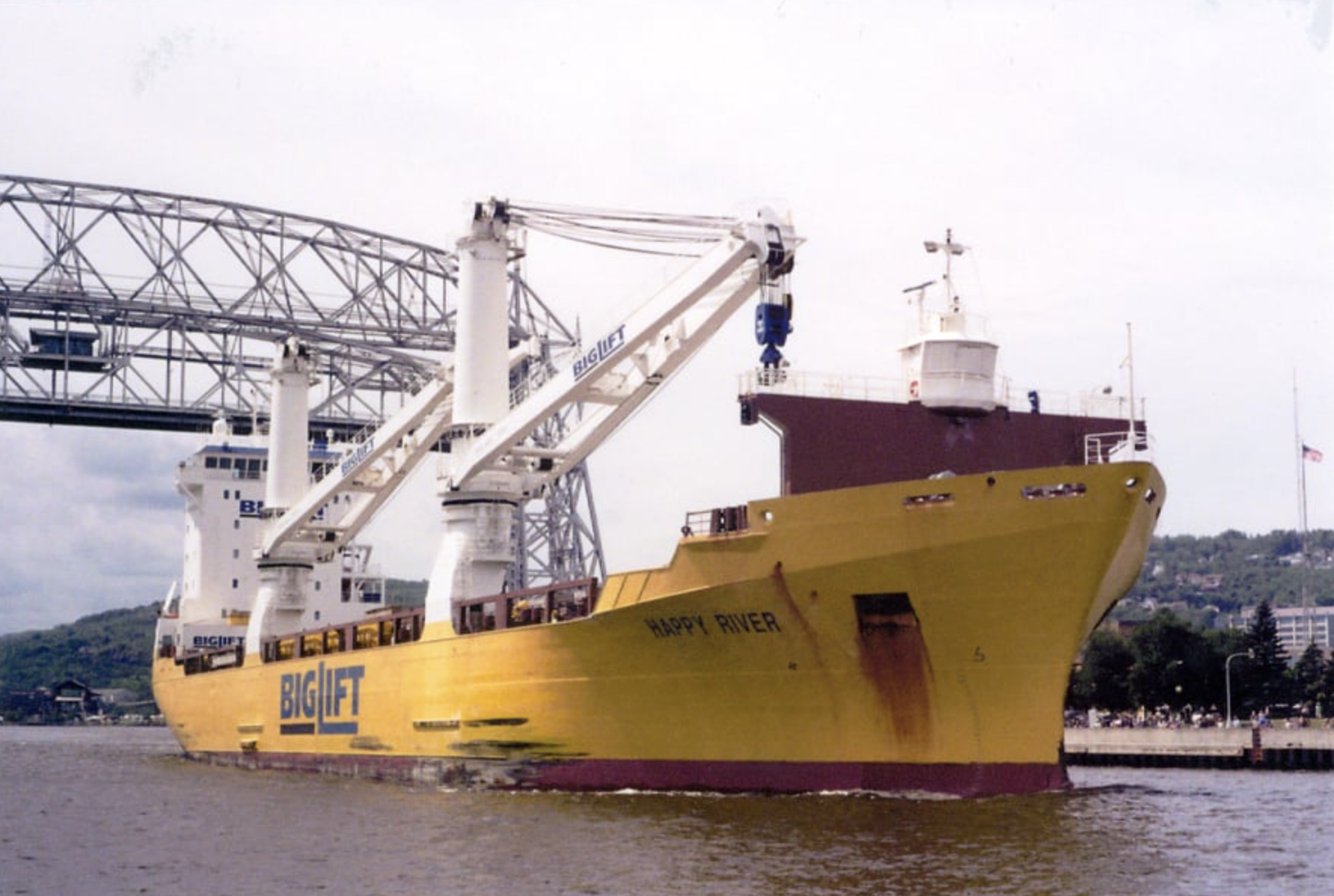
Total cargo tonnage shipments (from March 22 to June 30) via the St. Lawrence Seaway totaled 11.9 million metric tons, down 8.3% compared to 2021 but gaining ground in comparison to April, when it was down 18% at the start of the season. Other system-wide highlights include an increase in project cargo such as wind energy components and a 55% increase in coke shipments, including exports to Europe for cement production.
U.S. grain shipments via the Great Lakes-Seaway system totaled 414,000 metric tons from March 22 to June 30, up 37% compared to the same period in 2021. Much of the increase is due to exports of corn and soybeans. The rise in shipments, which are predominantly heading to Europe and North Africa, are in part due to shifting global grain trading patterns as the conflict between Russia and the Ukraine — both major grain exporters — continues.
“International trade has been a major driver of Great Lakes-St. Lawrence Seaway shipping this season, with corn, soybeans, coke and containerized goods heading out and steel and wind energy components being shipped in,” Bruce Burrows, president and CEO, Chamber of Marine Commerce, said in a statement announcing the June numbers. “American businesses recognize that it is more important than ever to have this reliable, cost-efficient trade and transportation route, particularly in these high-inflation, uncertain times.”
June 2022 was a strong month for the Port of Toledo as shipments for the year surpassed 4.5 million short tons, up 22% over the same period in 2021. “We enjoyed increases in every cargo category other than liquid bulk,” said Joseph Cappel, VP of business development for the Toledo-Lucas County Port Authority. “Our grain tonnage is more than double what it was at the same time last year and iron ore and coal are also up significantly. With all three of our major staple commodities ahead of last year, we should expect a strong second half of our shipping season.”
The port also shipped petcoke to other U.S. ports as well as Portugal, the Netherlands and Ontario. The Port of Toledo is also in peak construction season with capital improvement projects occurring at the Toledo Shipyard, general cargo facility, and dredge material processing center. The Toledo-Lucas County Port Authority is also working with the Ohio Department of Natural Resources on several water quality improvement projects involving the creation of wetlands in the Maumee River and its tributaries.
At the Port of Duluth-Superior, limestone and general cargo shipments provided the June highlights. For the month, Duluth-Superior welcomed 433,143 short tons of the versatile chalky rock from Michigan, which pushed the season-to-date limestone total above 1 million short tons and 14.3% ahead of the five-season average. Limestone has numerous purposes, including being used as a building stone for construction and in the manufacturing of cement.
Inbound wind energy cargoes and bagged minerals delivered a general cargo boost in June, with nearly 13,000 short tons arriving at the Duluth Cargo Connect facilities. That float lifted the season-to-date general cargo tonnage total past 27,280 short tons, which exceeds the five-season average pace through June 30 by a robust 33%.
WorkBoat
Wind towers, manufactured in Monroe, are afloat at the Port of Monroe
MONROE, MI – During the 2022 shipping season, Port tenant Ventower Industries and DRM Terminal Services are working to develop and expand new renewable energy supply chain opportunities.
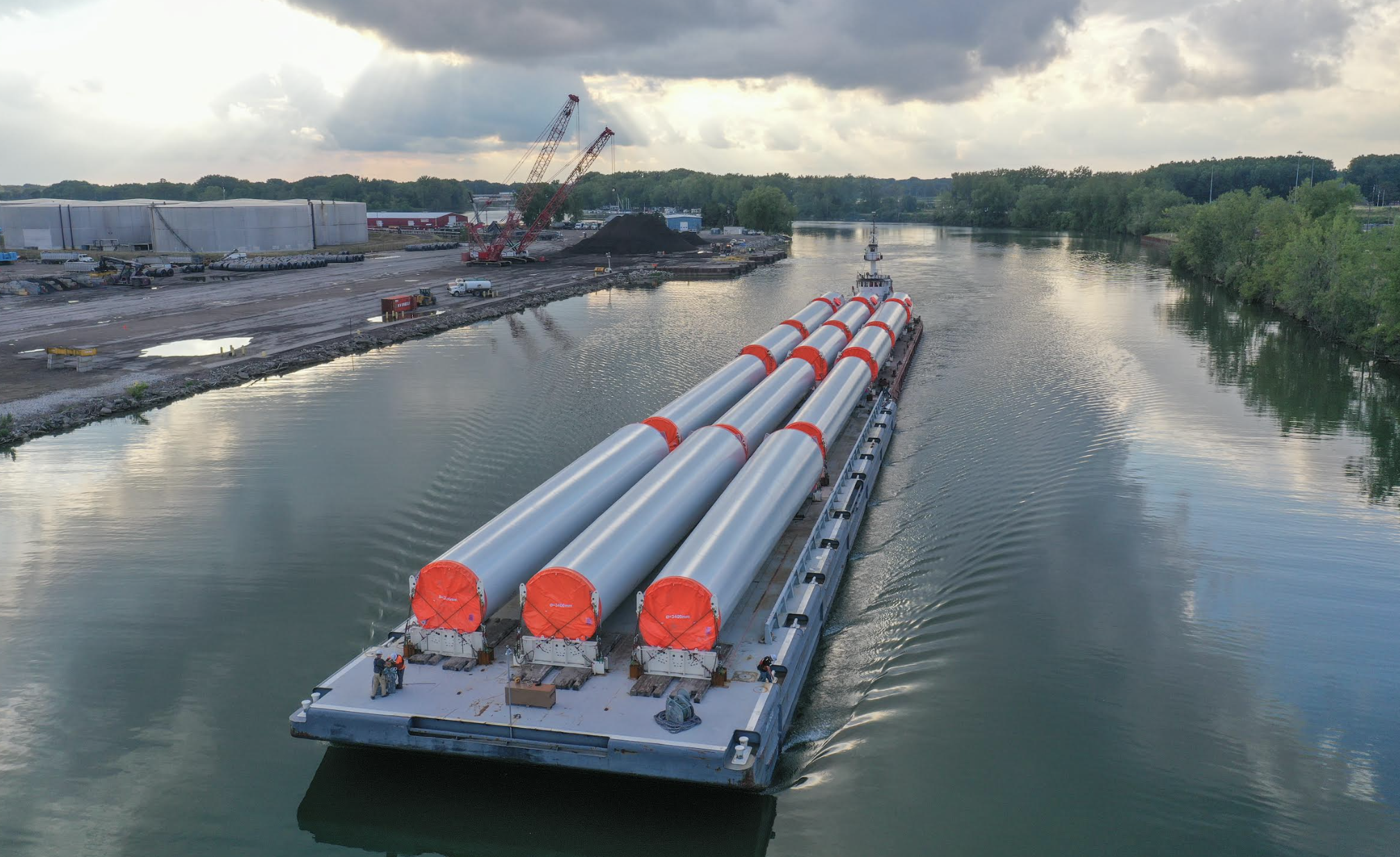
Currently, the Port and DRM are loading wind tower sections for outbound shipments on U.S. flagged barges. Made by Ventower, the wind towers will be transported by Michigan-based tug company Ashton Marine Corporation to the Port of Oswego in New York. The utility-scale wind turbines will then be staged with other components for delivery to a project site in upstate New York.
Made from tubular steel, the tower supports the structure of the turbine. Towers usually come in sections and are assembled on-site. Wind speed increases with height, therefore taller towers allow turbines to capture more energy and generate more electricity.
Scott Viciana, vice president in charge of sales and development at Ventowers, said the first shipment of wind towers left port on June 29. Each shipment weighs approximately 950 tons and there will be an estimated 90 sections shipped for the project before it is completed this summer.
Established in 1932, the Port of Monroe is Michigan’s only port on Lake Erie. The marine terminal provides access to the Great Lakes and St. Lawrence Seaway and it serves 17 states.
Six years ago, the Port of Monroe was designated as part of the Marine Highway Route M-90 by the U.S. Maritime Administration.
“In a single project, we have Michigan manufactured renewable energy components, built right here at the Port of Monroe, being transported under the American flag on a designated Marine Highway Route,” said Capt. Paul C. LaMarre III, Port Director at the Port of Monroe in a written statement provided to The Monroe News. “The Port of Monroe is proud to be at the forefront of domestic cargo diversification which will ultimately benefit the system as a whole.”
Ventower Industries is the only active wind turbine tower manufacturer in the United States located at the Port. The relationship between the Port and Ventower has been critical in developing these new supply chains.
“We, along with Ventower and DRM, have carved out a niche for projects like this. Everybody is excited to be involved with this project and happy that it’s moving forward,” Port Development Coordinator Samuel Hankinson said. “We’re excited to be Point A in the cargo operation and to be able to contribute to the Great Lakes shipping industry and to the success of other ports because we’re all stronger together.”
Monroe News
Great Lakes shipping on the rise, study finds
In a presentation to the Great Lakes Economic Forum in Chicago, the Hamilton-Oshawa Port Authority (HOPA Ports) highlighted the increasing viability of short sea shipping to move goods between some of the Great Lakes region’s biggest cities.
Preliminary research conducted by Fluid Intelligence, a data analysis partnership of HOPA Ports and the McMaster Institute for Transportation and Logistics, is beginning to uncover candidate routes and commodities where short-sea shipping can supplement long-distance and cross-border truck routes.
Short sea shipping refers to city-to-city shipments using the Great Lakes as a marine-highway alternative to road-based transportation. The marine option has a number of advantages, including a significantly lower carbon footprint, along with the ability to bypass congested highways.
Replace truck trips
Fluid Intelligence’s preliminary results show that half a million tonnes of goods are currently making trips longer than 100 kilometres every week between key origins and destinations in Southern Ontario and the U.S. Midwest, representing approximately 2.5 million heavy truck trips per year. Short sea shipping could accommodate some of that traffic on a greener, less congested water route.
“Short sea shipping on the Great Lakes is one of those ideas that’s been simmering for a long time, but recently, the stars are starting to align,” explained Larissa Fenn, HOPA’s director of public affairs.
“Population growth and highway congestion, driver shortages and fuel costs are all part of the equation making marine a more appealing alternative to road transportation. And of course, organizations are looking to lessen the carbon footprint of their supply chain. Short sea shipping helps tackle all of those problems.”
CO2 reductions
One marine vessel can carry the same amount of cargo as 963 transport trucks, and in moving the same amount of cargo, trucks emit 558 percent more CO2 per tonne/km.
The forthcoming paper, Foundational Study on Cross-Border Short Sea Shipping Opportunities, will provide indications of the commodities that present the greatest opportunities.
Primary plastics, newsprint and other types of paper, metal products and tires are just a few of the commodities occupying tens of thousands of trucks on the region’s highways each week.
The Great Lakes Economic Forum presented an opportunity for HOPA Ports to engage Great Lakes leaders about the potentially expanding role for short sea shipping. “Our intention is to generate renewed interest and discussion about an idea whose time has come,” said Fenn.
The final Fluid Intelligence report is expected to be released this fall.
InsideLogistics