Port of Toledo is having a solid 2021 season
Toledo, OH –2021 is shaping up to be a solid year at the Port of Toledo.
“Through June we are up about 25% over the same period last year. We are clicking on all cylinders here with a nice mix of lakers and overseas vessels,” said Joe Cappel, Vice President of Business Development for the Toledo-Lucas County Port Authority. “We are punching above our weight class, you could say. For a city our size, our port is very robust.”
A diverse portfolio of products coming in and out of the port is a big reason for that ongoing success, including everything from coal and salt to grain and iron ore.
“Every year there is a new cargo or two that comes through the port that adds to our overall portfolio. We have a very diverse range of products that are handled here.”
When it comes to volume with each vessel, the numbers are staggering. “I believe each vessel can carry about 700-800 truckloads of cargo,” Cappel said. “That is the economy of scale on one vessel that moves silently through the port 24/7, 365 days a year.”
Supply chain issues have plagued some other ports around the country in recent months, but Cappel said it has not been an issue on the Great Lakes. He said that’s due in large part to the fact that raw materials and not manufactured goods move through our region.
“Here on the Great Lakes it is business as usual. We have of course had some challenges, but the raw materials that drive industry here in the midwest continue to flow through the Great Lakes system uninterrupted.”
Toledo has the largest landmass port on the Great Lakes, with thousands of jobs tied to it. The new Cleveland Cliffs facility has meant more jobs and an additional two million tons of iron ore coming into the port every year.
“7,000 jobs rely on the Port of Toledo. It has a one billion dollar annual economic impact. That number is actually probably higher due to Cleveland Cliffs and other recent developments at the port. The projects are expected to keep our port on solid ground for years to come.”
Read more at this link: https://www.13abc.com/2021/07/19/port-toledo-is-having-solid-2021-season/?fbclid=IwAR1FX6aj6_KrBVaoh9dstymw9SyBDbn0MyyWL9BVT3HEok6pDBx6oYrBw3I
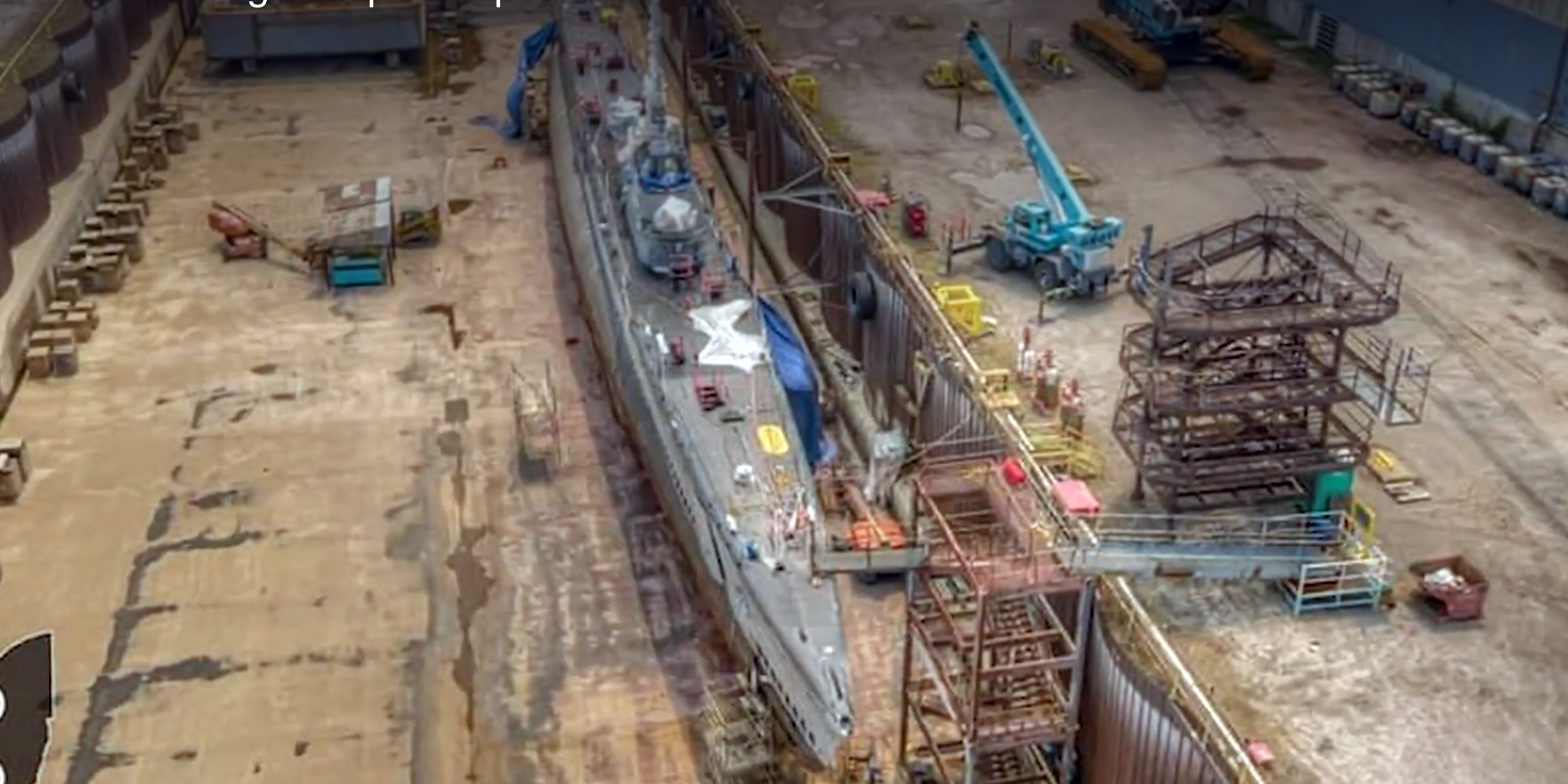
Drone images capture update on U.S.S Cod facelift
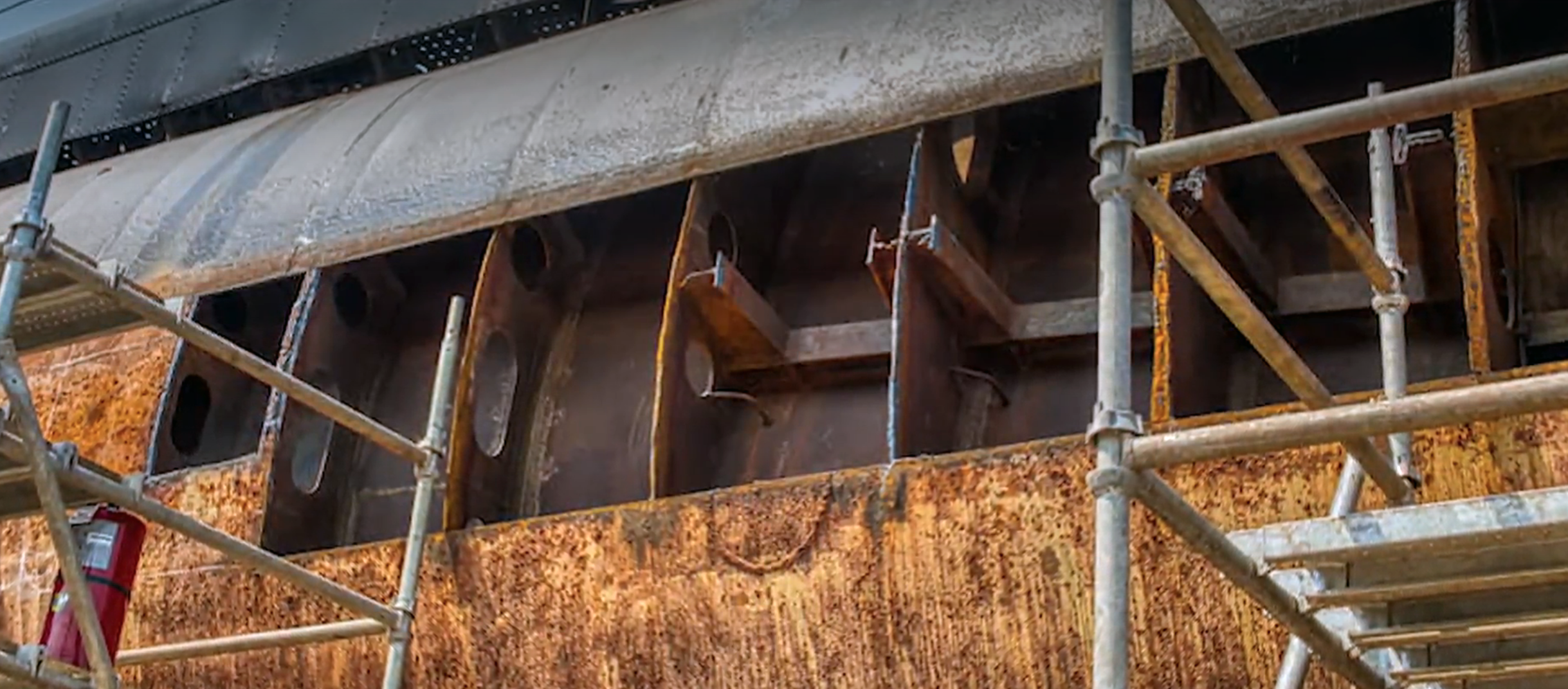
Cleveland, OH – From the air and on the ground, photos reveal the first new plate being installed last week on the ballast tanks on the port side of the U.S.S. Cod, an area subjected to the worst corrosion. “We kept our fingers crossed that maybe things wouldn’t be quite as bad as we hoped or thought they might be,” said Paul Farace, president of the U.S.S. Cod sub memorial.
Farace says there are also frightening indications that bacteria may be a factor in the wastage of the steel, at the splash zone. “There are strains of bacteria that eats steel. And leave little, kind of orange-ish, pasty, iron-oxide residue. So that’s quite frightening,” he said.
It’s been a little more than a month since the floating WWII memorial was pulled out of its permanent home along Cleveland’s Lake Erie shores, heading to DonJon Shipbuilding’s massive dry dock in Erie for its first facelift since 1963. And in a major show of hometown love, Cleveland-based Sherwin Williams donated hundreds of gallons of paint to assist in the restoration.
Farace adding, “Sherwin Williams stepping in and donating these expensive, but very high-tech and very necessary marine bottom coatings, they wear a Superman cape in our eyes.”
New steel, cut by a computer, is now being prepared for installation where rusty steel was recently removed. And just like a puzzle, each piece of new steel is laser engraved with codes and numbers on the exact placement location on the vessel with master craftsmen and women making something old, new again.
See more at this link: https://fox8.com/news/drone-images-capture-update-on-u-s-s-cod-facelift/?fbclid=IwAR0s5I0iiwlEqsH7WfVPkGgiaqvHp4GOdWeC6PZB9oxqO1aKXvcjMEfwhc8
International crisis: Shattered seafarers threaten a global logistics shutdown
“I’ve seen grown men cry,” says Captain Tejinder Singh, who hasn’t set foot on dry land in more than seven months and isn’t sure when he’ll go home.
“We are forgotten and taken for granted,” he says of the plight facing tens of thousands of seafarers like him, stranded at sea as the Delta variant of the coronavirus wreaks havoc on shore. “People don’t know how their supermarkets are stocked up.”
Singh and most of his 20-strong crew have criss-crossed the globe on an exhausting odyssey: from India to the United States then on to China, where they were stuck off the congested coast for weeks waiting to unload cargo. He was speaking to Reuters from the Pacific Ocean as his ship now heads to Australia.
They are among about 100,000 seafarers stranded at sea beyond their regular stints of typically 3-9 months, according to the International Chamber of Shipping (ICS), many without even a day’s break on land. Another 100,000 are stuck on shore, unable to board the ships they need to earn a living on.
The Delta variant devastating parts of Asia – home to many of the world’s 1.7 million commercial seafarers – has prompted many nations to cut off land access to visiting crews, in some cases even for medical treatment. Just 2.5% of seafarers – one in every 40 – have been vaccinated, the ICS estimates.
The United Nations describes the situation as a humanitarian crisis at sea and says governments should class seafarers as essential workers. Given ships transport around 90% of the world’s trade, the deepening crisis also poses a major threat to the supply chains we rely on for everything from oil and iron to food and electronics.
Bulk carrier master Singh, from northern India, is not optimistic of going ashore anytime soon; his last stint at sea lasted 11 months. He said his crew of Indians and Filipinos were living out of cabins measuring about 15ft by 6ft.
“Being at sea for a very long time is tough,” he says, adding that he had heard reports of seafarers killing themselves on other ships.
“The most difficult question to answer is when kids ask, ‘Papa when you are coming home?’,” he said from his vessel, which was recently carrying coal.
India and the Philippines, both reeling from vicious waves of COVID-19, account for more than a third of the world’s commercial seafarers, said Guy Platten, secretary general of the ICS, which represents over 80% of the world’s merchant fleet.
“We are seriously disturbed that a second global crew change crisis is looming large on the horizon,” he told Reuters, referring to a months-long stretch in 2020 when 200,000 seafarers on ships were unable to be relieved.
Reuters via gCaptain
Read more at this link: https://gcaptain.com/stranded-seafarers-covid-logistics-shutdown/?fbclid=IwAR3KmnxvxAbywCSyYVa0PecLNJ4Rtw0vah17HPWX58olsrCE1i1bTzq4FJE