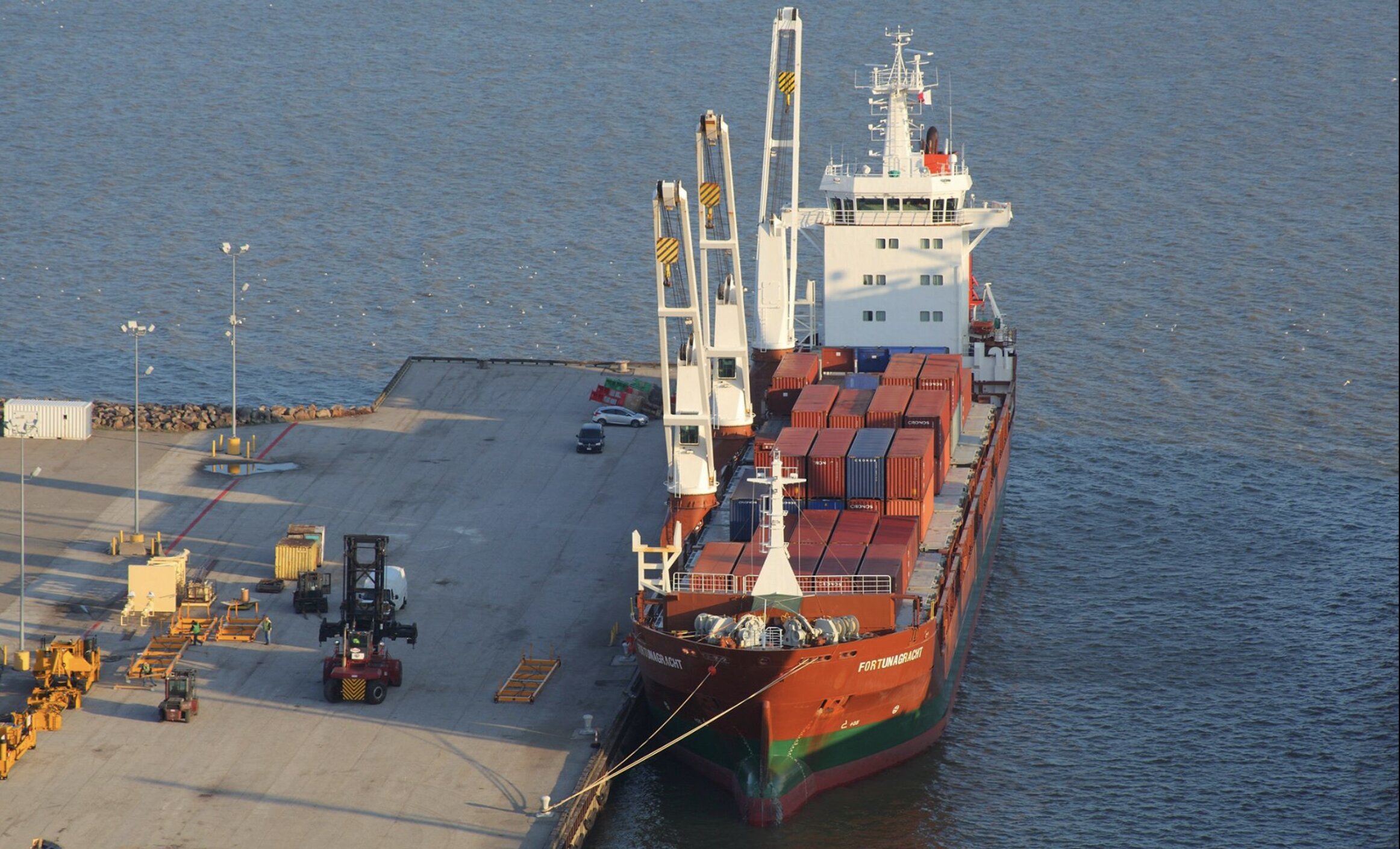
Fall storm brings high winds and snow, sending vessels to anchor
An early season winter storm in Michigan’s Upper Peninsula Monday and Tuesday brought heavy snow, powerful winds and extremely high waves to the Great Lakes region.
The storm, which moved over Lake Superior and northern Lake Huron on Monday, was heading east on Tuesday. Winter storm warnings and winter weather advisories were in effect through Tuesday evening for parts of Michigan’s Upper Peninsula and northern Wisconsin. Winds of up to 50 knots, or about 57 miles per hour, along the Lake Superior shoreline in parts of Michigan’s northern Upper Peninsula were possible on Tuesday, forecasters said.
By 11 a.m. on Tuesday, eight vessels were anchored in the sheltered waters of the lower St. Marys River north of DeTour, Mich. They were Herbert C. Jackson, Hon. James L. Oberstar, American Mariner, Rt. Hon. Paul J. Martin, Joyce L. VanEnkevort, Laura S. VanEnkevort and Burns Harbor. Mark W. Barker, which was upbound Monday afternoon with sand for the new Soo Lock project, discharged her cargo and tied up at the southeast pier awaiting better weather.
Edgar B. Speer was anchored west of St. Ignace, Mich., Tuesday morning. Downbound WIlfred Sykes and American Integrity were hugging the west Lake Michigan shoreline.
On Lake Superior, vessels were following the north shore. On Tuesday morning the 1,000-footer Stewart J. Cort, which had anchored Monday in Thunder Bay, got back underway for Burns Harbor.
By Tuesday morning, more than 13 inches of snow had accumulated in the north-central part of the Upper Peninsula, said Taylor Prislovsky, a meteorologist with the National Weather Service in Marquette. Waves of 13 to 15 feet were recorded along eastern Lake Superior, with the possibility that they could exceed 20 feet through the early afternoon.
Wind gusts of up to 60 m.p.h. were dashing the area around Grand Marais, Mich., on the southern shore of Lake Superior.
Port of Cleveland takes vital step forward in transformational lakefront project
CLEVELAND, OH – The Port of Cleveland’s board of directors took a vital step forward this week in embarking on a $300 million, multi-decade and ‘transformational’ project that would dramatically redefine the eastern shoreline of Lake Erie. Officials awarded a $3.75 million contract to a global engineering firm on Thursday, officially kicking off the extensive design and permitting process needed to bring the so-called CHEERS project to life.
The board selected Arup Engineering to head up the design and permitting services that will serve as the all-important foundation for the project to move forward. The Cleveland Harbor Eastern Embayment Resilience Strategy (CHEERS) project will soften the hardened, sculpted edges of Cleveland’s eastern lakefront near East 55th St. Marina, Gordon Park and the Lakefront Nature Preserve. By utilizing dredge material from the Cuyahoga River, the project calls for a more naturalized eastern shoreline, providing outdoor amenities for park-goers and habitats for wildlife. Additionally, a sheltered embayment will allow visitors to have direct access to the water, which would buttress a manmade ‘isle’ north of the nature preserve.
“We’re excited to be moving forward into the design phase of this transformational and vital project that will benefit Northeast Ohio communities for generations to come,” said Will Friedman, the president and CEO of the Port of Cleveland.
In addition to the recreational benefits, the project aims to better connect east-side residents to the lake in a manner similar to Edgewater Park and the west side. Although the project will likely be completed in phases over the course of three decades, the broader goals of the initiative include reconnecting communities to the region’s greatest natural resource, improving public health, bolstering the regional economy and tourism efforts and benefitting the environment.
Tracy Johnson, an avid fisherman that spends much of his free time fishing near the East 55th Street marina, said the project is exactly what the east side needs.
“I think it’s a great idea. Not only will people be able to come out and they put the island out there and you can picnic or relax,” Johnson said. “And, of course, the fishing. The further out in the water you get, the more fish you can catch. You got Edgewater on the west side. We need something out here also.”
Six entities guide the CHEERS project: the Port of Cleveland, the Cleveland Metroparks, the City of Cleveland, the Ohio Department of Natural Resources, the Ohio Department of Transportation, and the Black Environmental Leaders Association.
News 5 Cleveland
How a fleet of robots could help solve the Great Lakes plastic pollution problem
In the murky waters of Lake Ontario just off the Toronto harbor, a stream of trash inches toward a round, tubular-looking device floating in the water. A piece of white styrofoam bumps up against the device’s lip. Then, in one fluid motion, it tumbles over the edge. With tendrils of marine plants circling the waste, it looks like the styrofoam could have entered a portal to an undersea world. Instead, the device is a gateway to a less mystical — yet vital — destination: the garbage dump.
“It’s basically like a floating trash can,” says Chelsea Rochman, professor of ecology and evolutionary biology at the University of Toronto, who has worked with a team at the university to capture trash in Lake Ontario with bins like these since 2019. Powered from shore, the device, called a Seabin, uses a motor to create a vortex that gently pulls in floating waste from a 160-foot radius and then stores the trash in an attached basket.
Read the full story here: https://www.theverge.com/2022/10/14/23401381/great-lakes-plastic-pollution-cleanup-tech-robots
The Verge