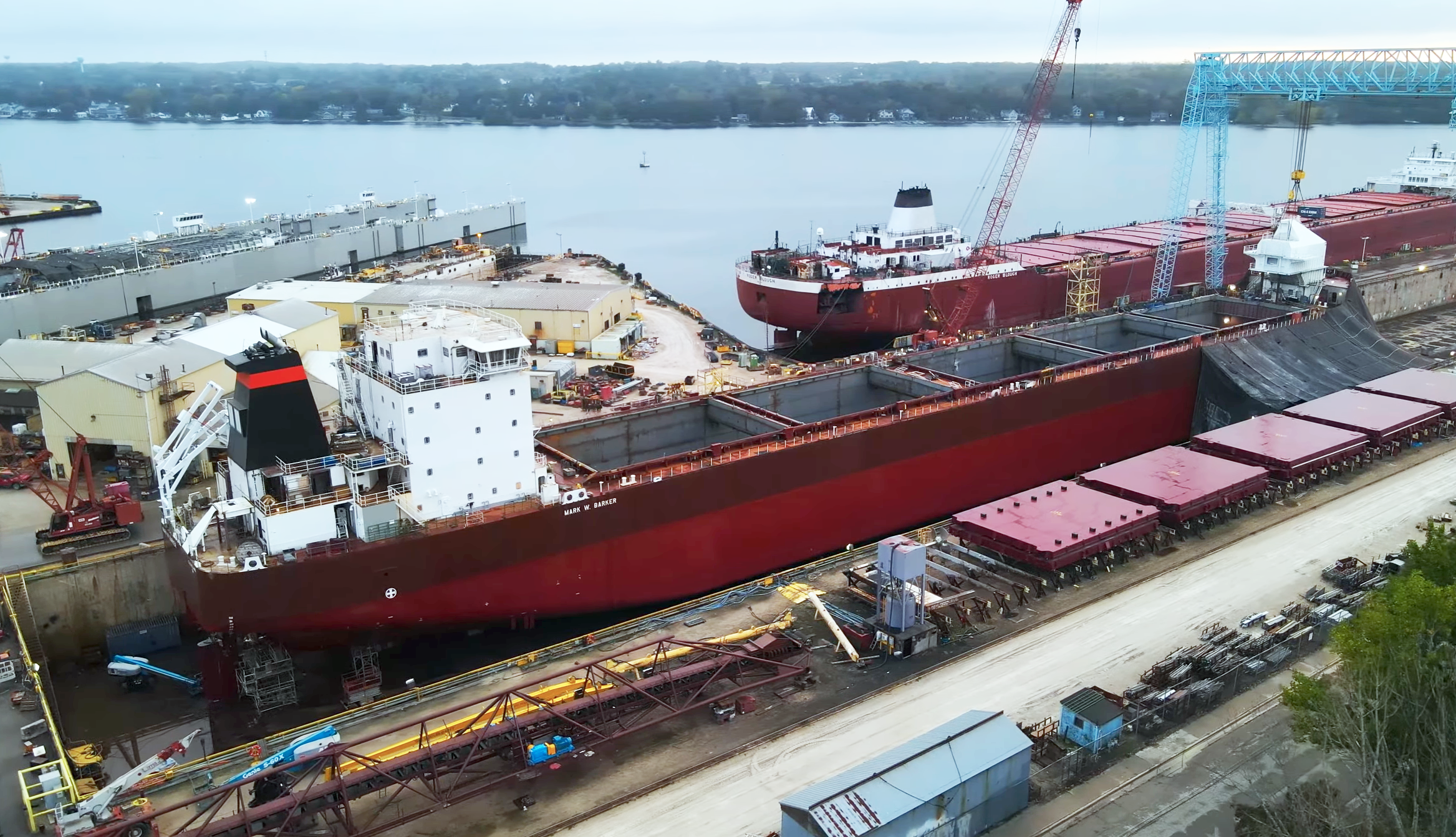
Mark W. Barker construction update update
Steel production, capacity utilization fall
Great Lakes steel production fell by 11,000 tons last week, while U.S. steel mills dipped under 85% capacity utilization, according to the American Iron and Steel Institute.
National steel output is more than 20% higher than at the same time last year, when steel mills sunk to just over half-capacity early in the coronavirus pandemic. With strong demand and soaring prices, the mills have been operating at more than 80% capacity this year.
Steel mills in the Great Lakes region, clustered mainly along the south shore of Lake Michigan in Northwest Indiana, made 638,000 tons of metal in the week that ended Oct. 9, down from 649,000 tons the previous week.
Overall, domestic steel mills in the United States made 1.858 million tons of steel last week, down 0.7% from 1.872 million tons the previous week, and up 19.9% compared to 1.549 million tons the same time a year prior, when the onset of the coronavirus pandemic shut down auto plants and other factories, greatly depleting the demand for steel.
So far this year, domestic steel mills in the United States have made 73.26 million tons of steel, a 20.2% increase compared to the 60.93 million tons made during the same period in 2020.
U.S. steel mills have run at a capacity utilization rate of 81.2% through Oct. 9, up from 67.1% at the same point in 2020, according to AISI.
Steel capacity utilization nationwide was 84.2% last week, which was up from 70.1% at the same time a year ago and from 84.8% a week prior.
Steel production in the southern region, a wide geographic swath that encompasses many mini-mills and rivals the Great Lakes region in output, totaled 768,000 tons last week, down from 774,000 tons the week before. Volume in the rest of the Midwest dipped to 191,000 tons, down from 196,000 tons the week prior.
NW Indiana Times
Port of Green Bay largely unaffected by supply chain issues
Green Bay, WI – While supply chain issues ravage various industries and aspects of life as the world tries to recover from the COVID-19 pandemic, leaders at the Port of Green Bay say they have not seen the same issues due to the type of traffic the westernmost port of Lake Michigan receives.
“Almost all the commodity movement into the Port of Green Bay is bulk material intended for industry use,” Mark Walter, business development manager for Brown County Port & Resource Recovery said. “We do not have any container traffic into Green Bay or even much of the Great Lakes at this point.”
The Port of Green Bay is one of 14 ports along the Fox River that handle more than two million tons of cargo annually. They handle mostly bulk material such as “coal, limestone and salt, bulk liquids like petroleum products, liquid asphalt and tallow, and break-bulk commodities including wood pulp and forest products in addition to oversized cargo like machinery and wind components,” according to the Port’s website.
NBC 26