Three 1800s-era shipwrecks discovered in Lake Superior
Whitefish Point, MI – Experts have announced the discovery of three 1800s-era shipwrecks in Lake Superior.
The Great Lakes Shipwreck Historical Society announced Monday that three different schooners, Dot, Frank W. Wheeler and Michigan were discovered near Grand Marais in the Upper Peninsula. Several additional shipwrecks have also been located and await positive identification, according to a news release.
“This has been a great year for us at the Shipwreck Museum, and we have never located so many new wrecks in one season,” Great Lakes Shipwreck Museum Executive Director, Bruce Lynn, said. “Each shipwreck has its own story…and the drama of the Drake and the Michigan, and the rescue of both crews…these are fantastic, true stories that we can tell in the museum someday.”
The Great Lakes Shipwreck Historical Society uses a combination of historical research, technology, and teamwork to map where ships were reported lost. The areas are then searched using its research vessel, the David Boyd, and Marine Sonic technology to analyze the lake bottom and identify submerged wrecks.
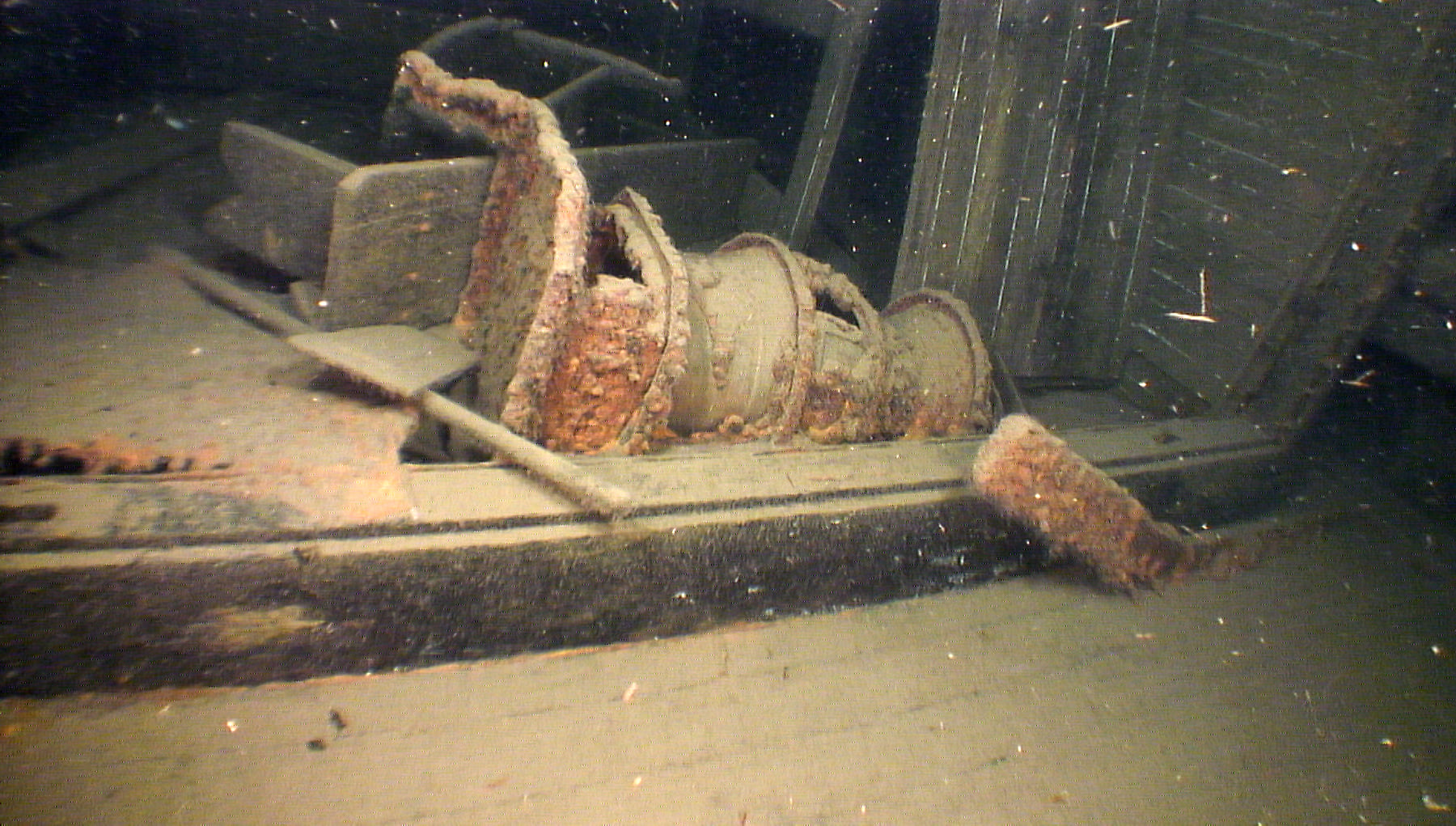
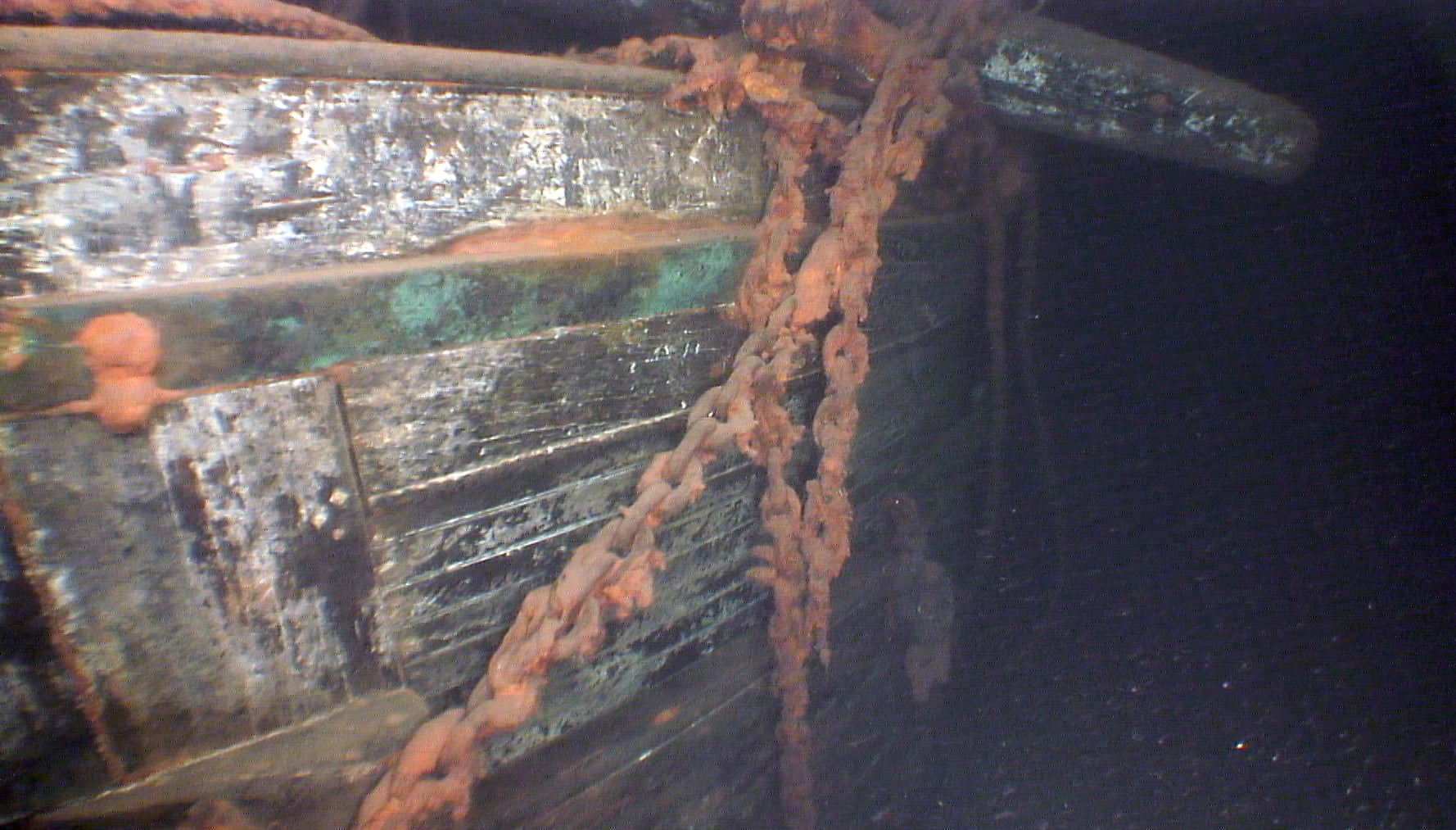
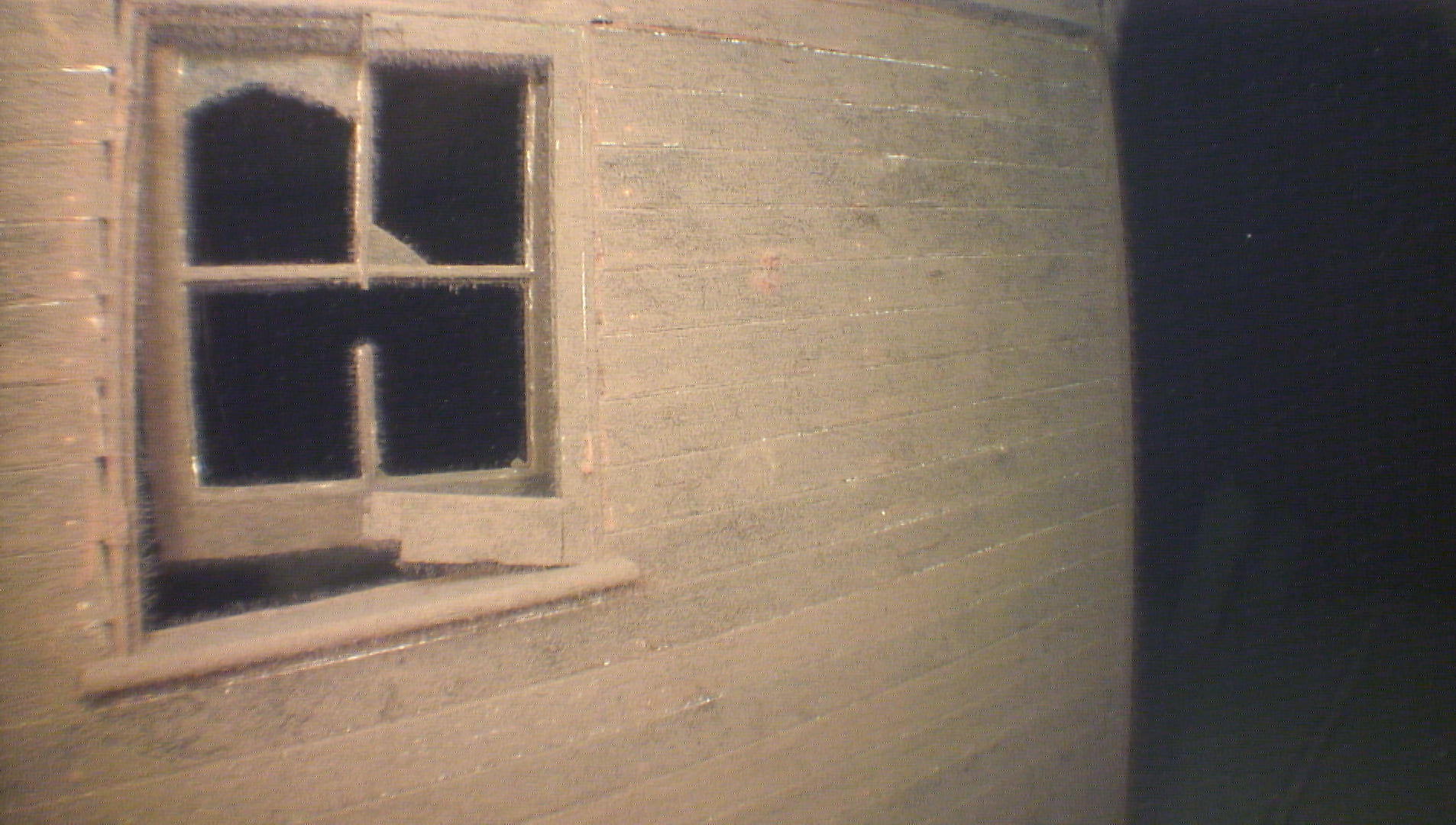
Here is a closer look at each of the discovered shipwrecks courtesy of the GLSHS.
The schooner Dot
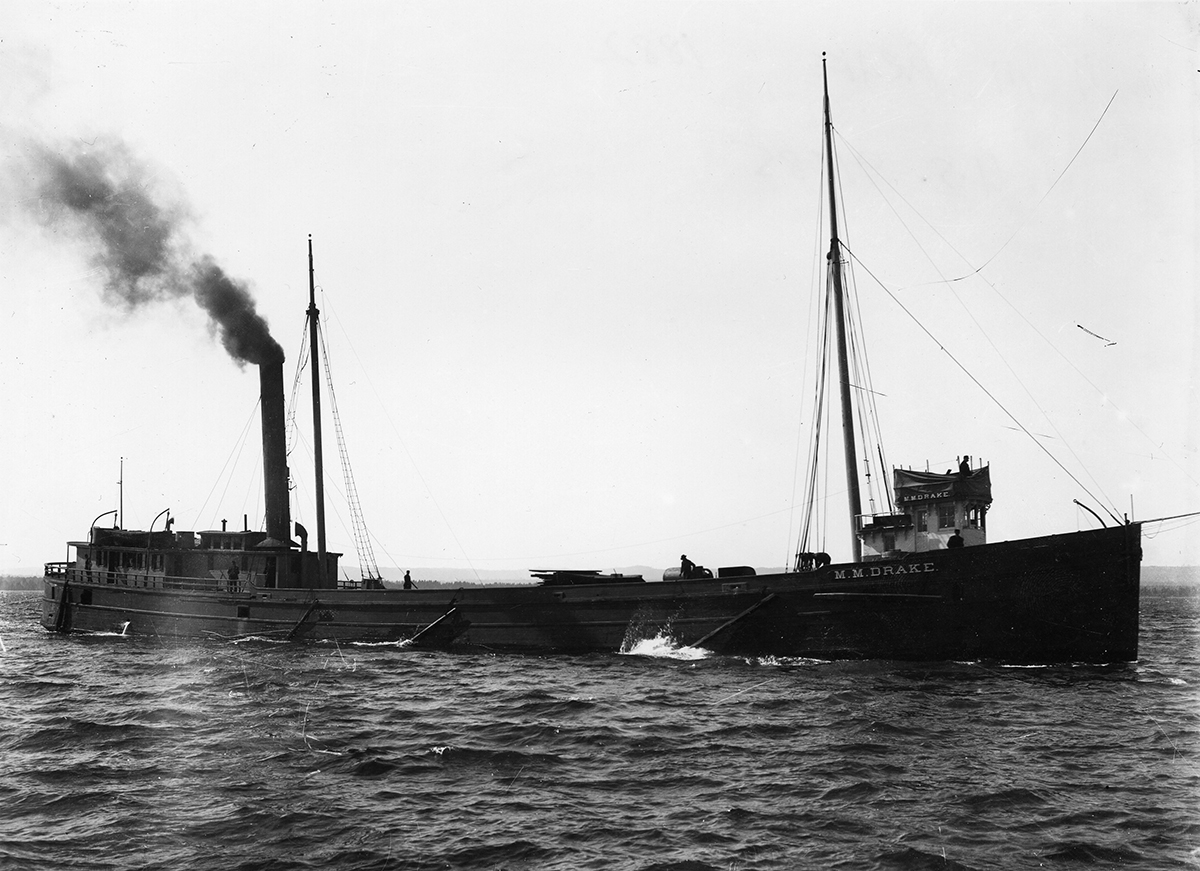
On Aug. 25, 1883, the steamship M.M. Drake was towing the schooner Dot, from Marquette with a load of iron ore, when the Dot started taking on water. The captain hailed the M.M. Drake, which came alongside his sinking ship and took his crew off before it dove for the bottom. All crew were rescued. The Dot, formerly the Canadian schooner, Mary Merritt, was built in St. Catharines, Ontario in 1865. Her remains rest in more than 350 feet of water, according to the GLSHS.
The schooner-barge Frank W. Wheeler
On Sept. 29, 1885, the relatively new schooner-barge, Frank W. Wheeler, was being towed by the steamer Kittie M. Forbes, when a gale swept across the lake. The ships struggled in the worsening conditions for hours and soon the Wheeler’s crew realized that their ship was sinking.
The pair of vessels then tried to reach the safety of Grand Island, near present day Munising, but the Wheeler eventually sunk bow first after the crew escaped in lifeboats. Several explosions were heard as the ship slipped beneath the waves, according to the GLSHS. The Frank W. Wheeler was built in Bay City by the West Bay City Shipbuilding Co. and today her wreckage lies in more than 600 feet of water.
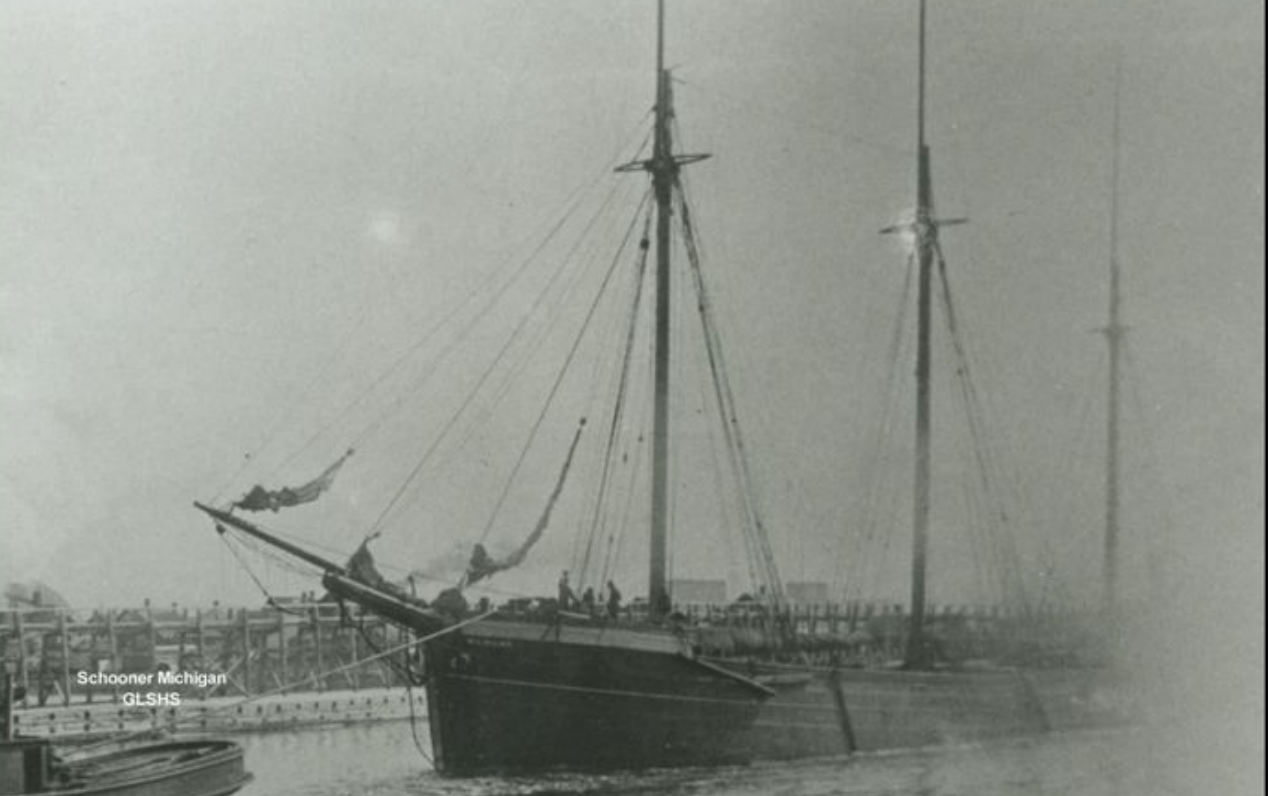
The schooner-barge Michigan
On Oct. 2, 1901, the steamer M.M. Drake was towing the schooner-barge Michigan in the vicinity of Vermilion Point, 12 miles west of Whitefish Point. Both vessels were struggling in rough weather, when suddenly the Michigan’s hold begins filling with water.
The Michigan’s crew eventually jumped from their sinking ship onto the Drake. Within minutes, a massive wave smashes the two vessels together, destroying the M.M. Drake’s smokestack, leaving the ship without steam-pressure.
Without power, the Drake soon lost headway and waves swept over her decks. Both ship’s crews were now in danger, but two large steel steamers, the Crescent City and Northern Wave, were close by and maneuvered-in to rescue the combined crews.
Harry Brown, the Michigan’s cook, was the only casualty in the unusual double sinking. The remains of the M.M. Drake were discovered in 1978 by the Shipwreck Society, and her rudder is on exhibit at Whitefish Point. The Michigan’s hull is in 650 feet of water.
“We have well over 2500 miles of searching this year alone,” said GLSHS Director of Marine Operations Darryl Ertel. “We’re searching 100 miles a day. We’re traveling at over 9 miles an hour as we’re searching and we’re seeing great detail on the bottom, it’s amazing.”
The GLSHS was founded in 1978 by a group of divers, teachers, and educators to commence exploration of historic shipwrecks in eastern Lake Superior, near Whitefish Point in Michigan’s Upper Peninsula.
The Shipwreck Museum is open to the public seasonally from May 1 to Oct. 31.
Toledo’s Glass City River Wall mural gains national attention
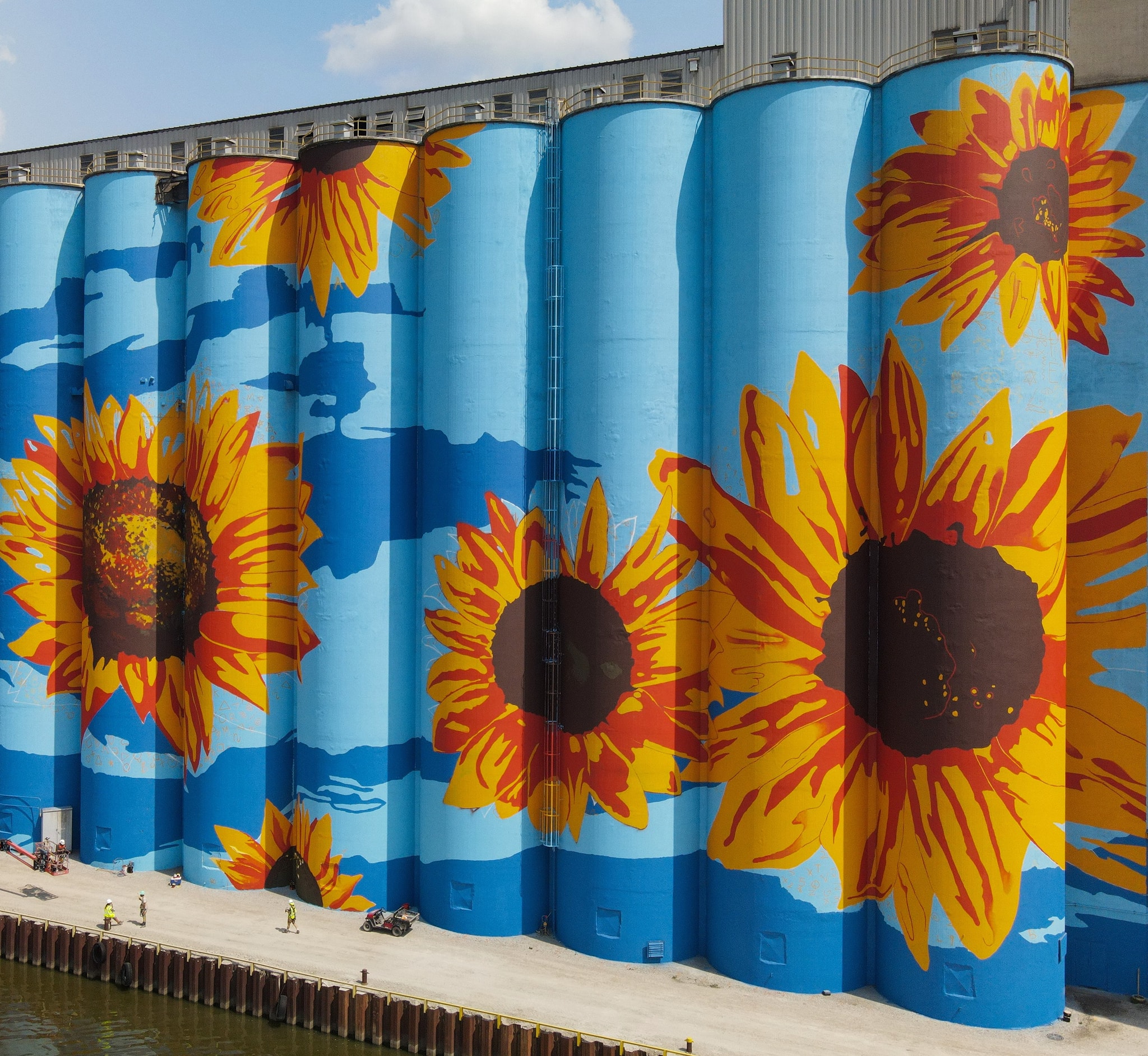
Toledo, OH – A massive mural on the Maumee River received attention on the national stage with a profile on CBS Sunday Morning, featuring the Glass City River Wall from conception to current day in a four-minute segment. The stretch of 28 grain silos, owned by a company called ADM, is being spruced up with a 160,000 sq. ft. mural, featuring sunflowers and swirls of blue.
ADM’s mission is to feed the world – a goal that the art project’s operation manager, Nicole Leboutillier, aligns perfectly with the installation’s theme of the first farmers, Native Americans and economic development. The theme was developed after the Glass City River Wall team, filled with community members of all backgrounds, found a stone monument along the river, commemorating the area as a Native American fortification.
The artwork is being painted by Gabe Gault, a creator out of California. He said he believes he can use his art to tell a powerful story for the Glass City.
“I want to tell a story that is colorful, bold, simple and readable,” he said. “My objective is to offer both an origin story, which honors the original farmers of the region, as well as providing an inspirational image for the future: a cornucopia of abundance and prosperity which speaks to ADM’s corporate governance and philanthropic contributions.”
Leboutillier says this ties into the theme of the mural perfectly.
“Their mission is feeding the world and it tied in really nicely with the fact that this is a project about the first farmers and Native Americans and economic development,” said Leboutillier.
Project manager Christina Kasper said they came up with the theme of the mural after their team found a stone monument along the Maumee River, commemorating the area as a Native American fortification. Kasper said the team knew this was the perfect way to honor Toledo’s Native Americans.
“They were the first farmers in this region. They were the first people to recognize what really makes us prosperous to this day and that is the value of the Maumee River,” Kasper said.
View the CBS segment here: https://www.wtol.com/article/news/local/toledos-glass-city-river-wall-mural-gains-national-attention-cbs-sunday-morning/512-c52670d4-41aa-41ea-b69b-4633575bca8d?fbclid=IwAR0rmVrUkQoYtTl0_S-rLvErr2XjgG4JUpWcquDLqb9FsunWlSP1p7Jzs-o
Dossin Great Lakes Museum to host annual Lost Mariners Remembrance Nov. 10
Detroit, MI – On Nov. 10, 2021, from 6:00 to 8:00 p.m., the Dossin Great Lakes Museum on Belle Isle in Detroit will host its 22nd annual “Lost Mariners Remembrance” in memory of all mariners who have lost their lives on the waters of the Great Lakes.
On the anniversary of the sinking of the Edmund Fitzgerald, a lantern vigil at the Fitzgerald anchor on the grounds of the museum will begin the night. That will be followed by the live Honor Guard escort of a memorial wreath to the Detroit River for receipt by an Honor Flotilla of Great Lakes vessels. A performance by Lee Murdock, Great Lakes balladeer, will follow the wreath ceremony.
In this year’s historical presentation, Detroit Historical Society curator emeritus Joel Stone will give remarks recognizing the many vessels and crew impacted by tragic storms in the year 1871. There will also be a remembrance of Mac McAdam, a long time supporter of the event and the museum, who passed away earlier this year.
While the live-stream is free, there is an admission fee for the in-person event of $5 for Detroit Historical Society members and $10 for non-members. For more details, see https://detroithistorical.org/things-do/events-calendar/events-listing/22nd-annual-lost-mariners-remembrance
Mandatory vaccination required to access Seaway structures – revised
The St. Lawrence Seaway Management Corporation is adopting a mandatory vaccination policy as mandated for the federally regulated marine transportation sector in alignment with Transport Canada guidelines.
As part of that policy, all agencies, administrations, vendors, suppliers, visitors and contractors are expected to be fully vaccinated to have access to our infrastructures, sites and premises starting November 15. To be considered fully vaccinated, an individual must have received the full series of an accepted COVID-19 vaccine or a full series of a combination of accepted vaccines at least 14 full days prior to the visit.
You will be asked to attest to being fully vaccinated prior to entry onto our infrastructures, sites and premises. All current posted sanitary measures like screening, physical distancing and masking remain in effect at all times.
Visitors governed by the Canada Shipping Act and wishing to access the lock’s infrastructures are to follow applicable requirements and timelines as set out by their employers, agencies and administrations.
By following our vaccination policy, you will be doing your part to preserve the health and safety of the marine industry. If you are not vaccinated, we encourage you to do so as soon as possible.
The St. Lawrence Seaway Management Corporation