Tug James Whalen to be recycled and displayed in the future
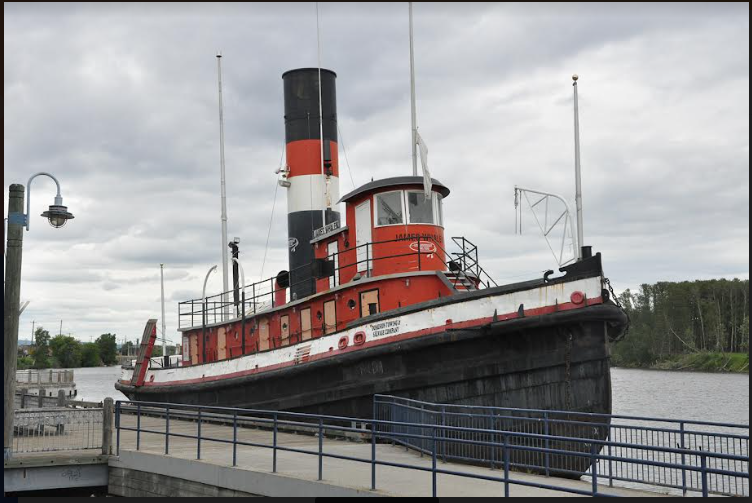
THUNDER BAY – In a seven to five vote, Thunder Bay council has decided to recycle the James Whalen Tugboat and save the entire deck at the request of the Transportation Museum of Thunder Bay.
Wally Peterson, Chairman of the Transportation Museum of Thunder Bay, told Newswatch they are happy that council had voted in favour of recycling the James Whalen.
“We want to try and preserve as much of it as we possibly can and hopefully in the future that it would come to our site and then we could be the ones maintaining and looking after it,” said Peterson.
After a short presentation by Manager of Parks and Open Spaces Corey Halverson explaining this historical significance and outlining the specific area that the park department would like to salvage and restore for a future monument, a lengthy discussion followed with many councillors weighing the cost-benefit of recycling versus disposing of the tug.
Halverson took his report off of the Sept. 9 council agenda because further information was presented by stakeholders about preserving more of the tugboat. Halverson wanted to make sure that his report reflected that information, while still meeting the intended recommendation in the agenda.
His revised report included that after consulting with the Transportation Museum of Thunder Bay they are recommending council consider the entire deck be preserved in one piece.
In light of the conversation with the Transportation Museum, Halverson still recommends that council consider recycling the James Whalen, but adds the Transportation Museum recommendation that the entire deck of the James Whalen be installed at Fisherman’s Park West, but on the condition that the cost would be no greater than 10 per cent above the costs for abatement, environmental remediation, and recycling of the vessel.
Halverson estimates costs for the necessary abatement, remediation and recycling, including the retention of selected pieces, to be approximately $135,000 for abatement and $155,000 for vessel recycling and preservation.
He noted that this estimate can vary, positive or negative, by 30 per cent. However, the total cost can not exceed greater than $415,000.
“We’re looking at approximately $300,000 to preserve select pieces and an EOI to determine whether or not we can include the deck or a reasonable cost, which is 10 per cent of the recycle of the restoration cost,” Halverson told council.
The total cost of disposing of the tub was estimated at $250,000.
Councillor Brian Hamilton was the first to ask Halverson what the final product would look like once the project was completed and the James Whalen found a home, but he wasn’t the last.
Nearly all the councillors around the table wanted to know where the monument’s exact final resting place was, if there were any extra funding opportunities to help supplement the cost of construction, and even if the tourist attraction could be monetized.
City Manager John Collin put all inquiries to rest several times by simply stating that city staff did not know and reminded council that they couldn’t proceed to the next phases of the project until a decision on the recommendation was made.
Staff were asked to provide council with a recommendation on what to do with the historic tug.
Collin pointed out that phase three of the asset management plan was a year away.
“Council will regrettably have to continue to just balance decisions based on public need versus their understanding of the relative impacts of the decision they make,” Colling said. “I cannot give you any more than that in the coming months as to the relative ways of this will go because we just don’t know yet.”
Councillors Mark Bentz and Trevor Giertuga thought the cost was too high on an asset that has been in disrepair for many years and essentially bleeding infrastructure dollars from more important projects.
“I’m all for heritage and I really appreciate the Transportation Museum wanting to maintain these assets,” “Bentz said. “But, when you have an infrastructure deficit of over $30 million per year and in a total of billion dollars, we’re told, do we wanna be spending $300,000 on a tug boat?
“That’s saying obviously we weren’t maintaining it. It’s saying it cost us a million dollars to bring it from the bottom. And now we’re gonna be spending a half million more.”
Bentz and Giertuga all noted that they would rather see the tug disposed of than recycled. Giertuga went as far as to ask for a motion disposes of the tug before council had a chance to attempt to defeat the recommendation.
Hamilton stated that the disrepair of the tug falls council’s shoulders because of a lack of interest; particular, in his “lap” as the councillor of the Mackellar ward for the past six years.
“It’s never come up in any budget to actually invest in the James Whalen before. I wouldn’t rest that up an administration. Those budget directions are ours to own as a council,” Hamilton said.
“So, I think when you’re talking about the fault of the sinking and that expenditure that would fall on council and our ability to kind of have that vision. How we could have had that vision I don’t know how we could have.
“But we didn’t choose to invest in it. We choose to keep taxes low. We chose to invest in other things and what, but ultimately, that falls on us and then to some degree of community.”
TB Newswatch
Agriculture and Steel Lead Great Lakes Tonnage Traffic in 2024, Supported by Innovation and Development at Ports
September 17, 2024 — As summer ends for the 2024 marine shipping season on the Great Lakes and St. Lawrence Seaway, a theme within the statistical reporting has emerged this year: agricultural commodities and steel are leading the way.
As noted in a release recently issued by the St. Lawrence Seaway Management Corporation and the Great Lakes St. Lawrence Seaway Development Corporation, there has been:
- 5.2 million metric tons (mt) of Canadian and U.S. grain traffic, which is up by 277,000 mt or 5.6% year over year;
- 849 thousand mt of Potash traffic, representing an increase of 145,000 mt or 21% year over year; and
- 1.3 million mt of iron and steel traffic, which is up by 347,000 mt or 35% over last year.
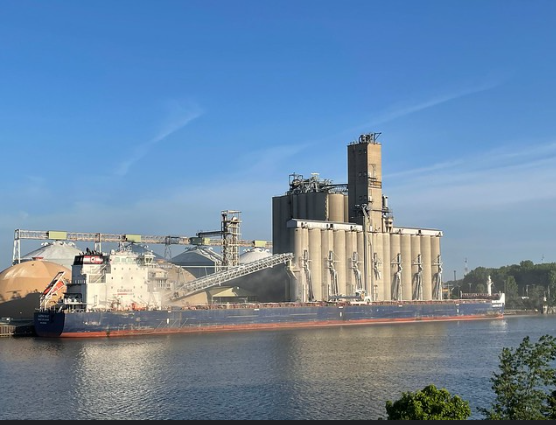
Ports within Chamber of Marine Commerce (CMC) membership are key conduits for moving these and many other vital commodities, and they have met that responsibility with ongoing development and innovation. A good example is the Port of Duluth-Superior, which is the Great Lakes’ largest port by tonnage. Located at the westernmost tip of Lake Superior, the Port of Duluth-Superior is North America’s farthest-inland freshwater seaport, and is home to 20 privately owned bulk cargo docks, an award-winning general cargo terminal, a marine fueling depot, a shipyard with dry docks, multiple tug and barge services, and an intermodal cargo terminal.
In keeping with the Seaway’s 2024 grain gains, Duluth-Superior wheat exports have more than tripled compared to the 2023 pace through August 31. Breakbulk cargo moves have also been a highlight this season, with high, wide and heavy tonnage tracking toward its best finish since 2020. Fortifying the multimodal logistics hub that supports those breakbulk and project cargo moves, the Duluth Seaway Port Authority has invested over $50 million USD in the improvement and expansion of Clure Public Marine Terminal assets since 2015. Part of that effort includes a dock reconstruction project underway this summer that will increase vessel berthing capacity and cargo laydown space.
“Our port plays a vital role in moving critical cargoes to and from North America’s midsection, and doing it efficiently,” said Deb DeLuca, executive director, Duluth Seaway Port Authority. “Modern, resilient port infrastructure is essential to accomplishing that mission, and also for driving success and dependability on the Great Lakes-St. Lawrence Seaway System as a whole, so it’s an ongoing top priority for us.”
“The world can count on marine shipping to be the most reliable and efficient means of moving what matters because CMC members like the Port of Duluth-Superior are investing, innovating, and finding new ways to meet the needs of shippers across diverse industries,” said Bruce Burrows, President and CEO of the Chamber of Marine Commerce. “The ambition and commitment to customer success shown by ports like Duluth-Superior is why I expect marine shipping to lead in these vital areas for many years to come.”
About the Chamber of Marine Commerce (CMC): The Chamber of Marine Commerce (CMC) is a bi-national association that represents diverse marine industry stakeholders including major Canadian and American shippers, ports, terminals and marine service providers, as well as Canadian domestic and international ship owners. The Chamber advocates for safe, sustainable, harmonized and competitive policy and regulation that recognizes the marine transportation system’s significant advantages in the Great Lakes, St. Lawrence, Coastal and Arctic regions.
Flickr – Download photos of the Great Lakes-St. Lawrence shipping industry
https://www.flickr.com/photos/marinecommerce/albums/72157657049769546
Media Contacts:
Jason Card
Chamber of Marine Commerce
jcard@cmc-ccm.com
(613) 447 5401
Biden Administration Invests $300 Million to Modernize U.S. Ferry Systems
Mike Schuler
September 16, 2024
The Federal Transit Administration (FTA) has announced nearly $300 million in grants to expand and modernize ferry systems across the United States.
The funding, part of President Biden’s Bipartisan Infrastructure Law, aims to improve transportation options for millions of Americans who rely on ferries for their daily commutes and travel needs.
“These funds will make it easier for Americans to move about their day while also protecting the rivers and waterways they depend on economically,” said U.S. Transportation Secretary Pete Buttigieg.
The grants will support 18 projects across 14 states, focusing on replacing aging vessels with electric ships, expanding fleets, and constructing new terminals and docks. Notably, eight of these projects will receive federal support for environmentally friendly propulsion technologies.
FTA Acting Administrator Veronica Vanterpool praised the initiative, saying, “This historic funding for FTA’s Ferry Programs will enhance ways for people to travel by water. We applaud ferry agencies for taking the big step toward electrification, increasing reliability, and bringing their aging ferry systems into a state of good repair.”
The funding is distributed across three competitive grant programs: the Ferry Service for Rural Communities Program ($194 million), the Passenger Ferry Grant Program ($56.3 million), and the Electric or Low Emitting Ferry Program ($49 million). These programs aim to boost ferry service in rural areas, modernize urban ferry systems, and promote the adoption of low- and zero-emission technology.
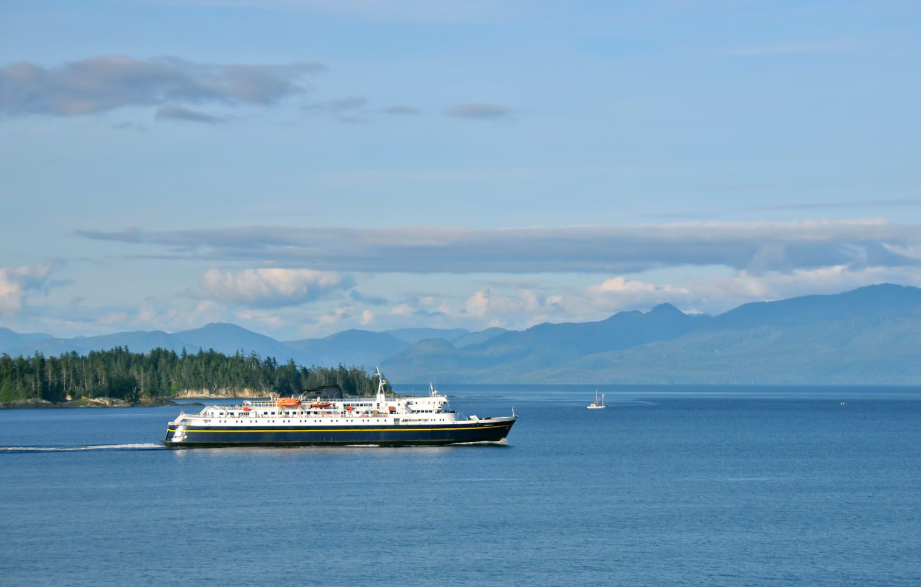
The FTA highlighted three notable project grant awards, including a $106.4 million grant to the Alaska Department of Transportation & Public Facilities for a new diesel-electric ferry to serve rural southwest Alaska, replacing a 60-year-old vessel. In San Francisco, $11.5 million will go towards building two new electric ferries to enhance emission-free service between downtown, Treasure Island, and Mission Bay. Additionally, the Maine Department of Transportation will receive $16.6 million to modernize rural ferry terminals in Lincolnville and Islesboro, supporting the future operation of a new hybrid ferry