Shipwreck peeks out of sand at Lake Michigan beach
Updated: Sep. 06, 2024, 12:32 p.m.|Published: Sep. 06, 2024, 7:00 a.m.
By Justine Lofton | jlofton@mlive.com
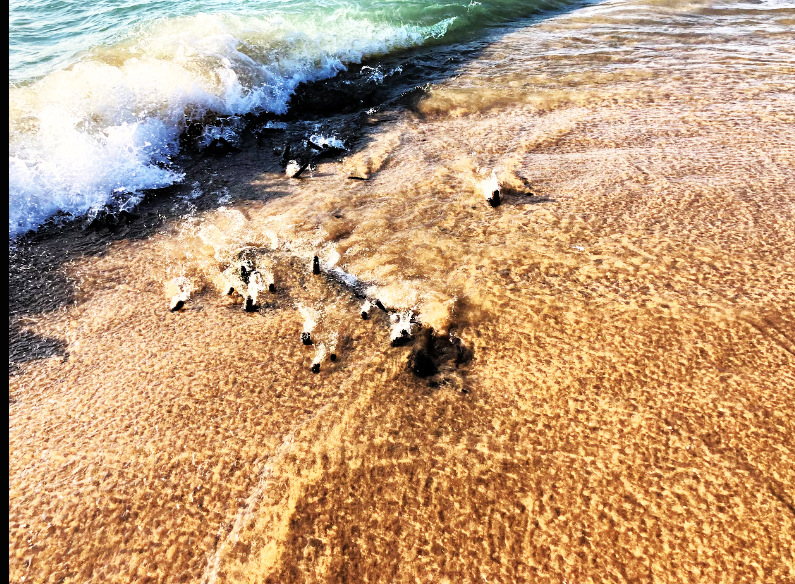
ARCADIA, MI – The remains of this 131-year-old shipwreck are easy to spot as they peek out of the sand along the Lake Michigan shoreline.
The Minnehaha ran aground and was broken apart by waves during October 1893. What’s left rests in two pieces. One part is at Arcadia Beach Natural Area. The other piece is just north of the city beach.
For those planning to drive M-22 for fall color, this is worth a quick detour.
Minnehaha shipwreck at Arcadia Beach
Getting there
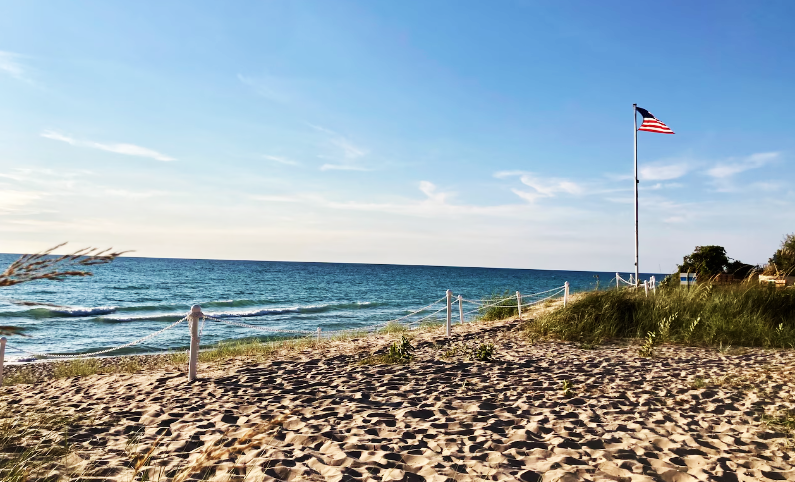
Find this shipwreck just off M-22 in northern Manistee County.
Traveling north on M-22, turn left onto Lake Street in Arcadia and continue west until the road becomes the Arcadia Beach parking lot.
Grab your camera, take off your shoes and head down to the water – a short walk down a small dune.
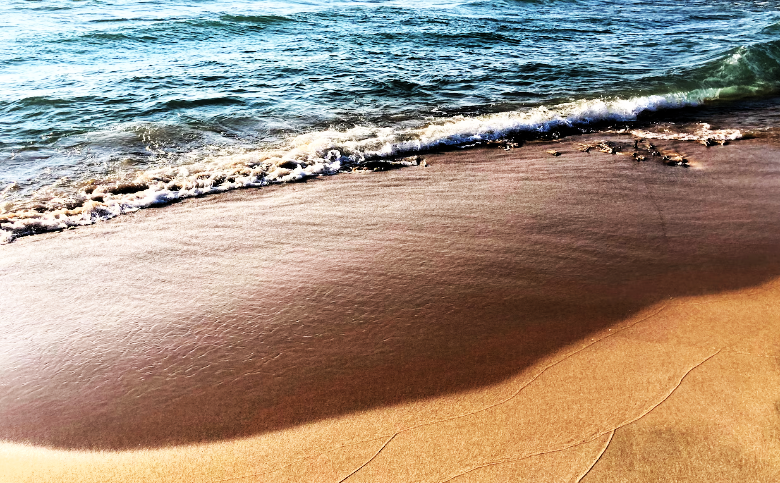
The portion of the wreck that’s at the city beach is almost directly down from the parking lot. Look for dark spots along the shoreline.
To see the other portion to the north, walk through the water to get around a boulder barricade.
The pieces are believed to be part of the starboard side of the hull.
How much of the wreckage is visible and where it lies varies from year to year. Sometimes, large portions are completely out of the water.
Those who find parts of what might be a shipwreck can submit their findings to the Michigan State Historic Preservation Office by filling out this form. https://docs.google.com/forms/d/e/1FAIpQLSfdyFdJo2LpT_NCoxpuCgQ6CnS6FzHE12X-zGaYHo_FUBbYqA/viewform?pli=1
Minnehaha shipwreck at Arcadia Beach
Minnehaha
The Minnehaha met its fate in a fall gale. Only the captain survived.
The 199-foot-long, 40-masted schooner was among the biggest of its time on the Great Lakes, according to the Michigan Shipwrecks Research Association. It was built in 1880 in Gilbraltar.
On its final journey, the Minnehaha was being towed by the steam barge Henry J. Johnson, according to the Arcadia Area Historical Society. The schooner was carrying 58,000 bushels of corn from Chicago to Point Edward, Canada, at the south end of Lake Huron.
On the evening of Oct. 13, 1893, the two ships were off Point Betsie near Frankfort when they were caught in 90 mph gale, according to the historical society. By morning, they were still fighting the winds and waves, working to stay out of shallow water.
The ships were near Frankfort when high waves crashed over the Minnehaha’s deck and smashed two hatch covers, according to the historical society. The hold began to fill with water. Capt. William Parker sent up distress signals, released the tow lines and headed for the beach. It ran aground about a quarter mile offshore near Arcadia.
To escape the waves sweeping over the deck, most of the crew climbed into the ship’s rigging, according to the historical society. One crew member attempted to swim to shore and drowned. As the ship broke apart, the captain instructed the crew to grab onto anything that would float. The captain was the only one to survive.
Those lost include John Rafferty, John Rafferty Jr., Mary Keefe, William Ahlstrom and two unknown sailors, all of Cleveland, according to the historical society.
Corn washed ashore for several days, according to the historical society.
Arcadia Beach Natural Area
The beach is part of Manistee County’s Explore the Shores network designed to provide barrier-free access, education and a connection to recreation and fishing.
Amenities include an accessible platform with benches and charcoal grills and at the top of the beach – a perfect spot to watch a sunset over Lake Michigan. It also has two accessible vault toilets, a small playground with swings and a slide, a Mobi-mat to access the shoreline and an information kiosk.
National Museum of the Great Lakes Second
Wave Capital Campaign Nears Completion
Toledo, OH – The National Museum of the Great Lakes is entering a new chapter as its Second Wave expansion project progresses. With the foundation set and structural build underway, the museum is reaching out to the community for a final push of support. Now is your chance to contribute to the future legacy of this historic institution.
The Second Wave expansion will add 5,000 square feet of new space, allowing the museum to showcase traveling Smithsonian exhibits, introduce new permanent exhibits, and create dedicated spaces for community education.
“By supporting this campaign, donors are actively preserving Great Lakes history, fueling ongoing education, revitalizing our neighborhood, and boosting the economic vitality of our region,” said Kate Fineske, Executive Director of the National Museum of the Great Lakes.
Donations can be made online at nmgl.org/thesecondwave or by calling the museum at 419-214-5000. Contributions of all sizes are welcome, and donors will receive exclusive Second Wave thank you gifts as a token of appreciation. Donors contributing more than $500 will also be recognized on our donor wall.
“This is the moment to make a lasting impact on our museum and the communities we serve,” said Sara Smith, the Museum’s Director of Institutional Advancement. As we conclude our public campaign, join in this effort and ensure the National Museum of the Great Lakes remains a beacon of pride and inspiration for generations to come. For more information or to make a donation,
The National Museum of the Great Lakes