Boatnerd News
Boatnerd News – July 21, 2023
Apron issue causes Badger to cancel sailings
UPDATE: Departures through July 27th canceled.
UPDATE: Please see press release in the gallery below.
LUDINGTON, MI – Travel aboard the SS Badger has been halted due to an issue in the car ferry’s loading area on Friday morning.
Sailing was called off for the day, and Lake Michigan Carferry is unsure when it will resume, according to a statement on social media. “We had a problem with our apron this morning so we will not be able to load anything onto the ship,” the statement read.
The situation is still being evaluated. Passengers are asked to call 1-800-841-4232 to reschedule or get a refund.
Ludington Daily News
Benefit-to-cost ratio of Soo Locks project bumped up
The U.S. Army Corps of Engineers, Detroit District New Lock at the Soo project fiscal year 2023 (FY23) Supplemental Economic Update has been approved with a policy-compliant Benefit Cost Ratio (BCR) of 2.1 at the 2.5 percent Federal Discount Rate, allowing the Corps of Engineers to more accurately document benefits and analyze the value this project will bring.
“The economic update was completed to evaluate critical assumptions and uncertainties in the BCR, justification of the project was not in question,” Mollie Mahoney, senior new lock project manager said. “The primary focus was on updating the benefits identified in the 2018 Validation Study, including the cost estimate for the Escanaba Build Out.”
The 2018 outdated cost estimate for the hypothetical Escanaba Build Out required a robust reevaluation. The cost of the Escanaba Build Out included expansion of the Port of Escanaba and associated rail infrastructure from Duluth to Escanaba as well as operation and maintenance costs. To calculate the BCR, the U.S. Army Corps of Engineers updated and evaluated the hypothetical plan of constructing the Escanaba Build Out to calculate what the costs of an alternative mode of transportation would be in the case of an unscheduled Poe Lock outage to derive the benefits.
“Construction of the New Lock at the Soo has continued through the economic update based on the total project benefits and criticality to the nation,” said Mahoney. “Resiliency of the Soo Locks is vital to America’s economic and national security.”
The economic update, including the new BCR of 2.1 (at 2.5 percent Federal Discount Rate for FY23), further emphasizes the justification of the project and its value to the nation.
With the updated BCR and more accurate comparison of benefits to cost, the New Lock at the Soo project will continue to follow the agency’s budgeting process for project implementation and should compete more favorably with other construction projects throughout the country.
The Supplemental Economic Update is an addendum to the FY22 Post Authorization Change Report and was conducted by the Corps of Engineers.
To find more information on the New Lock at the Soo, visit the Detroit District website.
U.S. Secretary of Transportation and Canadian Minister of Transport to join marine shipping industry in release of comprehensive economic study
U.S. Secretary of Transportation Pete Buttigieg and the Honourable Omar Alghabra, Minister of Transport for the Government of Canada, will join Administrator of the Great Lakes St. Lawrence Seaway Development Corporation Adam Tindall-Schlicht, President and Chief Executive Officer of the St. Lawrence Seaway Management Corporation Terence Bowles, and John Martin of Martin Associates for the release of a comprehensive economic study via a virtual event. The study provides an assessment of the contributions made by commercial maritime shipping in the Great Lakes and St. Lawrence region to the bi-national, national, and state/provincial economies, which is intended to help inform future policy and investment decisions that facilitate trade and economic growth, strengthen supply chains, and make transportation more sustainable. Key statistics captured in the study include jobs and wages, economic activity, tonnages volumes, and taxation generated.
Date and Time:
The virtual event for the release of the study will be held on Friday, July 21 at 11:00 a.m. Those attending the event are asked to register in advance at https://www.meetview.com/
The event will be broadcast in 1080p resolution, and a video recording of the event can be made available to media as of 4:00 p.m. EST provided they request a copy in advance. Requests for video recordings can be advanced to the communications contacts provided in this advisory.
A technical briefing will be provided to media in advance of the event via a virtual session at 9:30 a.m. (i.e. 90 minutes prior to the event). Media planning to attend are asked to pre-register via https://www.meetview.com/
Chamber of Marine Commerce
#gallery-1 { margin: auto; } #gallery-1 .gallery-item { float: left; margin-top: 10px; text-align: center; width: 33%; } #gallery-1 img { border: 2px solid #cfcfcf; } #gallery-1 .gallery-caption { margin-left: 0; } /* see gallery_shortcode() in wp-includes/media.php */
-
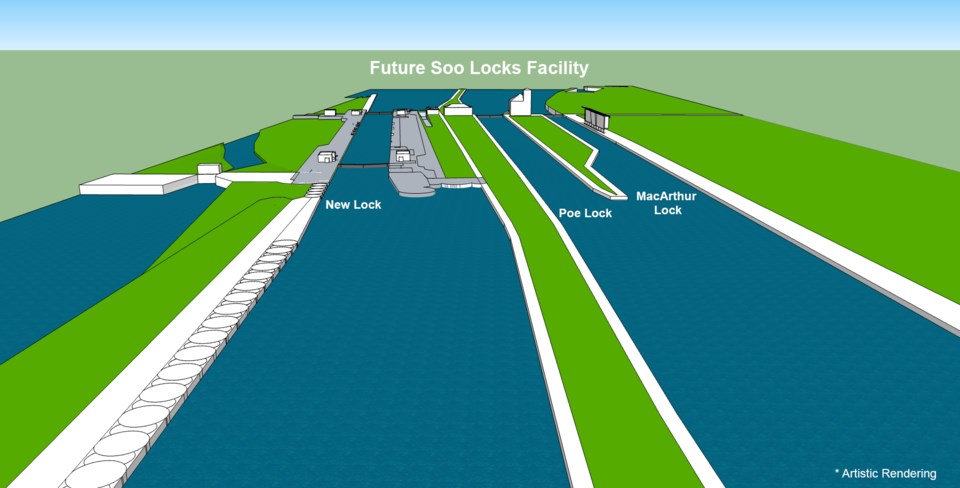
- Rendering of the new Soo Locks project. U.S. Army Corps of Engineers
-
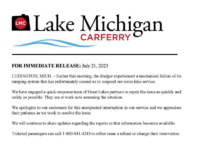
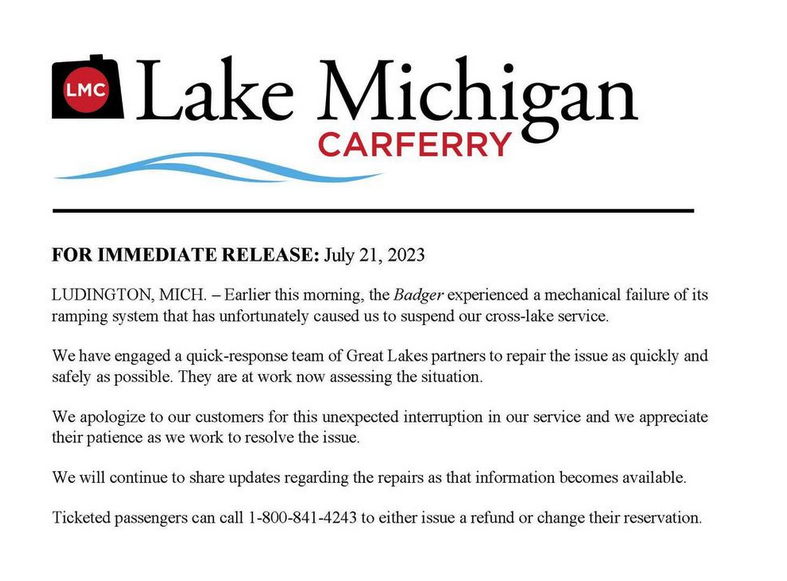
- Press release from Lake Michigan Carferry.
-
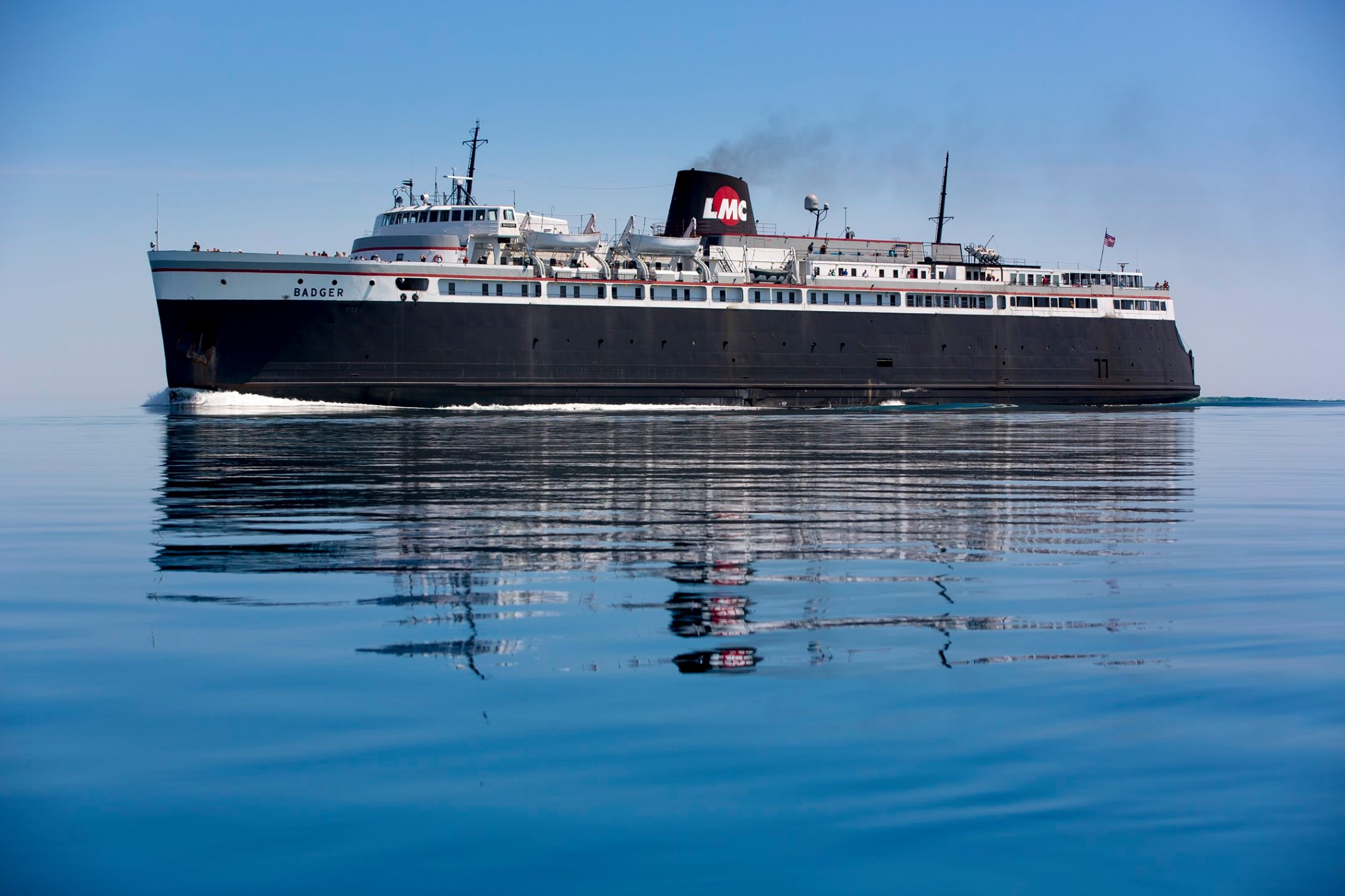
- Badger cruises along on Lake Michigan. Lake Michigan Carferry
Boatnerd News – July 20, 2023
Port Milwaukee and DeLong Company open new agricultural export facility
A new shipping facility for agricultural products — expected to generate $63 million in statewide economic impact each year — officially opened in Port Milwaukee Tuesday.
The $40 million Agricultural Maritime Export Facility is one of the first facilities in the Great Lakes-St. Lawrence Seaway to move bulk agricultural exports, including dried distillers grains — a byproduct from beer and ethanol production that is used in livestock feed — through intermodal transportation. Instead of sending products down the Mississippi River, Wisconsin farmers and businesses can now send their products by truck or rail directly to the facility where they will be loaded onto international shipping vessels.
“This new facility will have a tremendous impact here and around the state,” Gov. Tony Evers said during a ribbon cutting ceremony Tuesday.
Local, state and federal officials are hopeful the project will create jobs and grow the regional economy. Evers said he believes the facility, which will be operated by Clinton-based agricultural supplier The DeLong Co., will benefit farmers and the agriculture industry for years to come.
“This project has been a win for local jobs, both during the construction process and now to keep this multi-million dollar facility up and running,” Evers said. “This new facility is a win for the state and local economy as well. It will generate tens of millions of dollars in statewide economic impact each and every year.”
The DeLong Co. helped develop the new facility, which began construction in 2021 on Jones Island. The public-private partnership is the largest one-time investment in Port Milwaukee since the 1950s. The project was funded by a federal grant from the U.S. Department of Transportation, private funds from The DeLong Company, grants from the Wisconsin Department of Transportation and funds from Port Milwaukee.
Port Milwaukee Director Jackie Q. Carter said she’s excited the facility will allow the port to export more agricultural goods, which will be brought to the port, stored in there and then shipped out to markets across the globe on vessels and barges.
“We’re proud that we can say that Milwaukee has, right here in our city, a great resource for growers and producers all across this region to be able to get those products to those markets where they’re needed,” Carter said.
The facility will primarily handle dried distillers grains and other grains and feedstuffs from across the state and the Midwest. It can store 30,000 metric tons of dried distillers grains, or 45,000 metric tons of soybeans. Dried distillers grains are a major coproduct from the production of ethanol from grain, according to the United States Department of Agriculture. They’re typically used as animal feed.
The DeLong Co. moves about $1 billion worth of agricultural exports annually and will now be able to do that directly from Wisconsin, while reaching new markets in Europe and northern Africa. Prior to the opening of the facility, only partial vessels of feedstuffs could be loaded onto the Great Lakes.
Carter anticipates the facility will increase tonnage moving through the port by about 400,000 metric tons.The port handled about 2.3 million metric tons last year, which was down about 5 percent from its five-year average.
Milwaukee Mayor Cavalier Johnson said the project will benefit both the region and the state’s economy.
“Now, Wisconsin’s agriculture industry will have a new resource, right here in Milwaukee, to move their products not just around the state, but to markets around the entire globe,” Johnson said.
Wisconsin Department of Transportation Secretary Craig Thompson said Port Milwaukee is the third-largest exporter of grain on the Great Lakes.
“The export facility that we’re opening here today will expand that impact even further,” Thompson said. “This is an important new resource for both shipping and agriculture, and its impact will be felt statewide.”
#gallery-2 { margin: auto; } #gallery-2 .gallery-item { float: left; margin-top: 10px; text-align: center; width: 33%; } #gallery-2 img { border: 2px solid #cfcfcf; } #gallery-2 .gallery-caption { margin-left: 0; } /* see gallery_shortcode() in wp-includes/media.php */
-
- Local, state, and federal officials join The DeLong Co. during a ribbon-cutting ceremony at Port Milwaukee. Evan Casey
Boatnerd News – July 19, 2023
McKeil Marine welcomes new addition to fleet
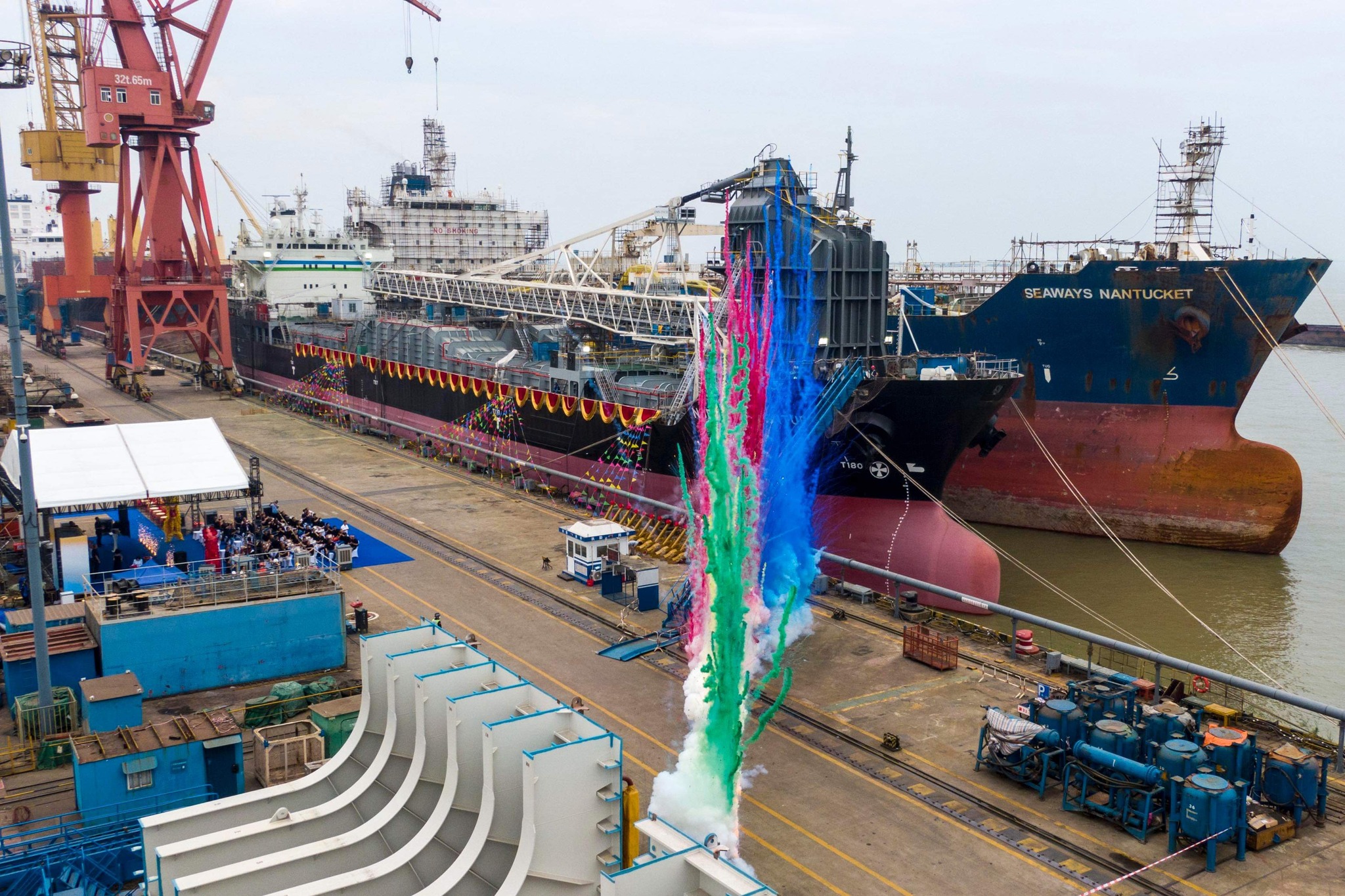
Our friend Andrea Guerriero from DRE Designs has the inside scoop on the new Northern Venture, a former saltie refitted for Great Lakes trade as part of McKeil Marine’s domestic fleet. See below for a Facebook update, photo gallery, and video post from the renaming ceremony!
Unlikely bond between luxury cruise line, Great Lakes climate scientists
Three years ago, Viking, the luxury cruise line, struck a deal with the National Oceanic and Atmospheric Administration to launch passenger cruises on the Great Lakes with a scientific bent.
This summer, Viking crews, NOAA researchers and passengers paying anywhere from $6,000 to $38,000 are exploring the waters around Michigan, Minnesota, Wisconsin and Ontario on two specially designed ships while performing high-stakes climate research.
“They’re not casual cruises as you would normally think, where everyone’s sitting by the pool having a drink and stuff like that,” said Bryan Mroczka, the partnership’s science director who is also a physical scientist with NOAA’s Great Lakes Environmental Research Laboratory.
“There are science lectures all day, people are engaged, hands on with some of these science experiments where they can safely do so,” he said.
The cruises, now in their second year, hold benefits for both parties. It provides Viking entry into the increasingly competitive Great Lakes cruise industry, where it can market “citizen-based science” expeditions to affluent, eco-conscious travelers. For NOAA and its Great Lakes laboratory, the ships provide a floating laboratory for ongoing research.
Mroczka said NOAA is happy with the results even as he acknowledges the partnership continues to be a work in progress. The venture is run through the Michigan-based Great Lakes lab, one of seven operated by NOAA. Much of Mroczka’s work centers around communicating between researchers from NOAA and Viking and ensuring they have the right materials.
Viking officials did not make themselves available for comment on the partnership. But in a press release from May, Viking said the deal allows the company to “further develop the scientific enrichment program for its Great Lakes voyages.”
Among the challenges, said Mroczka, are maritime rules that regulate transportation in the U.S. involving an international ship. (The two Viking ships are based in Switzerland.)
He noted, for instance, that under the Jones Act, passed after World War I to protect the economic interests of the U.S. maritime industry, cargo and passengers transported from one U.S. port to another need to be ferried by an American crew on an American ship.
“This was a learning experience for a lot of us…(with) multiple legal barriers that have slowed things down,” Mroczka said. “We’ve been working very hard to figure out ways to work with these laws and still be able to get the science that we need.”
The two Viking ships take a variety of paths, such as the “Niagara and the Great Lakes” tour, an eight-day excursion that takes passengers from Toronto to Niagara Falls, Point Pelee, then into U.S. waters in Detroit, to Alpena’s Thunder Bay, Mackinac Island and ending in Milwaukee.
The partnership launched last year, when Octantis was the lone Viking vessel setting sail in the Great Lakes. The Viking Polaris became the second this past May, allowing NOAA to double experiments and data gathering. Each ship can carry up to 378 guests in 189 staterooms.
The first scientific projects went well, Mroczka said: “Weather balloons started to fly, water samples were taken continuously and that data is being looked at as we speak.”
Researchers are focused on measuring the impact of climate change on the Great Lakes, which includes weather balloons, which transmits data to the National Weather Service to assist with forecast models. Information from the weather balloons changes as the ship travels, which makes it different from traditional weather balloons in which the location remains static.
Stephanie Gandulla, resource protection coordinator for the Thunder Bay Marine National Sanctuary in Alpena, said the sanctuary has also benefited from the Polaris and Octantis cruise ships coming ashore.
The Thunder Bay sanctuary was created in part to protect a collection of known shipwrecks in the area through the National Historic Preservation Act. She estimates there are another hundred shipwrecks to be found and said if the deal between NOAA and Viking continues, the ships will help the sanctuary increase its ability to provide visualizations of the lake floor and possibly even identify additional shipwrecks.
“Lakebed 2030 is the initiative to map the Great Lakes (lakefloor) to high resolution by the year 2030,” Gandulla said. “That is something kind of surprising that we’ve only mapped less than 20 percent to high resolution. It’s been mapped for navigation purposes, but as far as for other science purposes — understanding fisheries, habitat, and map looking for shipwrecks — there’s still a lot of work to be done.”
Mroczka said the agreement between NOAA and Viking is set to last until 2025, but he said that does not mean that’s when it will end. Future projects are being considered but most of the focus is on current research.
“Now that a lot of people have seen how the process works and hopefully that next data call for projects will be streamlined and develop faster than the first time,” Mroczka said. “But this partnership is moving forward and it’s got a bright future.”
#gallery-3 { margin: auto; } #gallery-3 .gallery-item { float: left; margin-top: 10px; text-align: center; width: 33%; } #gallery-3 img { border: 2px solid #cfcfcf; } #gallery-3 .gallery-caption { margin-left: 0; } /* see gallery_shortcode() in wp-includes/media.php */
-
- Northern Venture, the newest addition to McKeil Marine’s domestic fleet, is seen pictured in the foreground during her renaming ceremony in Nantong, China. McKeil Marine
Boatnerd News – July 18, 2023
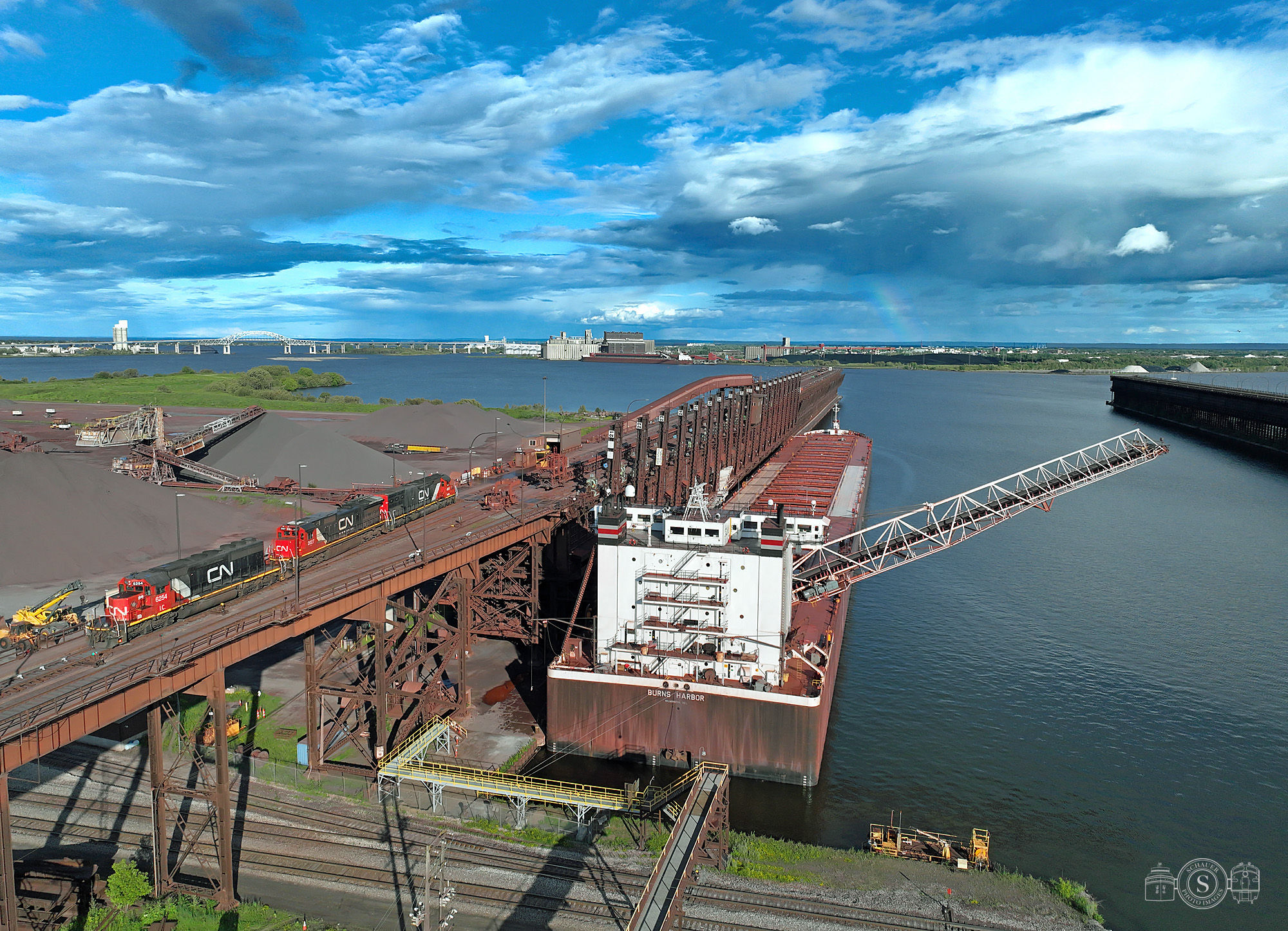
Iron ore and steel setting the pace for US Great Lakes shipping through month of June
Consistency in a resilient economy has been the theme to date for US Great Lakes Shipping thus far in 2023, as approximately 12 million tonnes of total cargo traffic have now transited the seaway system for the year to date – virtually identical to the same period in 2022.
Iron ore and coal, two key commodities for steel making, showed strong traffic numbers, with more than 2.3 million tonnes of iron ore moving through the system thus far (a year over year increase of almost 9 percent), and 769 thousand tonnes of coal transiting the system (a 44% increase). In addition, 193 thousand tonnes of steel slabs traveled the system – more than ten times the amount as last year.
TheToledo-Lucas County Port Authority is one of the key ports managing some of this traffic, having already handled 3.8 million tons of cargo year to date.
“In addition to handling cargo, the terminals are busy working with our Port Authority to coordinate construction projects that will upgrade the Port’s infrastructure and capabilities for years to come,” said Joseph Cappel, VP of Business Development for the Toledo-Lucas County Port Authority. “We are roughly 50% complete with the reconstruction of our main dock wall at our general cargo facility operated by Midwest Terminals. Additionally, the foundations are now in place for a new liquid bulk transload facility at that same terminal. Through this process, we are literally laying the groundwork for additional cargo handling opportunities at the Port of Toledo.”
The total project cost for the dock wall and liquid transload projects represents a $24 million investment in the port’s infrastructure.
“The focus and dedication that the Chamber of Marine Commerce’s members are putting into upgrading their facilities for the future is what will keep the marine mode at the forefront of all discussions related to sustainable economic growth,” said Bruce Burrows, President and CEO of the Chamber of Marine Commerce. “The enhancements at the Toledo-Lucas County Port Authority are a great example of the visionary thinking that will ensure supply chain capacity will meet business and consumer demands in a safe, sustainable, and efficient manner for many years to come.”
#gallery-4 { margin: auto; } #gallery-4 .gallery-item { float: left; margin-top: 10px; text-align: center; width: 33%; } #gallery-4 img { border: 2px solid #cfcfcf; } #gallery-4 .gallery-caption { margin-left: 0; } /* see gallery_shortcode() in wp-includes/media.php */
-
- Burns Harbor takes on ore at Duluth, MN’s CN Dock 6. David Schauer
Boatnerd News – July 17, 2023
Offer to save leaking World War II ship by city of Muskegon rejected
MUSKEGON, MI – A nearly $3 million proposal by the city of Muskegon to save a leaky World War II museum ship has been rebuffed by the ship’s owner.
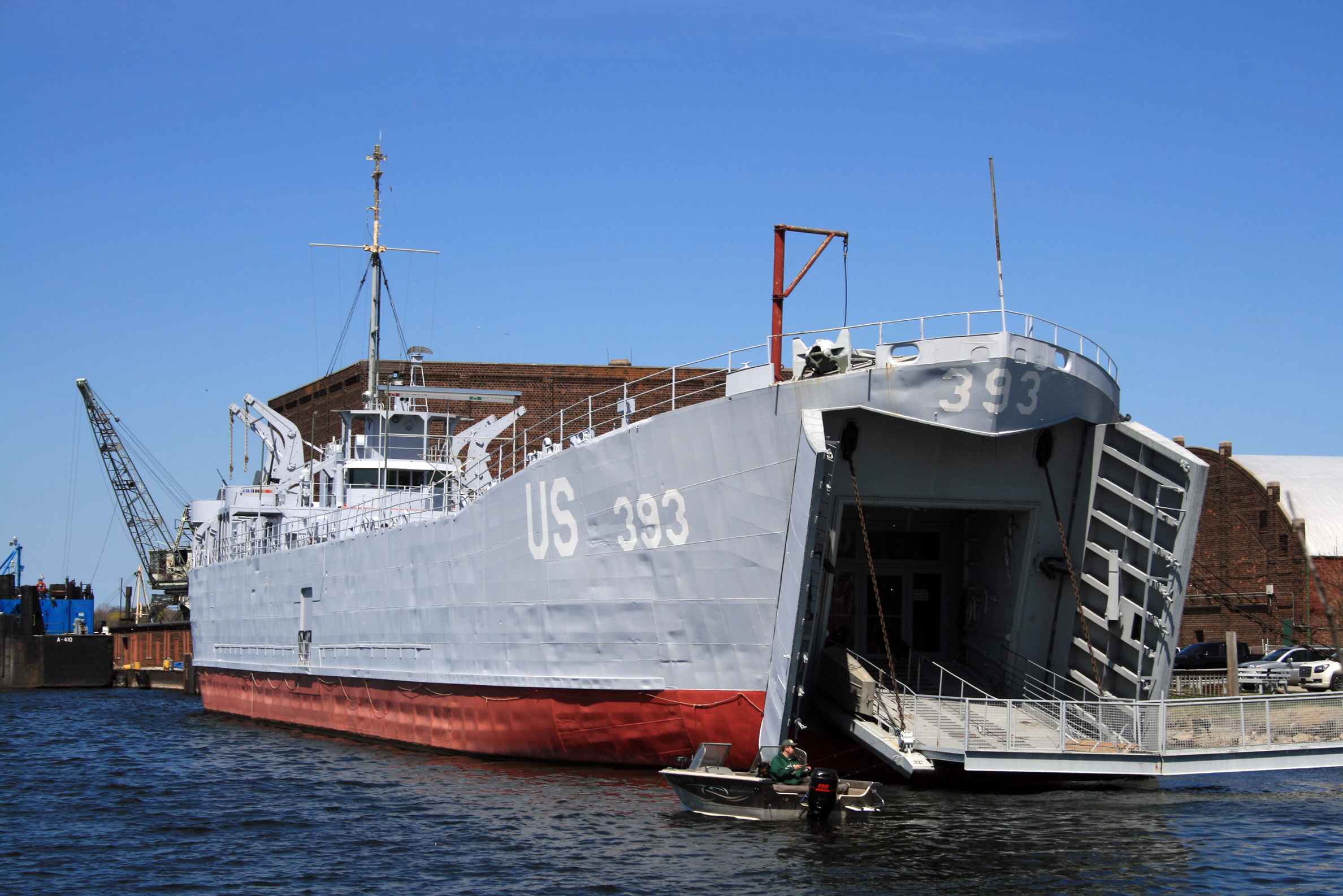
The city of Muskegon offered a couple of times to use $2.8 million in grant funding to buy property at the end of Third Street and bring the USS LST 393 ashore there. The property is owned by West Michigan Dock & Market (Mart Dock), a subsidiary of Sand Products Corp. that owns the ship.
Mayor Ken Johnson called the offer a “win-win.”
Sand Products CEO Max McKee and LST museum officials recently said the hull of the rare “landing ship tank” is taking on water and the ship is in jeopardy of sinking with all of its historic artifacts on board. It needs to be taken out of the water to preserve it, they said.
But McKee told MLive/Muskegon Chronicle he’s not interested in selling his property at the end of Third Street because he prefers to trade it for the city’s Fisherman’s Landing campground. Such a land swap has been contemplated, but it’s complicated by a prior state grant and could take more than a year to accomplish.
“Why should we be obligated to sell property?” McKee said when asked why he turned down the city’s proposed purchase. “We don’t like to sell property. We think property appreciates. It’s an investment.”
Johnson told MLive/Muskegon Chronicle he believes the city’s purchase of the property and relocation of the ship could create a park-like “wharf” for which the city received state “enhancement grants.” Those grants need to be spent fairly soon, though there’s no set deadline, he said.
“They say, ‘The ship is taking on water and it needs to be addressed. It’s essentially an emergency situation,’” Johnson said. “Well, here’s a solution to your emergency situation. It doesn’t need to be tied into the complex (land swap) deal that isn’t going to get done anytime soon. Here’s a win-win.”
McKee has his eyes on the campground as a location to which he could move his commercial port operations. Eventually, he’d like to construct a mixed commercial/residential development at the Mart Dock, which is located on prime Muskegon Lake shoreline. It’s also where the LST 393 currently is docked.
He said moving the LST on shore near where it’s currently docked isn’t an option because it wouldn’t fit in with those development plans.
The LST 393 is one of two surviving landing ships built during World War II. The ship was involved in the D-Day invasion of Normandy, to which it made 30 trips, as well as other battles.
It was purchased by Sand Products in 1948 and used as the Highway 16 car ferry to Milwaukee until the early 1970s. Restoration of the ship to its wartime appearance and the opening of the museum occurred about 20 years ago. USS LST 393 Veterans Museum is operated by an independent nonprofit group that leases the ship from Sand Products.
About eight months ago, breaches in the LST’s hull were repaired, but museum officials say it continues to deteriorate and the only way to preserve the ship is bring it ashore.
“Historic warships, especially the World War II ones, are sinking around the world,” museum Executive Director Jim Flood told MLive/Muskegon Chronicle earlier. “They have a finite life span and eventually the hulls give out.”
The city and McKee had been working on a land swap that would involve the city acquiring the Third Street property in exchange for the campground. But the land swap is complicated because the city used Michigan Department of Natural Resources Trust Fund money to develop Fisherman’s Landing.
If it was to get rid of the campground, the city would need to replace it with comparable property through a state-approved “conversion” process.
In November 2022, the city commission hired Ramboll, an engineering firm out of Ann Arbor, to develop a preliminary proposal for the state on the conversion of the Third Street Wharf and Fisherman’s Landing properties. Ramboll also was to look into several other properties that could require conversion. At that time, city staff said such conversion processes take at least a year to complete.
Meanwhile, the city has money to spend and McKee has a historic boat in jeopardy of sinking.
McKee said he would be willing to lease or sell a portion of the Third Street property onto which the city could move the LST. He believes the $2.8 million in grants were intended for moving the LST.
But Johnson said the money was intended for a park and wharf of which the LST could be a part. Leasing the property won’t satisfy terms of the grant, nor would it likely spend it all, he said.
Johnson remains interested in getting port operations moved out of downtown so the Mart Dock can be redeveloped, which he said was the main reason he agreed to pursuing a swap for the campground. It’s feasible that even if the land swap doesn’t go through that McKee could still acquire the campground a different way, Johnson said.
Meanwhile, the city continues to look for property for its wharf project.
#gallery-5 { margin: auto; } #gallery-5 .gallery-item { float: left; margin-top: 10px; text-align: center; width: 33%; } #gallery-5 img { border: 2px solid #cfcfcf; } #gallery-5 .gallery-caption { margin-left: 0; } /* see gallery_shortcode() in wp-includes/media.php */
-
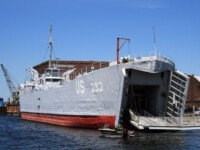
- WWII vet USS LST 393 sits at her dock as a museum ship in Muskegon, MI. Brendan Falkowski
Boatnerd News – July 16, 2023
Great Lakes Fest at National Museum of the Great Lakes on horizon
Great Lakes Fest—Fun for the Whole Family!
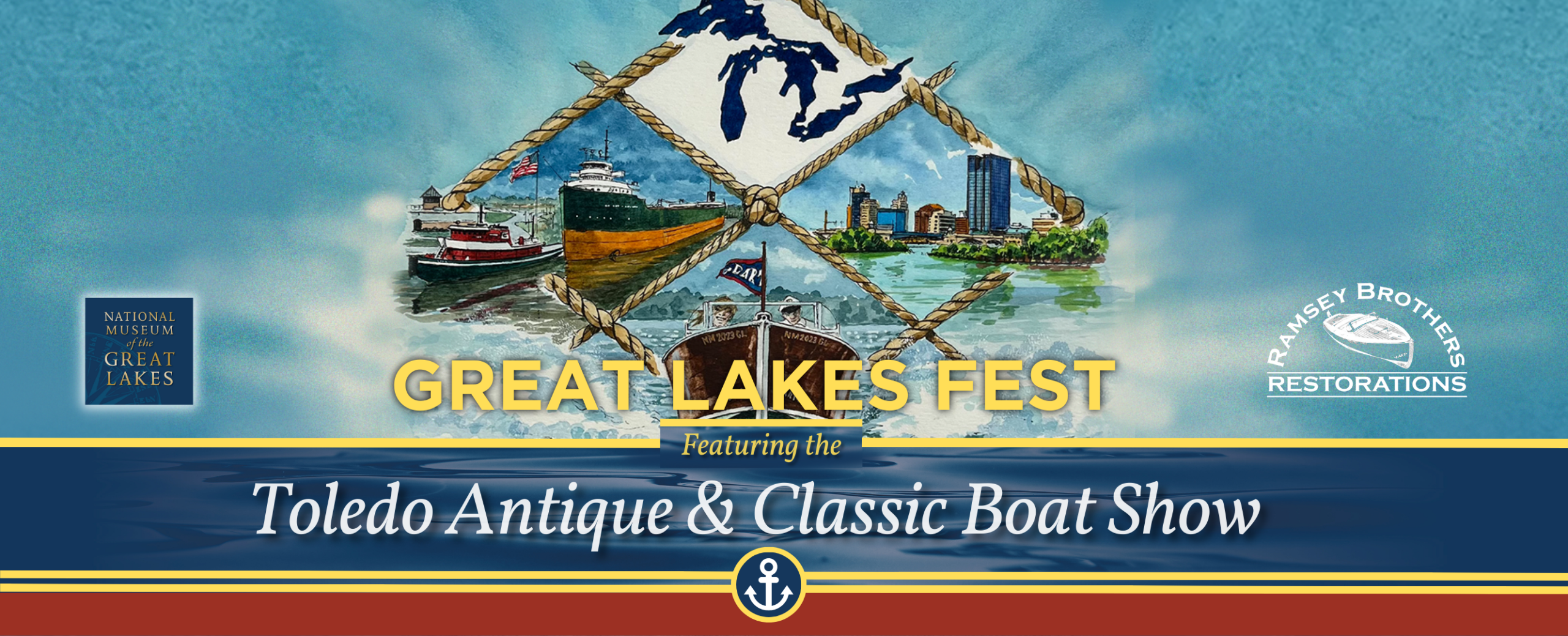
Get ready for a day-long celebration of Great Lakes history! On Saturday, July 22, from 10 am to 5 pm, the National Museum of the Great Lakes is teaming up with Ramsey Brothers Restorations to host Great Lakes Fest featuring the Toledo Antique and Classic Boat Show.
- Explore a stunning collection of classic and antique boats
- Discover environmental education and stewardship opportunities
- Get a bite to eat from a local food truck
- Take your kids on a scavenger hunt aboard our museum vessels
- See demonstrations by the Toledo Fire Department and more
Great Lakes Fest Admission
Great Lakes Fest admission includes entrance to the National Museum of the Great Lakes museum and museum ships as well as full access to the Toledo Antique and Classic Boat Show.*
- NMGL Members: FREE
- All Children 5 and Under: FREE
- Non-member Pre-sale Tickets: $10
- Non-member Day-of Tickets: $15 (Adults 18+); $10 (Youth 6 – 17)
*Pre-sale tickets are non-refundable. In the event of bad weather, purchasers will receive a free pass to the museum for each presale ticket purchased.
Skip the Line & Save!
Purchase your tickets in advance online or become an NMGL Member to save money and get in the express lane for admission! Memberships are available for individuals, couples, and families and start as low as $32. Become a National Museum of the Great Lakes member and get FREE admission to Great Lakes Fest AND the museum and museum ships for an entire year!
Bring your Boat!
Boater registration is still open for classic boats of all types, but particularly focused on those built prior to 1975 or modern re-creations.
National Museum of the Great Lakes
#gallery-6 { margin: auto; } #gallery-6 .gallery-item { float: left; margin-top: 10px; text-align: center; width: 33%; } #gallery-6 img { border: 2px solid #cfcfcf; } #gallery-6 .gallery-caption { margin-left: 0; } /* see gallery_shortcode() in wp-includes/media.php */
-

- Great Lakes Fest 2023 is next Saturday, July 22 at the National Museum of the Great Lakes in Toledo, OH.
Boatnerd News – July 15, 2023
Lake Michigan channel used by Beaver Island ferry getting $530K repair
CHARLEVOIX, MI – A $530,000 project is set to begin at a well-traveled channel in a popular Lake Michigan getaway.
The U.S. Army Corps of Engineers, Detroit District will begin planned maintenance work in the navigation channel in Charlevoix to replace deteriorating timber fenders along the channel revetments.
The work will begin July 17 and continue daily until July 24. The channel will be restricted to a width of 45 feet while work is occurring, but ferry services to Beaver Island and recreational boat traffic in the channel are not expected to be interrupted.
Funded by the 2023 Work Plan budget, the project will replace 1,100 feet of timber fenders along the north and south channel revetment walls.
The timber fenders protect the structures from vessel impact, but the existing weathered timber fenders along the revetments are beyond their design life and require replacement.
“The Work Plan funding at Charlevoix Harbor is allowing the Corps of Engineers to execute structure maintenance to keep the project safe for users,” said Cindy Jarema, Chief of Operations and Maintenance Branch for the Detroit District.
Divers may be used for several work tasks and inspections during the project. Maintenance work will also include removal of a fallen pile cluster in the waterway and filling in a sinkhole along the south revetment.
The U.S. Army Corps of Engineers, Detroit District, maintains a navigation system of 81 harbors and channels joining Lake Superior, Lake Michigan, Lake Huron, Lake Erie and Lake St. Clair.
Manitowoc Riverbank undergoing restoration and renovation
The Manitowoc Riverbank will be experiencing some restoration in the next few weeks.
Pilings are currently being placed in the river to restore the dock wall that has eroded over the past several years.
They will also be demolishing the failed river wall and working on some drudging with the central goal being to restore the shoreline.
With the restoration in mind, a kayak launch will be installed where the car ferry used to dock along with boat docking areas.
MayorJustin Nickels also told Seehafer News, “A trail that’s going through that property, cleaning up making it a nice park-like setting where people can fish. There will be some fishing stations, and we’re going to actually be putting an outdoor fireplace in that area for people to enjoy.”
Restoring and renovating the Manitowoc shoreline will provide more opportunities for the water resources to be enjoyed and used to its fullest potential.
#gallery-7 { margin: auto; } #gallery-7 .gallery-item { float: left; margin-top: 10px; text-align: center; width: 33%; } #gallery-7 img { border: 2px solid #cfcfcf; } #gallery-7 .gallery-caption { margin-left: 0; } /* see gallery_shortcode() in wp-includes/media.php */
-
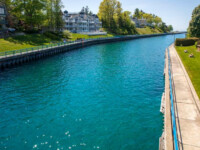
- The U.S. Army Corps of Engineers will begin planned maintenance work in the navigation channel in Charlevoix, MI, to replace deteriorating timber fenders along the channel revetments. MLive
Boatnerd News – July 14, 2023
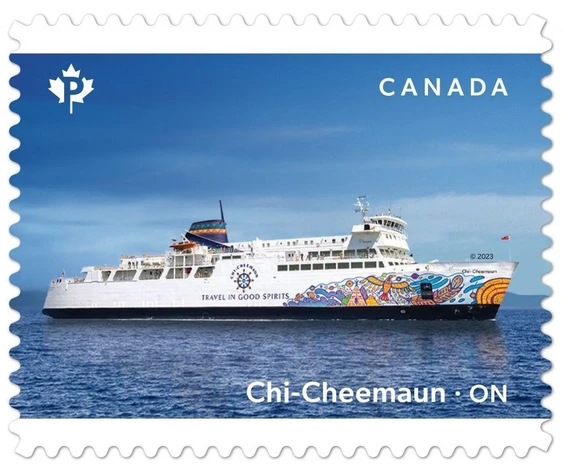
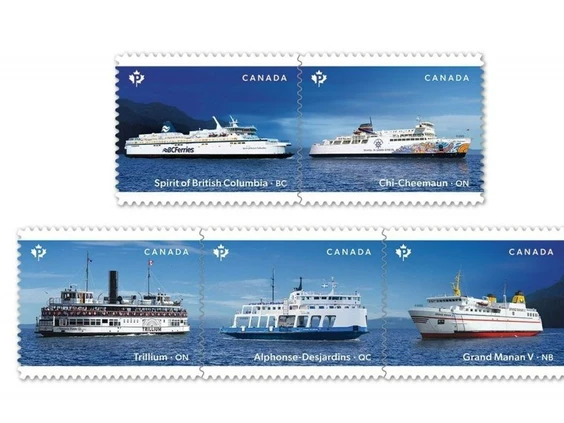
Chi-Cheemaun featured on new Canada Post stamp
The stamps are designed by Lionel Gadoury and Owen Gabany of Context Creative and depict “postcard-perfect photos” of the ferries in their home waters, the release said. Rob Boyce took the photo of the Chi-Cheemaun.
Printed by Lowe-Martin, the issue includes a booklet of 10 permanent domestic rate stamps, an official first day of issue envelope and a souvenir sheet of five stamps.
The stamps and collectables are available at canadapost.ca and postal outlets across Canada, the news release said.
Researchers looking for World War I-era minesweepers in Lake Superior find a ship that sank in 1879
Researchers searching for a pair of World War I-era minesweepers that mysteriously vanished in Lake Superior over a century ago instead found a long-missing ship that sank to the bottom of the lake nearly four decades earlier, in 1879.
The tug boat called Satellite, which sank on June 21, 1879, was located by a crew last June, the Michigan-based Great Lakes Shipwreck Historical Society announced this week.
The story behind the discovery unfolded in June 2022, when Josh Gates of Discovery Channel’s “Expedition Unknown” traveled to Michigan to search for two French minesweepers that disappeared in 1918. The twin vessels — Inkerman and Cerisoles — were en route to Europe when the ships vanished in a storm, killing 78 crewmembers.
Last June, Gates joined the Shipwreck Society’s crew aboard the 47-foot R/V David Boyd and the ship’s sonar identified a submerged wreck. A remotely operated vehicle (ROV) was deployed to reach the target nearly 300 feet below the surface and the images revealed a surprise — the shipwreck was not a steel minesweeper, but the wooden-hulled Satellite.
The Shipwreck Society posted eerie video of the wreck, showing various angles of the ship with shattered wooden planks inside.
According to the Shipwreck Society, the Satellite had four barges in tow when she ran into problems. It’s unclear whether the ship had a mechanical issue or if it struck something in the lake and started taking on water.
“Regardless of what happened, the Satellite went to the bottom of Lake Superior and has not been seen for 142 years,” the group wrote, noting that no one on board died in the sinking.
There are no known photos of the Satellite, but the ship’s appearance was touted in the press over a century ago. According to the Shipwreck Society, the Detroit Press and Tribune wrote: “It is said that her cabin and upper works were the most elaborate put upon a craft of her kind.”
There are roughly 10,000 shipwrecks in the Great Lakes, but only about 350 of them are located in Lake Superior, according to the Minnesota Historical Society. One stretch of the lake where ships have routinely met their demise has been dubbed the “graveyard of the Great Lakes.”
In April, researchers found the wreckage of two ships that disappeared in Lake Superior in 1914. In March, a ship carrying a load of coal when it sank in a storm in 1891 was discovered in the lake.
And in February, a 144-foot shipwreck that searchers called a “Bad Luck Barquentine” was found in Lake Superior more than 150 years after it sank.
Legislation grants 25+ Maritime cadets eligibility for incentive payments
TRAVERSE CITY — Great Lakes Maritime Academy cadets older than 25 who agree to enlist in the U.S. Navy Reserve upon graduation are now eligible for incentives of up to $32,000 over four years, due to bipartisan legislation signed by President Joe Biden last week.
Cadet Rick Ramos, 37, will be among the first to benefit. He comes from a military family and had already committed to the Navy Reserve after his expected 2024 graduation. The new legislation will help him pay tuition and other expenses and allow him to go from two jobs to one.
“I have been working since I started the program,” said Ramos, who is in GLMA’s engine program. “I can finally breathe and focus on my classes, especially now that I’m getting into the license prep semester.”
Previously, the incentive payments to attend the six state maritime academies in the U.S., including GLMA, were limited to cadets under age 25. The Changing Age-Determined Eligibility to Student Incentive Payments (CADETS) Act removes that age cap. The legislation was introduced by two members of Michigan’s congressional delegation in their respective chambers, Sen. Gary Peters and U.S. Rep. Jack Bergman.
The incentive payments can be spent on tuition, uniforms, books, and living costs. In return, cadets commit to eight years in the U.S. Navy Reserve, which can be fulfilled while working in the commercial shipping industry. Peters originally introduced the CADETS Act in 2021. It passed the Senate in 2022. He reintroduced it in March and it passed both chambers of Congress this spring.
“It’s a great relief to hear it has actually gone through,” Ramos said.
The change is anticipated to help student veterans in particular.
“The CADETS Act is greatly appreciated, and will benefit veterans and non-traditional students not only in Michigan, but across the nation,” said GLMA superintendent Admiral Jerry P. Achenbach. “Additionally, it addresses the current shortage of licensed officers in the U.S. Merchant Marine.”
Upon earning their licenses, graduates must sail commercially for three years.
“Those men and women who delayed college to serve their country should not be denied opportunities given to younger, more recent high school graduates,” said Jim Weakley, President, Lake Carriers’ Association, which represents companies that ship on the Great Lakes.
“The bill will incentivize more cadets to continue serving their country after graduation, while helping them receive a high-quality, affordable education,” Peters said.
“This common sense bipartisan solution will expand opportunities for veterans and older students who wish to become mariners – a crucial national security need – and will greatly benefit Michigan’s maritime industry,” said Bergman, who was the guest speaker at the 2023 GLMA graduation in May.
Northwestern Michigan College
Great Lakes Fest, Toledo Antique & Classic Boat Show on the horizon
Great Lakes Festfeaturing the Toledo Antique & Classic Boat Show will take place from 10 a.m. – 5 p.m. on Saturday, July 22.
Boater registration is still open to classic boats of all types, but particularly focused on those built prior to 1975 or modern re-creations. For additional event details on boater registration or to pre-purchase tickets visit www.nmgl.org/
National Museum of the Great Lakes
#gallery-8 { margin: auto; } #gallery-8 .gallery-item { float: left; margin-top: 10px; text-align: center; width: 33%; } #gallery-8 img { border: 2px solid #cfcfcf; } #gallery-8 .gallery-caption { margin-left: 0; } /* see gallery_shortcode() in wp-includes/media.php */
-
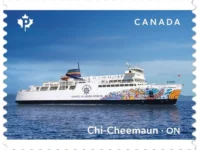
- Chi-Cheemaun is featured as part of a new stamp collection released by Canada Post. Owen Sound Sun Times
-
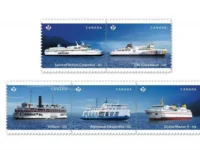
- A look at the complete collection. Owen Sound Sun Times
Boatnerd News – July 13, 2023
Man rescued after falling from Ambassador Bridge into Detroit River
DETROIT – A man was rescued after he fell from the Ambassador Bridge into the Detroit River.
The incident happened after 4 p.m. Wednesday. Fire officials said witnesses reported a man was doing work on the Ambassador Bridge when he fell off and into the river.
People fishing along the river saw what happened and ran and knocked on the door of J W Westcott Co. They were able to get boats into the water and rescue the man.
Witnesses said he was alert and talking. He is being transported to a hospital.
Click here for video.
Explosives to be used in new superlock construction at Soo Locks, Army Corps says
SAULT STE. MARIE, MI – Explosives will be used as work progresses toward the construction of a new superlock at the Soo Locks in Michigan’s Upper Peninsula, officials said.
During a meeting Monday, officials with the Army Corps of Engineers announced that explosives will be used in the deconstruction of the Sabin and Davis locks, which will be replaced by the new superlock, 9&10 News reports.
The detonations are expected to begin at the end of July, the report said. The Soo Locks will be intermittently closed to marine traffic due to the explosions.
Boaters are asked to follow the instructions given by security personnel on the water, as they are tasked with keeping mariners safe during detonations, said Rachel Miller from the Army Corps of Engineers.
The Soo’s big Poe Lock is one of two functional locks in what originally was a four-lock system. In addition to the Poe lock, the smaller MacArthur Lock remains; it’s south of the Poe. The 800-foot-long MacArthur Lock generally handles smaller watercraft while the 1,200-foot-long Poe Lock is used by larger vessels, such as freighters, traversing between the upper and lower Great Lakes.
The work being done now will eventually result in a new Poe-sized lock in place of the inactive Davis and Sabin locks. It won’t be complete for several years.
The Poe is currently the sole lock large enough to move increasingly longer and wider Great Lakes ships. A second lock its size will ensure cargo can still move between Lake Superior and the lower Great Lakes should one lock unexpectedly close.
The Soo Locks is a crucial piece of engineering for Great Lakes shipping. The system raises and lowers vessels to accommodate the 23-foot elevation difference between Lake Huron and Lake Superior. This allows freighters, tugboats, Coast Guard boats and other vessels to move in and out of Lake Superior.
Each year, more than 4,500 ships and other vessels pass through the Soo Locks. These are carrying 80 million tons of cargo – mostly coal, limestone, iron ore and wheat.
Triple-masted schooner to get big welcome after 3,000-mile journey to Grand Traverse Bay
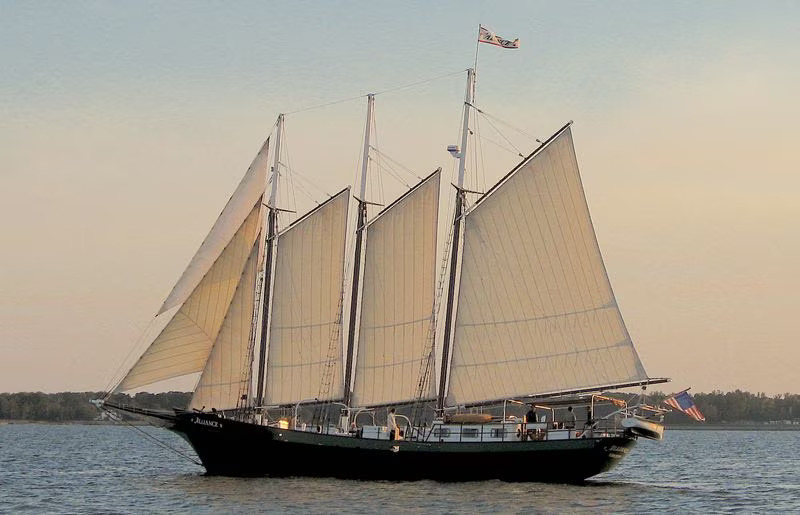
SUTTONS BAY, MI – A triple-masted schooner that’s been turning heads for the last month as it has made its way from the East Coast to the Great Lakes is set to receive a big welcome when it sails into its new home port on Grand Traverse Bay this week.
The Alliance, a 105-foot boat that’s most recently done day cruises in Virginia, is the newest name in the Inland Seas Education Association’s fleet. It is in the Straits of Mackinac area today, plans to swing by Charlevoix, then is expected to finish its 3,000-mile journey late this week.
The public is invited to welcome the Alliance to Suttons Bay on Friday, July 14, from 4 to 7 p.m. Visitors can meet at the Inland Seas campus at 100 Dame St. Once the schooner arrives, people can meet the crew and take a tour of the vessel.
The Inland Seas Education Association (ISEA) is known for its popular schoolship program for students as well as its short, themed cruises for the public. The nonprofit’s team has been excited for months about adding the Alliance. They say it will open the door to a lot more programming for students here and in other Great Lakes cities where ISEA’s vessels sail. These include Houghton, Green Bay, Detroit and Cleveland.
Currently, the program uses its flagship 77-foot Inland Seas, along with another boat, the Utopia. Check out its public day sails schedule here.
The Alliance, which can carry about 54 passengers, will allow ISEA to answer a growing pile of requests that until this year had to go unfulfilled. It can also add new programming, building on its current work of deepening people’s understanding and connection to the freshwater system that surrounds us.
“The addition of the schooner Alliance to the ISEA schoolship fleet marks a pivotal moment in the history of our organization and the future stewardship of the Great Lakes,” said ISEA Executive Director Fred Sitkins. “This organizational expansion is a testament to the partnerships that ISEA enjoys throughout the Great Lakes region.”
“Colleges/universities, nonprofits, K-12 schools, foundations, and other organizations partner with ISEA to develop environmental stewards and leaders to care for the Great Lakes. We make a lasting impact in the lives of youth and the health of the Great Lakes and we are thrilled that we can now reach more individuals and communities with the addition of another schoolship.”
Want to experience sailing on Alliance? Public sails are scheduled for late July and early August. In the fall, the Alliance will motor into Detroit to work with students on the Detroit River.
A Flashy Past
The big schooner was launched as a superyacht in 1995 by Treworgy Yachts in Palm Coast, Florida. Initially named Kathryn B., the boat was launched just a year after the same yard put out the Inland Seas. The Kathryn B. ran as part of a windjammer group in Maine, then in 2005 was renamed the Alliance and was run as a daysailing boat in Yorktown, Virginia.
When the vessel came up for sale, the ISEA team saw it as a great addition because it was not only a big, safe boat in good condition, it was already licensed by the U.S. Coast Guard. The long journey to get the Alliance to Grand Traverse Bay began at a Maryland marina in mid-June. From the crew notes that day:
“The Schooner Alliance calmly slipped away from the fuel dock at Georgetown Yacht Haven and headed downriver towards the main body of the Chesapeake Bay. After weeks of yard repairs taking longer than anyone had anticipated, the crew is relieved to be underway at last. Winds are light from the west and Alliance turned more than her fair share of heads as she motored down the Sassafras River. After entering the Chesapeake, Alliance turned north for the Elk River and then onto the C&D Canal bound for the Atlantic Ocean.”
More Than Three Decades on the Water
ISEA’s schoolship program, based in Suttons Bay with an education center and small dormitory there, has been active for 33 years. It has invited children in elementary, middle and high school classes to climb aboard and experience the Great Lakes up close. Kids learn about their water-based ecosystem, environmental issues, conduct experiments, and just learn to love the feel of being on the water.
“People protect what they love, and they love what they understand,” Sitkins said, echoing the words of the famous ocean explorer Jacques Cousteau. “We want kids to understand the lakes … so they feel connected to them.”
Being aboard a boat as it’s skimming across a Great Lake is an experience that sticks with kids. It also offers them a chance to do the hands-on work of scientists and engineers – perhaps sparking an interest in a future career. “It’s a really good real-world work experience for students,” he said.
More than 10,000 people participated in ISEA programs last year. About half of those were students from more than 150 different schools in Michigan, Indiana, Ohio and Illinois. Other passengers were adults or family groups who toured one of the boats, went on their roster of ticketed summer cruises for the public, or just stepped on board for a look around as they stopped in a Great Lakes port.
ISEA has deep connections around the lakes. It works with colleges, environmental groups, foundations and other nonprofits. The year-round work follows a seasonal structure: Schoolship programs start in May and stretch into June. Summer is for traveling, sailing into four of the five Great Lakes for educational programs. Past port stops have included Detroit, Chicago, Cleveland and into Lake Superior to drop anchor in Marquette, Houghton and Duluth. Then it is back to the fall schoolship format once classes are back in session.
Boatnerd AIS back up and running
Thank you for your patience as we dealt with an outage at our hosting company.
The Boatnerd Team
#gallery-9 { margin: auto; } #gallery-9 .gallery-item { float: left; margin-top: 10px; text-align: center; width: 33%; } #gallery-9 img { border: 2px solid #cfcfcf; } #gallery-9 .gallery-caption { margin-left: 0; } /* see gallery_shortcode() in wp-includes/media.php */
-
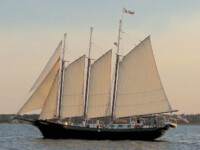
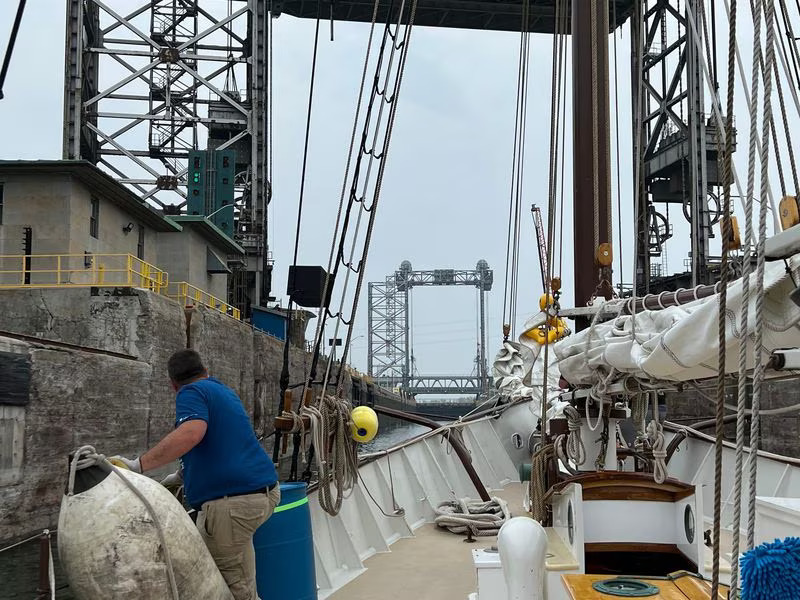
- Three-masted schooner Alliance is on its way to Grand Traverse Bay. ISEA
-
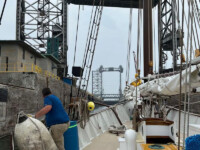
- Alliance transits the St. Lawrence Seaway on its way into the Great Lakes. ISEA
Boatnerd News – July 12, 2023
Boatnerd AIS down temporarily
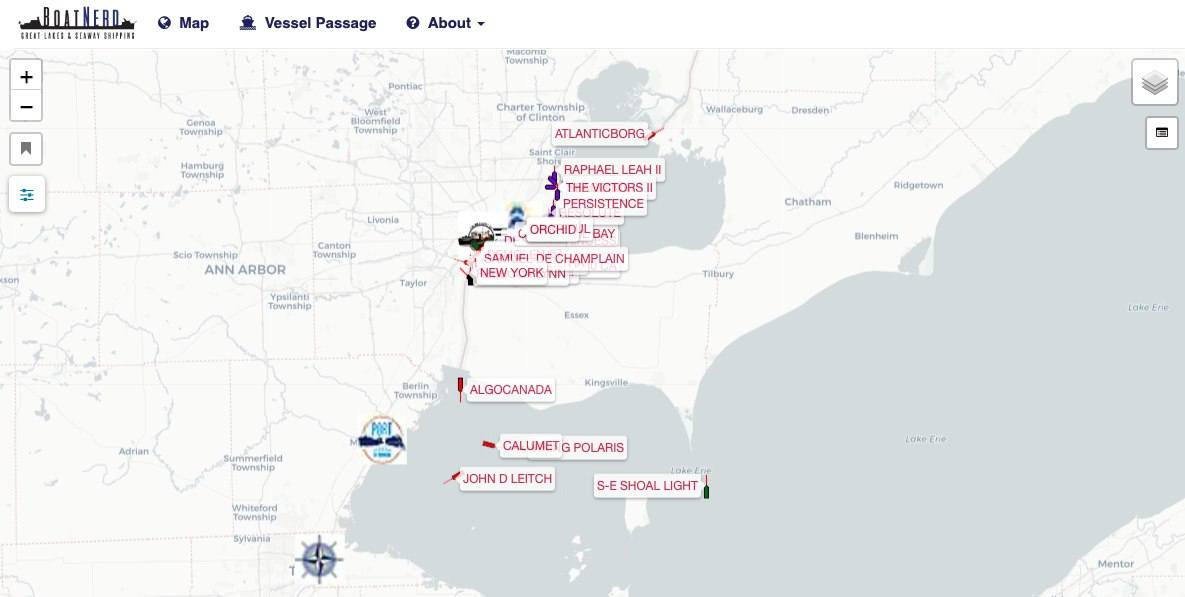
There has been an outage at the data center that hosts the Boatnerd AIS information. They tell us it should be back up tomorrow. Please keep checking back.
The Boatnerd Team
#gallery-10 { margin: auto; } #gallery-10 .gallery-item { float: left; margin-top: 10px; text-align: center; width: 33%; } #gallery-10 img { border: 2px solid #cfcfcf; } #gallery-10 .gallery-caption { margin-left: 0; } /* see gallery_shortcode() in wp-includes/media.php */
-
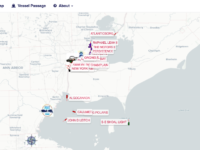
- Some vessel traffic in the Detroit River area is still visible.