Radcliffe R. Latimer

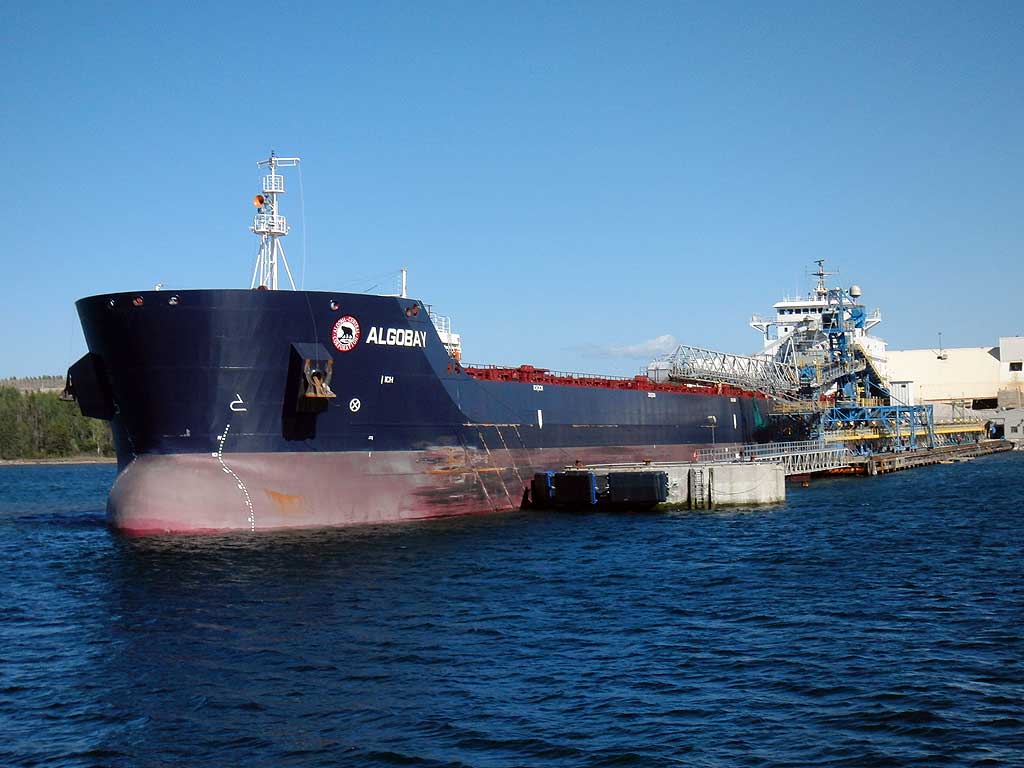
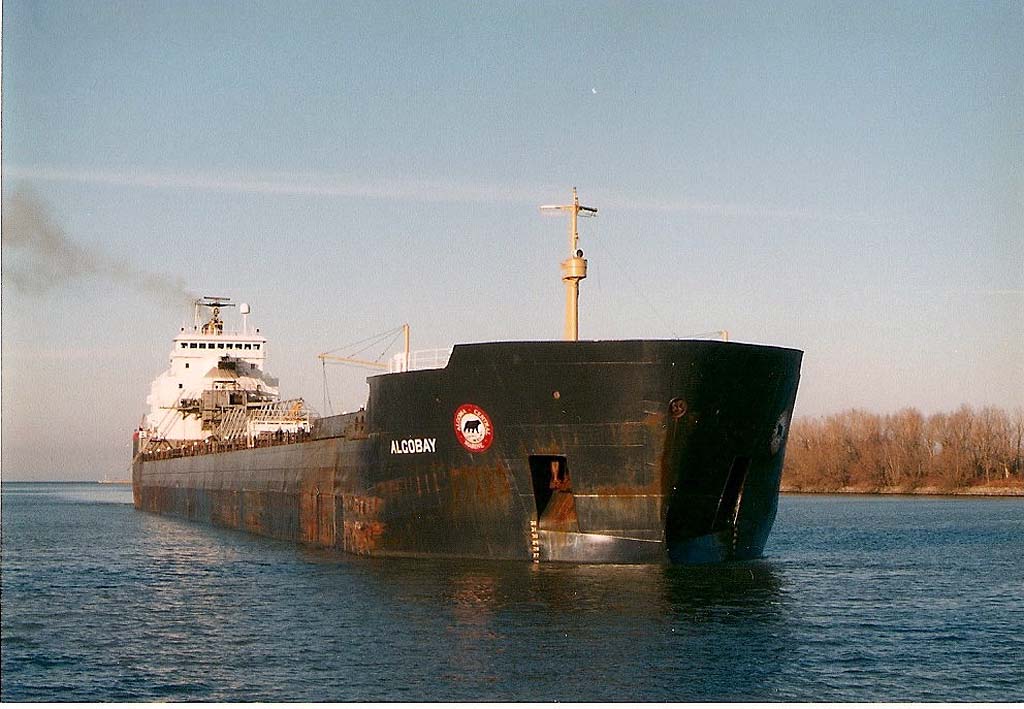
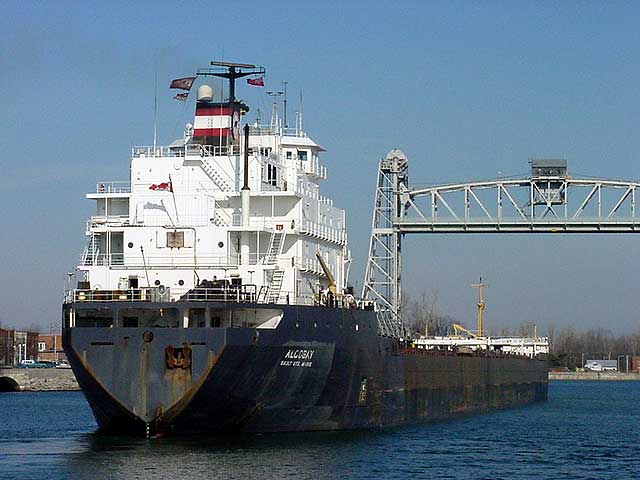
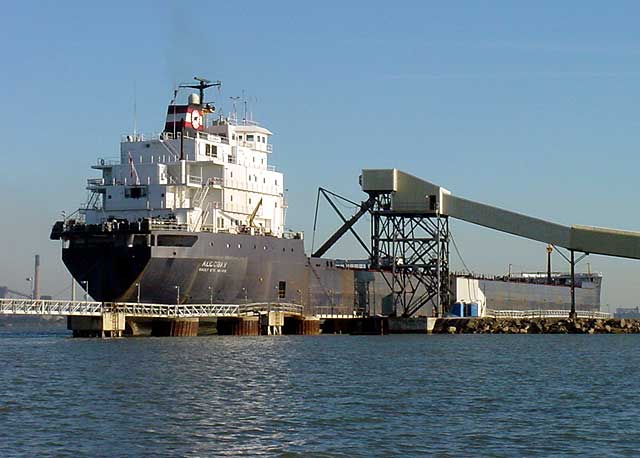
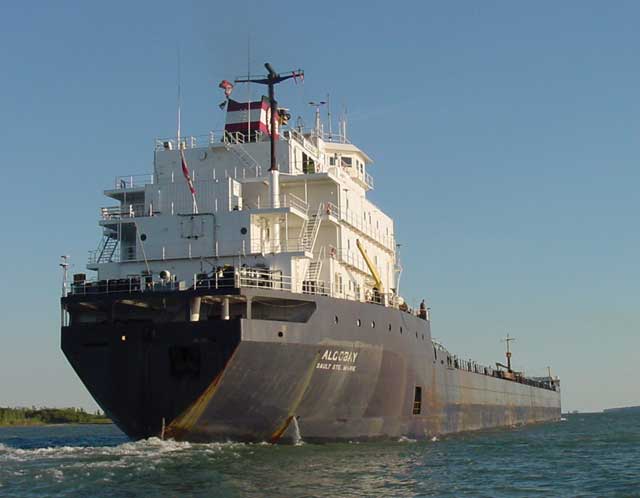
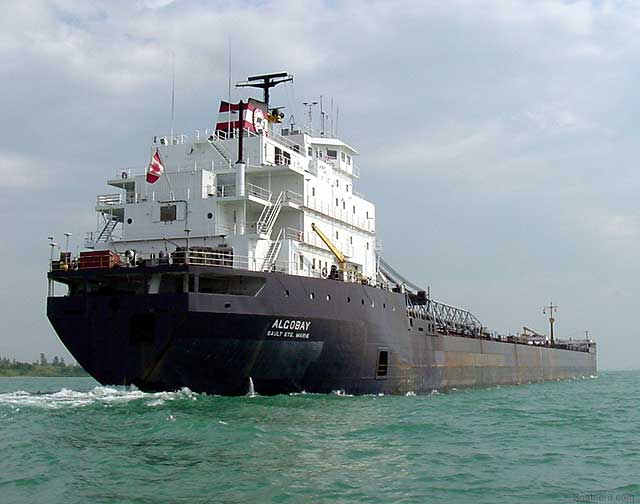
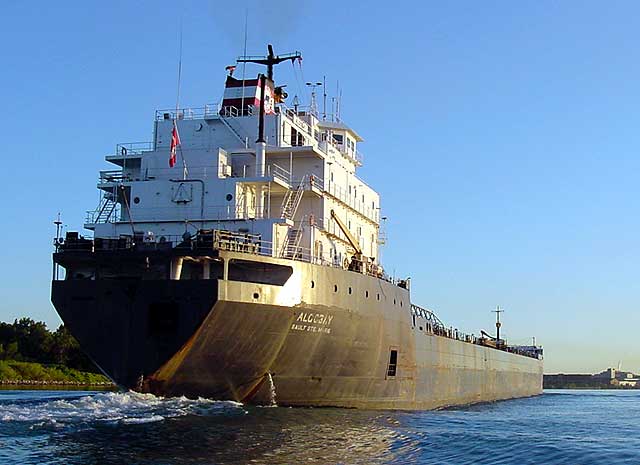
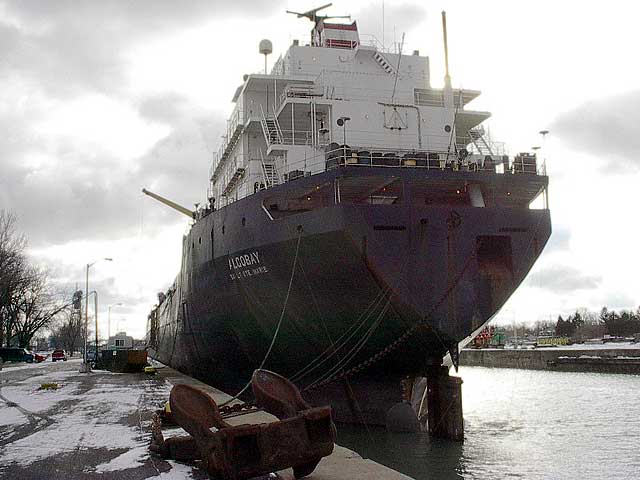
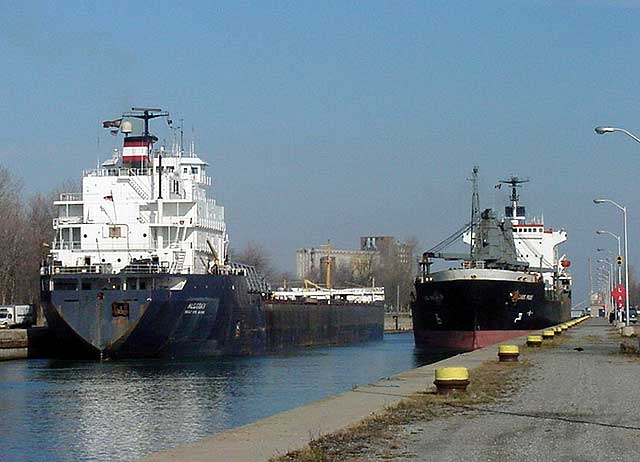
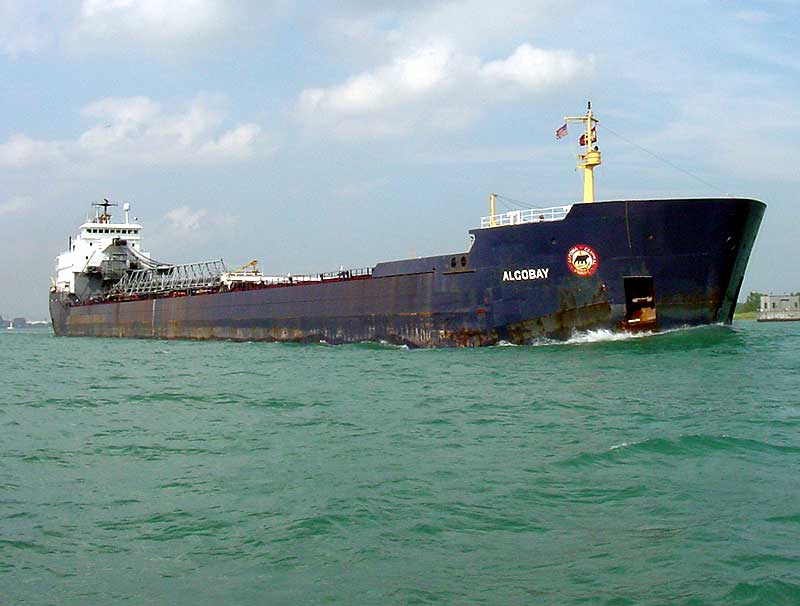
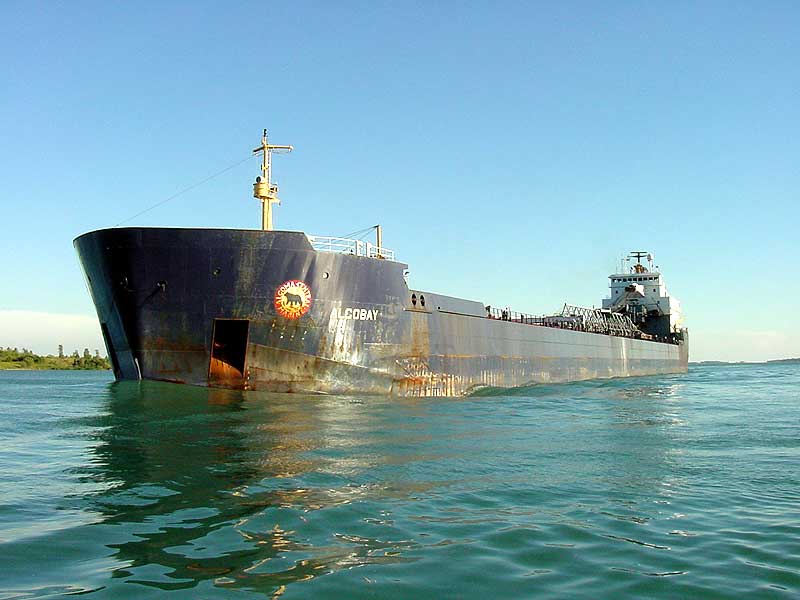
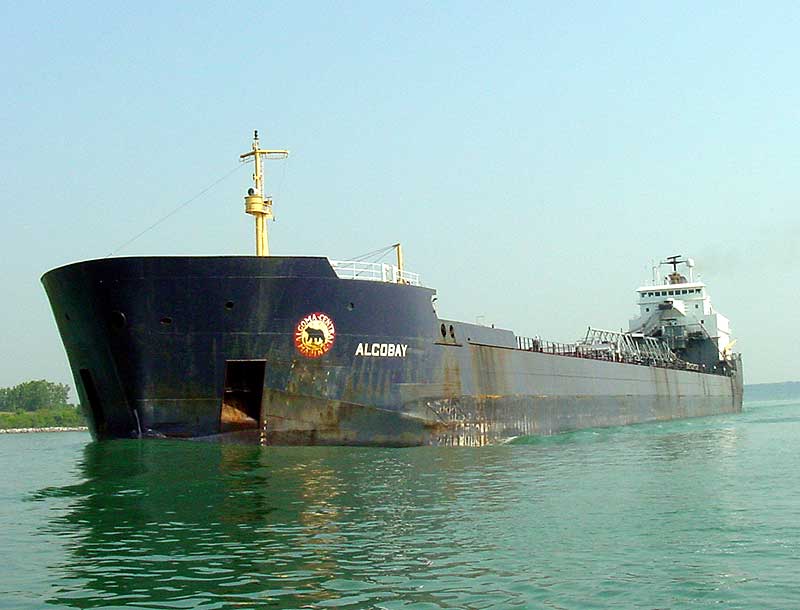
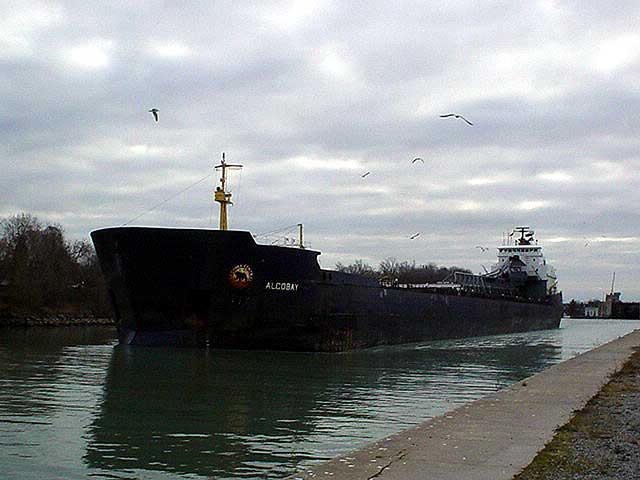
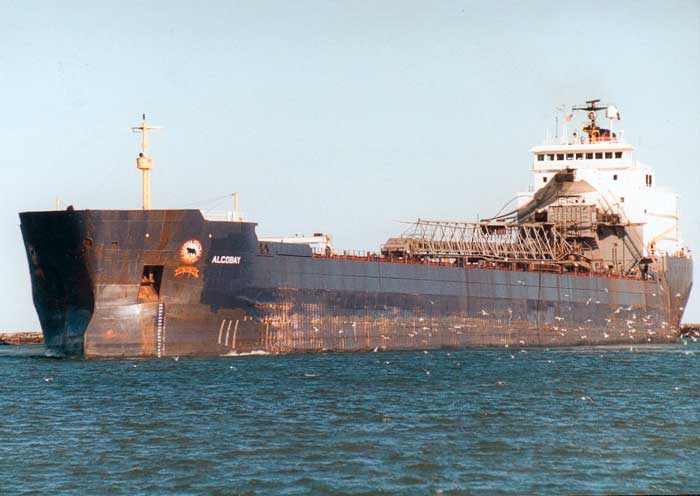
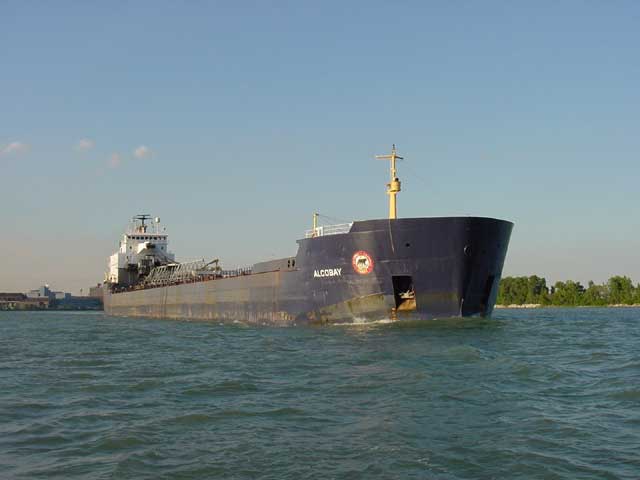
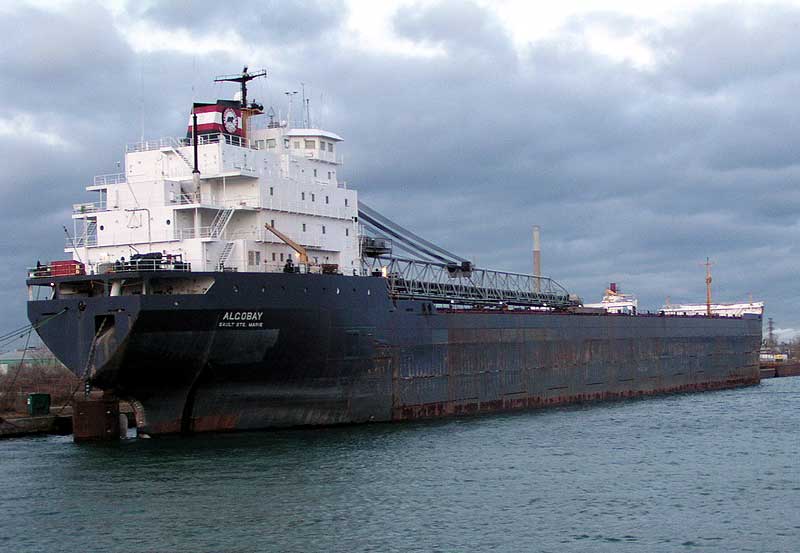
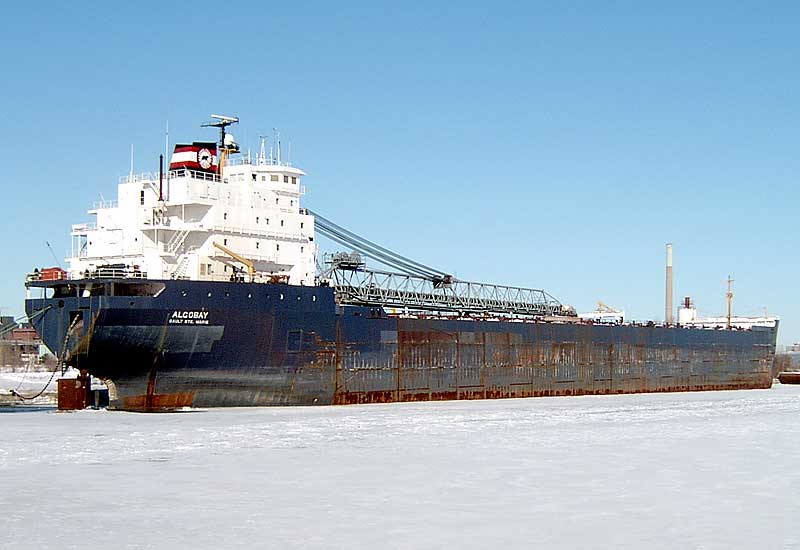
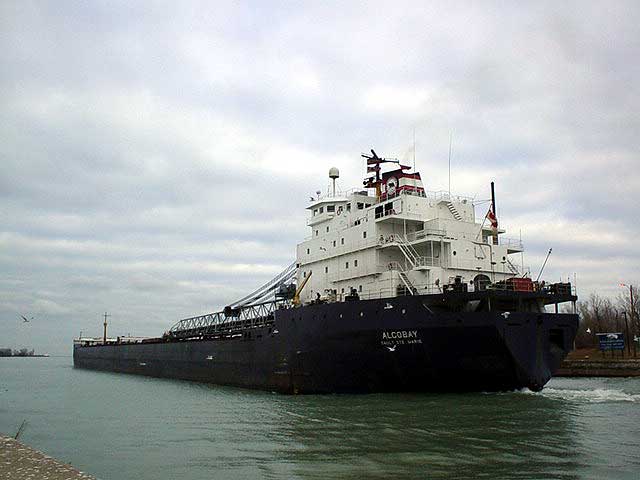
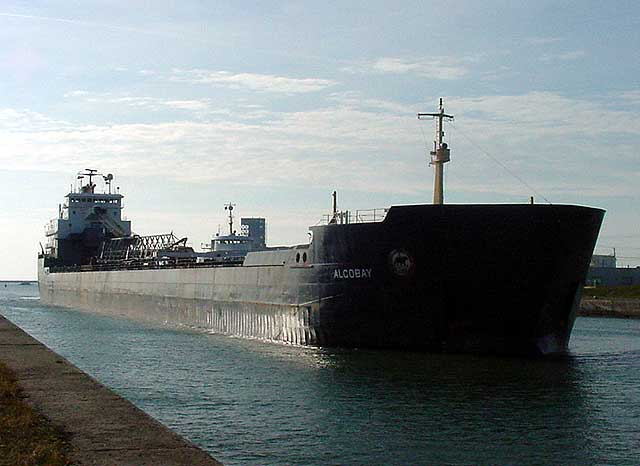
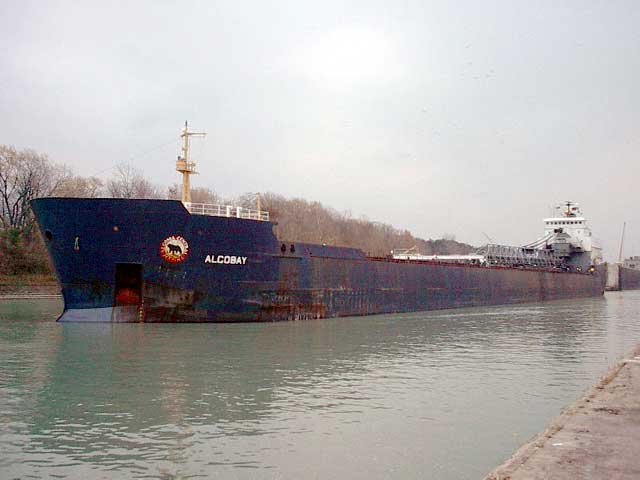
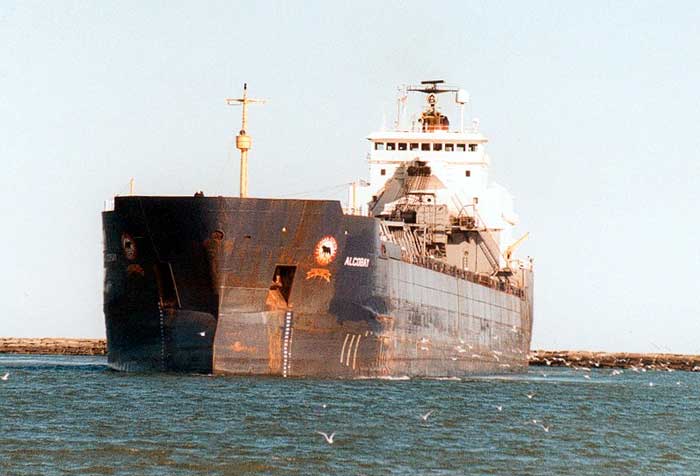
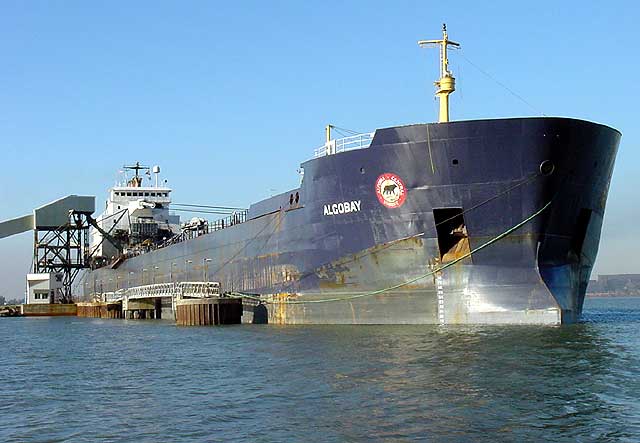
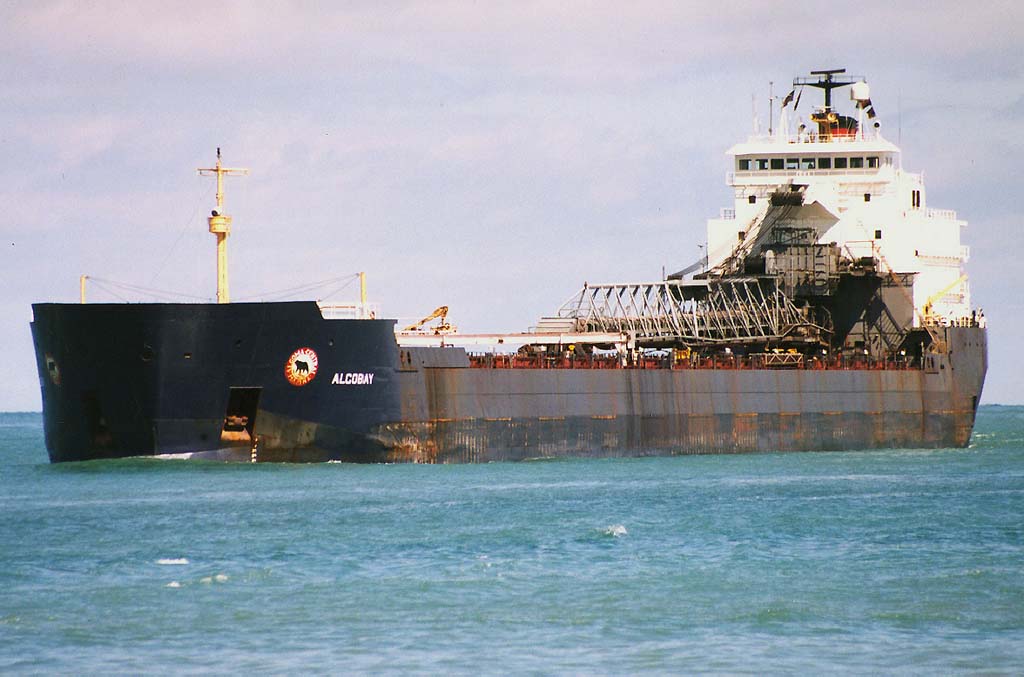
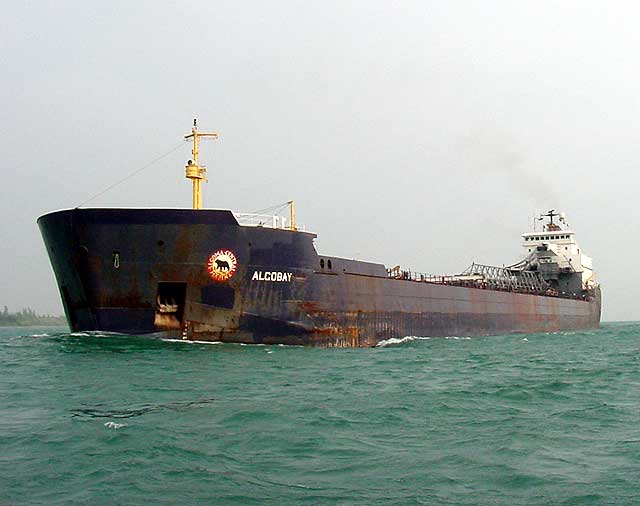
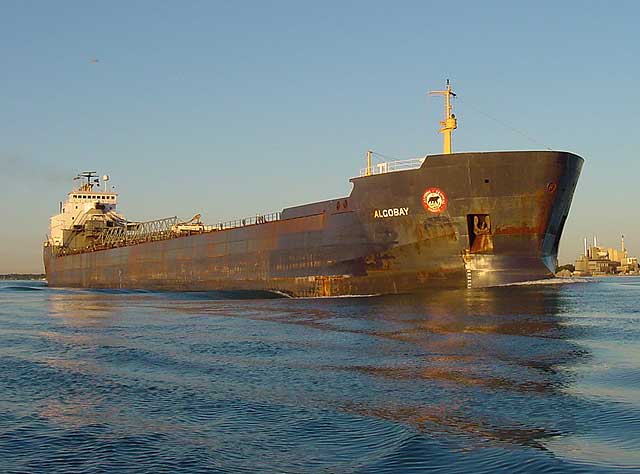
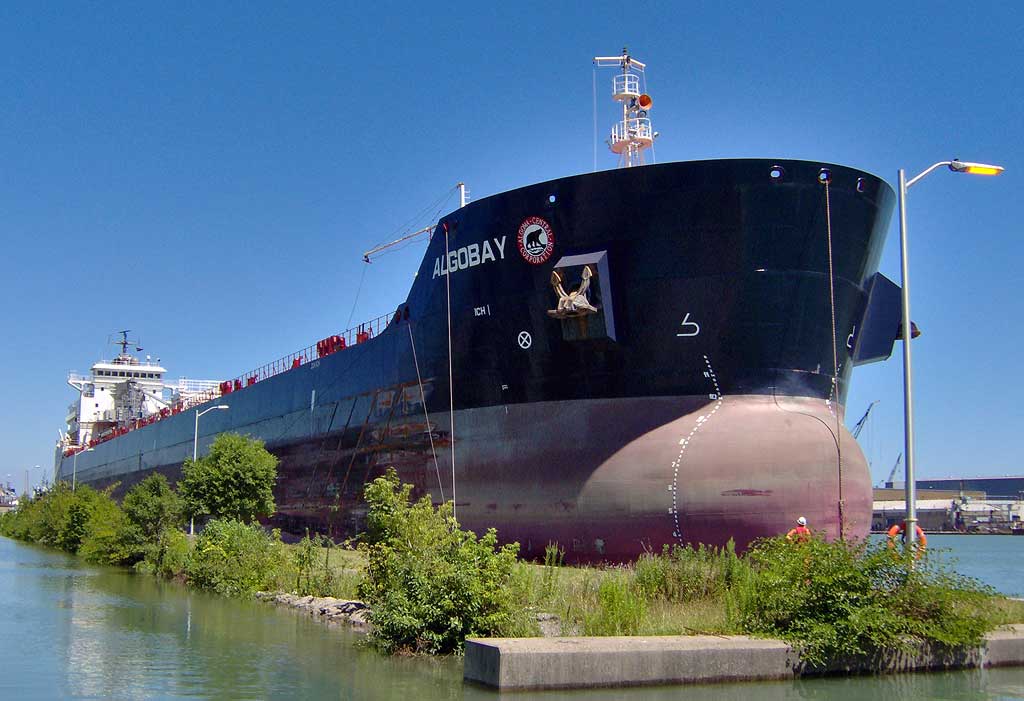
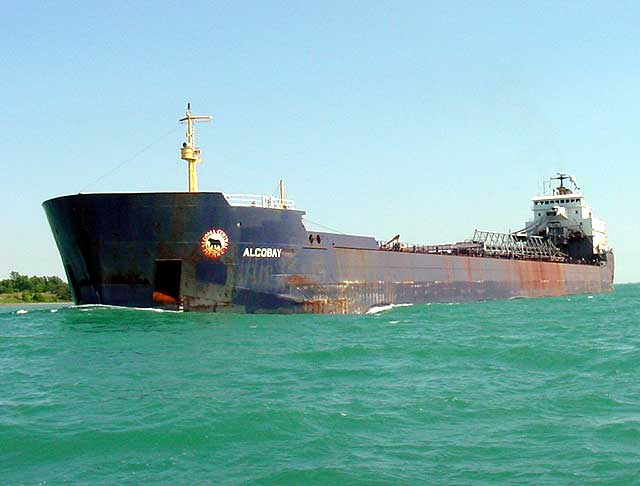
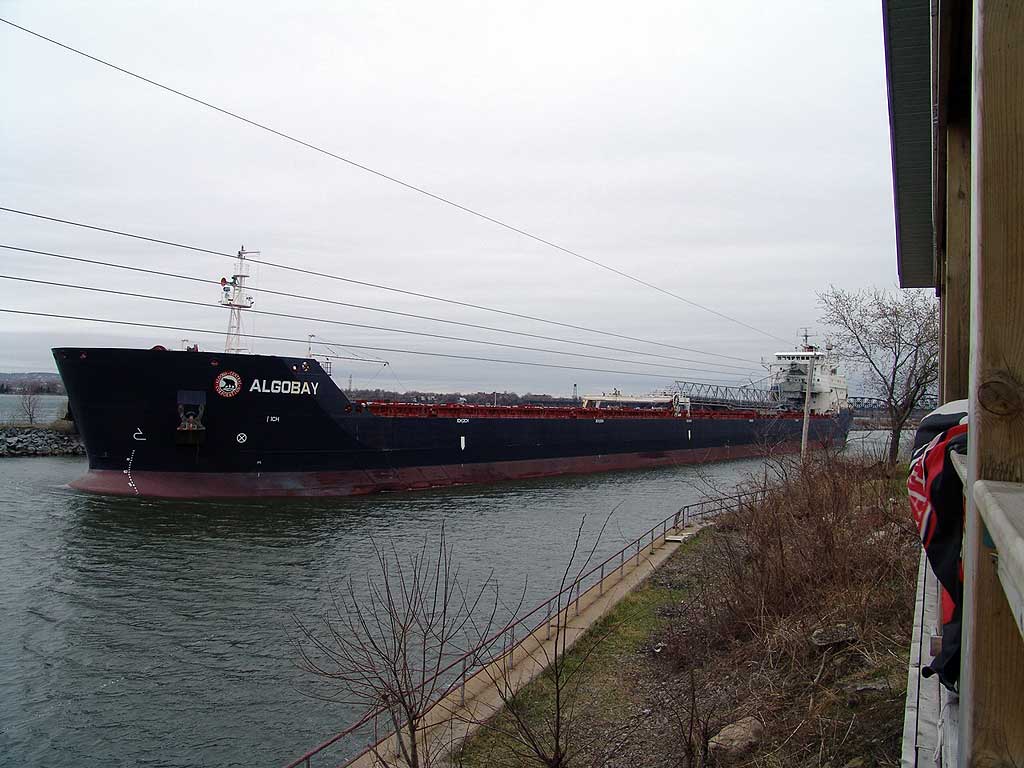
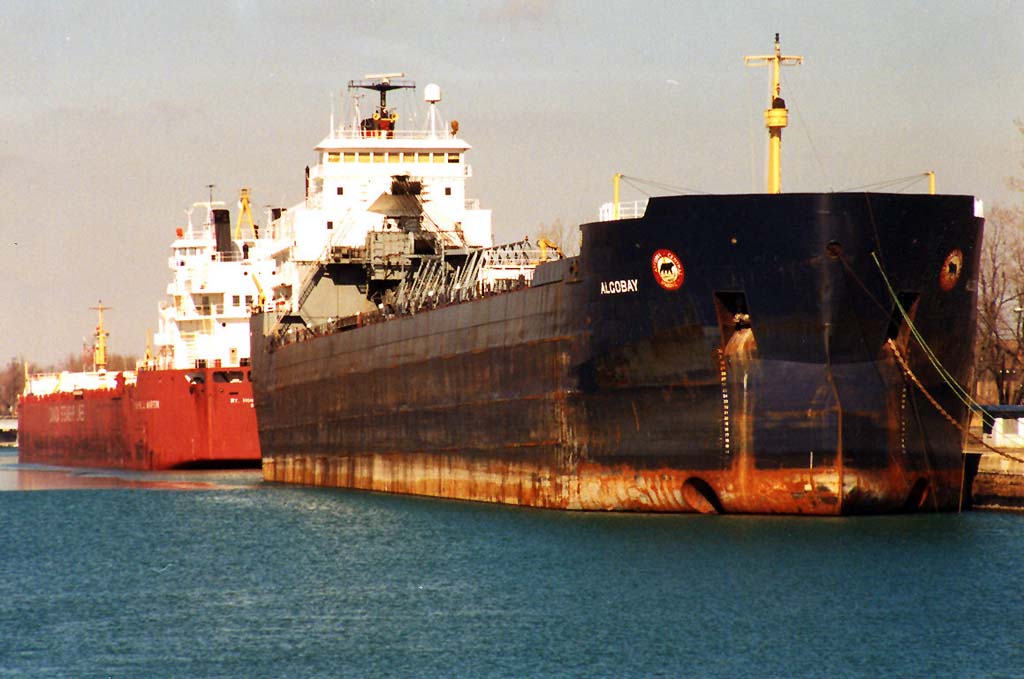
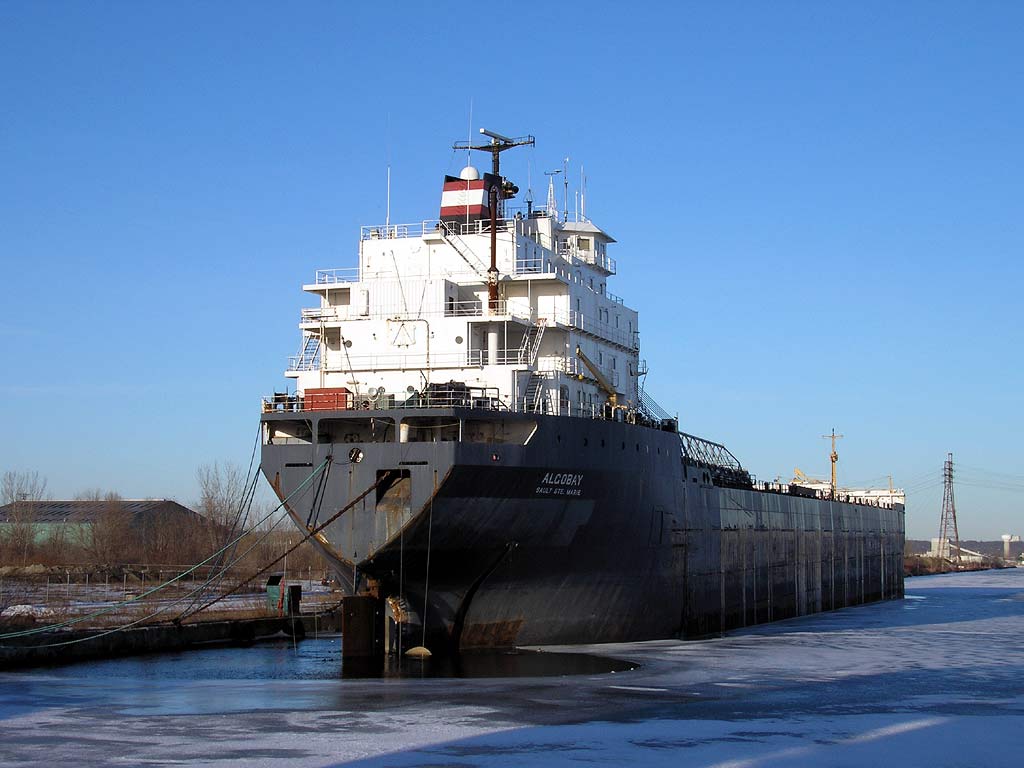
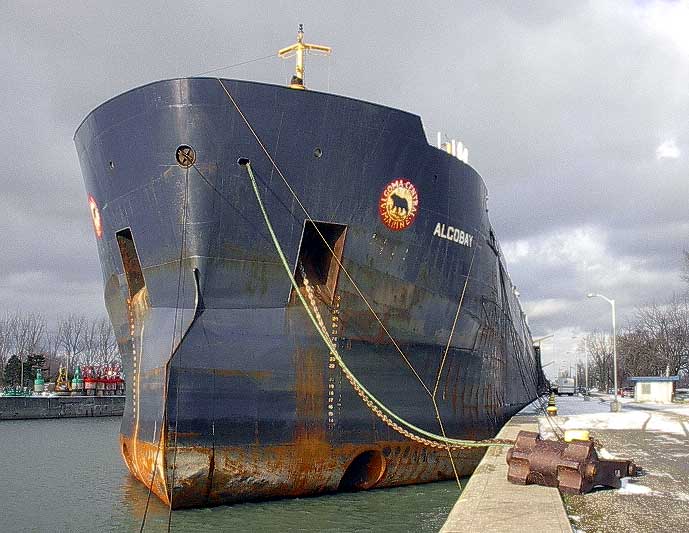
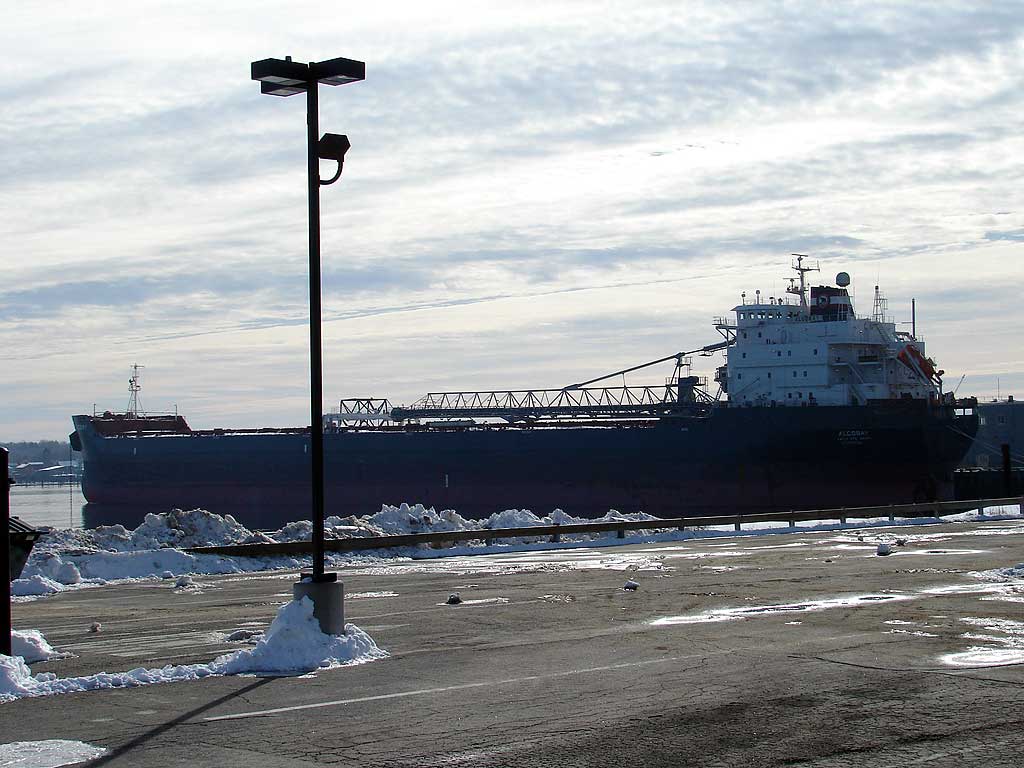
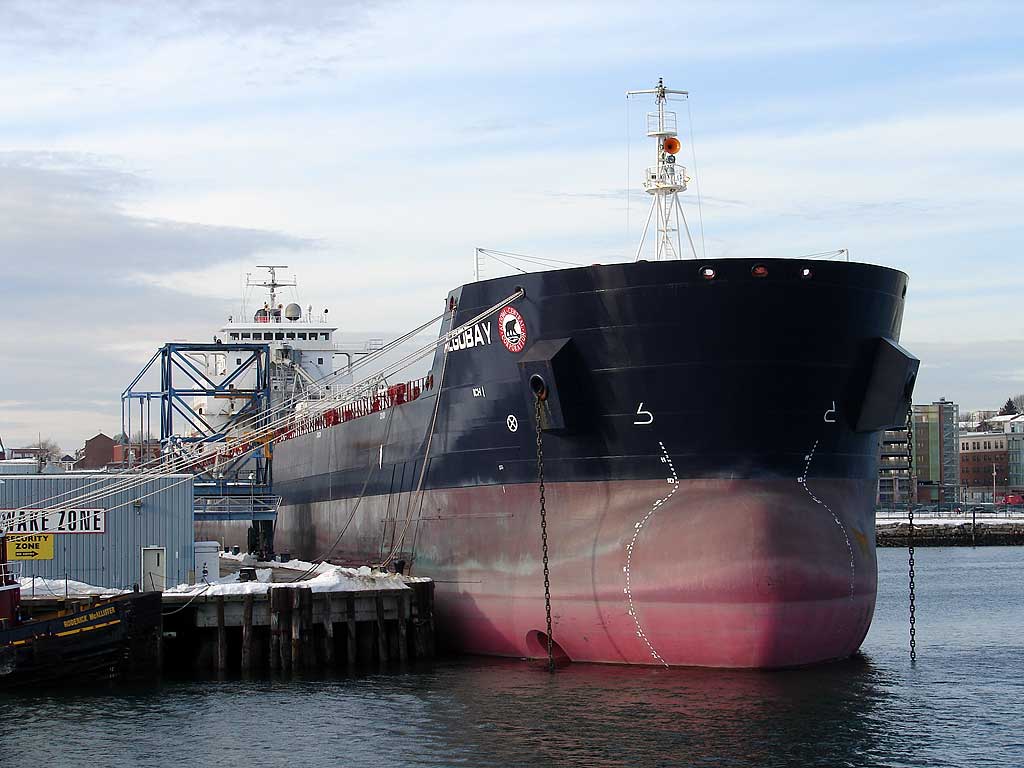
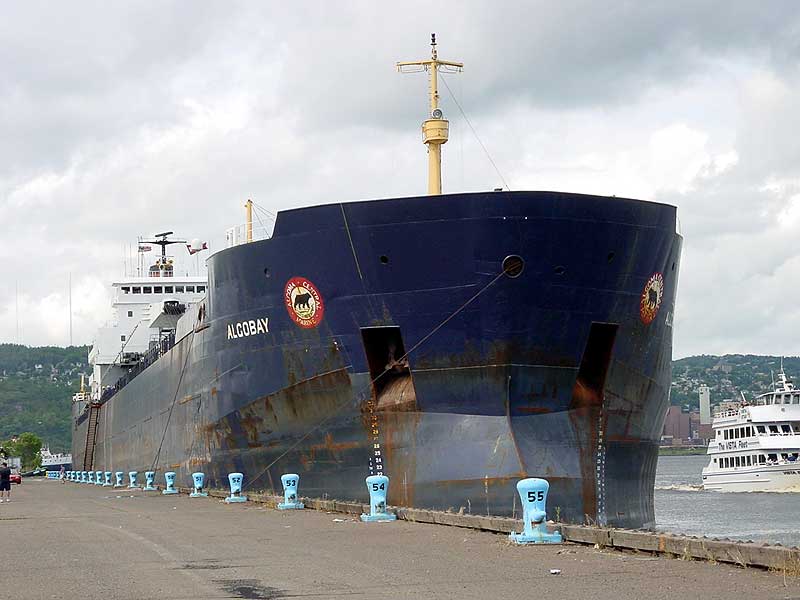
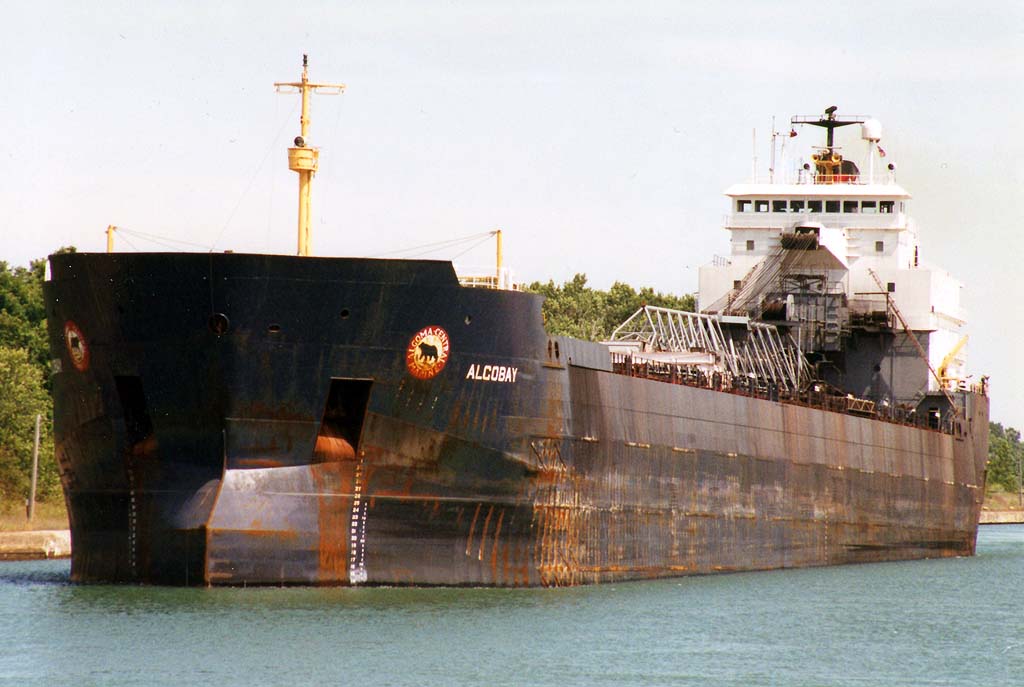
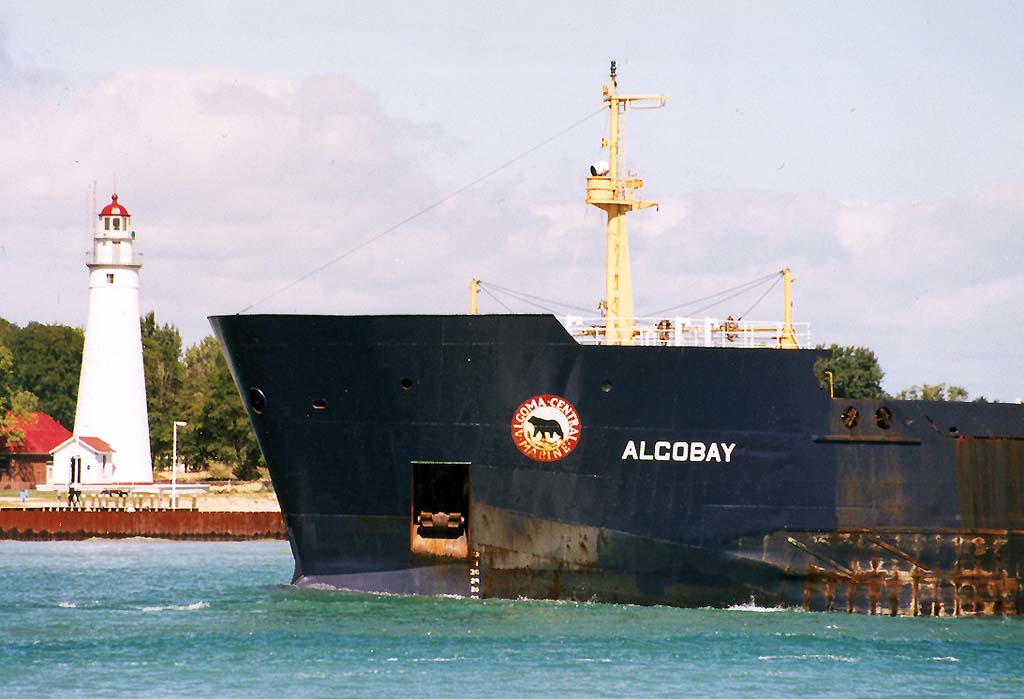
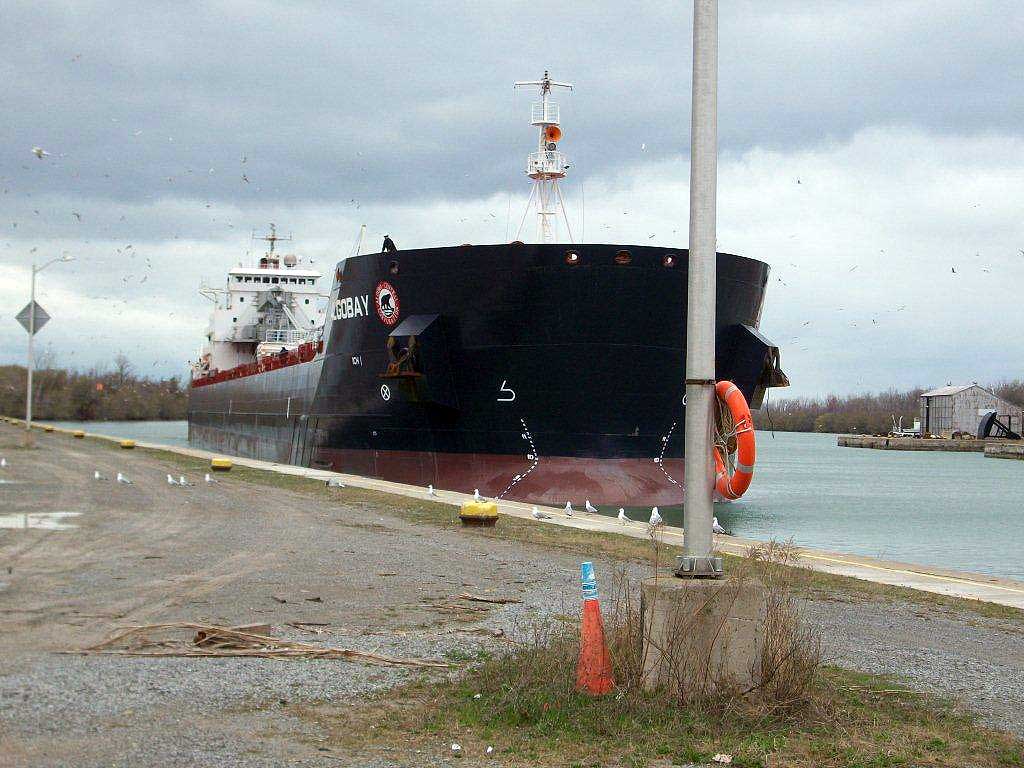
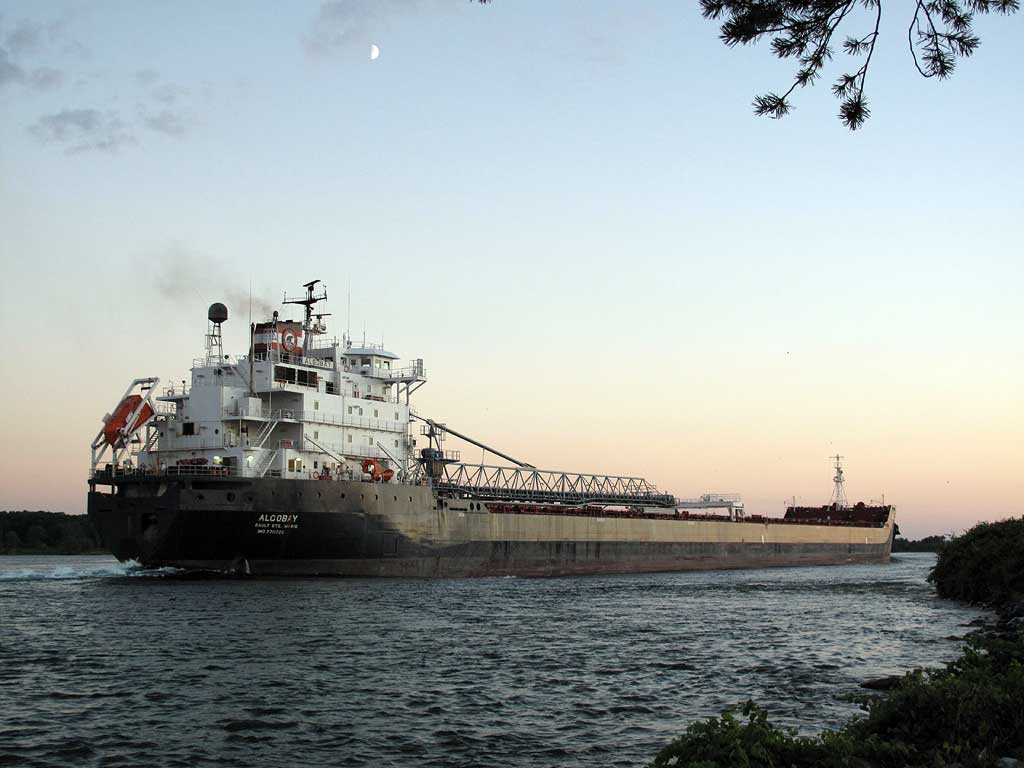
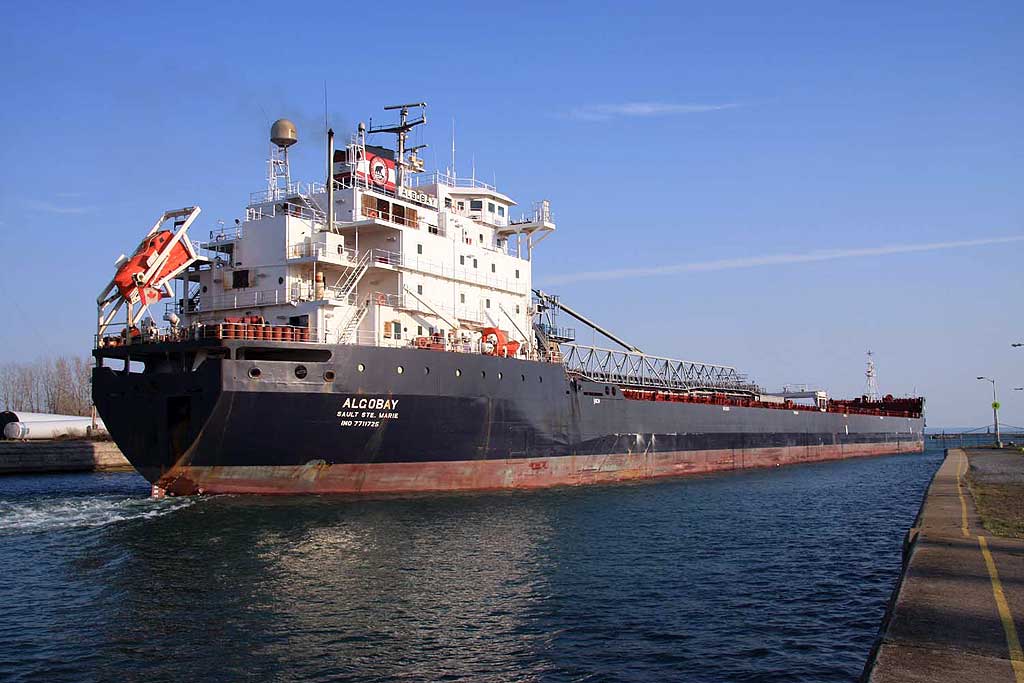
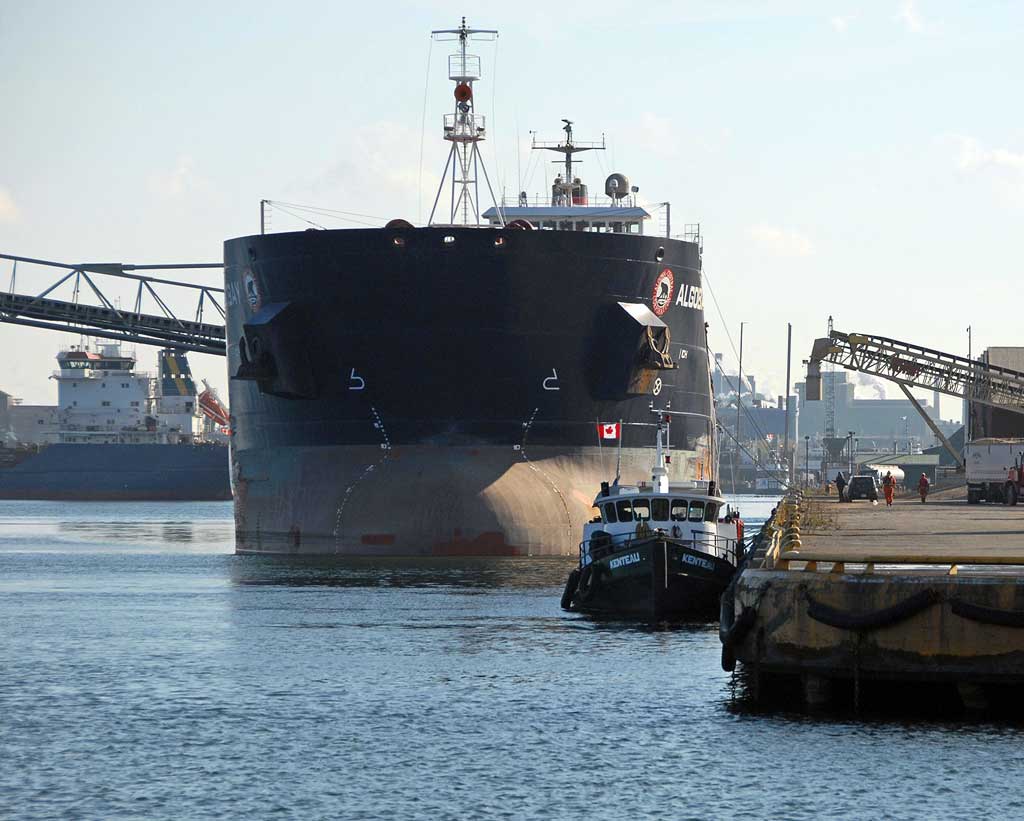
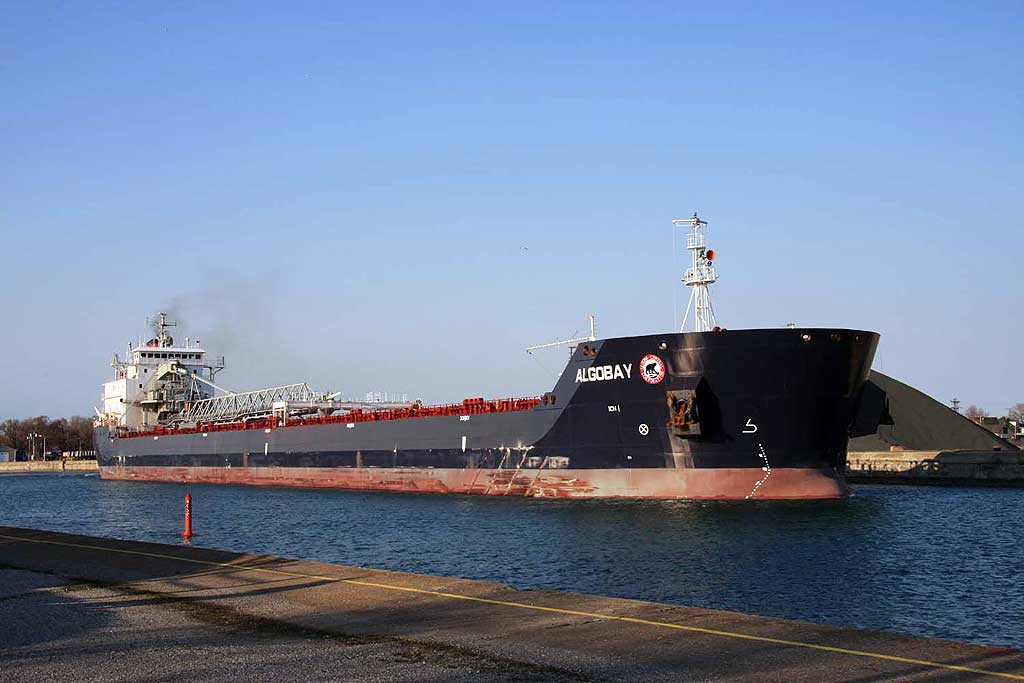
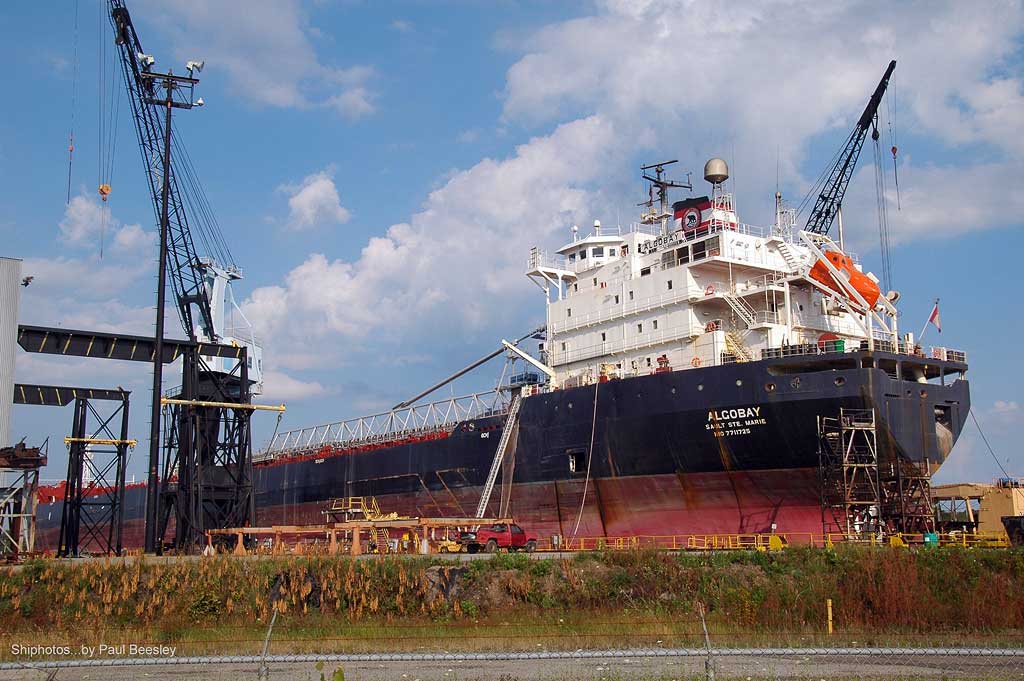
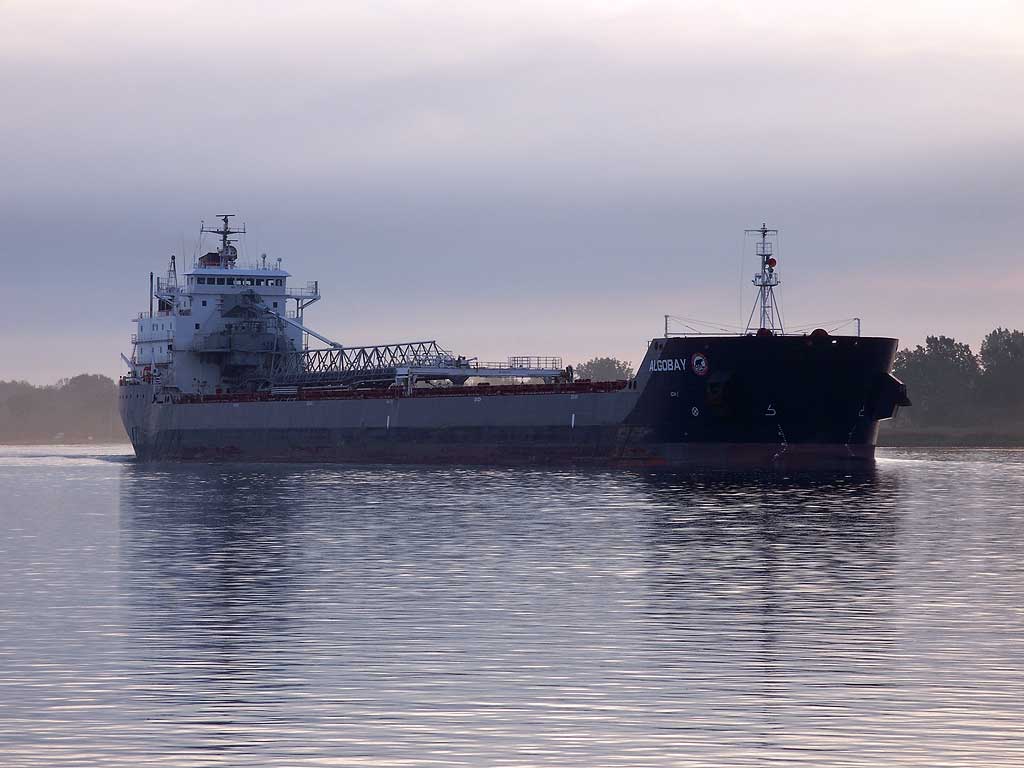
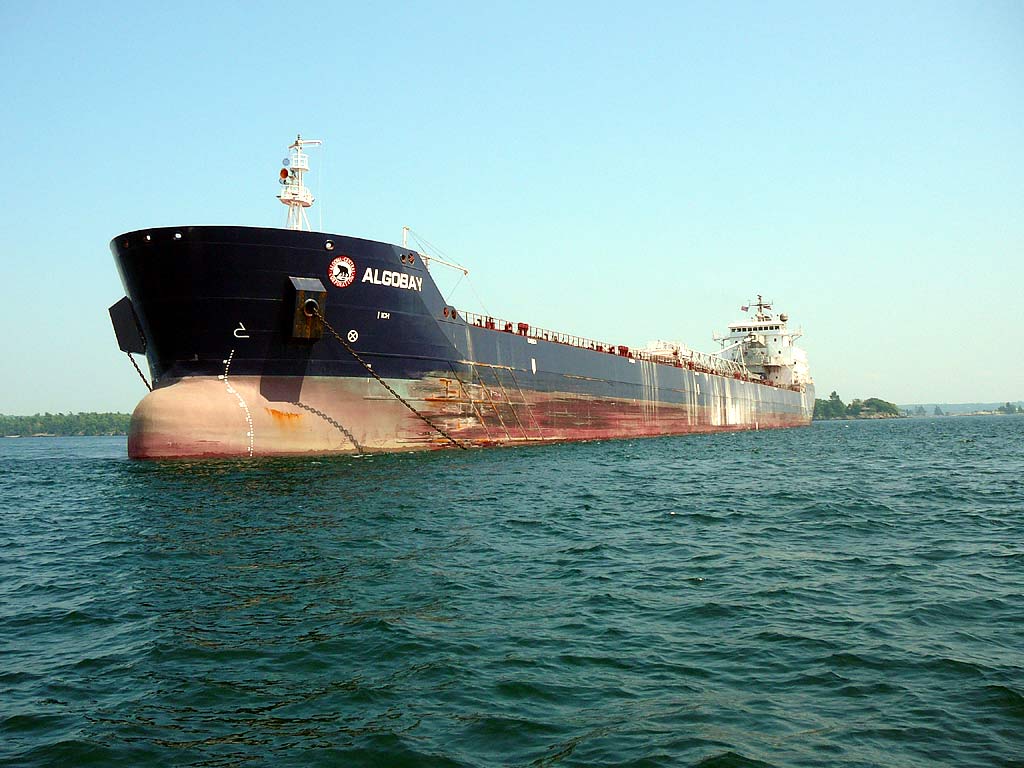
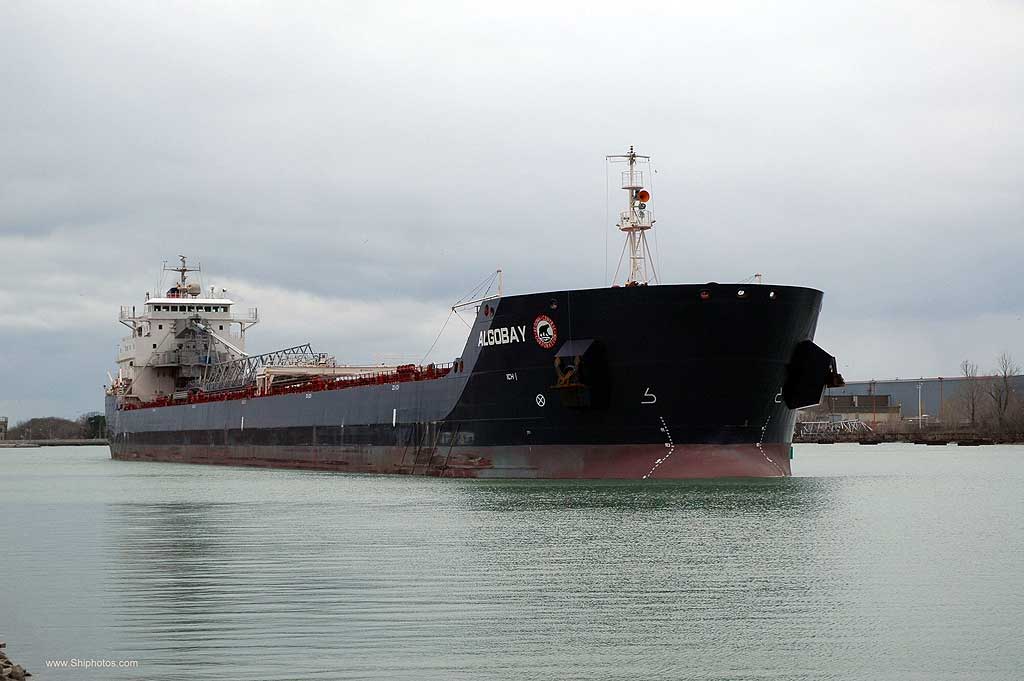
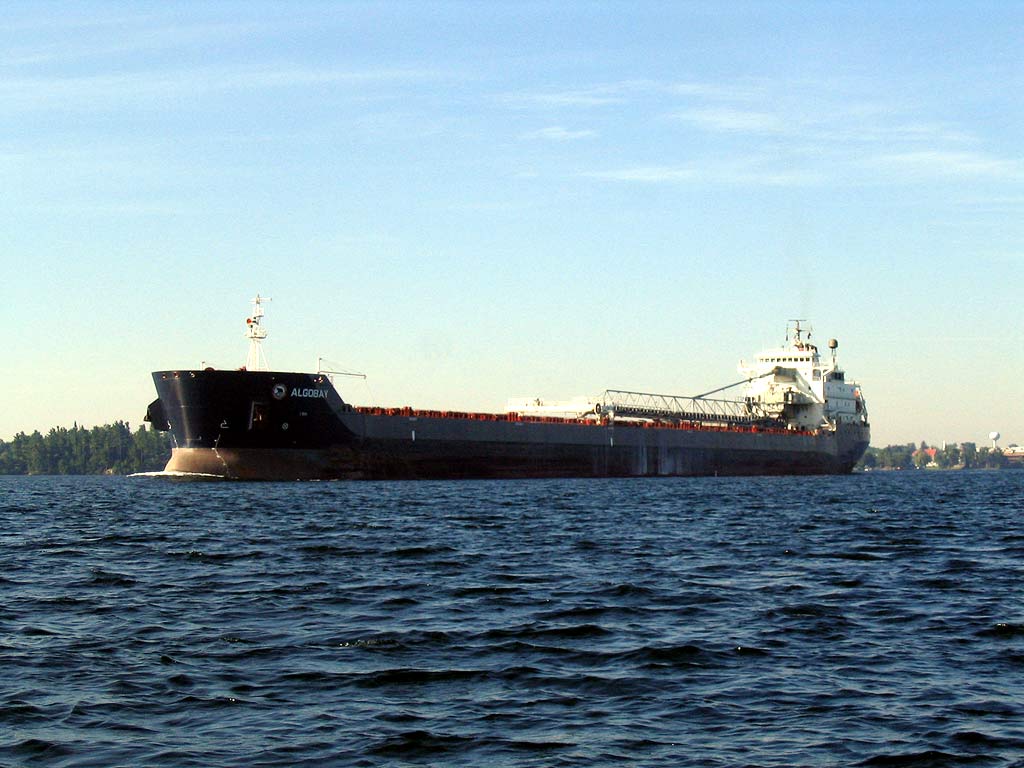
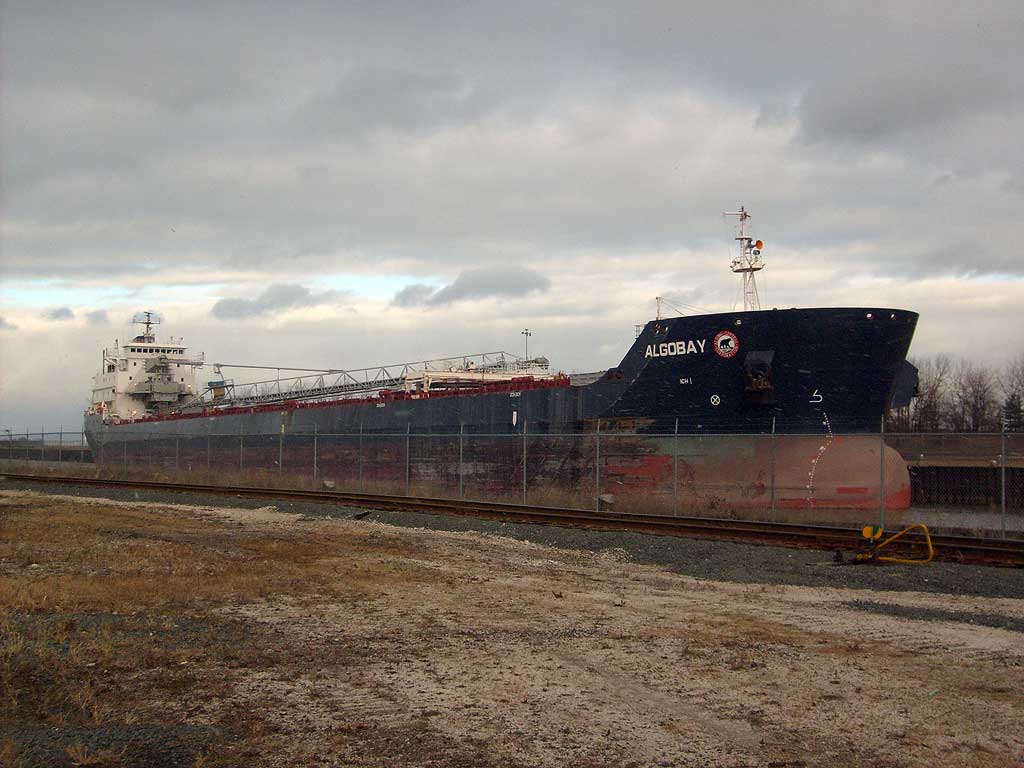
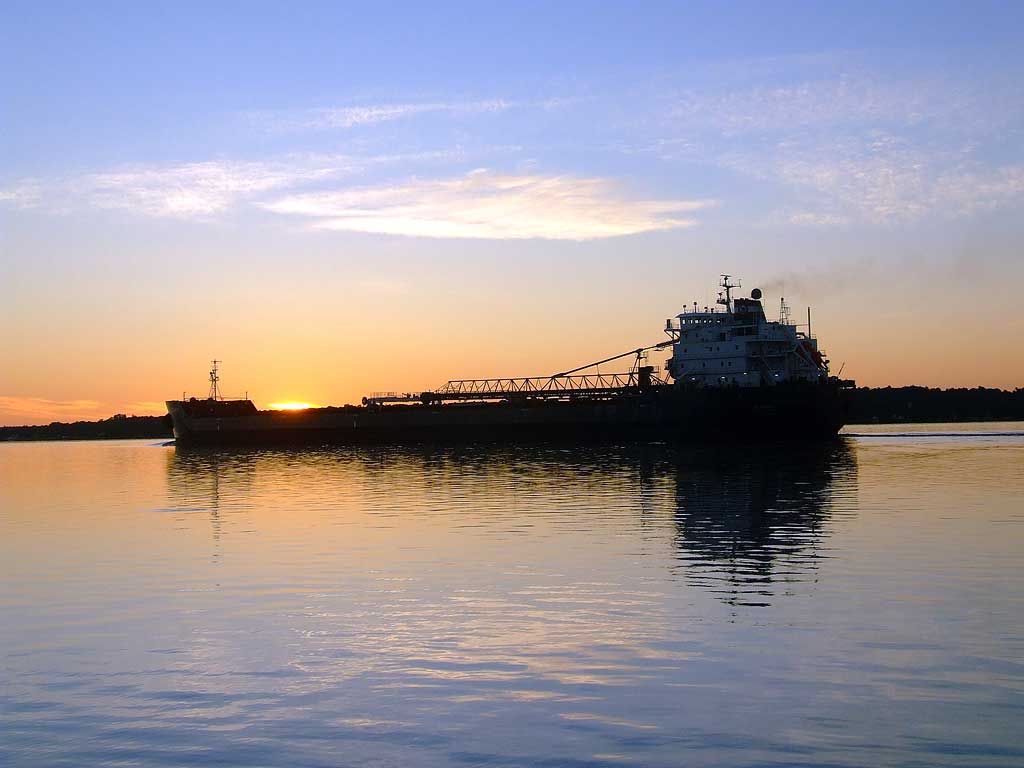
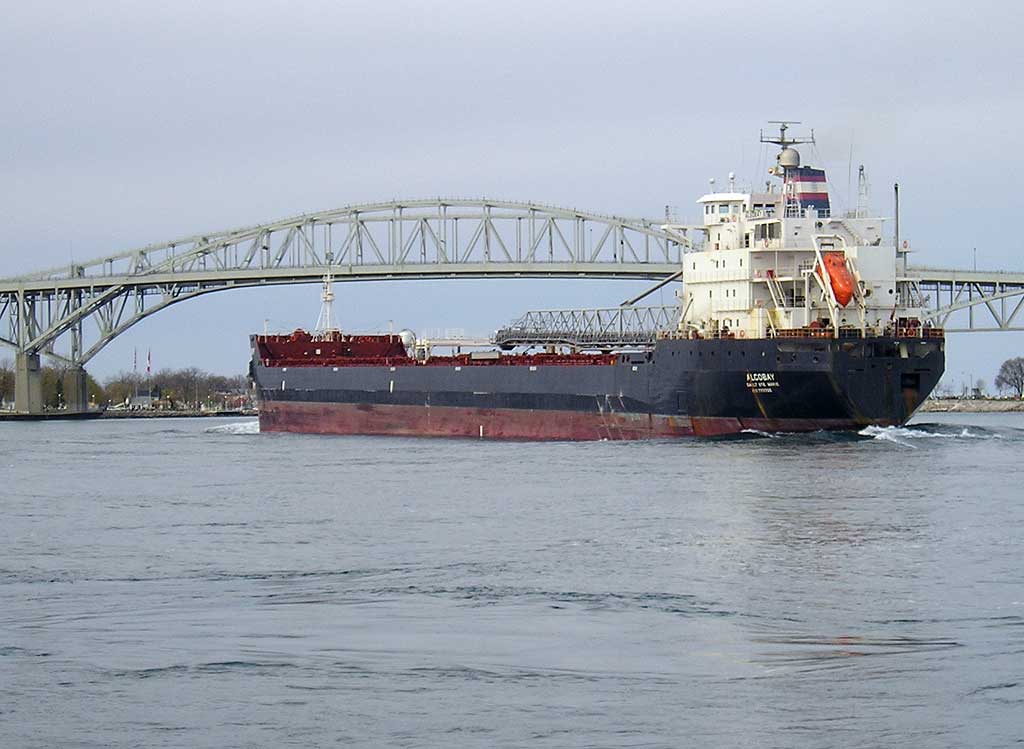
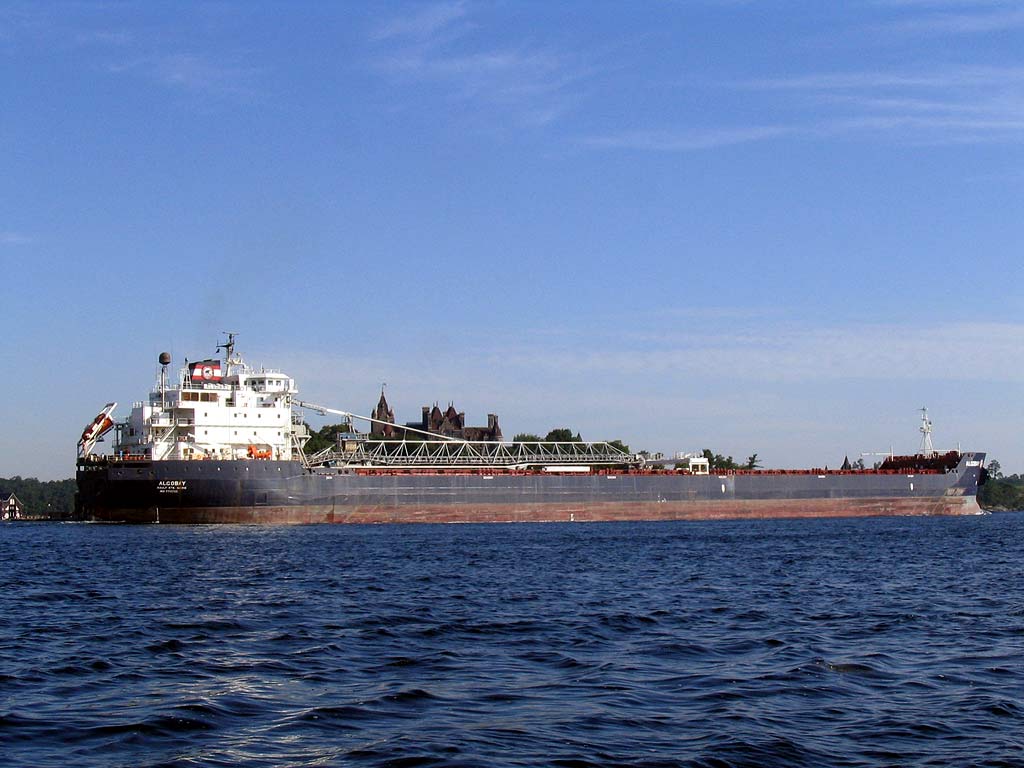
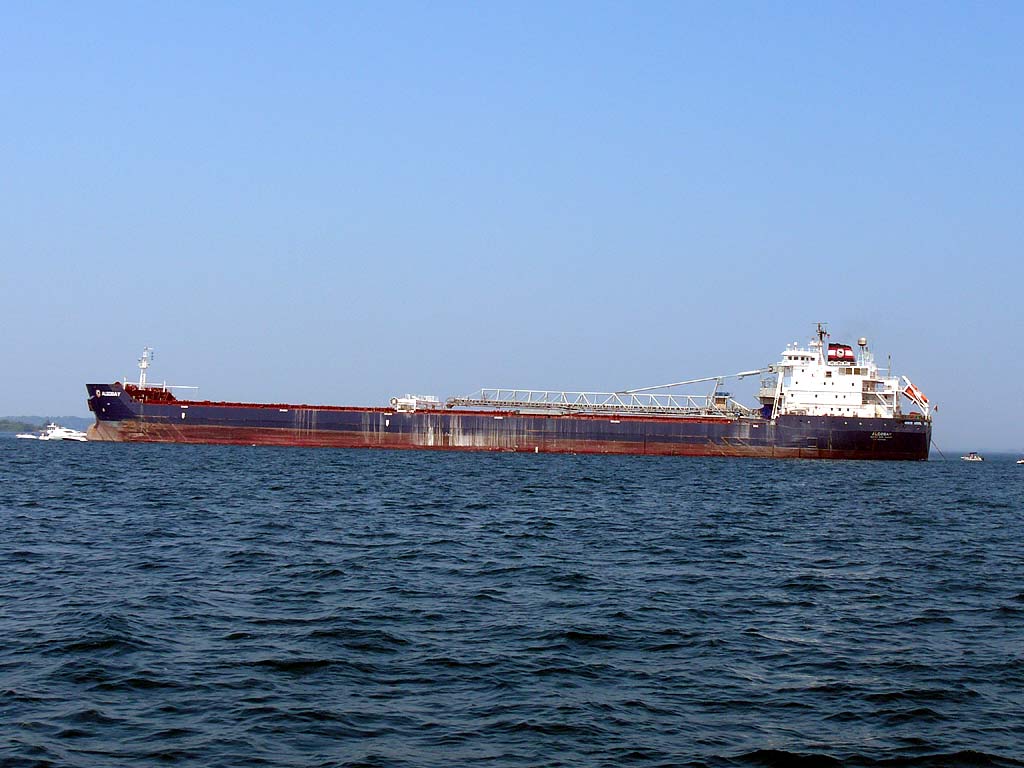
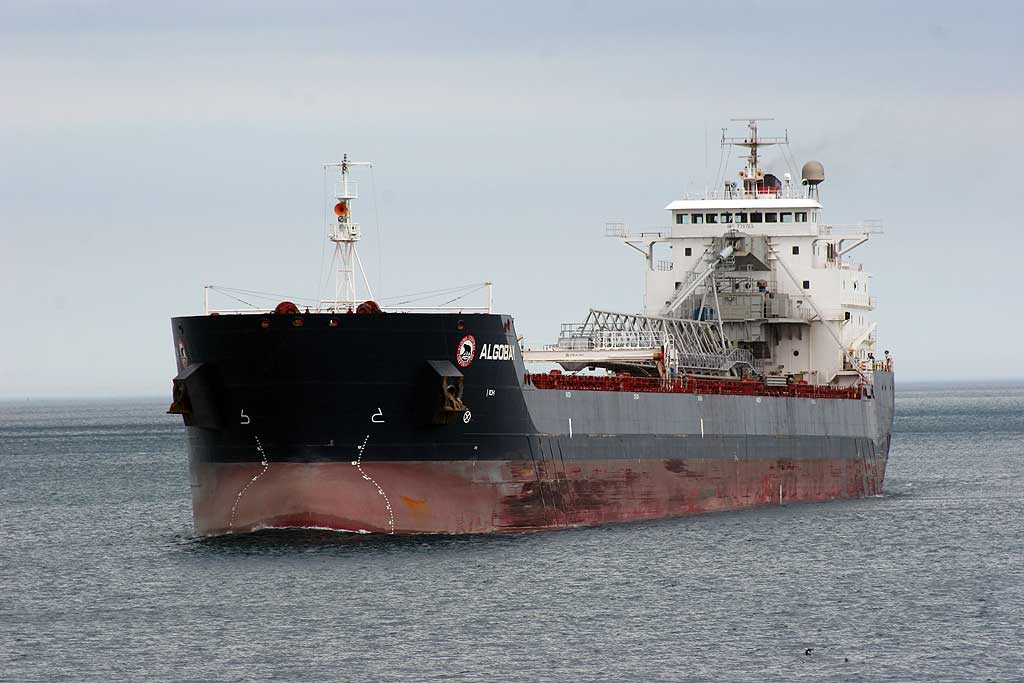
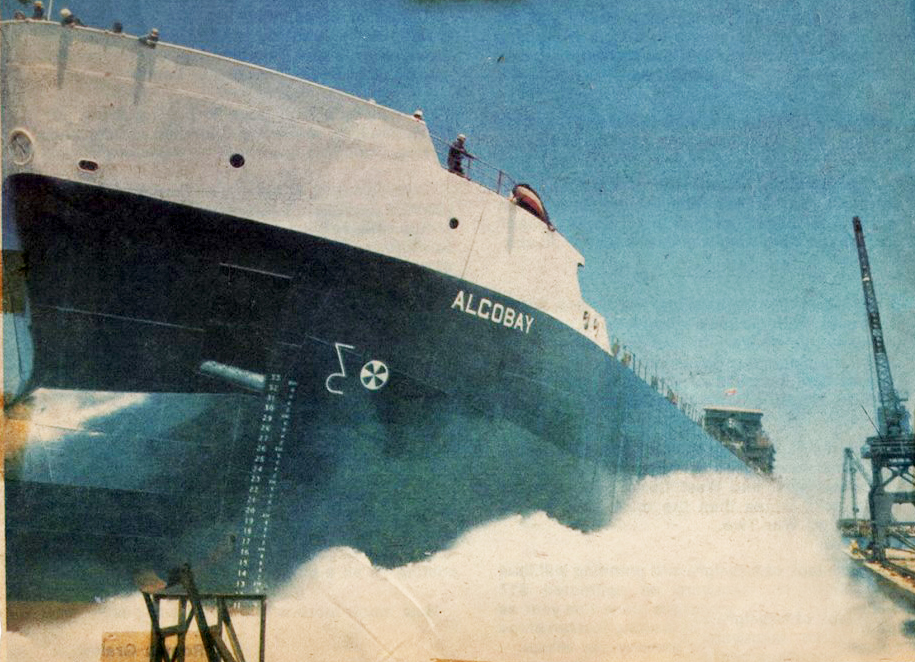
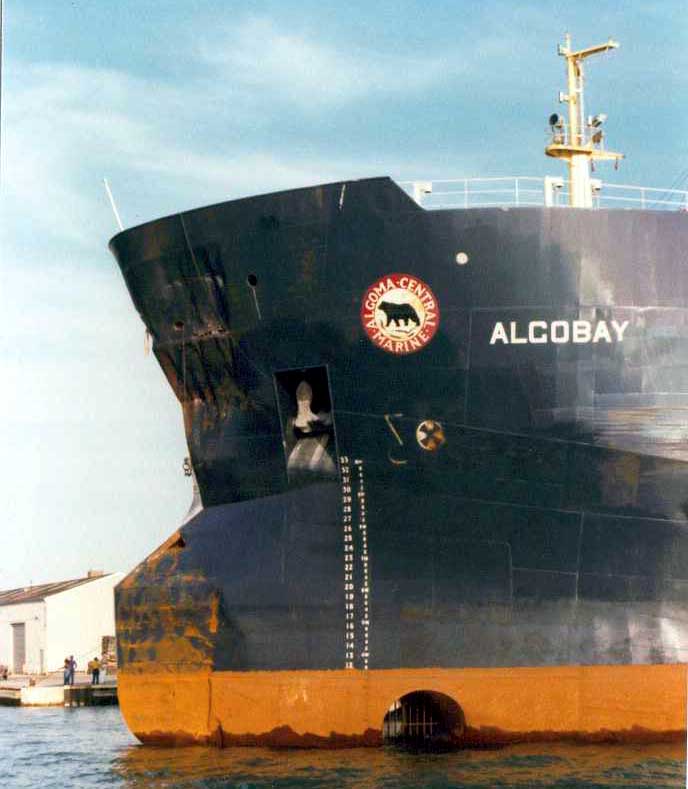
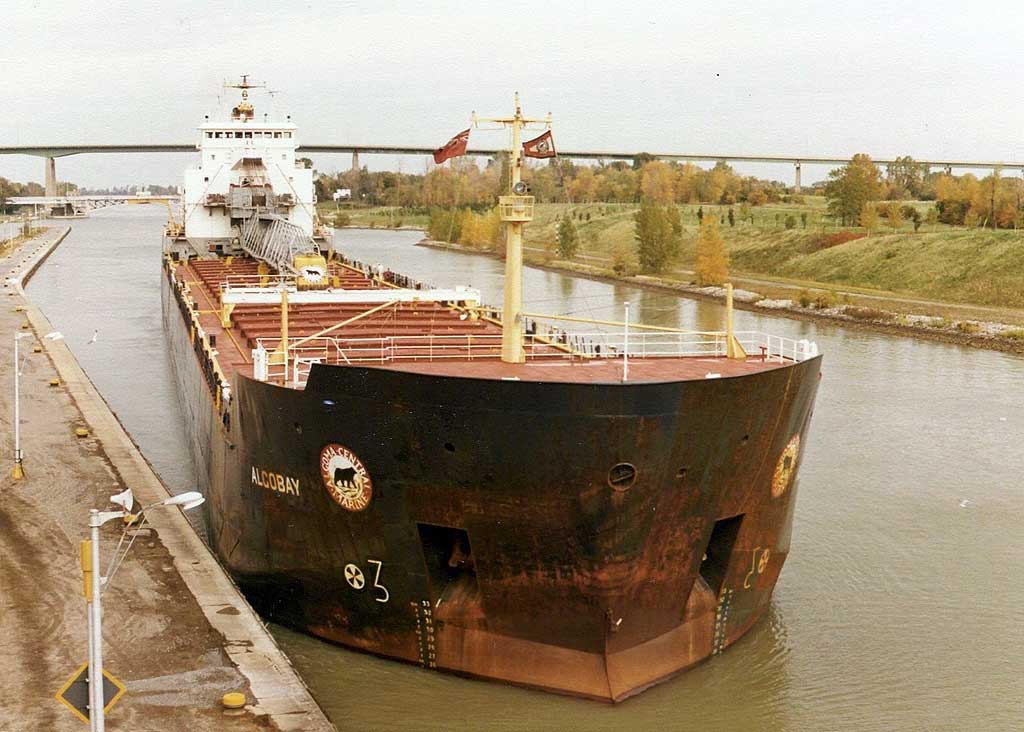
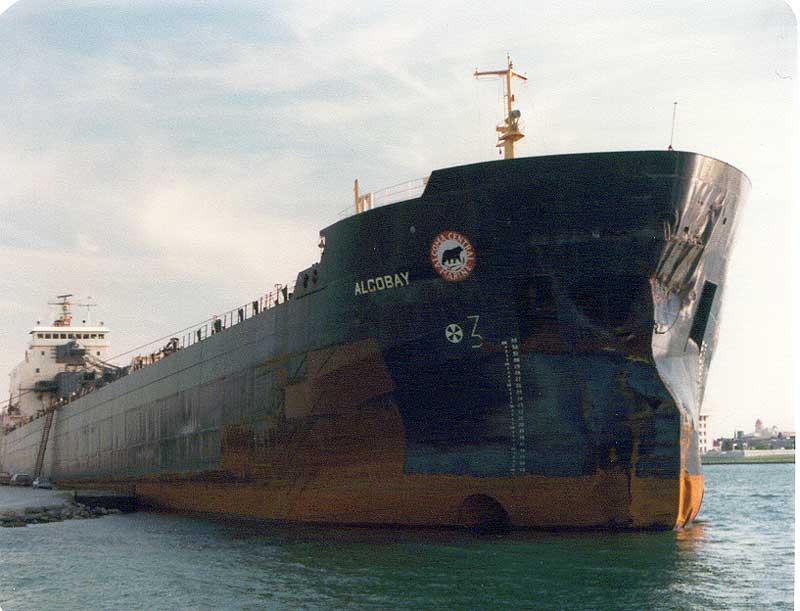
As a result, the keel was laid for Collingwood Shipyard’s hull #215 on August 16, 1977. Hull #215, a new self-unloading bulk carrier, was built in 1978 for Algoma Central Corp., Sault Ste. Marie, ON. The new carrier was launched on June 19, 1978 and was christened Algobay by Mrs. Cedric Ritchie, wife of the chairman and president of the Bank of Nova Scotia on that date at a ceremony at the shipyard. The Algobay was built to a “Nova Scotia Class” classification allowing for the operation of the vessel along the eastern seaboard. The new vessel had an advanced “V” shaped bow to the 24′ (7.32m) mark for working in ice, higher horsepower diesels and a greater degree of hull strengthening. The self-unloader was the widest vessel built to date at the shipyard. The Algobay’s name was derived from the common corporate naming prefix “Algo” and “bay” honoring the various bays of the Great Lakes but no one in particular.
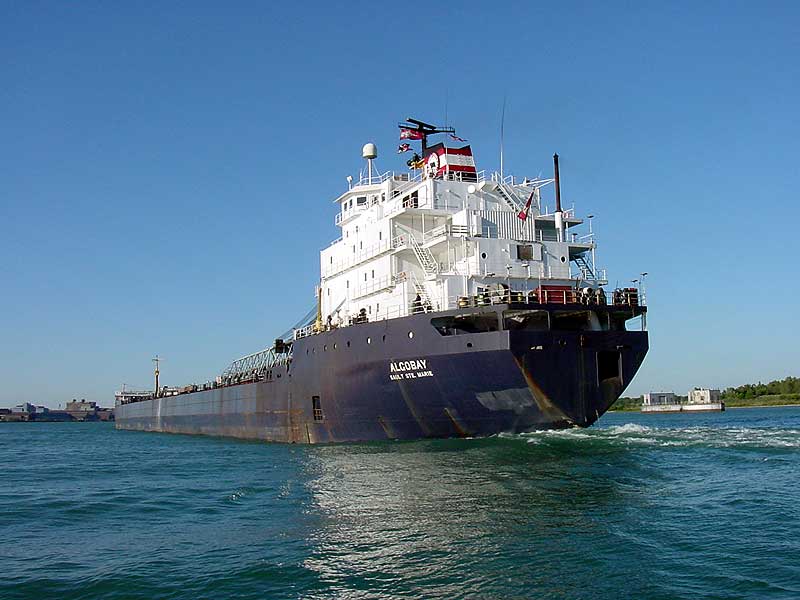
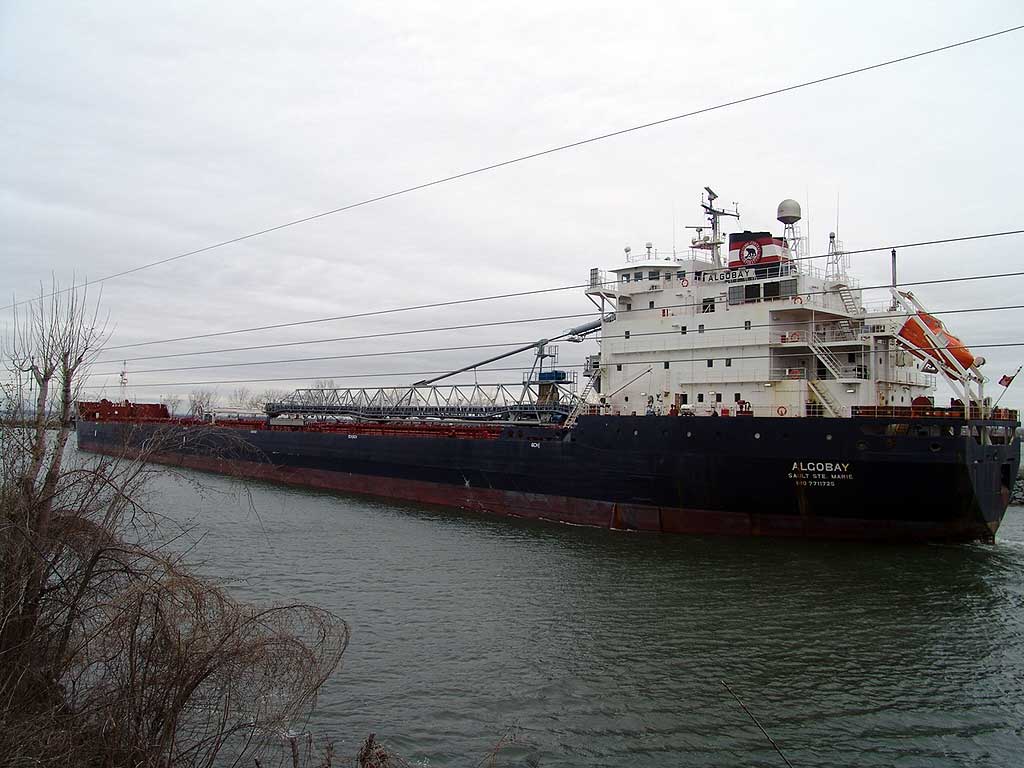
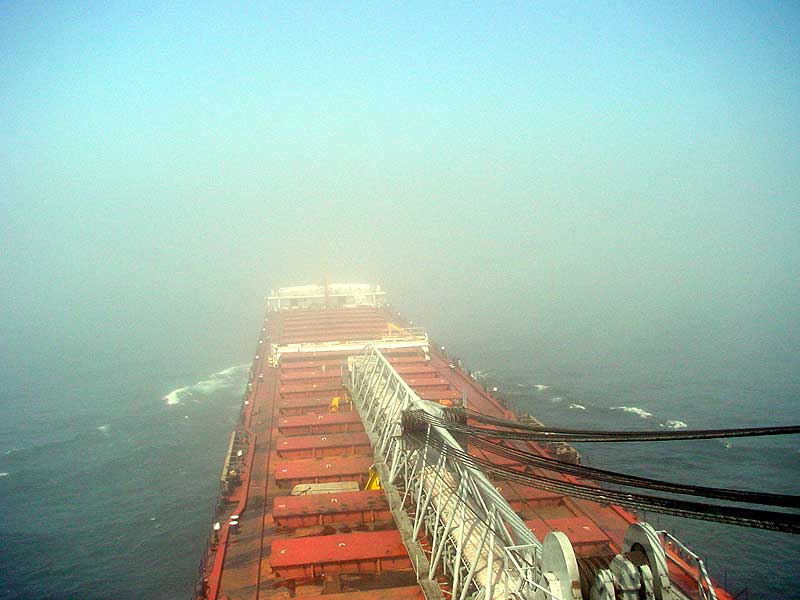
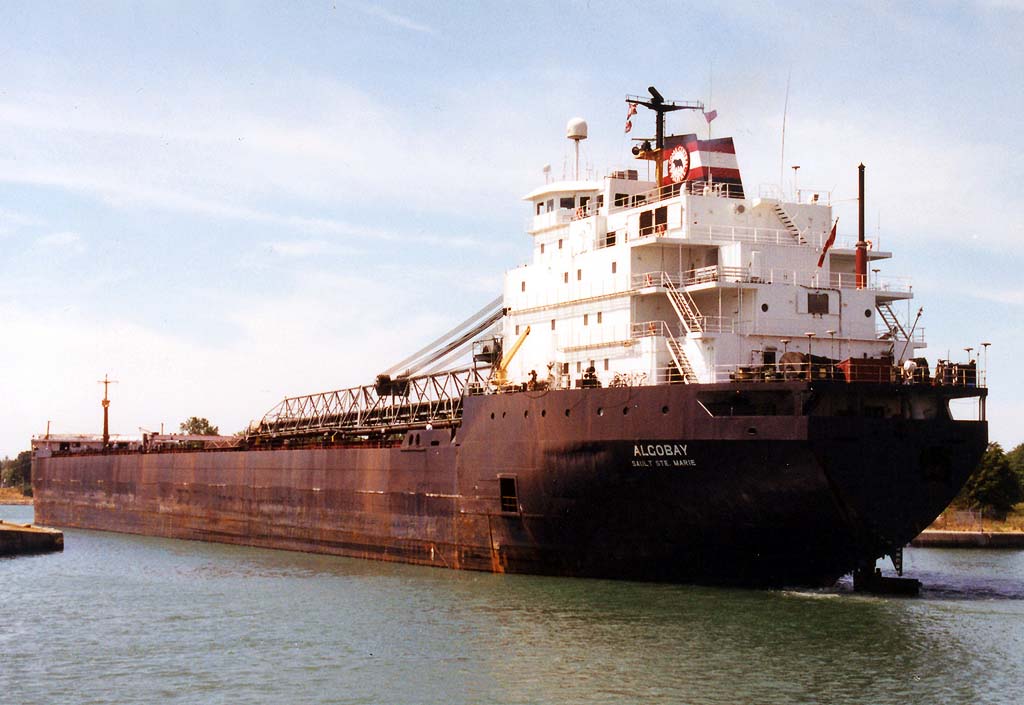
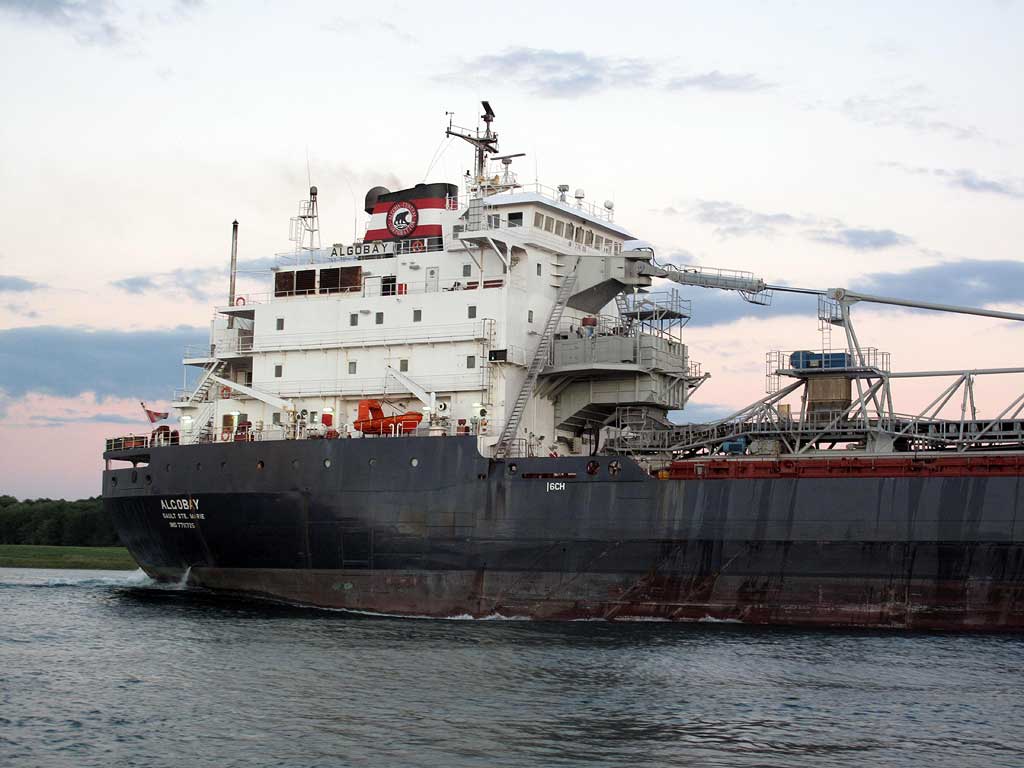
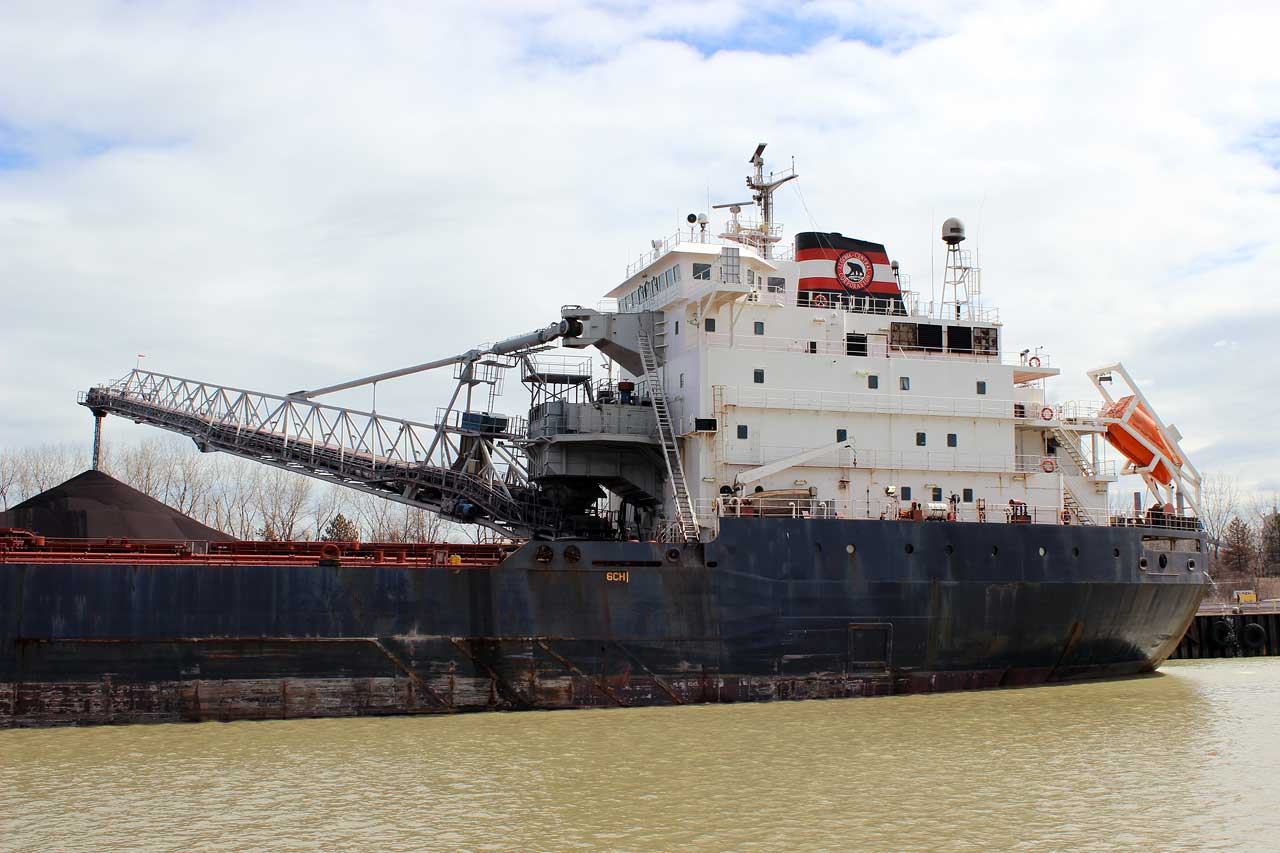
The overall dimensions of the Algobay as originally built were 730′ 00″ loa x 75′ 10″ beam x 46′ 06″ depth. The vessel was originally powered by 2 Pielstick 10PC2-3V-400 V-10 cylinder 5,350 b.h.p. diesel engines built by Crossley Premier Engines Ltd., Manchester, UK burning intermediate grade 40 fuel. The power drove a single controllable pitch propeller giving her a rated service speed of 13.8 m.p.h. Her original machinery also included a KaMeWa 1,000 h.p. bow thruster. Serviced by 22 hatches, the vessel’s 5 holds were capable of carrying 33,840 tons at a mid-summer draft of 32′ 08″ and approximately 25,945 tons at the Seaway draft of 26′ 06″. These holds had the cubic capacity to handle 26,964 tons of coal. Other capacities included 447 tons of fuel oil, 254 tons of diesel oil, 112 tons of potable water and 16,464 tons of water ballast. The Algobay displaced 9,050 tons lightweight. The self-unloading equipment consisted of a variable speed 3-belt gravity system with bulk flow gates, plastic linings and vibrators throughout feeding to a single loop belt elevator and a stern-mounted 261′ discharge boom that can swing 90 degrees to port or starboard and can discharge at a rate of up to 5,354 tons per hour.
The Algobay sailed on her maiden voyage leaving Collingwood on October 26, 1978 in ballast to Stoneport, MI to load limestone for Sarnia, ON. On November 14, 1978; as the Algobay was leaving Sept Isles, QC for Sydney, NS with a load of iron ore, she was in collision with the 90,000 ton 832′ 06″ Italian registered ore carrier Cielo Bianco. The tug Pointe Marguerite, which was towing the Cielo Bianco at the time, was crushed between the 2 larger vessels and sunk with the loss of 2 lives. The Algobay then proceeded to Ashtabula, OH for a partial unload and on to Port Arthur Shipbuilding, Thunder Bay, ON for repairs. Late the following year, on December 2, 1979, the self-unloader grounded at Crossover Island on the St. Lawrence River west of Brockville, ON when the steering gear failed. She was pushed out of the shipping channel by a USCG tug but was not freed from her strand until December 4 with the assistance of tugs Robinson Bay, Helen McAllister and Salvage Monarch. There was no damage other than the necessary repairs to the steering gear.
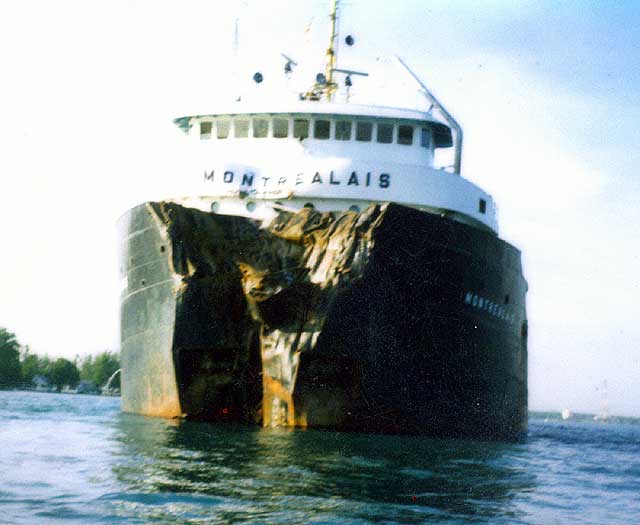
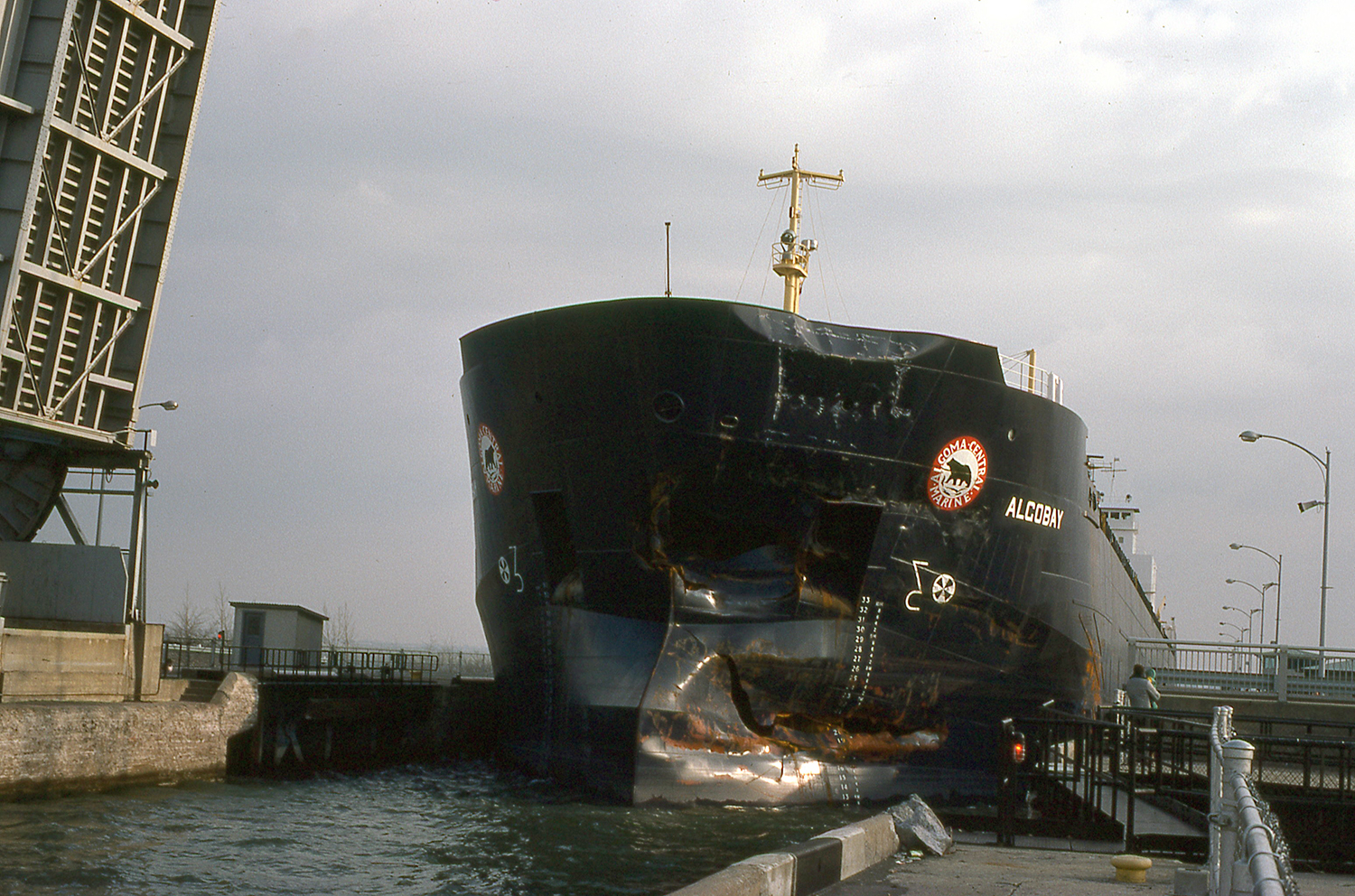
The Algobay was involved in a head-on collision with the Upper Lakes steamer Montrealais on an extremely foggy St. Clair River just below Port Huron, MI on June 25, 1980 with resulting extensive bow damage to both vessels. The Algobay’s approximately $500,000 worth of damage was repaired at Fraser & Associates, Port Colborne, ON. Damage to the Montrealais exceeded $1.5 million. After being repaired, on September 10, 1980, the Algobay is noted to have loaded the 400 billionth ton of iron ore at Sept Isles, QC and on April 5, 1982 was the honored vessel officially opening the Welland Canal for that season. On May 16, 1983 after unloading at Halifax, NS, the Algobay proceeded to Saint John, NB to load 33,000 tons of salt for Montreal, the first load of a 6 year contract.
The Algobay was upgraded at Port Weller Dry Docks, St. Catharines, ON to “Caribbean Class” during the winter of 1987/1988 thus allowing her to trade on deep sea Atlantic Ocean and Gulf of Mexico routes. In the summer of 1989, the versatile carrier was noted to have rescued 2 people from dinghy in the Florida Straits. Then, on February 5, 1990, the Algobay was reflagged Liberian at Shelbourne, NS being manned by Canadian senior officers and Filipino junior officers and unlicensed crew. The vessel was chartered for a 2 year period to Atlantic Beltships, a partnership of Jebsens Thun Beltships Investments Ltd. and A.C.C. Shipping (Barbados) Ltd., all of Bridgetown, Barbados. Both A.C.C. Shipping and Atlantic Beltships were subsidiaries of Algoma Central Corp. and were part of the Algoma Central Marine Group.
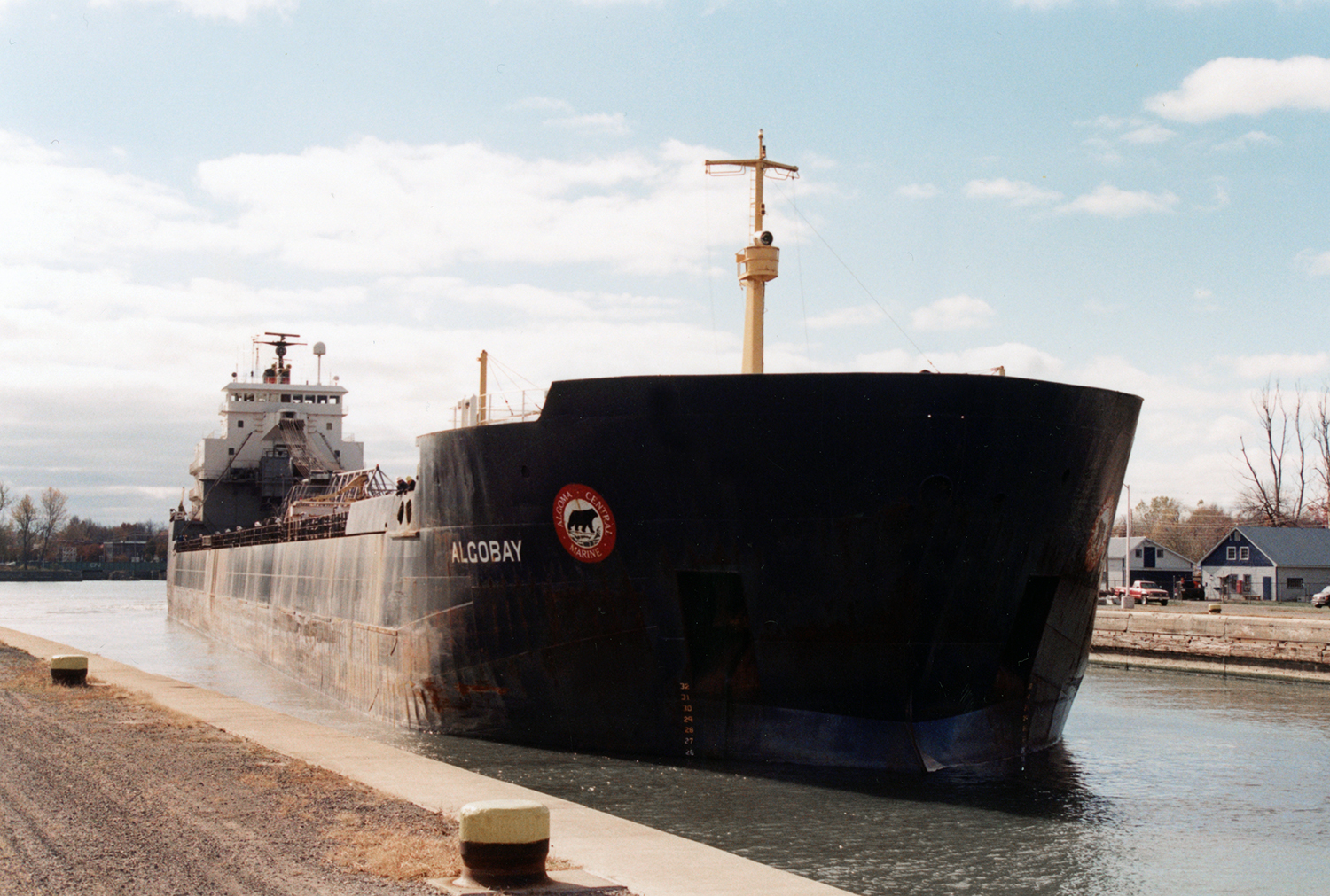
The Algobay was chartered by Canada Steamship Lines in 1994 and was renamed Atlantic Trader that year. As part of her new duties, the Atlantic Trader delivered the first cargo of coal from Ashtabula, OH to New Brunswick Power at Belledune, NB. Other coal cargoes were delivered to Hamilton, Courtright and Nanticoke, ON as well as iron ore to Hamilton and Nanticoke and grain to Halifax. The self-unloader came off charter in 1997 and regained her original name of Algobay upon her return to the Algoma fleet. While under charter, on October 6, 1995, the vessel was returned to Canadian registry
With her return to the Algoma fleet, the Algobay sailed under the management of Seaway Self Unloaders, St. Catharines, ON (a partnership of Algoma Central and Upper Lakes Group). At the beginning of the new century, the partnership became Seaway Marine Transport who now operate and manage both the Algoma and Upper Lakes fleets of bulkers and self-unloaders. On June 9, 1999 while exiting the Poe Lock at the Soo, the unloading boom having been raised to correct a slight port list, swung out of control knocking down 5 light standards. Extensive damage resulted to the hydraulic slewing system with the boom itself receiving some structural damage.
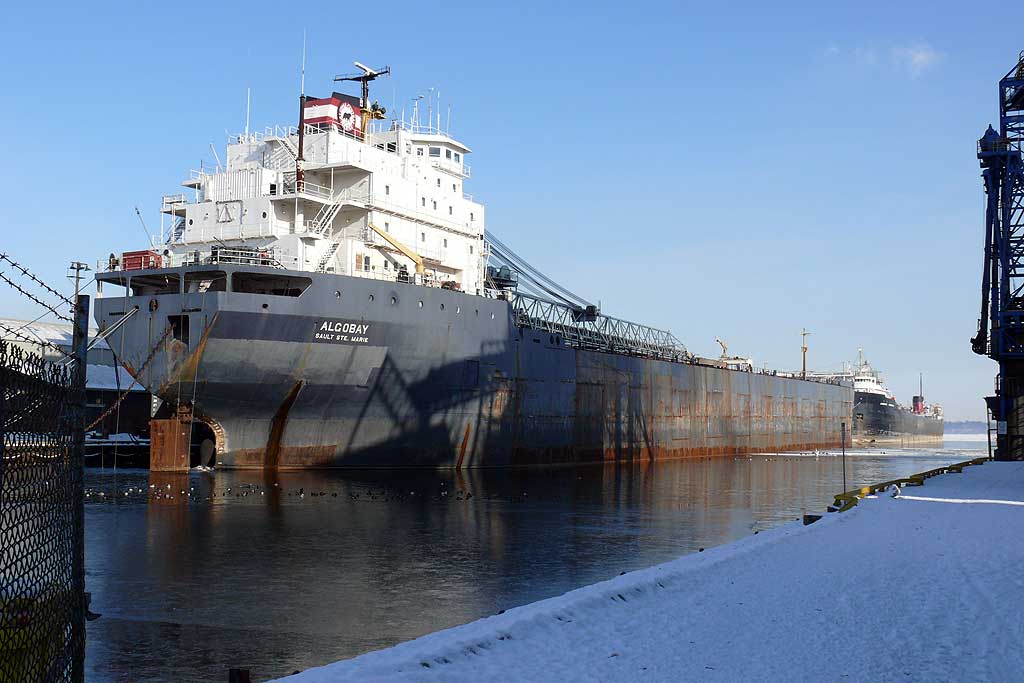
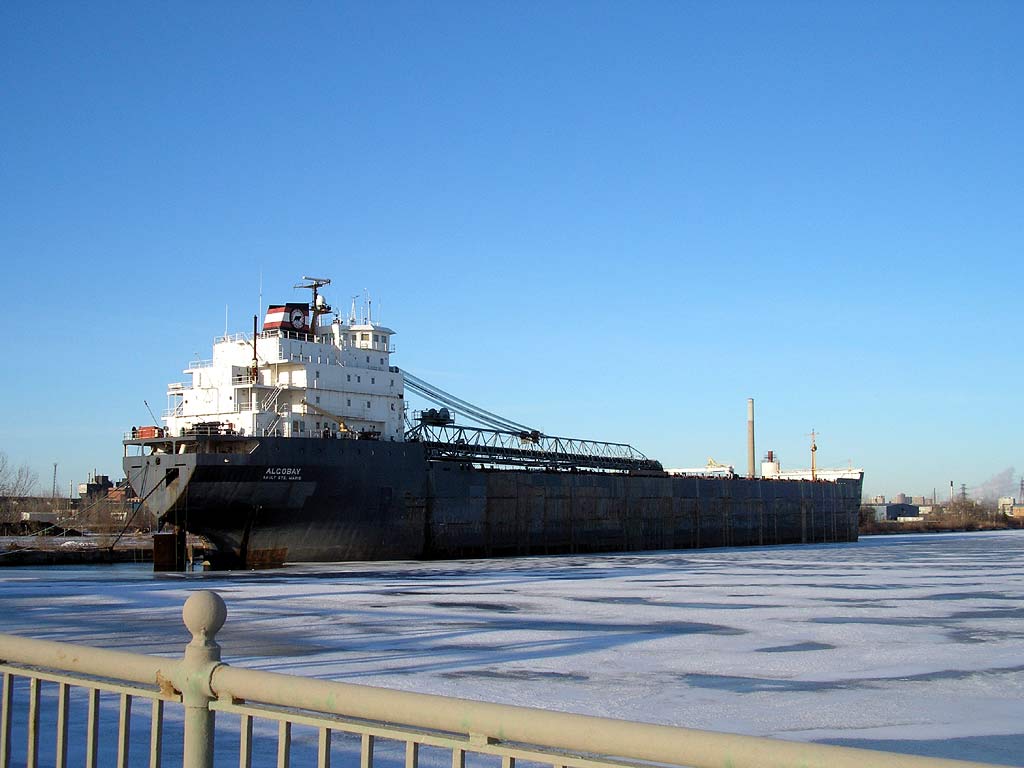
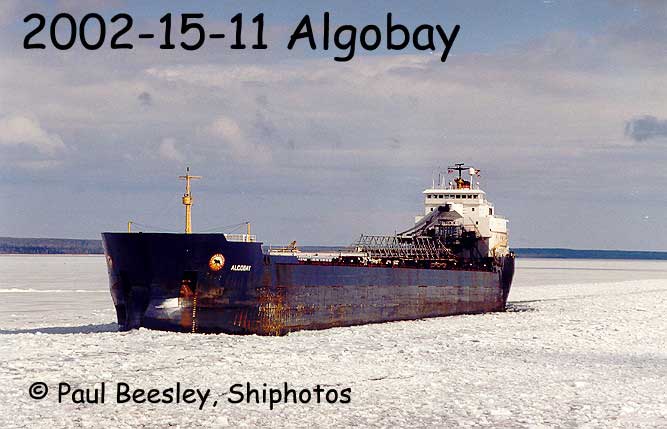
The Algobay entered long term lay-up on December 25, 2002 at Toronto, ON, the hull reportedly requiring extensive steelwork and equipment upgrades. Then, on November 7, 2007, Algoma in conjunction with Upper Lakes Shipping announced the construction of two new maximum seaway size self-unloading forebodies to attach to the aft-ends of the Algobay and fleet mate Algoport. The forebodies were built by Chengxi Shipyard, Jiangyin, China at a total cost of approximately $125 million, the cost to be split equally between the 2 companies involved. Due to the sinking of the Algoport while in transit to China on September 6, 2009, the forebody being built for the Algoport became a complete new-build (new forebody and stern) to be named Canadian Mariner entering service in 2011.
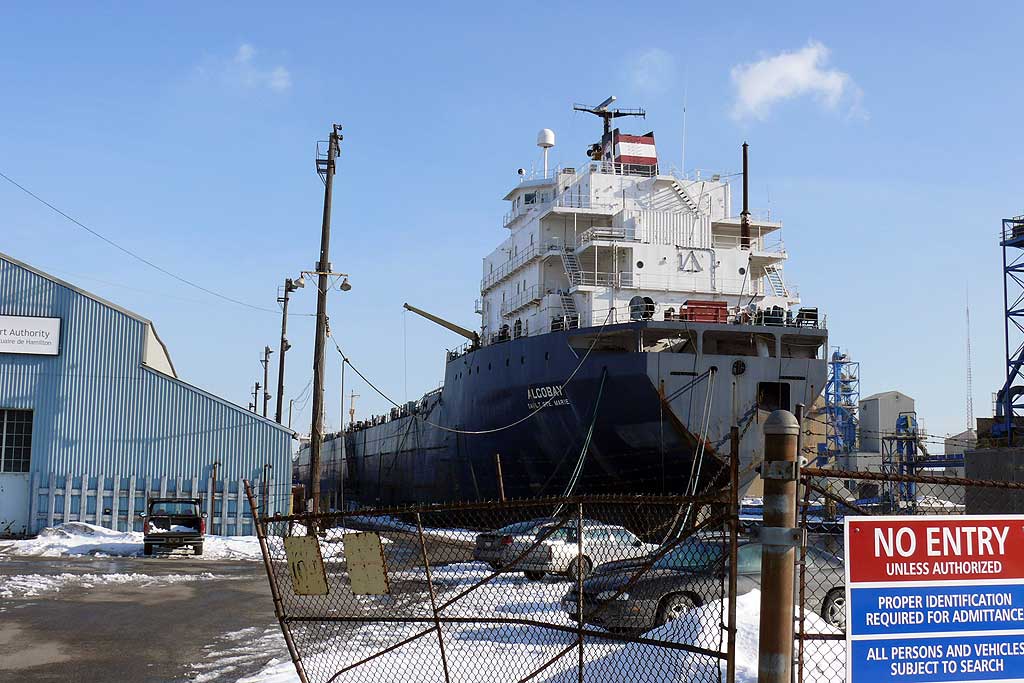
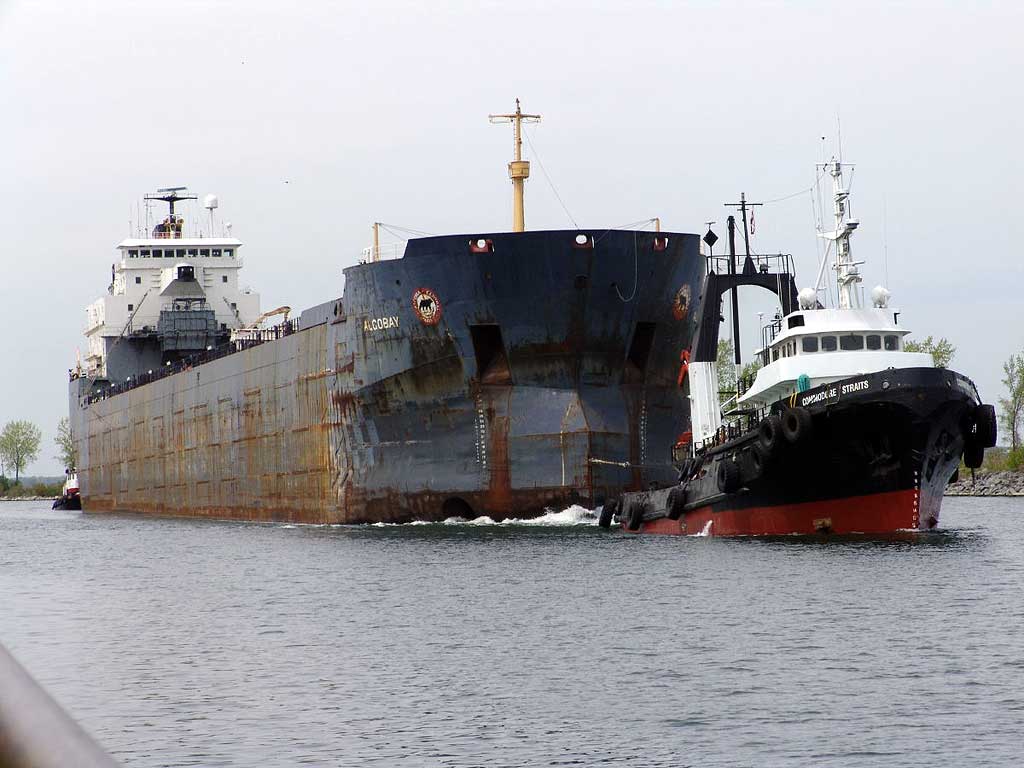
Shortly after the announcement, on November 28, 2007, the Algobay was moved by tugs from Toronto to Pier 10 at Hamilton, ON in preparation for the upcoming overseas tow. The tow departed Hamilton on May 13, 2008 for Montreal, QC towed by Upper Lakes tug Commodore Straits. Marcon International, Coupeville, WA was contracted to arrange the towing of the Algobay to Jiangyin, China. After a short stay in Montreal, the 5,200 b.h.p. ocean tug Hellas (606 GRT) operated by Gigilinis Shipping Group, Thessaloniki, Greece departed Montreal on May 25 with the Algobay in tow bound for Gibraltar where, on June 16, the towing duties were transferred to the 8,202 b.h.p. ocean tug Simoon (978 GRT) operated by ITC Management, Heemstede, Netherlands. The Simoon towed the Algobay through the Suez Canal arriving at Jiangyin, China on September 10, 2008.
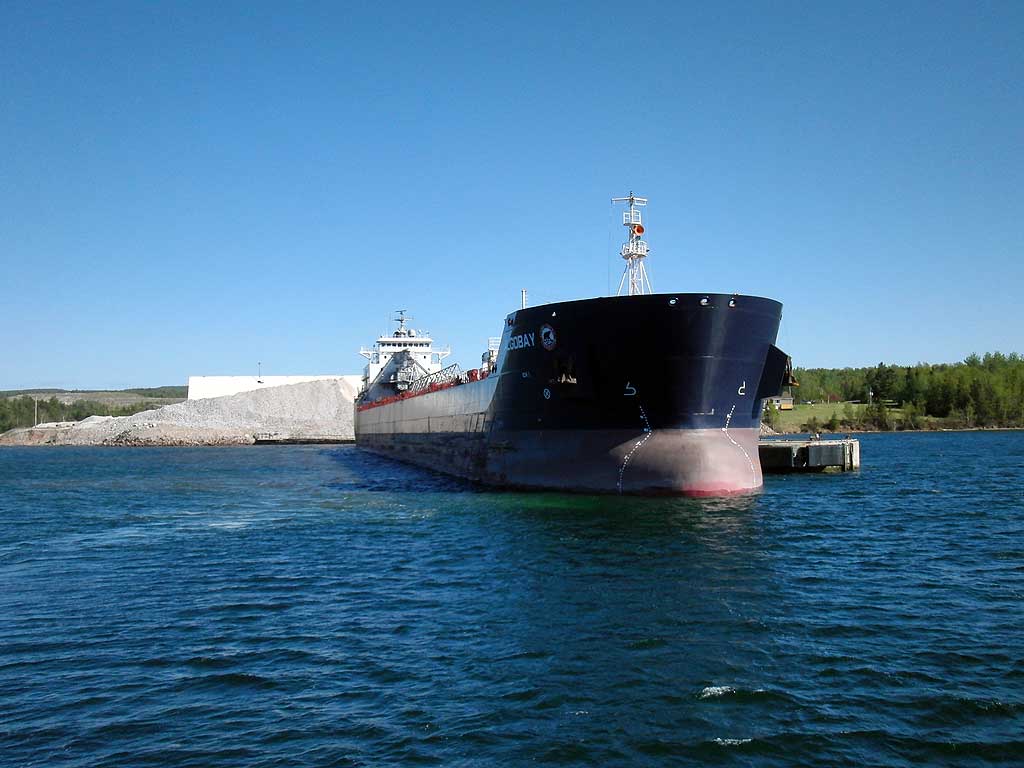
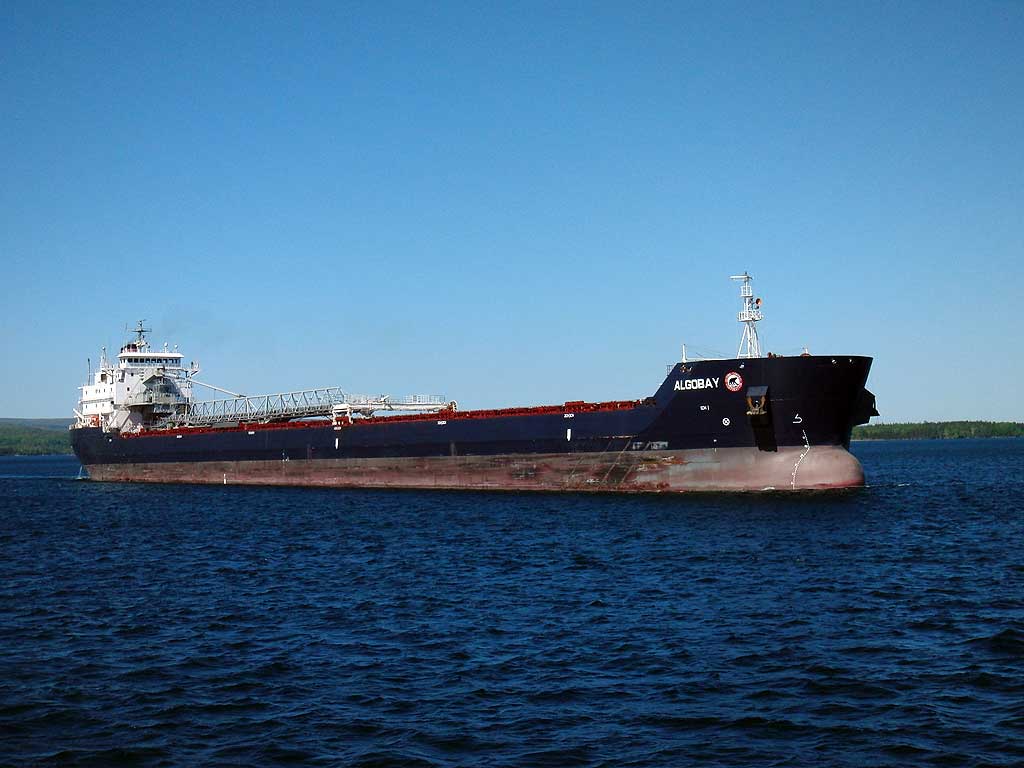
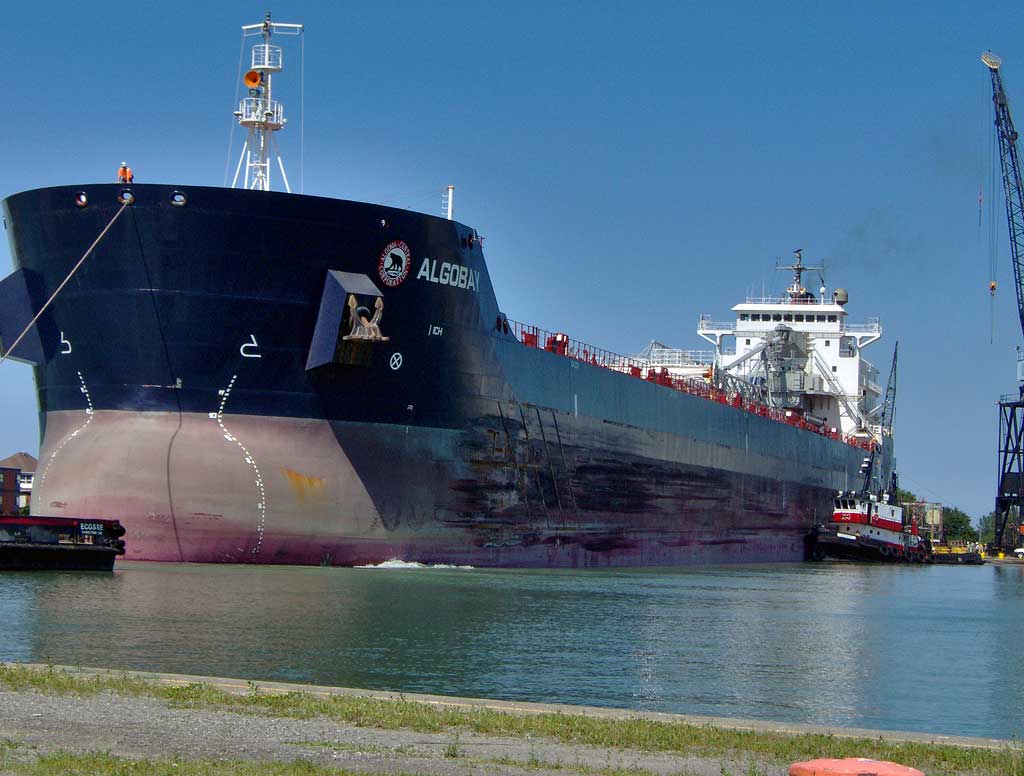
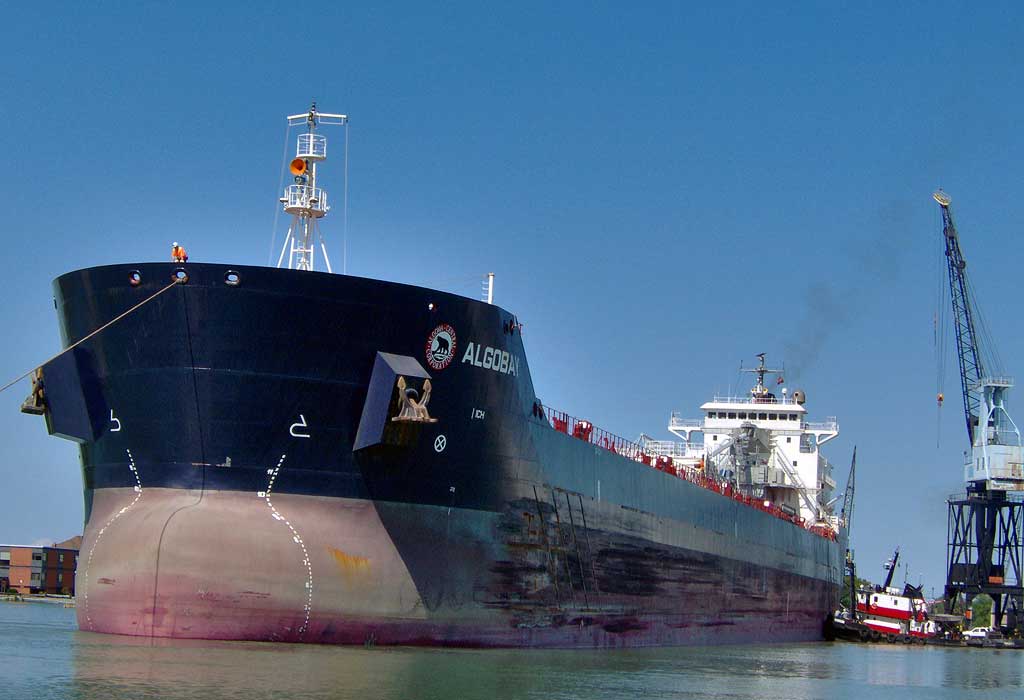
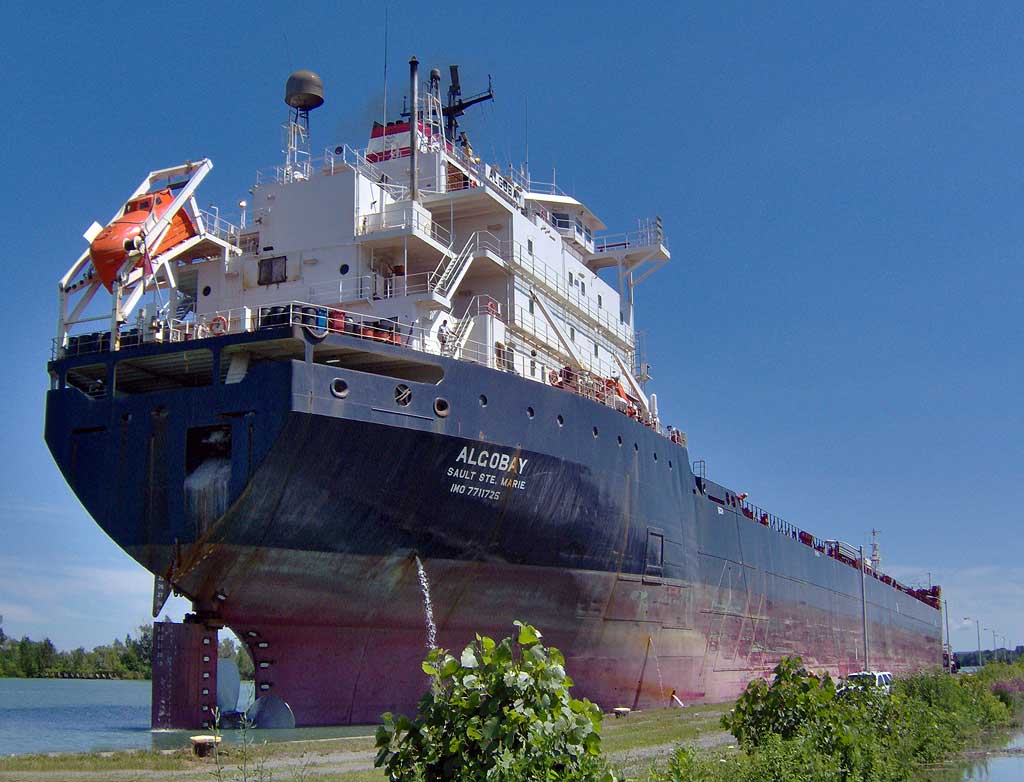
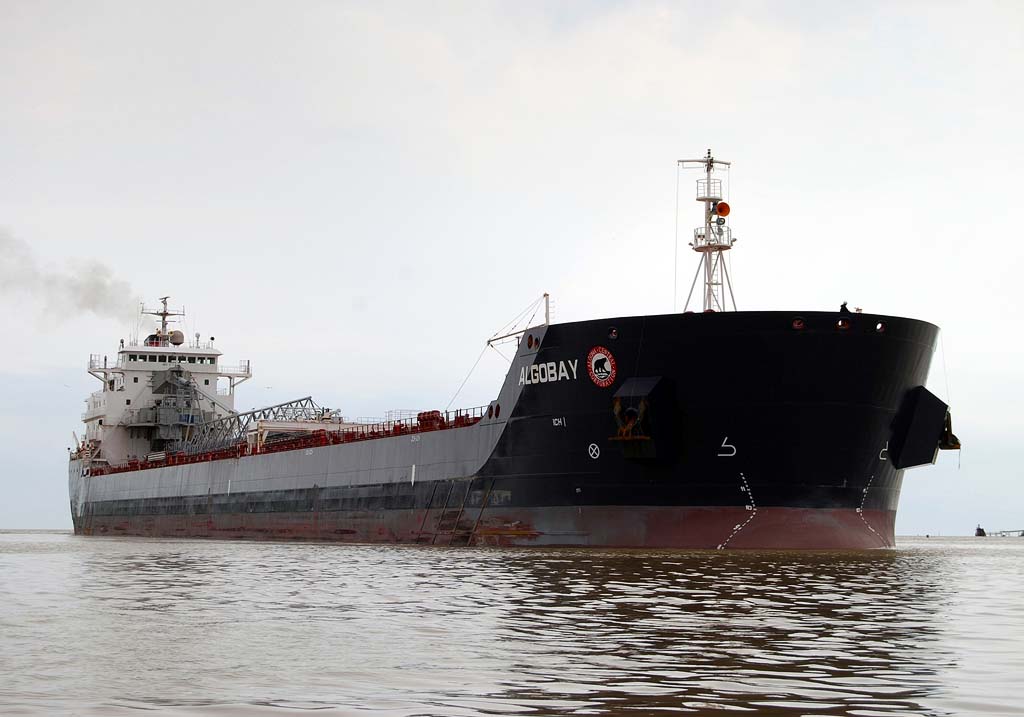
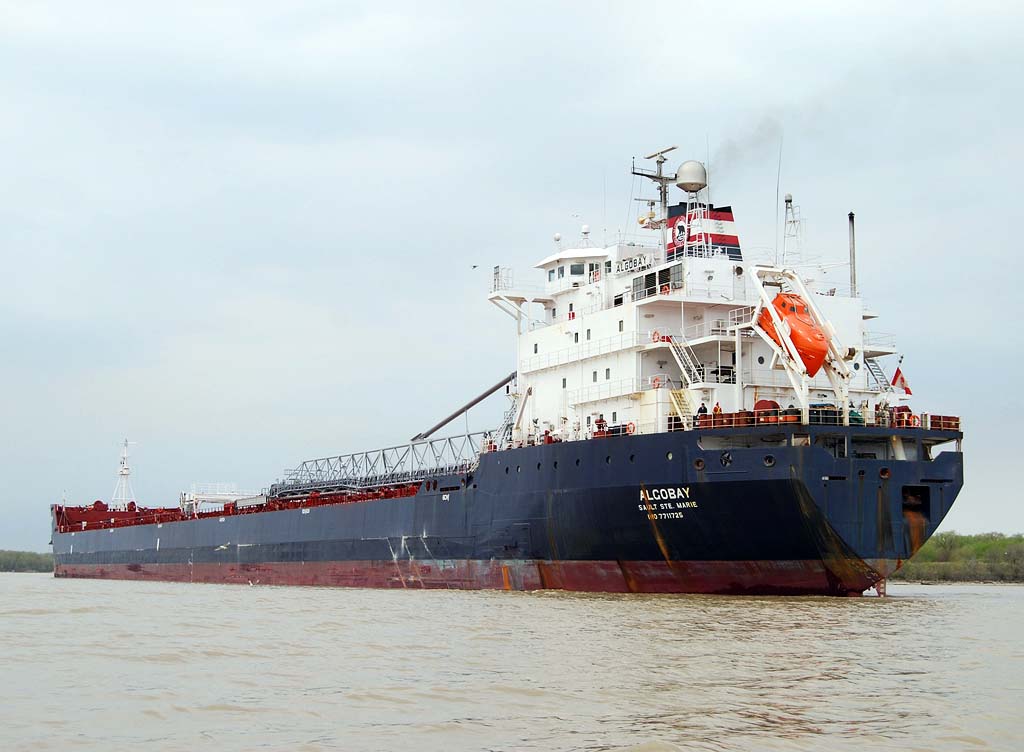
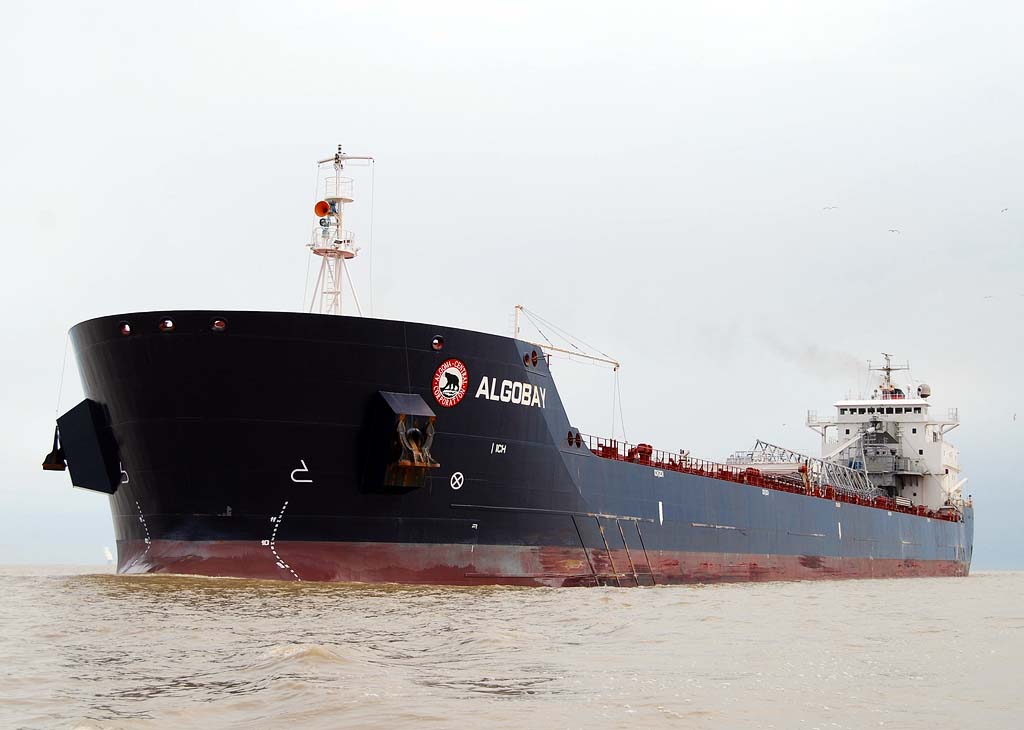
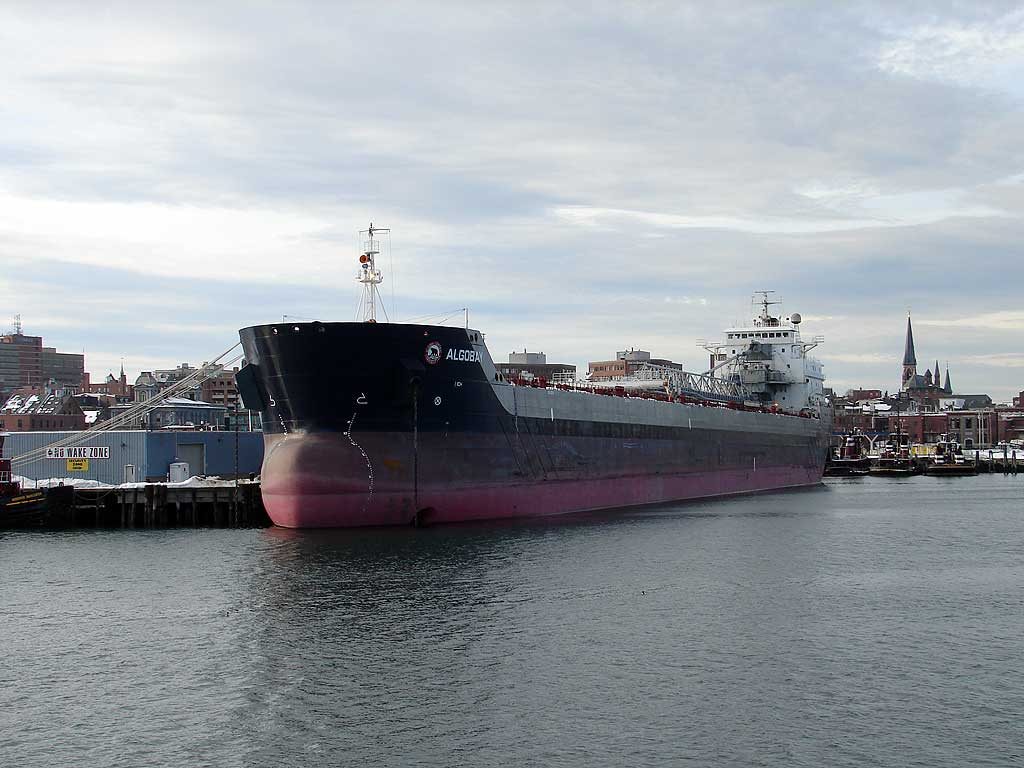
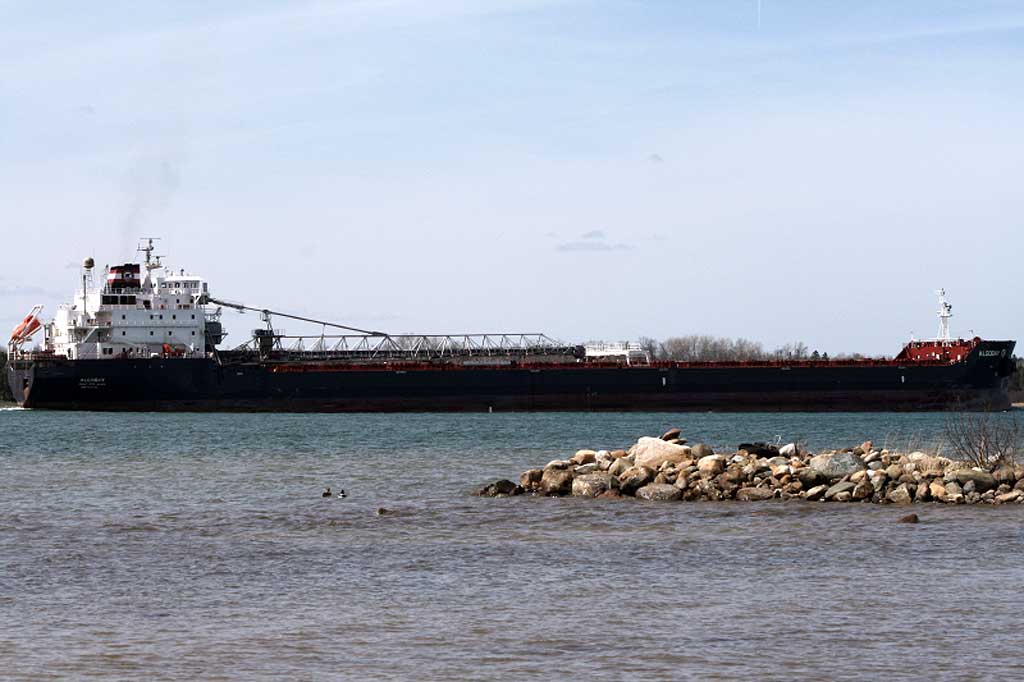
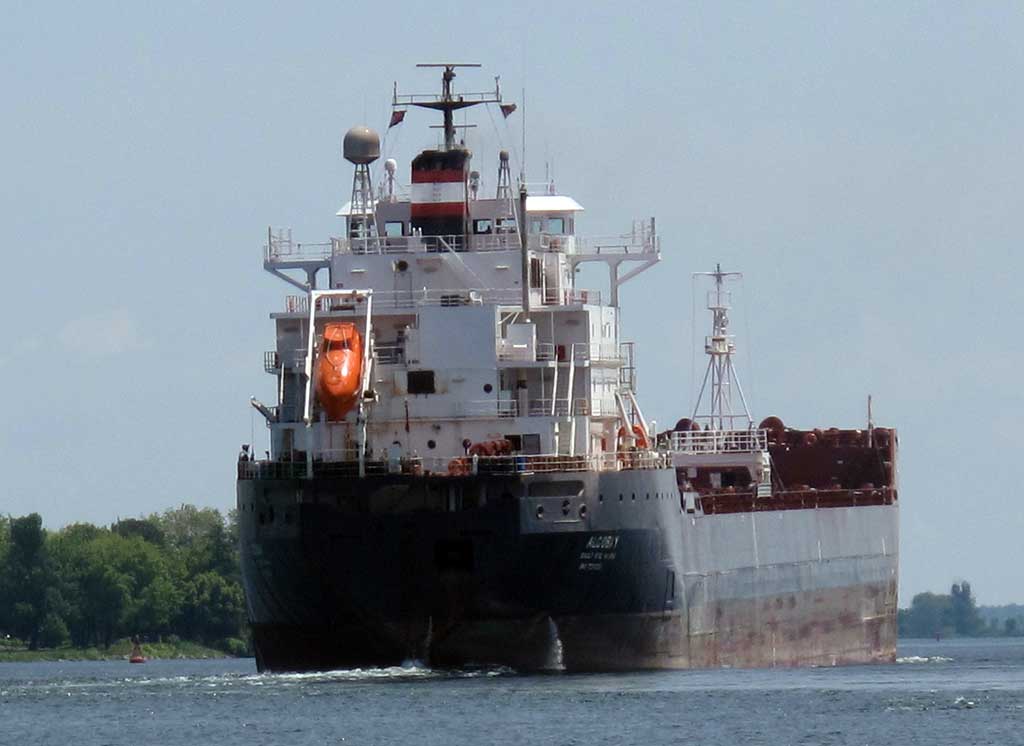
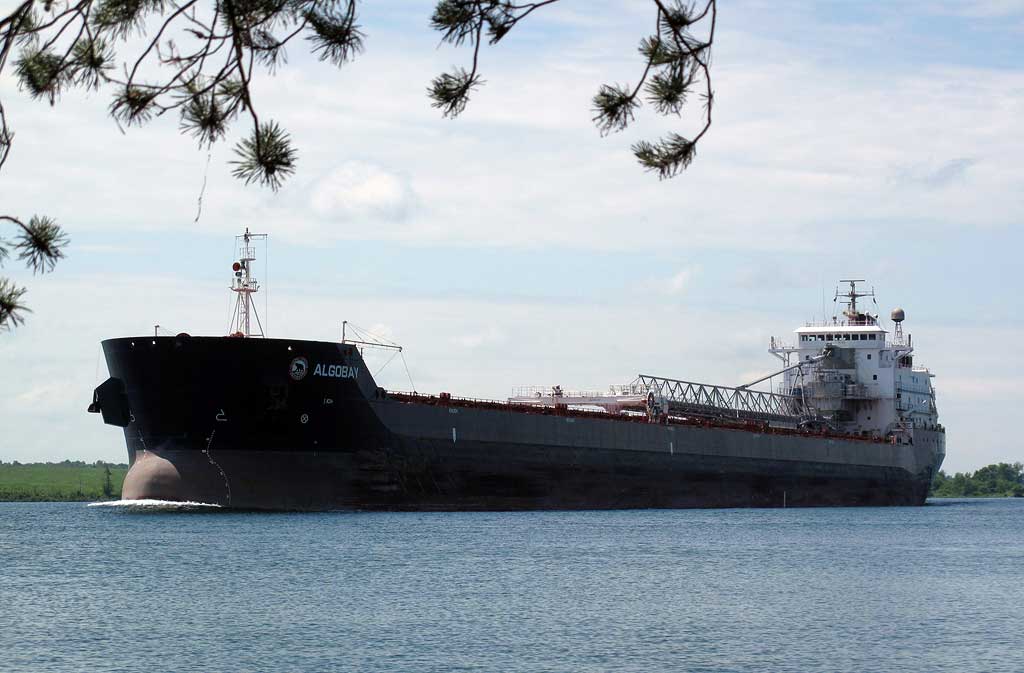
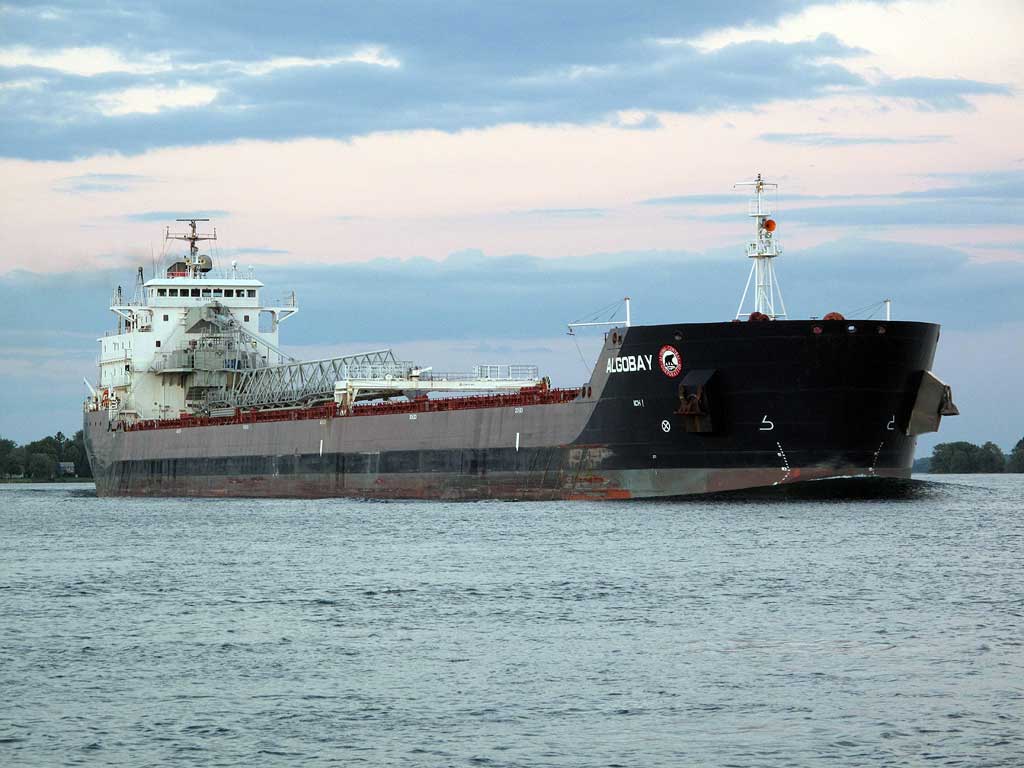
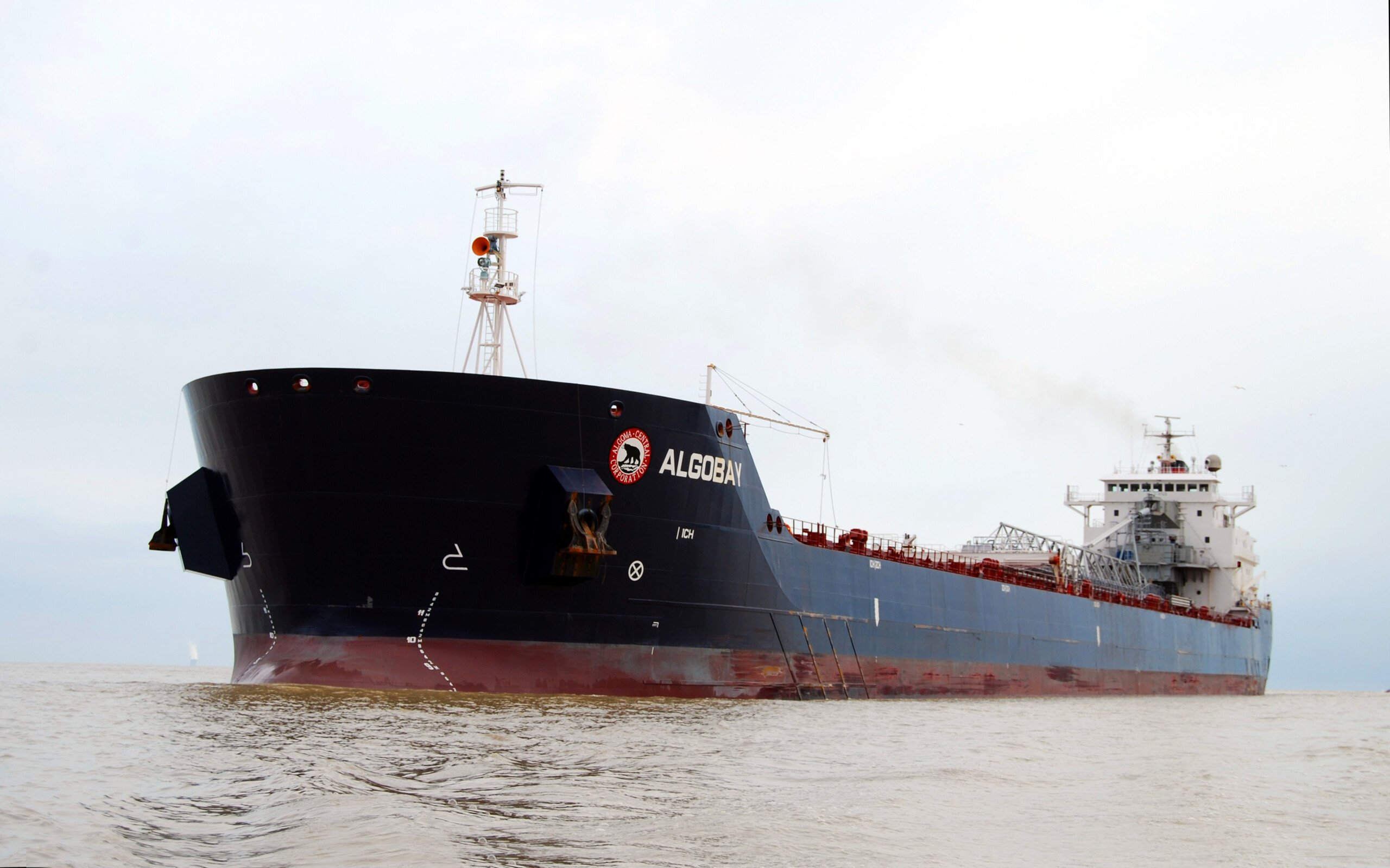
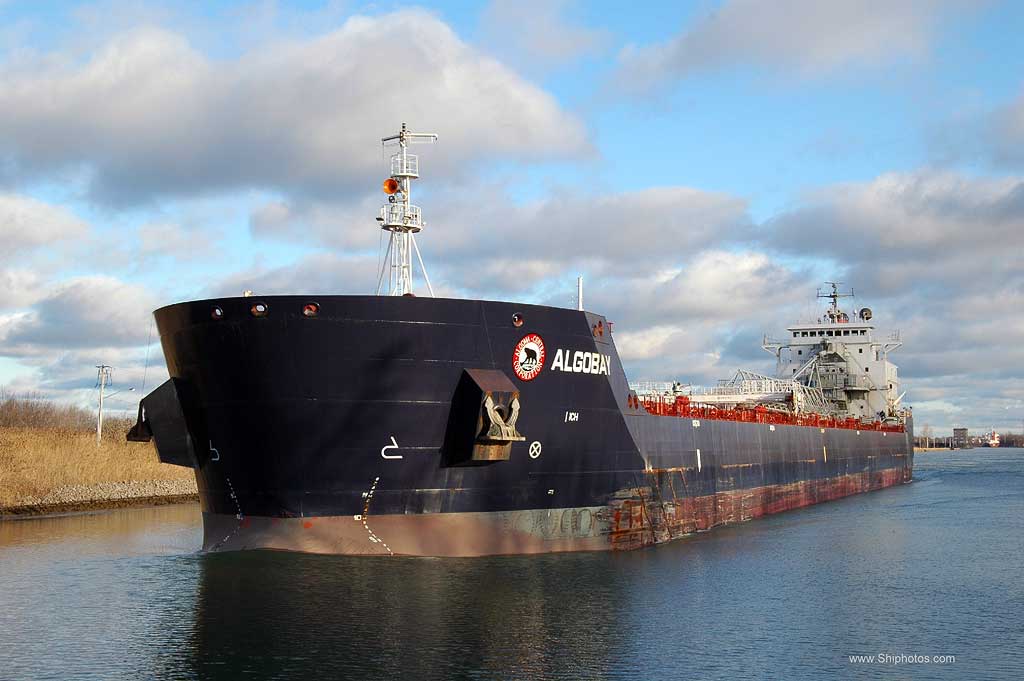
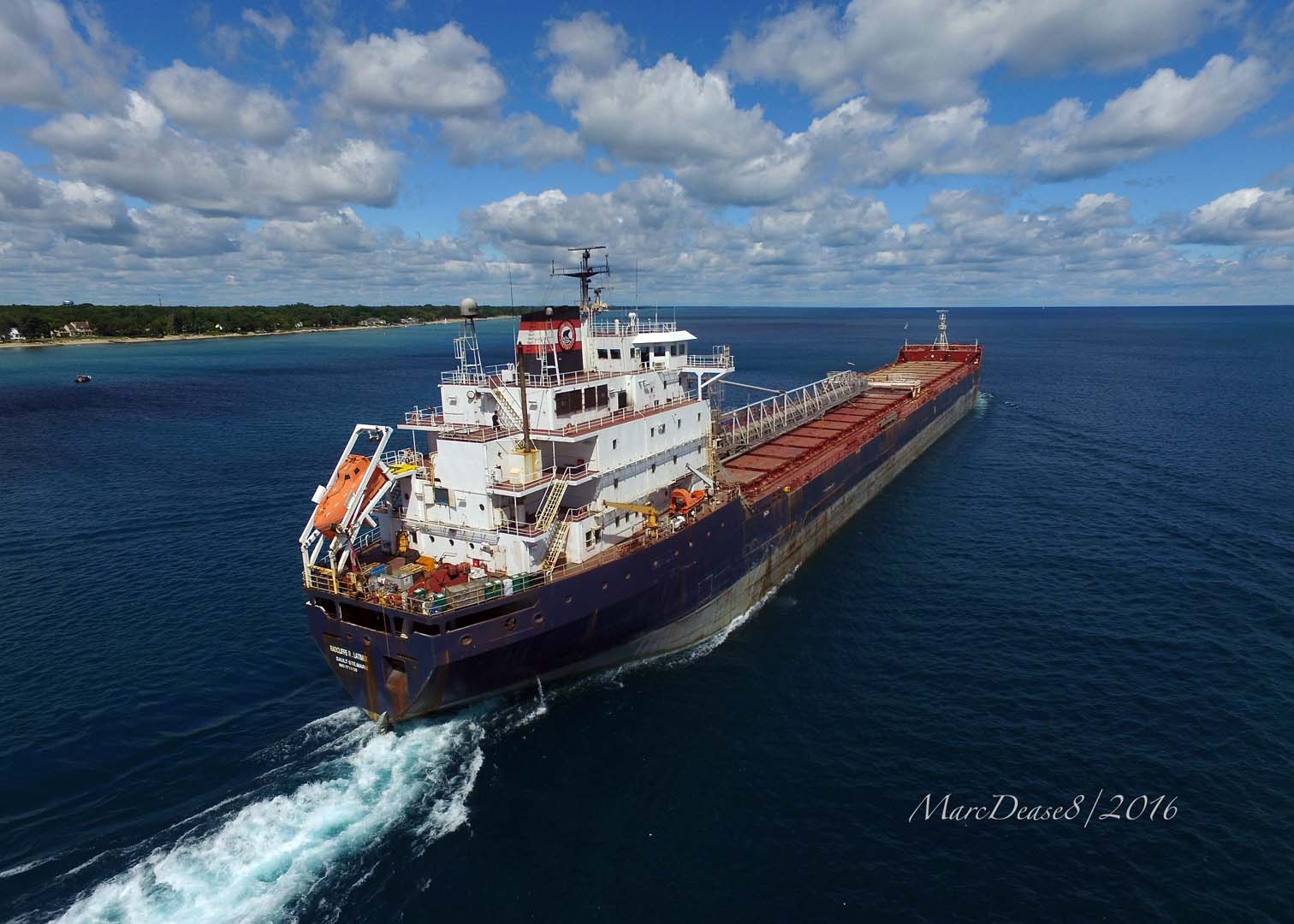
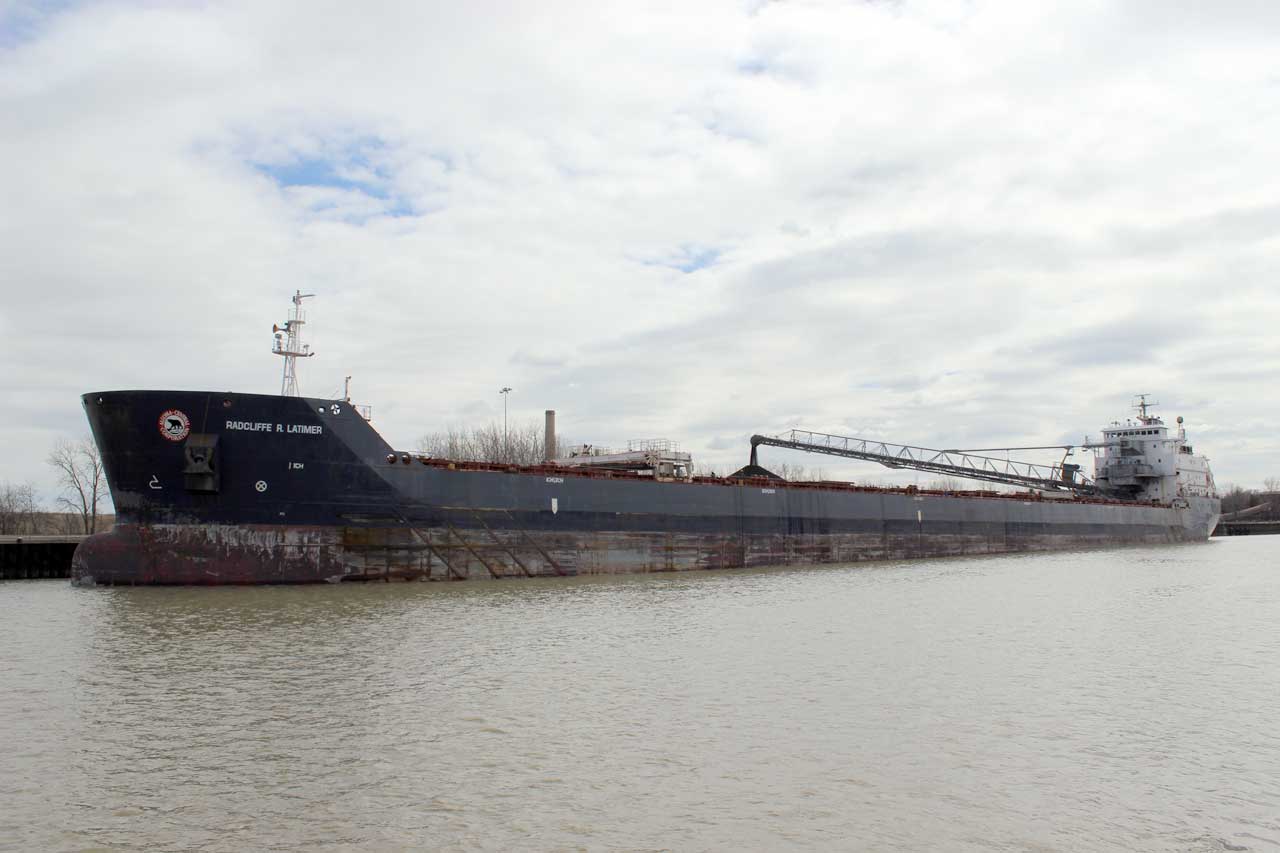
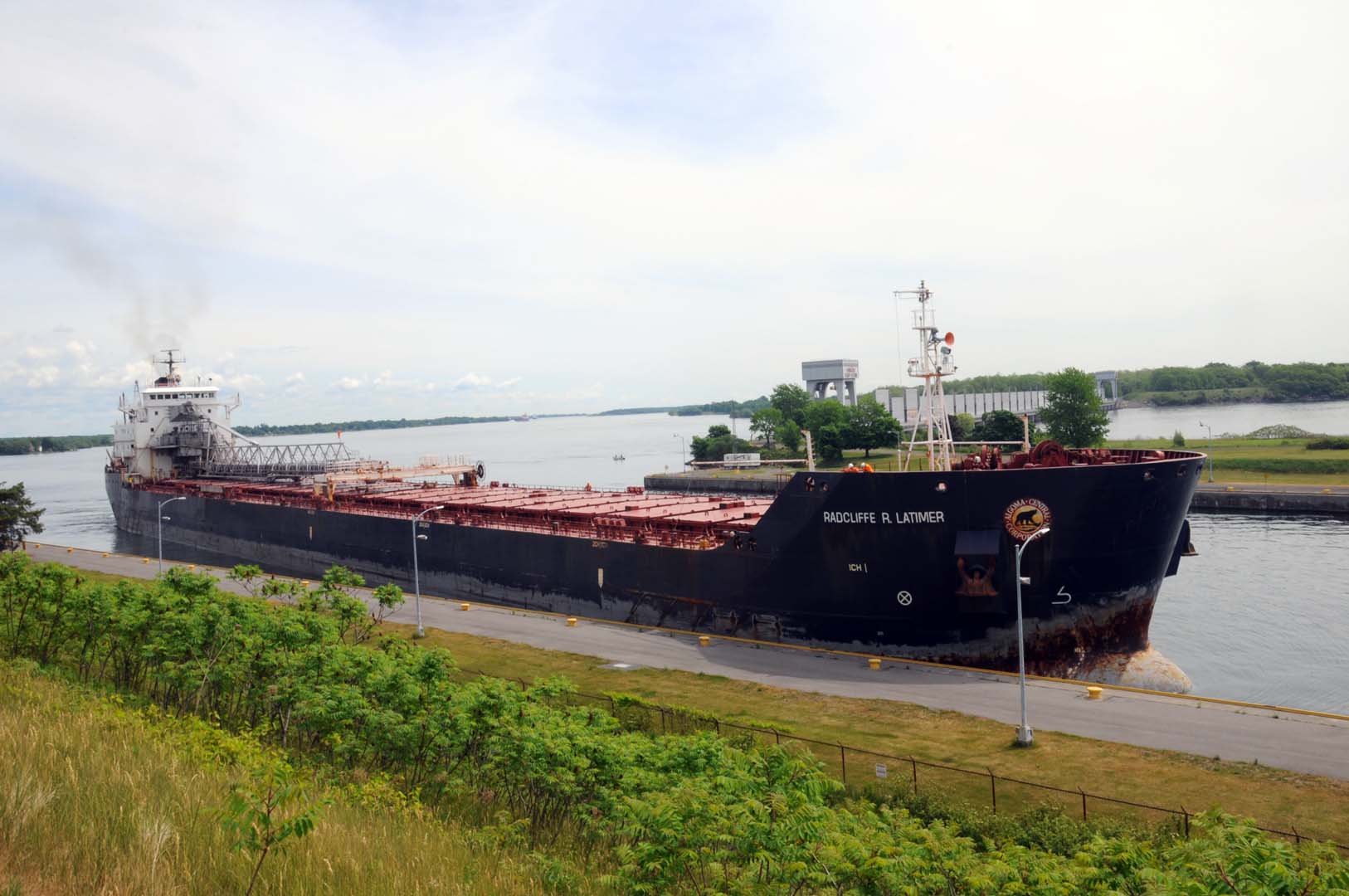
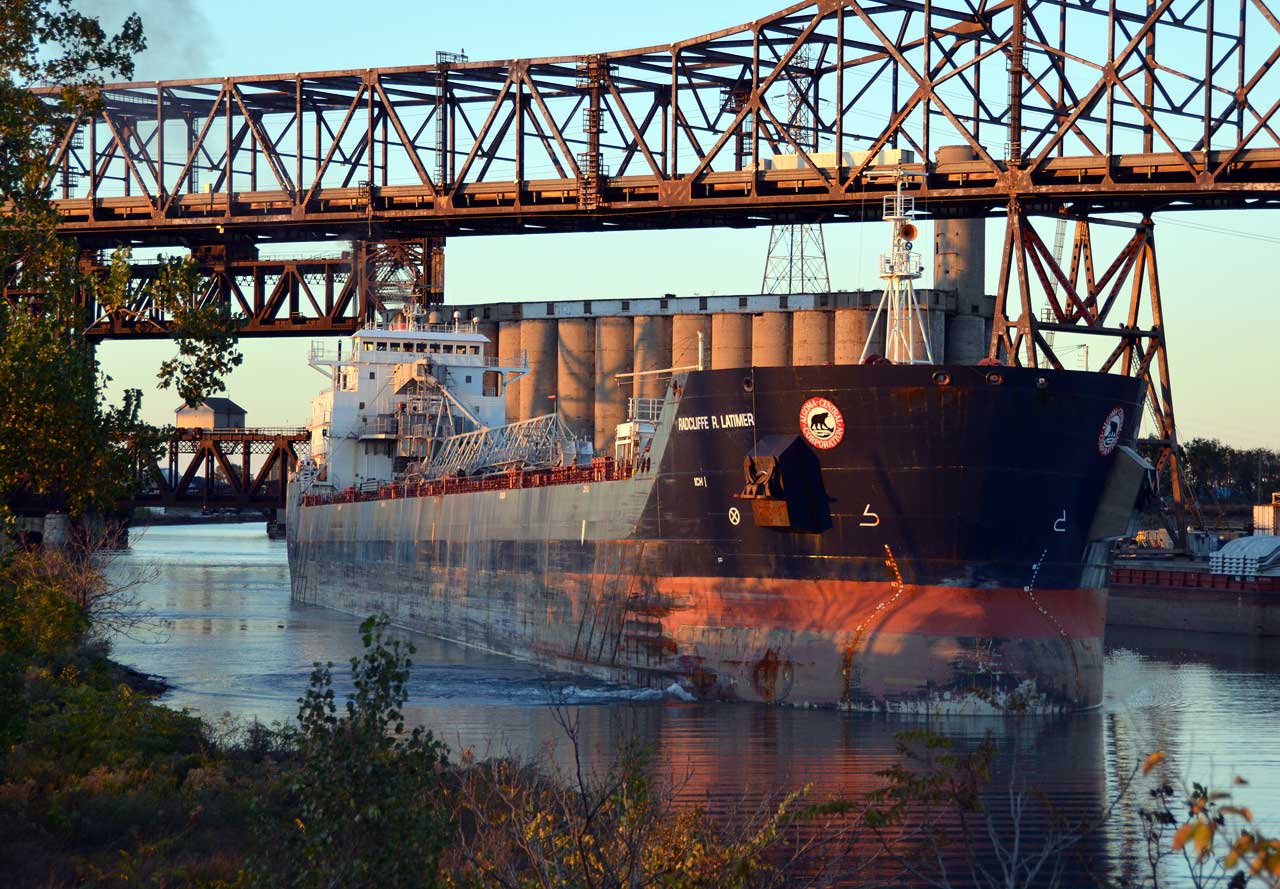
The new Coastal class self-unloader is now powered by 2 new inline 8-cylinder MaK 8M32C long-stroke diesel engines each rated at 5,221 b.h.p. built by Caterpillar Motoren GmbH & Co. KG, Germany. Capable of burning economical heavy fuel oil (HFO), marine diesel oil (MDO) or diesel oil (DO), these engines feature the ultimate in emission reduction technology and weigh about 46.4 mt each. The power is fed to a new controllable pitch propeller. The Algobay’s newly designed hull has 6 holds serviced by 22 hatches. The self-unloading equipment consists of a variable speed 2-belt gravity system with shear type basket gates, UHMW plastic linings and vibrators throughout feeding to a single loop belt elevator and a stern-mounted 261′ discharge boom that can slew to 95 degrees to port or starboard and can discharge at a rate of up to 5,354 tons per hour. The Algobay is also fitted with a new bow thruster and generator sets. The aft end was rebuilt with new navigation equipment in a modernized wheelhouse and updated crew accommodations.
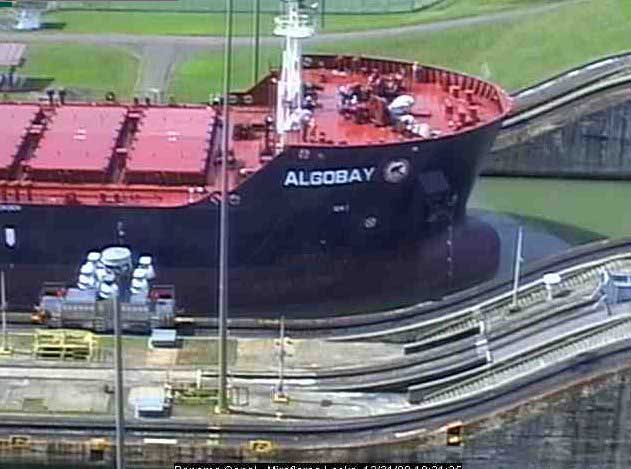
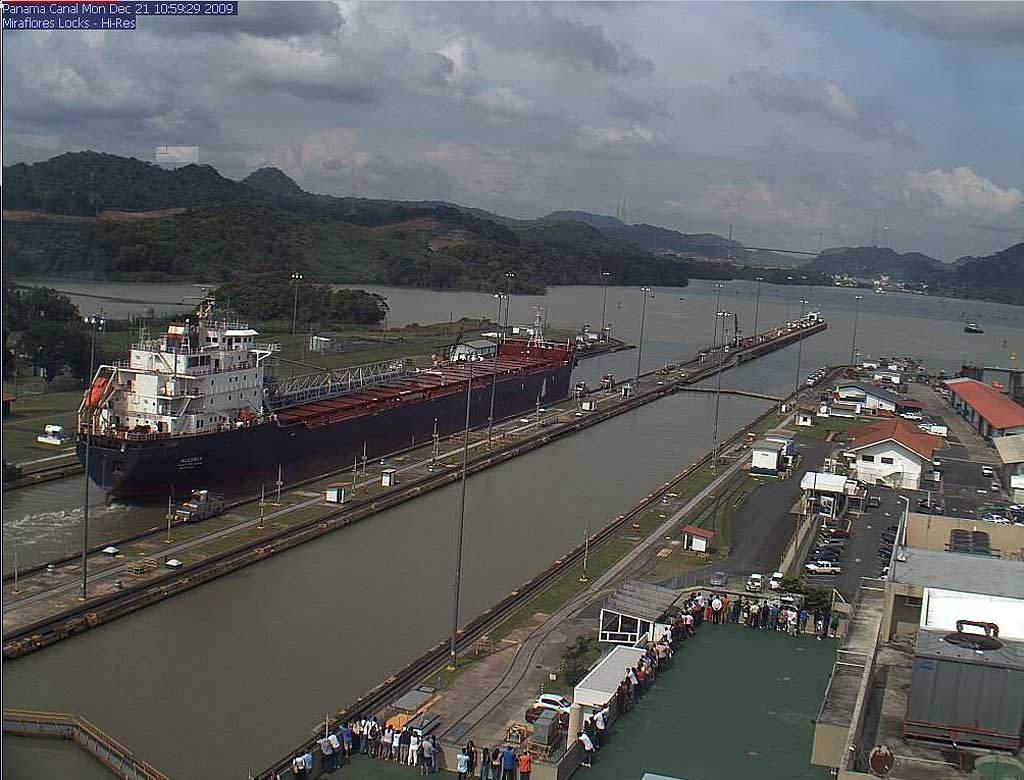
The Algobay’s new forebody was launched with a ceremony held at the Chengxi Shipyard on March 30, 2009 (see video below). The new Algobay was fresh out of the drydock in China on October 21, 2009. After crossing the Pacific Ocean and transiting the Panama Canal, the Algobay arrived at Portland, ME in early January, 2010 for a short winter lay-up. The vessel made several coastal trips before venturing into the Great Lakes. On February 24, 2010, the Algobay departed Portland for Port Cartier, QC where it departed February 28 with 35,628 tons of iron ore for New Orleans, LA. After discharging the cargo on March 13 into river barges on the Mississippi River for furtherance to the AK Steel facility at Ashland, KY, the Algobay proceeded to Santa Marta, Columbia for a load of 30,510 tons of steam coal for Newburg, NY on the Hudson River. The Algobay’s first cargo for the Great Lakes was a load of iron ore from Sept Isles, QC for Toledo, OH, the new self-unloader entering the St. Lawrence Seaway upbound for the first time on April 8, 2010. The Algobay’s first season on the Great Lakes was not without incident. On April 13, the vessel grounded while upbound the St. Marys River after rounding Johnson’s Point and also grounded on a shoal just outside the shipping channel while upbound the St. Lawrence River near Chippewa Bay, NY. In both cases, the Algobay damage required drydocking, the repairs being completed at the Seaway Marine and Industrial Inc. facility at Port Weller, ON. On December 27, 2010, the Algobay departed the St. Lawrence Seaway for Trois-Rivieres, QC to unload wheat and then on to Port Cartier, QC to begin Gulf of St. Lawrence / St. Lawrence River and coastal trading for the winter of 2010/11.
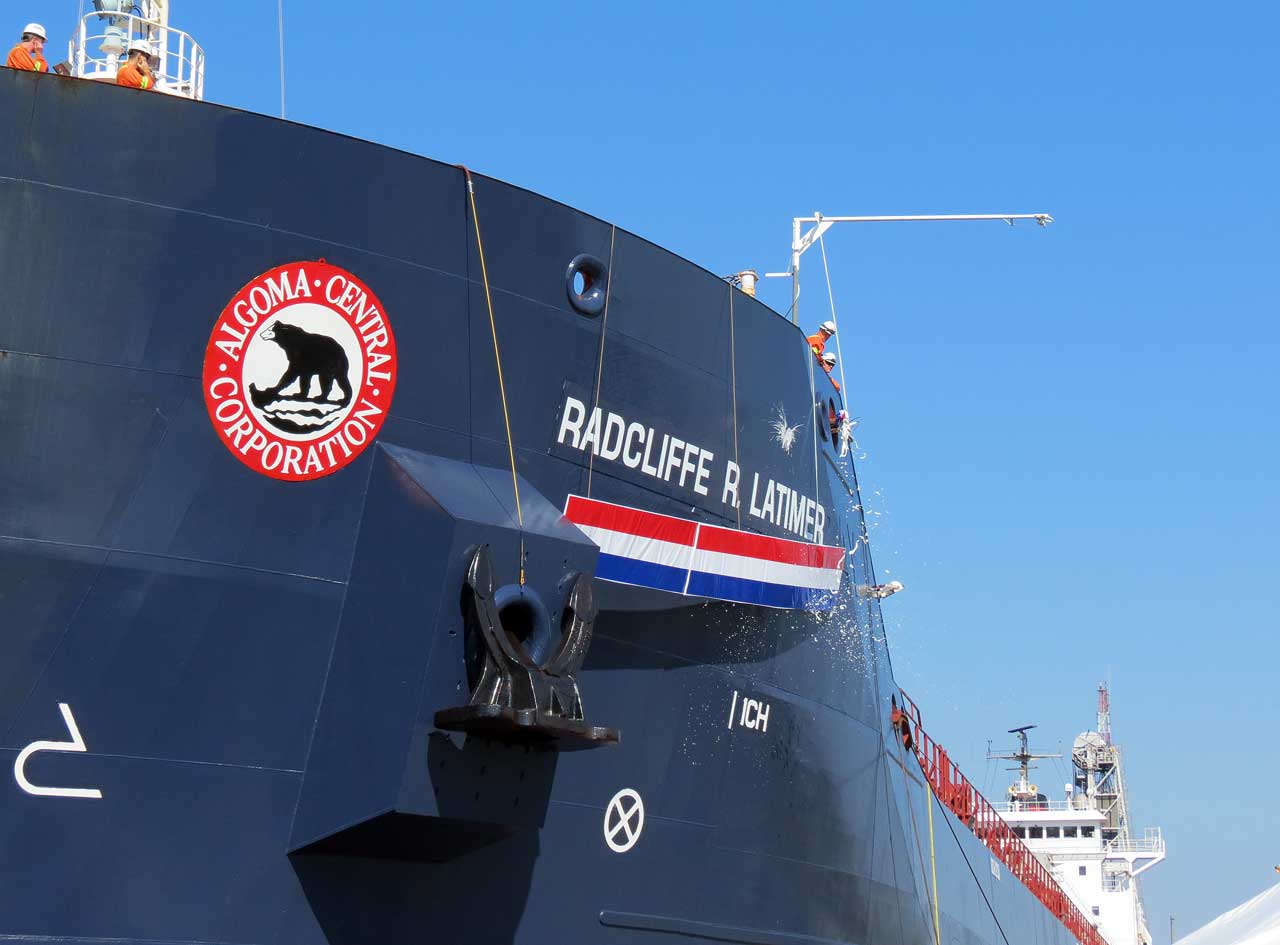
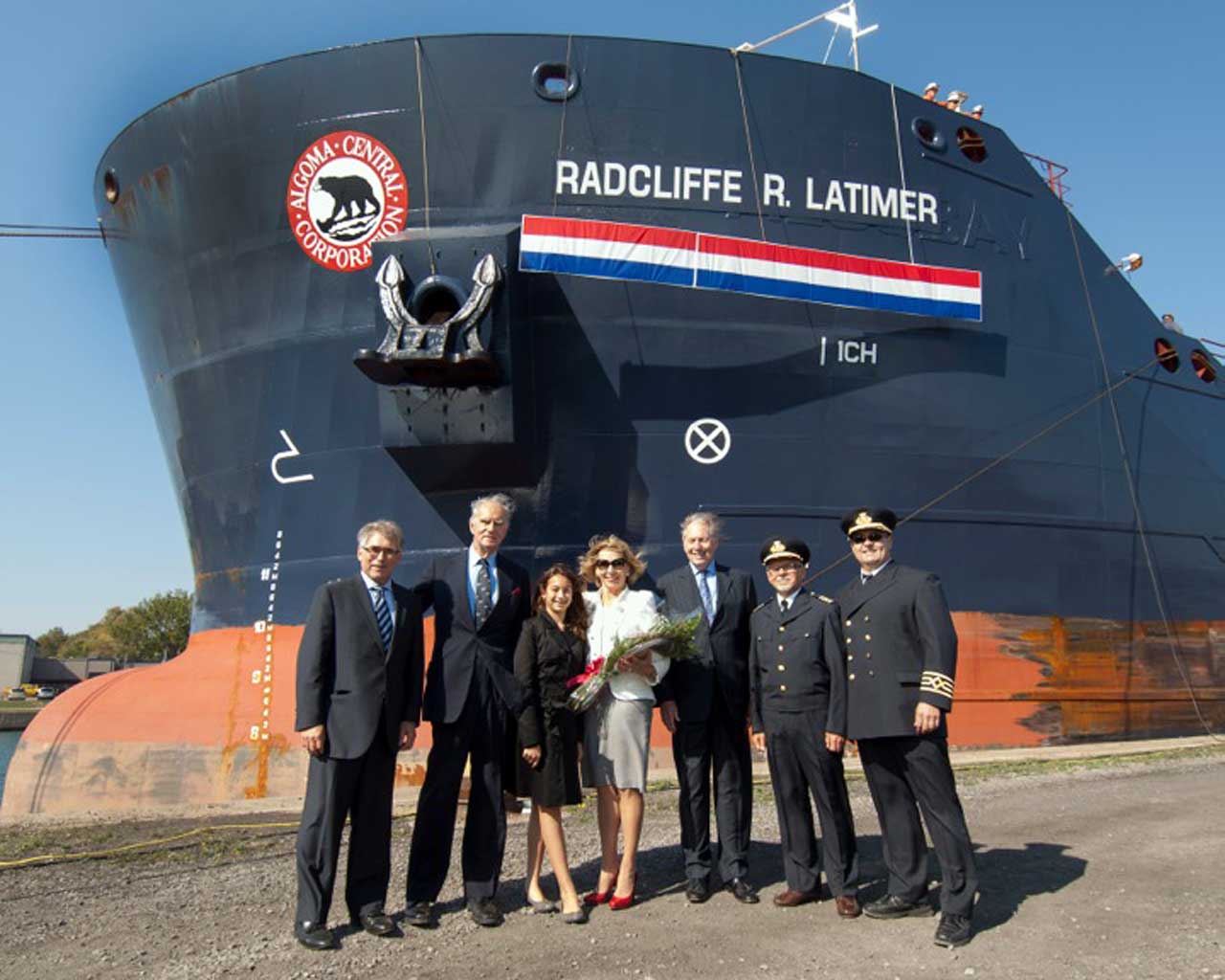
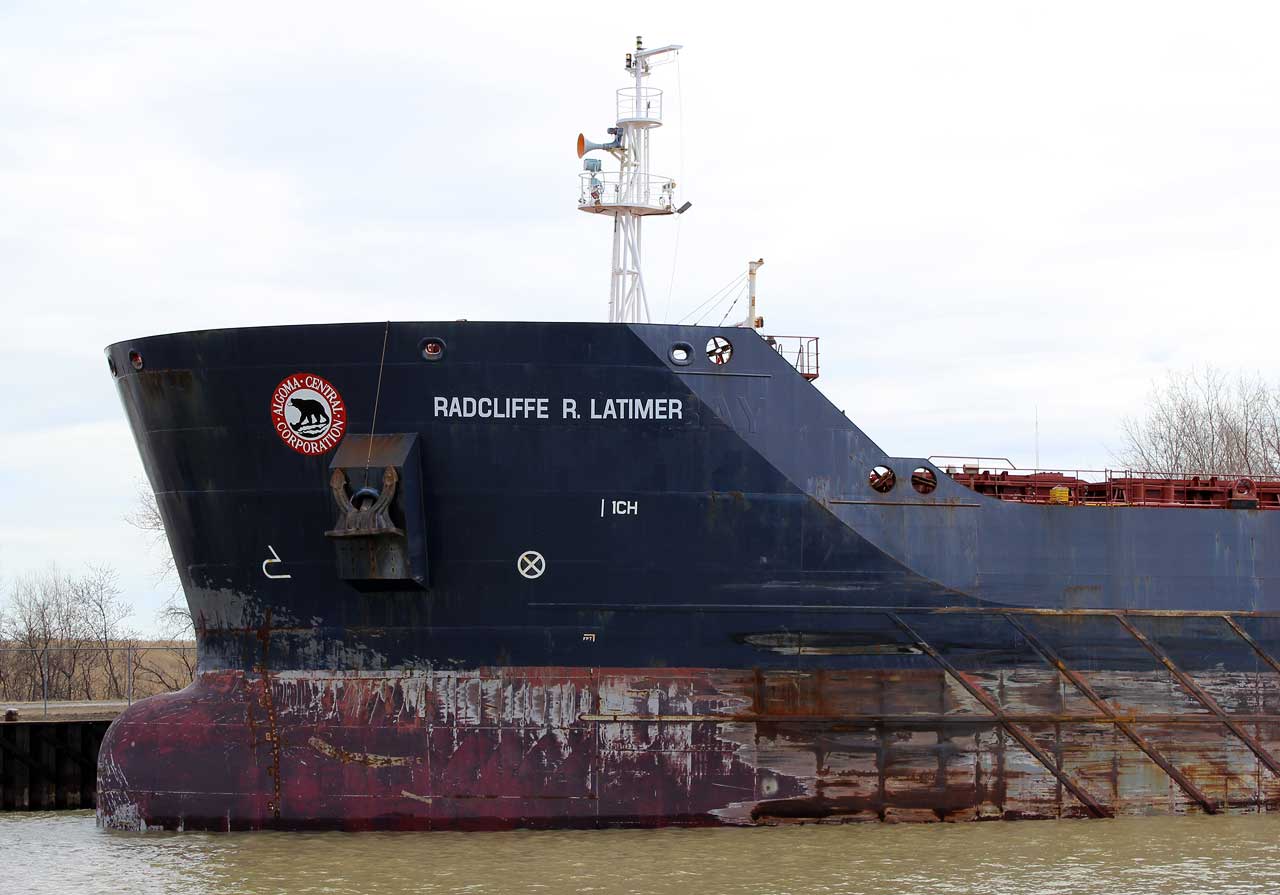
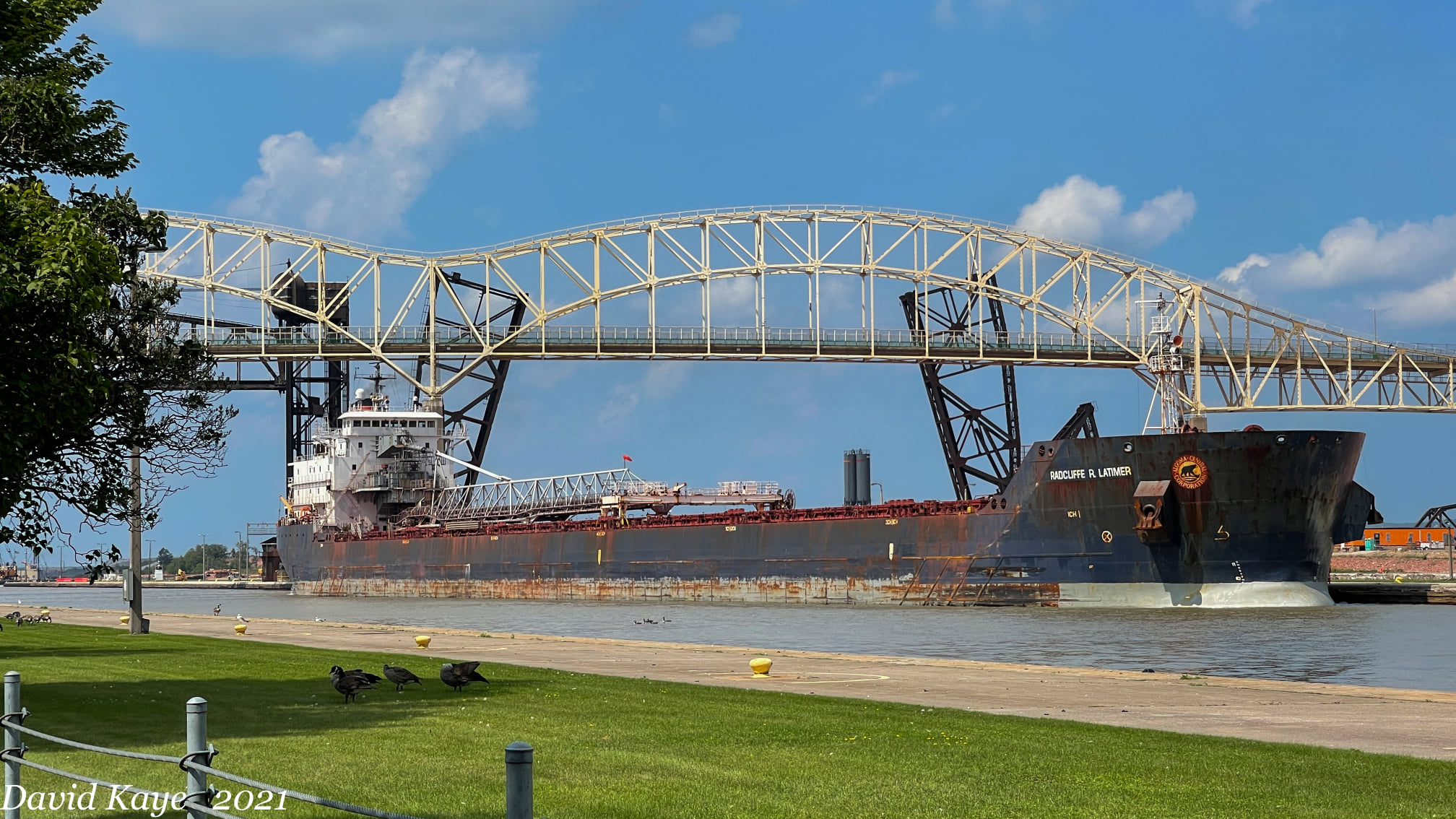
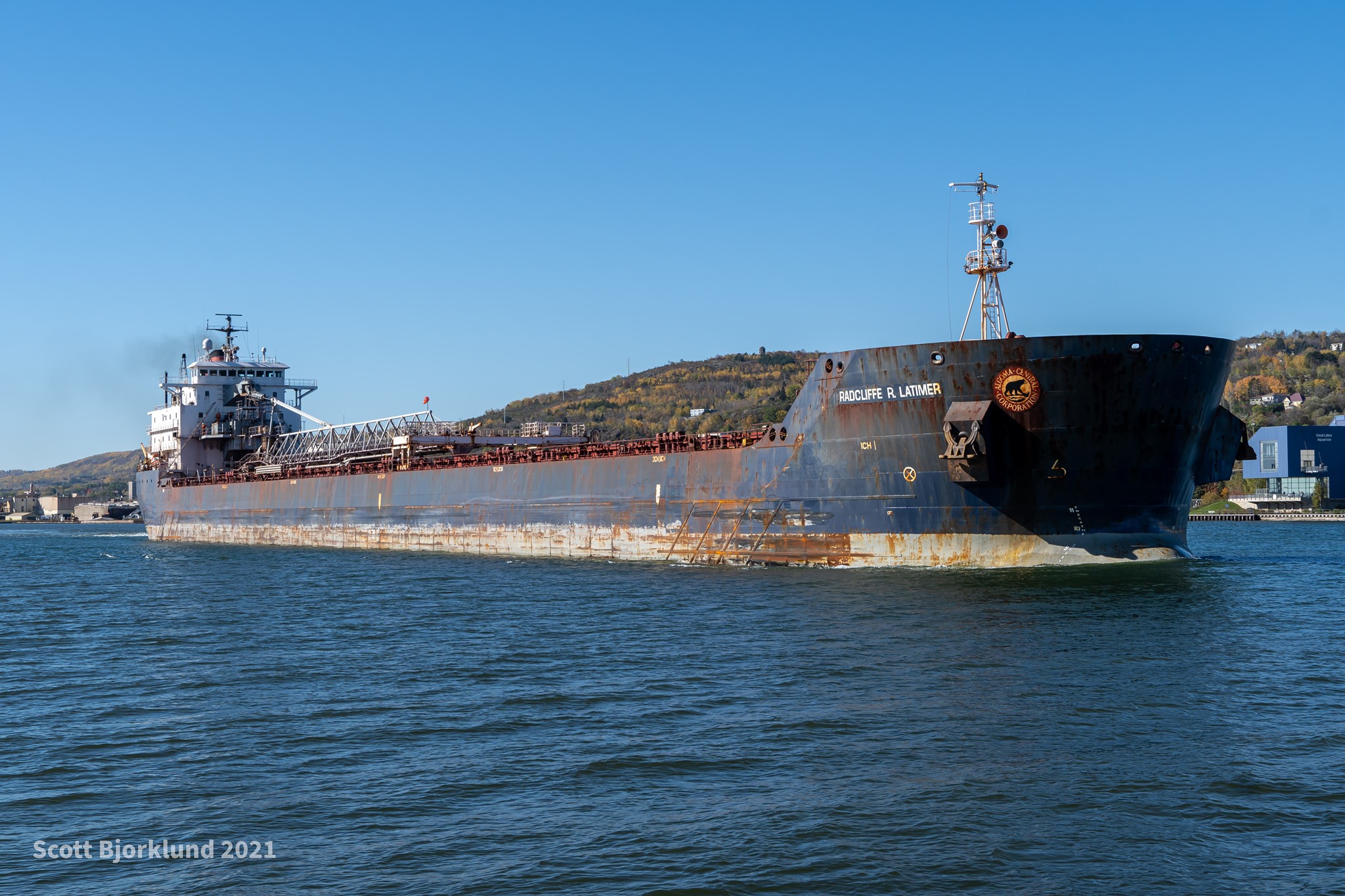
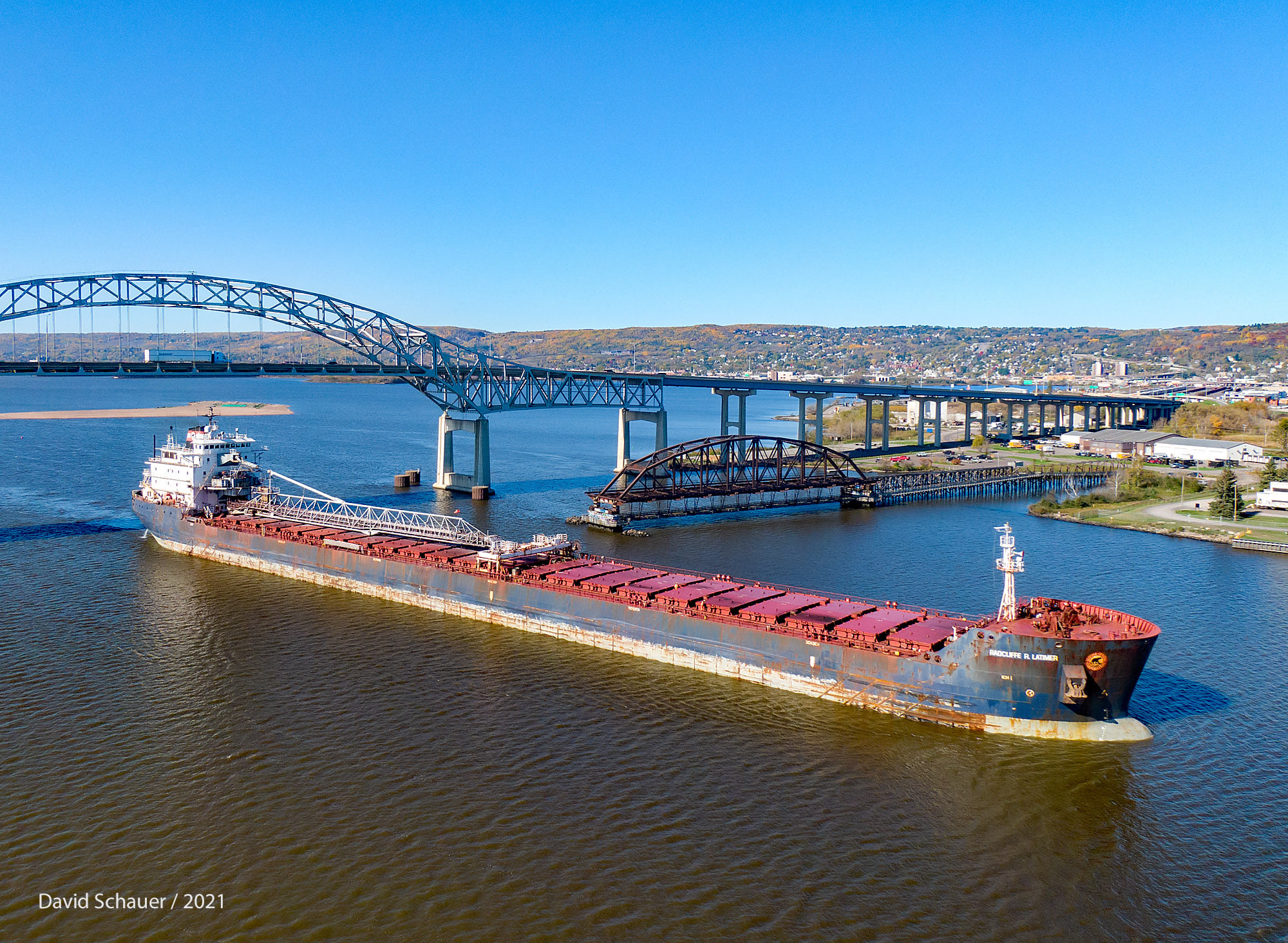
On October 4, 2012, Algobay was renamed Radcliffe R. Latimer to honor a former Algoma Central chairman. Mr. Latimer served as the chairman of Algoma Central Corp. from Jan.15, 2003 and its director since 1982, and served as its corporate director since 1979. He also served as a director of Hydro One Inc. and of Apac Minerals, Inc.
Written by George Wharton

Vessel Details
| IMO No. | 7711725 |
| Year Built | 1978 (Refit 2009) |
| Builders | Original Hull: Collingwood Shipbuilding (Collingwood, ON, Canada) New Forebody: Chengxi Shipyard (Jiangyin, China) |
| Length | 740′ / 225.55m |
| Beam | 78′ / 23.77m |
| Depth | 49’3″ / 15.01m |
| Midsummer Draft | 36’4″ / 11.07m |
| Unloading Boom Conveyor Length | 262’6″ / 80.0m |
| Capacity | 36,668 tons |
| Engine Power | 10,442 bhp diesel |
| Previous Names | Algobay (1978-94, 1997-2012) Atlantic Trader (1994-97) |
| Previous Fleets | Canada Steamship Lines (1994-97) |
Radcliffe R. Latimer (2012-Present)





Algobay (1978-94, 1997-2012)