CSL Niagara

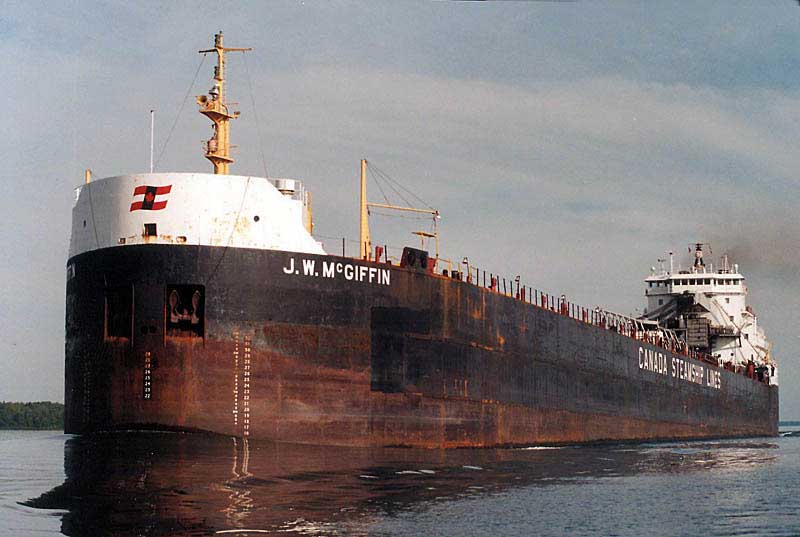
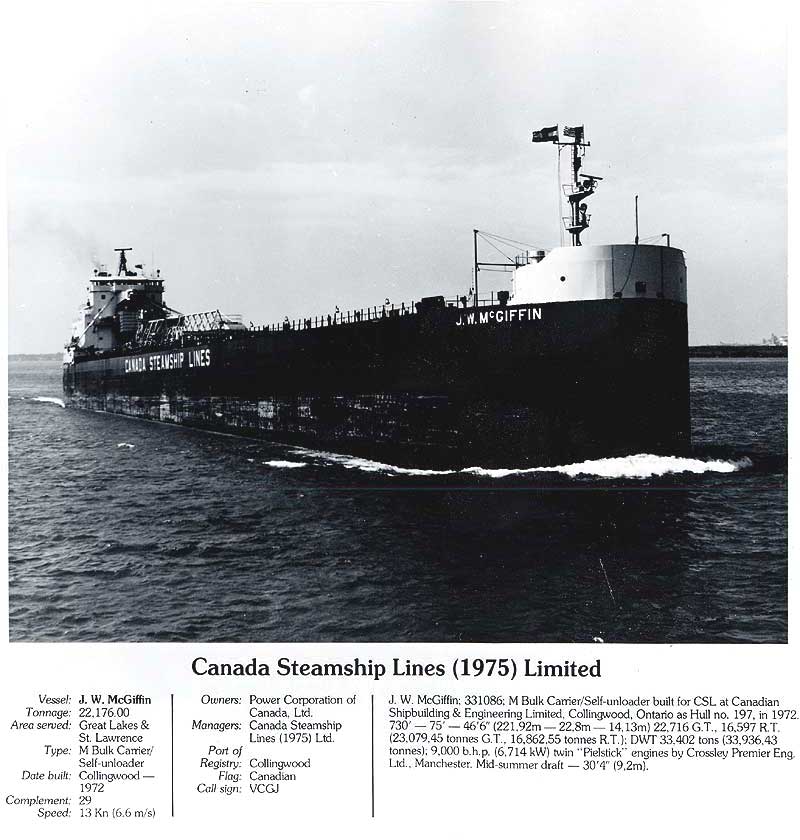
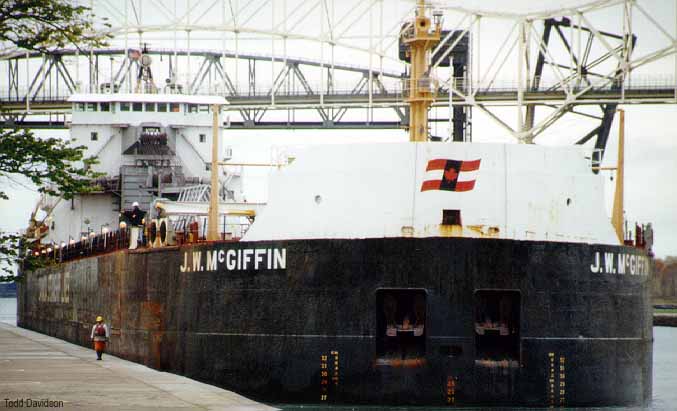
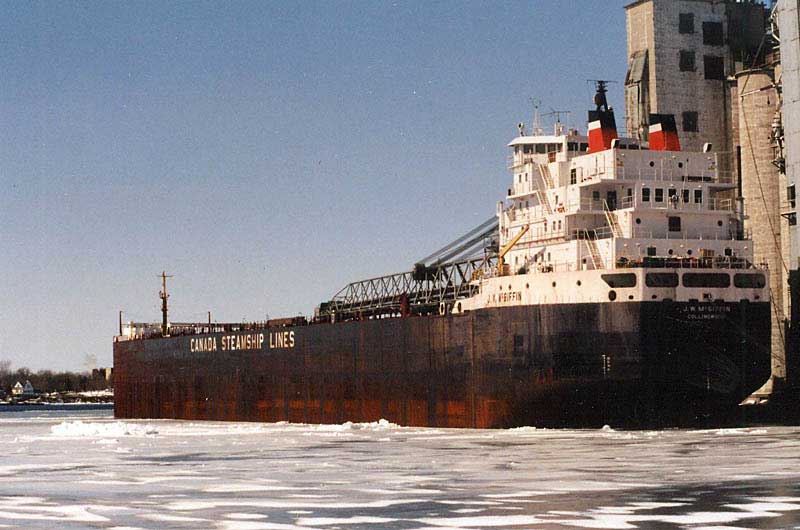
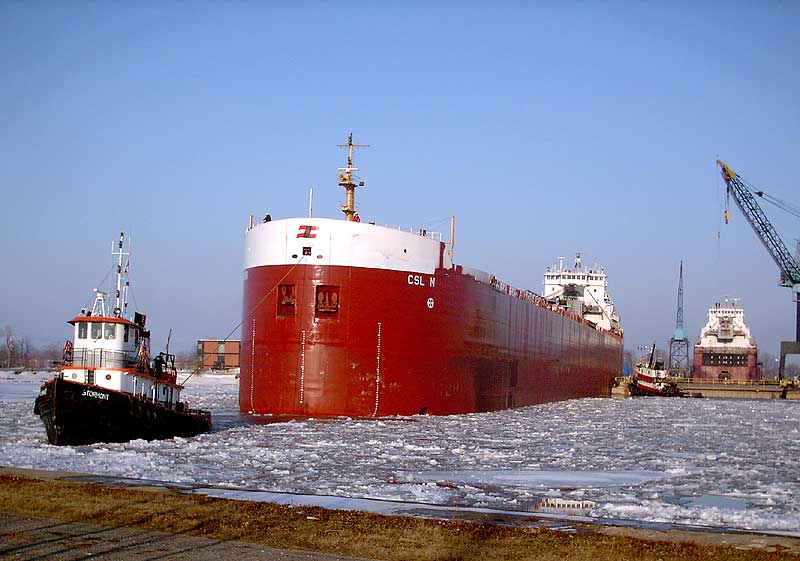
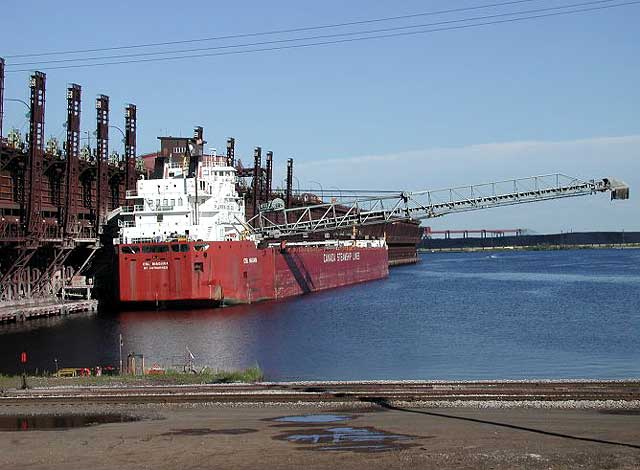
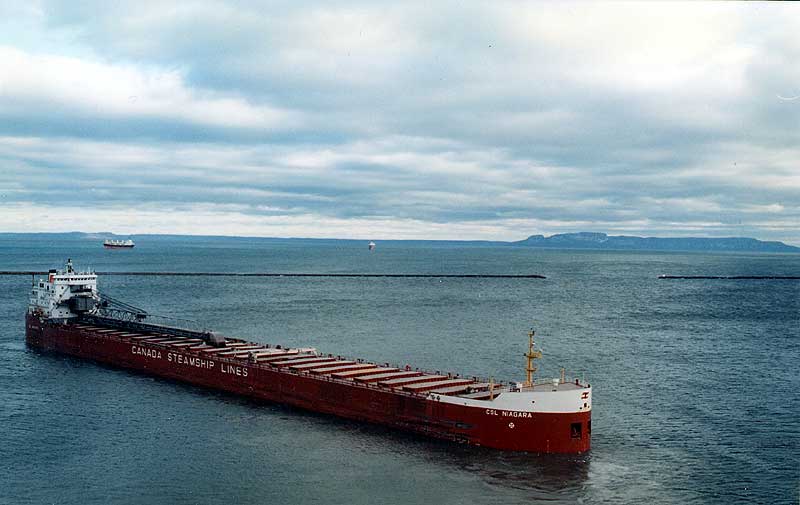
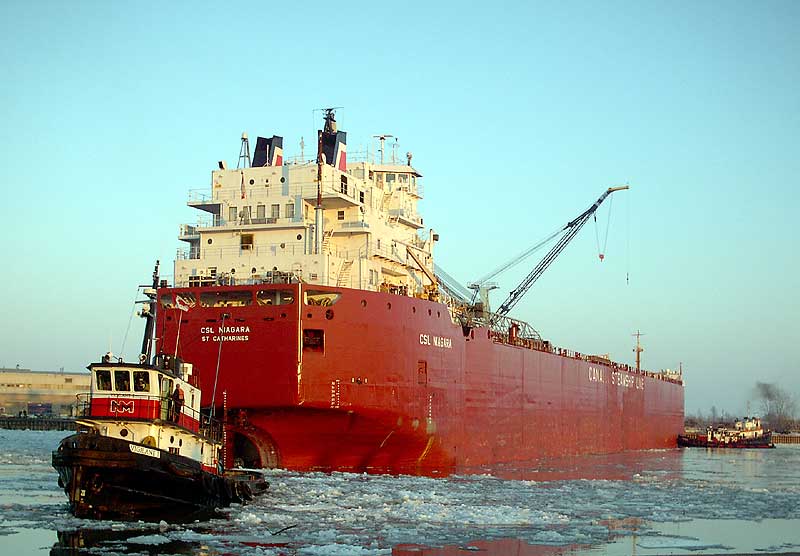
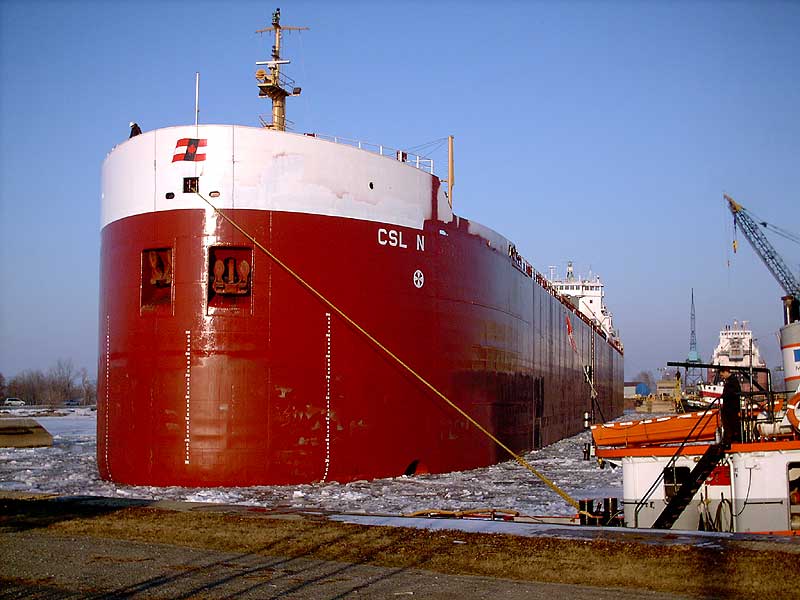
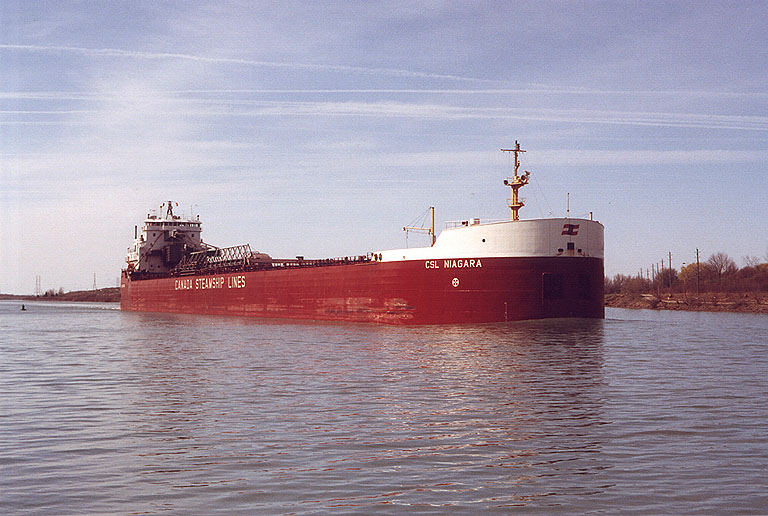
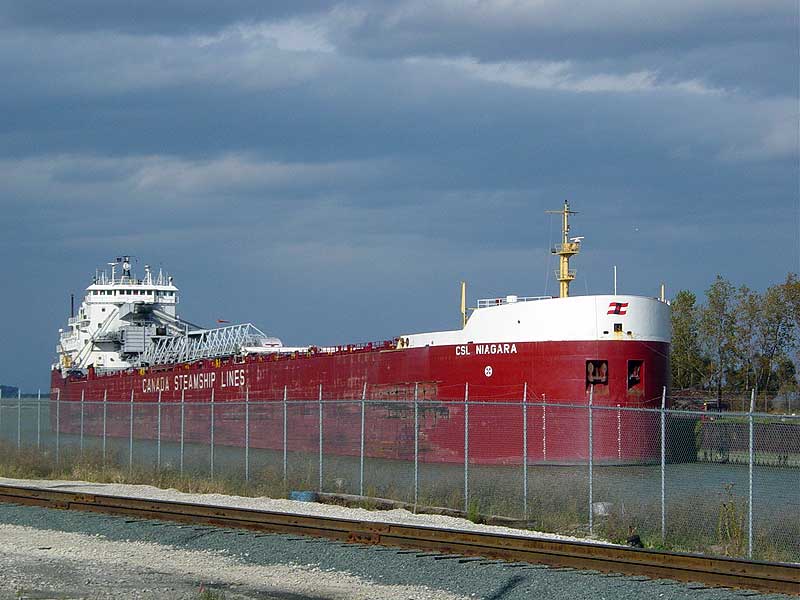
From the time of her building, the CSL Niagara has been unique in setting fleet standards for her owners. The self-unloading bulk carrier was launched December 16, 1971 and christened April 11, 1972 as the J.W. McGiffin for Canada Steamship Lines Ltd. of Montreal, QC. in honor of their Chairman of the Board of the CSL fleet at the time. (Mr. McGiffin later died on September 2, 1998.) The vessel was built by Collingwood Shipyards Ltd., division Canadian Shipbuilding and Engineering Ltd., Collingwood, ON as their Hull #197 at an approximate cost of $13 million (CN). Her construction marked the beginning of a new class of ships for this fleet. The J.W. McGiffin was one of the first self-unloaders to be built primarily for the coal trade featuring a rounded bow, square stern, and was the first self-unloader built for the Canada Steamship Lines domestic fleet with all cabins and wheelhouse aft. It had been reported that the vessel was to have been given the Indian name “Nekouba” but was changed prior to her launch. She departed on her maiden voyage April 20, 1972 light from Collingwood, ON to Sandusky, OH where she loaded 30,624.45 net tons of eastern coal for Hamilton, ON. This first cargo established a new Welland Canal coal record when the vessel transited the system on April 25, 1972.
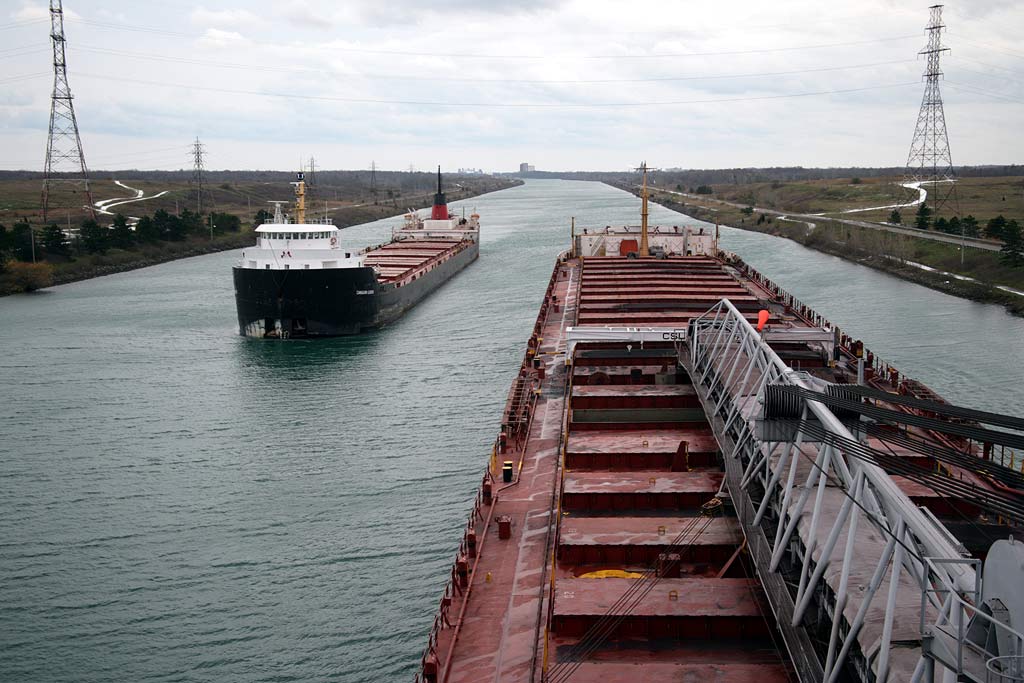
As originally built, the J.W. McGiffin’s overall dimensions were: 730′ 00″ (222.50m) loa x 75′ 00″ (22.86m) beam x 46′ 06″ (14.17m) depth. She could carry 33,937 tons (34,480 mt) at a mid-summer draft of 30′ 03 3/16″ (9.22m) and 27,970 tons (28,418 mt) at the old Seaway draft of 26′ 03″ (8.00m). The vessel had the cubic capacity to carry 34,500 net tons* (30,804 tons / 31,298 mt) of coal. The cargo was contained in 5 holds serviced by 22 hatches. The original self-unloading system consisted of hopper type cargo holds feeding the cargo through hydraulically controlled gates to three tunnel conveyors feeding two stern mounted cross-conveyors to a single loop belt elevator to a 257′ (78.33m) unloading boom. Power for the vessel is provided by 2 Pielstick 10PC2-2V-400 V-10 cylinder, 4 stroke cycle, single acting 4,500 b.h.p. (3,310 kW) diesel engines built in 1971 by Crossley Premier Engineering Ltd., Manchester, England. Burning intermediate grade 60 fuel, these engines send their power through a single reduction gear box to a single 17′ 00″ (5.18m) controllable pitch propeller in a Kort nozzle. She is equipped with a bow thruster.
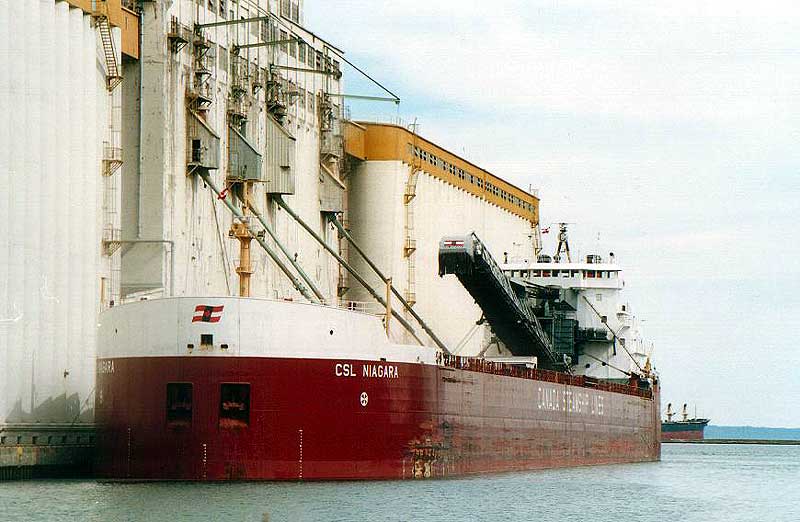
Although much of the J.W. McGiffin’s activities were focused on the Lake Erie eastern coal trade between Ohio ports such as Ashtabula, Conneaut, Sandusky, and Toledo bound for the Canadian steel plants at Hamilton, Nanticoke, or Sault Ste. Marie; or the Ontario Hydro steam power generating plants at Courtright, Nanticoke, or Port Credit; the self-unloader also carried cargoes of grain, coke, stone, and iron ore. The vessel set a Thunder Bay, ON grain record on October 5, 1973 when she loaded 1,006,672 bushels; then broke her own record in 1980 when she loaded 27,566 metric mt of the same commodity from Thunder Bay to Montreal, QC. She also broke another eastern coal record when, on July 25, 1975, 35,292 net tons were loaded on board at Conneaut for Nanticoke.
The J.W. McGiffin commanded by Capt. R. Drummond was honored by being the first upbound vessel in the Welland Canal on March 28, 1973, opening the Canal on the earliest date on record. On March 31, 1989 and under the command of Capt. Lars Bouman, she again took the honors in opening the Welland Canal for the new season.
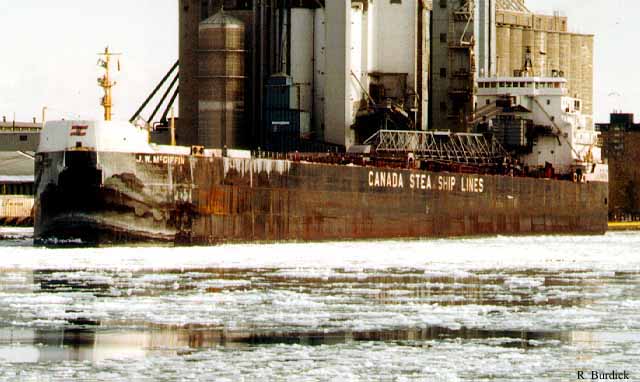
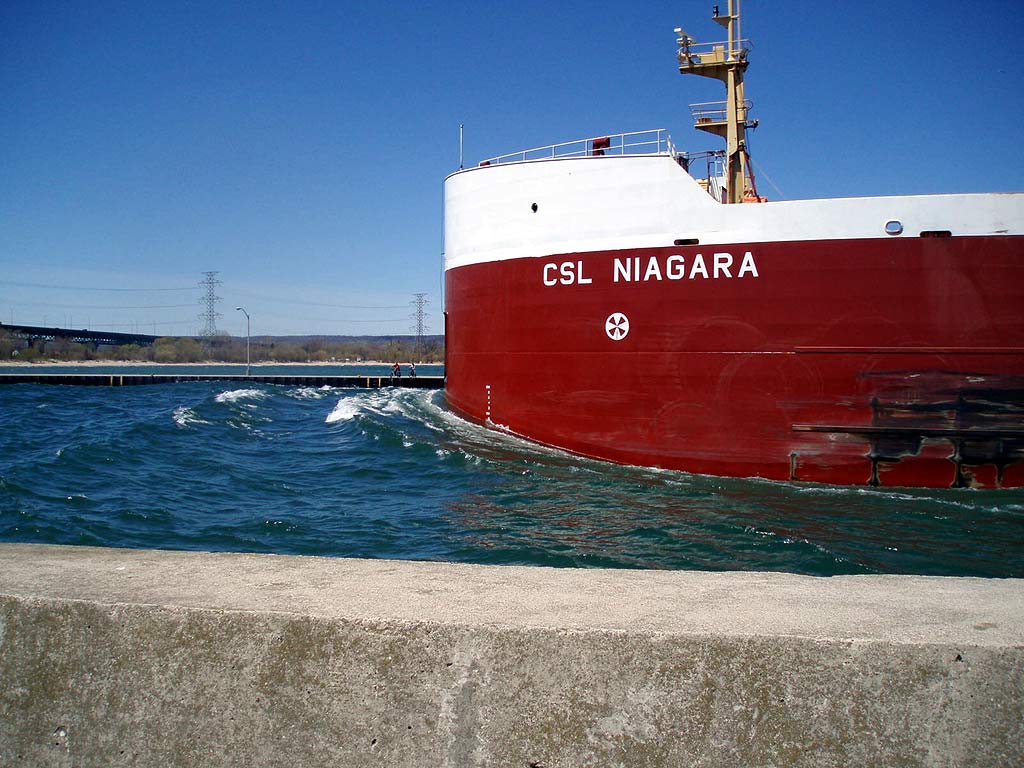
The J.W. McGiffin’s early years were not without incident. On April 3, 1975, the large self-unloader was blown aground in the Welland Canal near Thorold, ON while attempting to transit the Canal in high winds. The resulting damage was repaired at Port Weller Dry Docks, St. Catharines, ON. On November 10, 1979, the vessel was run aground on an embankment near Bridge 10 of the Welland Canal after a malfunction caused a delay in the opening of the bridge. The J.W. McGiffin was holed and took on some water, the damage again being repaired at Port Weller Dry Docks. While at winter lay-up in Hamilton, ON, on January 24, 1991 a leaking acetylene tank caused an explosion injuring 2 workers. Welding repairs were being completed in the lower belt tunnels when the explosion occurred.
The J.W. McGiffin distinguished herself in September of 1991 by responding to a distress call from a pleasure craft on Lake Erie. Despite 40 knot winds, the large vessel was able to come along side and her crew rescue the three sailors from the open boat without incident. The McGiffin was a participant in a CSL program of loading and topping up large salt water vessels in the St. Lawrence River off of Sept Isles, PQ. During the 1996 season, she carried over 2.5 million net tons of coal In 106 trips from Ashtabula, OH to Nanticoke, ON to be followed up in 1997 when she carried in excess of 3 million net tons of coal in 107 trips on the same trade route.
On a different note, on December 11, 1996, Rev. Elder of Grace United Church in Port Dover, ON received a several hundred dollar donation from the crew of the J.W. McGiffin for needy children and families in the Port Dover area. A deal was made with a local K-mart for the purchase of toys and the church bought food vouchers. A similar donation was made by the crew in 1997 for needy children in Port Colborne, ON and in 1998 for needy children in North Sydney, NS. A challenge was issued by the J.W. McGiffin crew to other crews of the fleet to match their donations.
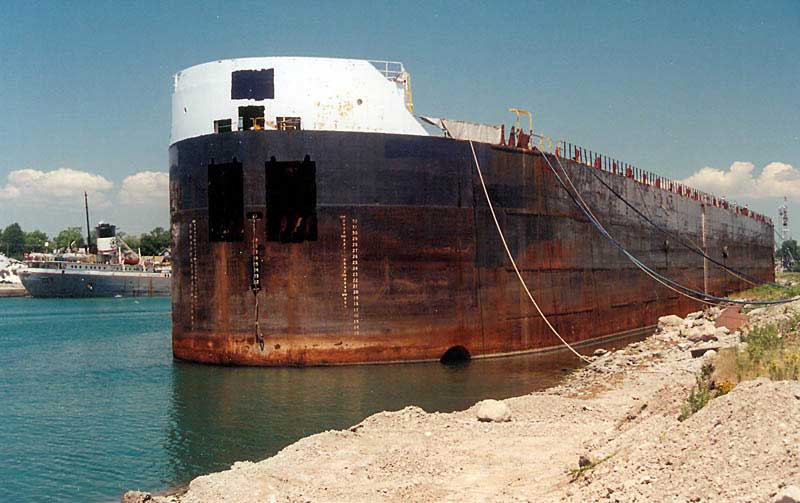
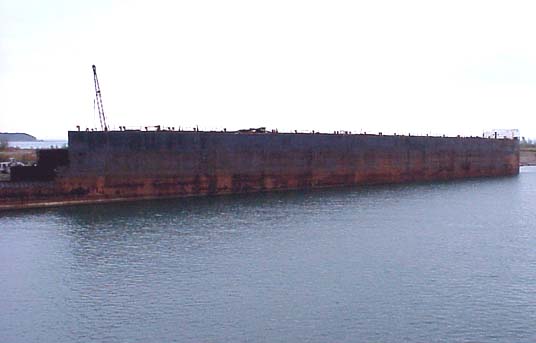
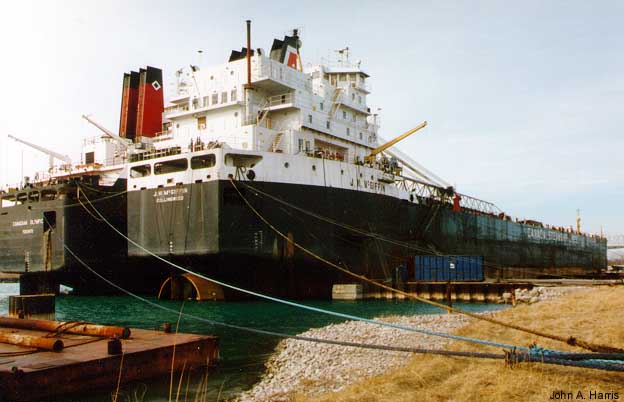
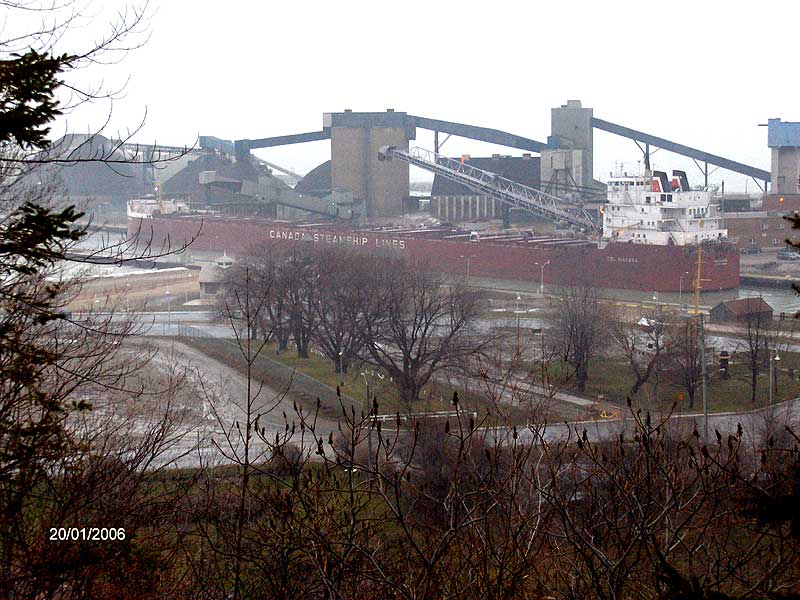
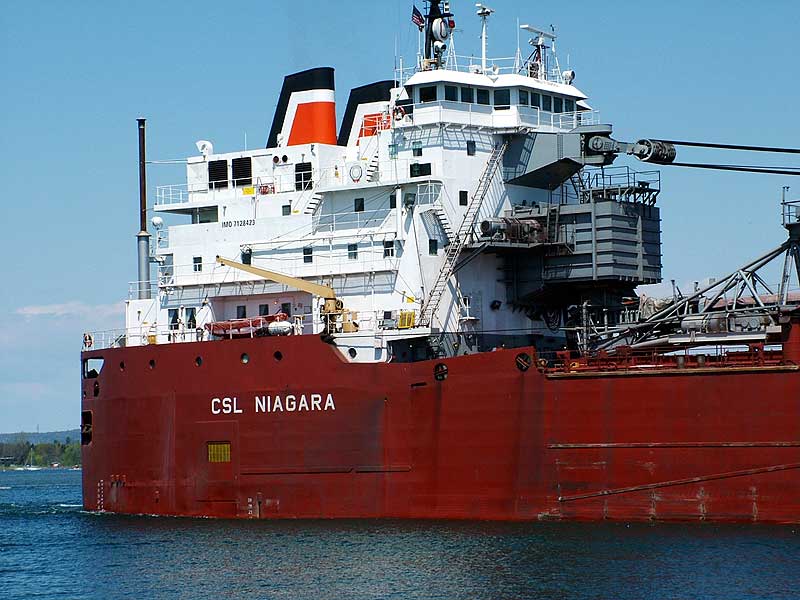
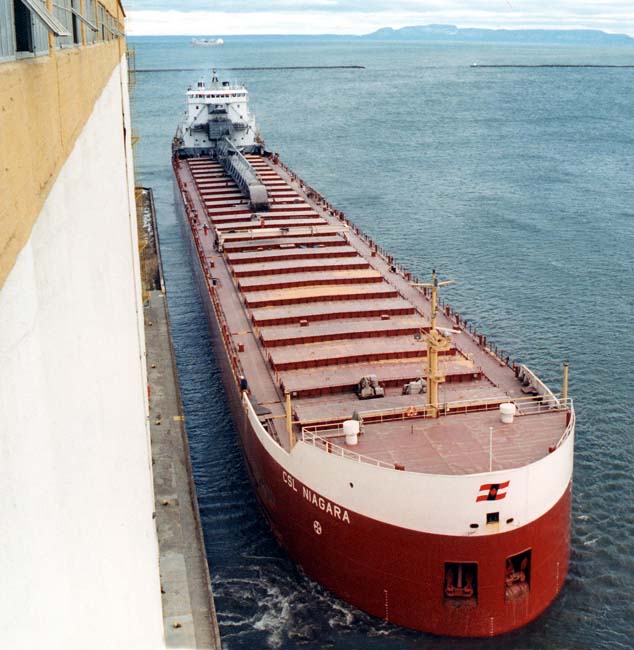
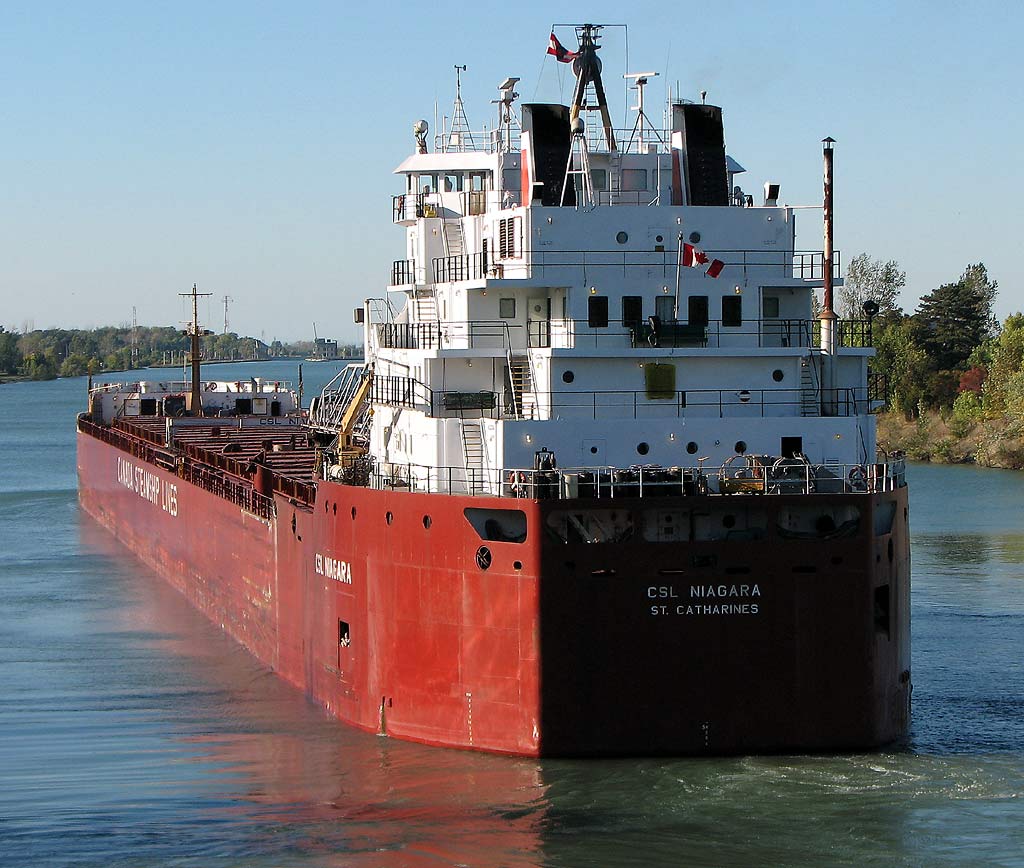
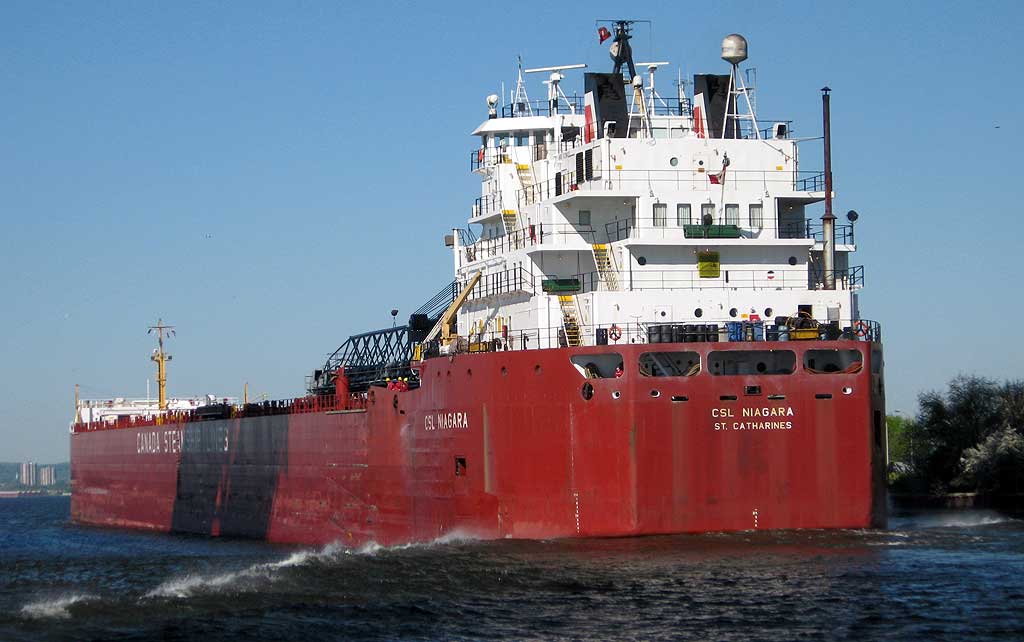
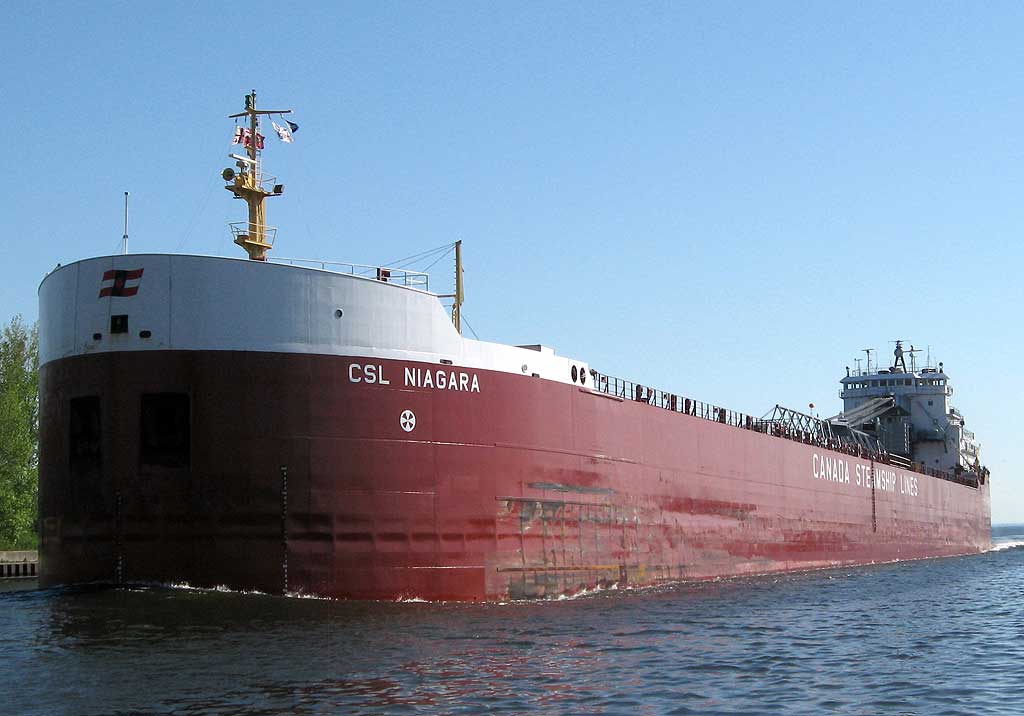
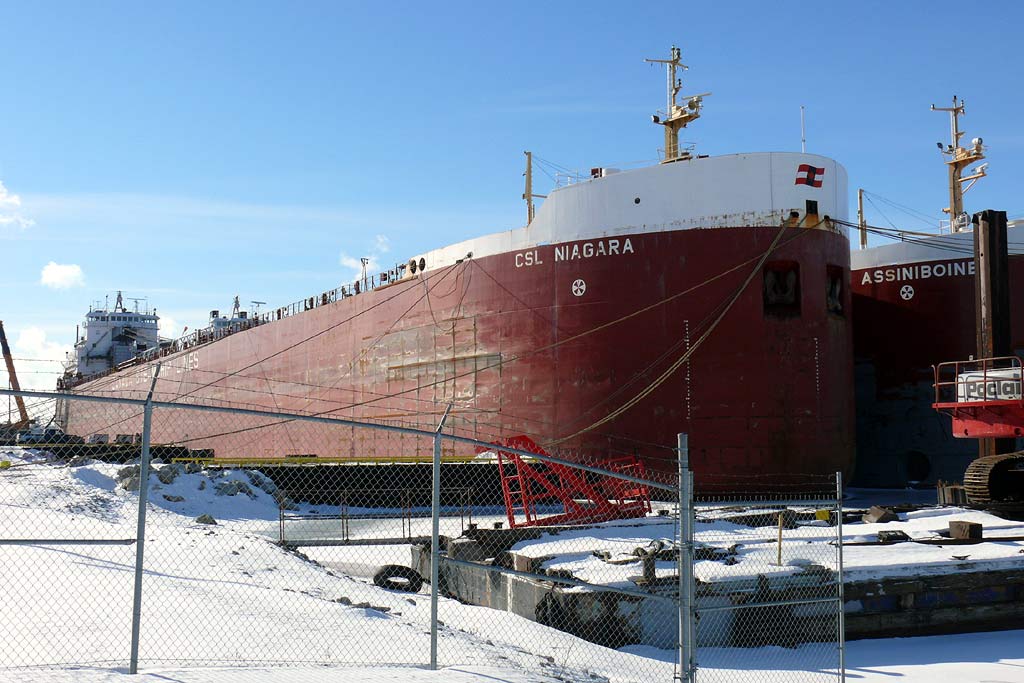
On December 24, 1998, the J.W. McGiffin laid up for a final time under that name at the Port Weller Dry Docks, St. Catharines, ON. She was to be the first of three CSL vessels to receive a new, larger forebody with an updated self-unloading system as part of a 3-hull $100 million (CDN) vessel revitalization program awarded to Port Weller Dry Docks. The 83-ton keel for the new forebody was laid at the dry docks on September 10, 1998. The new hull was attached to the original stern with the vessel retaining her original pilothouse, accommodations, engine room, and steering gear. She received her new hull during the 1998/99 winter lay-up thus becoming the first ship to be built to the new maximum-size allowances of the St. Lawrence Seaway system. The hull was built using over 6,000 tons of steel.
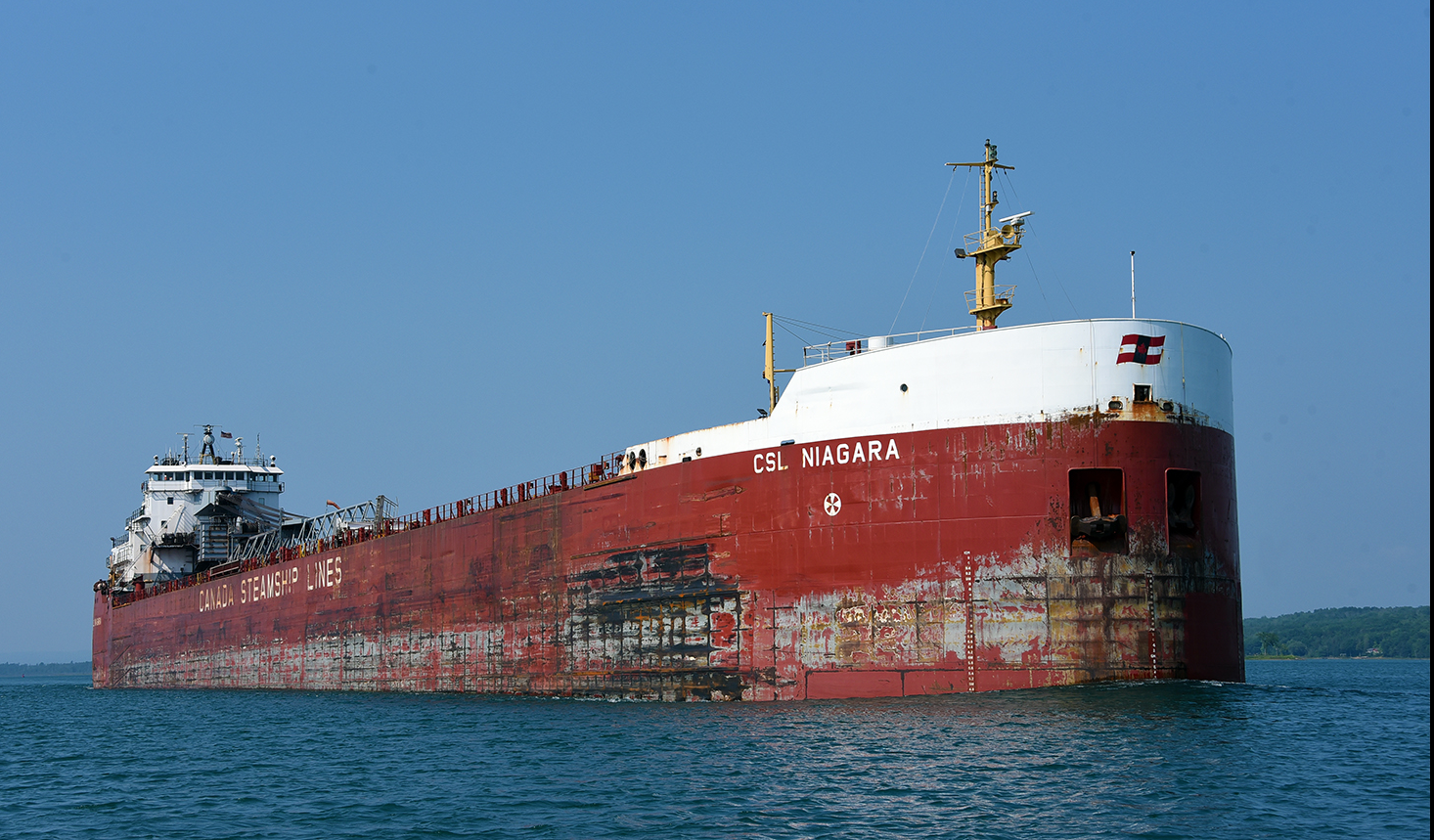
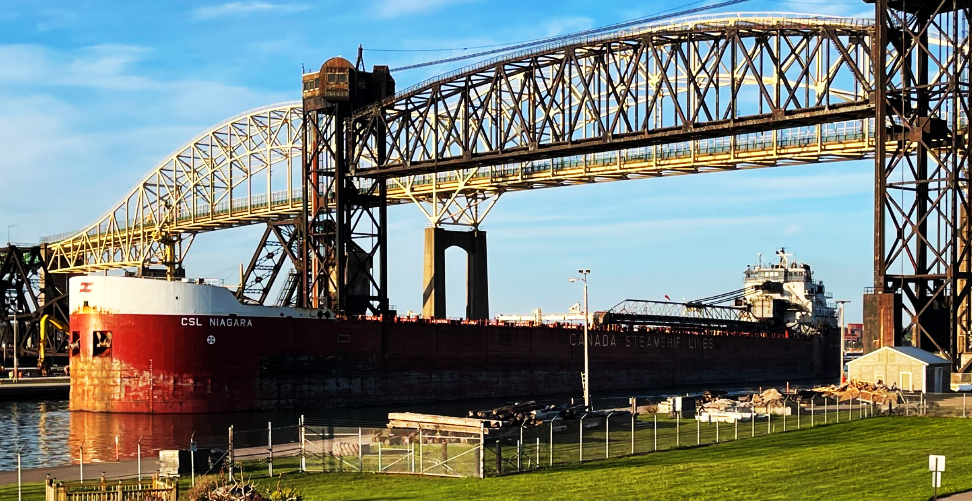
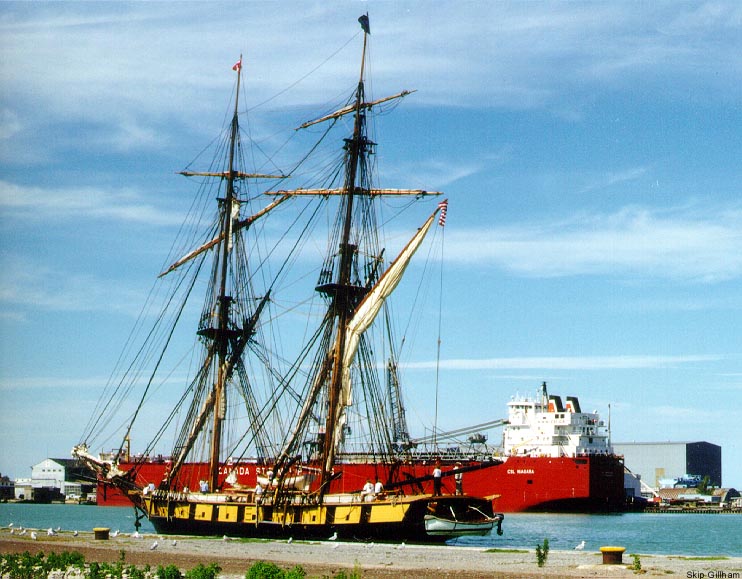
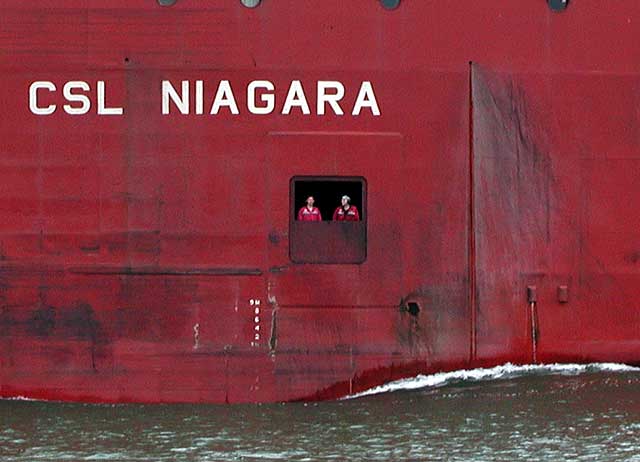
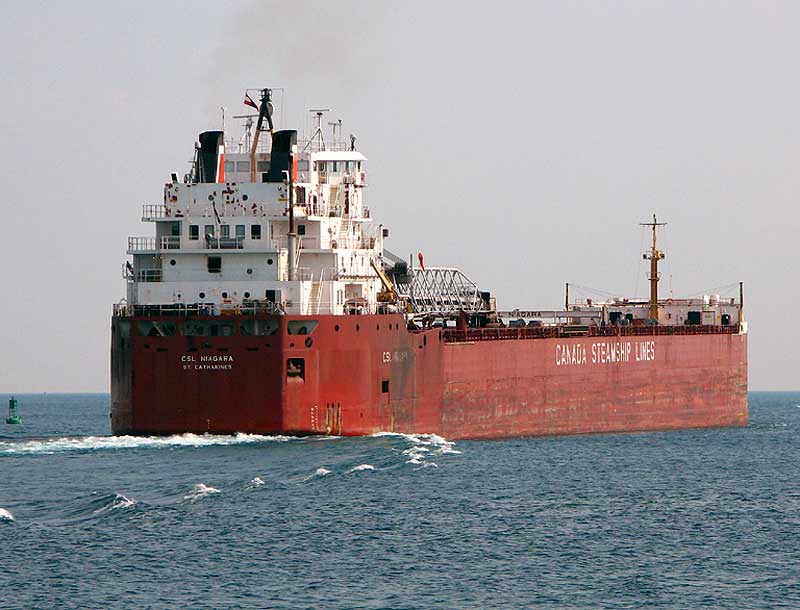
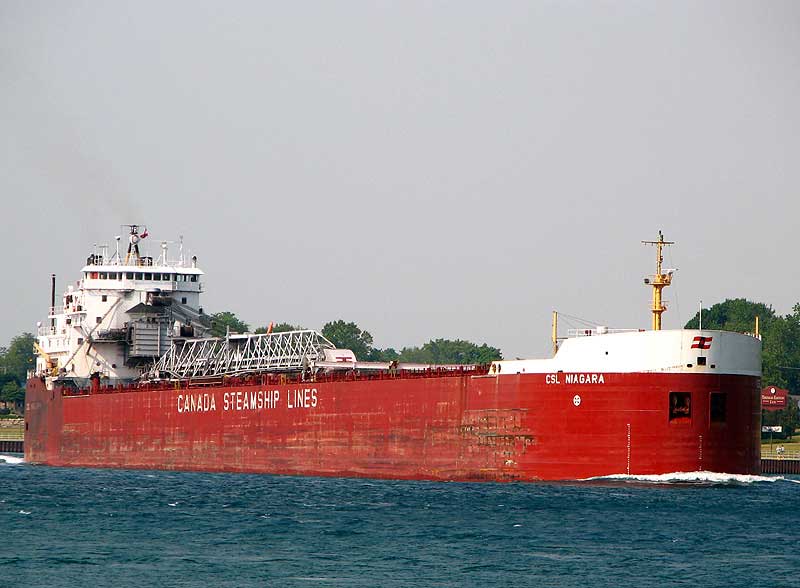
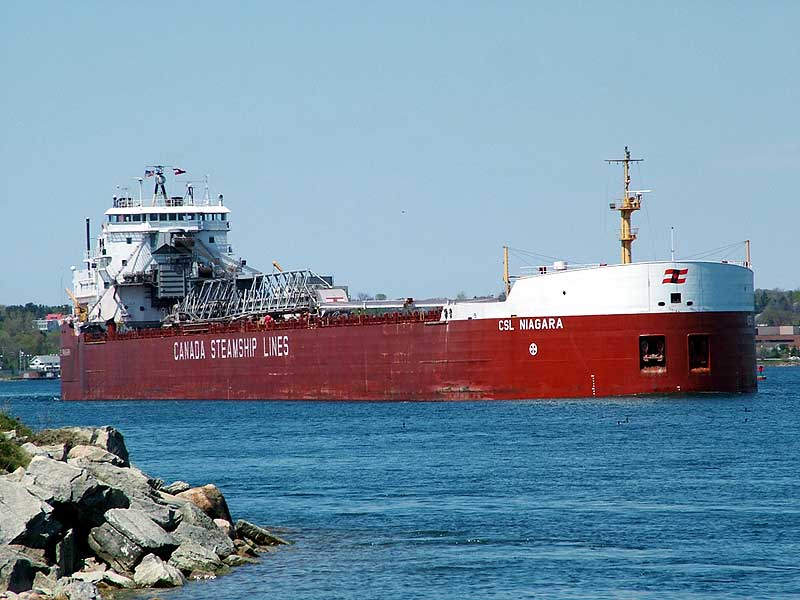
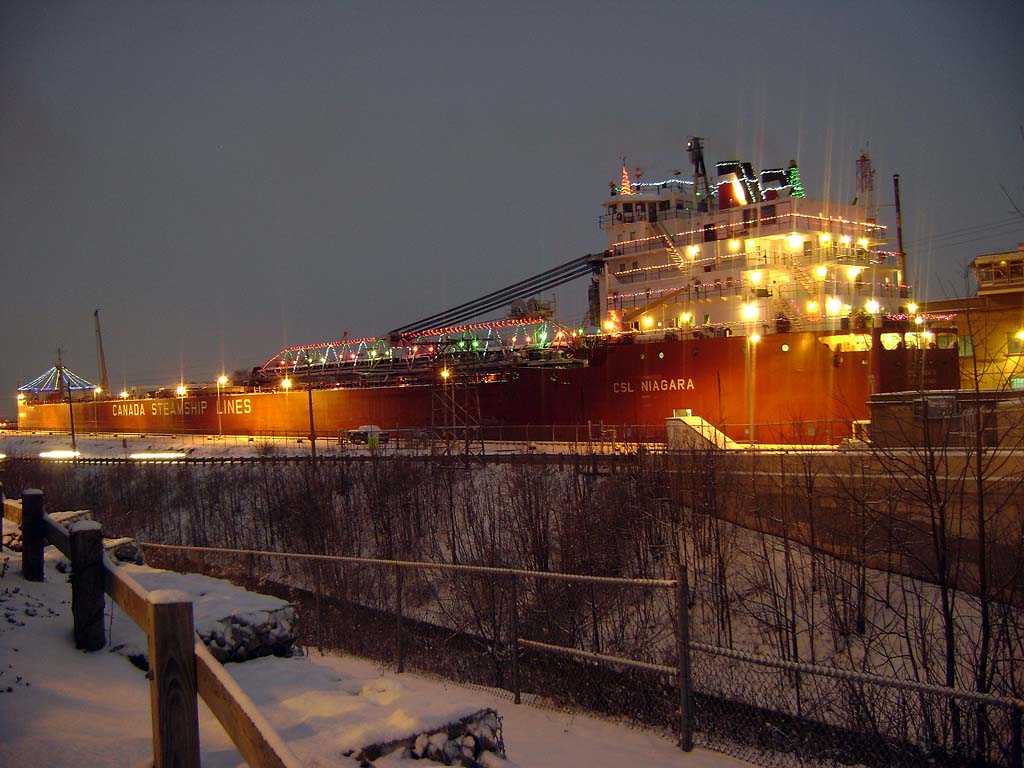
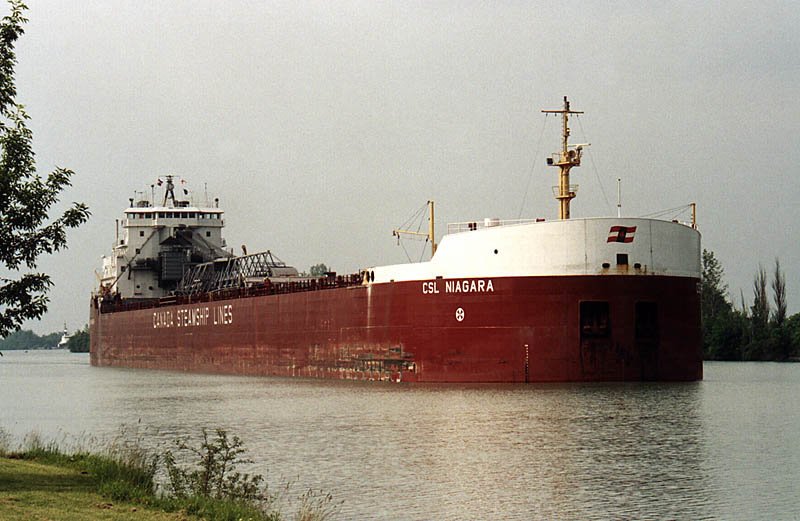
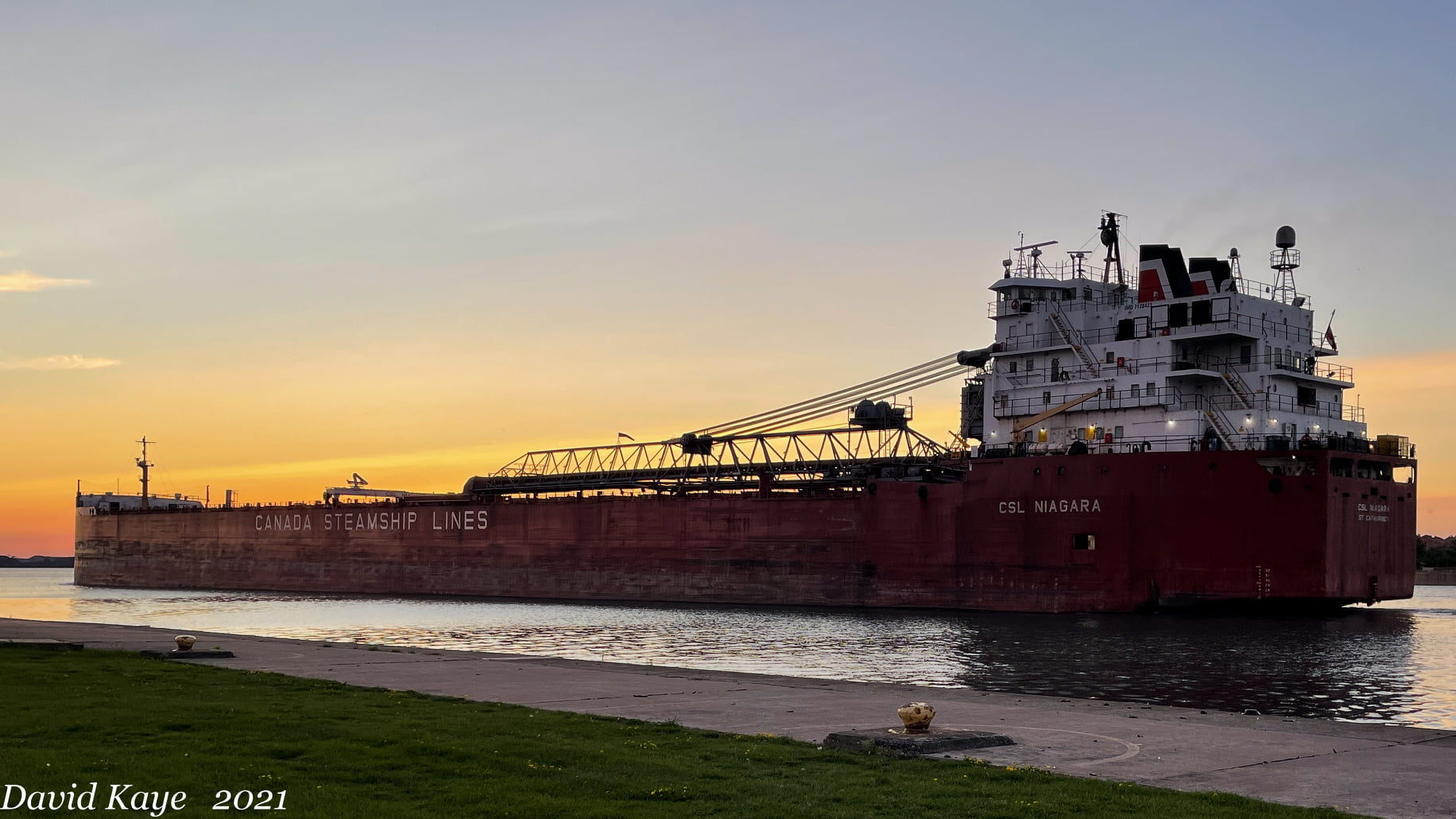
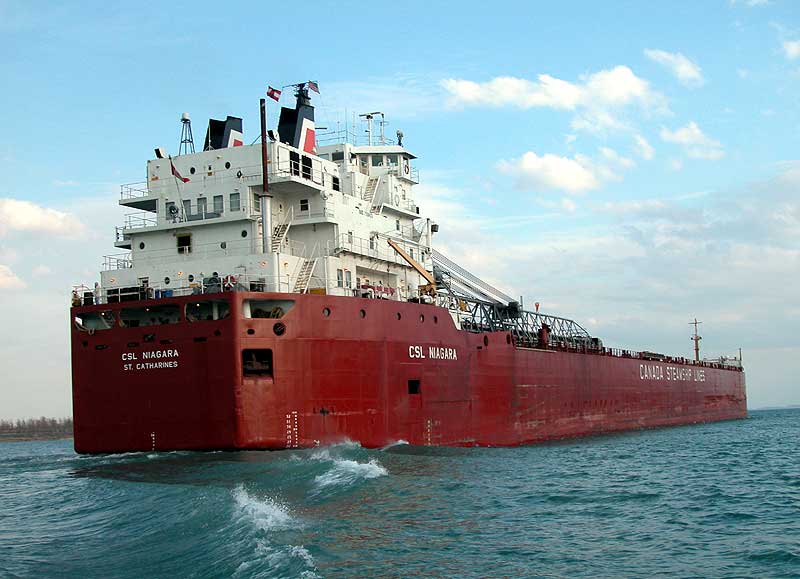
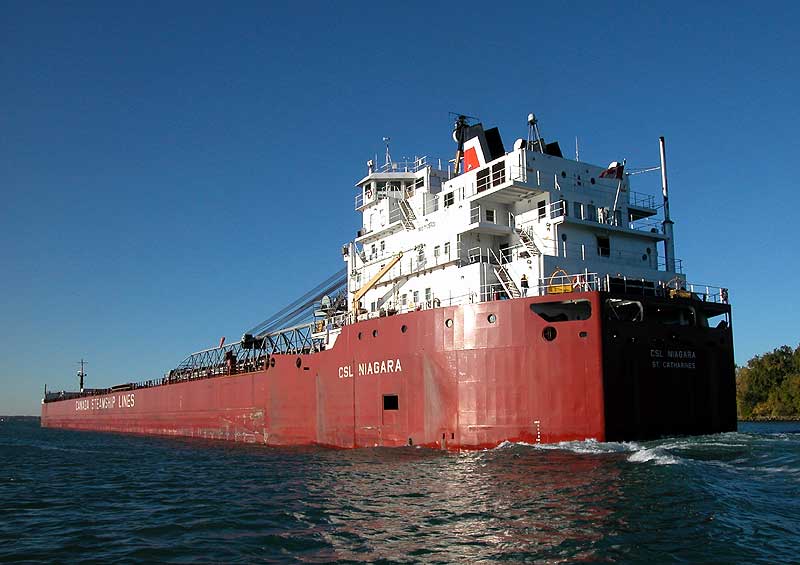
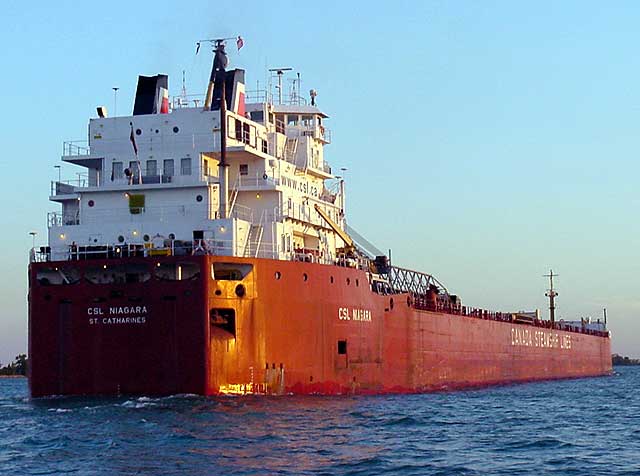
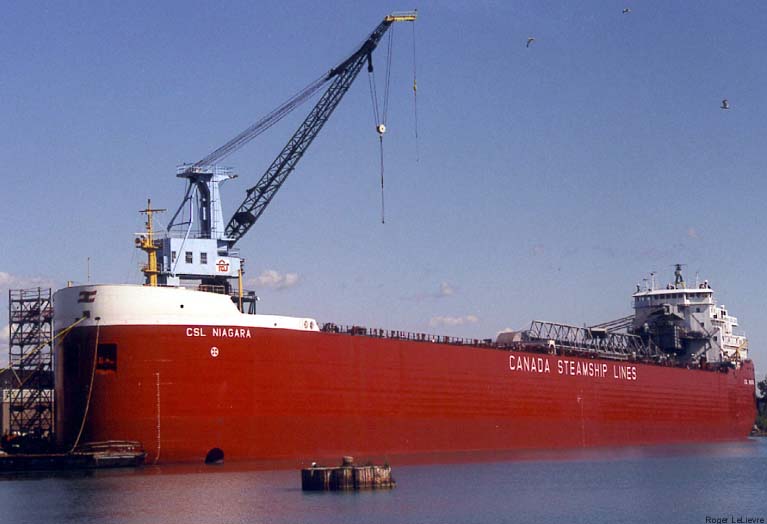
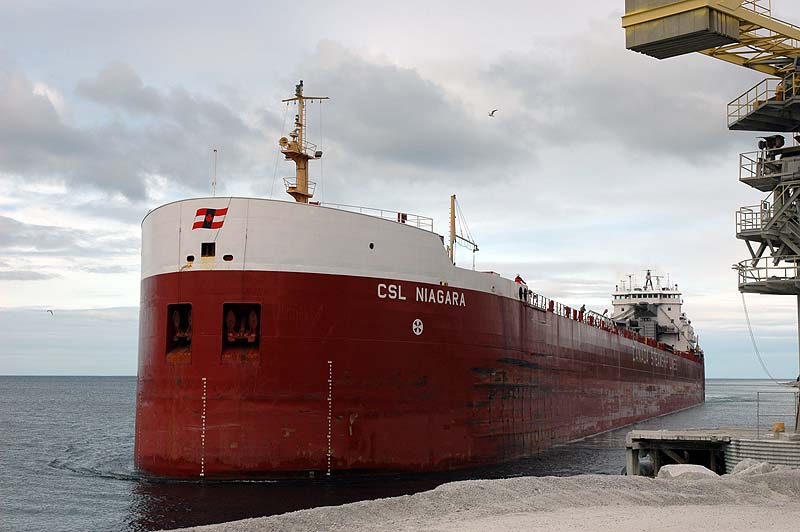
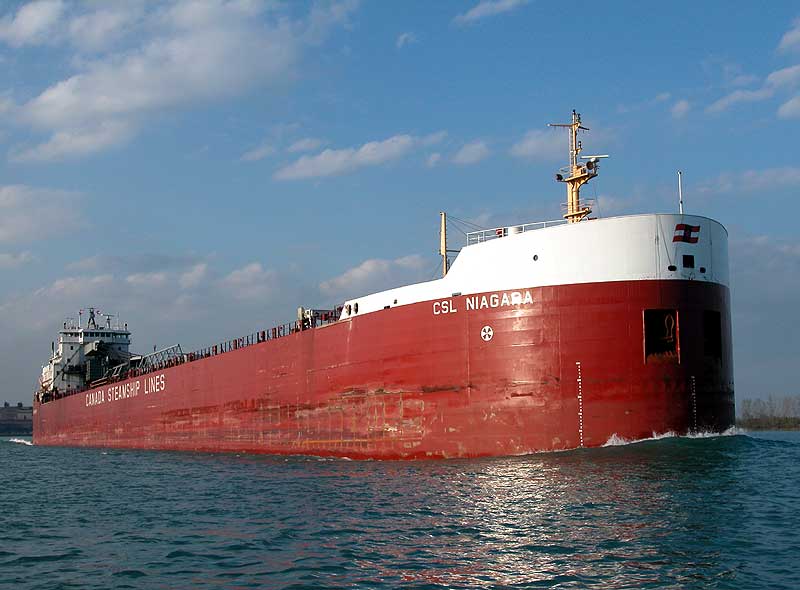
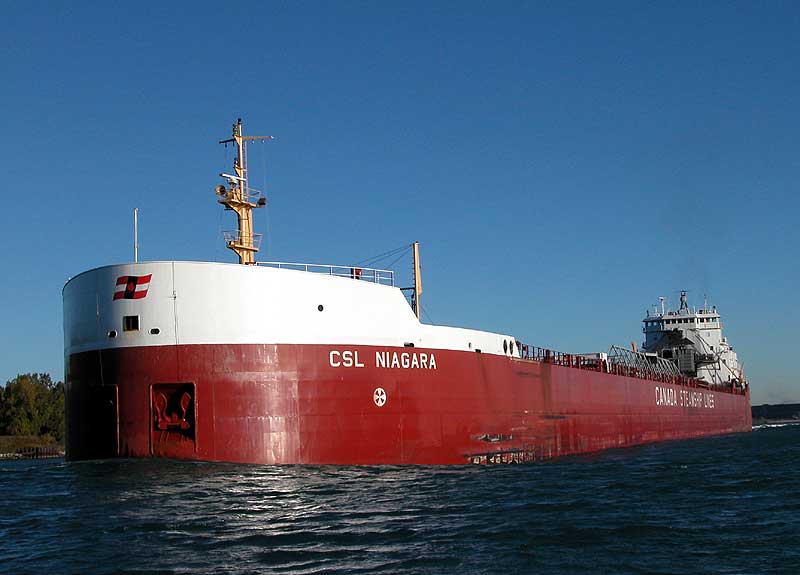
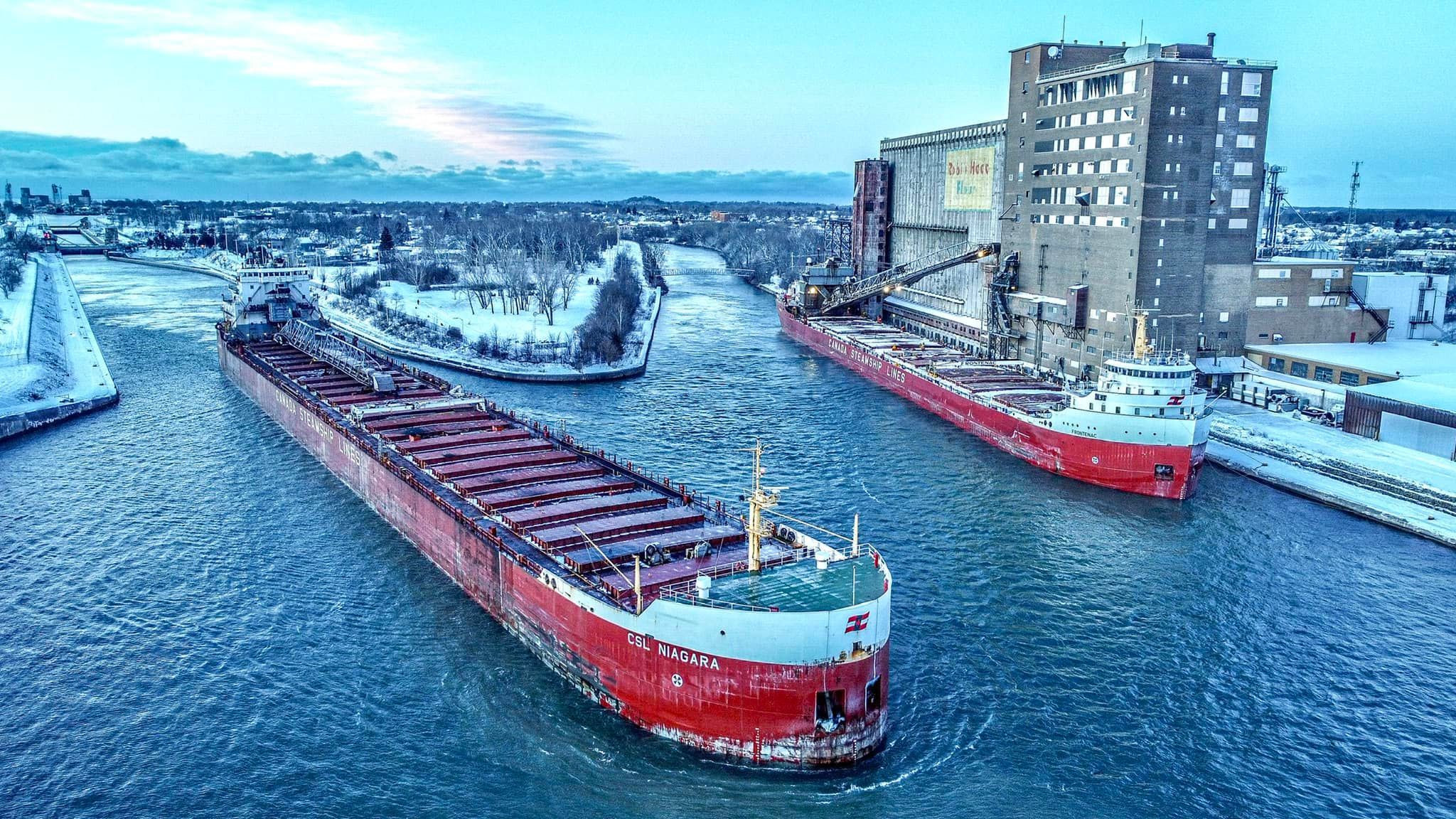
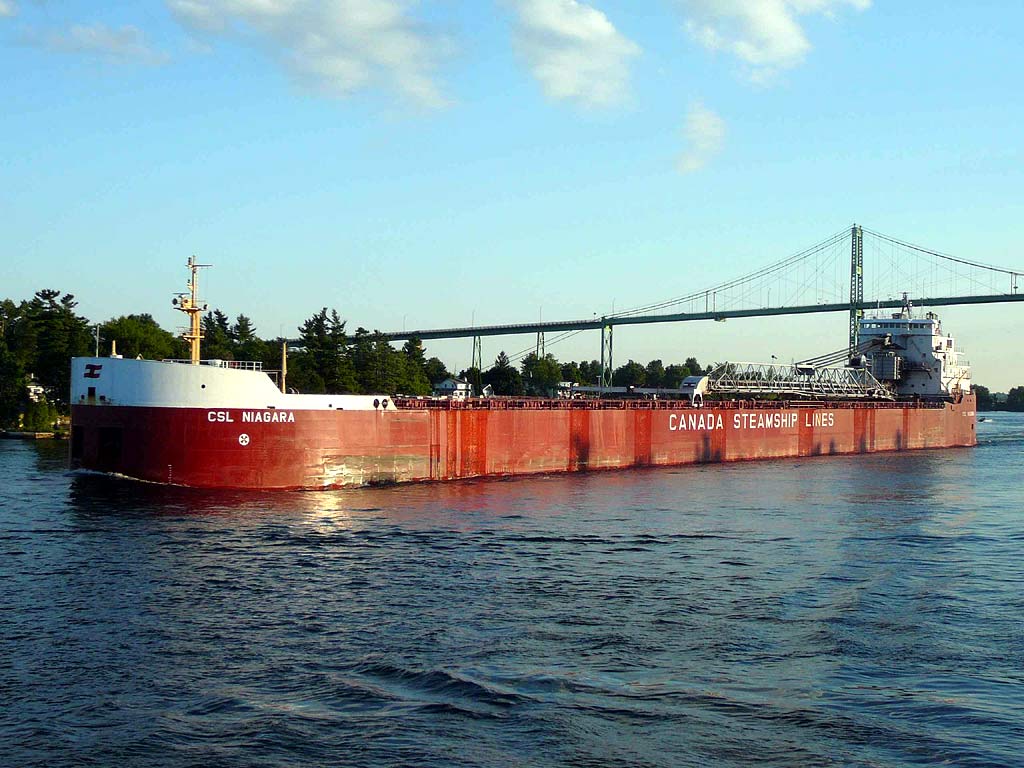
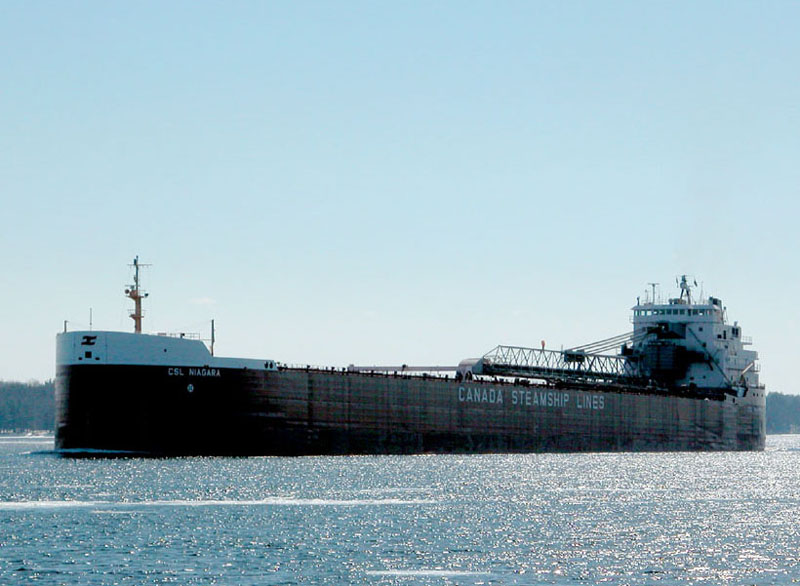
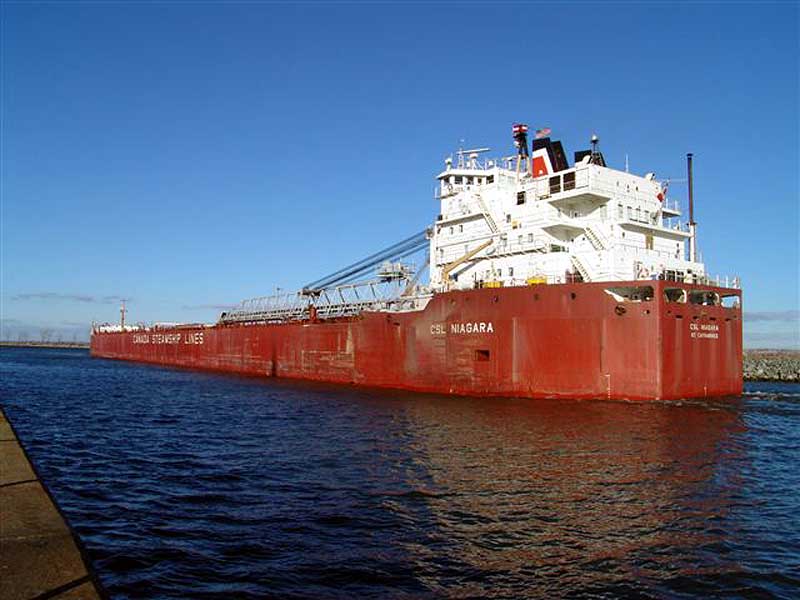
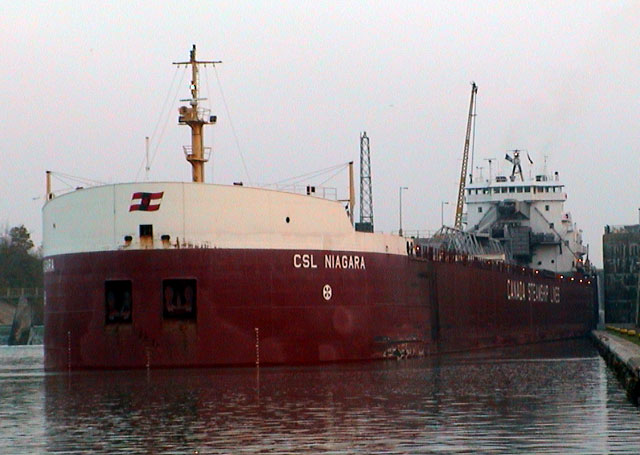
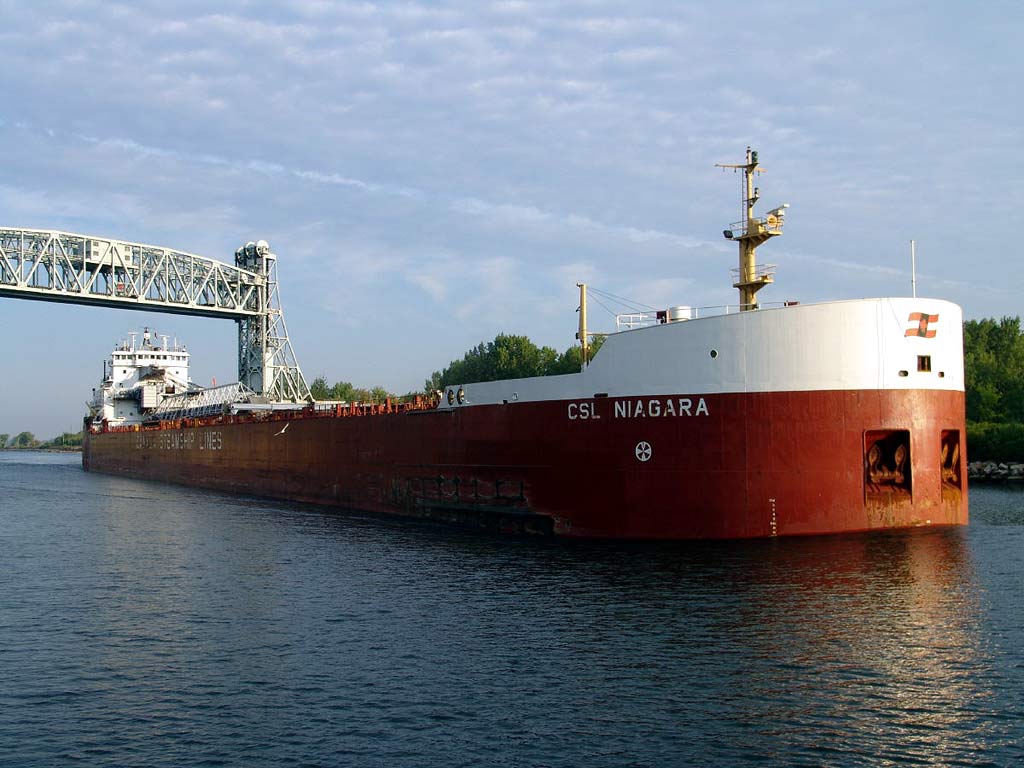
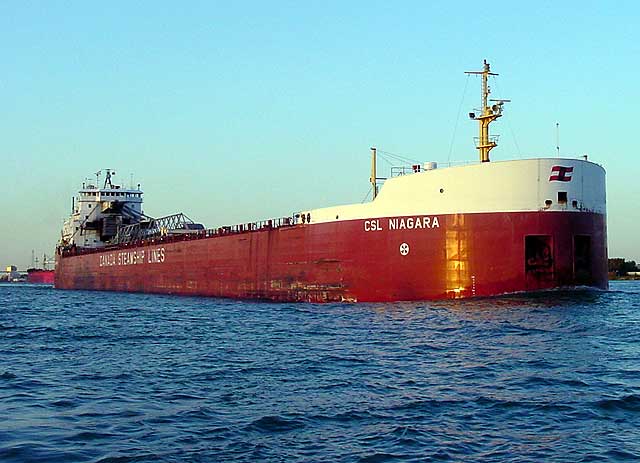
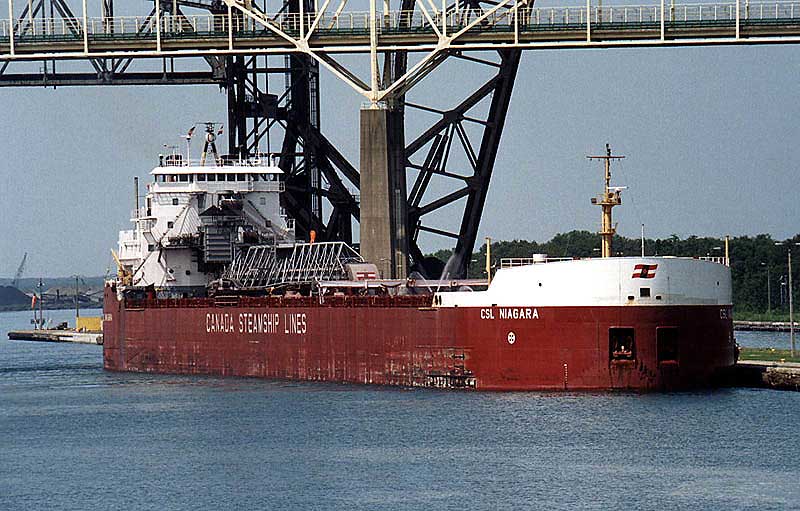
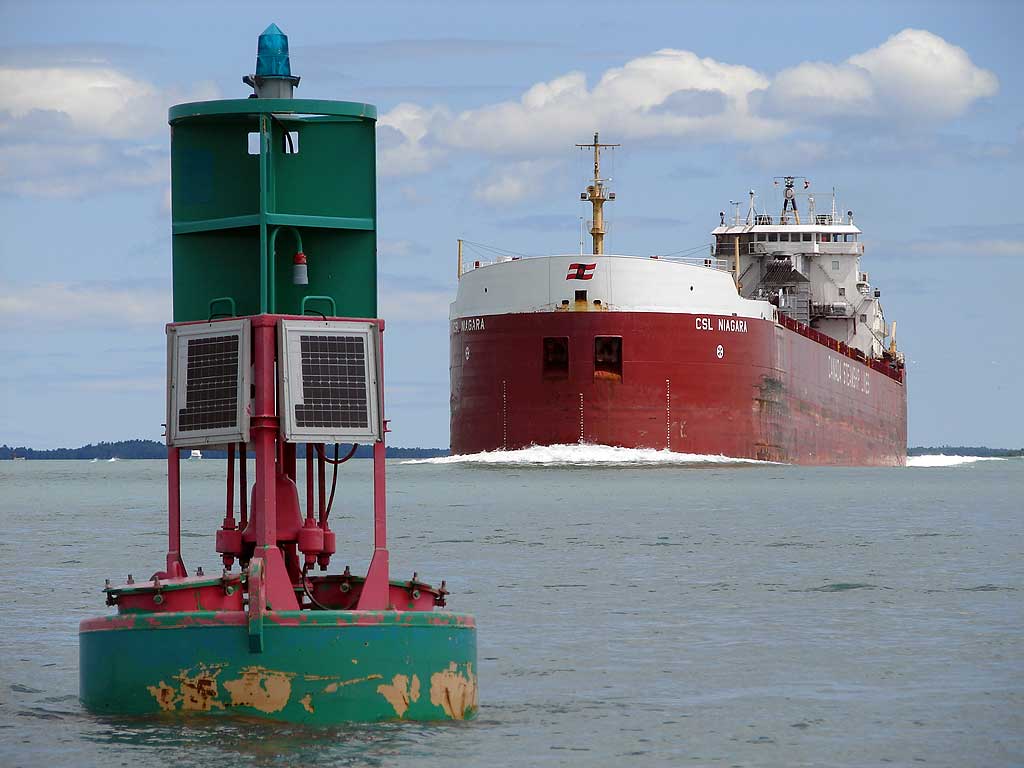
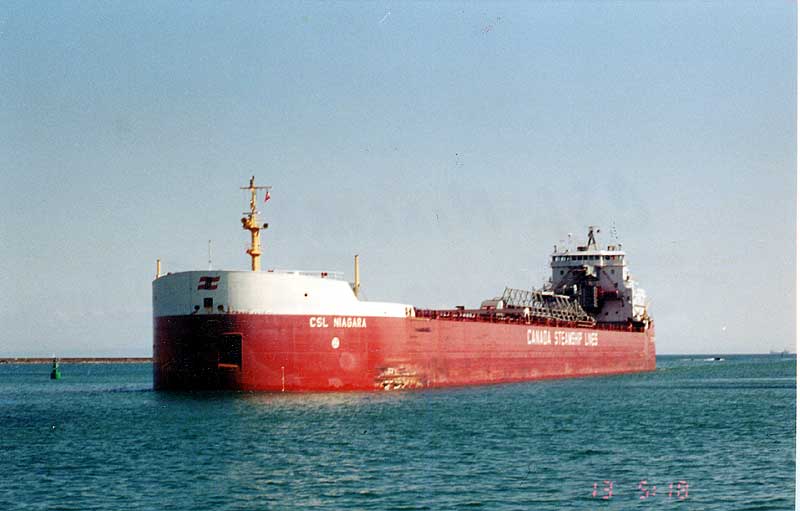
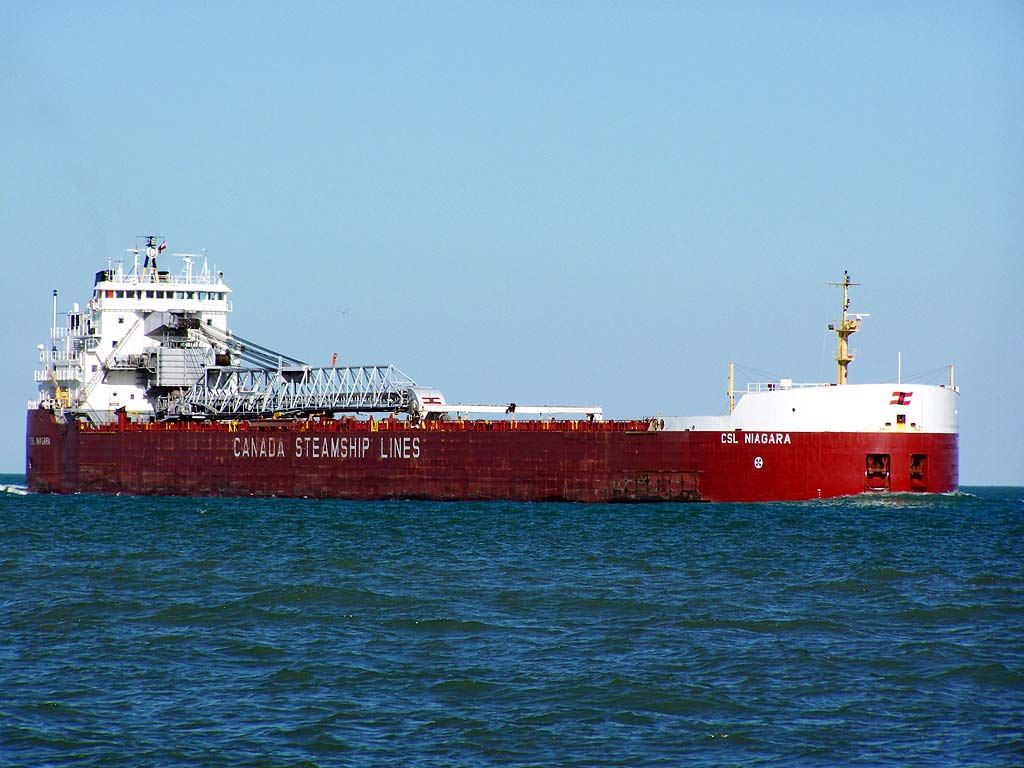
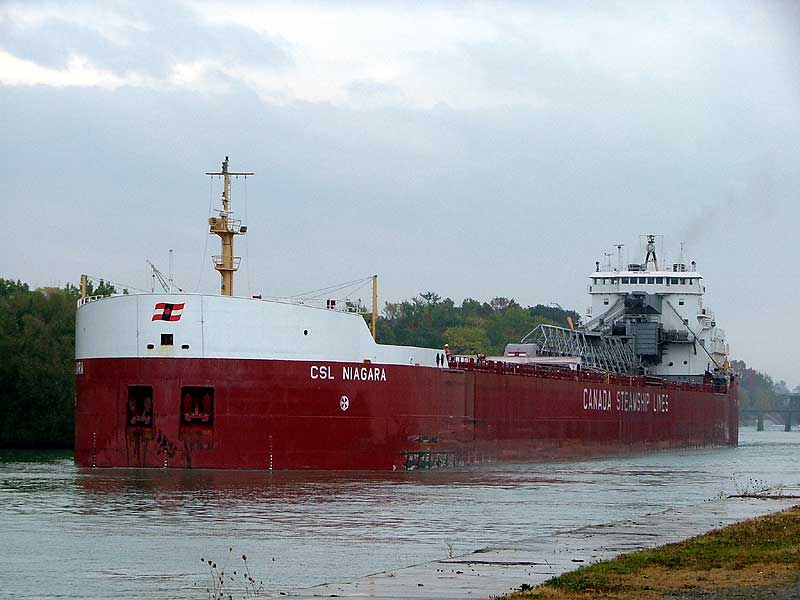
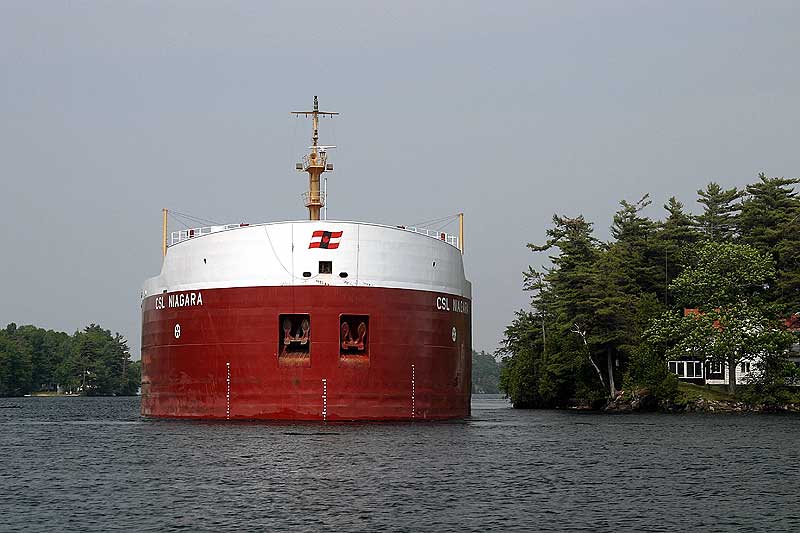
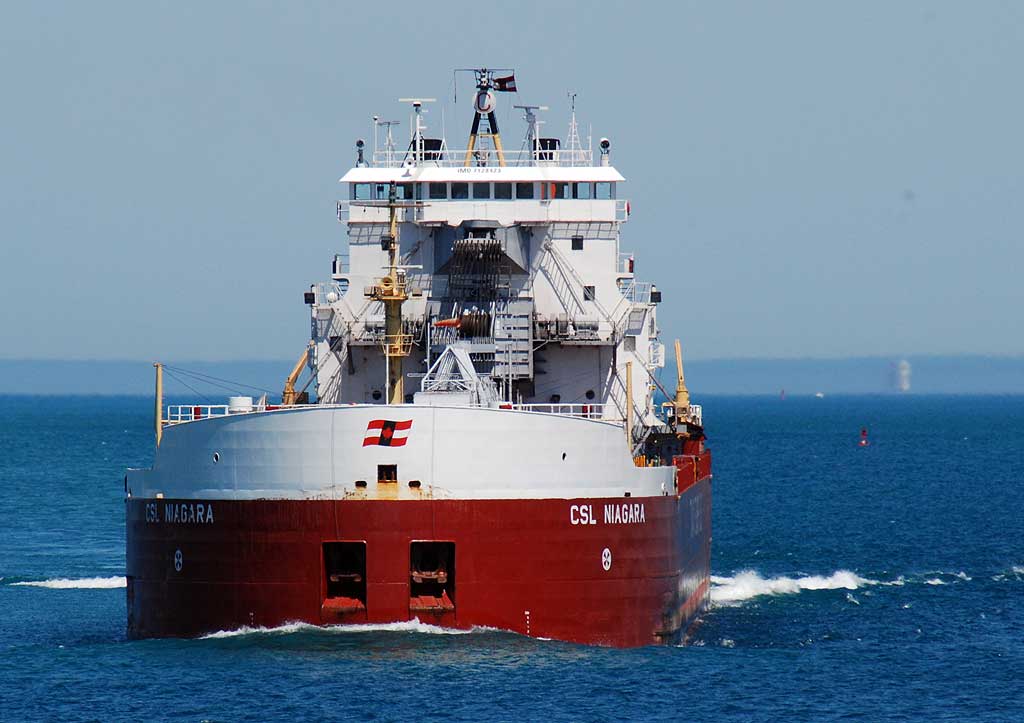
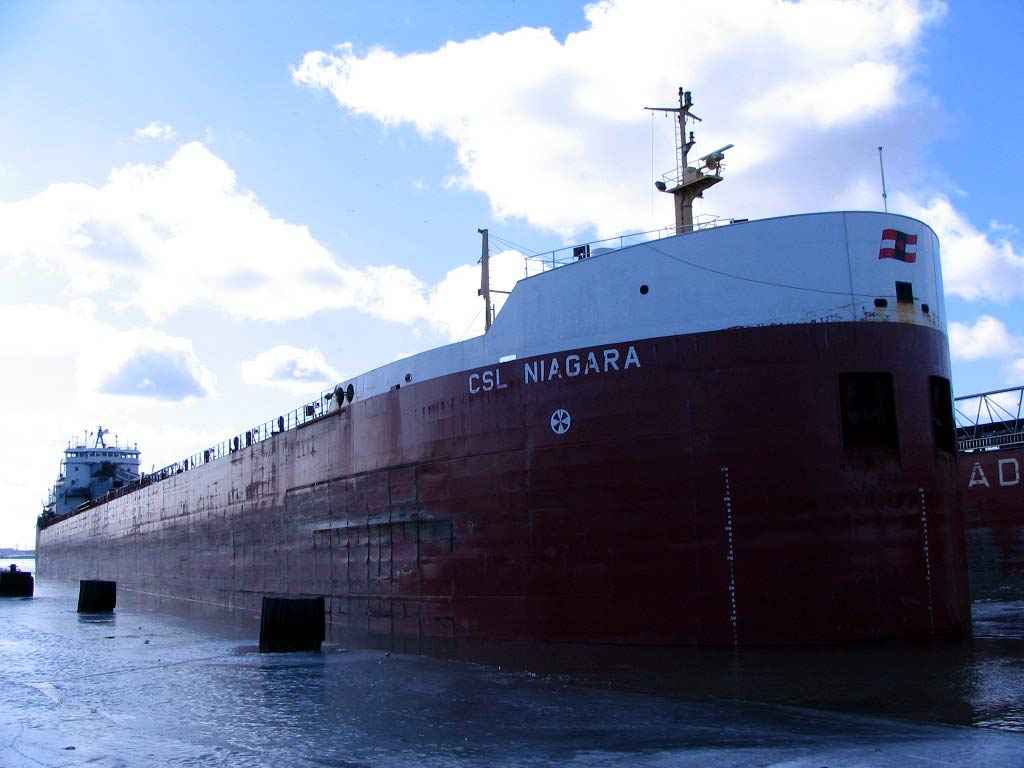
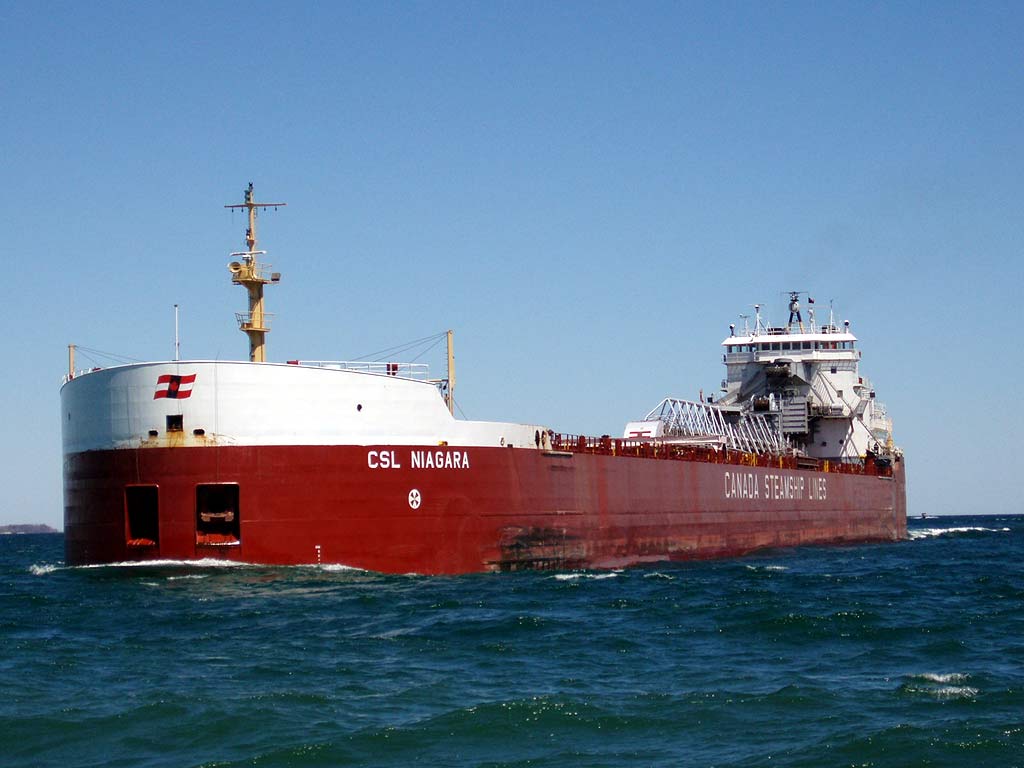
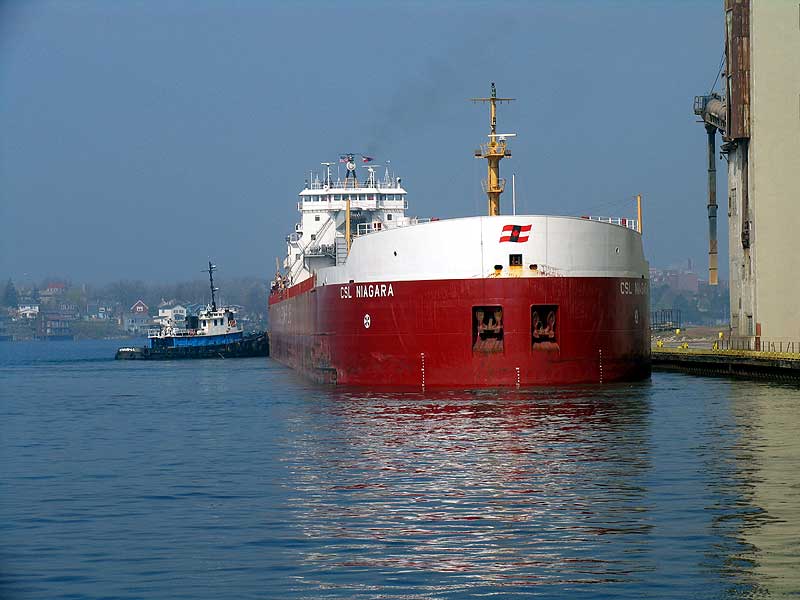
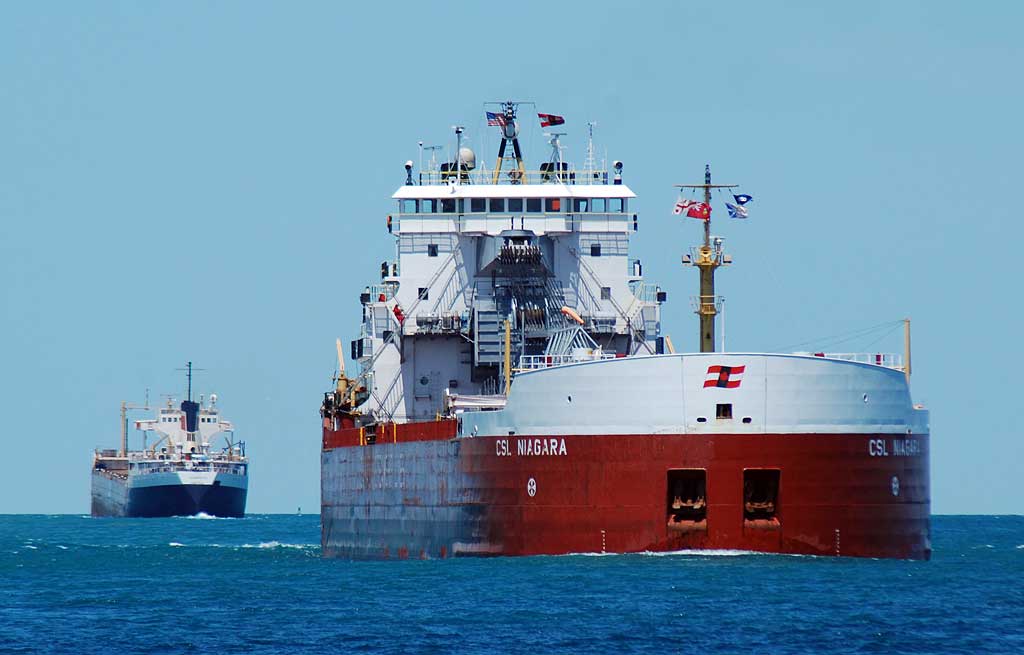
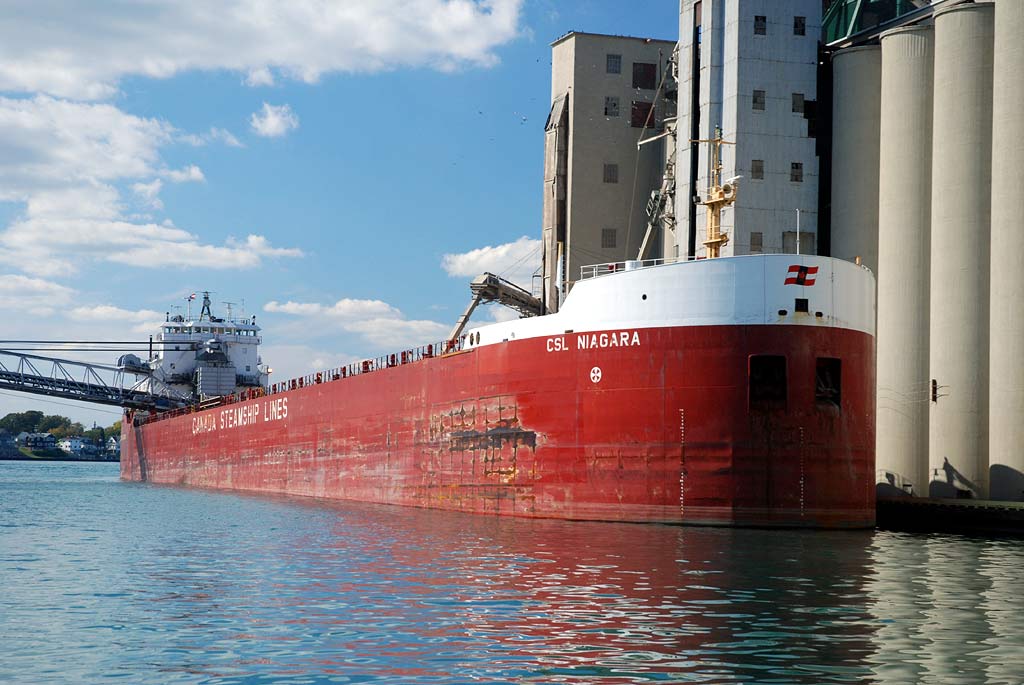
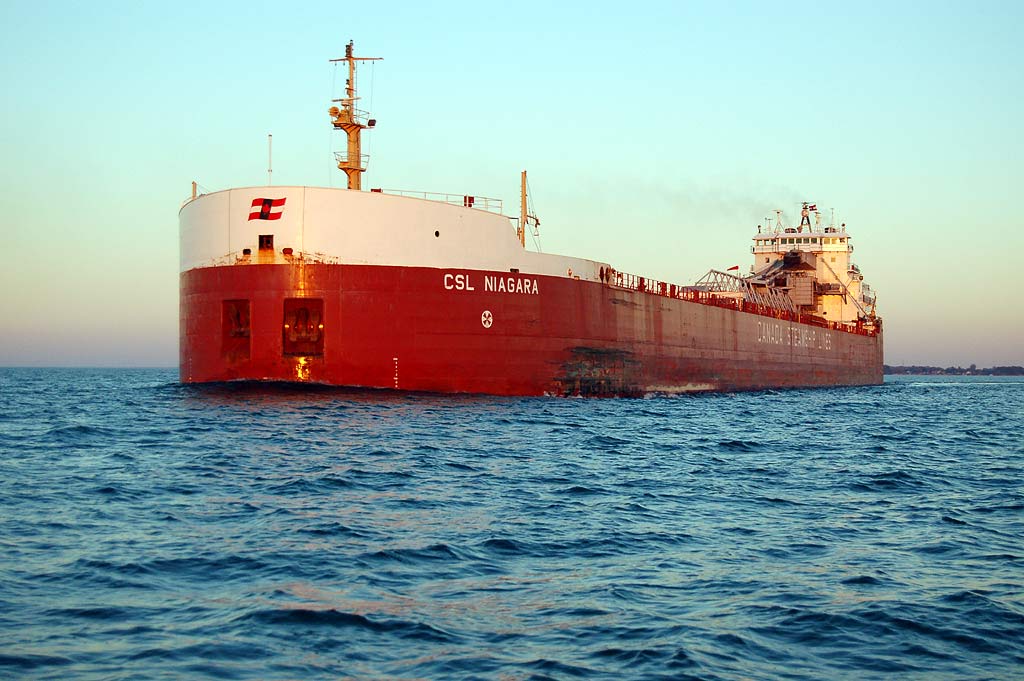
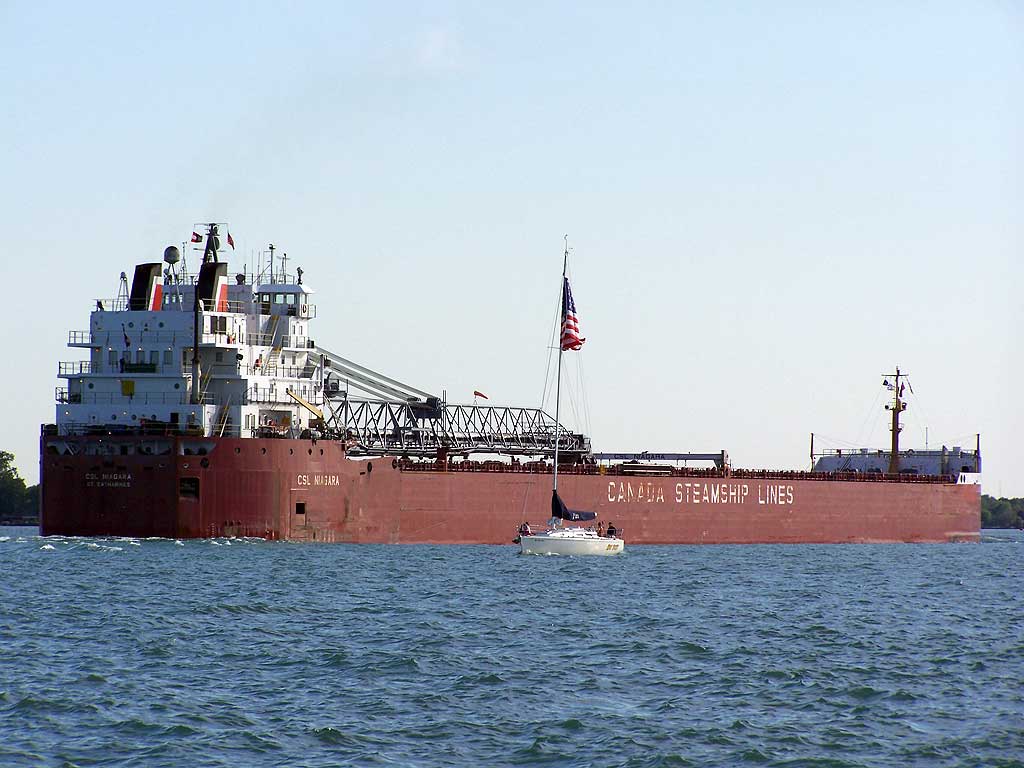
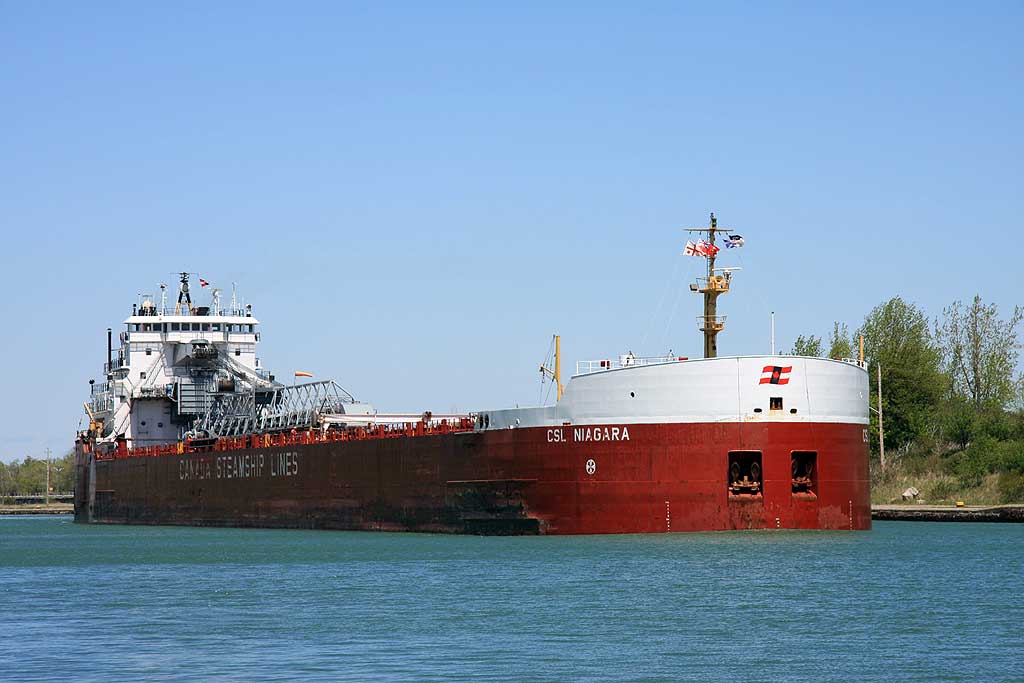
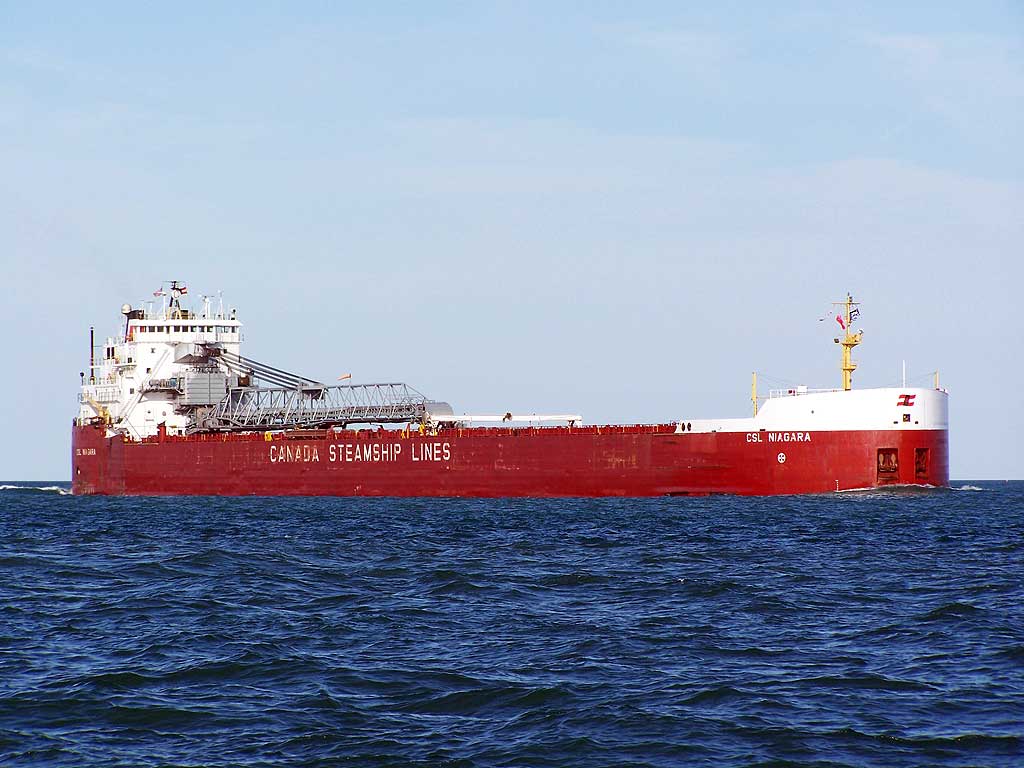
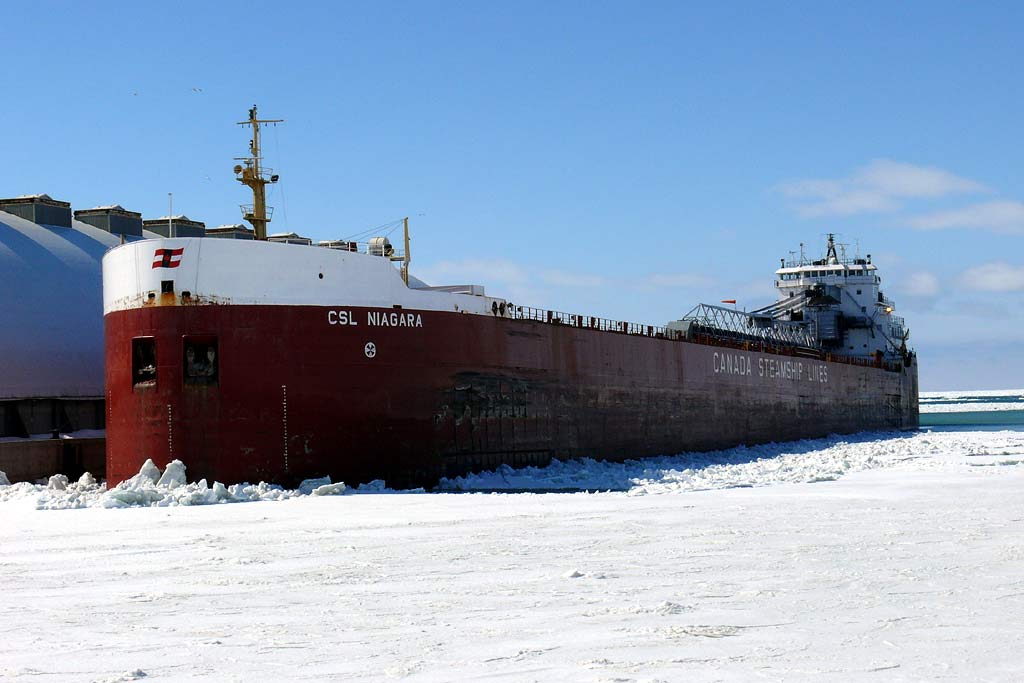
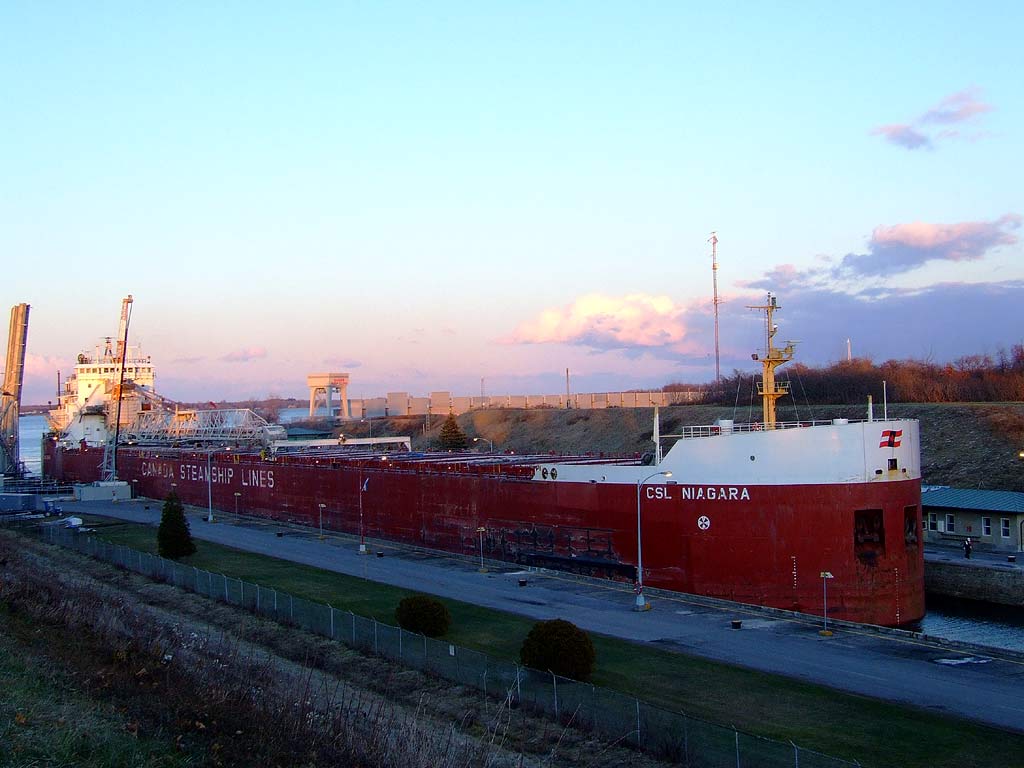
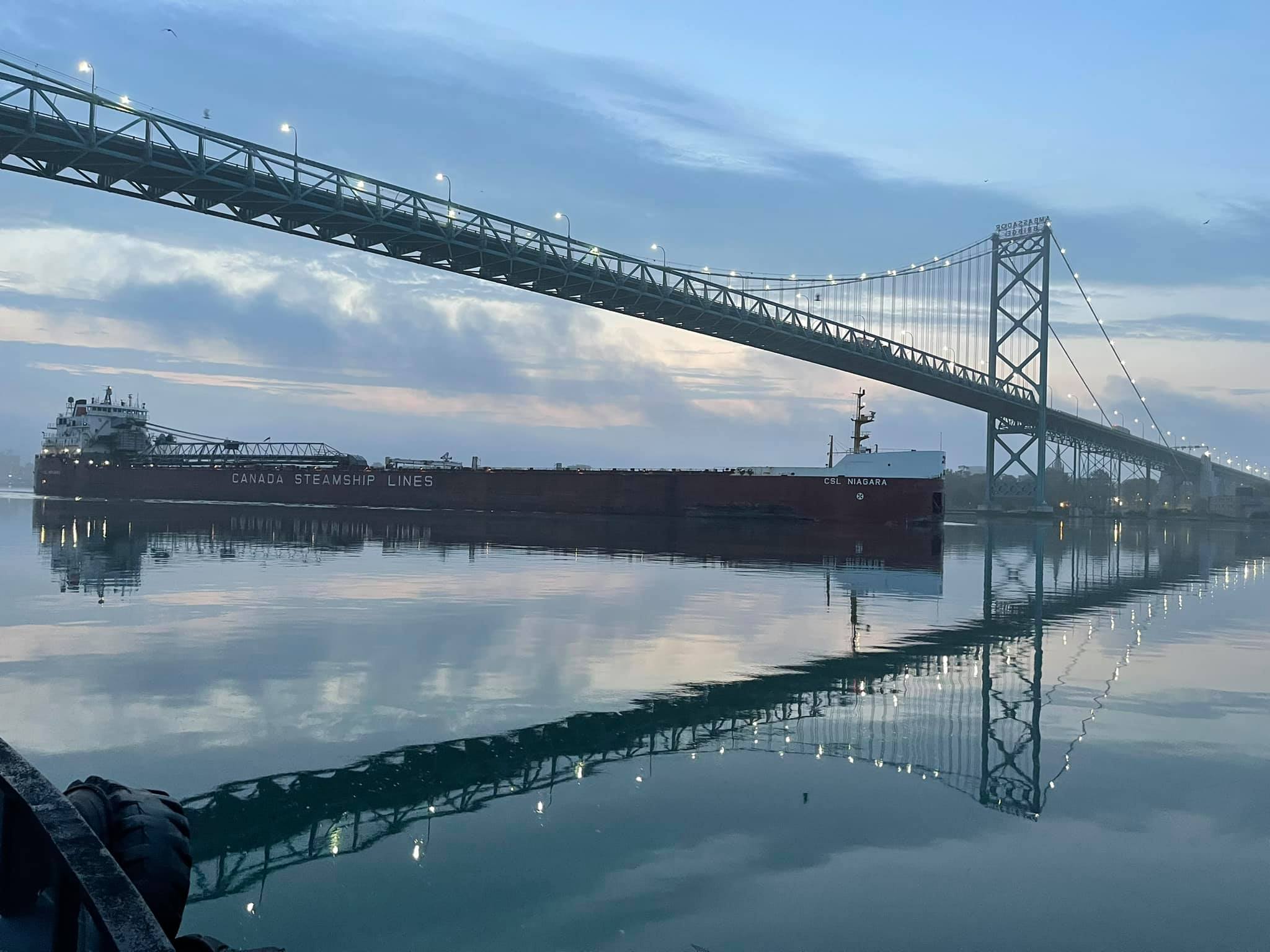
The ‘new’ Canada Steamship Lines vessel was christened CSL Niagara on June 15, 1999 at Port Weller Dry Docks, St. Catharines by Mrs. Catherine Warry, wife of Mr. Brian Warry, VP, Purchasing, Raw Materials and Pipe Operations with Stelco, Inc., Hamilton, ON. The “SeawayMax” vessel was named in honor of the falls themselves, the city and of the ‘Niagara’ Peninsula and ‘Niagara’ Frontier being the locations of the Welland Canal and Port Weller Dry Docks; the ‘CSL’ referring to her owner’s name. The new name was chosen in a company-wide naming contest won by Capt. Ken Ford and his wife Barbara who reside in Niagara Falls, ON. The CSL Niagara was the first new Great Lakes vessel built in 14 years. The launch itself was preceded by a keel-laying ceremony for hull #78, the second of the 3 forebody program, becoming the first time in Canadian shipbuilding history that a keel-laying and a christening took place at the same time. The other two vessels involved in the revitalization program were the Rt. Hon. Paul J. Martin, a) H. M. Griffith 2000; and the CSL Laurentien, a) Louis R. Desmarais 2001.
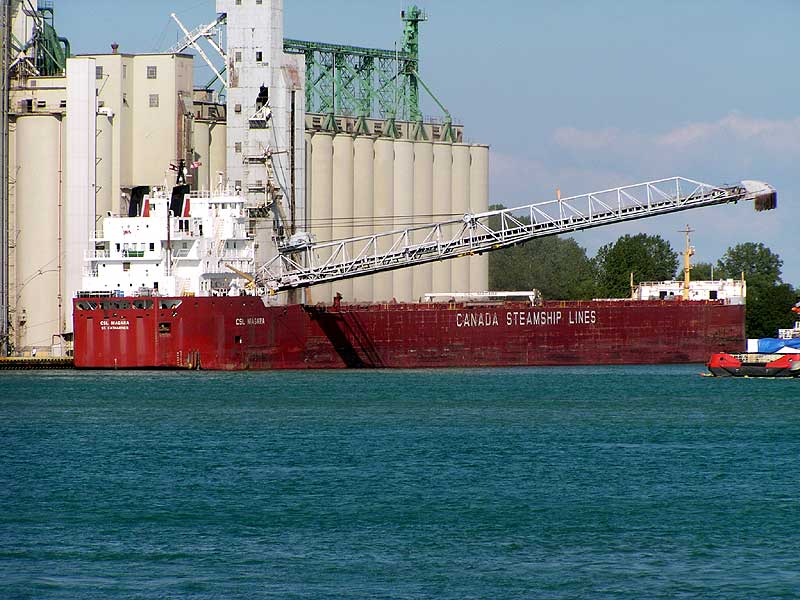
As a result of this upgrade, the vessel was lengthened 10 feet (3.05m), widened 3 feet (.91m) and deepened 1.5 feet (.46m). The CSL Niagara’s 24 hatches service 5 holds where she is now capable of carrying 37,694 tons (38,299 mt) at her maximum mid-summer draft of 31′ 04″ (9.56m) and can carry 30,223 tons (30,708 mt) at the maximum Seaway draft of 26′ 06″ (8.08m). Her new self-unloading system features hopper type cargo holds with overhung roller track slide gates feeding the cargo onto 2 tunnel conveyors to a single loop-belt elevator onto a 257’00” (78.33m) unloading boom. The entire system can be remotely controlled from the wheelhouse or the unloader control room and is integrated with the ballast control and tank gauging systems. The system can discharge at a rate of up to 5,413 tons (5,500 mt) of iron ore or 3,937 tons (4,000 mt) of coal per hour.
On July 23, 1999; the CSL Niagara was bunkered by the Provmar Marine tanker Hamilton Energy; departing St. Catharines for sea trials on Lake Ontario on Wednesday, July 26. Later on July 26, the CSL Niagara departed on her maiden voyage from St. Catharines, ON light to Sandusky, OH where she loaded 32,355 net tons of coal for Stelco in Hamilton, ON. She set her first record on November 29, 1999 by loading 29,707 metric tons of grain (1,091,545 bushels) at Thunder Bay, ON bound for Montreal, QC, breaking a previously set 1980 record of 29.016 metric tons set by her fleet mate Pineglen. After laying up at Hamilton, ON in 1999/2000, the CSL Niagara was the honored vessel at the opening of the Welland Canal on March 27, 2000. She was the first upbound vessel at the St. Lambert Lock of the St. Lawrence Seaway on March 26, 2002 opening the Seaway for the 2002 season.
On June 29, 2005, the CSL Niagara grounded on a shoal in the St. Lawrence Seaway just east of the Thousand Island Bridge about 15′ (4.6m) off shore of St. Helena Island. She was holed in her forepeak but her pumps were able to contain the inflow of water (considered as minor damage). After Coast Guard inspection, she was allowed to proceed to deliver her cargo of coke from Quebec City, then go to Pascol Engineering at Thunder Bay, ON for dry docking and repair. At the beginning of the 2006, 2007 and 2008 navigation seasons, the large self-unloader was the first arrival at Goderich, ON (March 16, 2006), Sandusky, OH (March 19, 2007) and Goderich again (March 16, 2008); opening those two ports for their respective seasons.
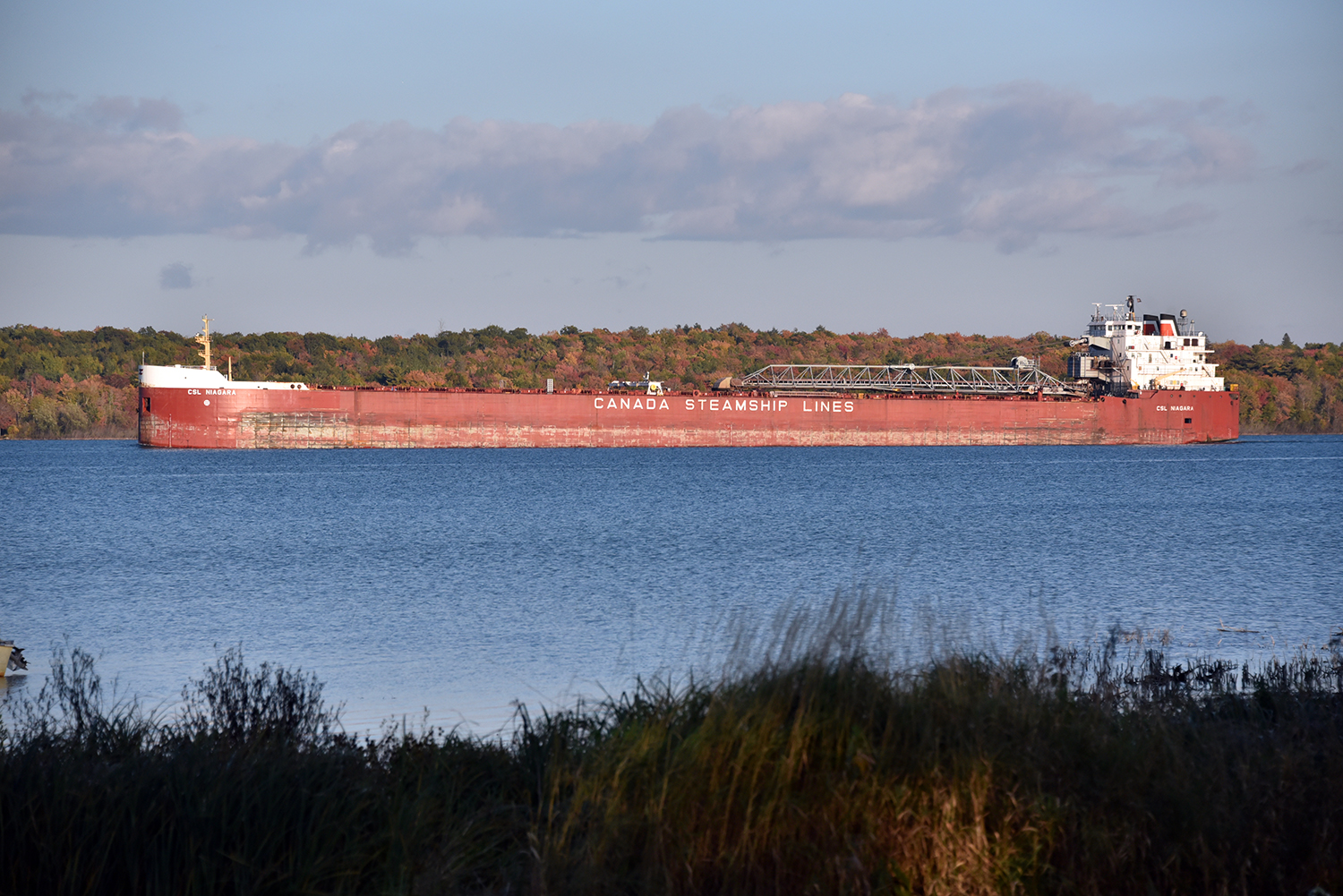
The CSL Niagara was repowered with new diesel engines in 2013. She remains in service today in the Seaway ore, coal, stone, grain, and salt trades.
* The standard shipping unit for coal is the net ton (2,000 lbs) whereas other commodities use the gross ton (2,240 lbs) & / or the metric ton (2,204.6 lbs). All tonnage figures used in this feature are expressed using the gross ton with metric in brackets unless otherwise noted,
Written by George Wharton, updated by Brendan Falkowski

Vessel Details
Refit: Port Weller Dry Docks (St.Catharines, Ontario, Canada)
CSL Niagara (1999-Present)


J.W. McGiffin (1971-99)