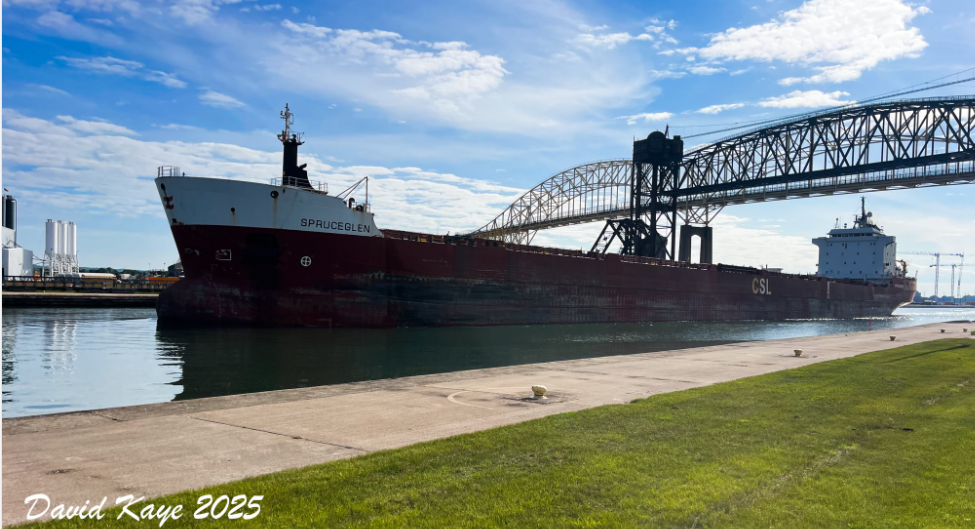
Spruceglen

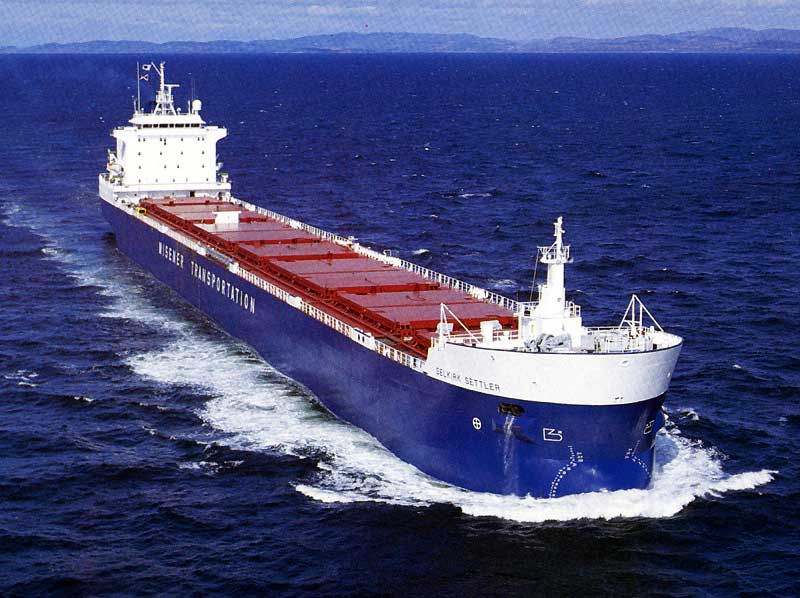
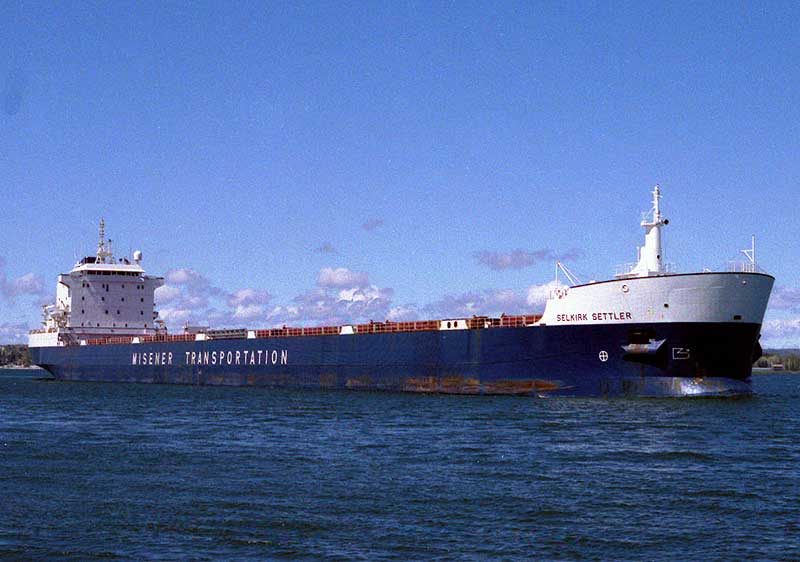
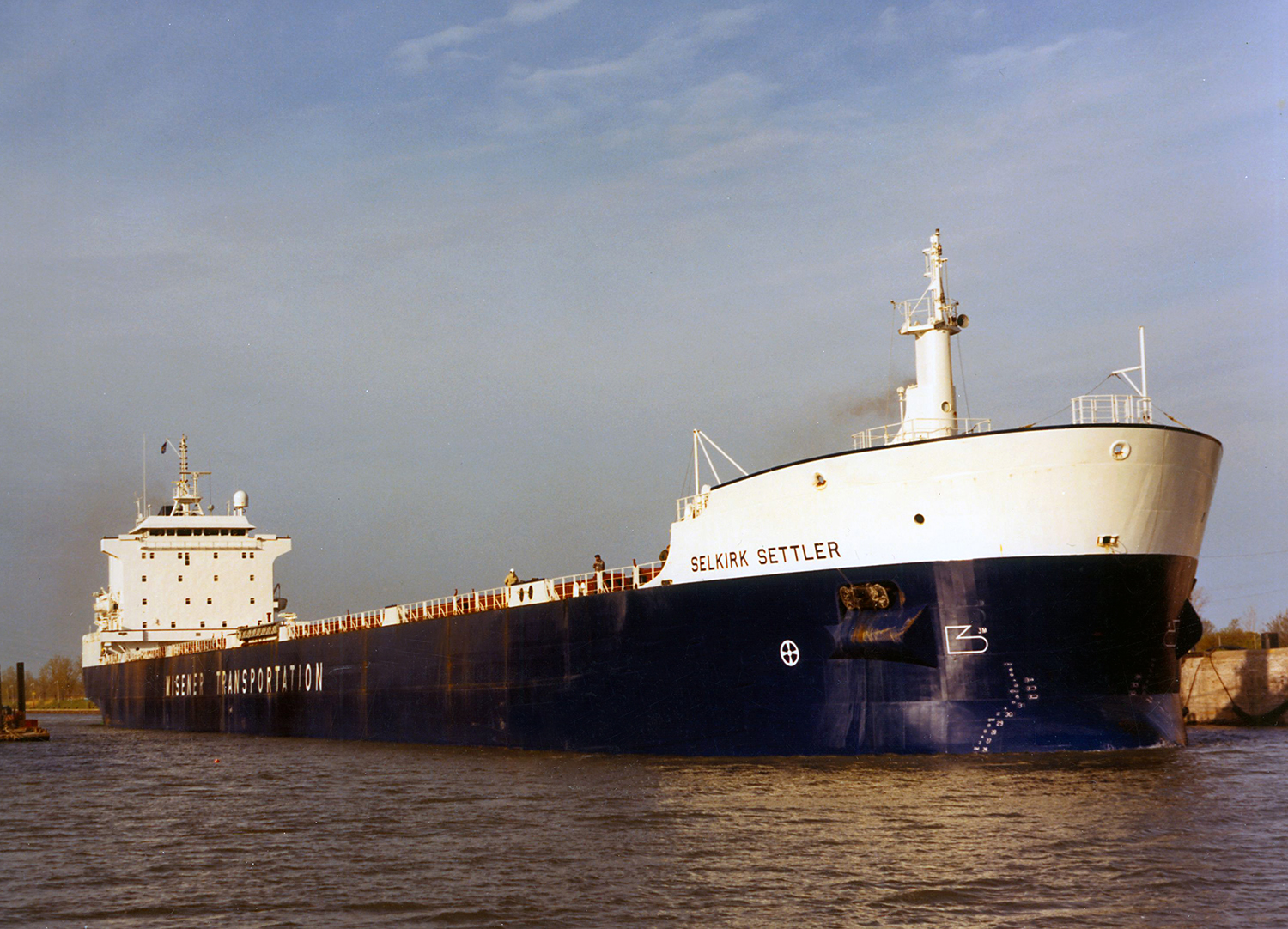
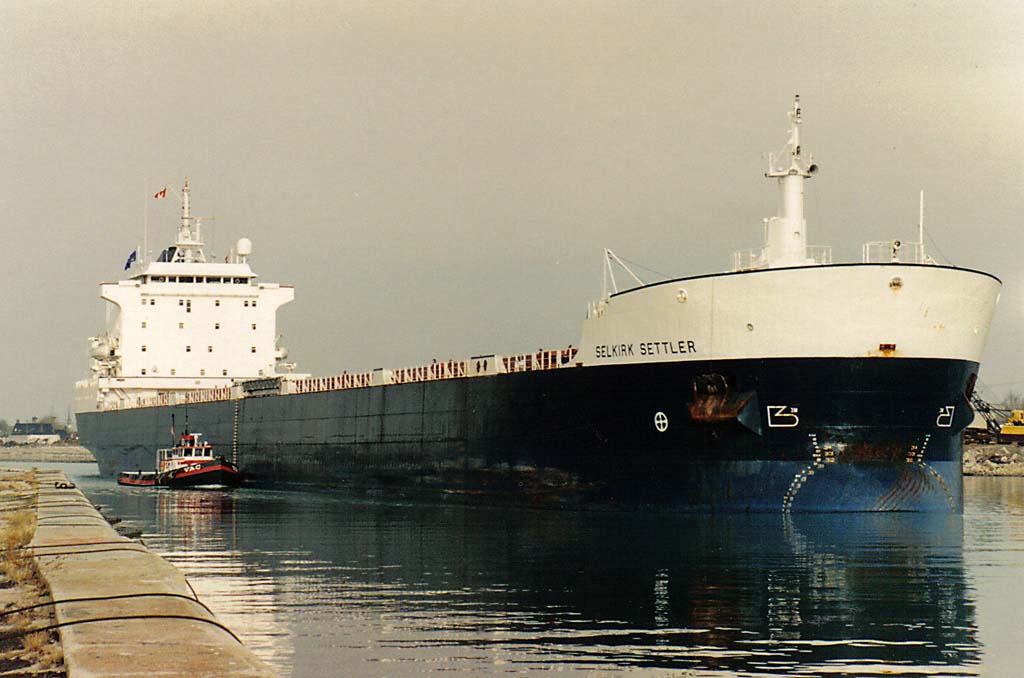
The first of three sister ships to be constructed for Misener Transportation Ltd., St. Catharines, ON; this Great Lakes and ocean gearless bulk carrier was built as hull # 256 by Govan Shipbuilders Ltd., Govan, Scotland. The new bulk carrier was launched January 28, 1983 and christened as the Selkirk Settler on April 15, 1983. The Selkirk Settler cleared Scotland on April 25, 1983 on her maiden voyage to Canada arriving at the Welland Canal on May 5th. This bulker and her two sister ships were built to give Misener Transportation (as well as the Misener managed and crewed Pioneer Shipping Ltd.) the capability of operating year round. The plan was to operate these vessels on Great Lakes trades during the navigation season, then ocean trades during the winter months. The other two sister ships were the Canada Marquis sailing under the Misener banner and the Saskatchewan Pioneer sailing under the Pioneer Shipping banner. Of note; the Canada Marquis now sails as the Birchglen owned by Canada Steamship Lines, Montreal, QC and the Saskatchewan Pioneer as the Voyageur Pioneer owned by Voyageur Marine Transport Ltd., Ridgeville, ON.
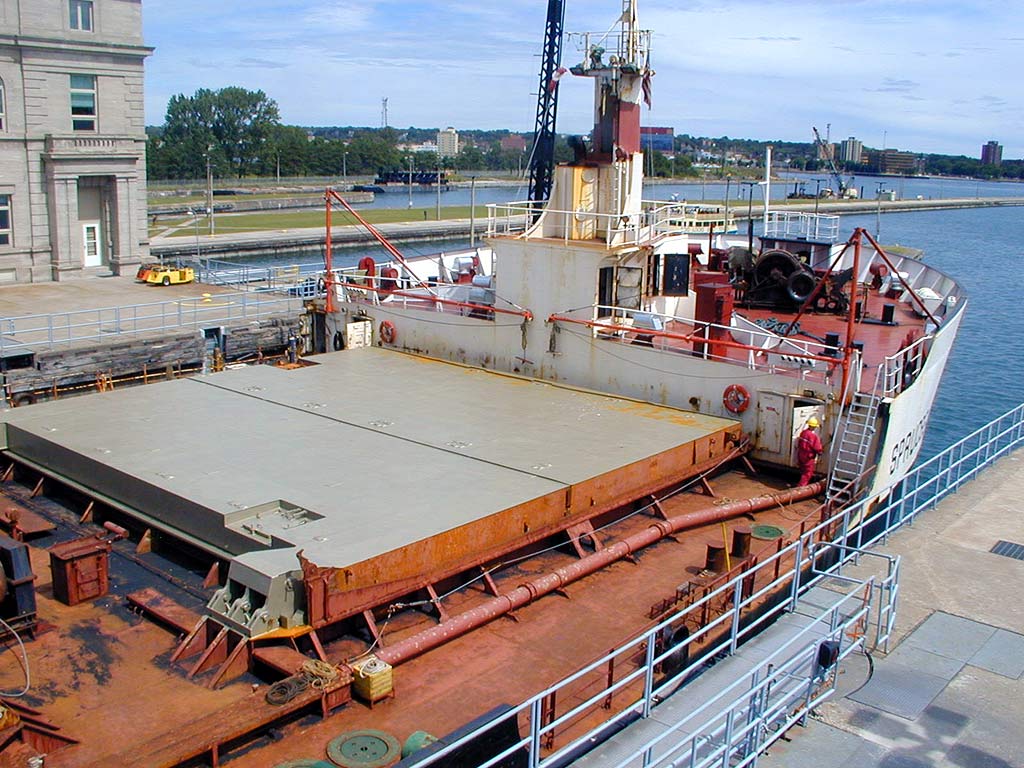
The Selkirk Settler was built with private air-conditioned rooms. The vessel is powered by a single Sulzer model 4RLB76 two stroke cycle, single acting 4 cylinder 10,880 b.h.p. (8,098 kW) diesel engine burning intermediate grade fuel oil; the power being fed to a single controllable pitch propeller in a Kort nozzle giving the vessel a rated service speed of 13.8 m.p.h. She is equipped with a 1,240 h.p. (923 kW) KaMeWa bow thruster. Seven hatches equipped with McGregor hydraulic hatch covers with automated cleating service 7 holds where the vessel is capable of carrying 33,824 tons (34,367 mt) at her maximum draft of 32’ 08” (9.962m) and 25,875 tons (26,291 mt) at the Seaway draft of 26’06” (8.08m). Cubic hold capacities include 39,500 net tons of coal (standard measurement for coal, equivalent to 35,268 tons or 35,834 mt)*, 35,195 (35,760 mt)* of wheat, 33,203 tons (33,736 mt) of corn or rye, 29,125 tons (29,593 mt) of barley and 26,776 tons (27,206 mt) of oats. Other capacities include 1,363 tons (1,383.5 mt) of intermediate fuel oil and 124 tons (126 mt) of diesel oil. The vessel’s hull was built to Lloyd’s 100 A1, Ice Class 3 classifications and strengthened for heavy cargoes (with holds 2, 4, & 6 or 1, 4, & 7 remaining empty).
Much of the Selkirk Settler’s first season was spent in the grain trade from Thunder Bay, ON. The vessel’s first overseas trip was a cargo of grain clearing Duluth, MN on December 8, 1983 for Limassol, Cyprus. She then returned to Baie Comeau, QC on February 17, 1984 where she loaded for Tilbury, England; returning to the Seaway and Great Lakes trading on April 2, 1984. Her second winter saw the Selkirk Settler load at Milwaukee, WI in December of 1984 bound for Leningrad arriving January 9, 1985. She then later ran European grain from Hamburg to Leningrad. Other ports and countries visited in the late ‘eighties included Casablanca, Baltimore, Philadelphia, France, and Belgium. From 1987 until 1991, the Selkirk Settler sailed under the flag of the Isle of Man reflecting a change away from her original Canadian registration.
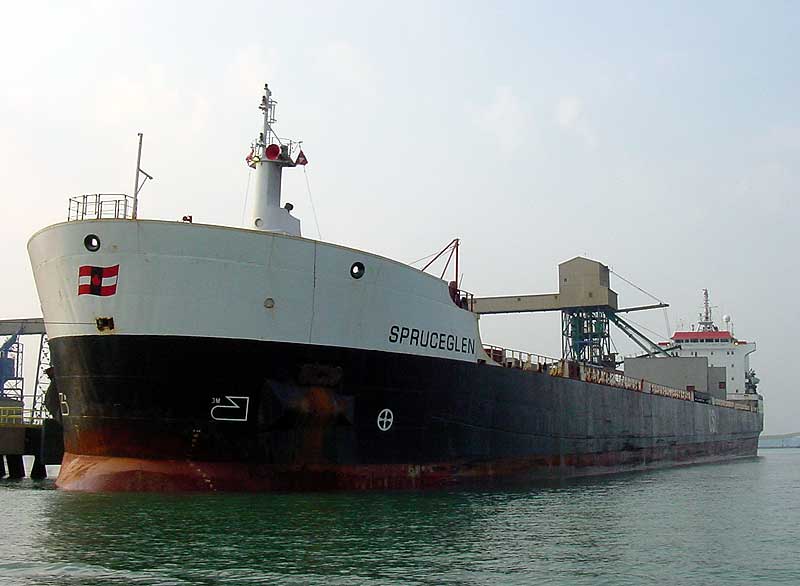
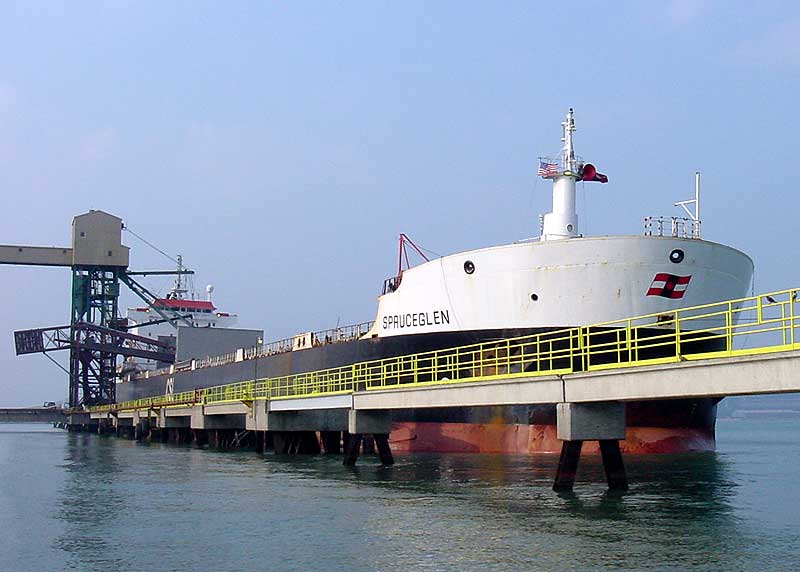
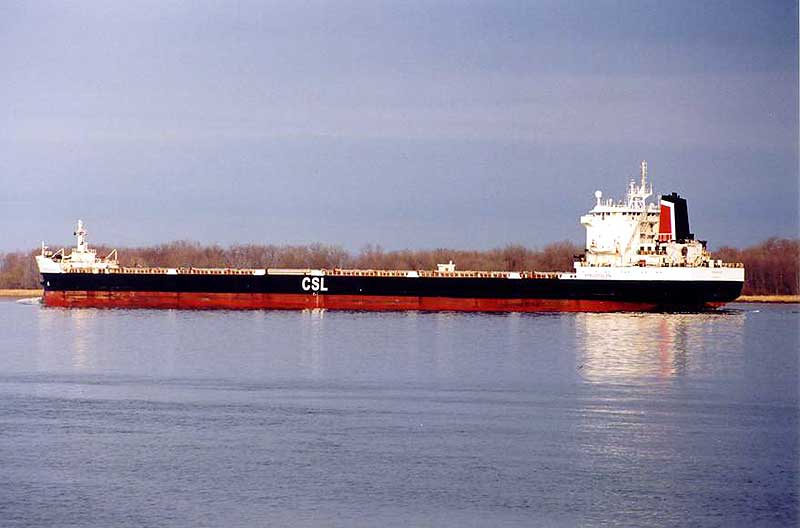
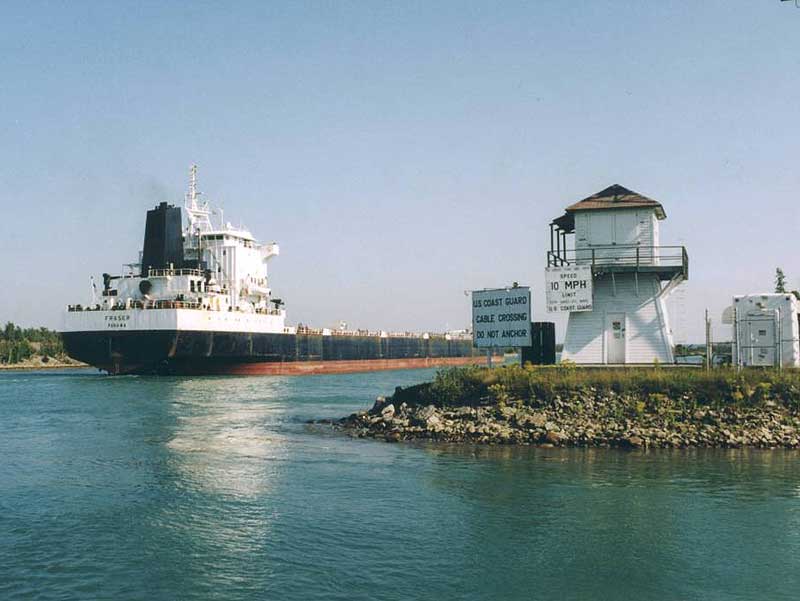
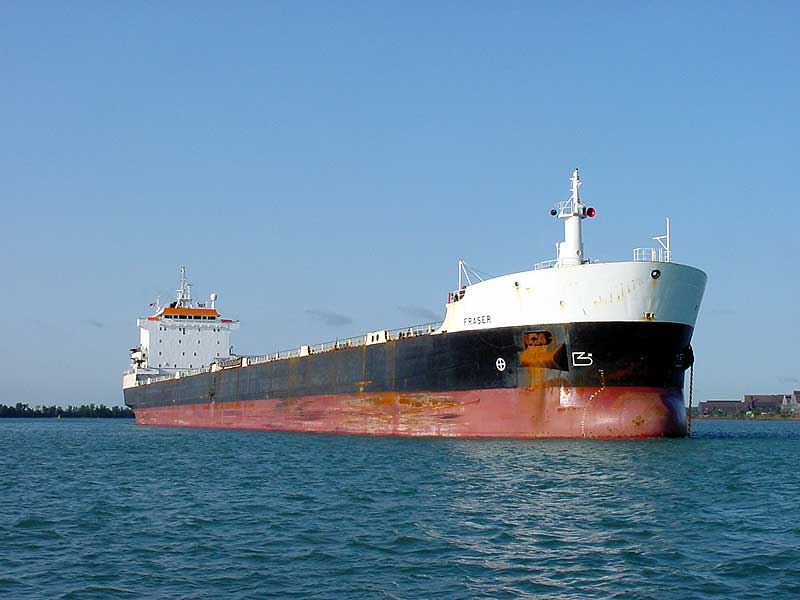
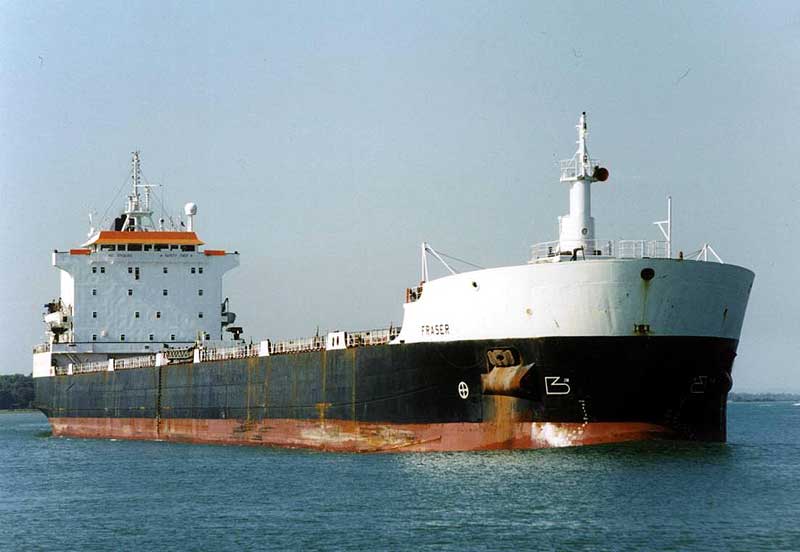
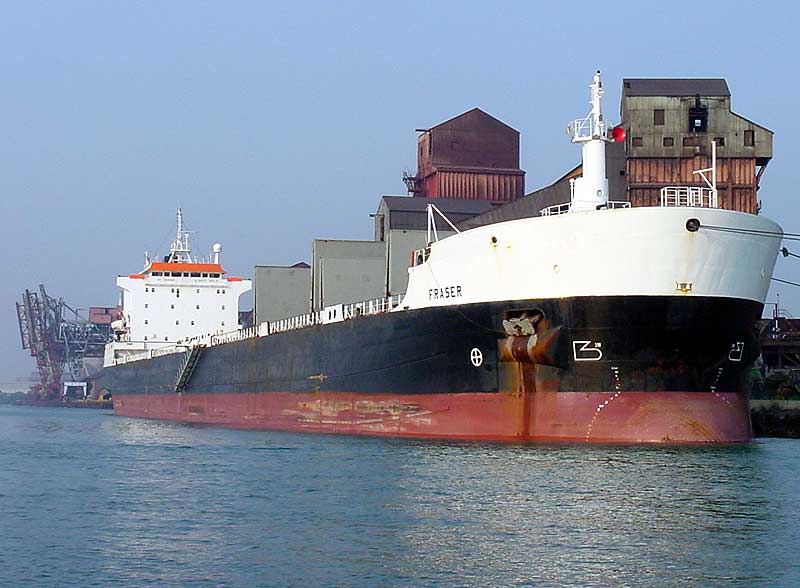
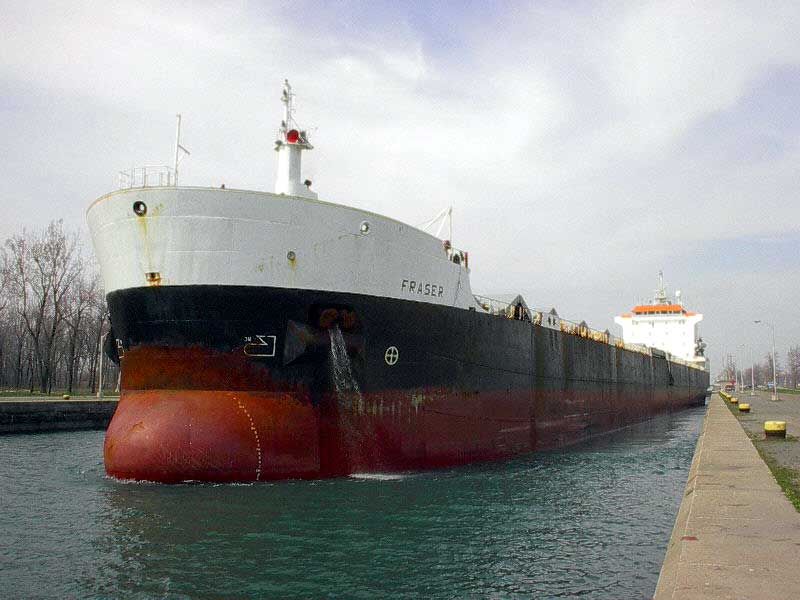
In 1991, ownership of the Selkirk Settler was transferred to Federal Navigation, Detroit (division of Fednav Ltd., Montreal, QC); then to Ubem S.A., Antwerp, Belgium (managed by Fednav Ship Management Ltd., London, England; also a division of Fednav Ltd., Montreal, QC). For 1991, the vessel was renamed Federal St. Louis sailing under the flag of the Bahamas marking the beginning of a new phase in her career; that of an ocean trader. The bulker was renamed Federal Fraser in 1992 flying the flag of the Philippines. Ownership of the vessel changed several times in 1994, first passing to Primera Ship Management (managed by Nuk Maritime Corp), then Crimson Line of Japan, and finally Koyo Line also of Japan; all the while remaining under long term charter to Fednav. Ownership changed again in 1995 passing to Prominent Star Ltd., Hong Kong (managed by Univan Ship Management Ltd.) with the vessel’s registration changing to Hong Kong. M & N Shipping Corp. of Japan acquired the vessel in 1998 changing the vessel’s registration to Panama; then changing the bulker’s name to Fraser in 2001. From 1998 onward, the vessel was chartered to Fednav International Ltd. (division of Fednav Ltd.), Montreal, QC.
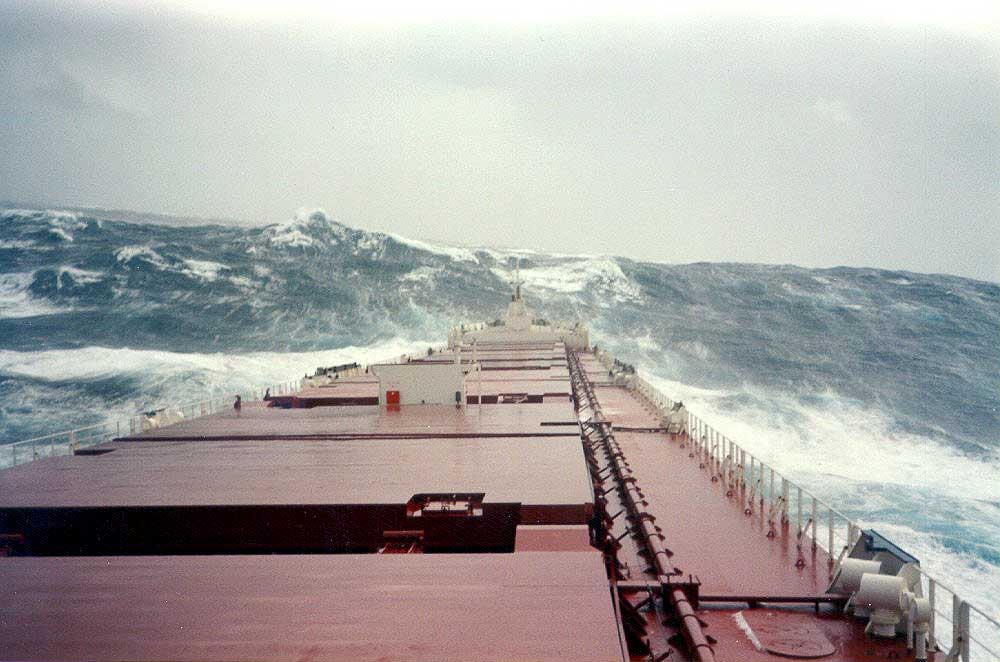
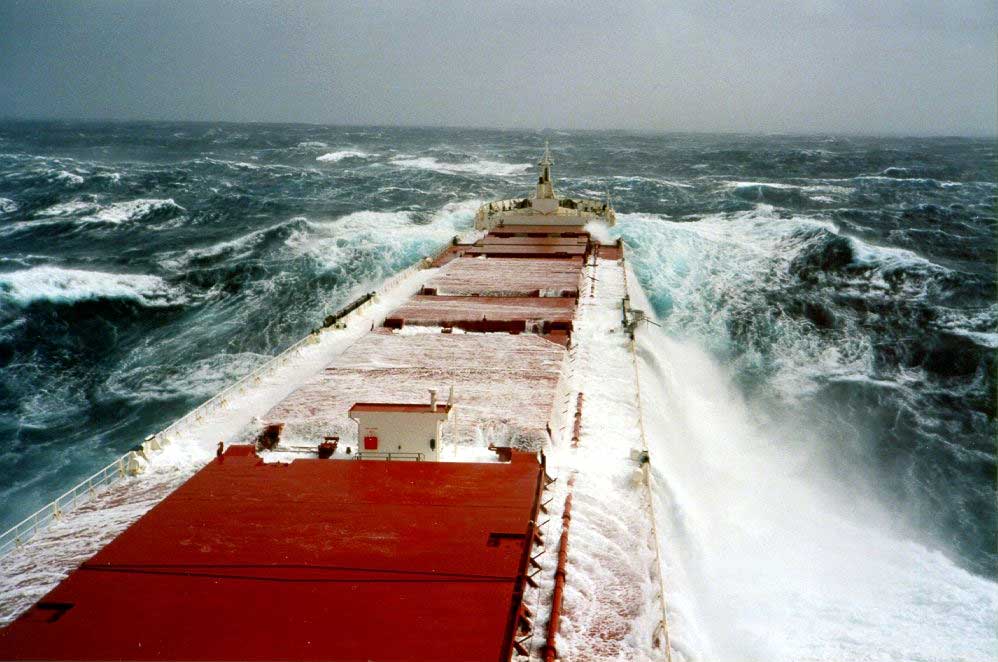
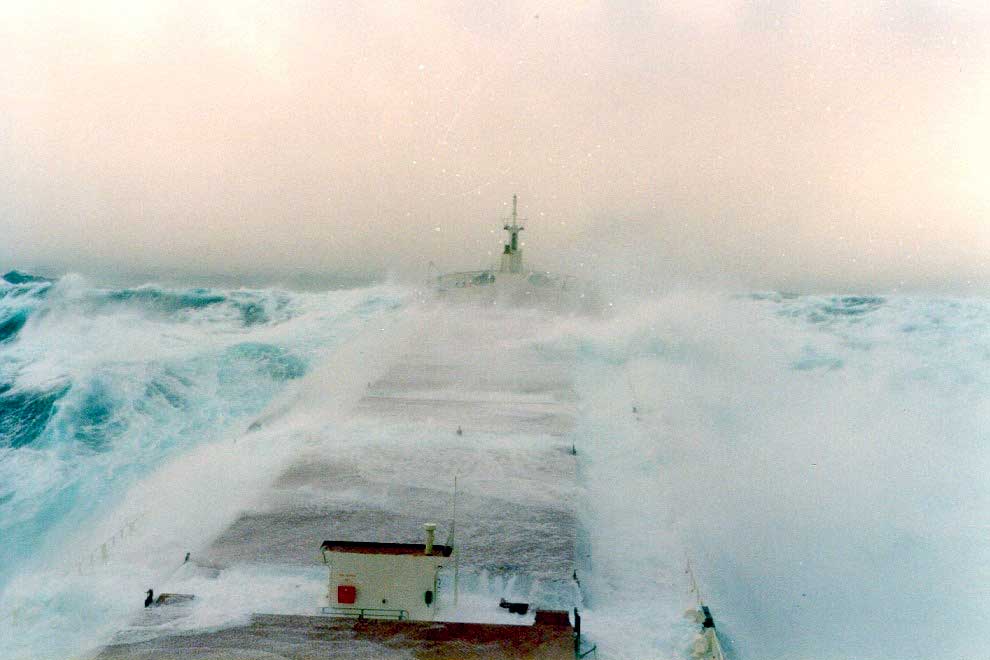
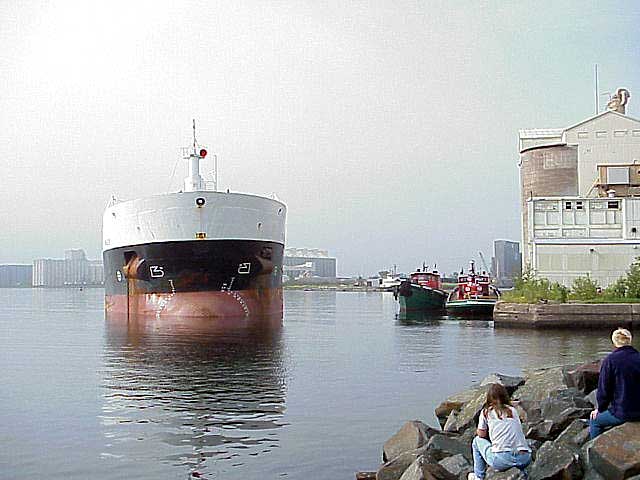
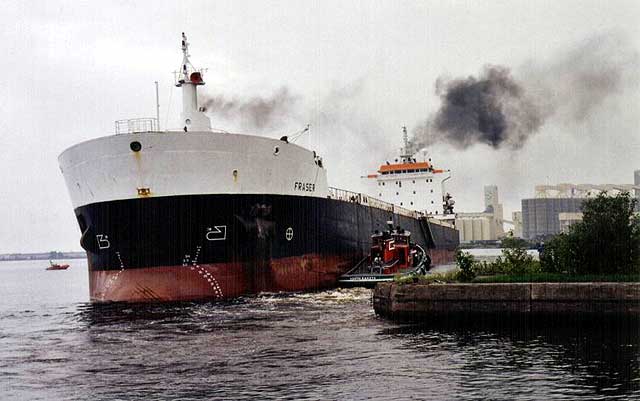
Throughout this tenure as an ocean trader, the vessel continued to be a regular visitor to the Great Lakes. On August 28, 2002; the Fraser grounded while attempting to leave Duluth, MN in heavy fog and laden with grain for overseas. The vessel was freed late on August 29th with no apparent damage as the Fraser had grounded in silt.
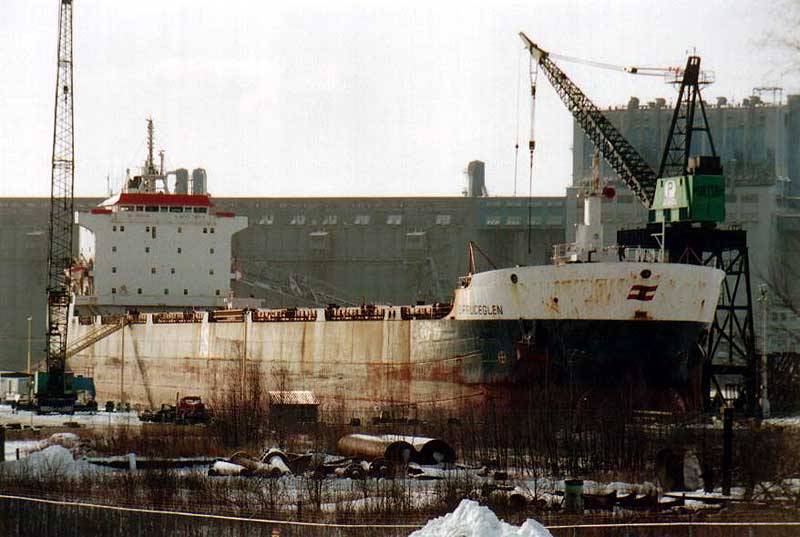
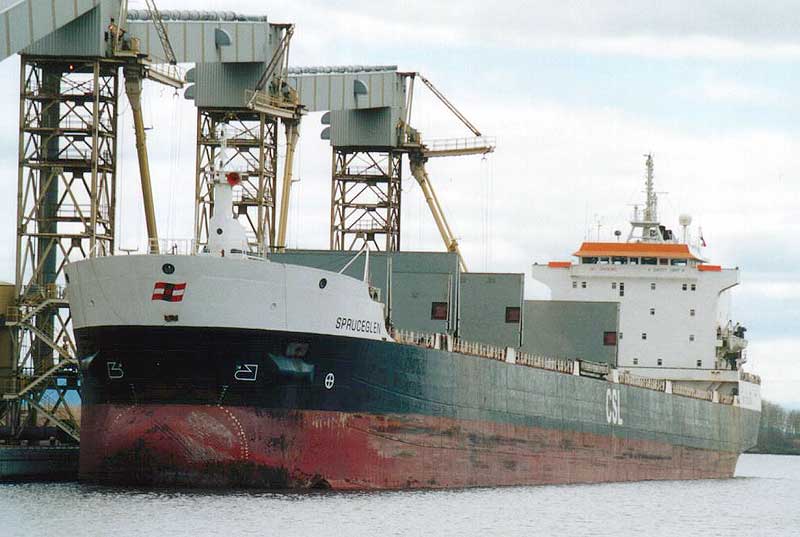
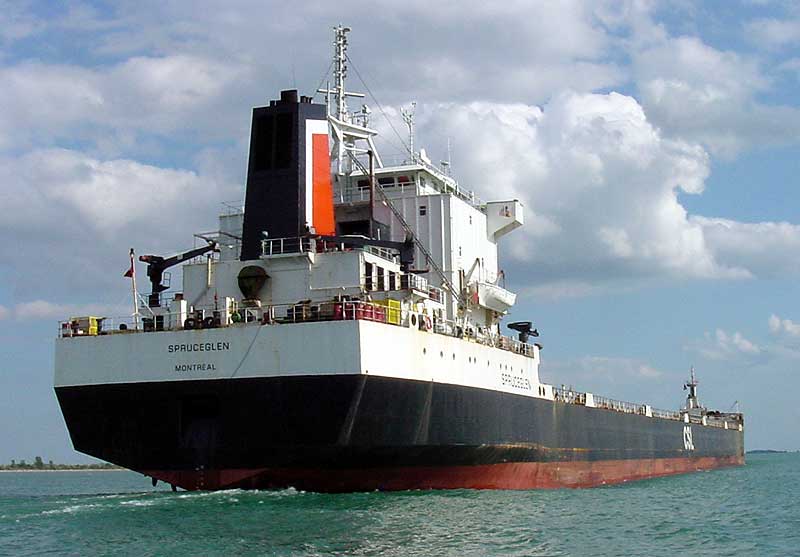
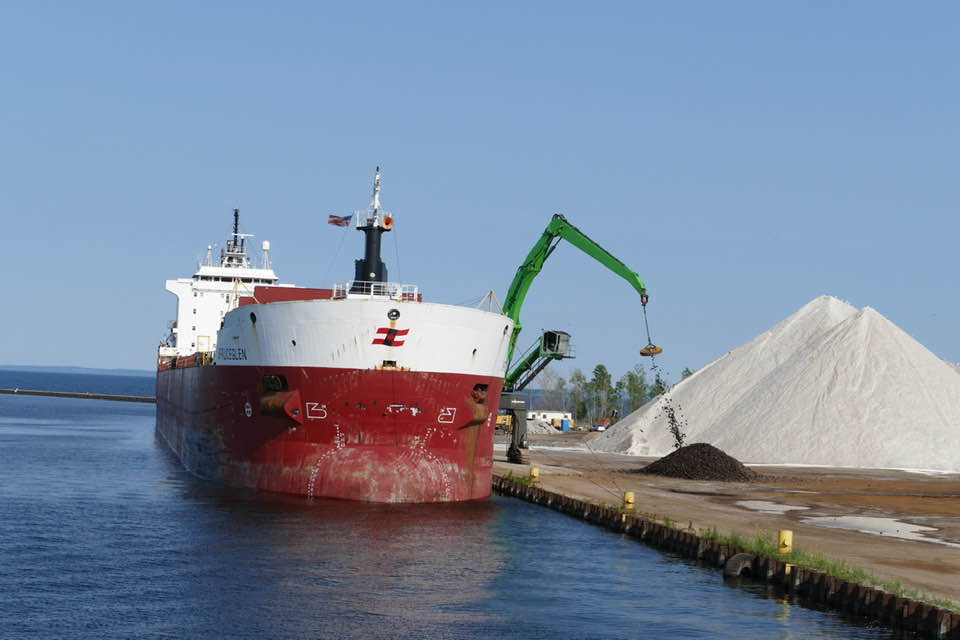
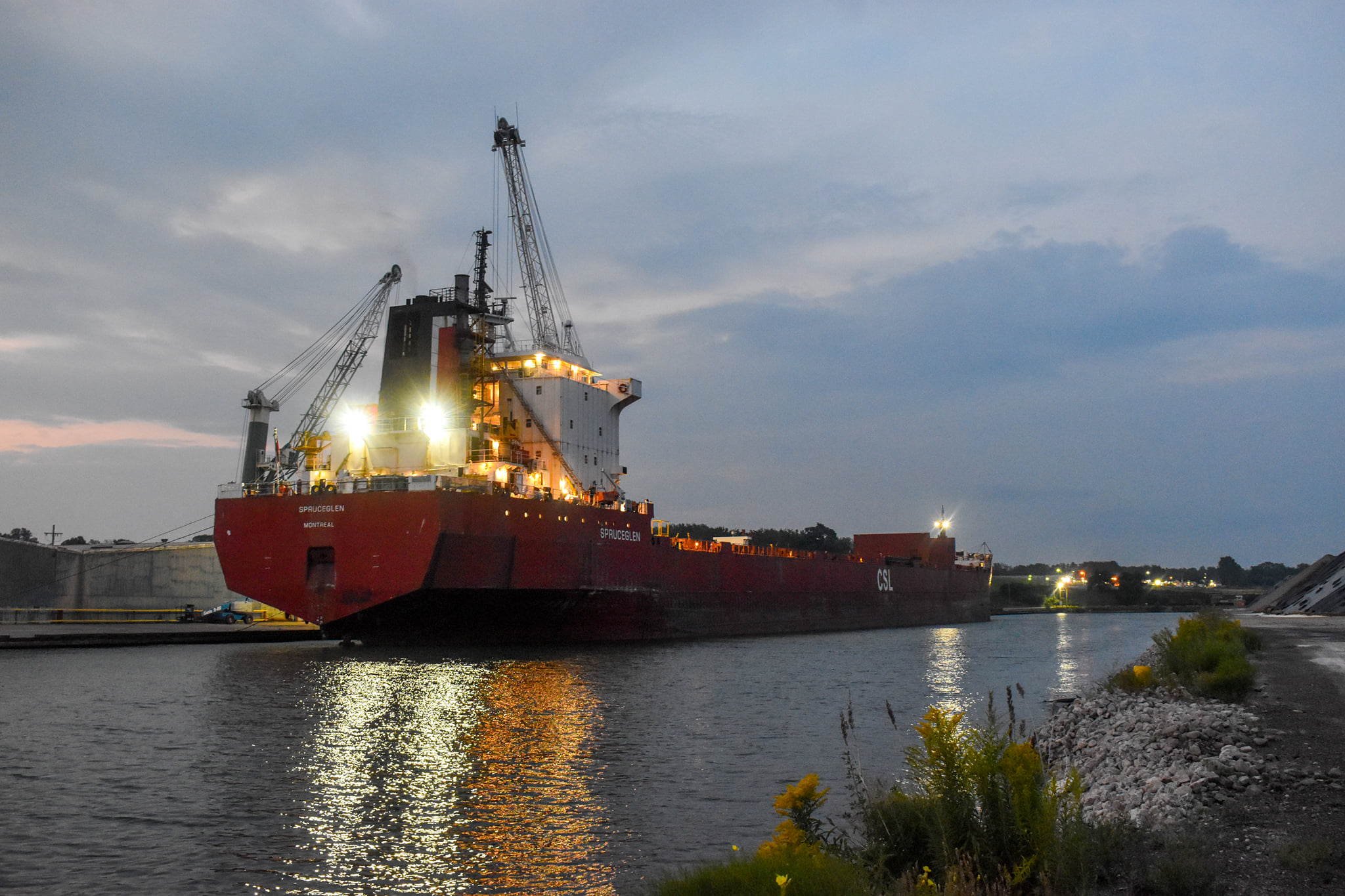
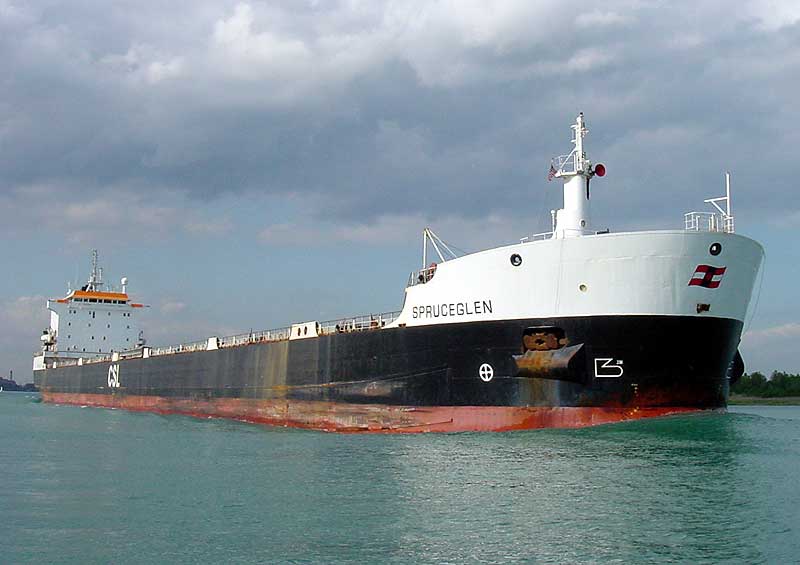
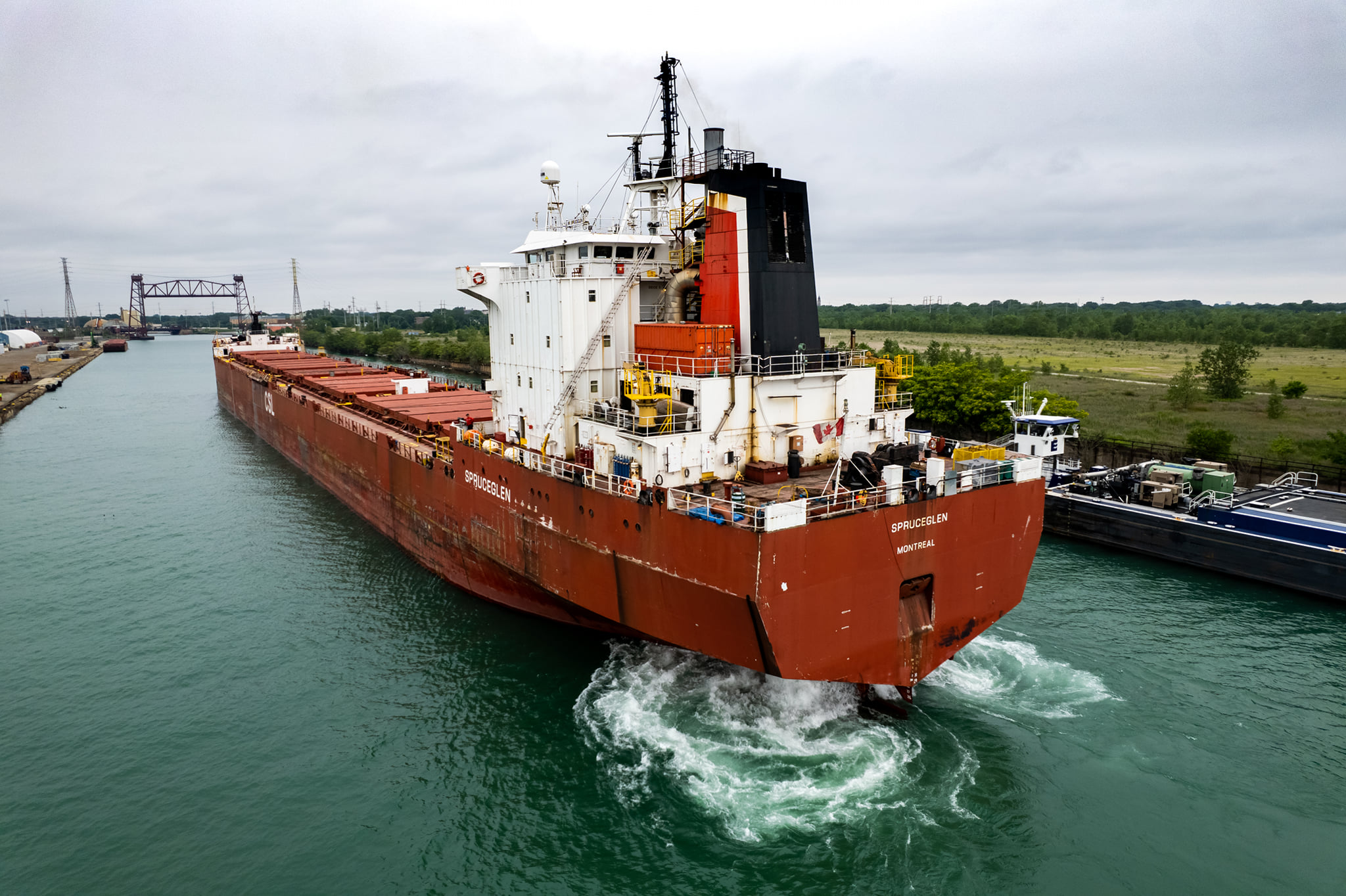
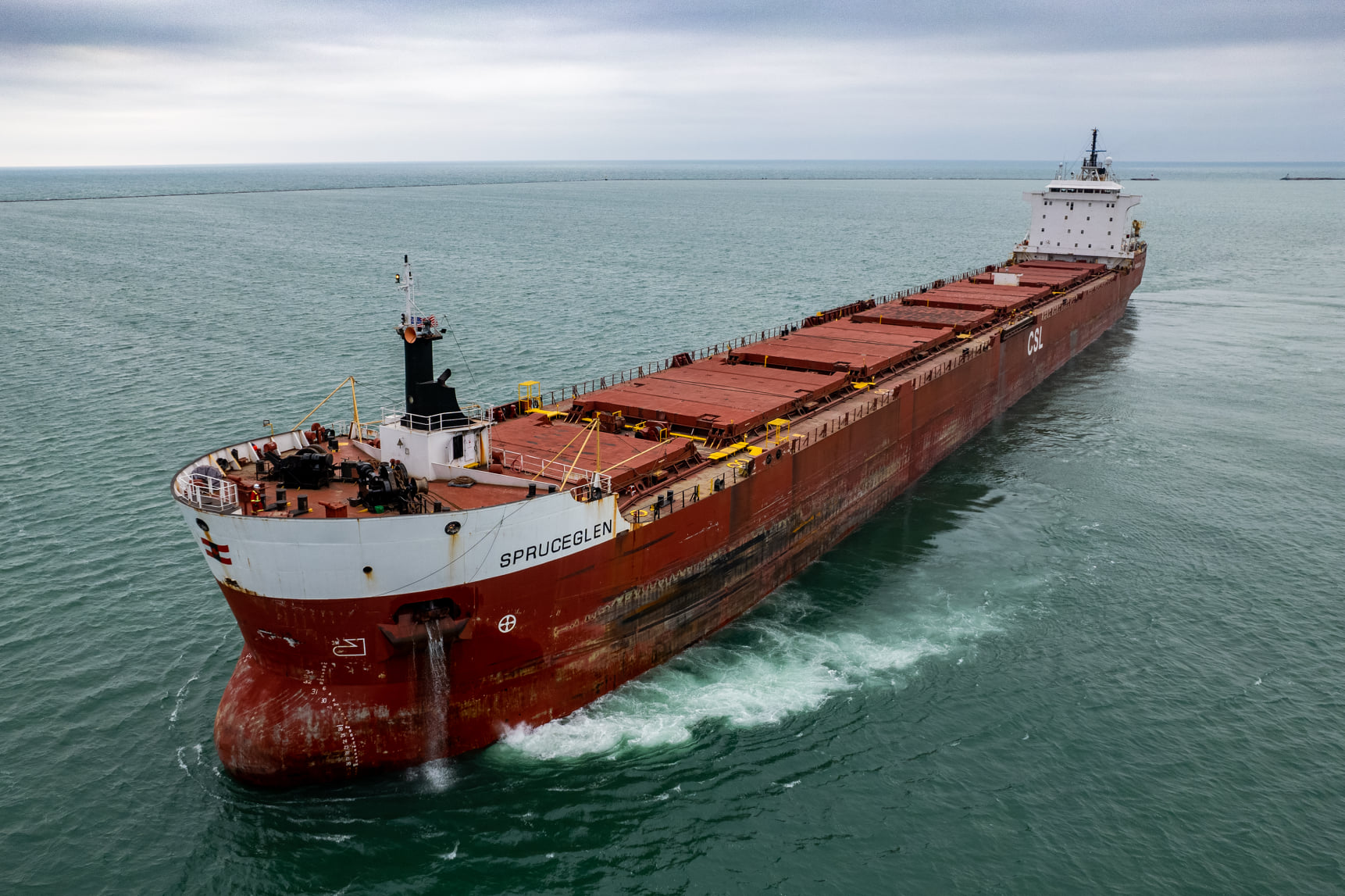
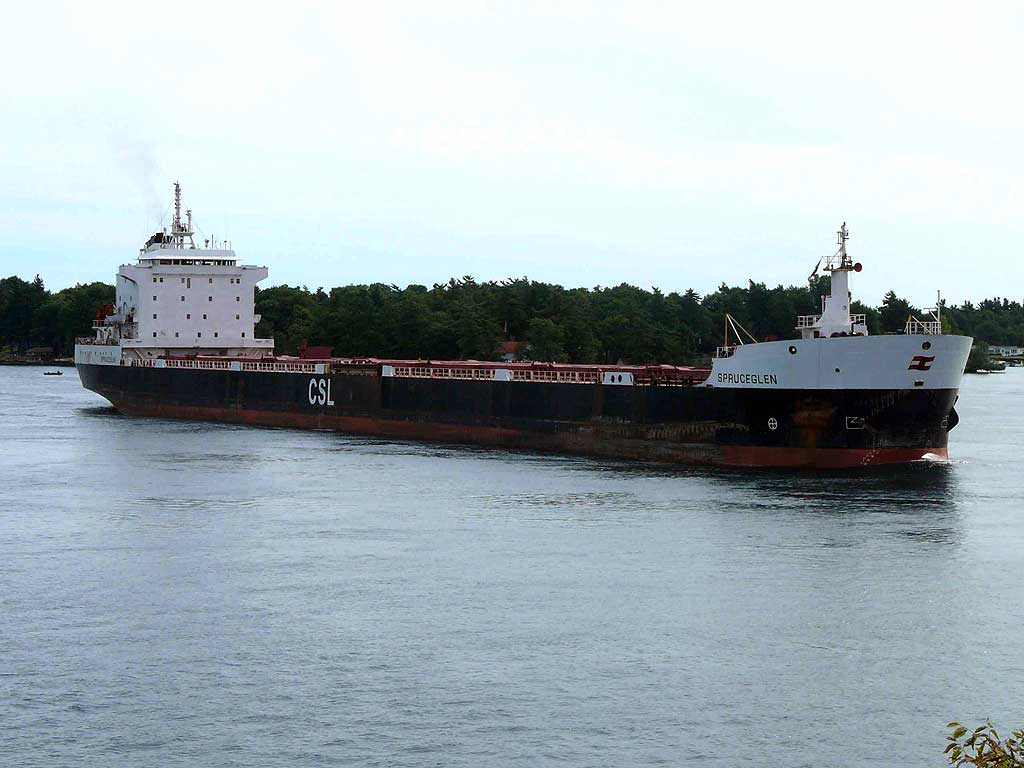
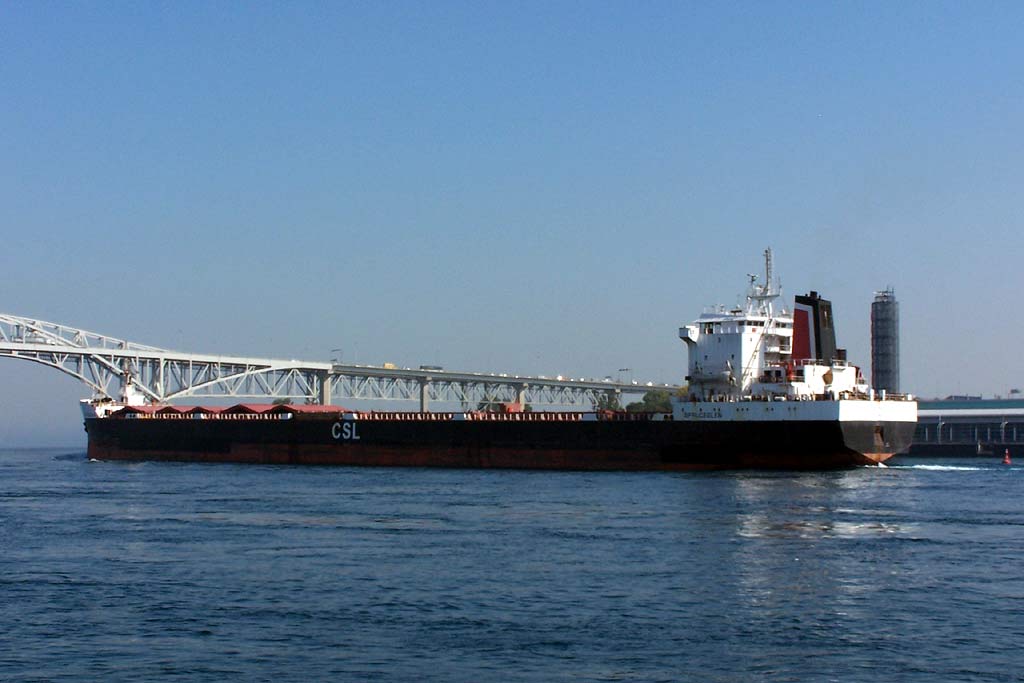
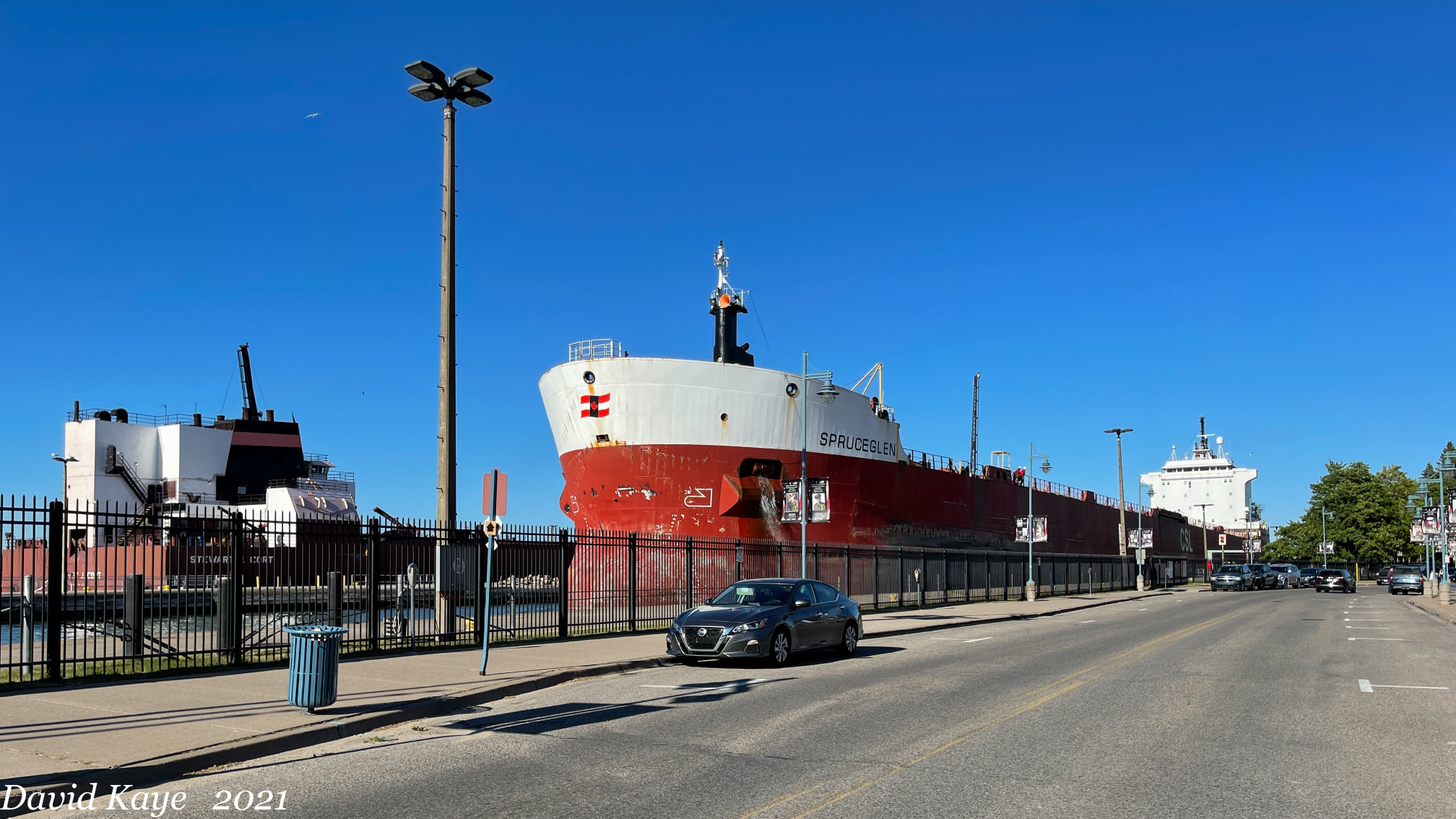
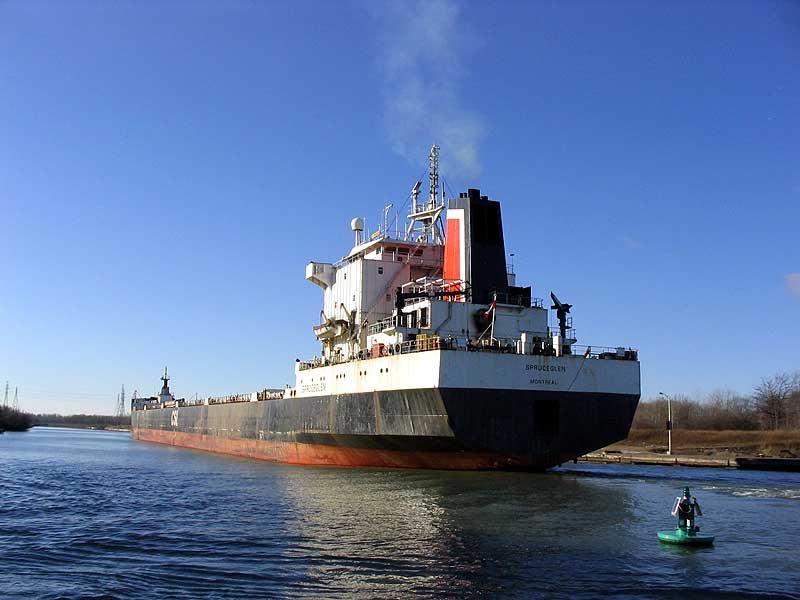
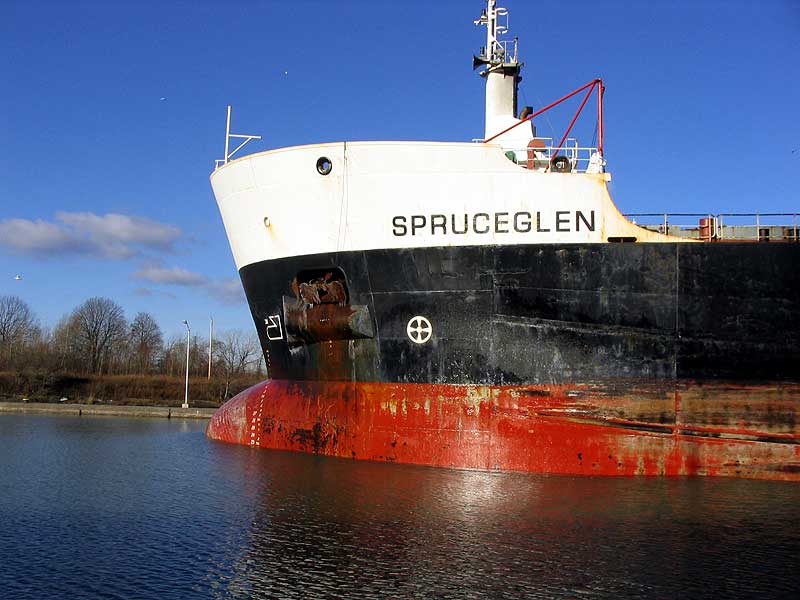
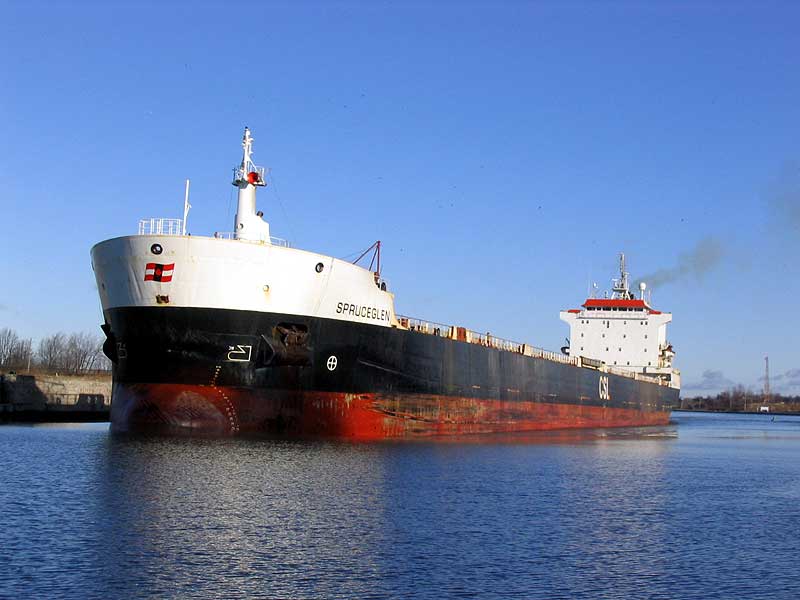
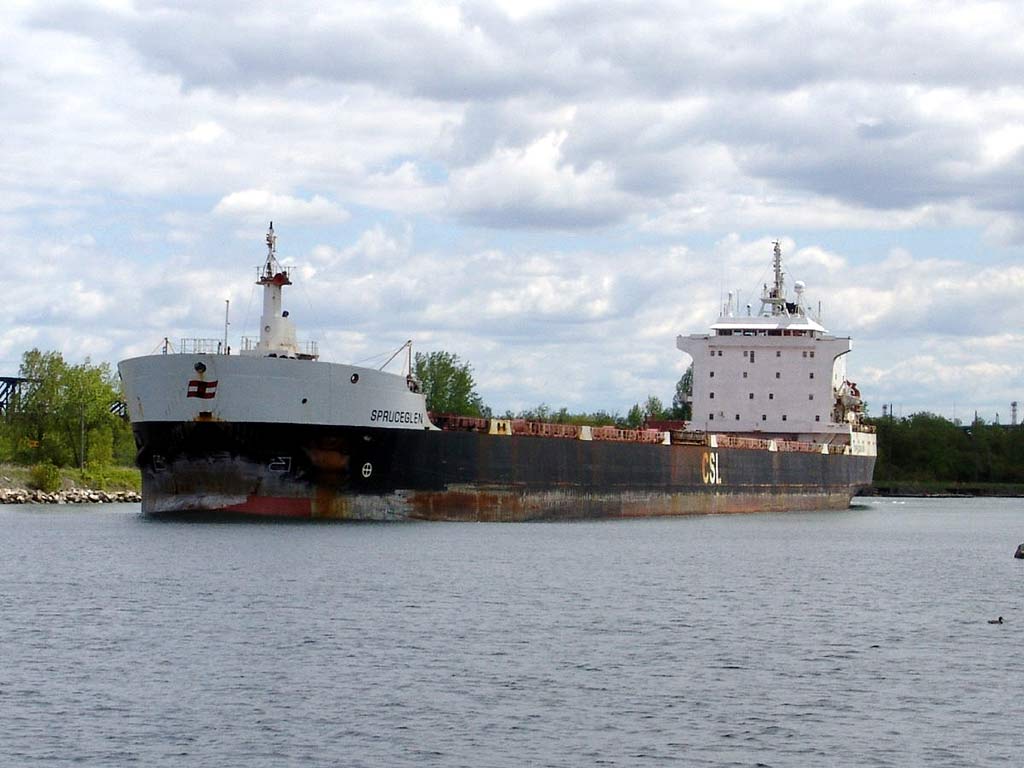
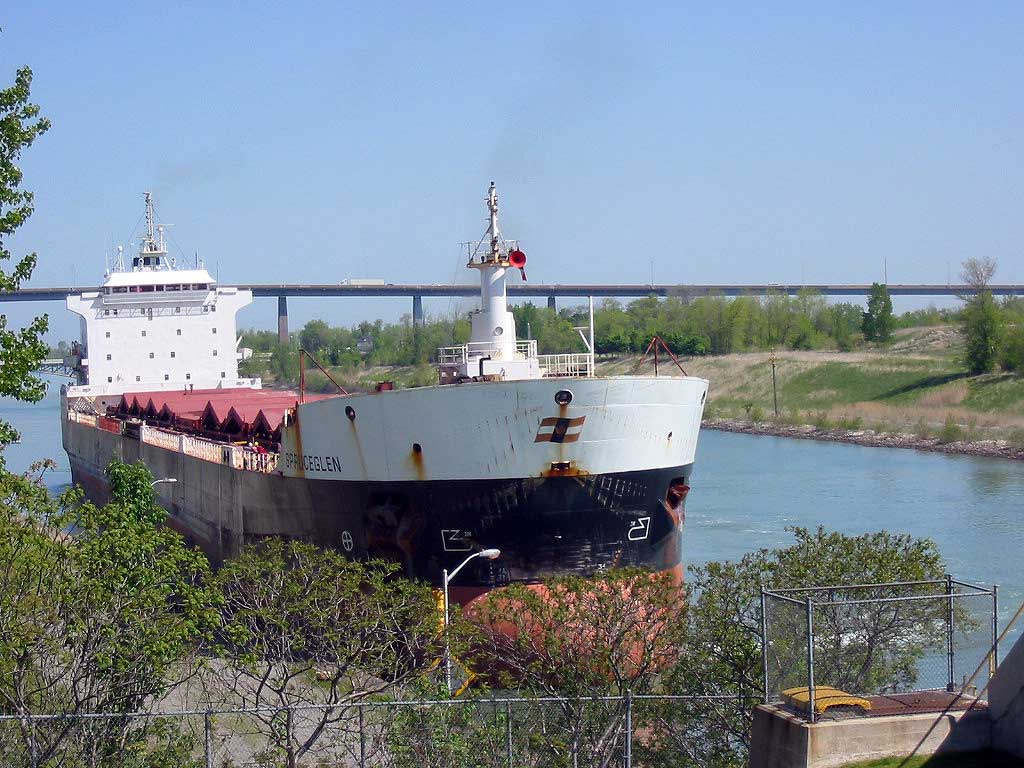
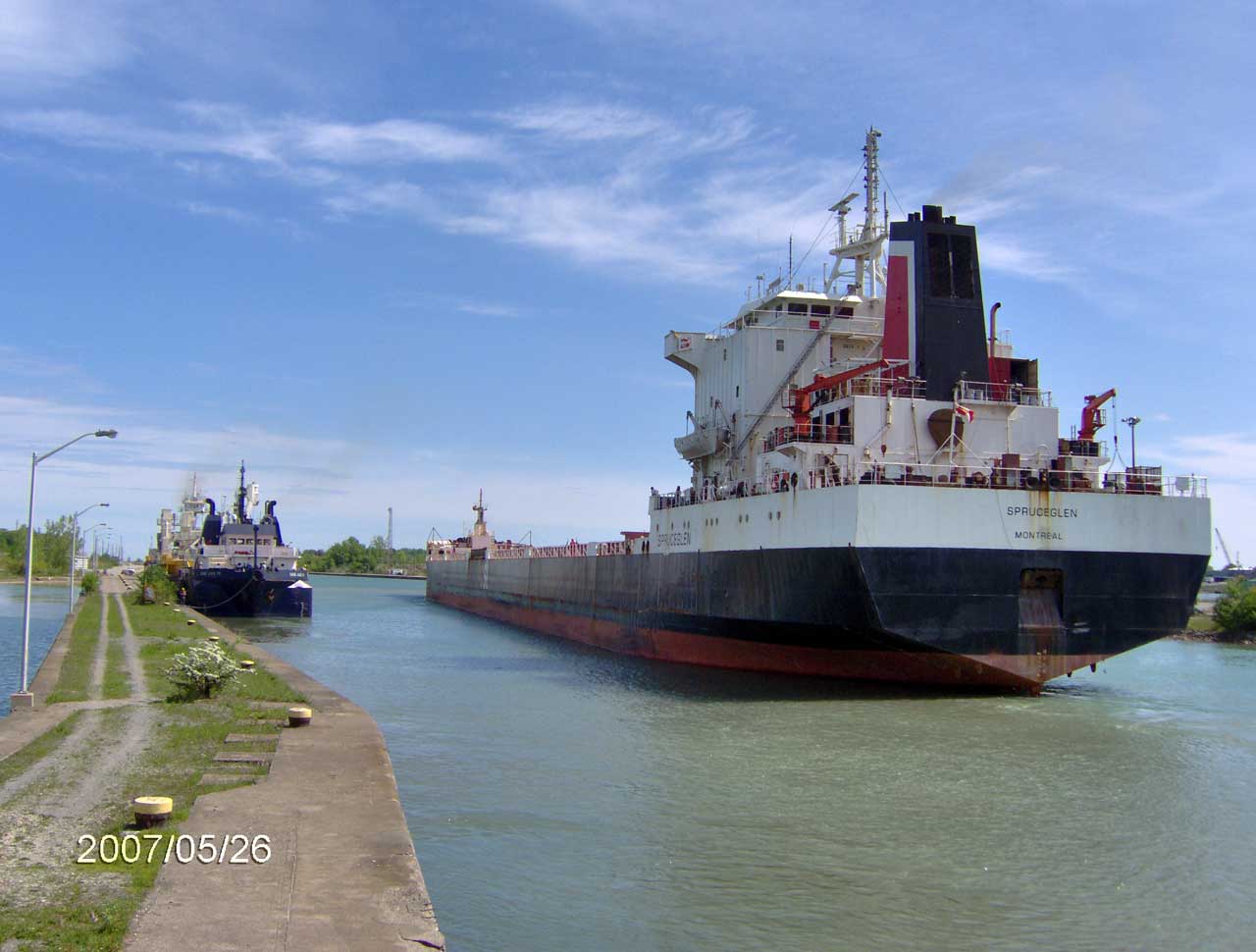
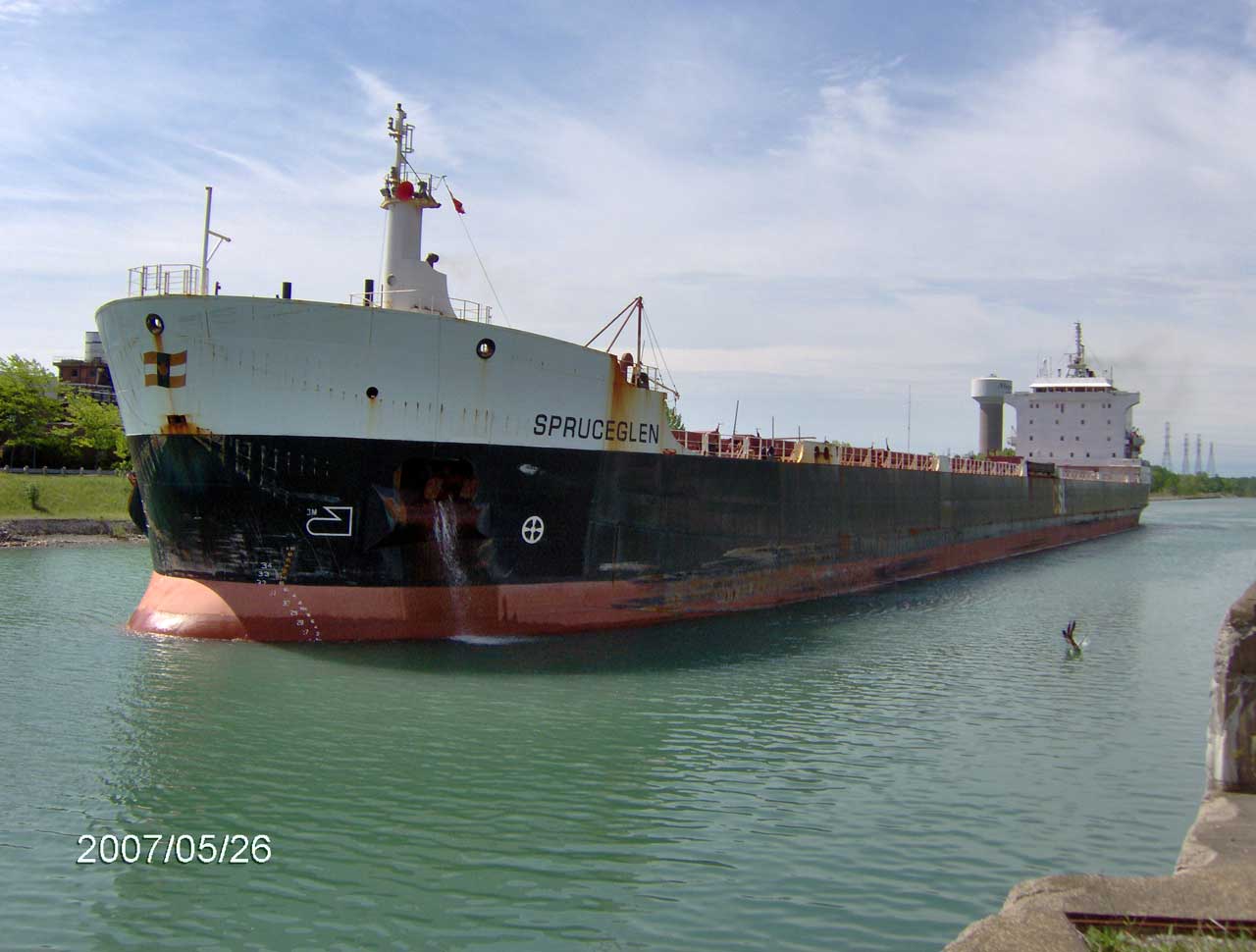
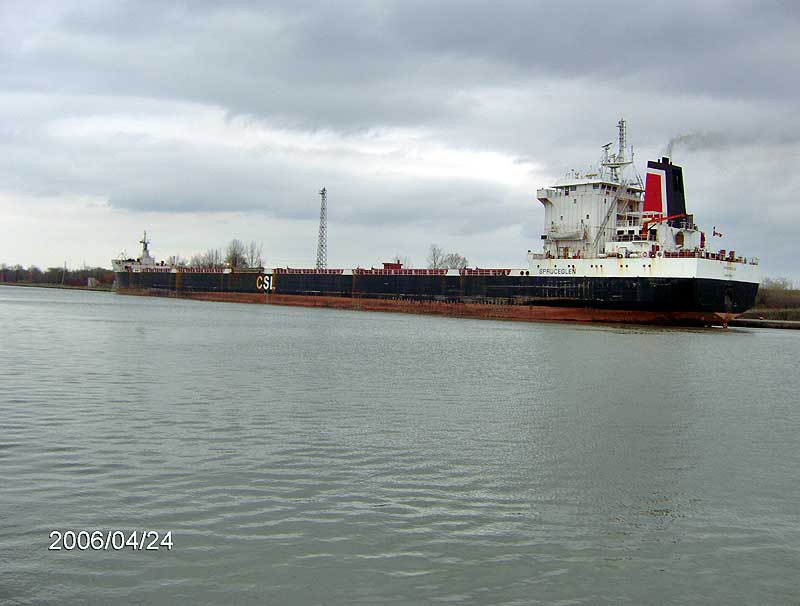
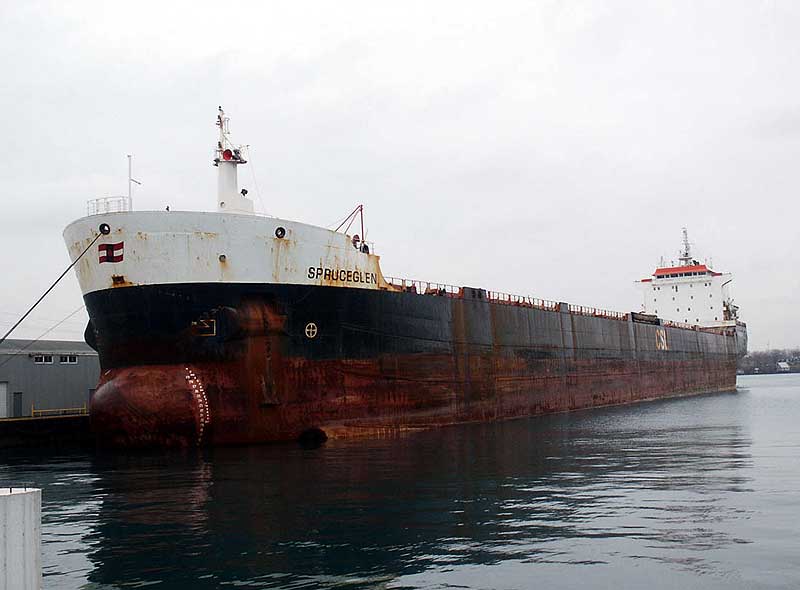
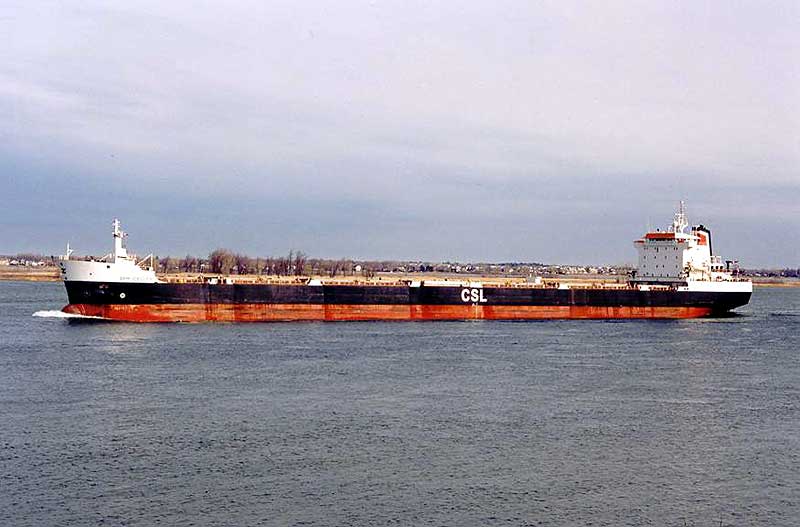
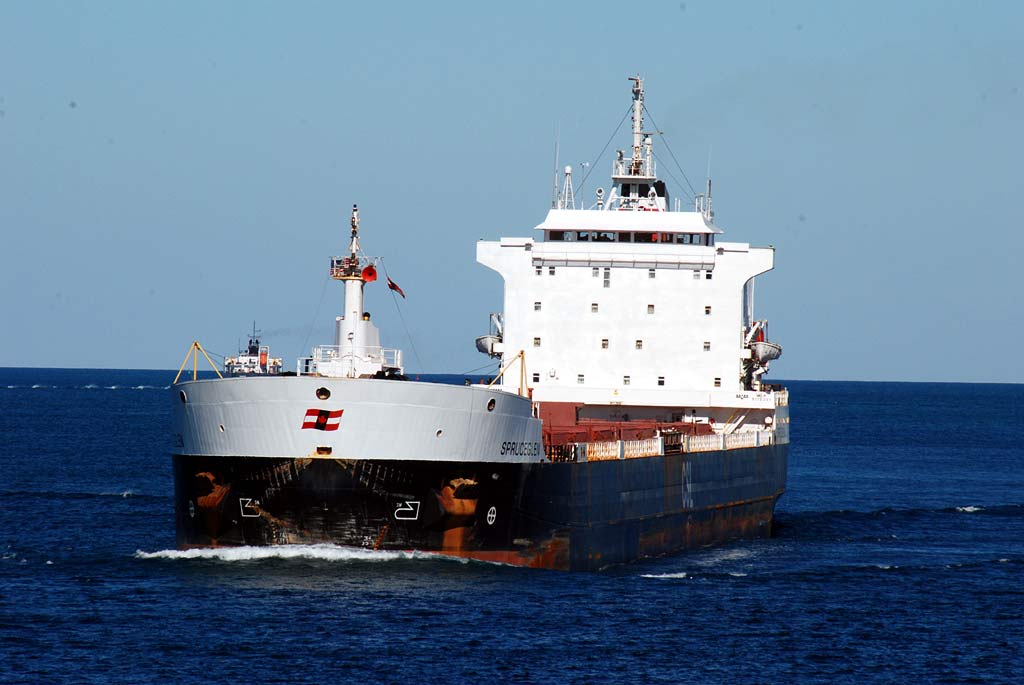
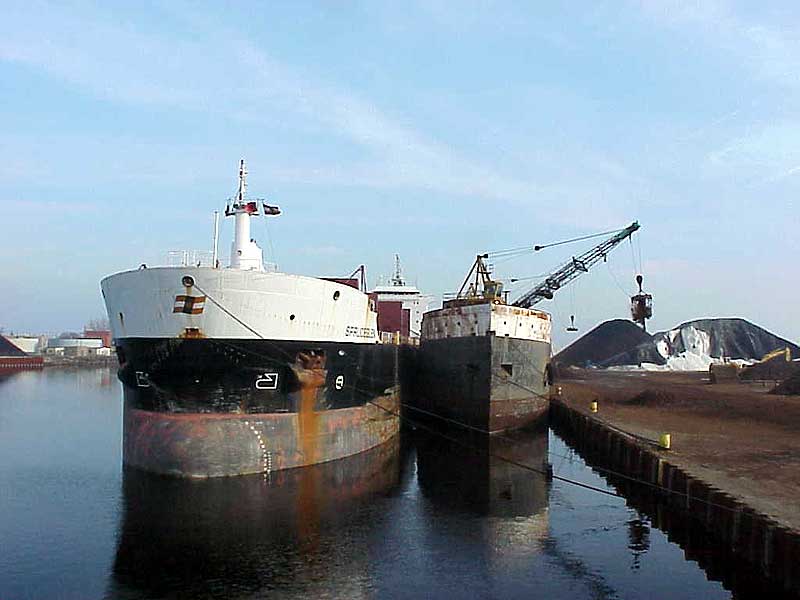
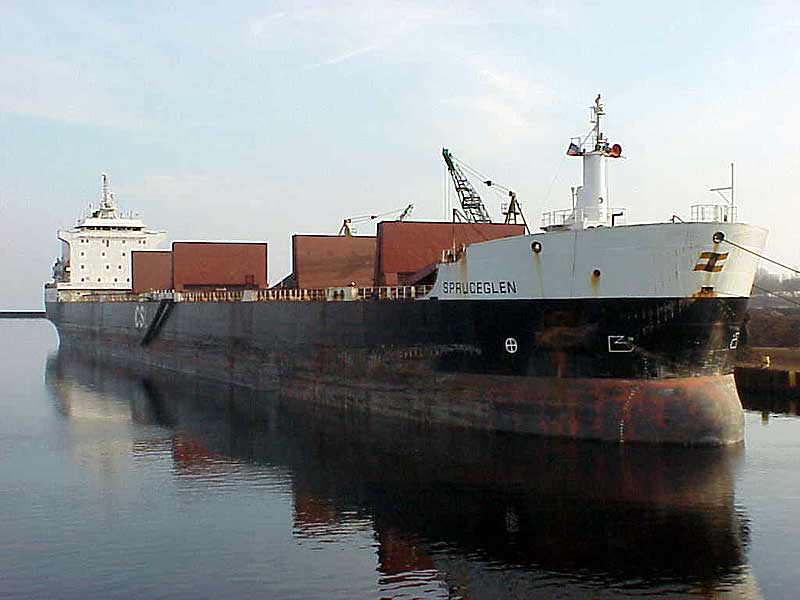
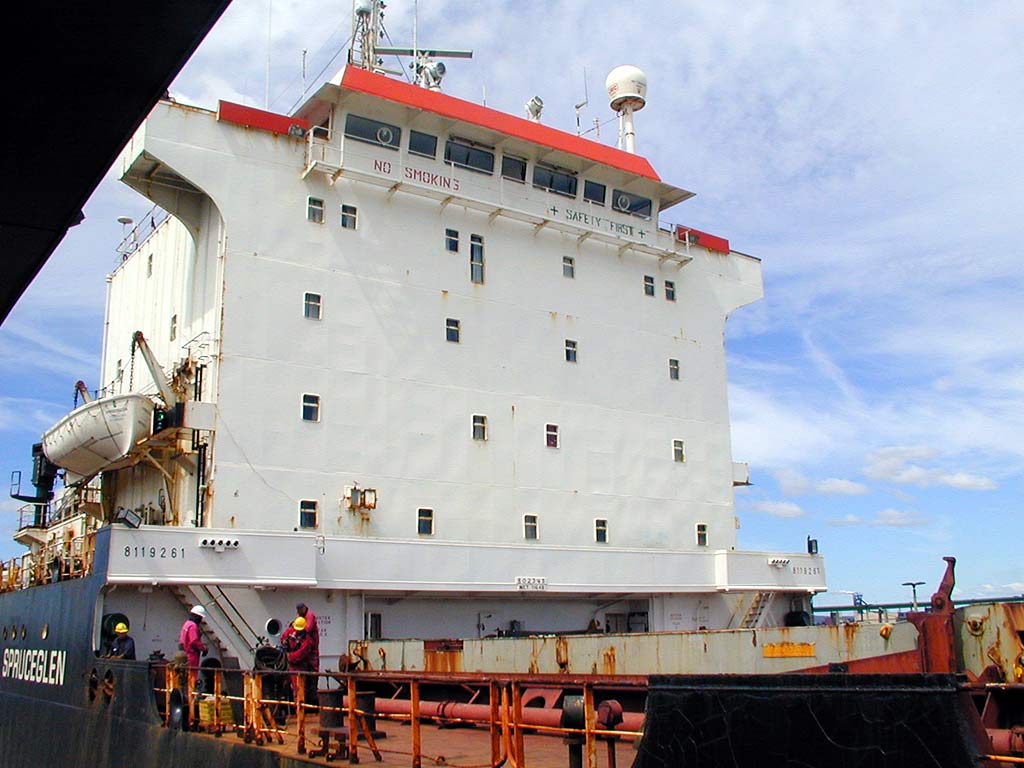
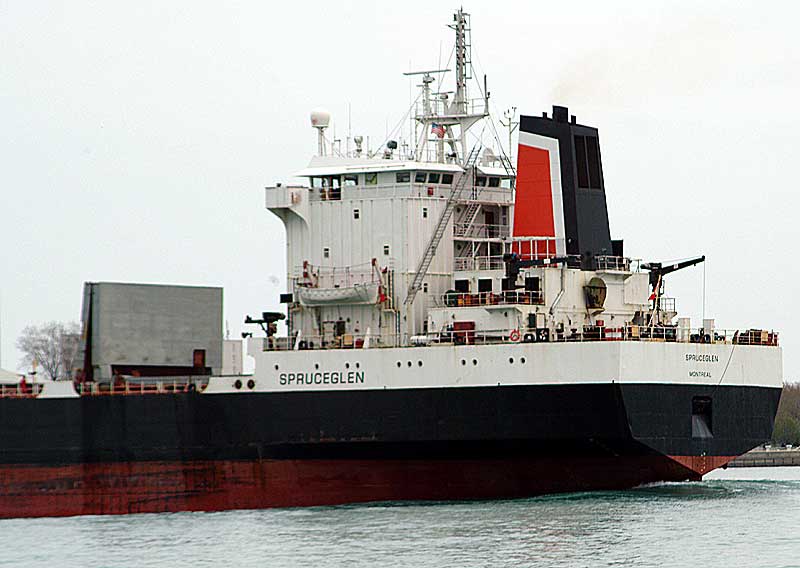
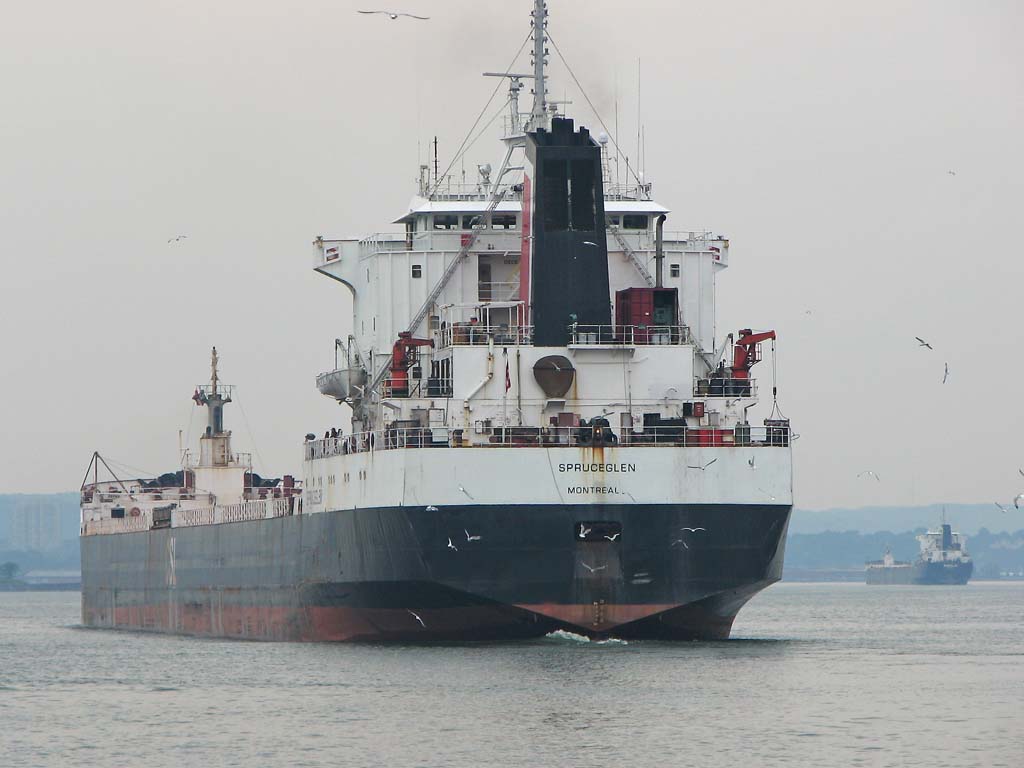
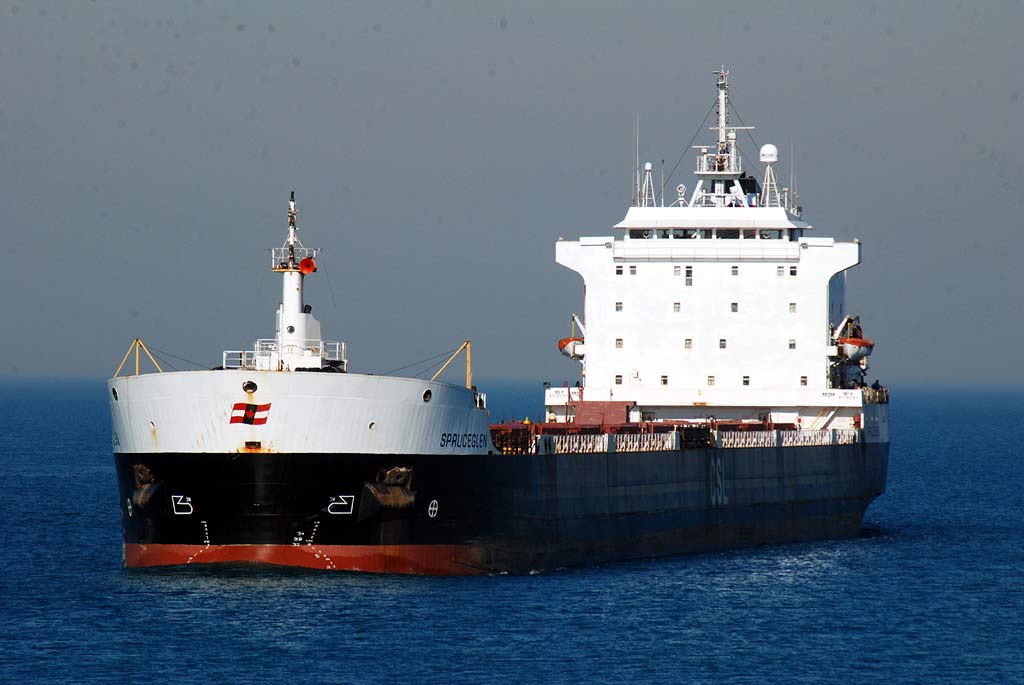
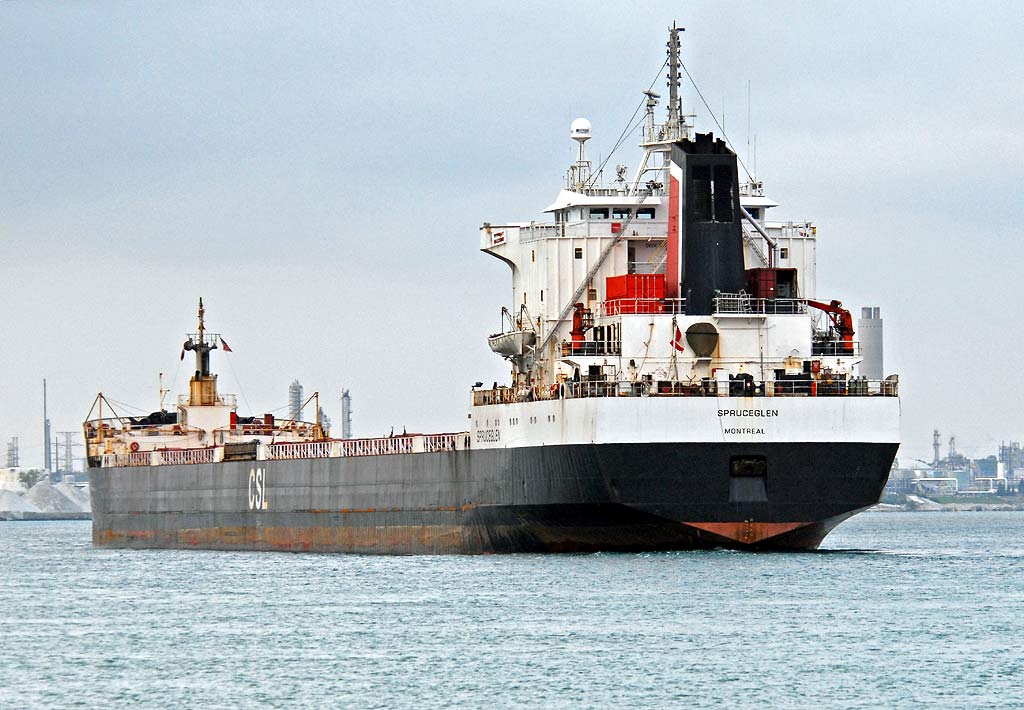
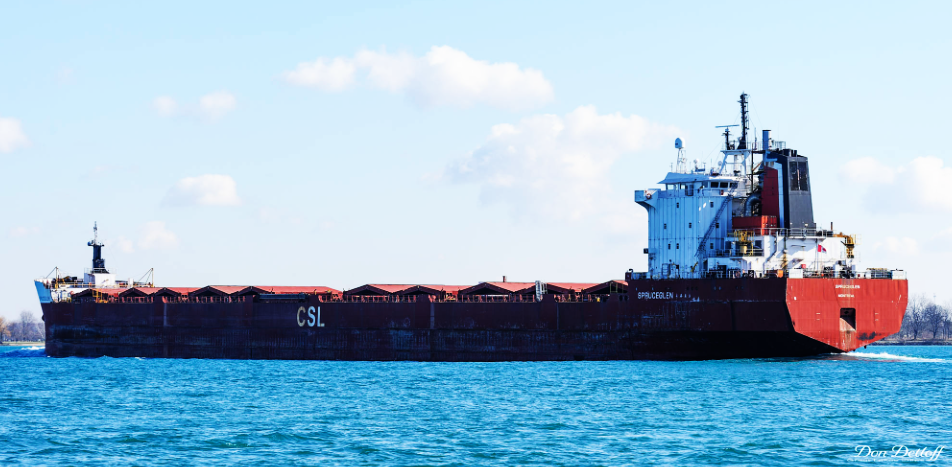
On October 25, 2002; Canada Steamship Lines Inc., Montreal, QC announced the acquisition of the Fraser from Fednav Ltd., Montreal; who, in turn, had acquired the vessel from M & N Shipping with the expressed purpose of selling the vessel to Canada Steamship Lines. The Fraser was reflagged Canadian and departed Antwerp, Belgium in late November bound for Belledune, NB. From Belledune, the Fraser proceeded to Quebec City arriving December 10th. The vessel’s name was officially changed to Spruceglen (2) and registered Canadian on December 11, 2002. The Spruceglen arrived in Toronto, ON with a load of sugar from Quebec City for Redpath in Toronto on December 18. The vessel spent her first winter lay up in Toronto where various repairs were completed including the painting of stack to CSL colors. The hull color remained black in keeping with CSL’s color scheme of black hulls for the bulkers and red for the self unloaders. The Spruceglen departed Toronto on April 1, 2003 in ballast to Duluth to load grain. Her trade routes are now predominately on the Great Lakes and the St. Lawrence River with some ocean trading done during the winter months after the seasonal closing of the St. Lawrence Seaway.
Of note; the first Spruceglen was launched in 1924 as the William K. Field and was the flagship of the Reiss Steamship fleet at the time. The vessel held several names including Reiss Brothers, George D. Goble, and Robert S. Pierson before being named Spruceglen (1) in 1982 after being acquired by P & H Shipping. Because of her poor condition, the vessel was sold for scrap in 1985 and was the last Canadian coal-fired bulker.
The Spruceglen (2) follows Canada Steamship Line’s naming pattern for its bulker fleet. The ‘tree’ motif reflects back on the 1937 CSL acquisition of Tree Line Navigation Co. and the ‘glen’ suffix from the 1926 acquisition of Great Lakes Shipping Company whose vessels included names such as Gleneagles and Glenelg.
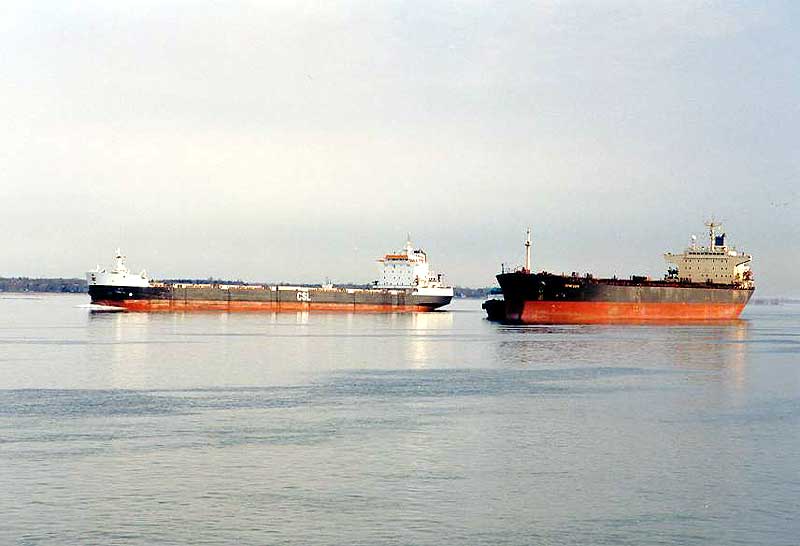
The Spruceglen {3} remains an active member of Canada Steamship Lines’ fleet, serving the Seaway ore and grain trades.
*Note: Exceeds vessel’s fresh water load line capacity of 33,824 tons
Written by George Wharton

Vessel Details
Federal St. Louis (1991)
Federal Fraser (1992-2001)
Fraser (2001-02)
Fednav Ltd. (1991-2002)
Spruceglen (2001-Present)





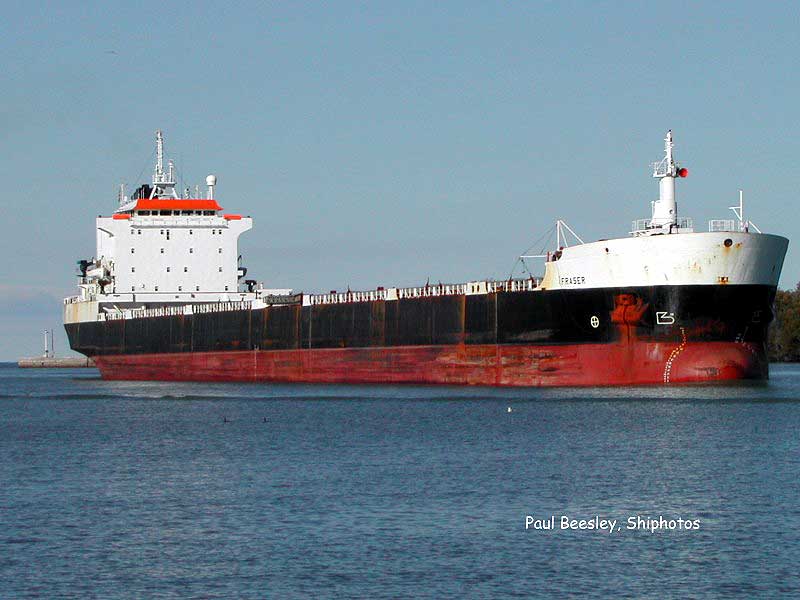
Fraser (2001-02)
Federal Fraser (1992-2001)
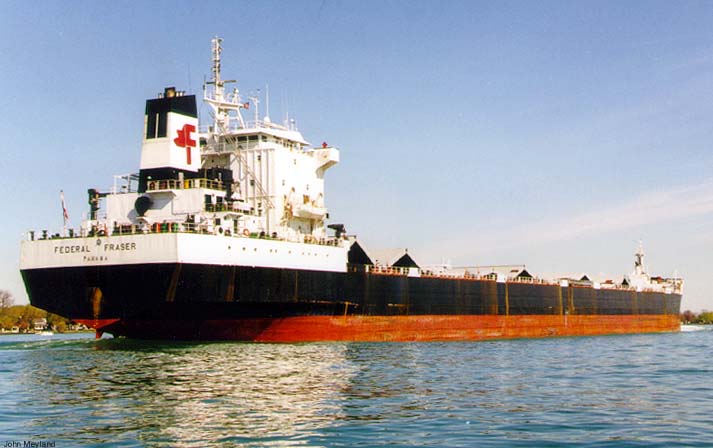
Federal St. Louis (1991)
Selkirk Settler (1983-91)