Roger Blough

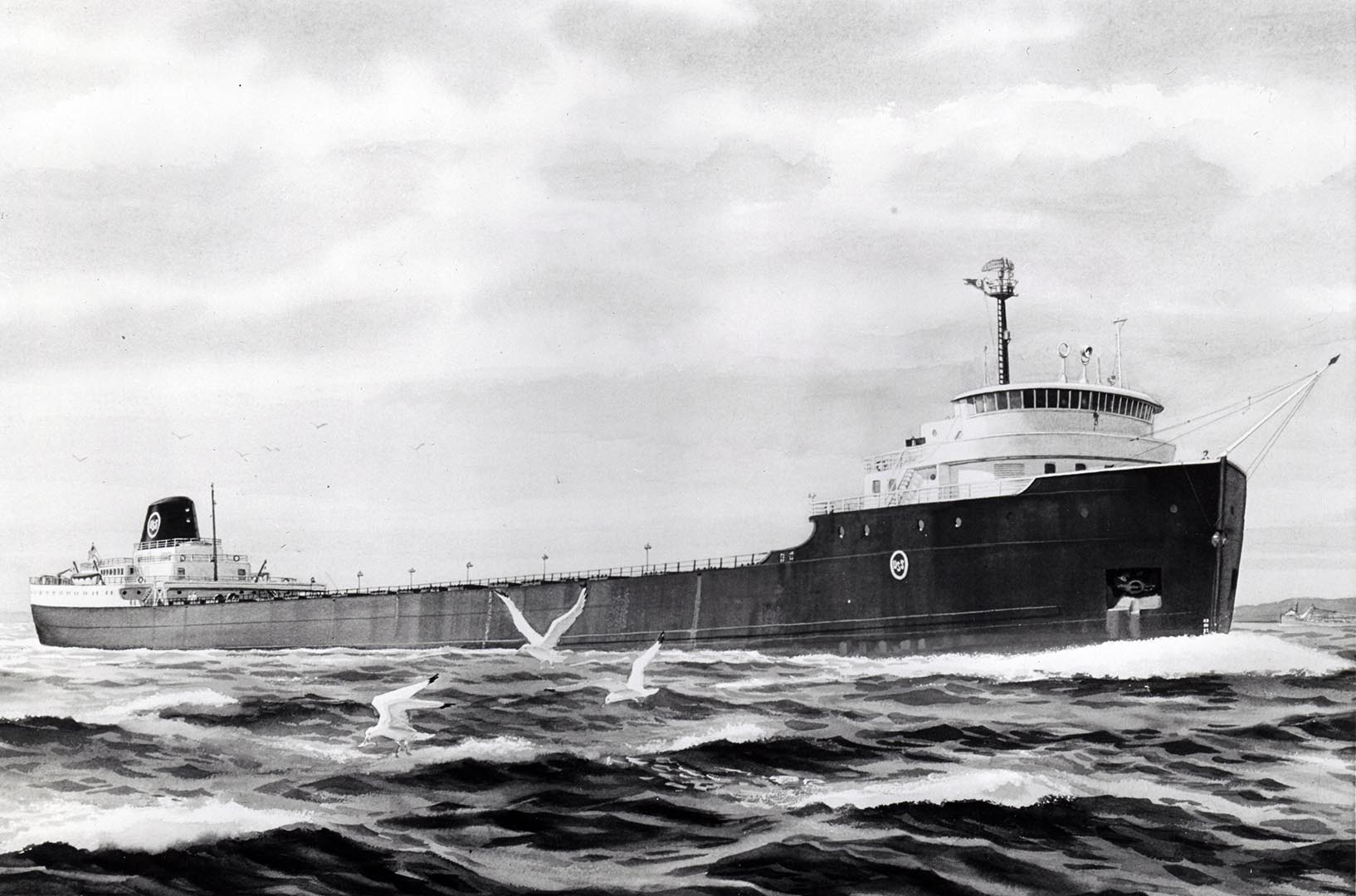
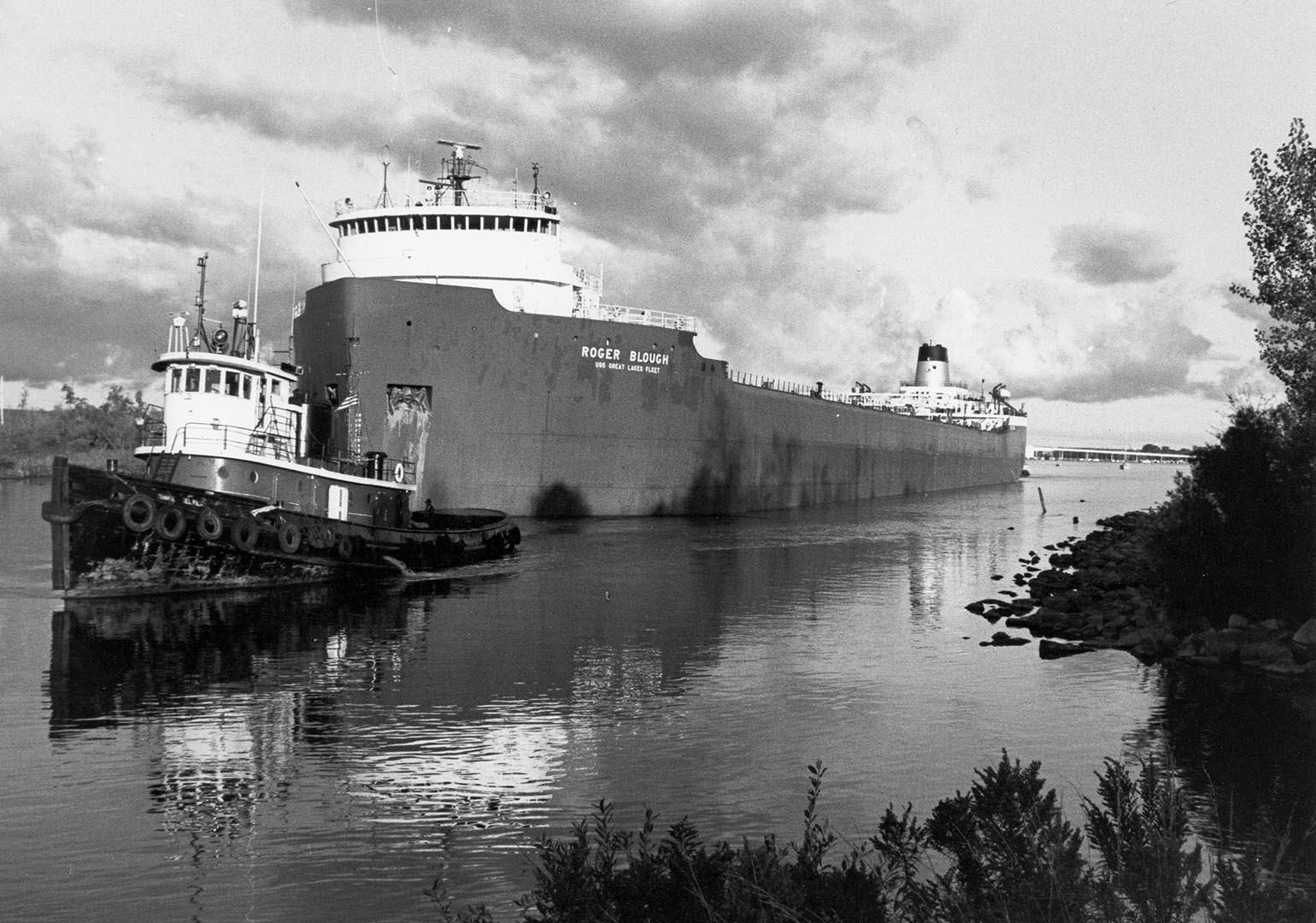
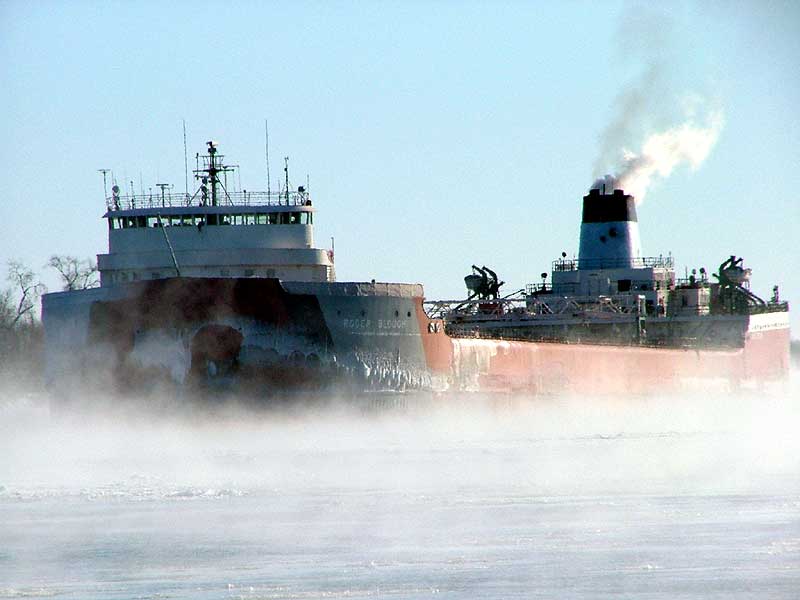
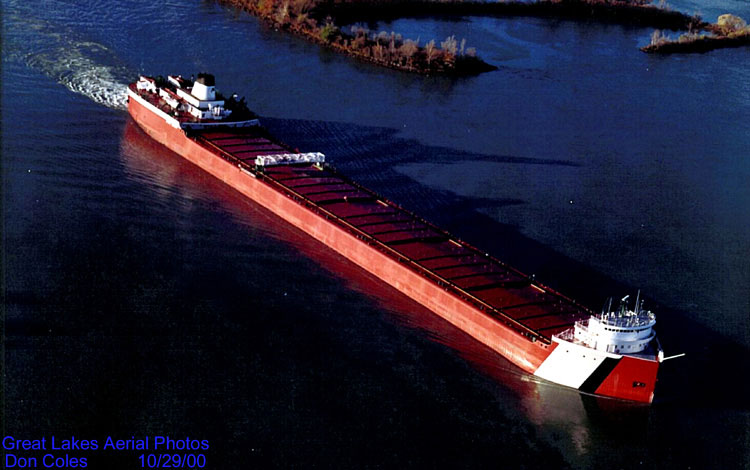
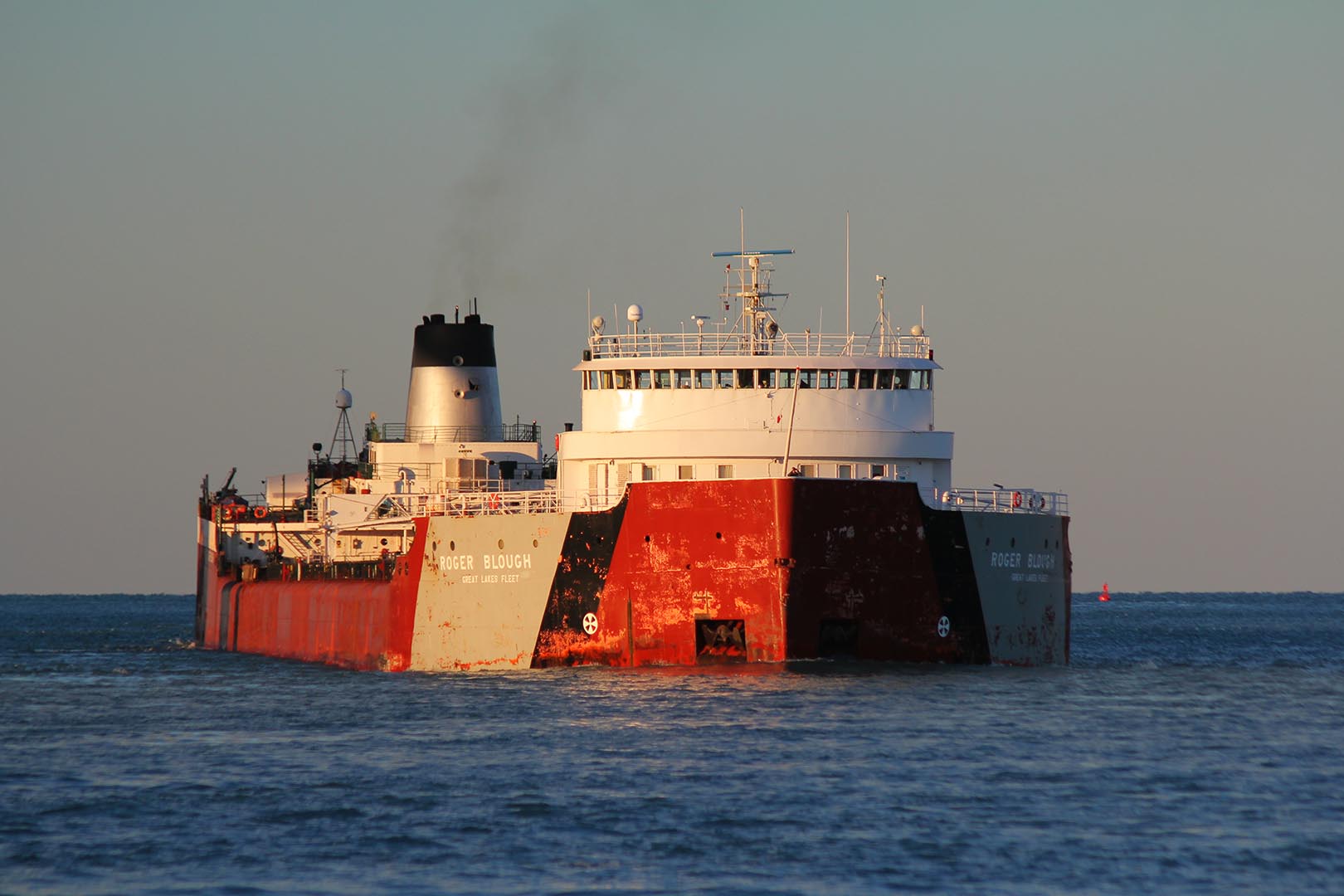
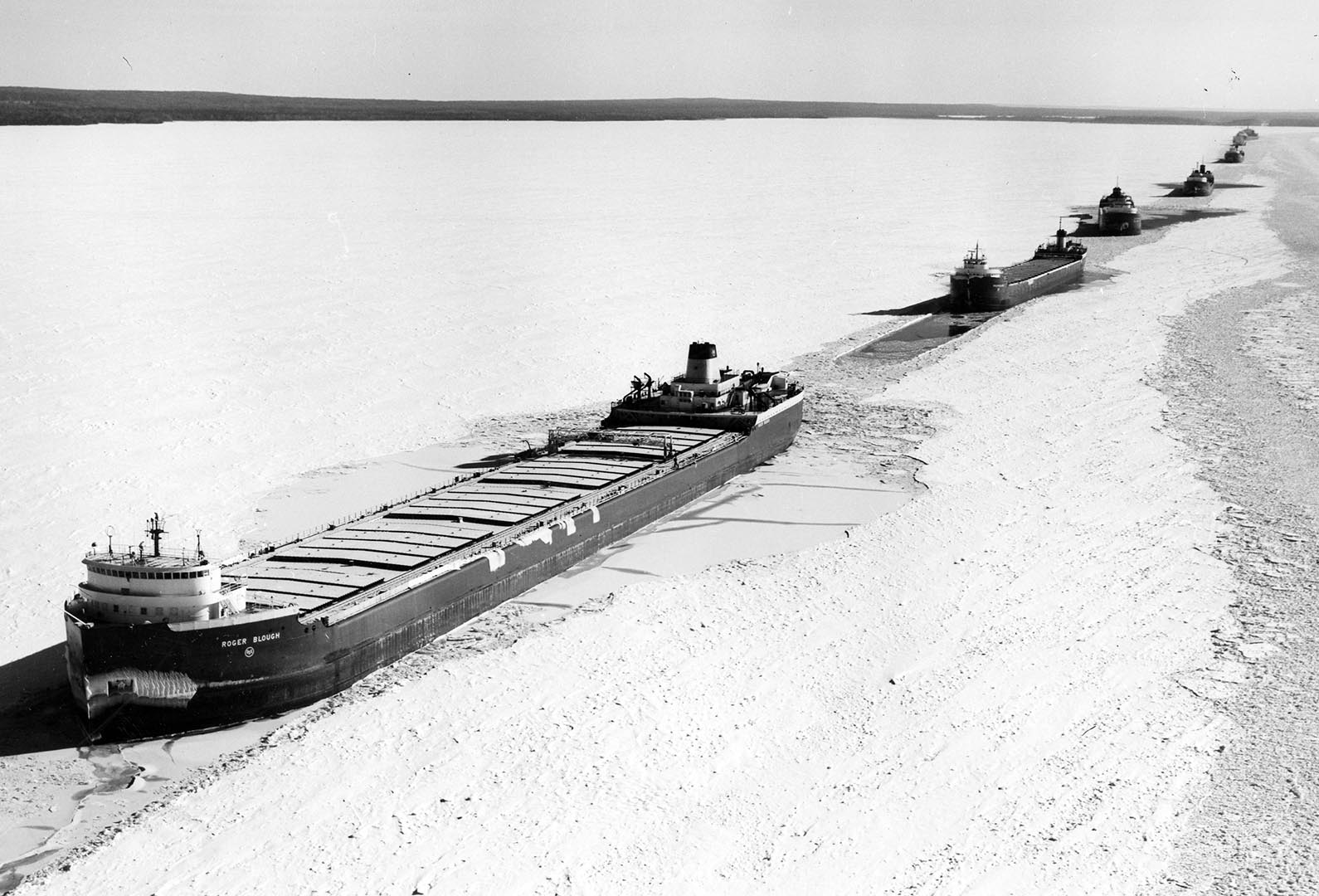
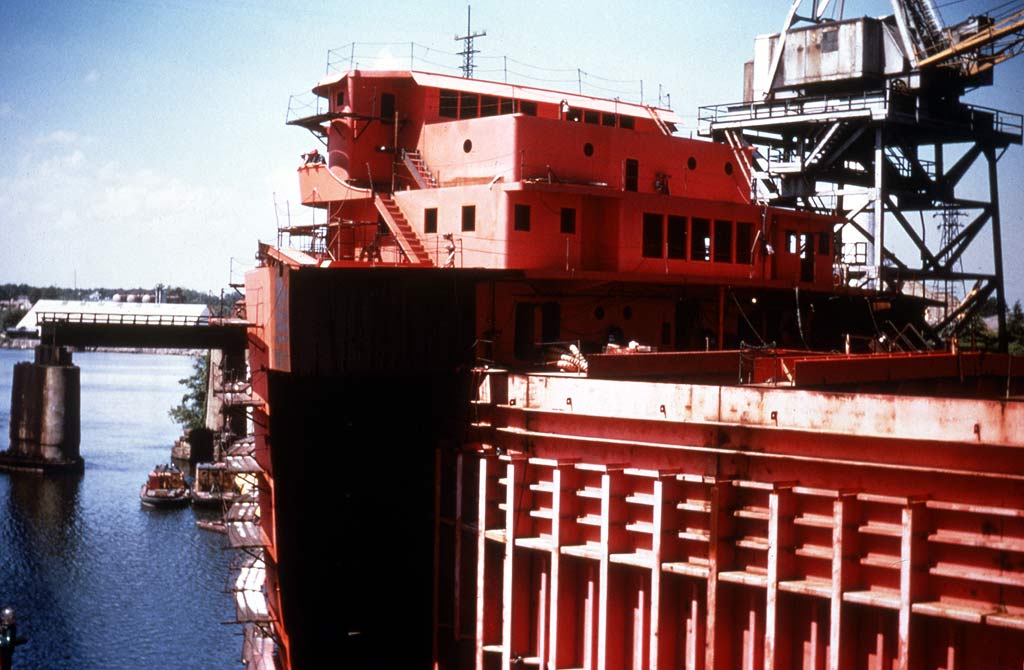
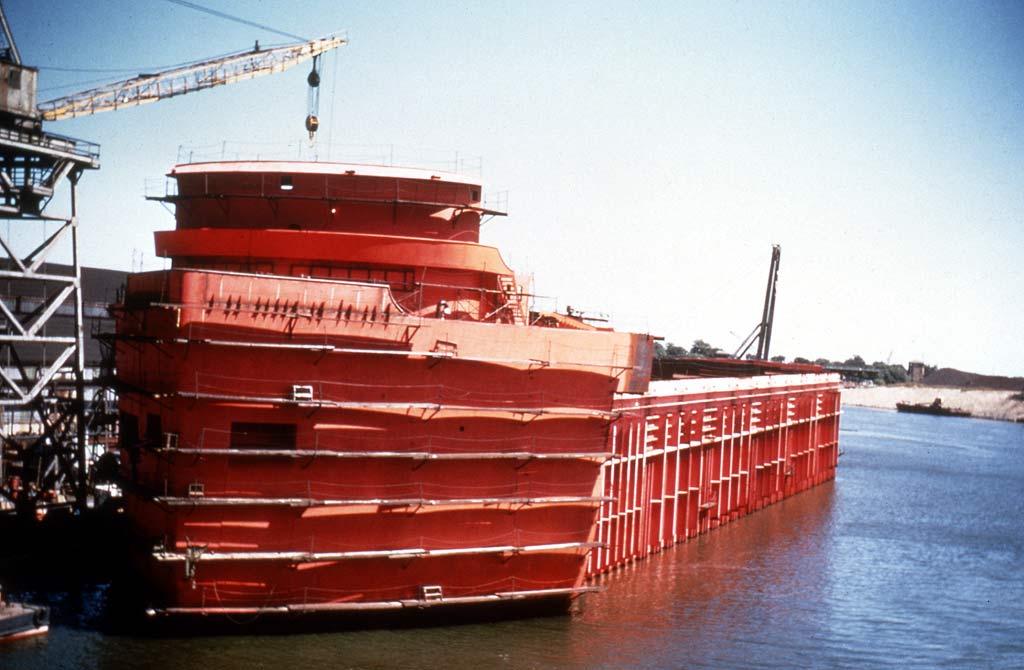
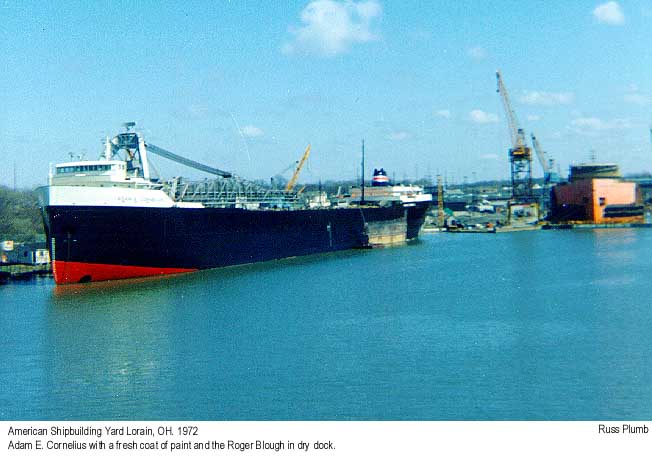
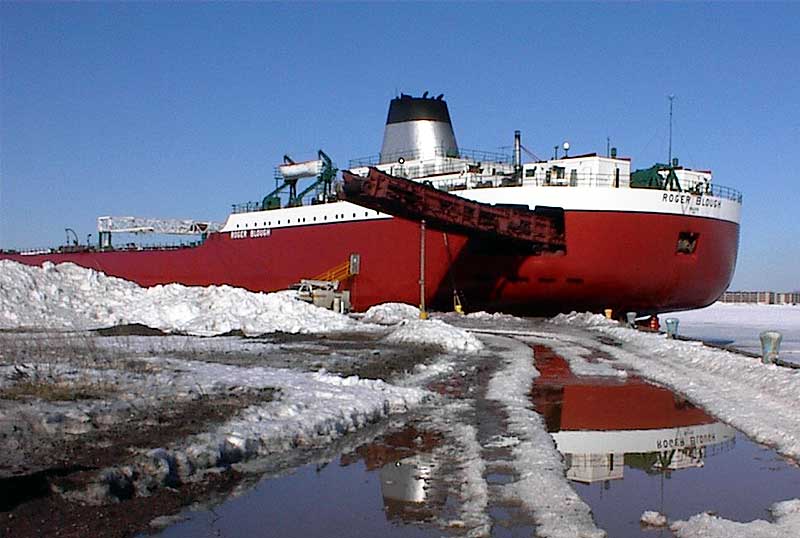
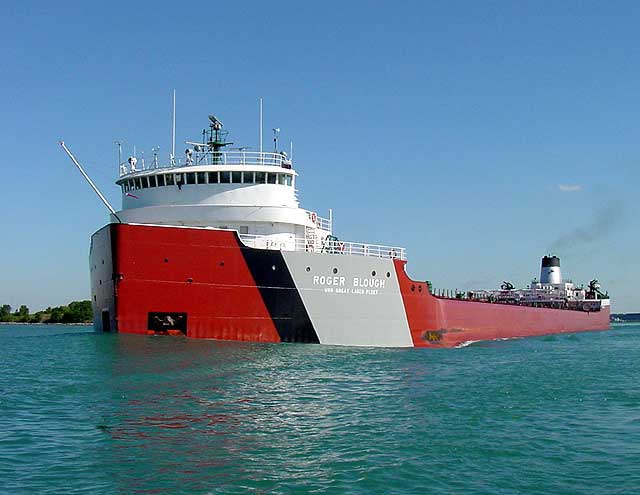
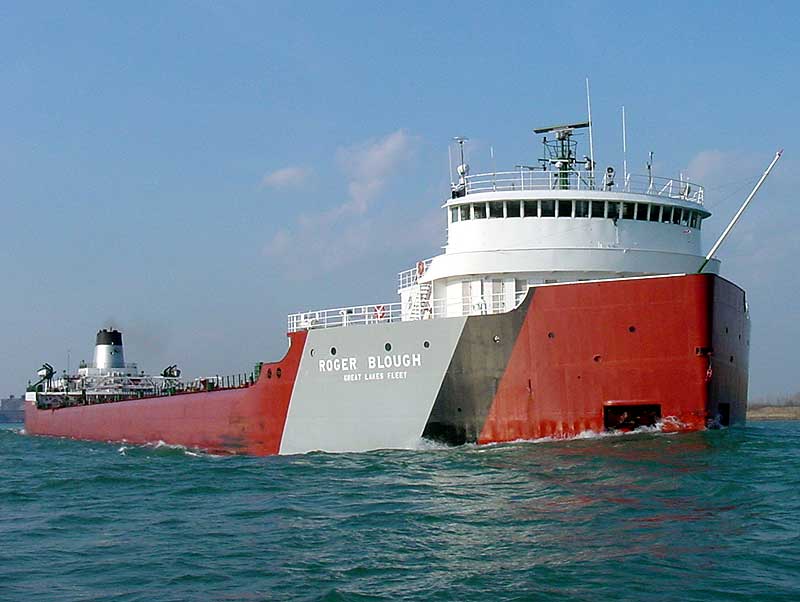
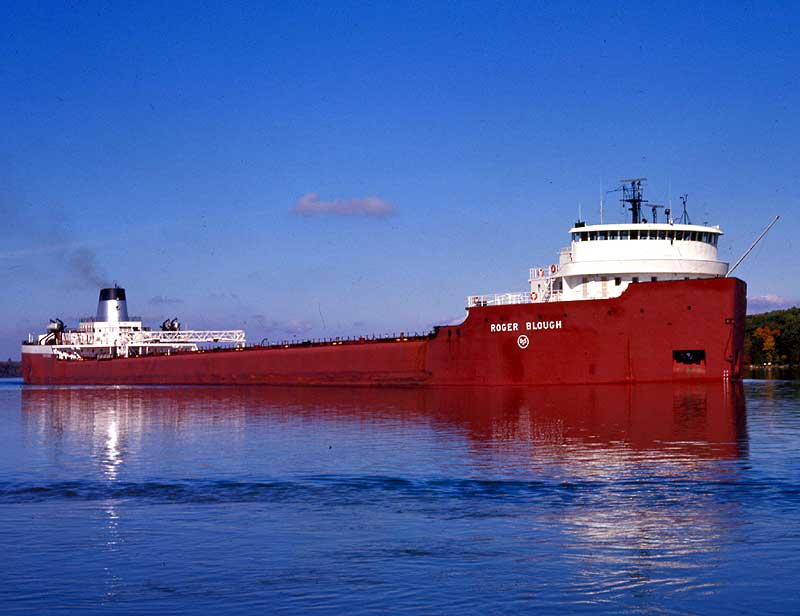
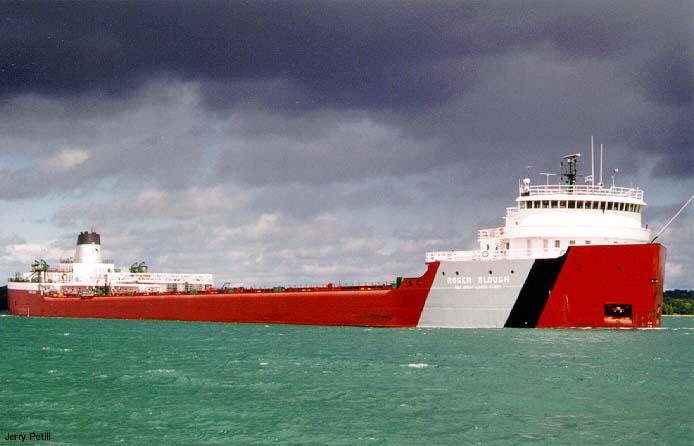
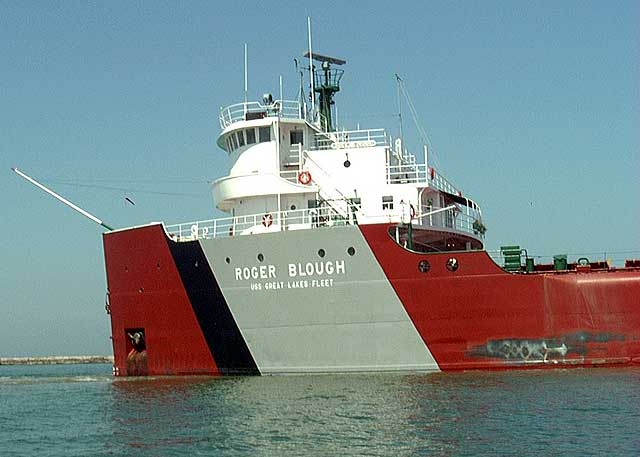
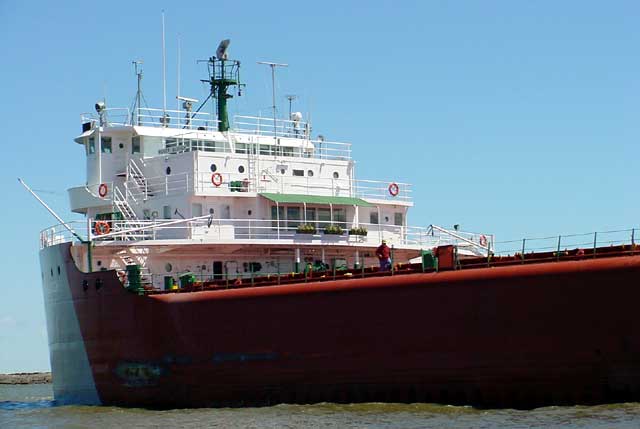
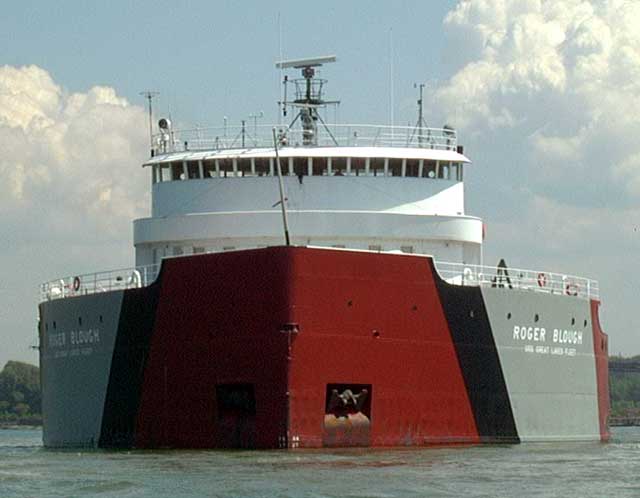
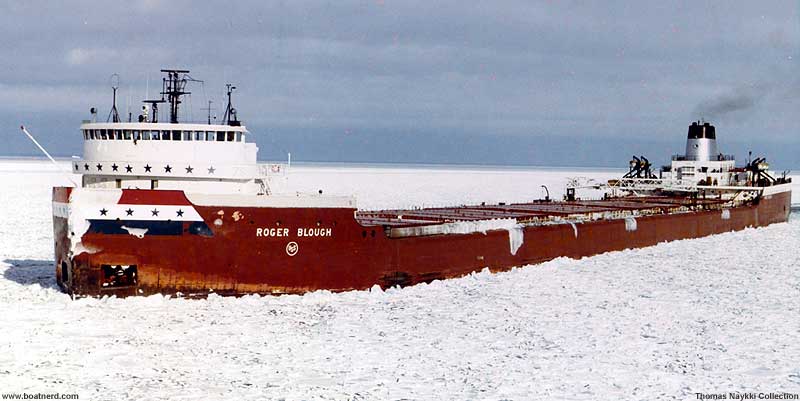
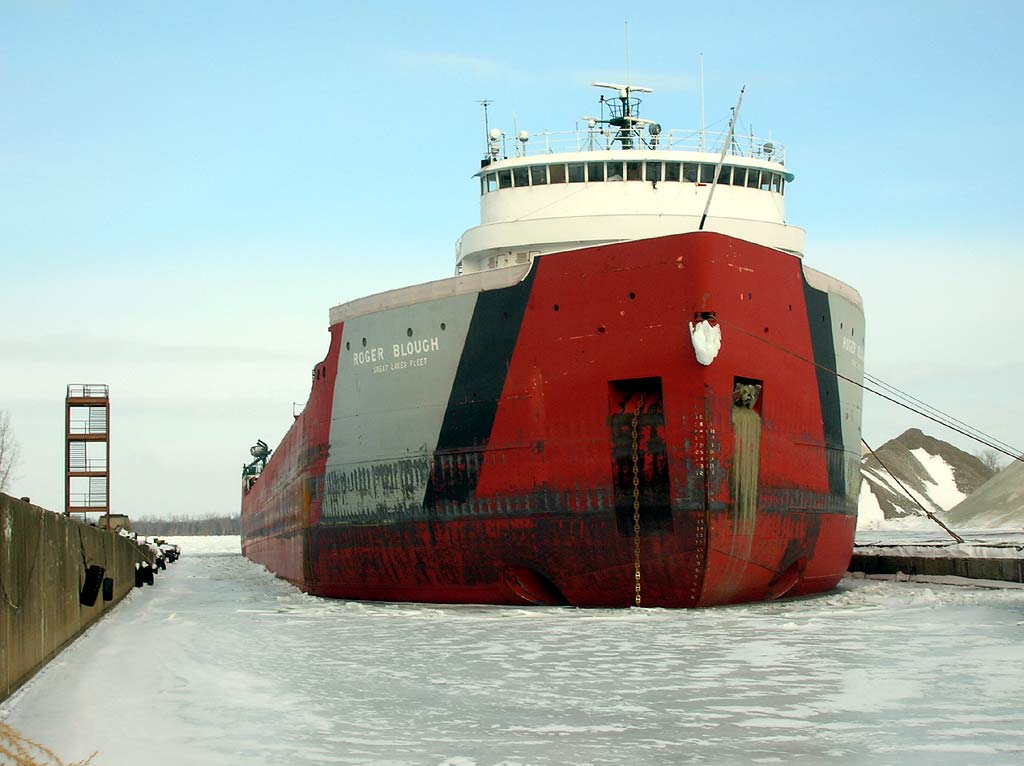
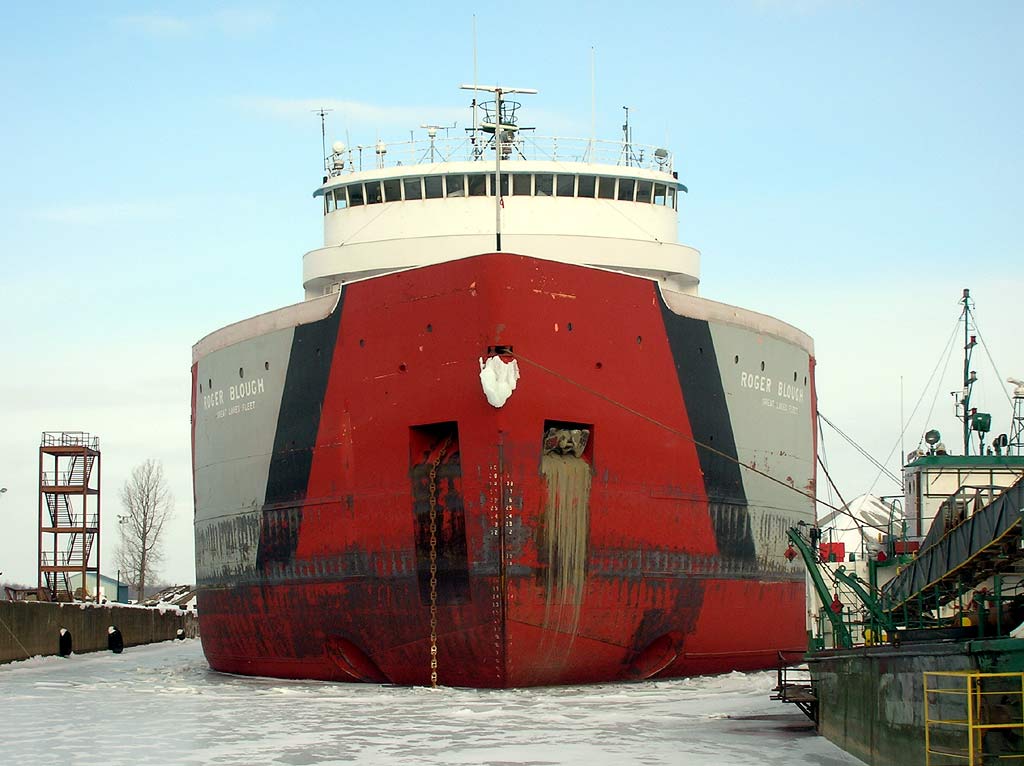
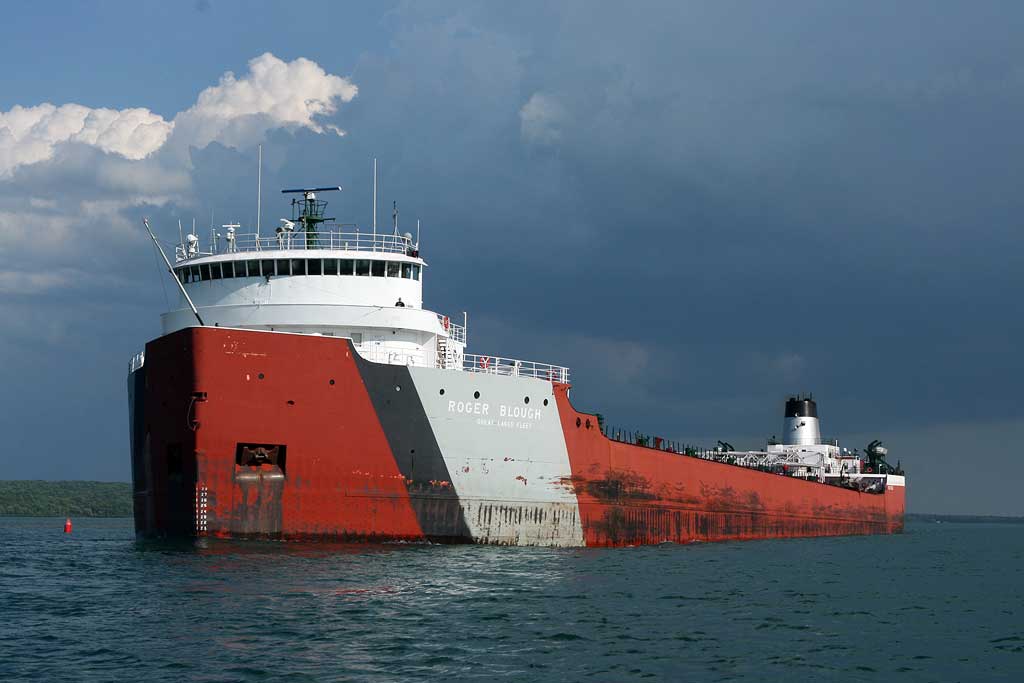
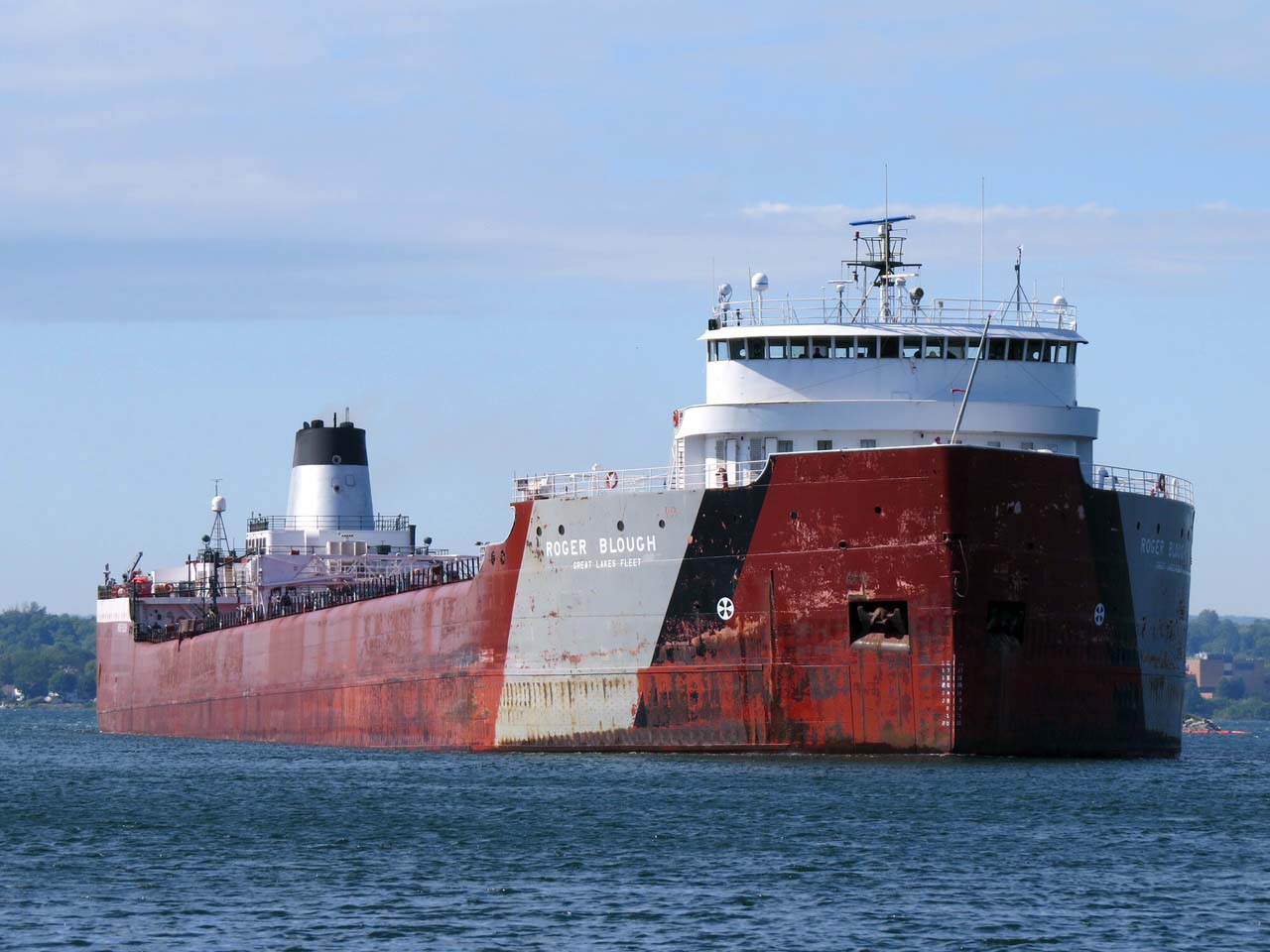
The self-unloading bulk carrier Roger Blough, sailing for the Duluth-based Great Lakes Fleet, was built in two sections as hull #900 by the American Shipbuilding Co., Lorain, OH, for the USS Great Lakes Fleet, Duluth, MN, at a cost of approximately $20 million. The keel of the 437-foot-long bow section was laid September 3, 1968 and was float-launched December 21, 1968 (less ballast tanks due to the restricted size in width of the drydock). A new, 125-foot-wide drydock had been constructed where the keel of the 421-foot-long stern section was laid December 29, 1969. The bow section was floated into the new drydock July 25, 1970 and was joined to the stern section.
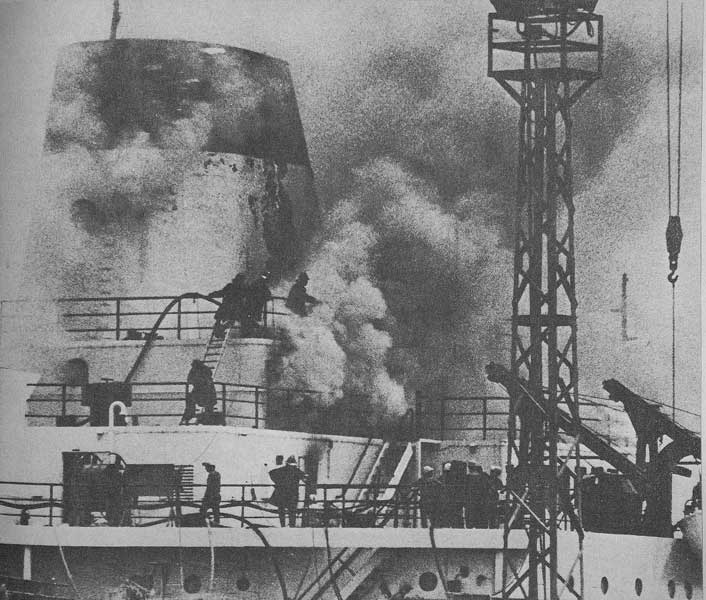
The official launch was scheduled for July 1971, but a serious engine room fire on June 24, 1971 delayed the launch for almost a full year. The exact origin of the fire remains a mystery, though there was speculation pointing a finger at a high intensity light bulb. (The local fire department was unable to locate the actual cause.) What is known is that there was diesel fuel leaking from a faulty bonnet gasket on a fuel line in the engine room and the yard employees were advised to immediately extinguish any flame. The fire, though, had already started. Those that could get off did so, but many went back on board to fight the flames knowing that four of their co-workers (two welders and two air tool department workers) were trapped as they were checking a tank filled with air for leaks located immediately below the engine room, regardless of the fact that a couple of decks below was a fuel tank containing thousands of gallons of diesel fuel. The trapped workers died of asphyxiation and the engines and aft deck house were destroyed. Repairs cost approximately $13 million.
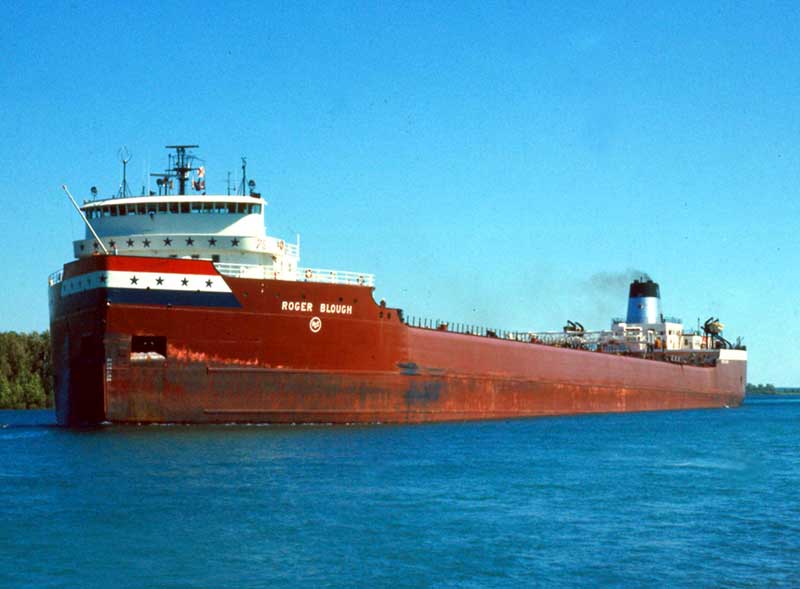
With this incident behind it, hull #900 was christened June 5, 1972 as Roger Blough in honor of the retired Chairman of the Board of the United States Steel Corp. The Blough sailed on her maiden voyage June 15, 1972, departing Lorain in ballast for Two Harbors, MN. While on that voyage, the Blough carefully sailed upbound past the sunken Sidney E. Smith, Jr. in Port Huron, MI on June 15th. Upon arrival at Two Harbors, the vessel took on 41,608 tons of taconite ore pellets.
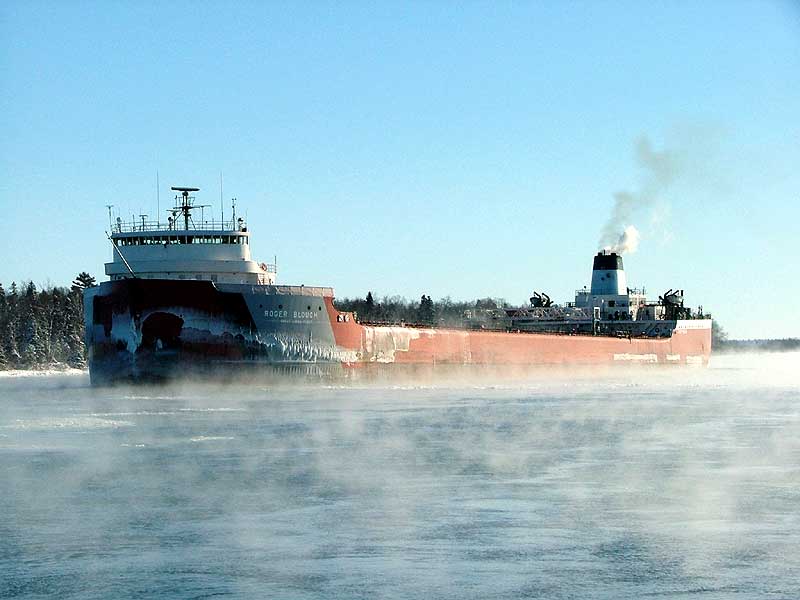
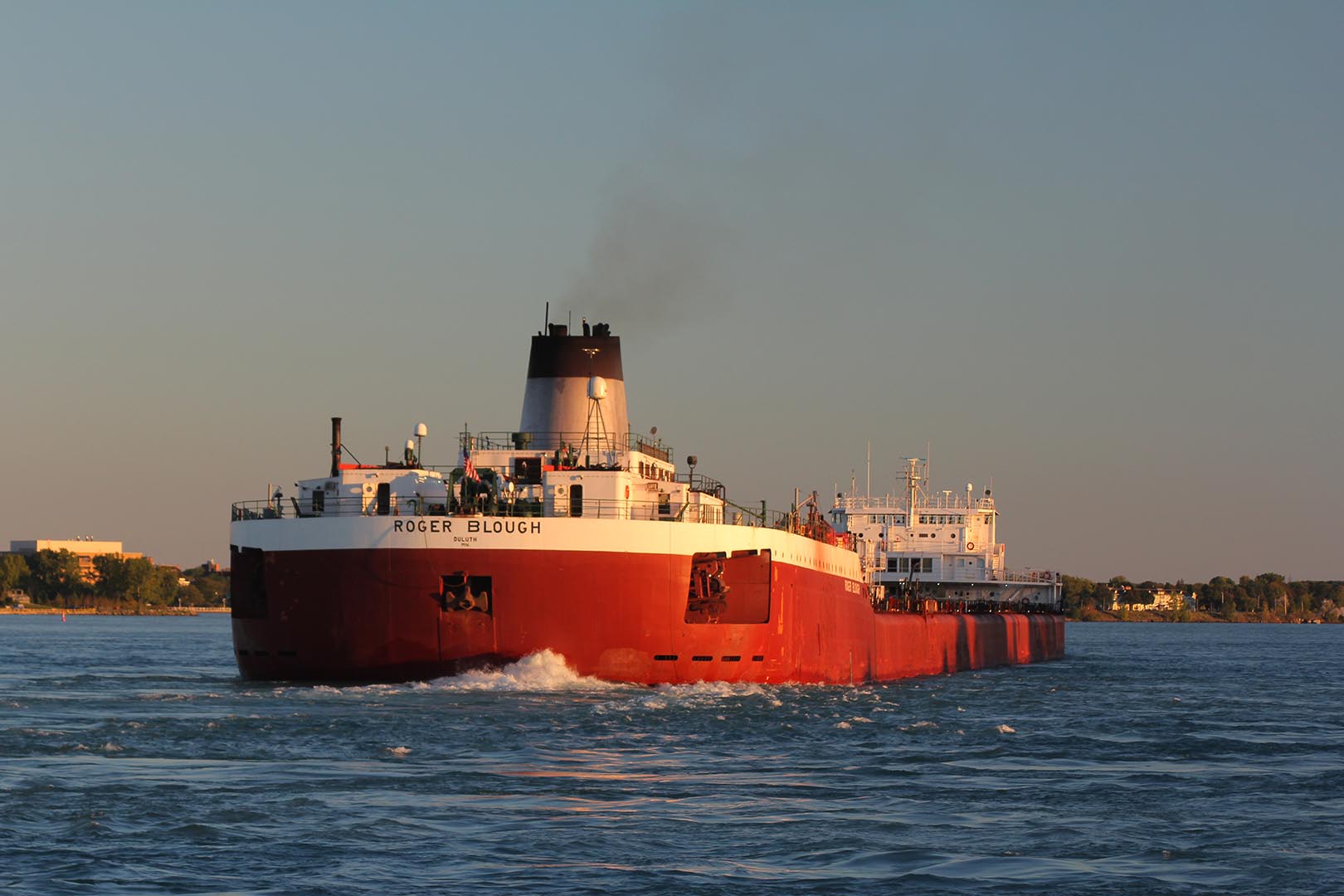
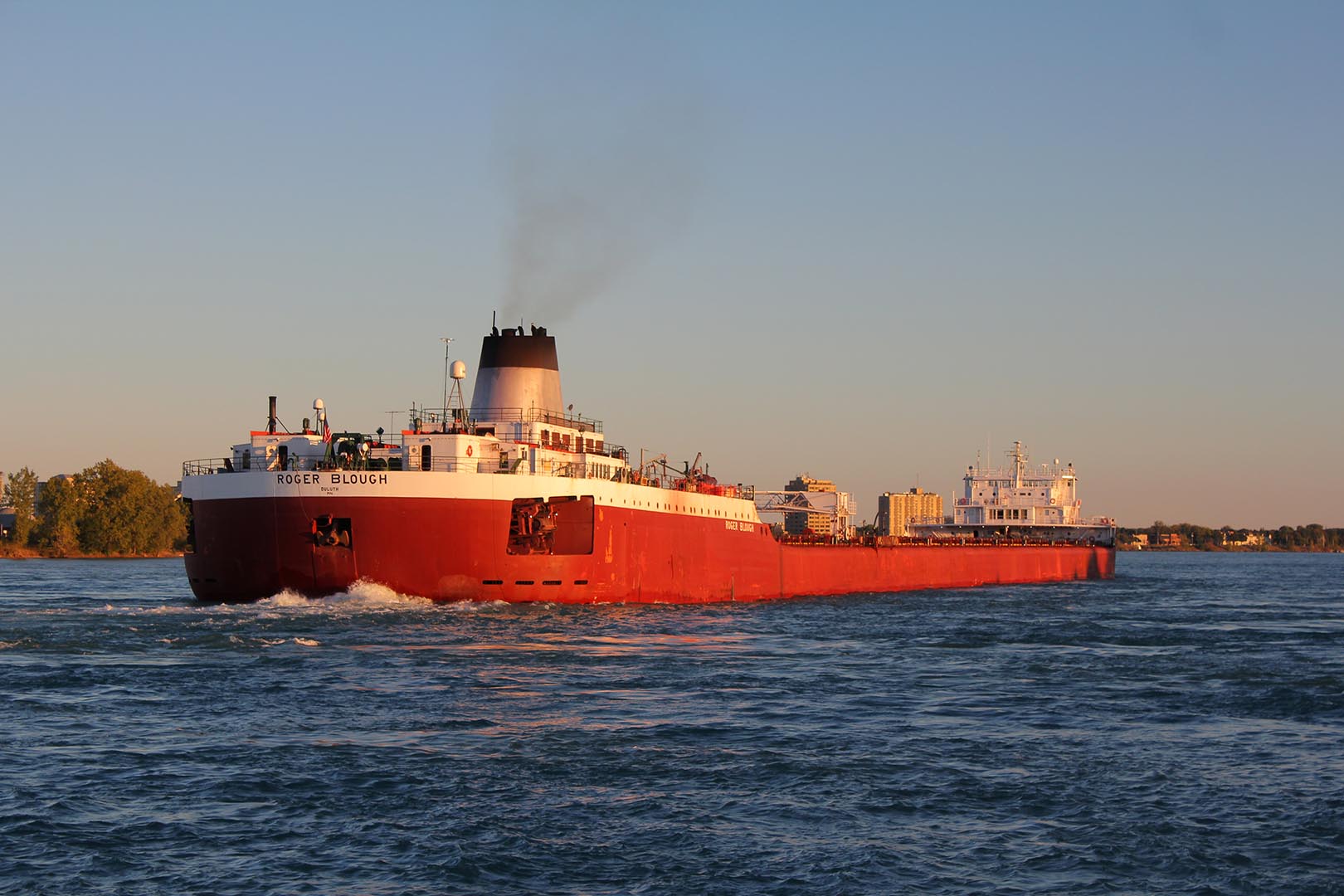
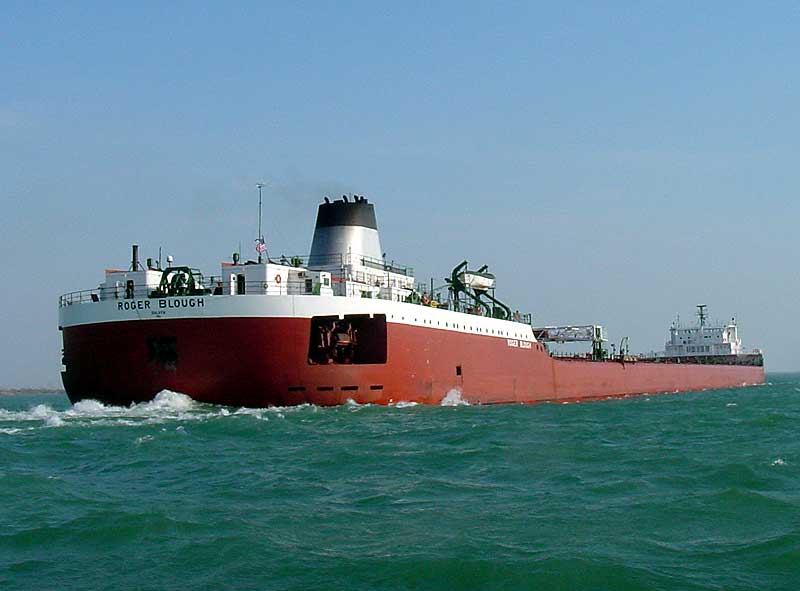
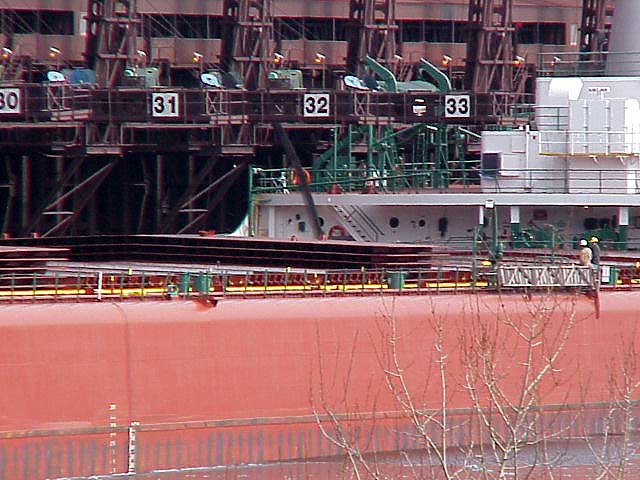
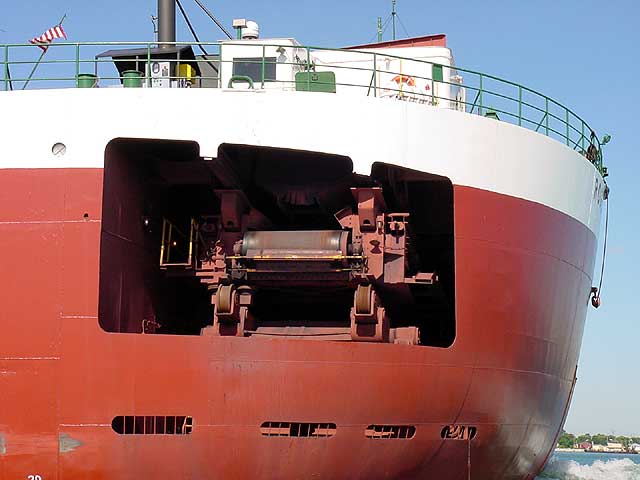
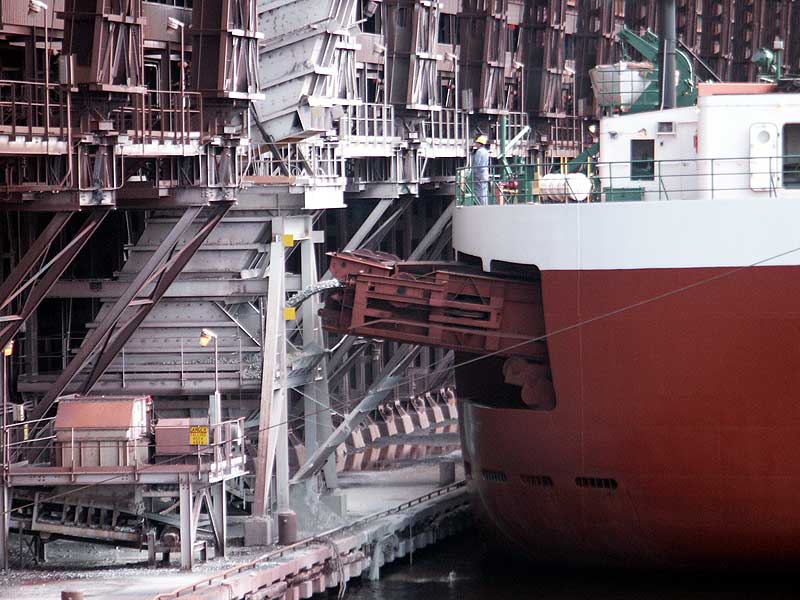
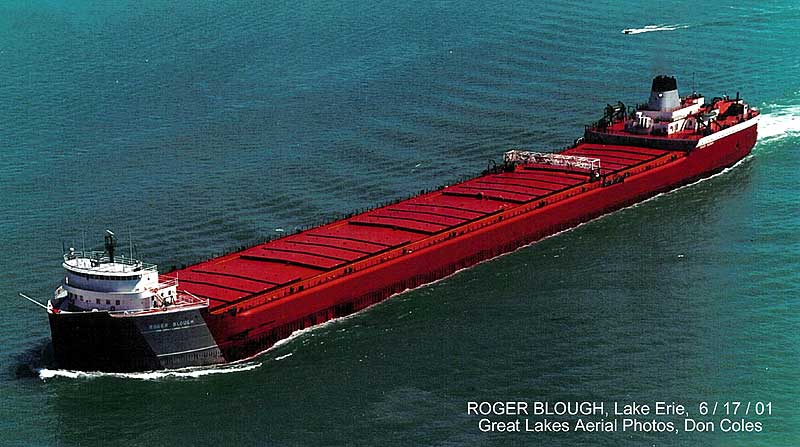
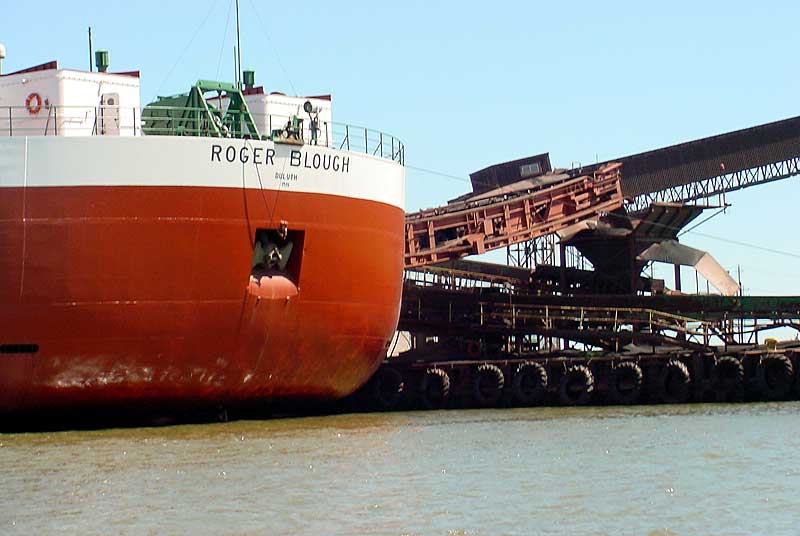
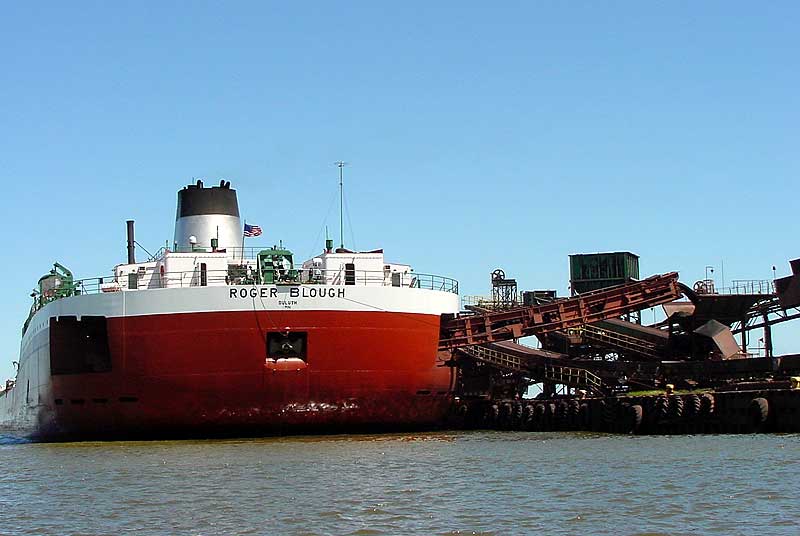
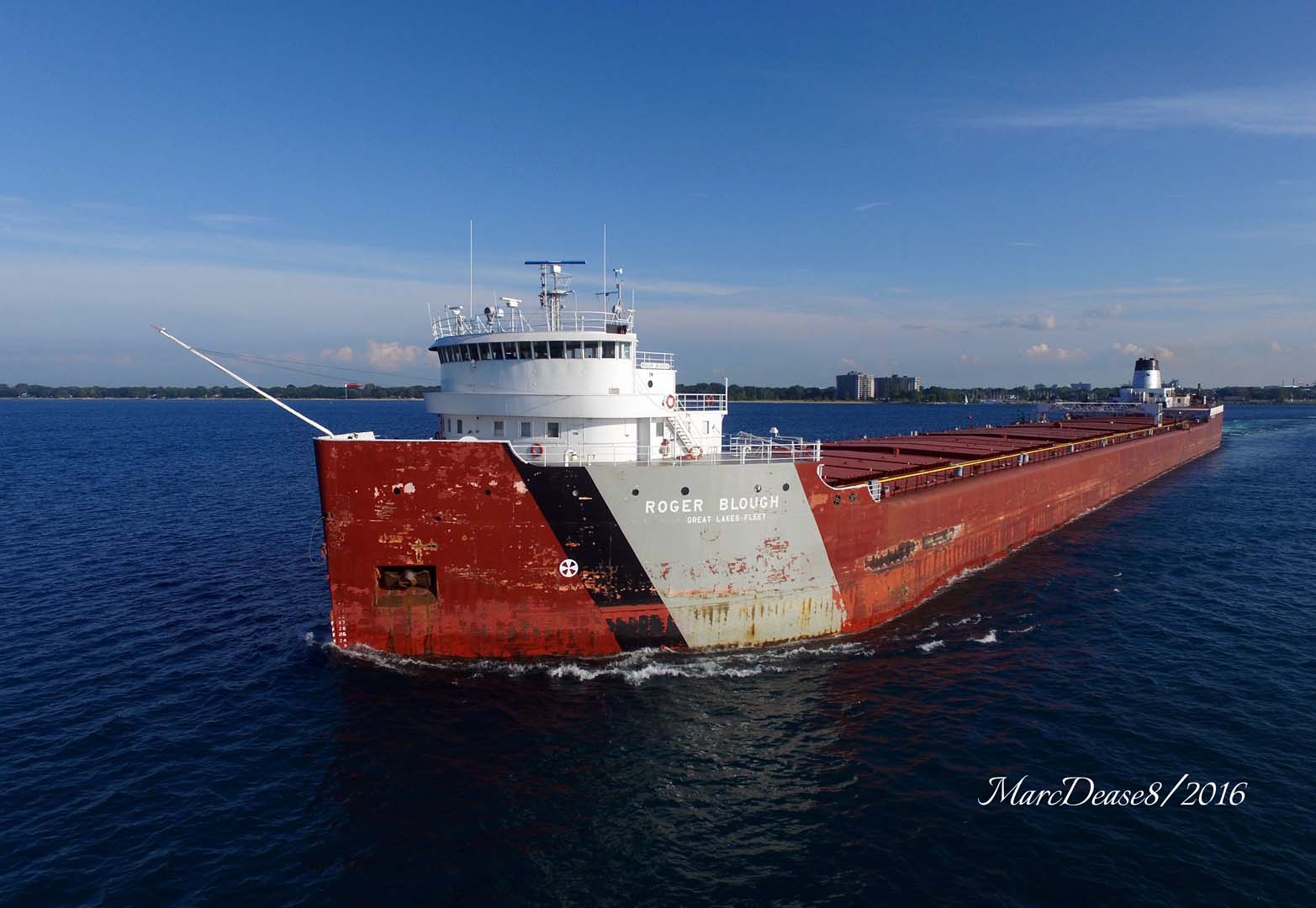
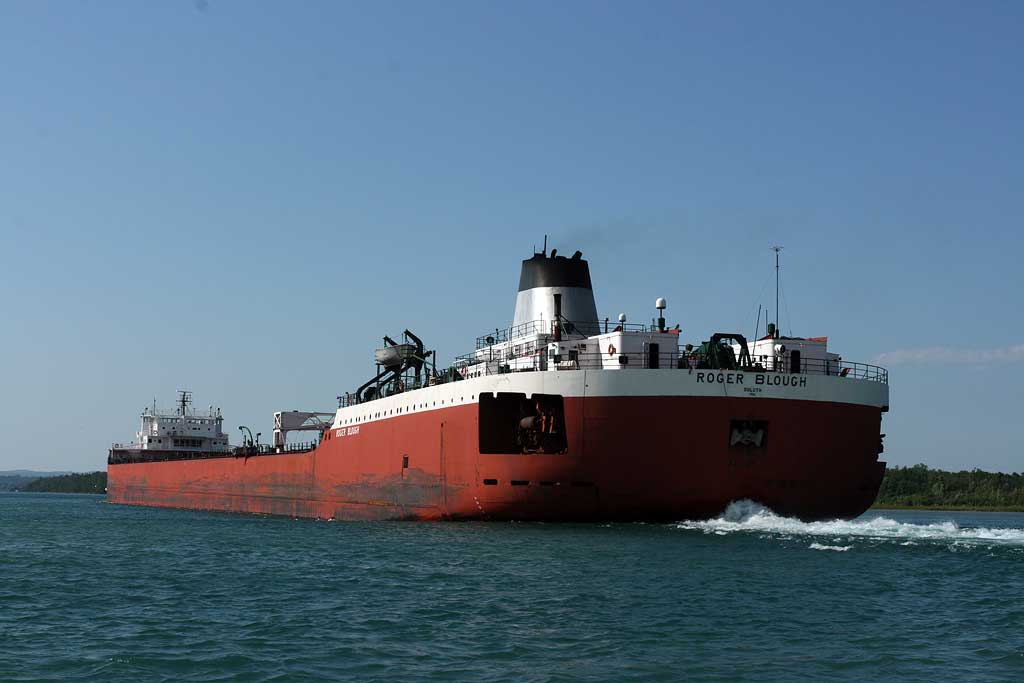
Roger Blough is powered by two Pielstick model 16PC2V-400 four-stroke, single-acting V-16 cylinder 7,100 b.h.p. diesel engines (built by Fairbanks Morse & Co., Beloit, WI) burning intermediate grade 320 fuel. The power is fed through a Falk single reduction gear box to a controllable pitch propeller giving the vessel a service speed of 16.7 m.p.h. The vessel is equipped with a bow thruster. Roger Blough’s self-unloading system was designed specifically for unloading taconite ore pellets into compatible hopper systems on shore. The vessel was designed for the delivery of those pellets to U.S. Steel docks at Gary, IN; South Chicago, IL; and Conneaut, OH. The shuttle-type transverse self-unloading boom is located below the boat deck in the stern of the vessel behind the engine room. This boom can be extended 54 feet to port or starboard and unload at a rate of up to 10,000 tons per hour. The Blough is capable of carrying 43,900 tons at her mid-summer draft of 27′ 11″ in five holds fed through 21 hatches.
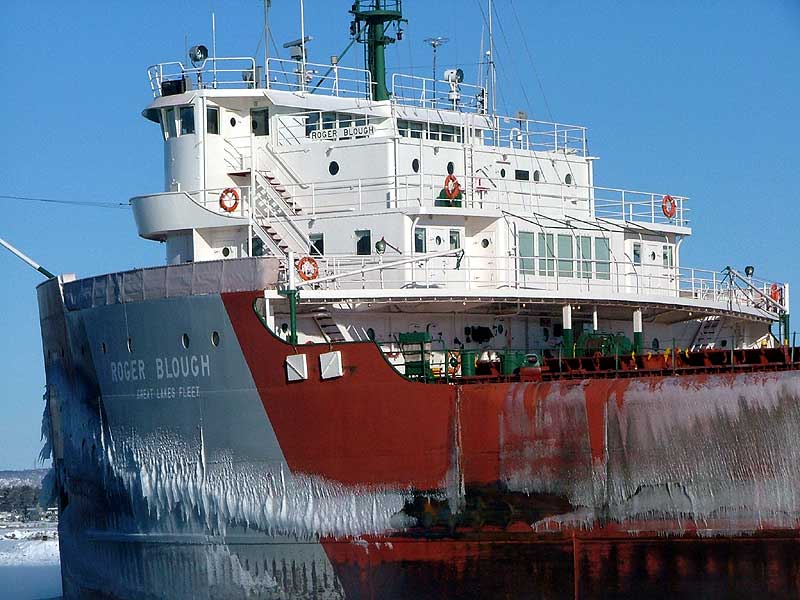
All accommodations for the officers and crew are equipped with private baths and individual temperature controls for heating and cooling. The hull of the Roger Blough was built so that it actually undulates as the vessel works in heavy seas. This hull will heave and bend, thus arching her back as she negotiates the waves. This form of construction contrasts with older, smaller vessels whose rigid hulls were constructed with two arch supports stretching nearly the full length of the vessel resulting in a “springing” action while working heavy seas.
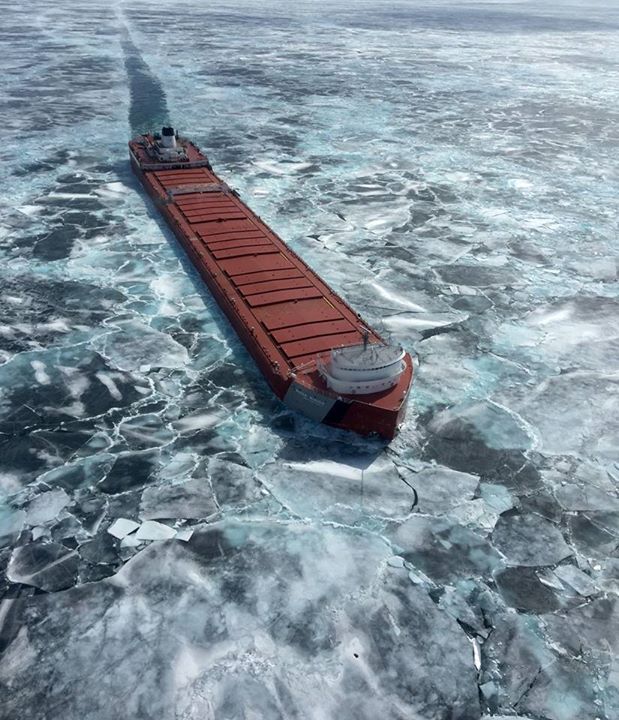
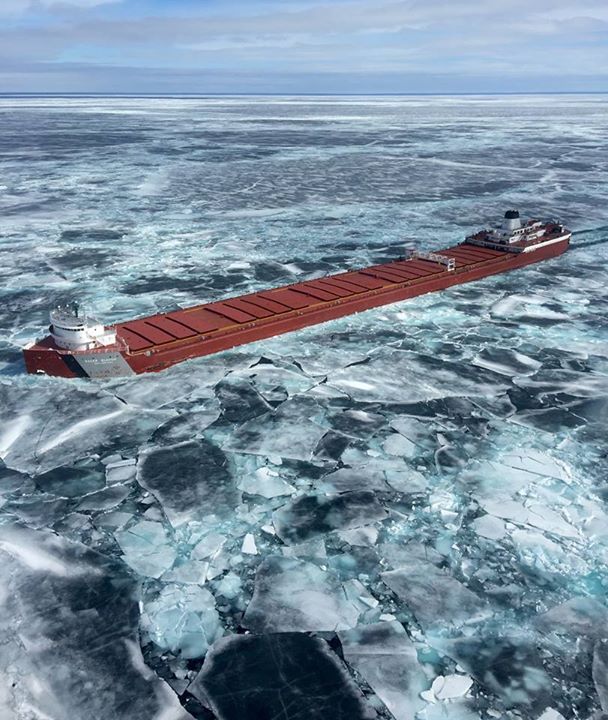
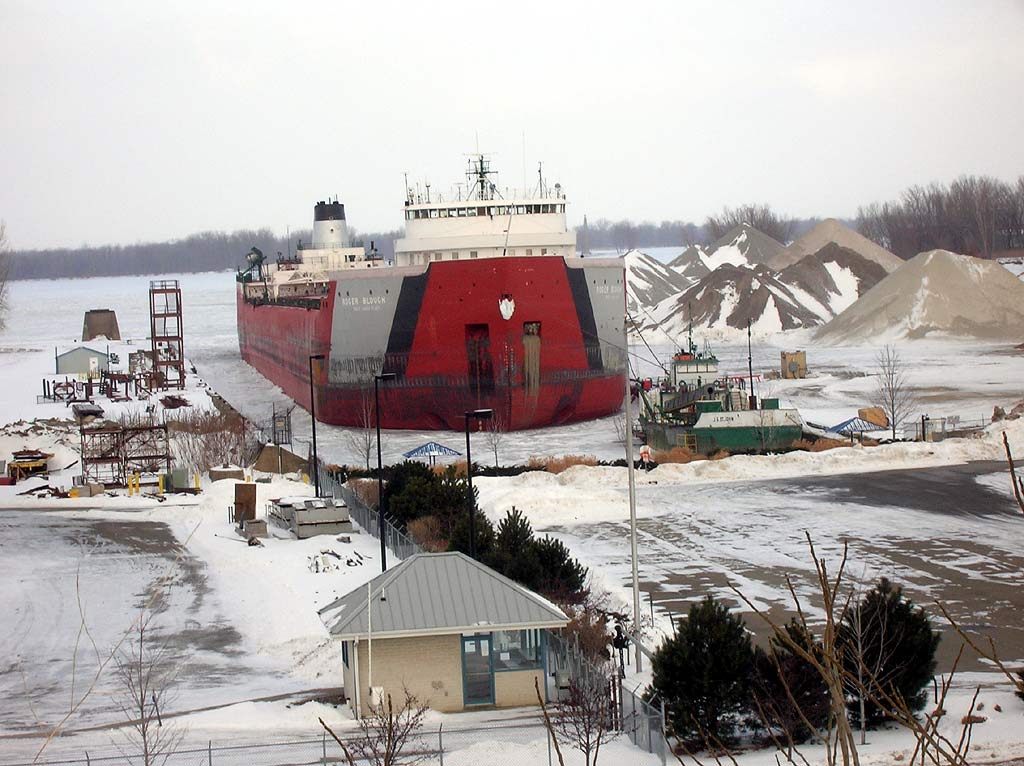
Roger Blough struck the stern of the Philip R. Clarke on January 11, 1973 while working in ice in the Straits of Mackinac, with repairs completed at Lorain, OH ,during the 1972/73 winter layup. Due to the Roger Blough’s cargo-specific design and economic conditions, the vessel was laid up at Sturgeon Bay, WI, from September 12, 1981 through September 25, 1987. For the remainder of the 1987 season, the vessel ran 21 trips carrying 900,000 tons of taconite pellets into the Gary, IN, plant. On April 23, 1994, the vessel was in a collision with a foreign freighter in Chicago causing only minor damage to the port lifeboat davits. In August 2000, the vessel struck a pier at the Soo causing damage to several plates and a crack forward on the port side with repairs completed during the winter layup of 2000/01 at Sturgeon Bay, WI. In recent years, the Roger Blough has seen sporadic mid-season lay ups due to her smaller size and unique self-unloading system design.
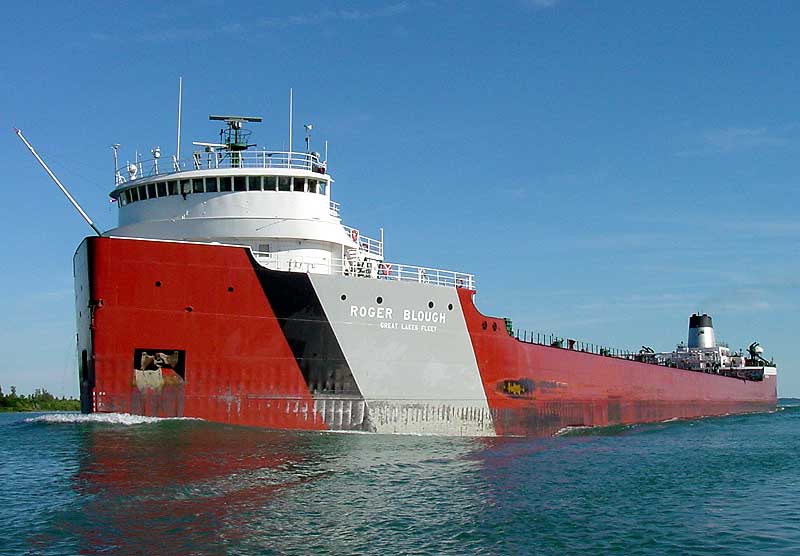
The Roger Blough is the largest traditional-styled lake boat constructed from the keel up on the Great Lakes. (The 1,000 foot Stewart J. Cort, launched in 1972, was assembled on the Great Lakes but had sections built outside the Lakes.) She also remained the largest lakes-built vessel until the launch of the 1,004 foot James R. Barker in 1976. (The 1,000 foot Presque Isle (ii) launched in 1973 was constructed similar to the Cort.)
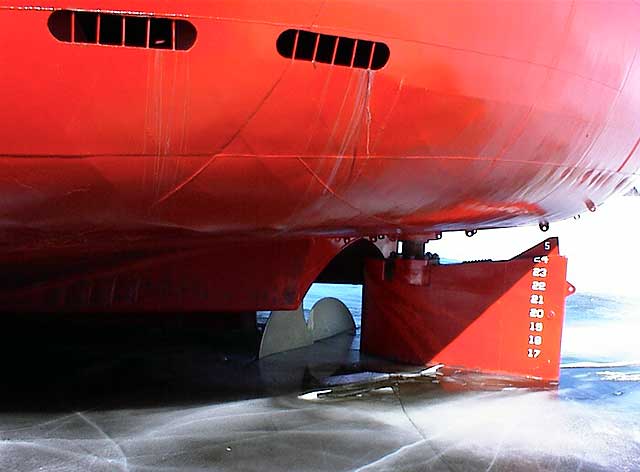
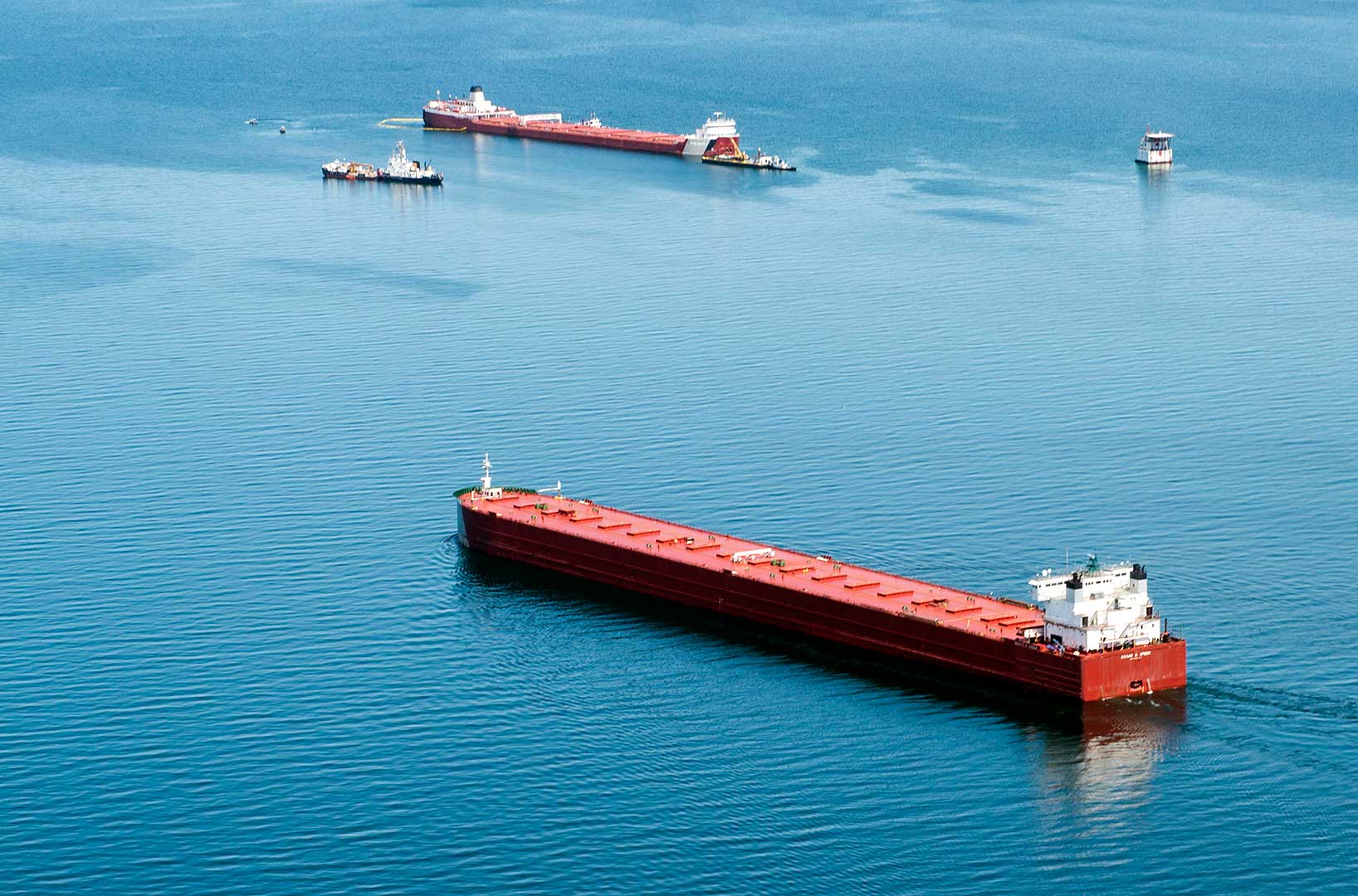
In August 2006 the Bough lost its rudder in the lower St. Marys River and anchored near Raber Bay off of Lime Island. Fleet mate Edgar B. Speer arrived on scene three days later and the Blough was lashed alongside the Speer for a tow to Gary IN, the Blough’s original destination. The tow departed on August 9 and arrived in Gary on August 11. The Speer left the Blough at anchor while the Speer unloaded, as both vessels use the same hopper to unload with their short unloading booms. The Blough was then towed to Sturgeon Bay for repairs. The Blough was the third boat to lose a rudder in the same area of the St. Marys River in recent years. The others were the Edgar B. Speer and the Mississagi.
Since 1999, cargoes of limestone and stone have been carried with relative success in unloading, in addition to the regular cargoes of iron ore pellets.
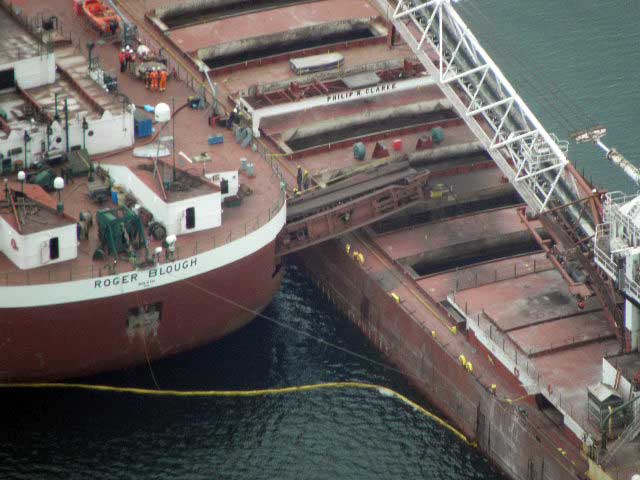
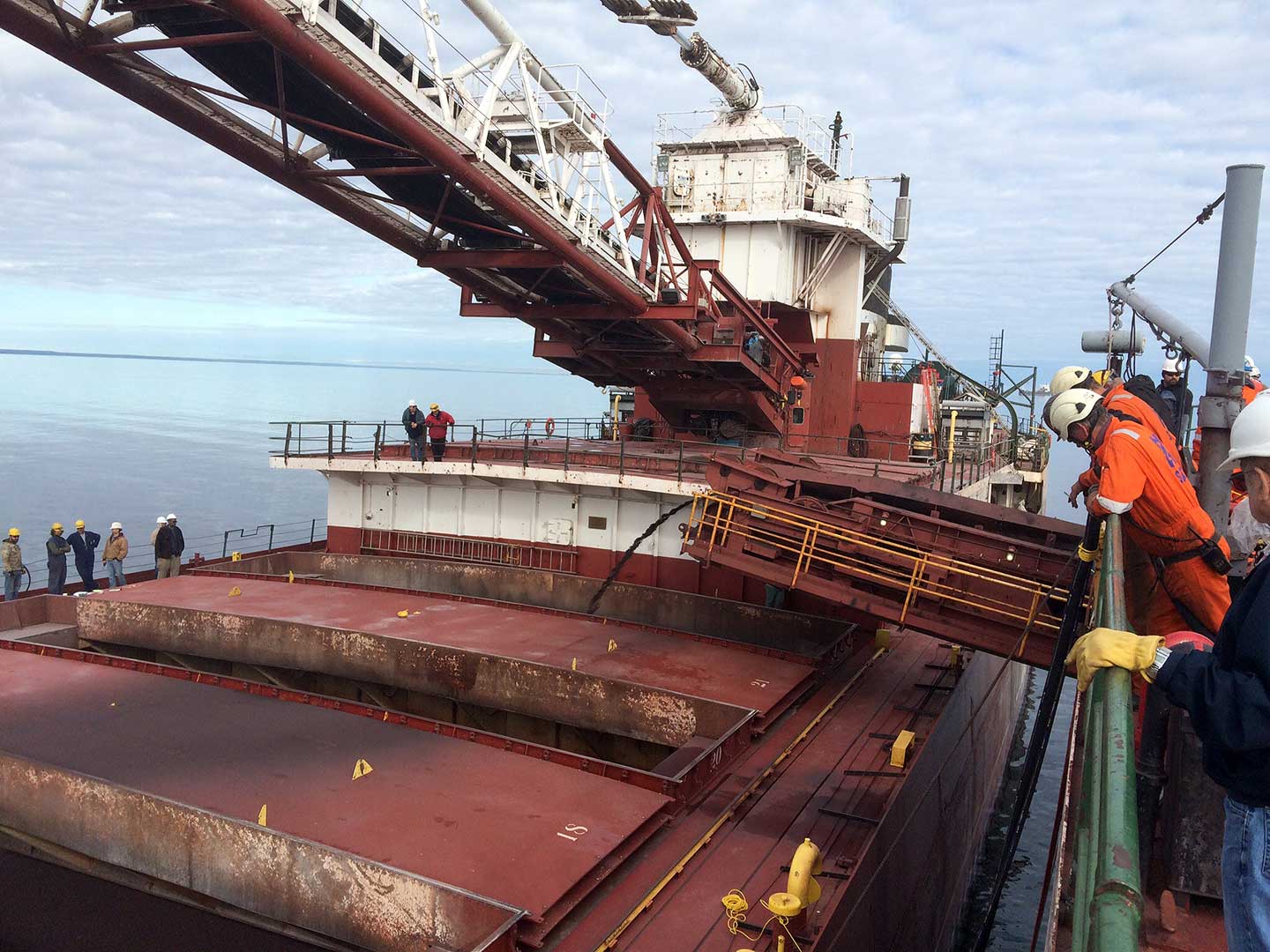
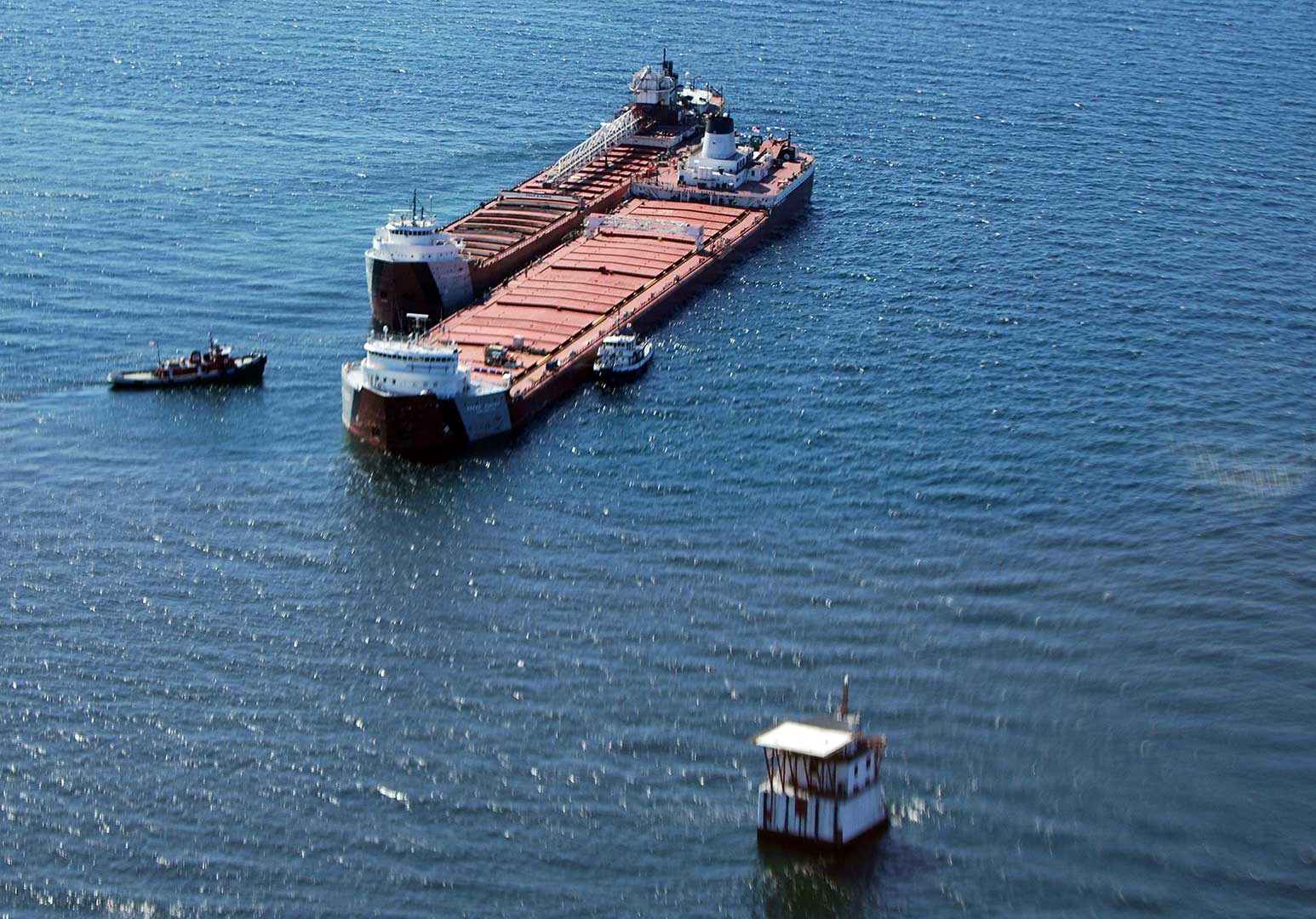
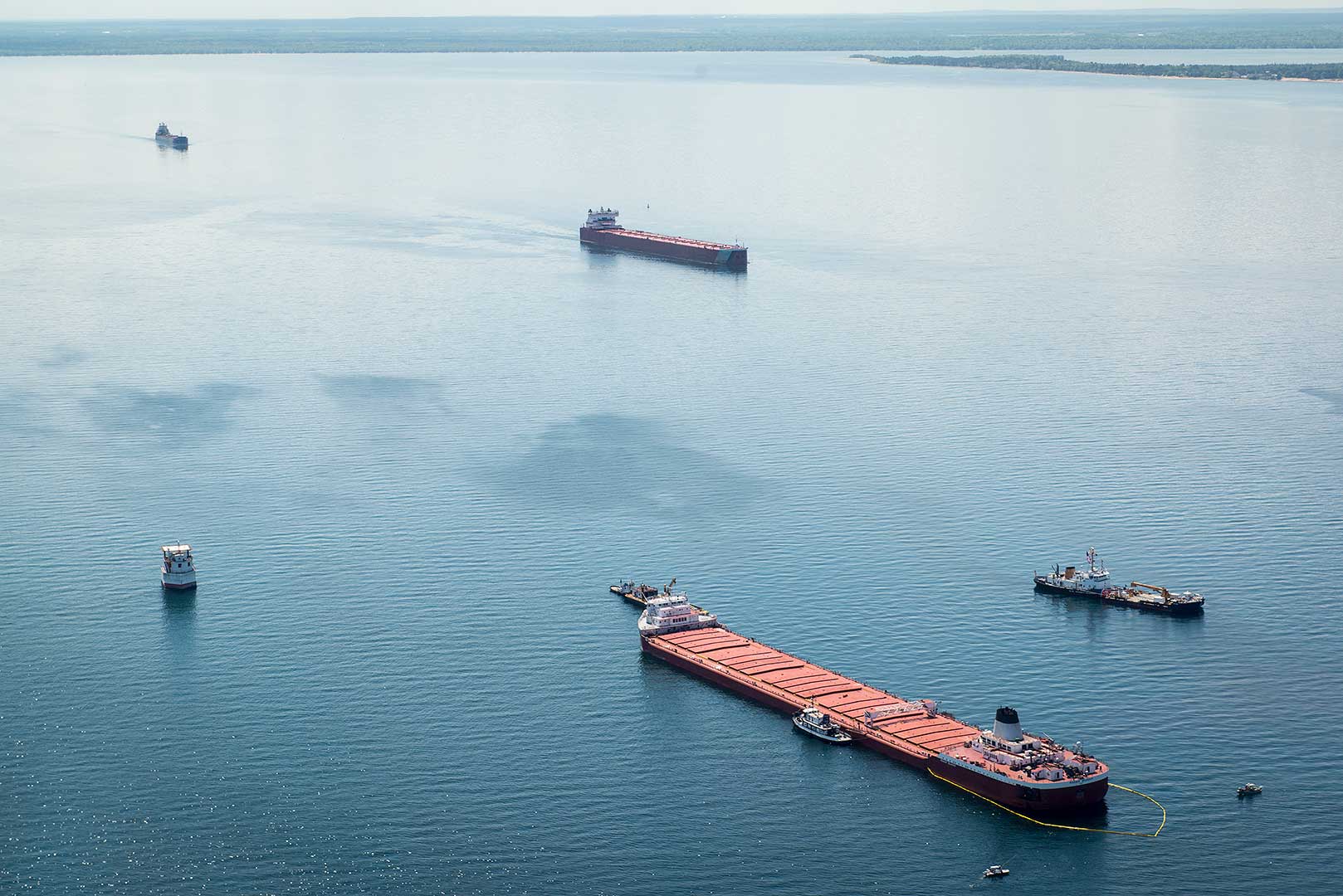
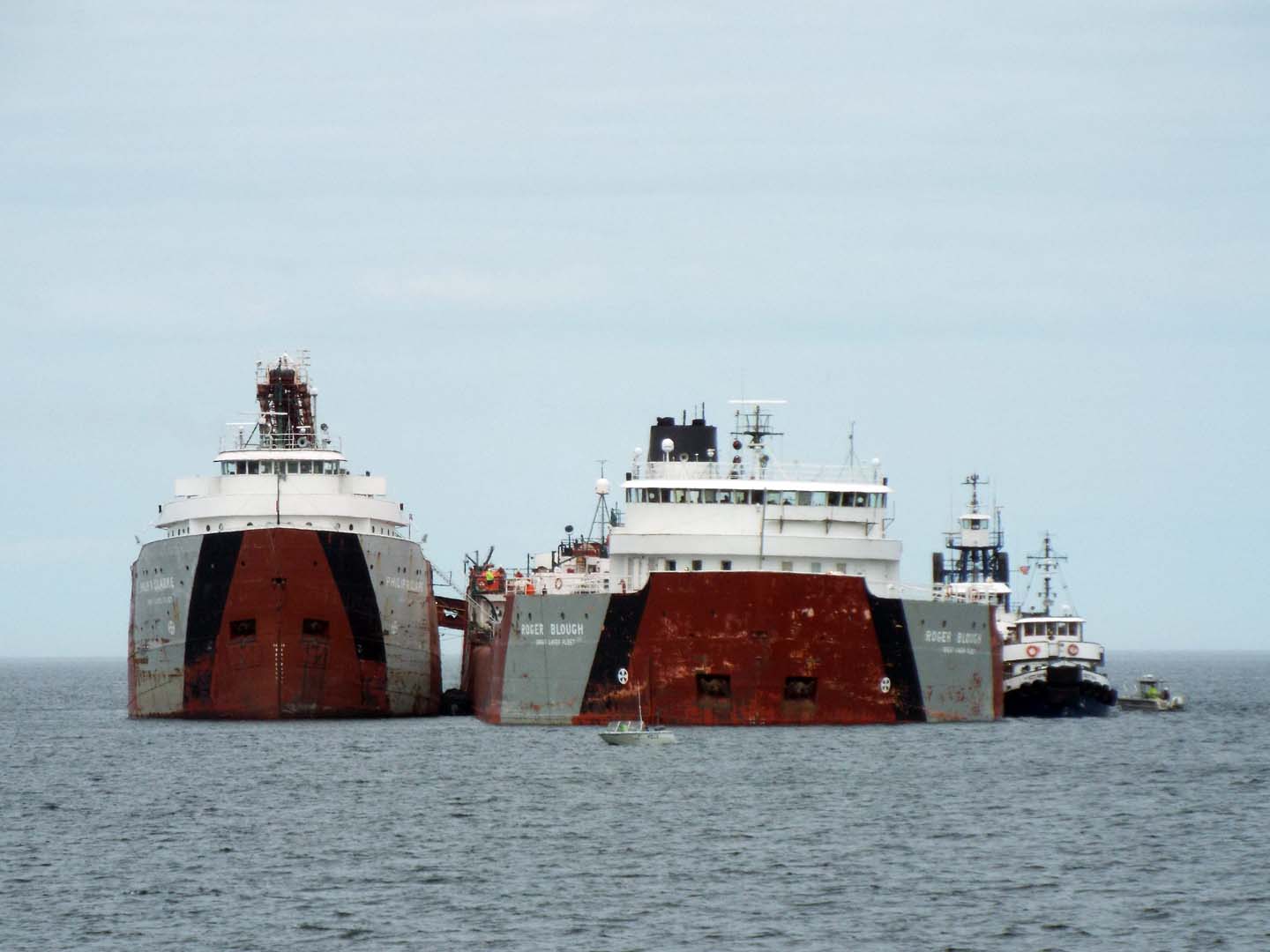
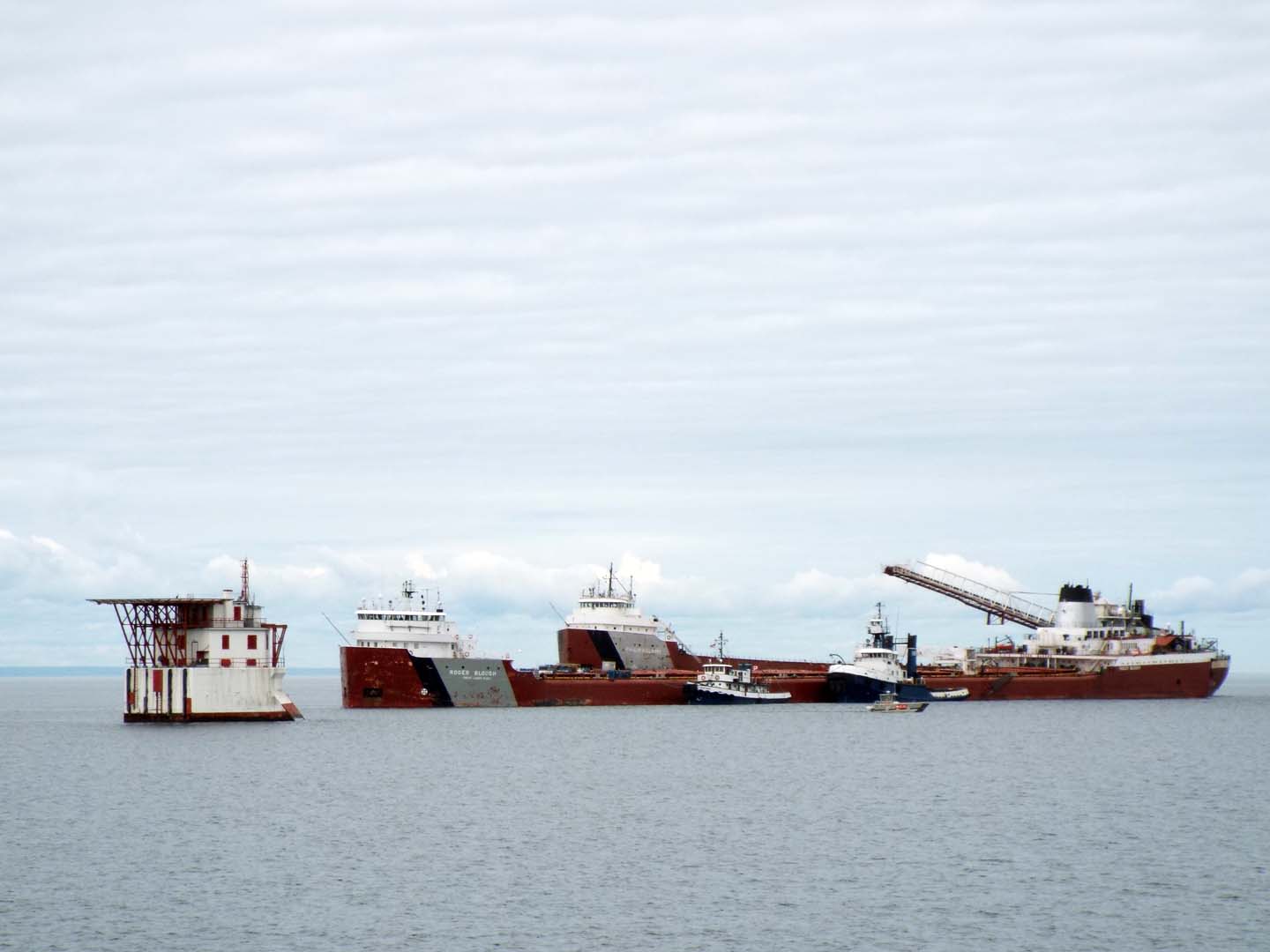
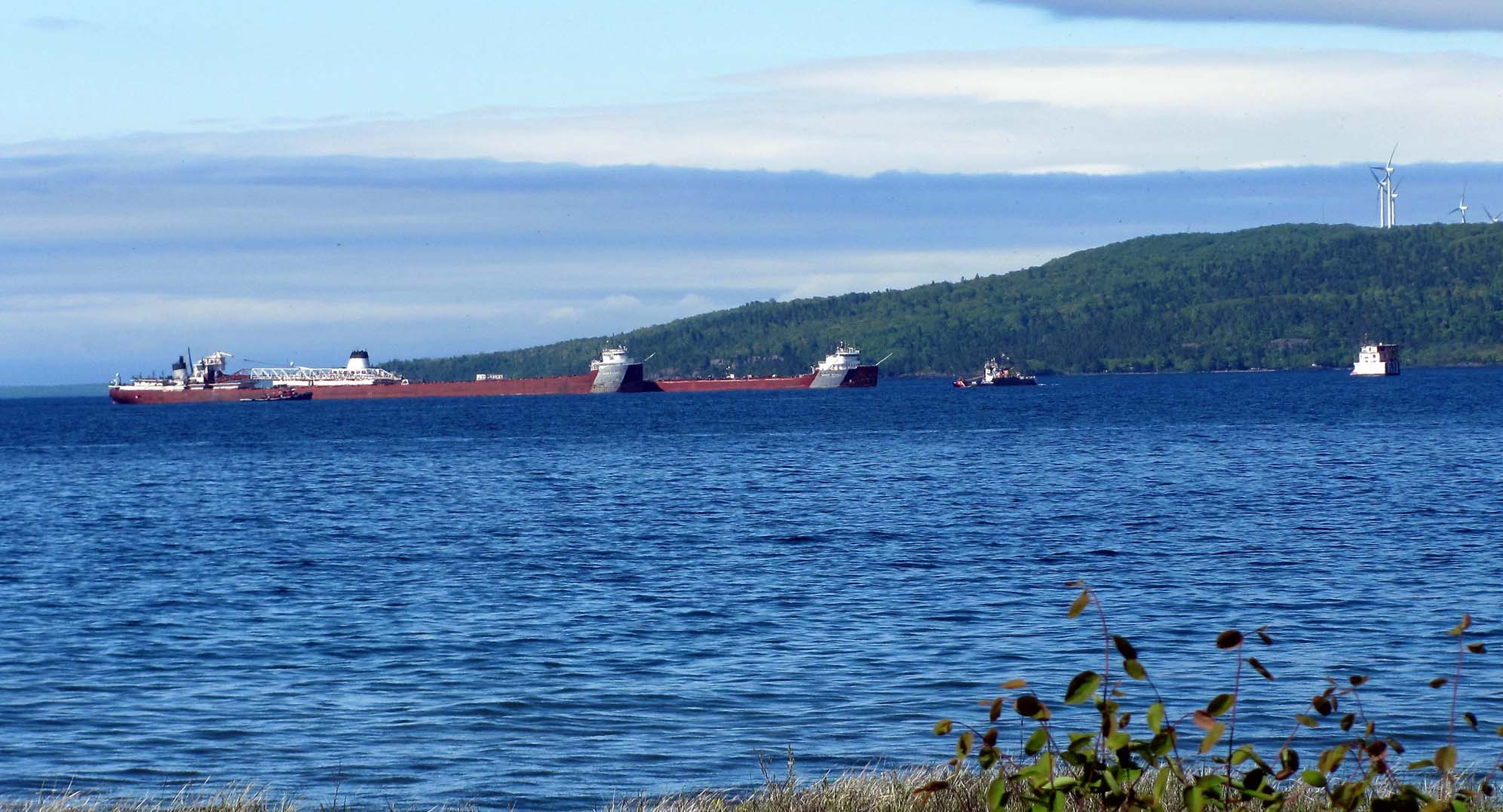
On May 27, 2016, Roger Blough ran aground near the Gros Cap Reef Light in the upper St. Marys River, puncturing steel in multiple places and flooding her forward ballast tanks to the waterline. No one was hurt or pollution reported, but the damage to the ship was significant – $4.5 million worth to the Blough’s hull and interior cargo system of tunnels, belts and pulleys. Freeing the Blough required a two-day lightering of her taconite iron ore cargo into a pair of fleetmates, the Arthur M. Anderson and Philip R. Clarke. Afterward, the Blough was shepherded to a shipyard in Sturgeon Bay, Wis., to be out of commission for about two months of repairs. The National Transportation Safety Board determined that the probable cause of the grounding was the second mate’s failure to use all navigational resources to determine the ship’s position as it approached shallow water near Gros Cap Reef. Contributing to the accident was inadequate monitoring by Vessel Traffic Service (VTS) St. Marys River.
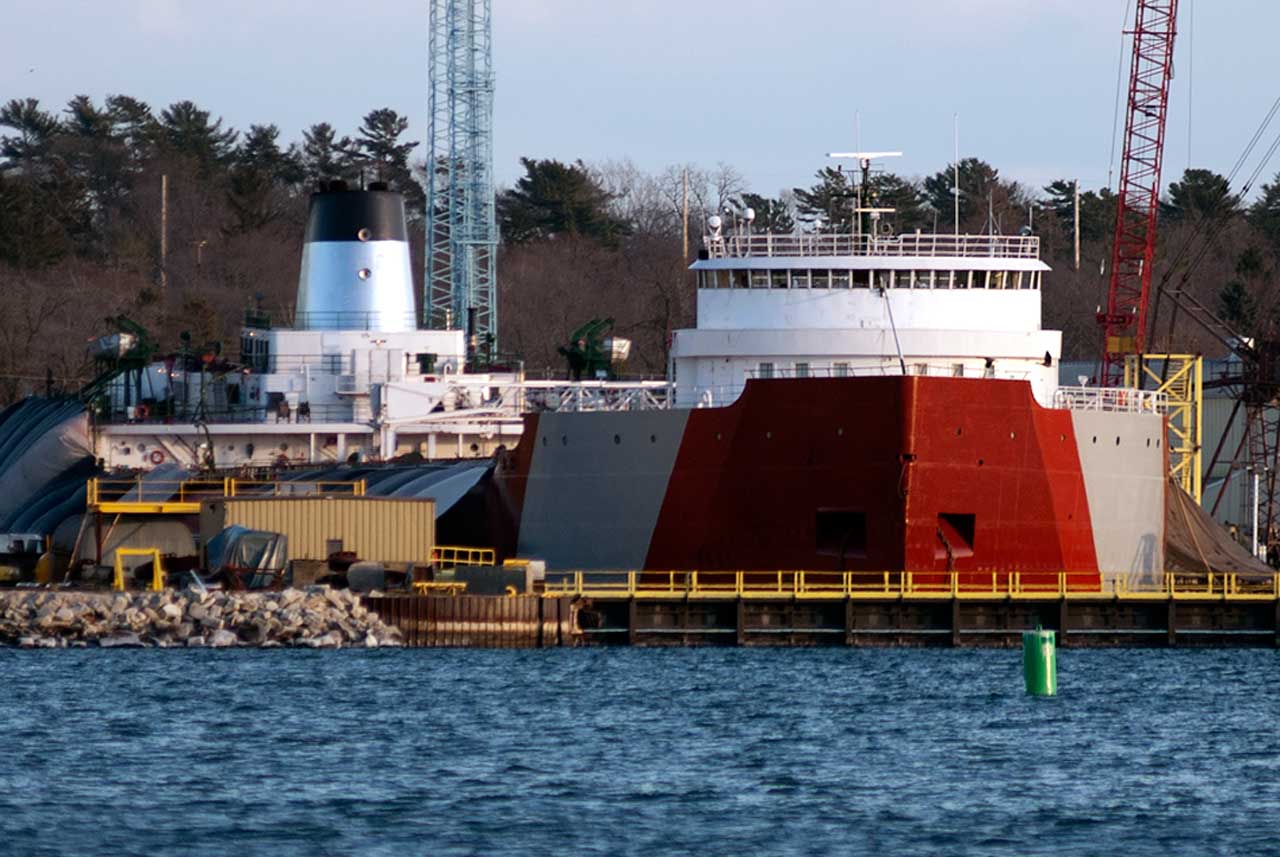
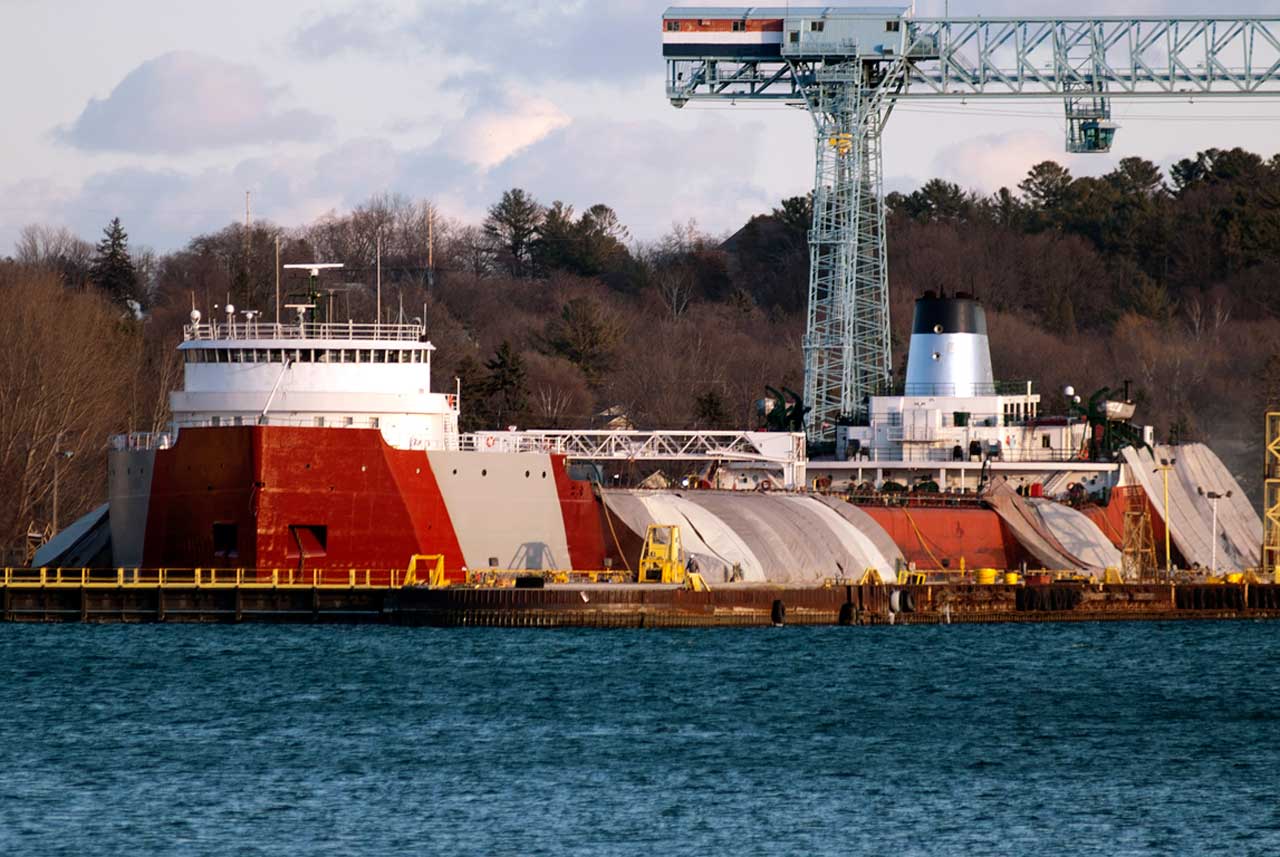
After starting the 2020 shipping season, the Roger Blough was sent to Sturgeon Bay, WI, for early layup on July 9, 2020, due to a downturn in demand for raw materials caused by the COVID-19 pandemic. On February 2, 2021 a fire broke out in the stern section of the Blough while she was in layup at Bay Shipbuilding Co., Sturgeon Bay, WI. The damage was confined to unloading shuttle, crew’s quarters and engine room areas. A decision on her future has not been made, although it appears unlikely she will not sail again.
Written by George Wharton

Vessel Details