Dorothy Ann / Pathfinder

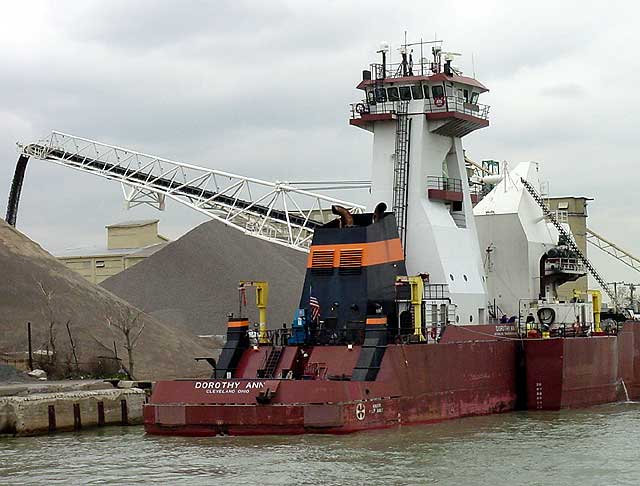
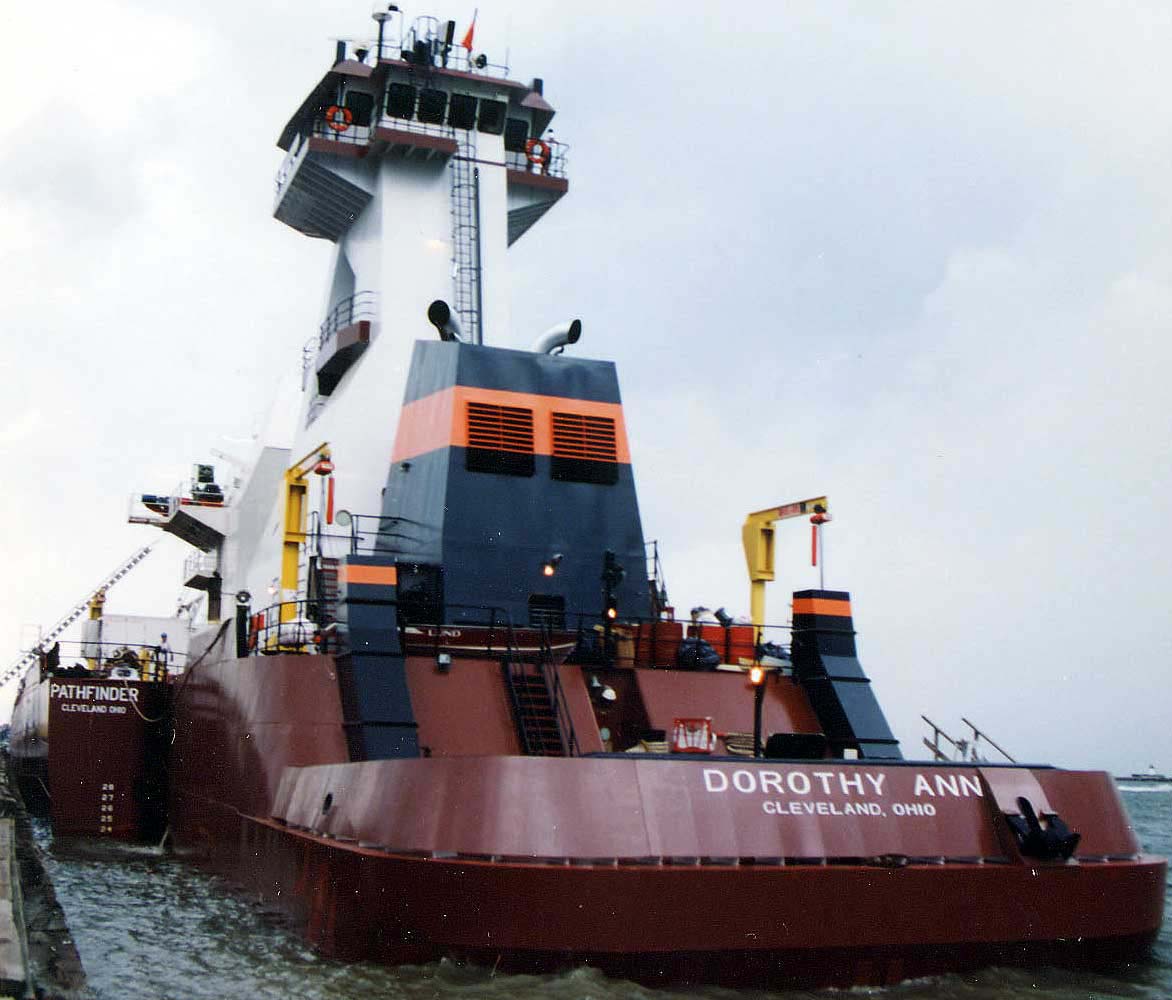
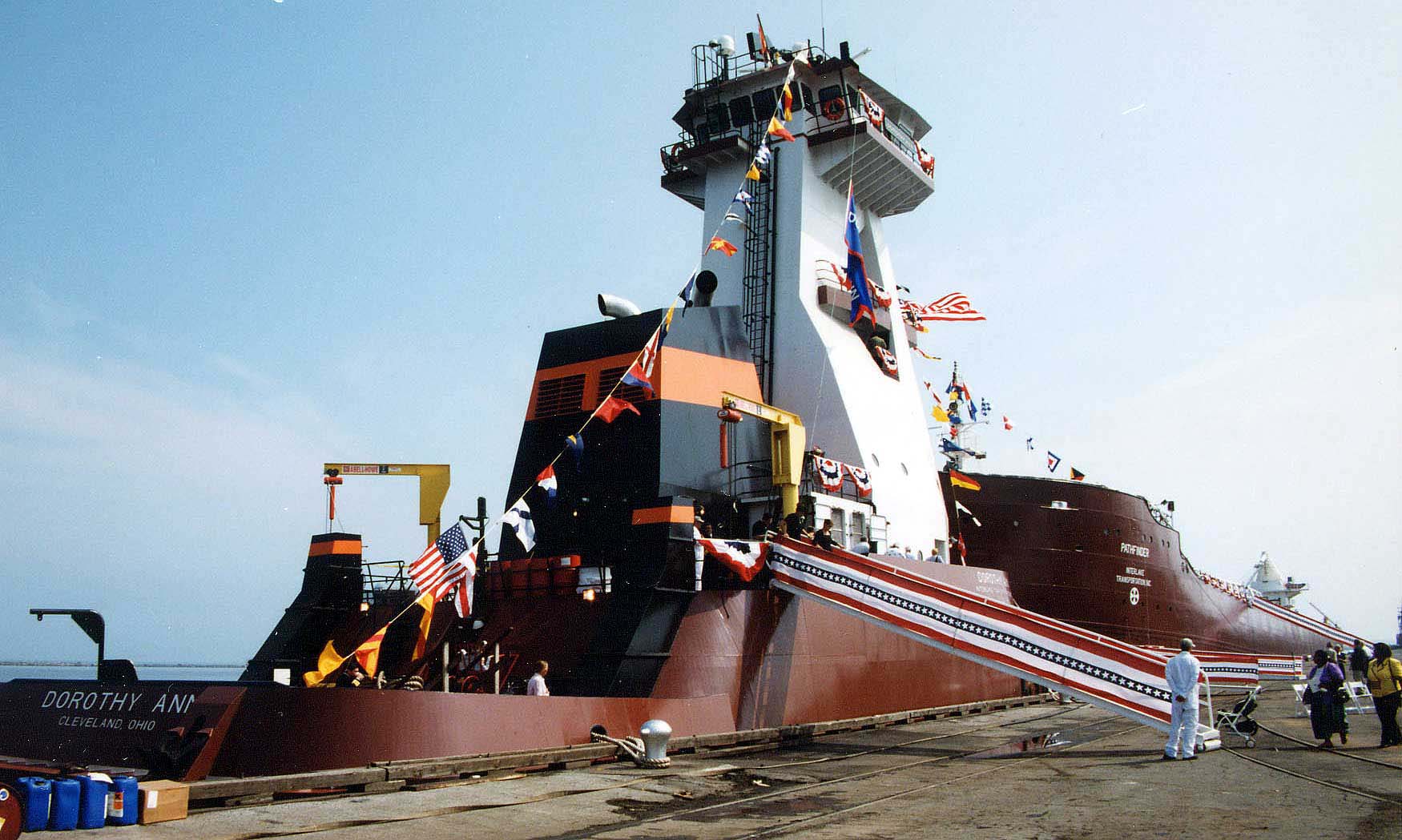
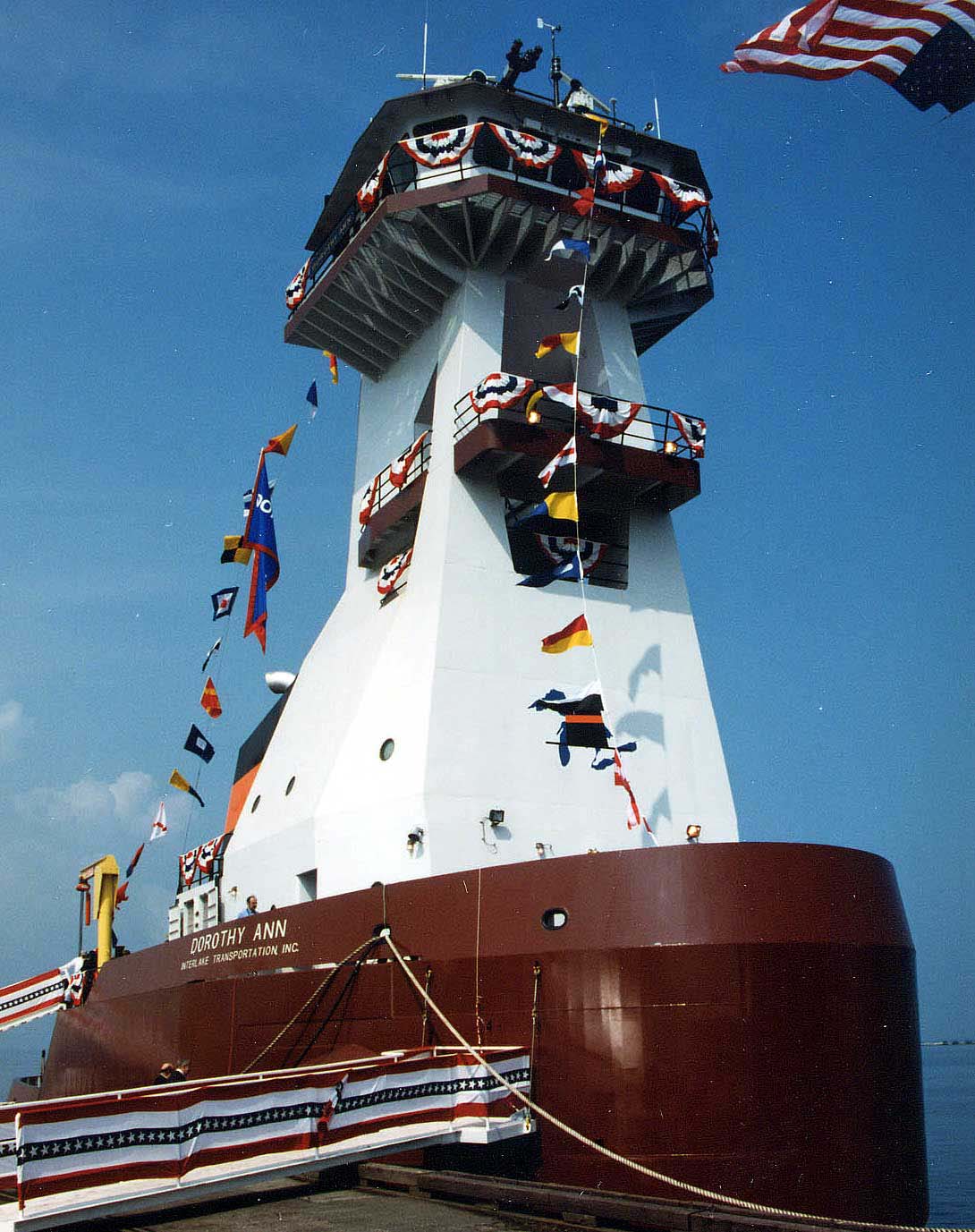
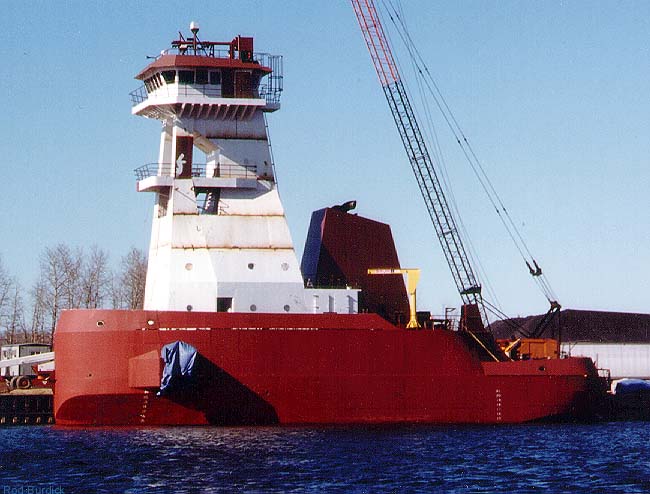
The 124-foot, 7,200-horsepower Z-drive tug Dorothy Ann was designed by Ocean Tug & Barge Engineering of Bellingham, Massachusetts. Hull construction began at Bay Shipbuilding Company, Sturgeon Bay, Wisconsin, on January 1st, 1998. The tug’s hull, including main engines and Z-drives, was delivered on September 16th, 1998, and towed out of Bay Shipbuilding’s drydock to Escanaba, Michigan. Final outfitting was performed by Bark River Towing of Escanaba, Weld All of Menominee, Michigan, and Marine Accommodations of Jacksonville, Florida.
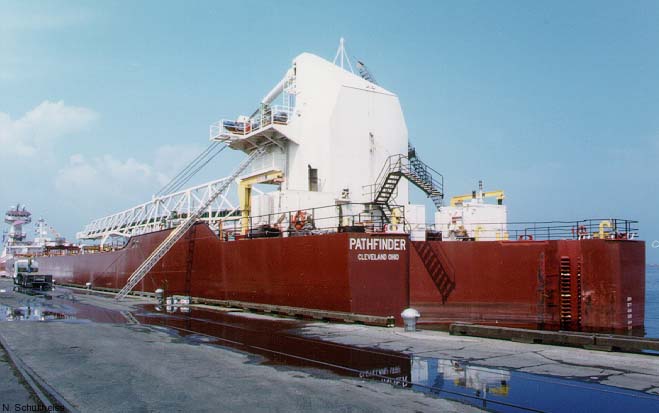
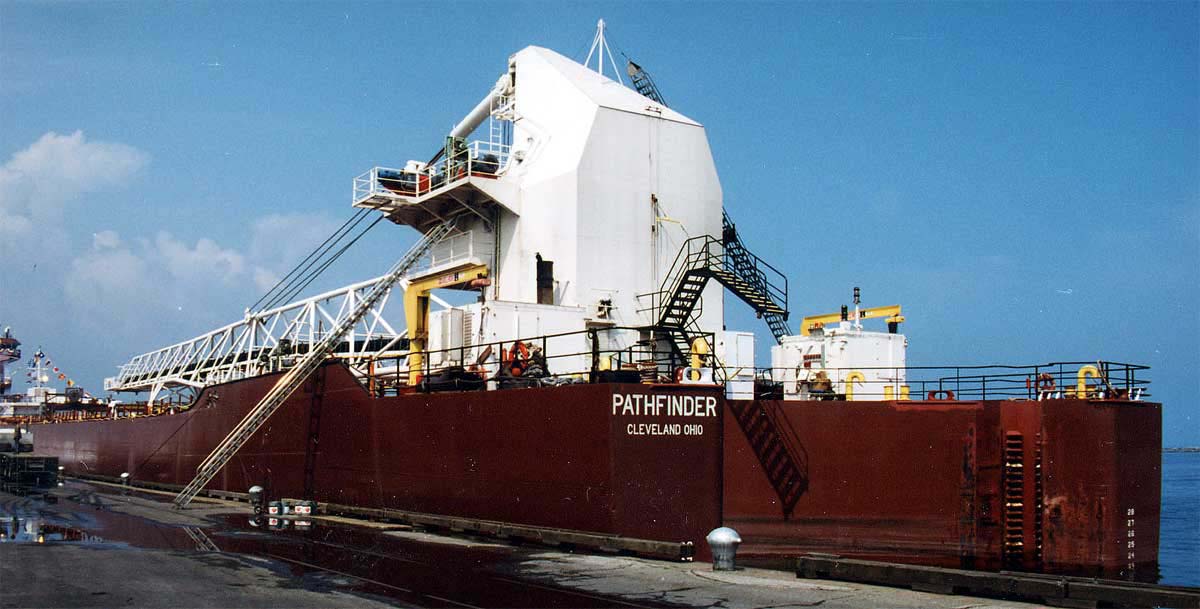
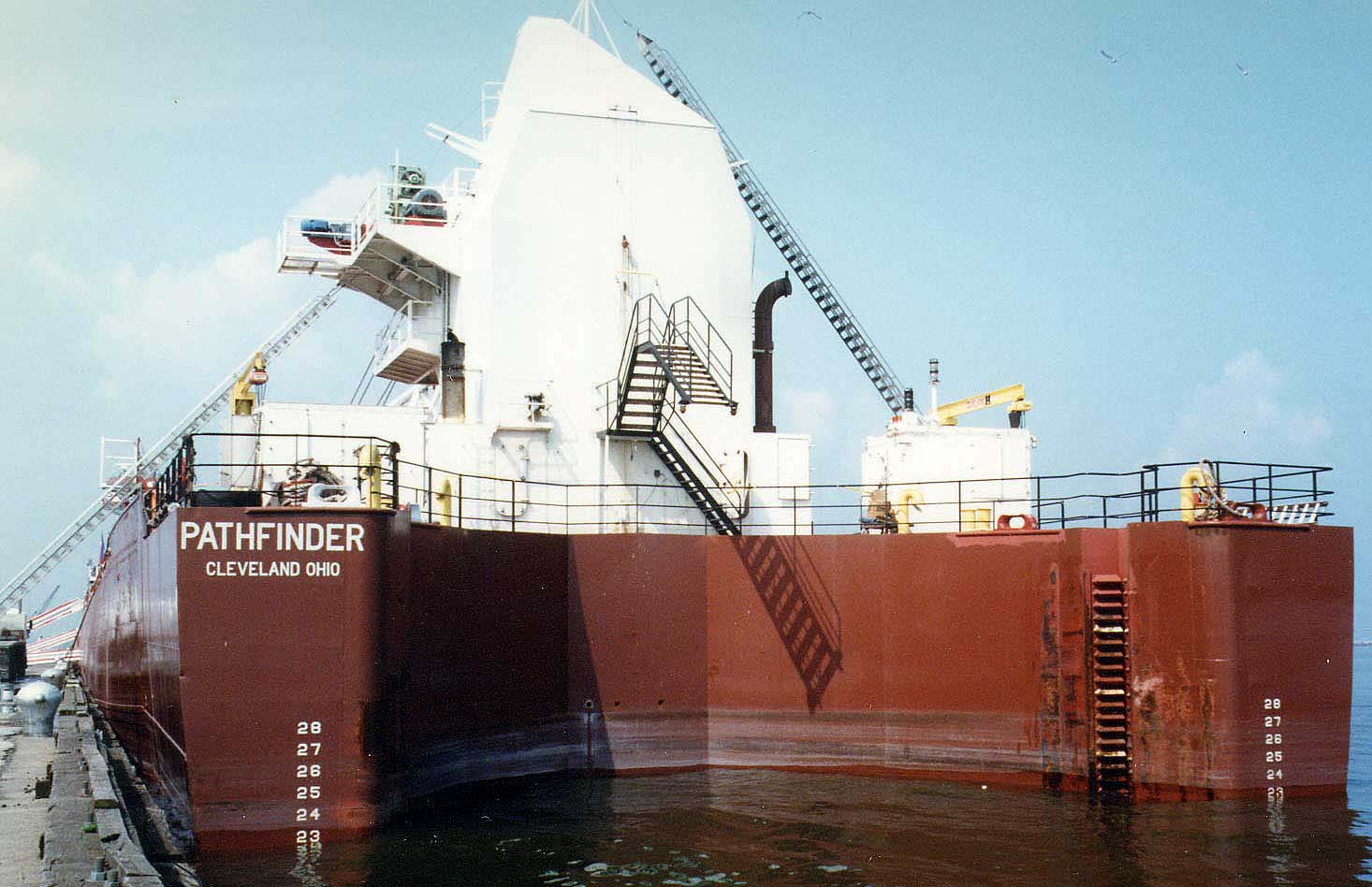
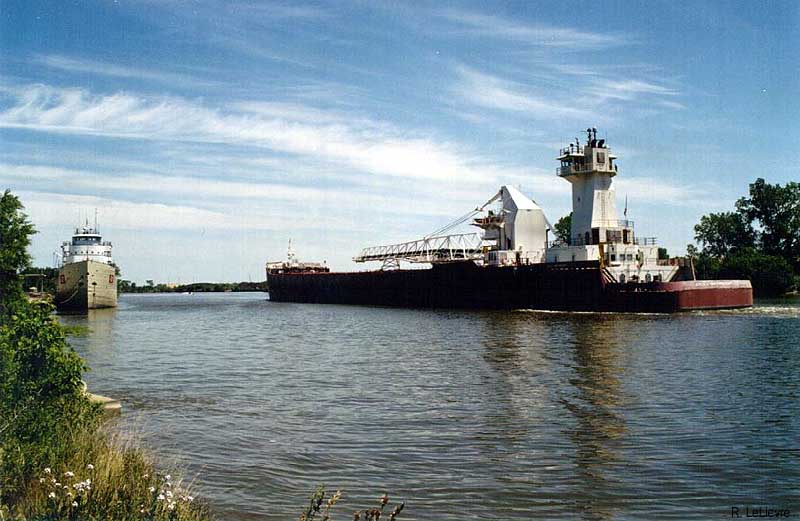
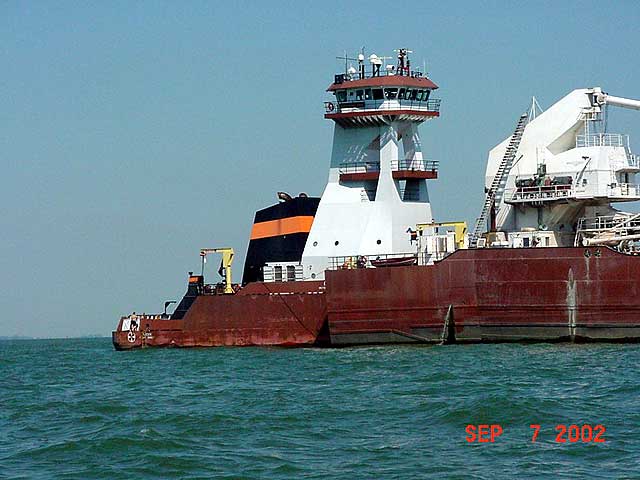
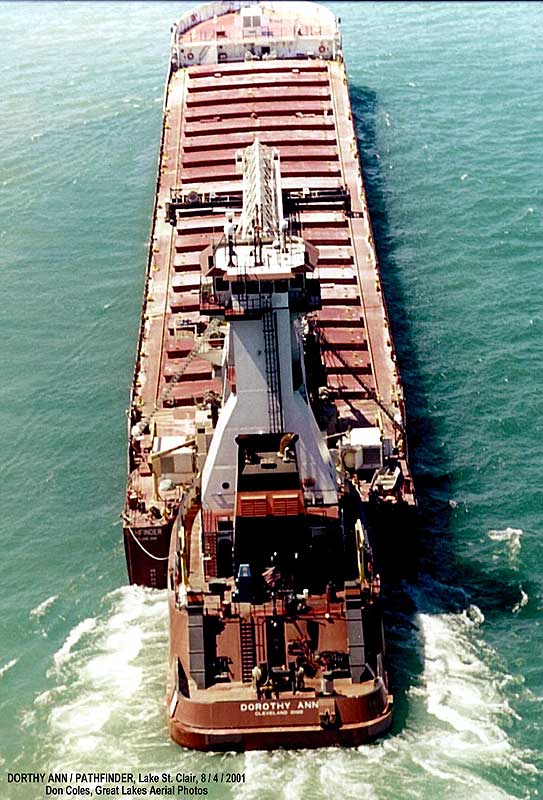
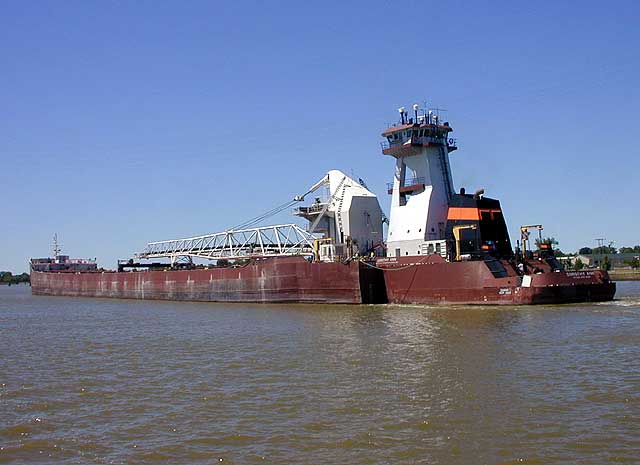
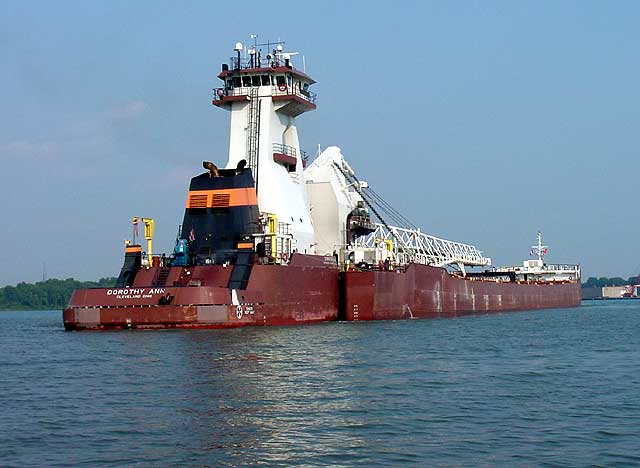
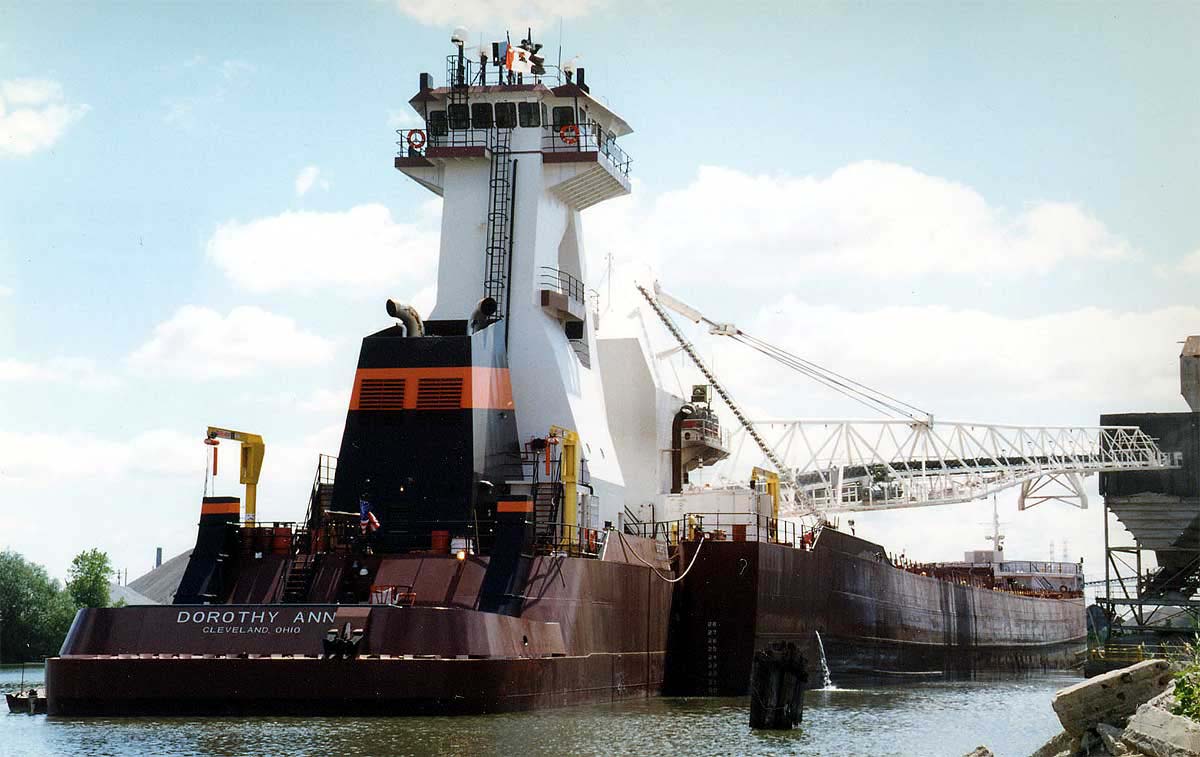
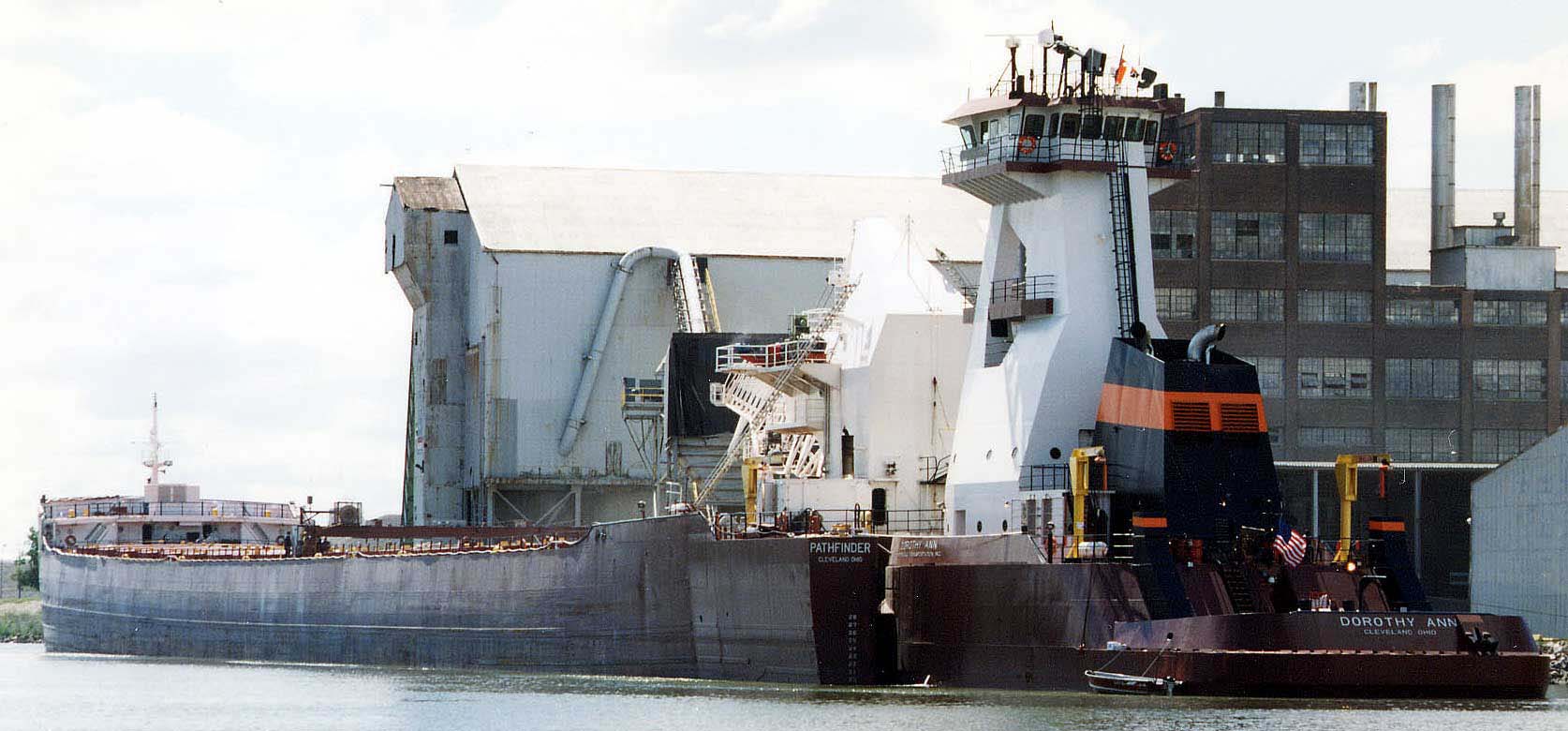
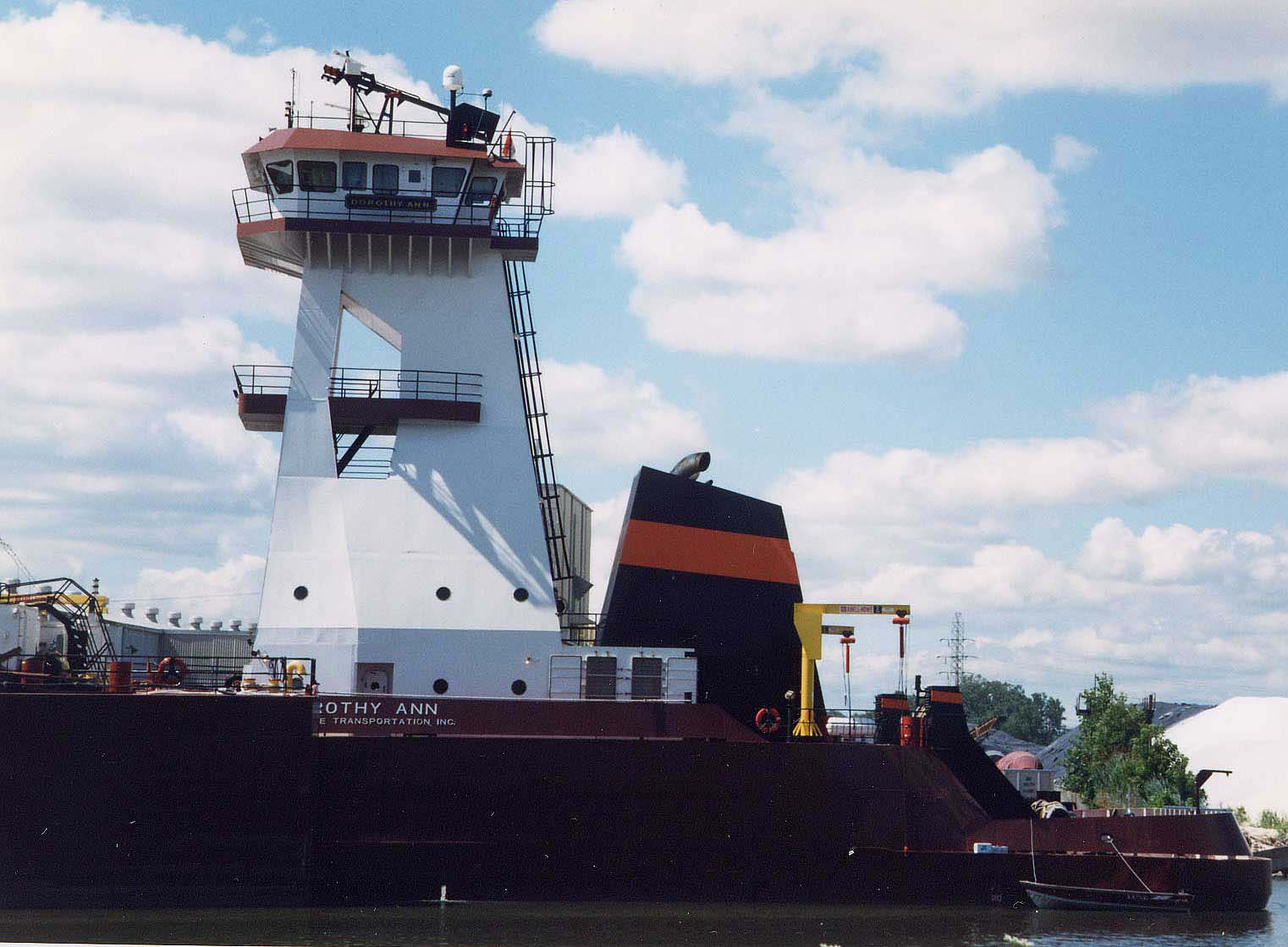
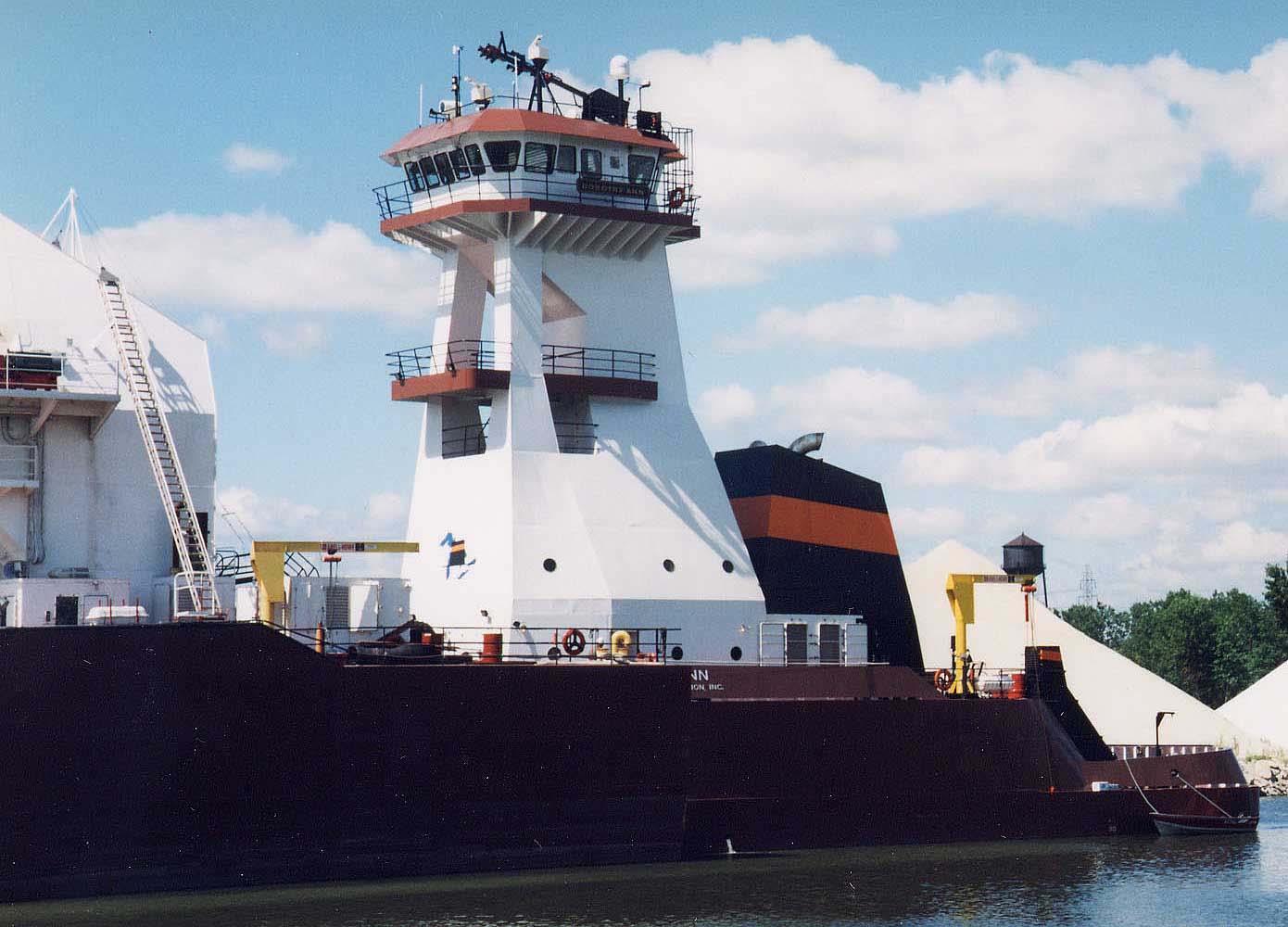
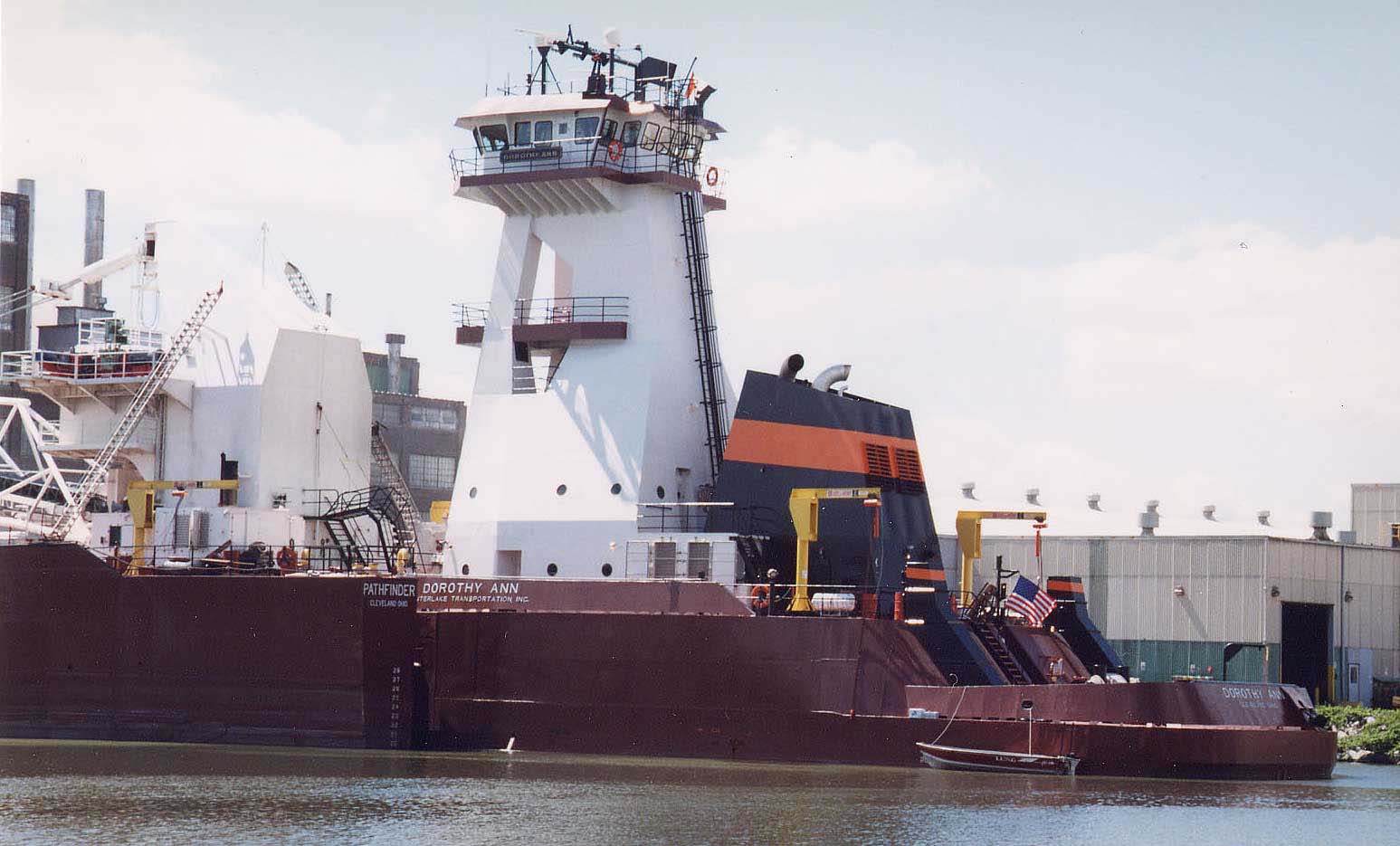
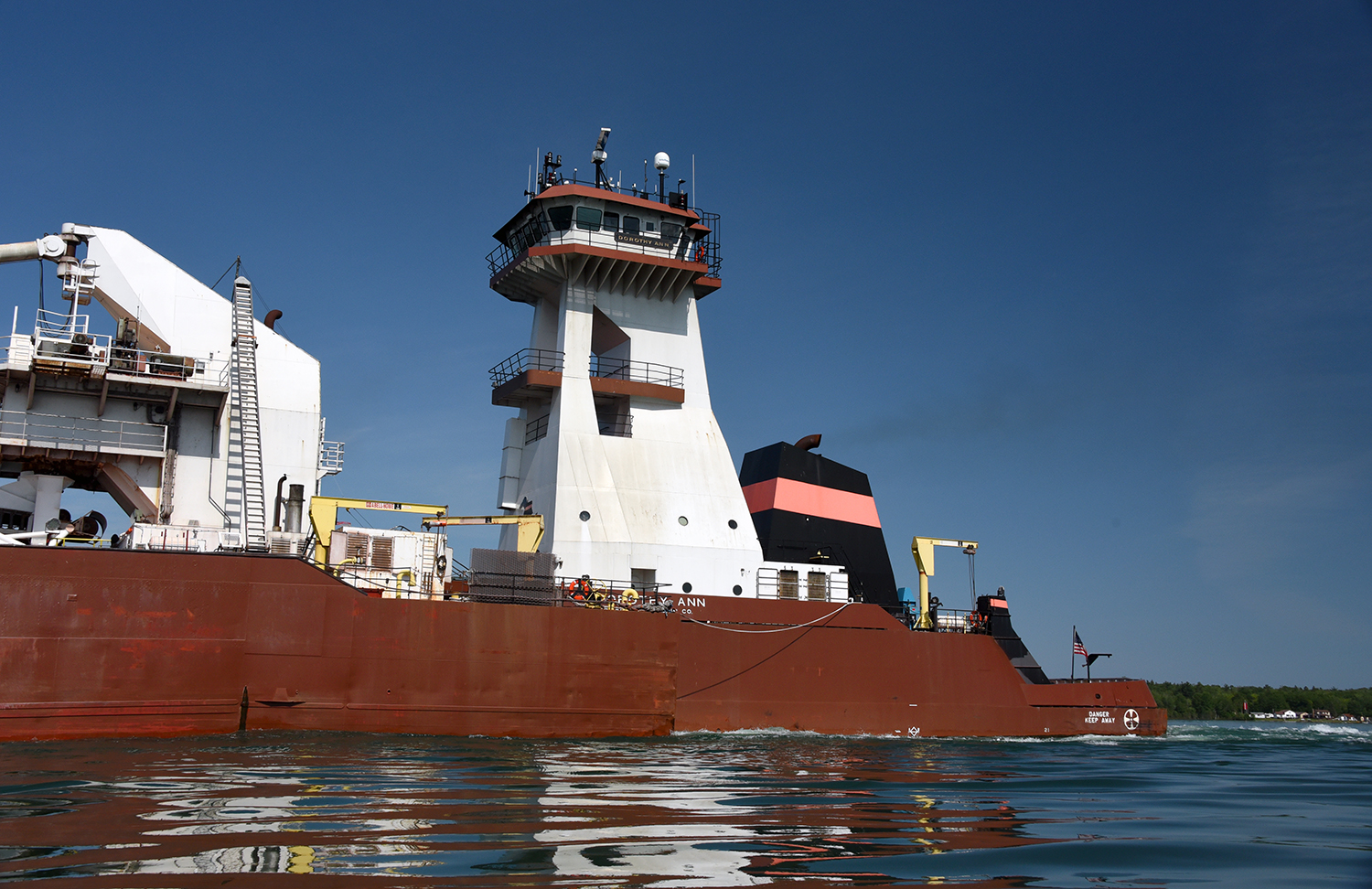
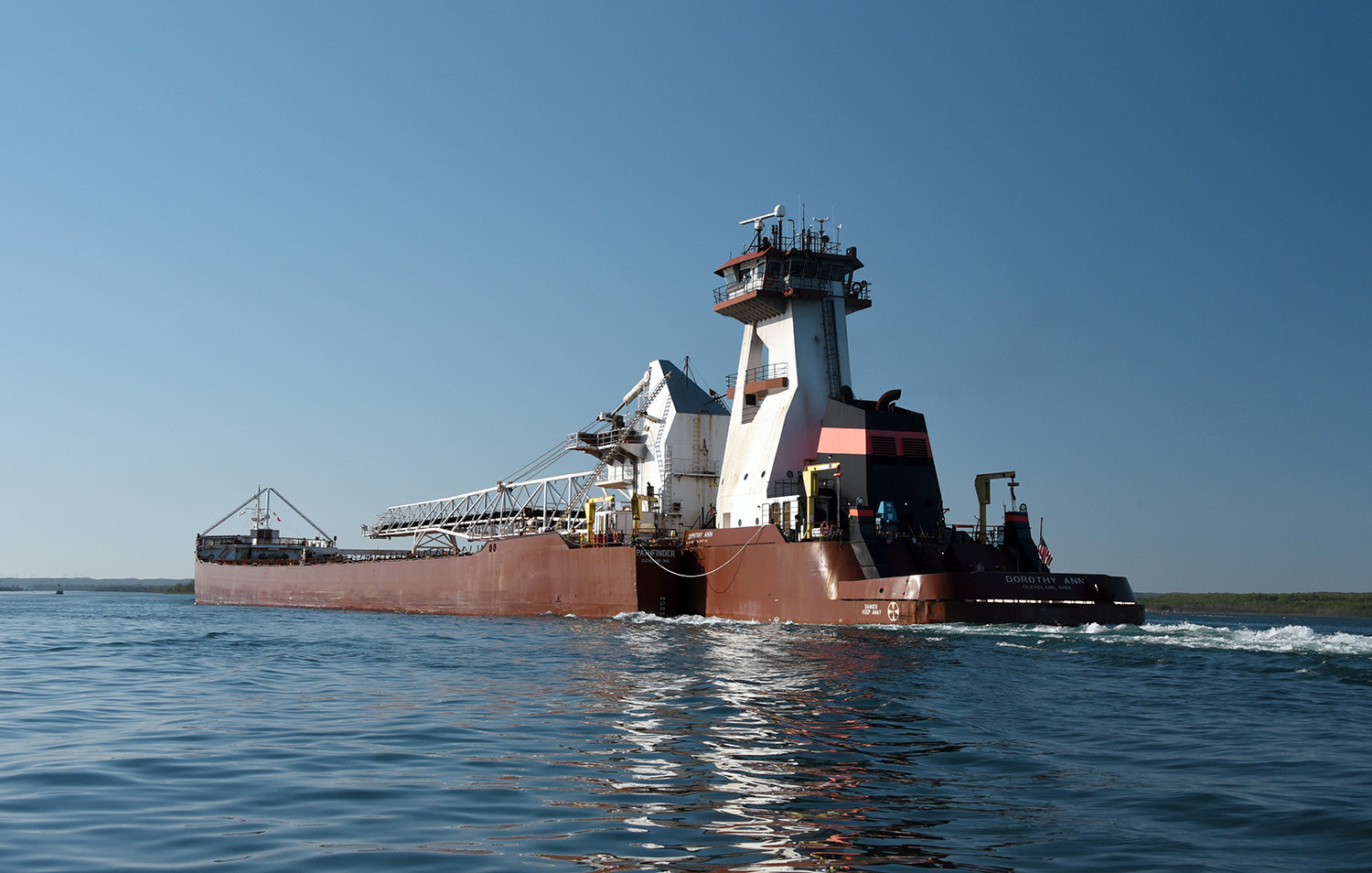
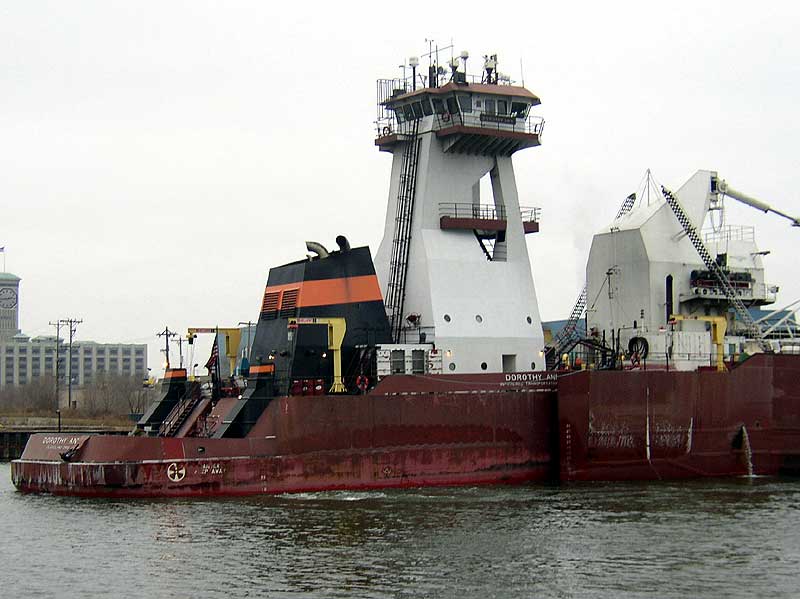
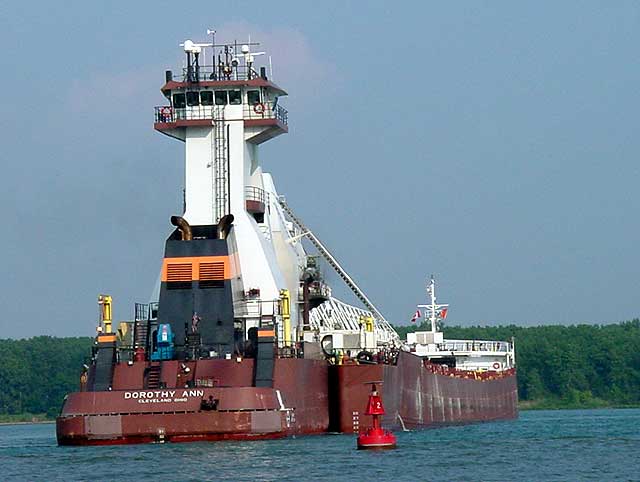
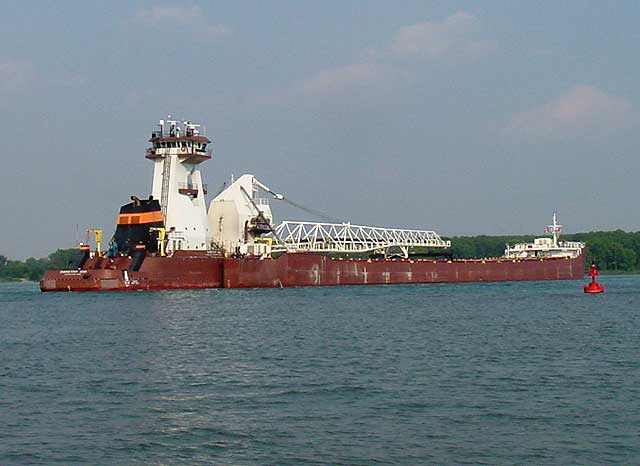
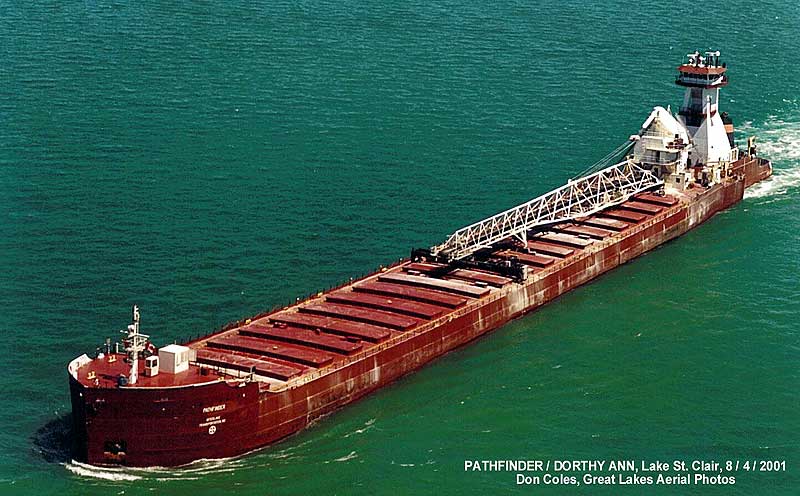
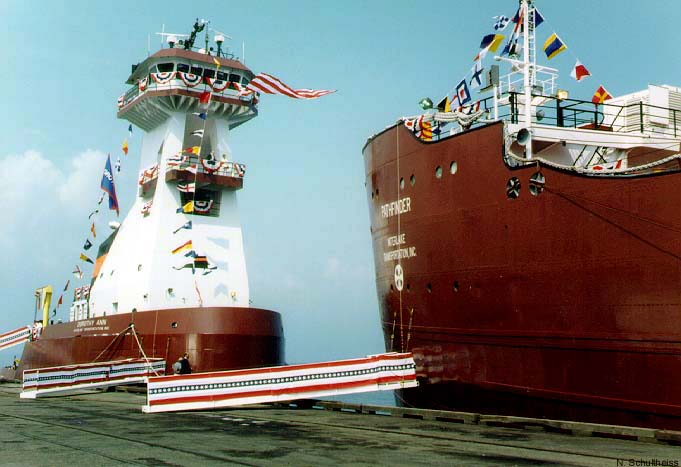
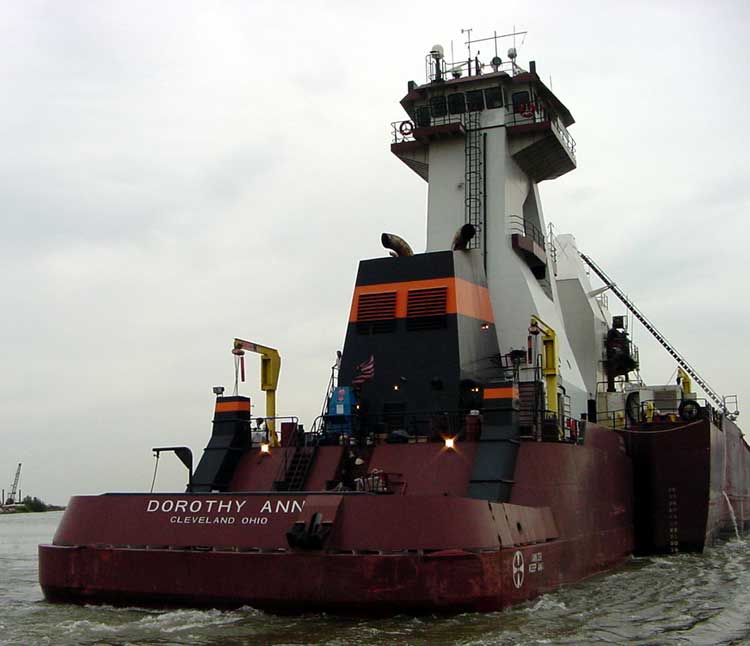
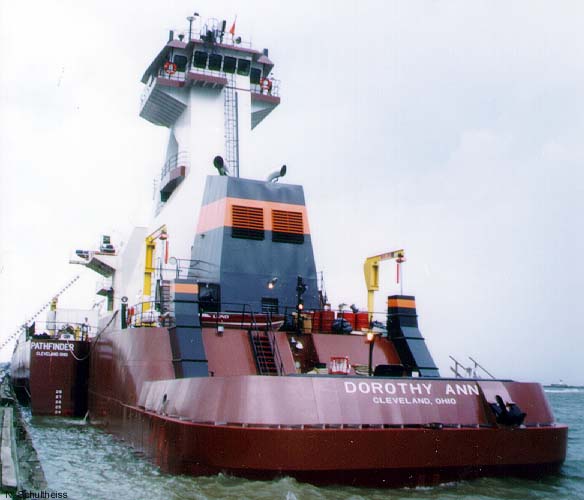
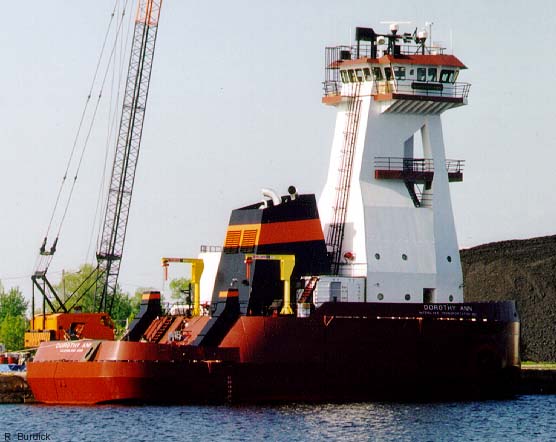
Dorothy Ann is the largest Z-drive tug built to date in North America. Her twin Z-drives enable her to turn on her own axis, stop within her own length, and move easily in any direction. Coupled with barge Pathfinder the pair is the most maneuverable unit on the Lakes. Alone, Dorothy Ann can travel at 16 mph when pushing the loaded barge, open lake speed is 11.5 MPH. Dorothy Ann is fitted with a Great Lakes-specific articulated pin-type connection system for engaging Pathfinder‘s notched stern. A pair of hydraulic rams project from the sides of the tug’s bow and lock into receptacles in the barge’s stern.
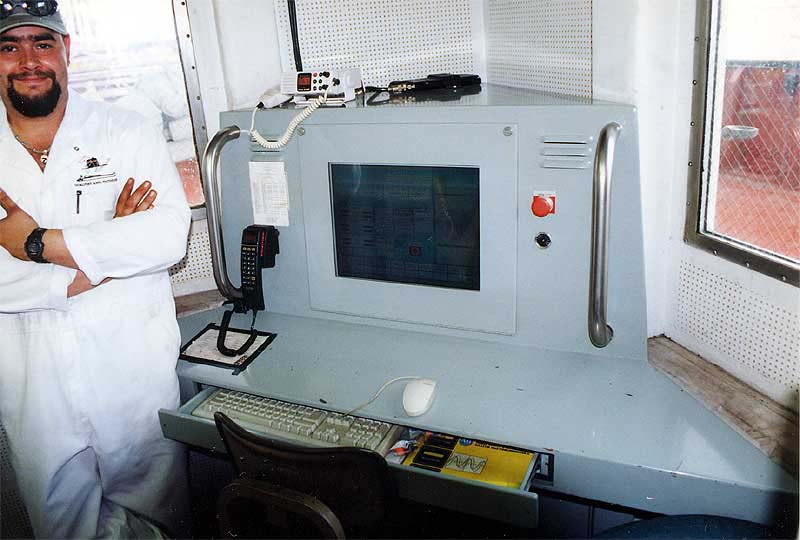
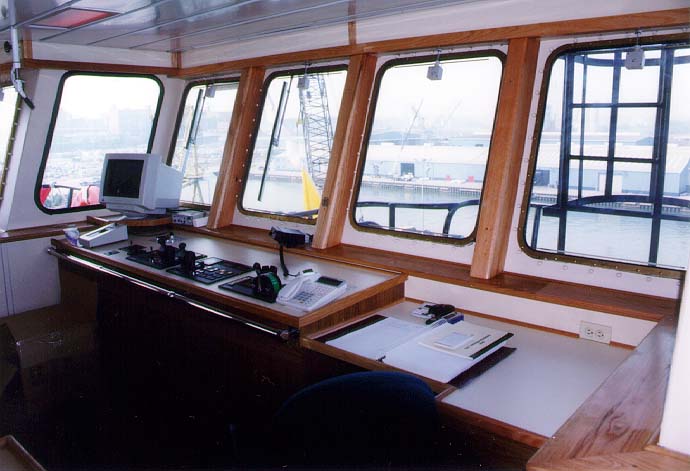
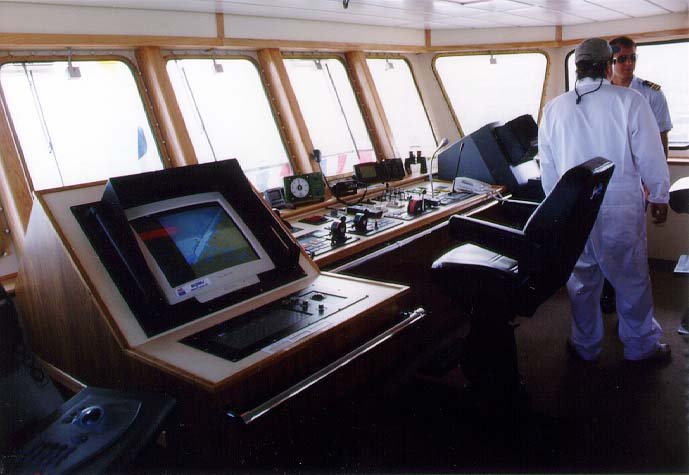
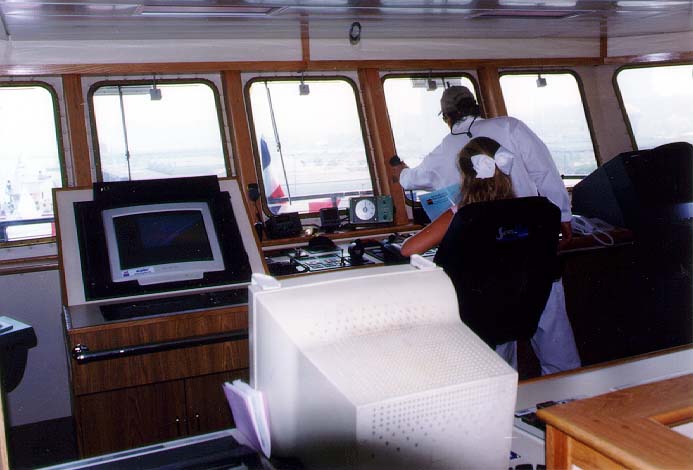
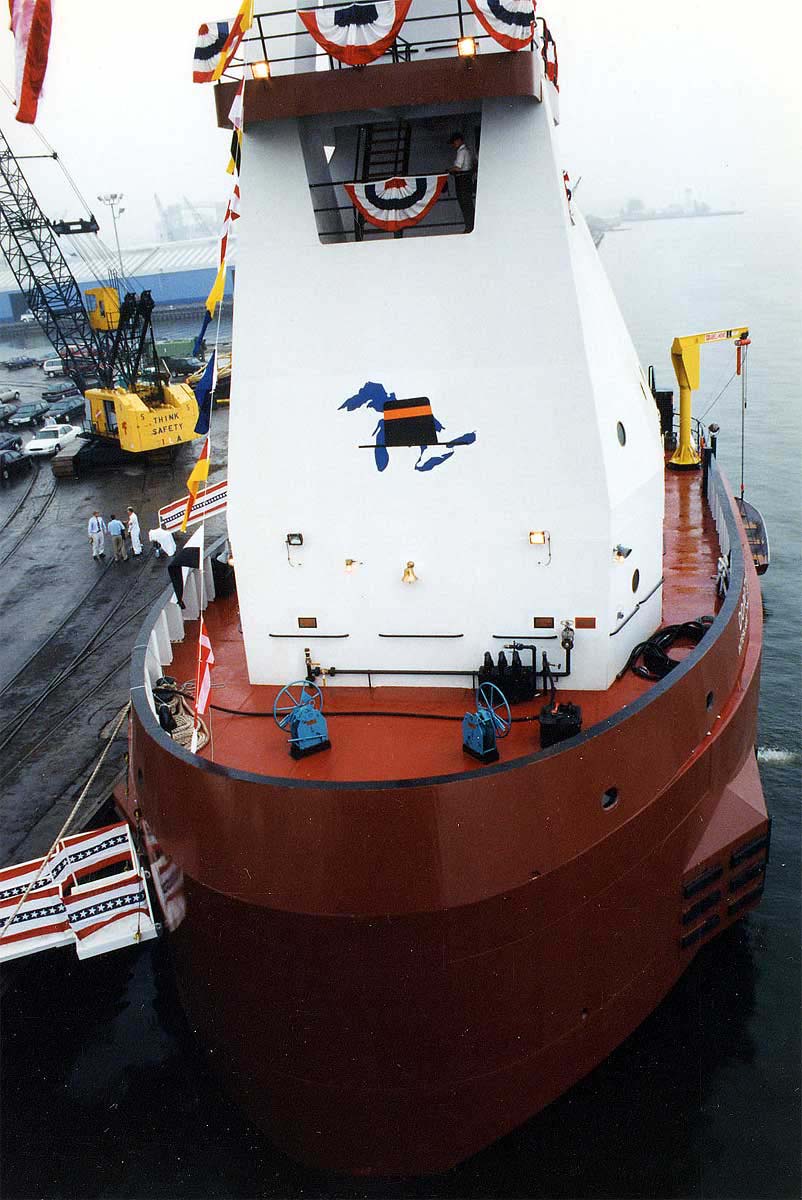
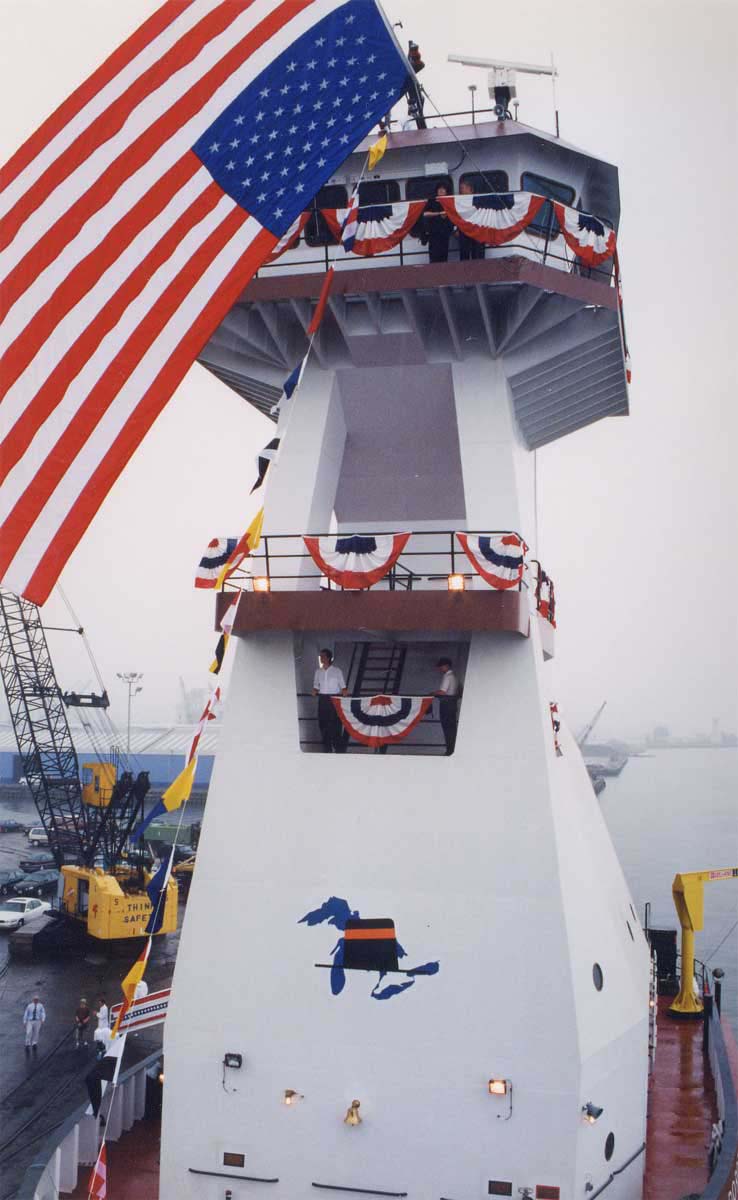
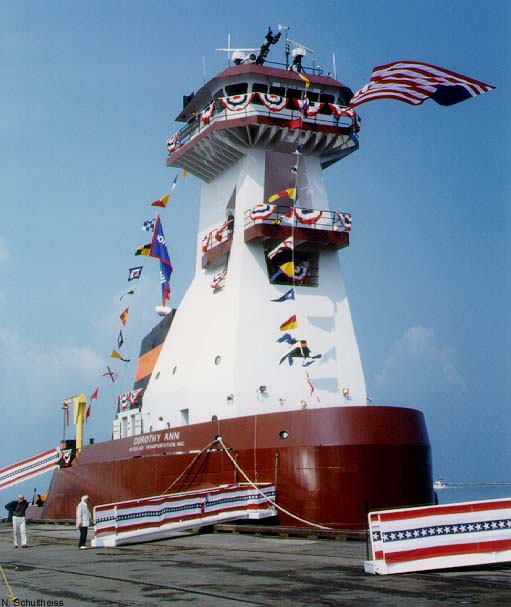
Dorothy Ann is outfitted with state-of-the-art navigation and communication equipment. Her elevated pilot house has a height of eye of 70 feet, and the vented tower was designed to spoil trailing air drafts. Accommodations include air-conditioned private cabins with semi-private bathroom facilities for 14 crew members, a lounge, and an owner’s stateroom.
Tug Details
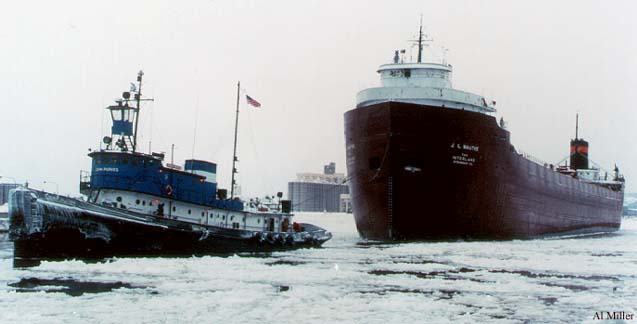
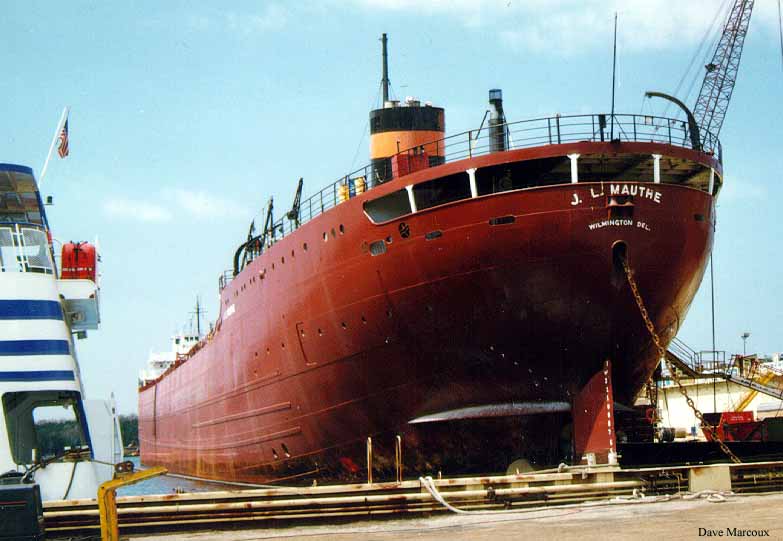
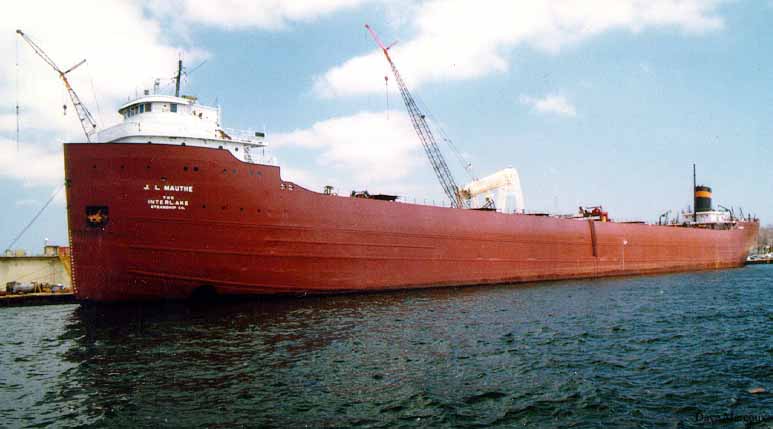
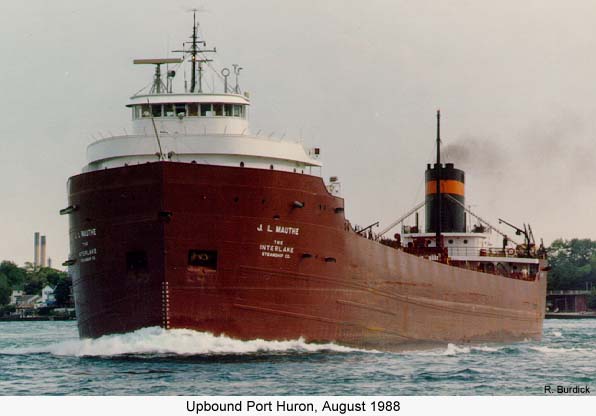
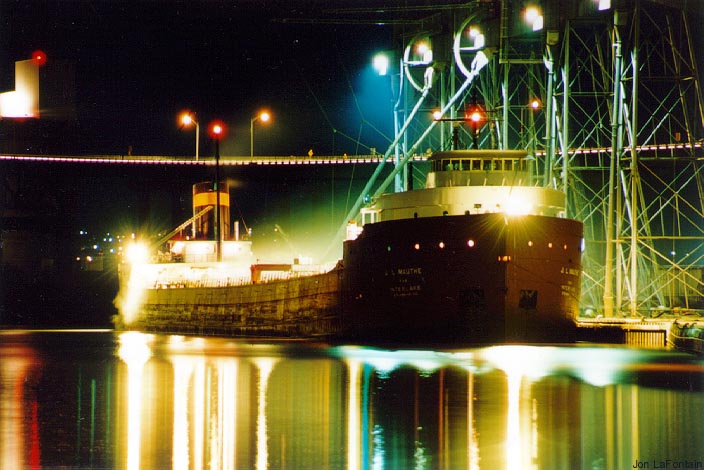
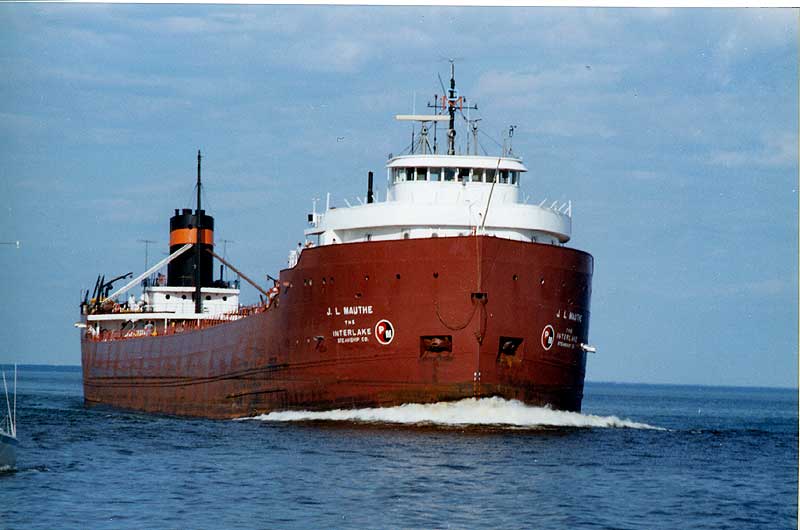
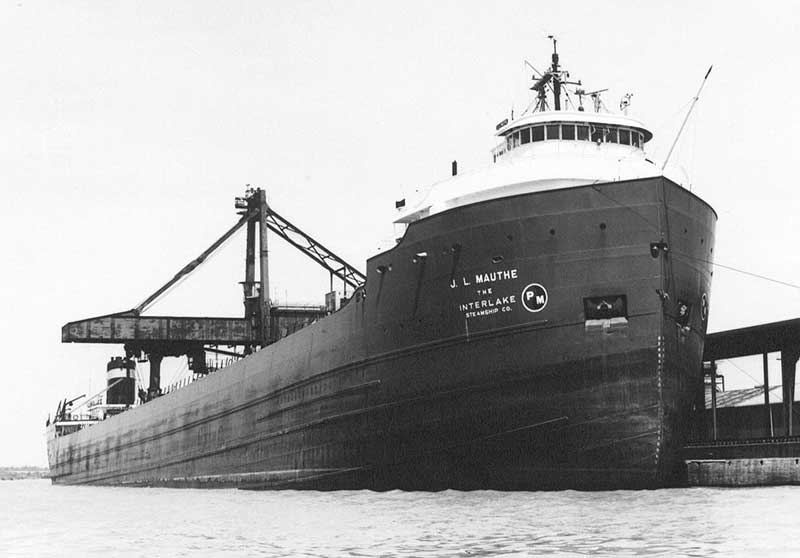
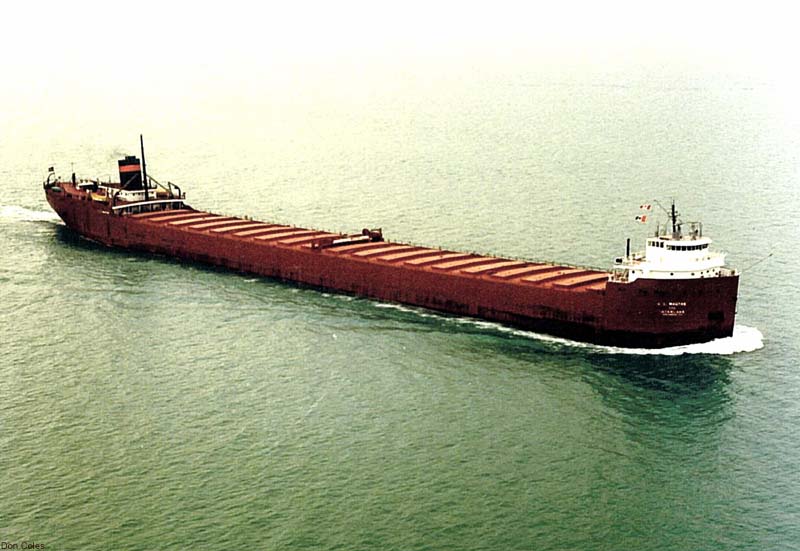
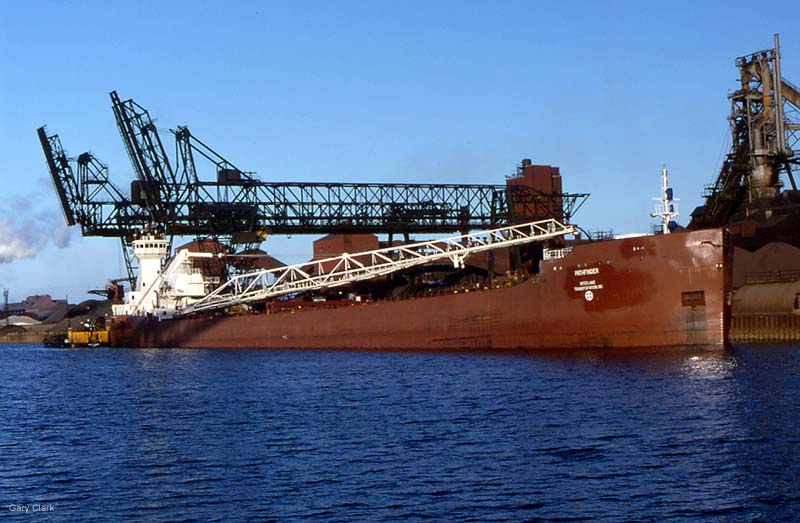
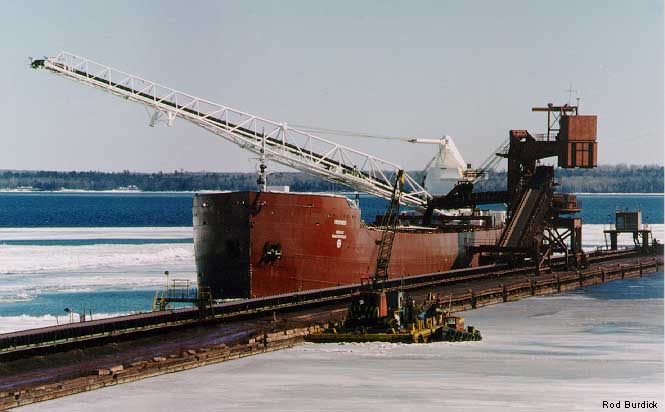
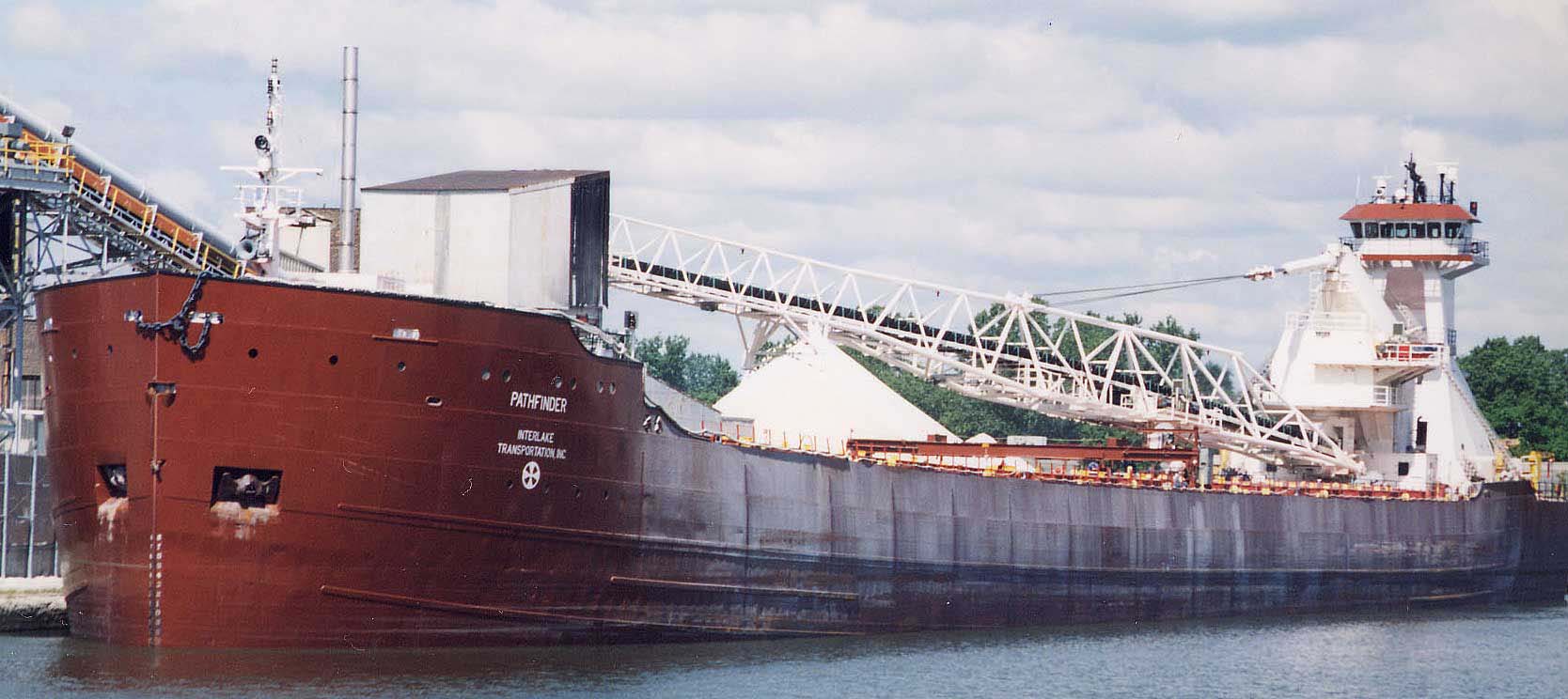
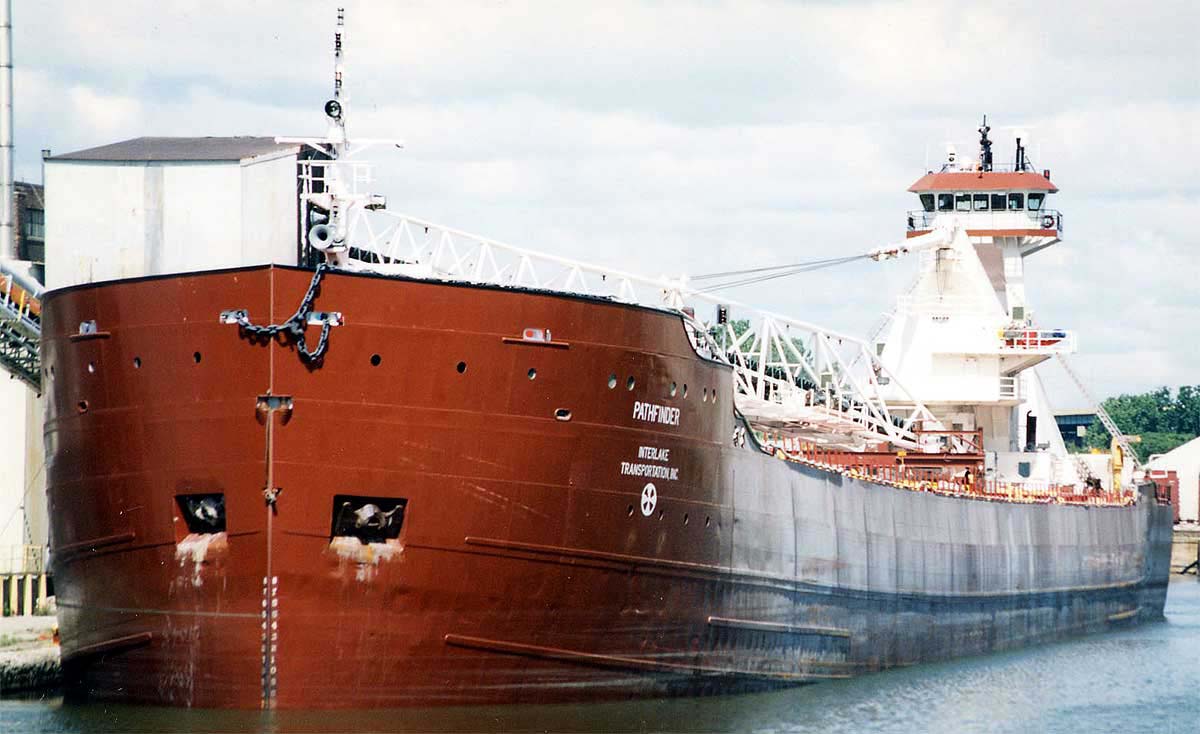
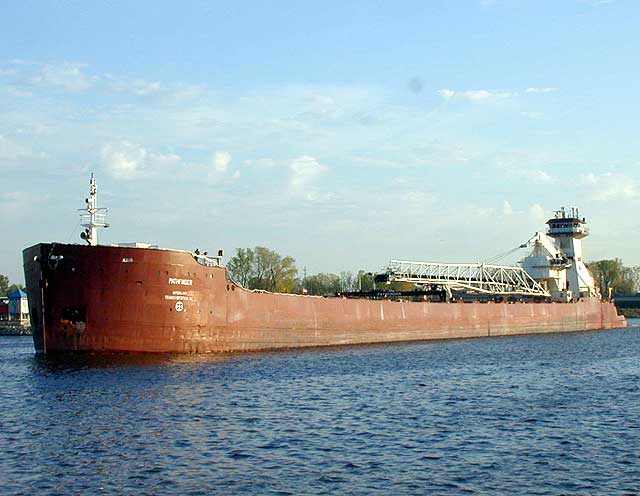
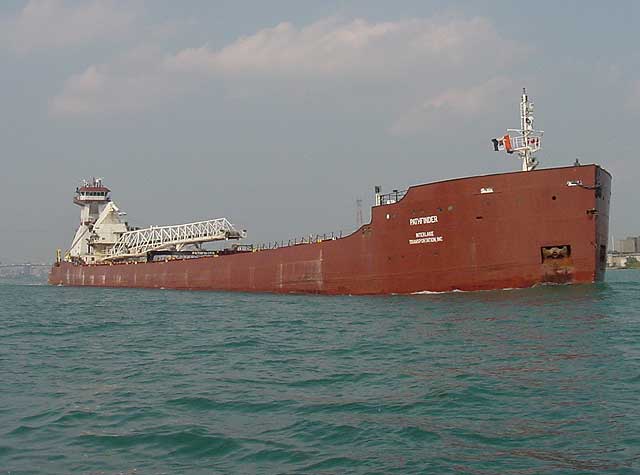
The Pathfinder began her career as one of the members of the “AAA” class of vessel originally designed for Pittsburgh Steamship Company. Other fleets adopted variations of the original plans for their needs, and Interlake Steamship Company developed what was probably the most scaled down version of the class for the J.L. Mauthe, now the Pathfinder.
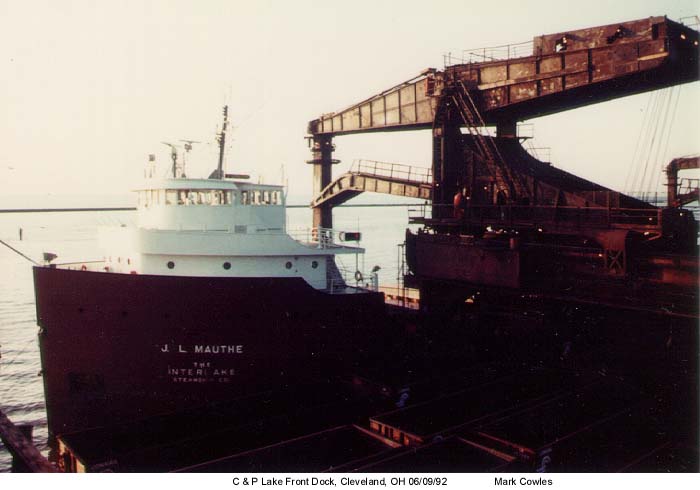
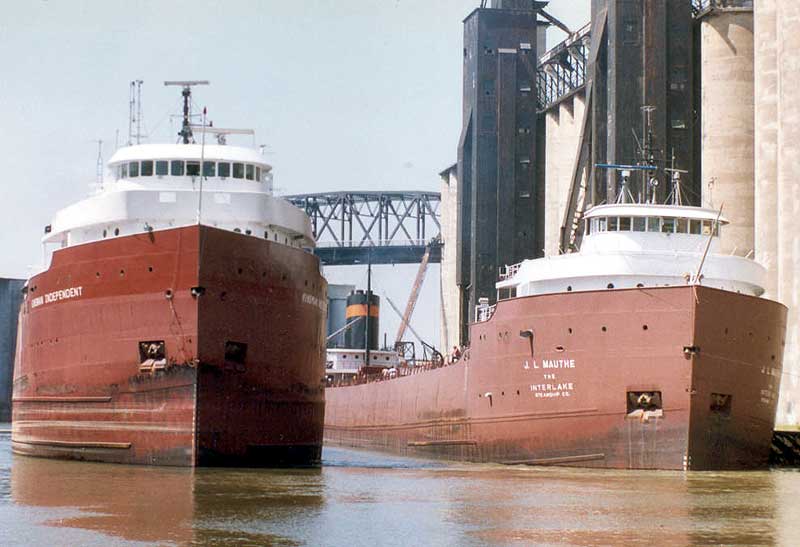
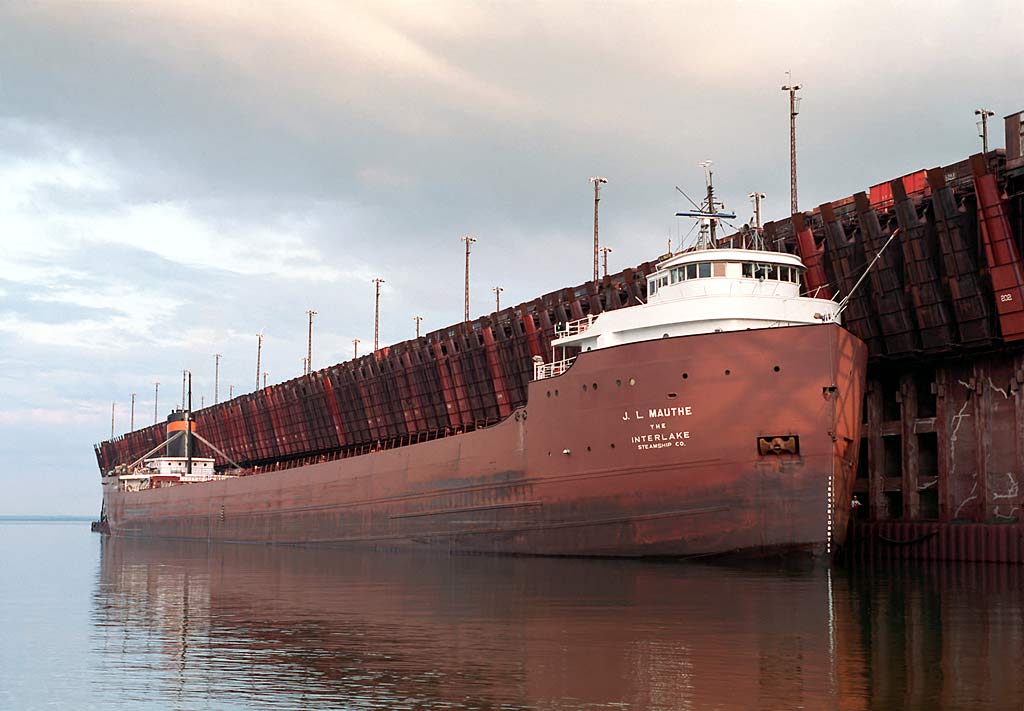
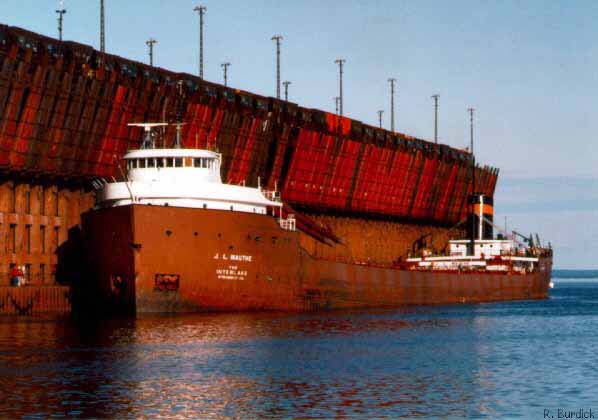
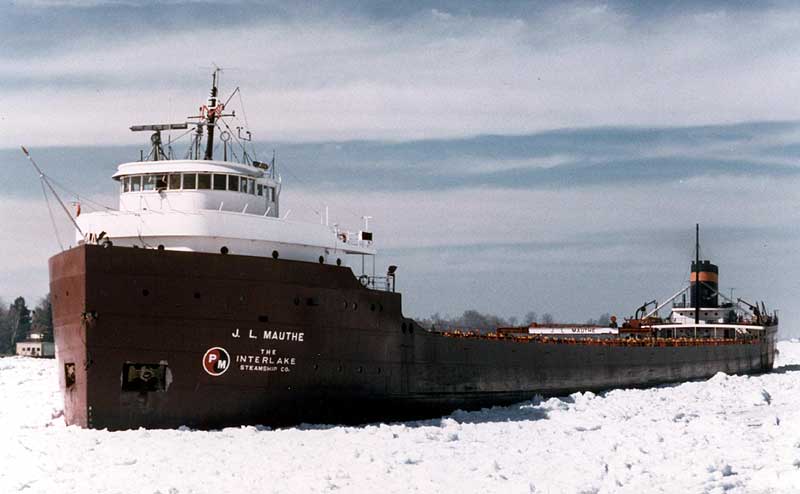
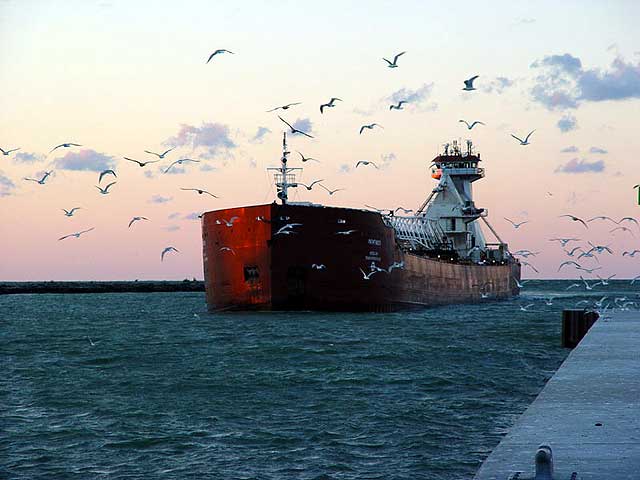
The J. L. Mauthe was built as Hull #298 of the Great Lakes Engineering Works, River Rouge, Michigan. The vessel was noticeably different from the other members of the class with its small after deckhouse and a slightly different arrangement for the forward cabins. She entered service on April 2nd, 1953 and fell into Interlake’s typical iron ore trade routes between Duluth-Superior and various lower lake ports.
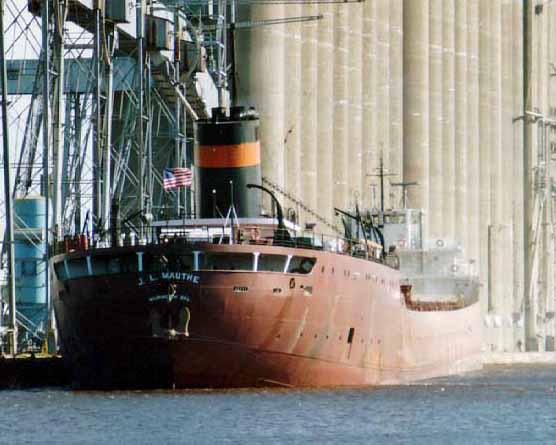
This vessel, as years passed, distinguished herself, not for any records set for cargo or speed, but due to the lack of modifications which were done to the other members of her class. All of the other members of the “AAA” class had been lengthened 120 feet, to 767 feet overall, by 1979, and all but one (the William Clay Ford) was converted to a self-unloader. Even most of Interlake Steamship Company’s other 1950’s-era vessels had been lengthened and/or converted to self-unloaders by that time. By the early 1980s, the iron ore trade was less favorable to vessels such as the Mauthe. While the Mauthe continued to carry occasional loads of iron ore, she found herself more regularly involved in the grain trade.
The grain trade was not enough to sustain this vessel’s activity for much longer. As the 1980s and early 1990s progressed, fewer vessels were being used in this trade, and on July 5th, 1993, the J.L. Mauthe laid up for the final time in Superior, not far from long-time inactive fleetmate John Sherwin. Her future looked uncertain.
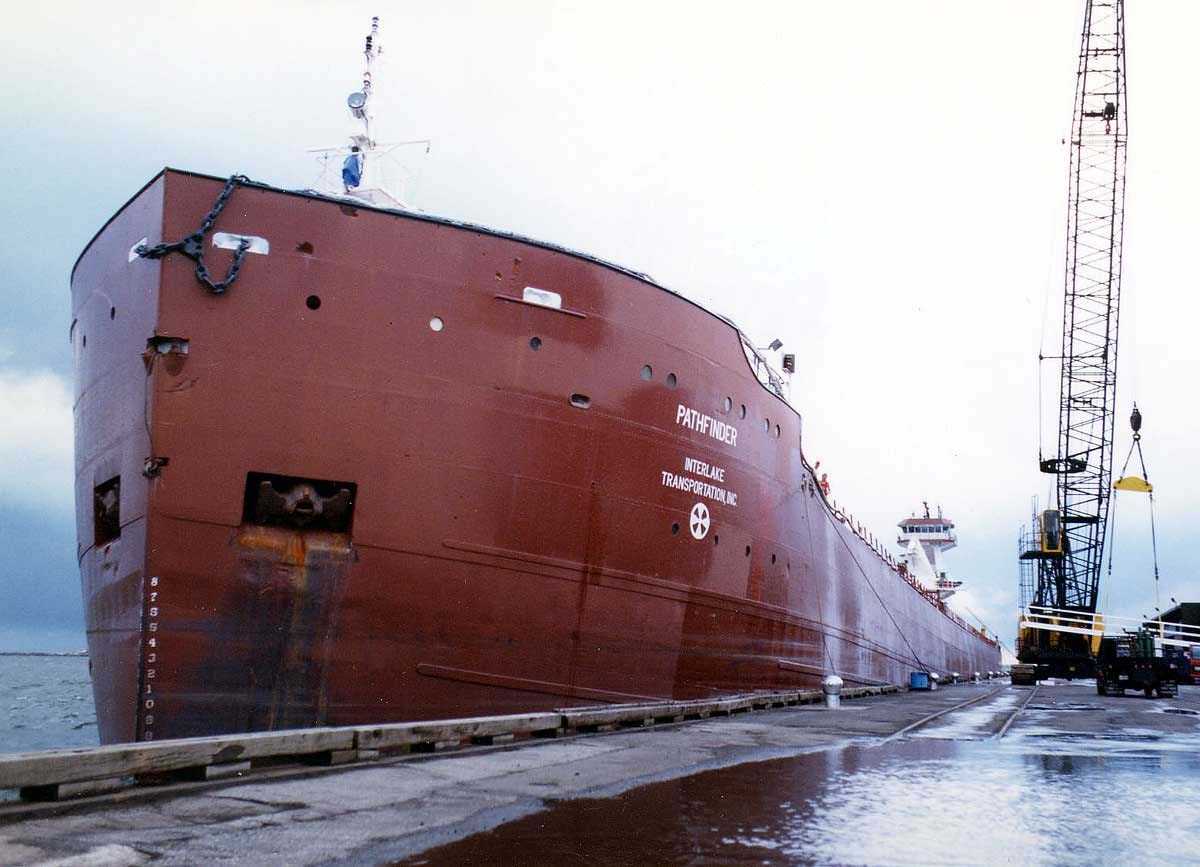
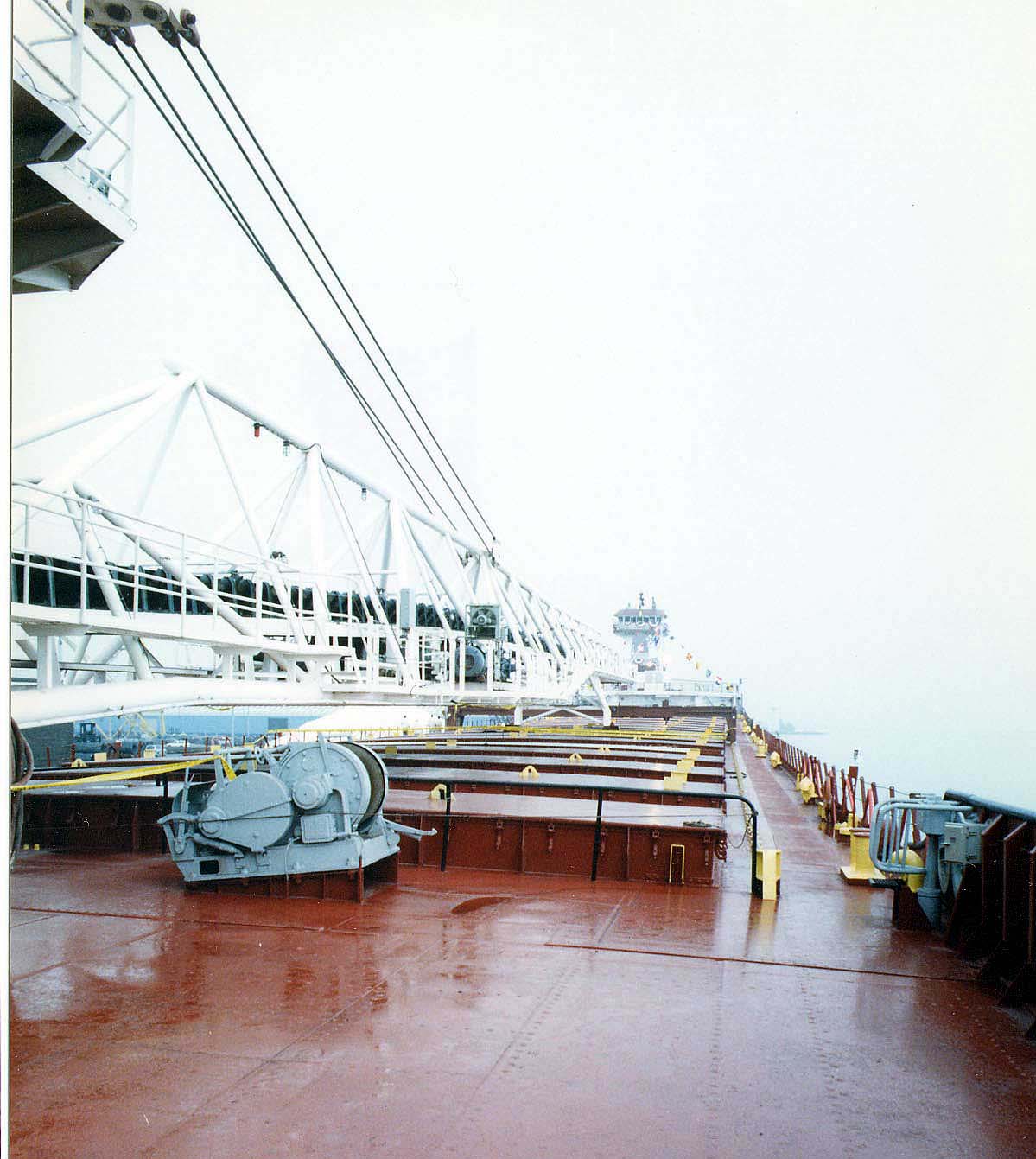
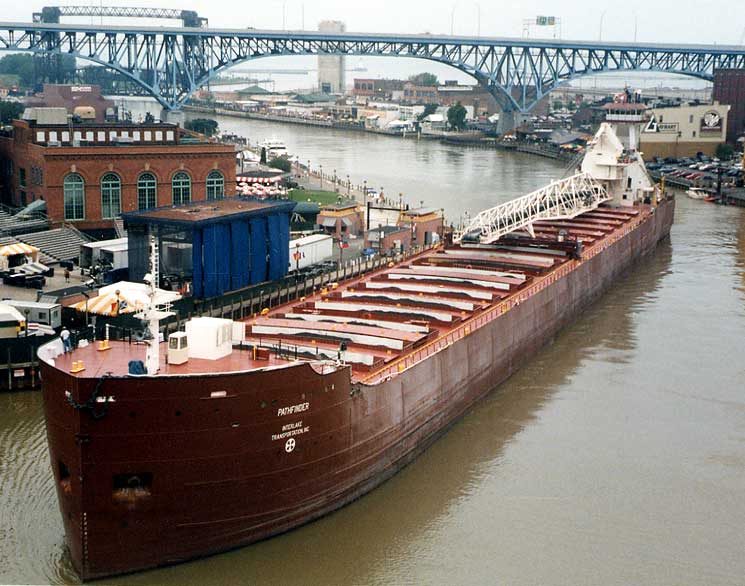
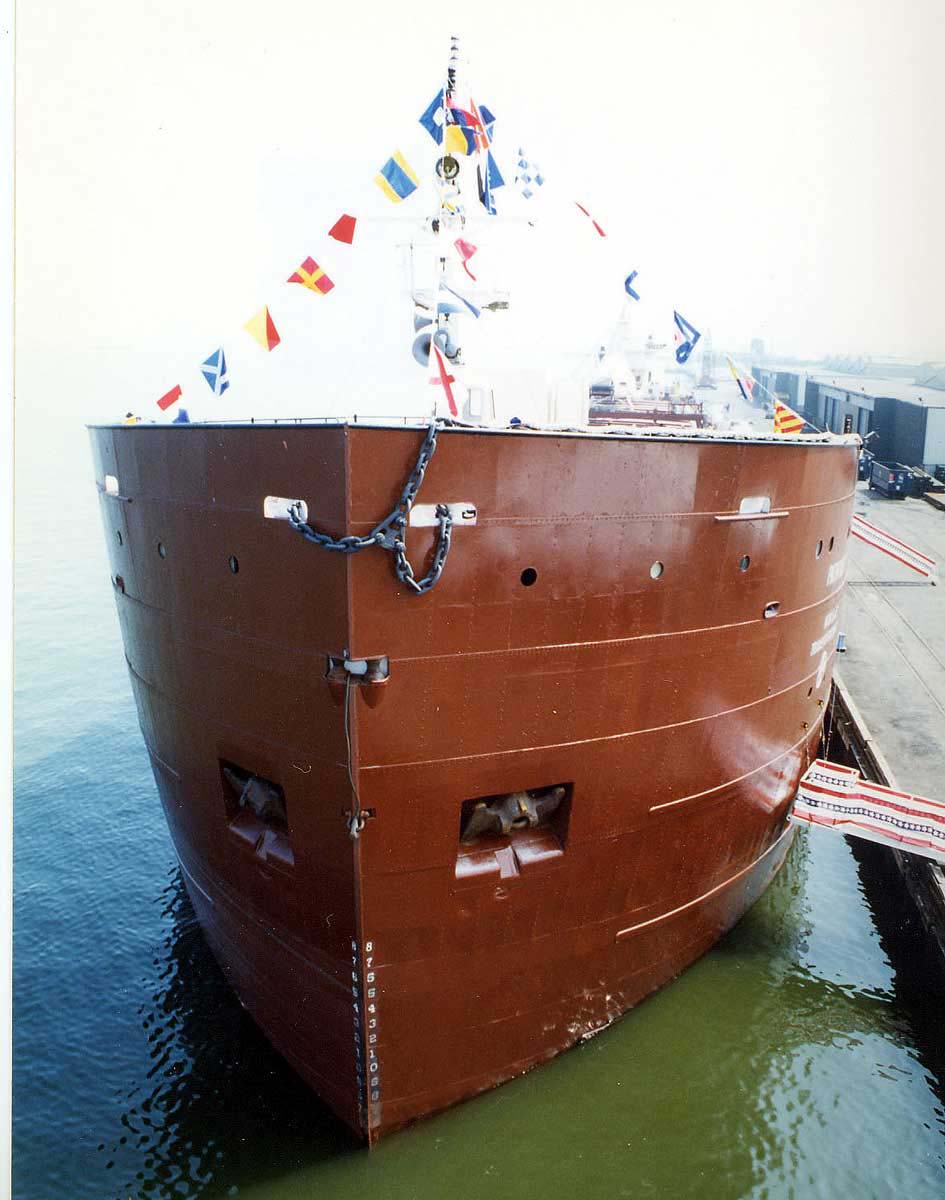
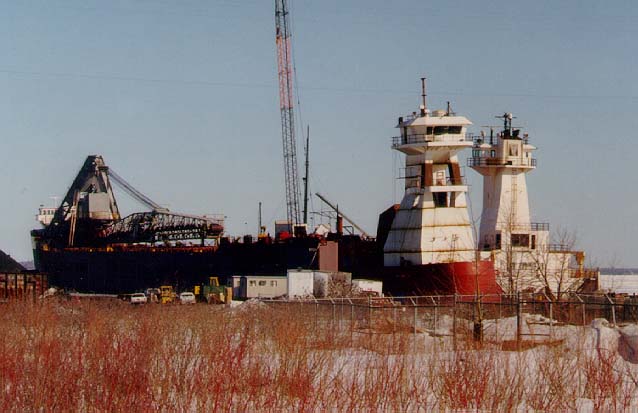
A developing trend during the early 1990s was the conversion of former straight-deck bulk carriers and some older, small self-unloaders to barges, with powerful tugs fitted into a notch at the stern of the vessel. The Joseph H. Thompson was one example of a successful conversion project, as she ended eight years of inactivity as a straight-decker with her conversion in 1990. Similar plans were being considered for the Mauthe. In 1996, these plans were completed, and on December 31st, 1996, the J.L. Mauthe departed Duluth-Superior for a late-season trip to Bay Shipbuilding Company in Sturgeon Bay, Wisconsin. Work was underway on the vessel during most of 1997, and in March, 1998, the resulting self-unloading barge was completed with a new name on the bow, reviving a name from Interlake’s past–Pathfinder.

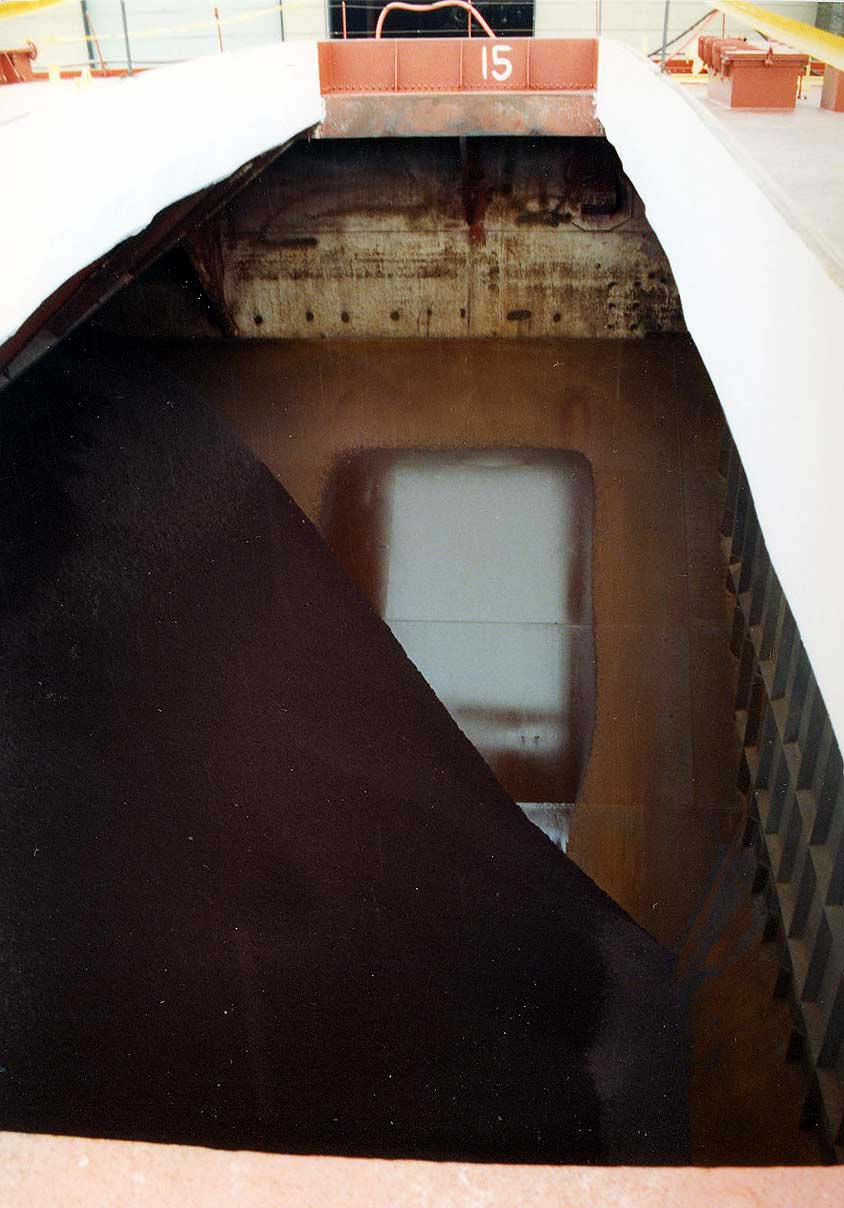
Pathfinder’s cargo handling efficiency was further improved over the winter of 1998 – 1999 by the installation of new cargo side slope plates, facilitating the carriage of new cargoes in a wider range of sizes than other lakers. This reduced the amount of cargo the barge could carry but the vessel can now unload cargoes faster with this all-gravity system at 6000 tons per hour.
The J.L. Mauthe’s trim lines and distinctive profile for her class made her a favorite among boatwatchers, particularly in the later years. The vessel now finds herself in a revived career in the newest trend in Great Lakes shipping.
Written by Jody Aho
Barge Details
Barge Refit 1998
Barge Refit: Bay Shipbuilding (Sturgeon Bay, WI, USA)
Dorothy Ann / Pathfinder (1998-Present)












J.L. Mauthe (1953-98)