Boatnerd News

Boatnerd News – March 23, 2023

Edwin H. Gott likely first vessel at Soo

SAULT STE. MARIE, MI – With Great Lakes Fleet’s 1,000-footer Edwin H. Gott due at DeTour at 7 a.m. Thursday, it seems likely she will be the first boat to pass through the Soo Locks at 12:01 a.m. Saturday, opening the Soo Locks for the new shipping season.

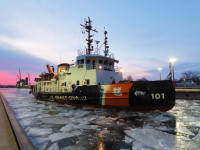
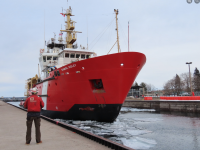
Early Wednesday morning, the U.S. Coast Guard Cutter Katmai Bay locked through the Poe Lock to start breaking ice in Whitefish Bay. In the late afternoon, USCG Mackinaw locked up enroute to Duluth.

Last year, the Gott’s fleetmate Edgar B. Speer was first vessel. The Soo Locks have been closed since mid-January for annual winter maintenance.

CCGS Samuel Risley was on Lake Superior Wednesday night but her AIS had not been updated.


Captain Henry Jackman opens Seaway

 CLAYTON, NY  The St. Lawrence Seaway is open for the season. Icebreakers have been in the channel, clearing the way for ships to navigate from Montreal to Lake Ontario.

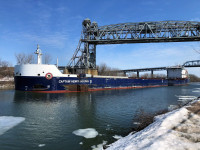
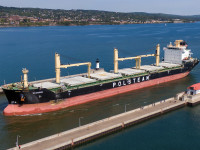
The first bulk carrier into the seaway was the Captain Henry Jackman, entering at Montreal and making its way to Lake Ontario. A few other bulk carriers soon followed and are in the channel Wednesday.

Between 2021 and 2022, yearly tonnage shipped through the seaway decreased by 5 percent but overall vessel traffic increased by 2.4 percent.

Federal Champlain was the first ocean-going ship in the Seaway.

WWNY


Niagara tips its hat as Welland Canal kicks off navigation season

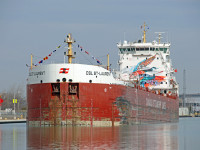
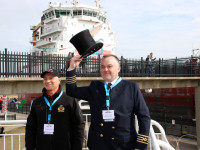
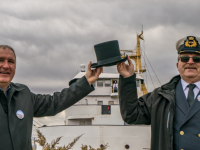
 ST. CATHERINES, ON  James Ryan worked his way through the seafarer ranks to earn his role as captain. For eight years, he has commanded ships with Canada Steamship Lines (CSL), but this season, his preparation as captain of the CSL St-Laurent was a bit fancier than usual. In the form of a black beaver pelt top hat.

Alongside the ship’s chief engineer, Montreal’s Stoyan Vlaev, the pair took part in their first official top hat ceremony in St. Catharines Wednesday morning, as a crowd of a hundred or so visitors — in naval tradition — tipped their hats in a show of greeting and respect.

The annual tradition, in which a symbolic top hat is presented to the captain of the first upbound and downbound vessels, marks the beginning of the new Welland Canal shipping season. To celebrate, ceremonies were held at St. Catharines Museum and Welland Canals Centre at Lock 3 and at Lock 8 Gateway Park in Port Colborne.

Ryan and Vlaev were appointed this season to the 36,364-tonne CSL St-Laurent, a bulk carrier built in 2014. The vessel’s first trip is to Superior, WI, to pick up a load of iron ore for Quebec City. “I’ve very excited about this season. It’s always nice to get started again,” said Ryan, hails from Newfoundland and Labrador, in an interview following the ceremony.

St. Lawrence Seaway Management Corp. market development director Bruce Hodgson said its system has moved more than 970 million tonnes of cargoover the past 25 years.

He said the canal plays a celebrated role in Canada’s supply chain, helping North American farmers get their grains to market — it anticipates a “very good start this year” and a record crop for Ontario grain — and assisting manufacturers in getting raw materials necessary to power the economy.

“One vessel, like the CSL St-Laurent, carries the equivalent or more than 963 trucks or 300 rail cars. Marine can help ease the pressure on gridlocked highways and busy rail corridors with less impact on the environment,” said Hodgson.

Seaway operations vice-president D’Arcy Wilson thanked the public for their patience during winter months as the canal goes through its necessary maintenance period, ensuring all repairs and updates are complete ahead of the new season.

Investments made in the past year included repair of lock gates (predominantly Lock 6), installation of a new road deck at the Homer Bridge and dredging the bottom of Wharf 6 to prepare for commercial use.

The vessel did not arrive until late morning, after the ceremony concluded. There are initiatives set to bring new life to the canal through a $45-million project to reconstruct new wharfs, funded with $22.7 million from the federal government and $22.6 from the Seaway.

Welland Tribune


Icebreaking in Thunder Bay harbour begins Thursday 

Icebreaking in the Thunder Bay area will begin this week, with the Samuel Risley starting the “initial harbour breakout” on Thursday, the Canadian Coast Guard said.

“Breaking up the ice will allow for the safe and efficient movement of commercial vessels,” it said in a media release.

Data from the National Oceanic and Atmospheric Administration’s CoastWatch program shows that as of Sunday, under eight per cent of the Great Lakes were under ice cover.

Meanwhile, an ice thickness map by the U.S. National Ice Center showed most of the ice in the Thunder Bay harbour was estimated to be 12 to 28 inches [about 30 to 71 cm) thick as of Sunday.

Isabelle Pelchat, the Canadian Coast Guard’s superintendent of icebreaking for the Great Lakes region, said the ice coverage this year has been below average.

“It’s not all frozen like we used to see,” Pelchat said in a recent interview with CBC News. “So it’s most likely the open up of Thunder Bay would be easier this year.”

However, the lack of ice on the Great Lakes doesn’t change much when it comes to icebreaking operations.

“We remain available 24/7,” she said. “We’re continuing the monitoring and surveillance of the ice at all times.

“Our two icebreakers are on standby and available, and the crews are ready. So it’s giving us more time to do some training and familiarization for the crew.”

Pelchat said icebreaking on the Great Lakes normally begins just before the opening of the Soo Locks, which officially marks the start of the Great Lakes shipping season. This year, the opening is set for this Friday.

CBC


2023 “Know Your Ships” launches; book signing at Soo Locks Saturday

SAULT STE. MARIE, MI – The new shipping season is at hand, and so is the release of the 2023 edition of Know Your Ships, the popular annual field guide to boats and boatwatching on the Great Lakes & St. Lawrence Seaway, now in its 64th edition.

To mark the opening of the Soo Locks, Editor & Publisher Roger LeLievre will be at the Soo Locks Visitor Center Saturday from 11 a.m.-3 p.m. to sign copies of the new edition. Buy them right from him, or from Das Gift Haus and Island Books and Crafts, bring them to the Visitor Center and he will sign them.

Standard and spiral bindings are available. The standard version features the eye-catching Viking Octantis on the cover, while the spiral shows off the veteran John G. Munson.

In the Spotlight section, you can read stories about the new Mark W. Barker (still has that new boat smell!), Michael Moran’s popular St. Joughnuts sweet treat deliveries at St. Joseph, MI, a look at the Great Lakes Maritime Academy serving a demand on the Great Lakes, and even about boats named after real-life rock stars!

This year’s 200-page book also includes information on U.S., Canadian and international-flag cargo vessels, tugs, excursion boats and barges in regular Great Lakes & St. Lawrence Seaway service, including owner and port of registry, year and shipyard where built, length, beam, depth, cargo capacity and former names, plus type of engine, horsepower and more.

Order at this link: www.knowyourships.com

#gallery-1 { margin: auto; } #gallery-1 .gallery-item { float: left; margin-top: 10px; text-align: center; width: 33%; } #gallery-1 img { border: 2px solid #cfcfcf; } #gallery-1 .gallery-caption { margin-left: 0; } /* see gallery_shortcode() in wp-includes/media.php */

Boatnerd News – March 22, 2023

Coast Guard vessels head to Lake Superior as Soo Locks opener nears

With the opening of the Soo Locks approaching, multiple Coast Guard vessels are headed to Lake Superior.

A Facebook post on Tuesday evening by the U.S. Army Corps of Engineers, Detroit District stated, “U.S. Coast Guard Cutters Mackinaw and Katmai Bay are expected to lock through first thing tomorrow (March 22) morning. Coast Guard vessels will be busy opening tracks and harbors on Lake Superior to get the 2023 Navigation Season off to a great start,”.

Canadian Coast Guard’s Samuel Risley was anchored north of the Soo Locks off of Bay Mills, MI on Tuesday evening.


First ship of 2023 season arrives at Port of Green Bay

In a sign of spring, the first ship of the 2023 season has arrived.

The Port of Green Bay says the Algocanada arrived just before 9 a.m. Wednesday. It was only a day after Coast Guard icebreakers opened the shipping channel.

The Algocanada delivered petroleum products for U.S. Venture. It was the same ship that closed the previous shipping season in January.

“We are fortunate to be off to a fairly early start this shipping season,” port director Dean Haen said in a news release. “With the 2023 shipping season officially underway, we are cautiously optimistic that we’ll have another strong year of cargo movement.”

Those interested in viewing ships can watch from locations such as the Fox River Trail, the Green Bay Metro Boat Launch or other areas along the lower Fox River. The port’s website and Facebook page have information on ship arrivals.

FOX 11 News


Spliethoff vessel banned amid crackdown on ‘Poor Performers’

The Australian Maritime Safety Authority (AMSA) has handed down a 90-day ban to a Netherlands-flagged ship as part of a crackdown on “poor performers” in the maritime industry.

AMSA detained the general cargo ship Flevogracht, operated by the Spliethoff Group, after the ship’s rescue boat engine was found to be defective.

AMSA had previously issued Spliethoff with two warning letters outlining concerns over the seaworthiness of their ships. This latest incident is part of a pattern of unacceptable performance from the operator, that poses a risk to the integrity of the ship, the safety of the crew, and the marine environment, AMSA said.

The latest marks AMSA’s fifth detention of Spliethoff ships in the past two years. Three of the detentions were related to serious failures to effectively implement Safety of Navigation processes and all occurred in Queensland waters, around the Great Barrier Reef.

On February 16, the Master of the Florijngracht was fined $6,000 for breaching compulsory pilotage laws after the ship illegally entered the Great Barrier Reef Marine Park without a marine pilot.

AMSA Executive Director of Operations Michael Drake said AMSA takes its responsibility as Australia’s maritime regulator very seriously.

“The fact that Spliethoff ships continue to be detained is evidence of their ongoing and repeated lack of concern for safety and environmental protection,” Drake said. “The Great Barrier Reef is one of the world’s great natural wonders, and we have an obligation to ensure that any ships entering its waters do so safely and in full compliance of the law.”

The ban of the Flevogracht comes just weeks after AMSA issued a 90-day ban to the MSC Kymea II, operated by MSC Mediterranean Shipping Company (MSC), over maintenance and safety-related deficiencies. The ban followed the detention of nine MSC-operated ships in the past two years, including five so far in 2023.

“Ship operators should be on notice that AMSA will not hesitate to take action when we find unacceptable practices on board ships,” Drake said.

Both vessels have traded on the Great Lakes and St. Lawrence Seaway.

gCaptain


Pere Marquette Rail Bridge catches fire amid start of demolition

PORT HURON, MI – The Pere Marquette Rail Bridge briefly caught fire Tuesday as workers were starting to demolish the nearly 100-year-old structure.

The Port Huron Fire Department was called at about 11 a.m. to the bridge, 212 Quay St. Fire Chief Corey Nicholson said the fire was likely caused by heat from torches or saws used during the demolition process, but the fire remains under investigation.

“We’re going to look at some mitigations as far as removing any combustible material that may be up there,” he said. “Hot work is anything from an open flame to a piece of equipment that would cause excessive heat from friction.”

Port Huron Yacht Club Commodore Tyson Connolly said the demolition crew and the yacht club are going to work through any setbacks caused by the fire. “It doesn’t appear like there is anything that will delay production,” he said.

However, Nicholson said a second look at the demolition plan may be needed to prevent firefighters from having to return. He forwarded further comment on the issue to city building officials.

In an email Tuesday, David Haynes, the city’s planning director, said, “Based on today’s event, work on the Pere Marquette Railroad Bridge will cease until a combustible materials removal plan and/or a fire protection plan is submitted in writing to the city of Port Huron.”

Nicholson said there were no injuries from the fire. Additionally, he said there is no hazard to the public.

The Pere Marquette Rail Bridge is located adjacent to the Port Huron Yacht Club. The bridge was completed in 1931 and provided rail access to business north of the Black River for decades. It was placed in its upright position and abandoned in 1975.

Times-Herald

#gallery-2 { margin: auto; } #gallery-2 .gallery-item { float: left; margin-top: 10px; text-align: center; width: 33%; } #gallery-2 img { border: 2px solid #cfcfcf; } #gallery-2 .gallery-caption { margin-left: 0; } /* see gallery_shortcode() in wp-includes/media.php */


Boatnerd News – March 21, 2023

New administrator of Great Lakes/Seaway Development Corp. no stranger to NNY, shares vision

MASSENA, NEW YORK — The new administrator of the Great Lakes St. Lawrence Seaway Development Corp. found himself on old stomping grounds Wednesday morning.

“This is one of my favorite places on Earth,” Adam M. Tindall-Schlicht said during a visit to Massena, where two of the St. Lawrence Seaway’s 15 (13 Canadian) locks, Snell and Eisenhower, are operated. “Being here professionally is one of the gifts of being an administrator.”

Mr. Tindall-Schlicht, appointed in November as the 11th administrator of the Great Lakes St. Lawrence Seaway Development Corp.(GLS) by President Joseph R. Biden Jr., is atypical when it comes to the work experience of people previously appointed to that role. He has returned to GLS after working at the corporation from 2010 to 2018, focusing on marine transportation, international marketing and the Great Lakes Seaway System. In that role, he visited Massena frequently. At age 39, he is the youngest GLS administrator.

As administrator, Mr. Tindall-Schlicht oversees the federal corporation responsible for the operation and maintenance of the U.S. portion of the St. Lawrence Seaway between Montreal and Lake Erie. In timing with the opening of the Great Lakes St. Lawrence Seaway System’s 65th year of operation on Wednesday, the Watertown Daily Times requested a Zoom interview with the new administrator. It was expected that he’d be talking from the GLS’s Washington, D.C., headquarters, but on Wednesday morning, Mr. Tindall-Schlicht spoke from Massena where he was meeting with Seaway workers.

Read the full article here: https://www.nny360.com/news/stlawrencecounty/new-administrator-of-great-lakes-seaway-development-corp-no-stranger-to-nny-shares-vision/article_2e031417-2b40-506c-b77f-51e1f404954b.html?fbclid=IwAR1Ii2qwEqgx0NGfmixL9AiMwKaDwGi0OrAd4G5M2NsL9zhMmZ-KG5L9OTc

NNY360


Seafarers from Ukraine now working on Great Lakes Ships

Algoma, CSL, Groupe Desgagnés, and Hamilton’s McKeil Marine are among the Canadian ship owners that have welcomed qualified Ukrainian seafarers and other marine personnel after Russia invaded their homeland in February 2022.

Ruslan Butenko is eager to see his new work schedule as a Captain in Training on Algoma Central Corporation’s domestic vessels. He’s already sailed aboard the Algoma Intrepid, learning for the first time to operate the self-unloading eco-ship.

“No matter what my assignments, I’m grateful to be in Canada working for a company that has been supportive of this new start in my career and life,” says Capt. Butenko, who sought refuge for his young family from the war in Ukraine.

Butenko was aboard a German vessel when the Russian invasion started. “I had to work by phone and Internet to help my wife and daughter, who was just four months old, to find their way to safety,” he says.

That journey involved his family escaping to neighbouring Moldova, traveling next to Bulgaria, followed by Cyprus, then Italy to complete the necessary identity biometrics for Canada, and his wife and daughter returning again to Cyprus to stay with her sister while he made his way here to begin his new job and find a place for them to live.

“It was so wonderful when I arrived at Pearson International Airport on December 6th and the Customs officer said, ‘Welcome to Canada. You and your family will be safe now,’” he recalls.

Read the full article here: https://bayobserver.ca/seafarers-from-ukraine-now-working-on-great-lakes-ships/

The Bay Observer


How important was the Iron Range to winning World War II?

DULUTH — Minnesota nearly depleted its immense supply of high-grade iron ore to help the Allies win World War II, providing much of the crucial raw material behind America’s tanks, warships, guns and ammunition.

Reader Jim Herzog wanted to know just how much the Mesabi Range mines contributed to the “arsenal of democracy.” He sought answers from Curious Minnesota.

The short answer is that Minnesota’s rich iron deposits were a vital component of America’s war effort. About 70% of the iron ore that America devoted to the war came from Minnesota, amounting to more than 333 million tons, according to Pam Brunfelt, a retired Vermilion Community College faculty member and historian.

“Without the Iron Range, we would not have won the war,” said the Britt, Minn., native, who is writing a book about the phenomenon. “It was just the most astonishing accomplishment.”

Steel production in America tripled from 1938 to 1943. In 1942 alone, America produced about 8,000 warships, 24,000 tanks, 48,000 military airplanes and 667,000 machine guns, according to Marvin G. Lamppa’s “Minnesota’s Iron Country.” Much of the raw material to make those armaments came from the Iron Range.

The country’s need for all that natural iron ore during the war almost depleted Minnesota’s deposits and led to the mining of taconite, the lower-grade mineral produced on the Range today to make steel.

Read the rest of the article here: https://m.startribune.com/minnesota-iron-range-mesabi-world-war-2-ore-steel-mining/600259684/?fbclid=PAAaaFVZKkiKymvHRCNJGdf0tmGUV0rJ9QacT6CQIp3nXrFvQgU_pJKoIVbPk

The Star Tribune


St. Lawrence River hit with one of lowest ice cover seasons on record

There’s barely any ice to break on the St. Lawrence Seaway this year.

Scientists at the National Oceanic and Atmospheric Administration have confirmed that ice conditions across the Great Lakes during the 2022-2023 season were the third-lowest on record.

Although this is a widespread trend, it has had significant impacts on Lake Ontario and the St. Lawrence River.

“It was mid-December and January when we had those really deep freeze moments, but they were pretty quick this year,” Busler explained. “It was a short window when we had good ice cover between the islands.”

Without the typical thick ice, many winter recreational opportunities were too dangerous. Such as ice fishing, pond skating and snowmobiling out on the River and Lake Ontario.

This resulted in event cancellations throughout the region, Tyler Forger, the General Manager of Clayton Marina explained.

“Obviously we’ve missed all the ice fishing derbies, which are usually held right out in [our] bay. We missed events like that and some fundraisers,” he said. “So it has affected the community for sure.”

The low ice conditions also could have effects on native wildlife.

“Shorter winter and less ice cover could mean a shorter breeding and spawning season for fish and other wildlife,” Busler added. “Animals like the red fox and bobcat will use ice cover to travel amongst the islands.”

As of March 16, NOAA data confirmed that the total ice cover across the Great Lakes was 6.7%. On the same day in 2022, the total ice cover was 43.1%.

But as the winter season comes to a close, the low ice conditions may allow for an earlier season for water recreation.

Many marinas and public docks have already made preparations for early-season boaters.

“I think we’ll see an early spring. The sun’s out, people are itching to get ut of the house. That’s what we’re looking forward to at our marina,” Forger expressed. “So we’ll get phone calls from people that are trying to get to their island homes and we’ll see an earlier jump this year.”

WETM18

#gallery-3 { margin: auto; } #gallery-3 .gallery-item { float: left; margin-top: 10px; text-align: center; width: 33%; } #gallery-3 img { border: 2px solid #cfcfcf; } #gallery-3 .gallery-caption { margin-left: 0; } /* see gallery_shortcode() in wp-includes/media.php */


Boatnerd News – March 19, 2023

Top hat ceremonies to kick off Welland Canal opening

PORT COLBORNE, ON – A beaver fur top hat will be presented to the captain of the first downbound vessel on the Welland Canal when the 2023 shipping season kicks off in Port Colborne this week.

The city’s annual top hat ceremony takes place Wednesday in the pavilion at Lock 8 Gateway Park, 163 Mellanby Ave., with breakfast at 8 a.m., followed by the event at 8:30 a.m.

At the opposite end of the canal, a top hat ceremony will take place at St. Catharines Museum and Welland Canals Centre, 1932 Welland Canals Pkwy., at 10 a.m.

Port Colborne’s ceremony started in the early 1970s under then-mayor John Buscarino and involves a ceremonial beaver felt fur hat being presented to the captain of the first downbound vessel — headed to Lake Ontario from Lake Erie. An anonymous person donated the turn-of-the-century Tress & Co beaver felt fur hat to Port Colborne Historical and Marine Museum, which has loaned it out annually since 1999.

The captain of the first downbound ship is also presented with a hat to keep. In years past, it’s been presented to the same captain, same vessel, tug and barge combinations and even a U.S. coast guard icebreaker. It’s unknown which vessel will be the first downbound through the city, but at least four of six vessels that wintered in Port Colborne are above Bridge 19A, the Mellanby Avenue Bridge, and facing north.

The captain of the first upbound vessel — headed to Lake Erie from Lake Ontario — on the 43-kilometre, eight-lock Welland Canal will be presented with a top hat as well in St. Catharines.

St. Lawrence Seaway Management Corp. will officially launch the 65th navigation season of the 3,700-kilometre-long St. Lawrence Seaway at St. Lambert Lock on Montreal’s South Shore.

It will host an on-site event with seaway president and chief executive officer Terrence Bowles, the American Great Lakes St. Lawrence Seaway Development Corp. deputy administrator Adam Tindall-Schlicht, and Gregg Ruhl, president and chief executive officer of St. Catharines-based Algoma Central Corp.

The seaway invested $32 million in infrastructure work this winter, which included the deck on the Homer Bridge on Queenston Street, connecting St. Catharines and Niagara-on-the-Lake, being replaced, and the west abutment of the Clarence Street Bridge in Port Colborne being refurbished. Both bridges reopened Wednesday.

Originally scheduled to close on Jan. 7, the canal remained open until Jan. 9 this year. As part of a five-year pilot project, the seaway has extended its season into January for the past four years.

During the 2022 shipping season, the seaway authorities said more than 36 million tonnes of cargo moved through the lakes and canal system. That was down 5.03 per cent, 1.922 million tonnes, compared to 2021. Contributing 11 million tonnes to the total were dry bulk commodities, such as coke, salt and potash.

Potash shipments shot up 100 per cent last year as global issues — the invasion of Ukraine and sanctions imposed on Russia — affected fertilizer and grain supplies. Potash is a key ingredient in fertilizer, and Russia is one source of the mineral. Ukraine and Russia also account for more than 20 per cent of worldwide grain exports.

Welland Tribune


U.S. Steel restarts Blast Furnace #8 at Gary Works

U.S. Steel has restarted the No. 8 blast furnace at its flagship Gary Works steel mill.

The Pittsburgh-based steelmaker, one of the Region’s largest employers, idled both the No. 3 blast furnace at Mon Valley Works in Pennsylvania and the No. 8 furnace in Gary last year after steel prices came down from historic highs in 2021 amid fears of a looming recession.

U.S. Steel has restarted both blast furnaces over the past couple of weeks as market conditions have improved.

The steelmaker said it restarted the blast furnace because of rising demand and improving prices.

Steelmakers have gone from facing headwinds to getting winds behind their sales thus far this year. The domestic steel industry has especially benefited as automakers have ramped production back up after being hamstrung by semiconductor chip and other supply chain shortages in recent years.

The No. 8 blast furnace at Gary Works can make up to 1.5 million tons of iron annually. It was originally idled for a planned maintenance project last year and was supposed to be restarted in August after three months of construction, but then market conditions deteriorated and U.S. Steel opted to leave it down until demand returned.

No one was laid off as a result of the idling. The temporarily displaced workers were moved to other parts of the sprawling steel mill that stretches for seven miles along the Lake Michigan lakeshore.

“We continue to monitor market conditions and bring furnaces back online when business conditions allow,” U.S. Steel spokeswoman Amanda Malkowski said. “There is no employment impact from bringing #8 back online, nor was there any employment impact in bringing it down.”

U.S. Steel also operates the Midwest Plant in Portage, which has many finishing lines that prepare the steel made at Gary Works for a variety of commercial uses.

NWI Times


Mark your calendars for Soo Boatnerd Picnic and Freighter-Chasing Cruise

Join us for the Annual Boatnerd Picnic and Freighter-Chasing Cruise on the St. Marys River during the annual Engineers’ Day weekend at Sault Ste. Marie June 29-30. Find details on both events here: https://boatnerd3.jasonbowlerdesign.com/boatnerd-soo-gathering-june-29-30-2023/


#gallery-4 { margin: auto; } #gallery-4 .gallery-item { float: left; margin-top: 10px; text-align: center; width: 33%; } #gallery-4 img { border: 2px solid #cfcfcf; } #gallery-4 .gallery-caption { margin-left: 0; } /* see gallery_shortcode() in wp-includes/media.php */

Boatnerd News – March 18, 2023

City receives $2.187M grant for the Carbide Dock rehab project

SAULT STE. MARIE — The Carbide Dock project has received another grant that will help fund the long-running project.

The new grant will help bring shore power to the dock, to help incoming vessels reduce gas emissions while docked at the city.

“When boats and ships come in to dock, they generally need to keep their engines running,” said Jeff Johnston, Michigan Department of Environment, Great Lakes, and Energy public information officer. “This will allow them to plug in, turn off their engines, and burn less fuel.”

For around seven years, the Carbide Dock rehabilitation project has been in planning and consideration, as the city adjusts and adds to construction plans and searches for funding.

For years, the Carbide Dock, and international dock just downstream of the Soo Locks would host visiting freighters and cruise ships in the city, until it was closed down and condemned due to disrepair. Around seven years, ago the city began formulating a project to completely rehabilitate the dock and bring it back into use.

The project will replace approximately 1,100 linear feet of the existing condemned dock structure to create a working waterfront. There will also be several updates to the dock, including secure storage areas, improved stormwater management facilities, and a critical connection from the Easterday Avenue truck route to the riverfront.

In 2017, the city approved plans to repair the dock, and began looking for funding opportunities. In 2019, the city received a $20.7 million grant from the U.S. Department of Transportation, this came in $14.5 million short of the complete goal, so the city has been searching for other funding options.

Since then, the city has applied for and accepted various different grants to complete the project, including a fuel transformation program grant from The Michigan Department of Environment, Great Lakes, and Energy (EGLE).

EGLE announced on March 10 that they would be awarding the city a $2.18 million grant as part of the Fuel Transformation Program, which aims to lower gas emissions. EGLE hopes to bring the state to neutral carbon emissions by 2050.

The grant will cover two-thirds of the cost of installing shore power to the dock, allowing visiting freighters and cruise ships to dock there without idling their engines. By allowing ships to visit our docks without idling engines, it will massively reduce carbon emissions from the ships overall, as well as reducing emissions in the city.

“It’s cleaner, it’s healthier and it’s a lot fewer emissions than what we’re doing now,” said Johnston.

The shore power, which will be supplied by around 50% renewable energy, is expected to reduce greenhouse gas emissions by 9,405 metric tons of carbon dioxide equivalents and 650 metric tons of nitrogen oxides, over the project’s lifespan

“Standing on those docks when fumes are being released can be hard for anyone, the people on the ship and the city it’s docked at,” said Johnston.

The grant will cover two-thirds of the installation, and the rest of the money will be matched by the 2019 USDOT grant of $20.7 million.


NOTICE TO SHIPPING NO. 4 – 2023 NIAGARA REGION WELLAND CANAL

East Flight Locks Out of Service

Please be advised that the East Flight Locks will be out of service from the opening of the Welland Canal until March 31, 2023. This may cause some delays as one way traffic may be implemented.


Boatnerd News – March 17, 2023

Soo Locks to open March 25 for 2023 shipping season

SAULT STE. MARIE, Mich. — The U.S. Army Corps of Engineers, Detroit District, Soo Project Office will open the Poe Lock, 12:01 a.m., March 25, marking the 2023 Great Lakes shipping season start.

The operating season is fixed by federal regulation and driven in part by the feasibility of vessels operating in typical Great Lakes ice conditions.

The Poe Lock closed January 16 to undergo critical repairs and maintenance during the 10 week-long winter shutdown. Maintenance crews performed a variety of critical tasks on the Poe Lock, including Gate 1 anchorage component repairs such as replacing concrete, Gate 1 lifting lugs and turning feet, underfloor drain system inspection, Gate 1 structural inspection for future replacement, Gate 3 inspection for structural repairs, gate jacking pedestal inspections, valve repairs, Gate 3 seal repairs and culvert intake grate repairs. The (miter) gates are the large gates at each end of the lock chamber. The gates open and close allowing ships to enter and leave the lock and prevent water from entering or exiting the lock while boats are lifted or lowered.

“Crews also performed a wide range of other maintenance tasks including fender timber replacements, electrical and mechanical systems inspections, and preventative maintenance on both the Poe and MacArthur Locks and floating plant maintenance,” Maintenance Branch Chief Nick Pettit said.

Contractors also performed work on the Poe Lock ship arrestor project. OCCI of Missouri, was awarded the contract in July 2021, for $17.5M after awarded options. This winter, they completed the new downstream arrestor equipment buildings, installed the new arrestor machinery and replaced the arrestor boom.

“This winter a portion of maintenance projects on Gate 1 required the Poe Lock to remain full while others required the lock to be dewatered,” Maintenance Branch Chief Nick Pettit said. “Sequencing Poe Lock maintenance/repairs allowed our team to maximize the non-navigation season.”

The MacArthur Lock, located south of the Poe, is scheduled to open April 24.

“We welcome visitors into the park for the 2023 Soo Locks season opening. The park and viewing platform will open March 24 at 11 p.m. and close March 25 at 1 a.m. The Visitor Center will host an open house March 25 from 9 a.m. to 3 p.m.,” Chief Park Ranger Michelle Briggs said.

The park is open daily 9 a.m. to 6 p.m.

The U.S. Army Corps of Engineers plans to open the Soo Locks Visitor Center May 1 for the summer season.

For those not able to come to the Soo Locks opening, there will be a Facebook Live stream of the first ship on our Facebook page starting at 11:55 p.m., March 24 at: https://www.facebook.com/USACEDetroitDistrict.

U.S. Army Corps of Engineers


St. Marys River expanding spring icebreaking operations

Thursday March 16, 2023, the Coast Guard expands icebreaking operations in the lower St Marys River in preparation for the 2023 Great Lakes commercial shipping season.

Ice throughout the lower St Marys River, including the southern half of the West Neebish Channel, is rapidly deteriorating. With increased sunlight, the forecast of above freezing temperatures and rain, Coast Guard icebreakers will advance north of Moon Island to connect the open water at the lower end of the Rock Cut to the tracks extending south towards Munuscong (Mud) Lake. This action creates space for ice to flow, reducing the risk of ice related delays to Neebish Island Ferry operations.

On 22 March, these icebreaking activities will encompass all navigable waters of the St Marys River, including the West Neebish Channel in its entirety. Recreational users of the ice should plan their activities carefully, use caution near the ice, and stay away from charted navigation areas.

If you have questions about local or regional icebreaking activities, you may contactthe Vessel Traffic Service at (906) 635-3299 or via email sootfc@uscg.mil

USCG


Coast Guard finds ice thinner this season, making ice-breaking operations swift

Residents in Midland and nearby areas are advised that later this week, the Canadian Coast Guard Ship Samuel Risley will be breaking up ice for commercial vessels, including the CSL Frontenac, to leave Midland Harbour.

Ice users are reminded that no ice is safe ice, and ice-breaking operations can cause ice to shift, creating unstable conditions.

Residents are urged to use extreme caution near shorelines and inland on harbours.

The Canadian and United States Coast Guards work together to ensure scheduled vessel traffic can move safely through shipping channels and community harbours in the Great Lakes and connecting waterways.

Coast guard officials say this winter’s weather has been “on its side” this year, making for thinner ice than they are typically prepared to break.

“We can see a big difference this year. We haven’t been as busy as before,” said Canadian Coast Guard Ice-breaking program superintendent Isabelle Pelchat in an interview with CTV News in January when the ships began ice-breaking to allow vessels into the harbour.

The Coast Guard notes the date and assets used for ice-breaking are subject to change without notice, as they may begin earlier or later depending on operational requirements or weather conditions.

CTV News


Detroit Ship Masters’ present Ludington Award to 2 mariners

DETROIT, MI – Two Great Lakes mariners received the prestigious Captain Lewis Ludington Award this past weekend during the annual Blessing of the Fleet at Mariners Church in Detroit, MI.

Honorees were Mark Mather, captain of VanEnkevort Tug & Barge’s Clyde S. VanEnkevort/ Erie Trader, and Ken Gerasimos, General Manager of the Great Lakes Fleet, based in Duluth, MN.

Mather attended the Great Lakes Maritime Academy and, after graduation, worked aboard tugs operated by Canonie Transportation Co., soon becoming a relief captain. In 1998, he was hired by Inland Lakes Transportation Co. as deck officer on the J.A.W. Iglehart, E.M. Ford and S.T. Crapo. Mather has been with VTB since 2017. He is a member of the Traverse City Ship Masters’ Lodge No. 23.

Following in the footsteps of his father, Gerasimos worked his way up the hawsepipe and sailed as 3rd mate on all five of the Ford Motor Co. freighters. He was the last 3rd mate on the original Benson Ford prior to its decommissioning. He is a member of the Duluth Ship Masters’ Lodge No. 12.

The Lewis Ludington Award was established by the Ludington Family and Mariners’ Church in 1994. Over the years over 90 shipmasters have been recognized for their contributions to the maritime industry on the Great Lakes. The program is under the auspices of the rector and board of trustees of Mariners’ Church and the Ludington Family, with the nominations and election of the honorees by Detroit Lodge No. 7 of the International Ship Masters’ Association.


Escanaba to welcome cruise ships for the first time

An Upper Peninsula town will welcome cruise ships for the first time this year, showing off its unique culture and Lake Michigan coastline.

Escanaba, located on Little Bay de Noc in Delta County, has been added as an “exclusive” port of call of American Queen Voyages. The Ocean Navigator will call on the port 10 times from May to August while the Ocean Voyager will visit 14 times between May and October.

Read the full story here: https://www.mlive.com/news/2023/03/this-up-town-will-welcome-cruise-ships-for-the-first-time.html?utm_campaign=mlivedotcom_sf&utm_medium=social&utm_source=facebook&fbclid=IwAR23GIs_eNVWvXdvgibq6VlPhMUd5OoMJ2Pfc2mSggvQSMEXe-qTNcojcMw

Boatnerd News – March 16, 2023

Steel production jumps by 14,000 tons in the Great Lakes Region

Steel production rose by 14,000 tons in the Great Lakes region last week, after rising by 13,000 tons a week earlier, according to the American Iron and Steel Institute.

Locally, steel mills in the Great Lakes region, clustered mainly along the south shore of Lake Michigan in Northwest Indiana, made 547,000 tons of metal in the week that ended March 11, up from 533,000 tons the previous week.

Steel mills remained well below 80% capacity, a key threshold for financial success for the steel sector. After years of record profitability, the industry has been dealing with falling prices, increased economic uncertainty and rising import levels after tariffs were rolled back in favor of quota systems with some trading partners. The United Steelworkers union and Cleveland-Cliffs pursued new trade protections for the first time in years after a collapse in the tin market that led to the idling of tin mills, including in Gary.

Overall, domestic steel mills made 1.677 million tons of steel last week, up 0.8% from 1.664 million tons the previous week and down 1.9% compared to 1.71 million tons the same time a year prior.

Nationally, steel production in 2023 totals 16.51 million tons, a 5.1% decrease from the 17.39 million tons manufactured through the same period last year.

U.S. steel mills have run at a capacity utilization rate of 73.9% through Saturday, down from 79.7% at the same point in 2022, according to the American Iron and Steel Institute.

Steel capacity utilization was 75% last week, down from 78.7% a year earlier and up from 74.4% the week prior.

Steel production in the southern region, which encompasses many mini-mills and rivals the Great Lakes region in output, totaled 704,000 tons last week, down from 717,000 tons the week before, according to the American Iron and Steel Institute.

Volume in the rest of the Midwest rose to 210,000 tons, up from 206,000 tons the week prior.

NWI Times


Southeast Side Residents Suing to Keep Army Corps ‘Mountain of Dredge’ From Rising Up on Lake Michigan

Opponents of a toxic sludge landfill on Lake Michigan have filed a lawsuit to stop a plan by the U.S. Army Corps of Engineers to expand the dump, which has already operated for nearly three decades longer than initially intended.

The Environmental Law and Policy Center filed the suit Monday in U.S. District Court on behalf of the Alliance of the Southeast and Friends of the Parks.

At issue is a 45-acre site on Lake Michigan, at the mouth of the Calumet River, adjacent to Calumet Park. Since 1984, after the Army Corps dredges Chicago-area waterways for navigation purposes, the sediment is stored in what’s known as a Confined Disposal Facility.

Now the facility — initially only authorized by the Illinois legislature for a 10-year period — has reached capacity. The Corps had said it would turn the property over to the Chicago Park District when the dump maxed out, but instead, the Corps wants to extend the life of the facility by building a 25-foot-tall vertical expansion.

The lawsuit alleges the Corps does not have authority to build the new dumpsite and has violated federal environmental and dredge-management laws by failing to adequately consider the project’s environmental impacts and less harmful alternatives.

The Corps only explored options for new facilities within the 10th Ward, home to the current dump. Residents balked at having a second waste site built in their community, but that left the Corps’ expansion plan as the only viable alternative.

“We are tired of being the dumping ground for toxic materials in the city,” said Amalia NietoGomez, executive director of Alliance of the Southeast, in a statement. “Chicago’s Southeast Side is already overburdened, and we don’t need an expansion to add more toxic dredgings from the river right next to Calumet Park, where families gather, do sports, have picnics and play in the water.”

Neighbors are concerned about pollutants from the facility and possible impacts on people’s health and their drinking water, she said.

Contaminants in the dredged materials include mercury, PCBs, arsenic, barium, cadmium, manganese, chromium, copper, lead and more. Friends of the Parks has long been concerned with the potential for these chemicals to leach into Lake Michigan.

“Chicago’s lakefront is one of our city’s most precious gems,” said Juanita Irizarry, executive director of Friends of the Parks, in a statement. “The (facility) lingers on our lakefront as a remnant of previous eras’ zoning and environmental policies. It is a travesty to continue to designate prime lakefront park land, that is next to other parks and beaches, for a toxic dump.”

The Army Corps did not immediately respond to a request for comment. According to a status update on the Corps’ project website, “Vertical expansion of the CDF is underway and scheduled for completion in (fiscal year) 2025.”

No river dredging has occurred since 2020, and harbor dredging last took place in 2022, according to the Corps.

A spokesperson for the Illinois Environmental Protection Agency said the Corps construction permit application “remains under review.”

WWTW

Manitowoc’s Cobia submarine is turning 80

MANITOWOC – On March 17, 1943, World War II submarine USS Cobia’s keel was laid by the Electric Boat Company in Groton, Connecticut.

This was the beginning of her journey to service during World War II, ultimately serving six war patrols in the Pacific Theater from 1944 to 1945.

March 17 will mark the 80th anniversary of her keel-laying “birthday,” and on March 18, the Wisconsin Maritime Museum will hold a celebration of Cobia’s 80th “birthday.” The museum will be open 10 a.m.-4 p.m. that day, offering $8 discounted admission, which includes access to the submarine. The museum is at 75 Maritime Drive in downtown Manitowoc.


Help wanted: Lake Michigan Carferry seeking 2nd Mate, 3rd Mate, 3rd Assistant Engineer

Third Assistant Engineers supervise a watch with the assistance and direction from the Chief Engineer. Responsible for the safety of the personnel assigned to the watch and their task performance in the operation of the vessel. Assists with the operation and maintenance of all vessels operating equipment and systems. Maintains the engine room records as required by various agencies. Conducts periodic safety inspections of departmental tools and safety equipment as directed. Required to make descriptive entries of all work performed in the Engineer log. Be prepared to live and work aboard the vessel the duration of the sailing season, from mid-May to mid-Oct. (room and board provided). Employee will stand a 4-hour watch, twice daily, 7 days per week. Eligible for AMO medical, dental, vision and 401K after completing 60-day probationary period. APPLICANTS FOR LICENSED ENGINEER POSITIONS MUST BE QUALIFIED AND POSSESS THE 3RD ENGINEER OF STEAM VESSELS OF UNLIMITED ENDORSEMENT OF 4000 HP OR HIGHER. Qualifications/Certifications Required: Valid Transportation Worker Identification Credential (TWIC), Valid Merchant Mariners Credential issued by the U.S. Coast Guard with proper endorsements, including at least Third Assistant Engineer of steam vessels of unlimited horsepower, current US Coast Guard Medical Certificate and be legally eligible to be employed in the United States (proof of identity will be required upon employment).

Licensed Deck Officer responsible to manage, oversee and direct the Deck Department for the daily operations of the vessel. Knowledge of the fire and lifeboat stations along with signals and procedures associated with an emergency in order to properly carry out a fire and lifeboat drill to US Coast Guard standards. On-scene commander in emergency situations and drills. Supervises the Deck Department assuring that work is accomplished in a safe and efficient manner. Supervises the general management of loading and off-loading passengers and cargo.. Maintenance of all cargo gear, deck gear, hold, decks, hatches and hull. Management of all emergency station bill assignments, posting of lists, and search parties. Manages the cleanliness of exterior, car deck and holds of the vessel. Be prepared to live and work aboard the vessel the duration of the sailing season, from mid-May to mid-Oct. Room and board provided. Employee will stand a 4-hour watch, twice a day, 7 days per week. Eligible for AMO medical, LMC dental, vision and 401K after completing 60-day probationary period. Applicants must possess unlimited tonnage endorsement. Qualifications/Certifications Required: Valid Transportation Worker Identification Credential (TWIC), Valid Merchant Mariners Credential issued by the U.S. Coast Guard, Current US Coast Guard Medical Certificate and be legally eligible to be employed in the United States (Proof of identity and eligibility will be required upon employment.

For particulars, contact Shari Vandervest at svandervest@ssbadger.com


Know Your Ships survey

Know Your Ships is asking readers to take a short survey to help chart their future course. You can take the quick survey by clicking this link: https://docs.google.com/forms/d/e/1FAIpQLSfYyWupfE5-AE8Bjss9g2YWVnsZIjlnOFW9LujpoAvFW-KK3Q/viewform?vc=0&c=0&w=1&flr=0&fbclid=IwAR1sXSvH6h0iiVBuq4rQHYgX25uWzInthKQdqiRXIPuBTjfiDRY7eEeR9Jo

Boatnerd News – March 15, 2023

New coast guard icebreaker rests in Collingwood this week

CCGS Judy LaMarsh is in Collingwood’s harbour this week for a crew change and for icebreaking operations in Georgian Bay; it’s a new ship for the coast guard, and is currently being tested before conversion

The Canadian Coast Guard is testing out its new icebreaker and is using Collingwood as a base while the ship works in Georgian Bay.

Capt. Travis Borchuk and his crew of 18 are finishing a month-long stint aboard the new-to-Canada vessel, the CCGS Judy LaMarsh, and have been given the mission of evaluating and reporting on her performance on the icy waters of the Great Lakes.

“This vessel is going to be working a majority of its time … on the Great Lakes, so we needed confirmation of how it would work with our existing assets and how it would work in these conditions where it’s going to spend a good deal of its time,” said Borchuk. “This has been a very light ice year, so what we’ve been doing is actually intentionally going into areas that have ice that we can work and test the vessel to its capabilities without disturbing ice users as much as possible.”

Formerly named the Mangystau-2, the ship was built in 2010 in Romania and used as a charter vessel contracted out for other work. It was owned and operated by Caspian Offshore Construction in Kazakhstan, where it worked in the Caspian Sea. Since then, the Canadian Coast Guard has put in many hours to convert the ship to meet Canadian regulations, and perform regular maintenance.

Borchuk said the ship was made for icebreaking and towing barges. While the coast guard doesn’t need to tow barges, icebreaking is a special task requiring unique construction. It’s not usually something a ship can be retrofitted to do.

“Icebreaking is very, very rigorous on machinery, and actually a complex operation as far as navigating and operating the vessel is concerned,” said Borchuk. “Ice can be unpredictable and quite challenging. The conditions can vary even just 100 metres out from one another … so our bridge team and our engine room teams have all been really going through the vessel, all the unique and complex systems and finding all of the peculiarities of it and how to operate as effectively as possible.”

The crew had the CCGS Judy LaMarsh on an exercise in the North Channel earlier this month with the CCGS Samuel Risley simulating working with escorting a commercial vessel. After that, the ship was in Sault Ste. Marie working in the area on joint operations with the U.S. Coast Guard to help with spring icebreaking. The ship has been in Georgian Bay since Sunday night, and went to Midland on Monday for icebreaking.

“Icebreaking is a rather crucial service as it allows industry to continue and fuels the economy of not just Canada and the Great Lakes, but through our binational agreement with the U.S. Coast Guard,” said Borchuk, noting the coast guard will sometimes escort vessels to make sure they get safely through the water in the winter. “We also manage flooding in the rivers.”

It’s unique for a coast guard icebreaker to harbour in Collingwood because of limited clearance, but the CCGS Judy LaMarsh is a wider boat that has a more shallow draft than other icebreakers, allowing it to navigate in Collingwood’s harbour a little easier. The shallow draft, said Borchuk, was one of the appeals of this ship.

The ship’s crane will be replaced during conversion work with a 12.5-tonne crane, allowing the crew to service navigational buoys. Borchuk said it will also have space to accommodate other government programs. For example, a science team can join the coast guard ship and use one of the multi-purpose spaces for a lab while the ship is working in the Great Lakes.

According to the federal government, the CCGS Judy LaMarsh will perform icebreaking duties in the winter and maintain nagivational buoys in the Great Lakes, the St. Lawrence, and Atlantic regions. It can be used for search and rescue and other emergency response operations when needed.

The government announced the ship’s renaming in October 2022, after Judy LaMarsh, an Order of Canada appointee and one of the first women to serve as a federal cabinet minister. LaMarsh was part of the team that developed medicare and the Canada Pension Plan. She also helped establish the Royal Commission on the Status of Women in Canada.

The CCGS Judy LaMarsh will be in Collingwood for a couple of more days. Members of the public are welcome to look at the ship from Millennium Park, but the coast guard is not offering tours or allowing the public to board the ship at this time.

Collingwood Today


Iconic lighthouse could transfer to Muskegon city ownership as repair plans take shape

MUSKEGON, MI – Muskegon city officials are considering taking ownership of the iconic Lake Michigan lighthouse that has been owned by a conservancy for the past 12 years.

The 91-year-old “south breakwater lighthouse” is in line for needed repairs, for which $800,000 in state funding has been pledged.

The city is in a better position to see those repairs through than the Michigan Lighthouse Conservancy, which at this point essentially consists of one man, Jeff Shook, who lives across the state in Fenton.

Read the full MLive story here: https://www.mlive.com/news/muskegon/2023/03/iconic-lighthouse-could-transfer-to-muskegon-city-ownership-as-repair-plans-take-shape.html?utm_campaign=muskegonchronicle_sf&utm_medium=social&utm_source=facebook&fbclid=IwAR1wEBz5EDbKVN5OWFWwAVACeVU9esvPc8cHaYz5G7hNrdRCClL3JpVVQS0


President’s Budget supplies $159 million for Corps of Engineers Detroit District

DETROIT — The President’s Budget for Fiscal Year 2024 (FY24) includes more than $7.4 billion in discretionary funding for the U.S. Army Corps of Engineers Civil Works program, with just over $159 million set aside for Detroit District projects.

Of great regional significance is $3 million for the Great Lakes Coastal Resiliency Study, a project that includes the three Great Lakes Corps of Engineers Districts: Detroit, Buffalo and Chicago. The study will identify vulnerable coastal areas and recommend actions to bolster the coastal resources’ ability to withstand, recover from and adapt to future hydrologic uncertainty with respect to man-made and natural coastal environments. Recent high-water events across the Great Lakes brought about the study’s need.

The Budget requests funding for investigations to provide local communities, including disadvantaged communities, with technical and planning assistance to enable them to reduce their flood risk, with emphasis on non-structural approaches. Investigation funding for the Detroit District includes a navigation study, Menominee River Deepening; an aquatic ecosystem restoration study, Rodgers Lake Habitat Pokagon Band; and three flood risk management studies, Peavine Creek Stabilization, Pokagon Band – Potawatami Tribe; South East Michigan; and Tittabawassee River Chippewa River, Pine River and Tobacco River.

The Detroit District operates and maintains the Soo Locks along with 81 navigation projects on lakes Superior, Michigan, Huron, St. Clair and portions of Lake Erie bordering Michigan. The President’s Budget includes $157.56 million for the district’s Operation and Maintenance Program, funding the maintenance of federal shipping channels and navigation structures within the Detroit District’s area of responsibility including the Soo Locks, Duluth-Superior Harbor, and Detroit, St. Clair, St. Marys and Saginaw rivers. These are critical projects within the Great Lakes Navigation System which provide a significant economic benefit to the Nation.

“We look forward to working with our partners to deliver reliable, innovative solutions that serve all our Great Lakes communities,” Lt. Col Brett Boyle, Detroit District Commander said.

Check out the full details here: https://www.lre.usace.army.mil/Media/News-Releases/Article/3327153/presidents-budget-supplies-159-million-for-corps-of-engineers-detroit-district/

U.S. Army Corps of Engineers


Mark your calendars for Soo Boatnerd Picnic and Freighter-Chasing Cruise

Join us for the Annual Boatnerd Picnic and Freighter-Chasing Cruise on the St. Marys River during the annual Engineers’ Day weekend at Sault Ste. Marie June 29-30. Find details on both events here: https://boatnerd3.jasonbowlerdesign.com/boatnerd-soo-gathering-june-29-30-2023/


Know Your Ships survey

Know Your Ships is asking readers to take a short survey to help chart their future course. You can take the quick survey by clicking this link: https://docs.google.com/forms/d/e/1FAIpQLSfYyWupfE5-AE8Bjss9g2YWVnsZIjlnOFW9LujpoAvFW-KK3Q/viewform?vc=0&c=0&w=1&flr=0&fbclid=IwAR1sXSvH6h0iiVBuq4rQHYgX25uWzInthKQdqiRXIPuBTjfiDRY7eEeR9Jo

Boatnerd News – March 13, 2023

Historic Duluth lighthouse has a new owner and will soon offer tours

A historic 43-foot-tall lighthouse at the entrance to the Duluth Ship Canal has a new owner.

Rethos, a St. Paul-based historic preservation nonprofit, was awarded the Duluth Harbor North Pierhead Light by the National Park Service last month.

In 2021, the U.S. Coast Guard announced it no longer needed the lighthouse that was built in 1910 at the end of the north breakwater of Duluth’s shipping canal.

It first offered the structure to government agencies, nonprofits or educational groups at no cost. So Rethos submitted an application.

“It seemed kind of crazy to me that we would take over a lighthouse, but it also seemed pretty spectacular to be able to take over a lighthouse, especially one in Duluth on Lake Superior where we could tell that really great story of Duluth,” Rethos executive director Heidi Swank said.

Swank received an email last month informing her that Rethos was the new owner of the lighthouse, she said. She received a hard copy of the letter signed by Secretary of the Interior Deb Haaland this week.

The group plans to install interpretative signs around the lighthouse and open it to tours starting next summer. Guides will provide education on the history of the structure and the greater Duluth harbor area and its maritime history.

From the lighthouse, “When you look back at the city, you see Duluth go right up the hill, and it’s just this amazing vantage point to be able to tell the story of land and water, and talk about that entire past of Duluth,” said Swank.

But first, she said, the structure will need some work, including a fresh coat of interior point.

She also warns that the lighthouse is small. “It really will fit like four people,” she said.

The Coast Guard still owns the light at the top. The U.S. Army Corps of Engineers owns the concrete pier it’s built on. Rethos owns the middle part — the actual lighthouse.

Through the National Historic Lighthouse Preservation Act, the government periodically offers up lighthouses it no longer needs. If it doesn’t receive suitable applications from government or nonprofit agencies, it offers them for sale to the general public.

That’s what happened in 2019, when a California man purchased the nearby Superior Entry Lighthouse in Superior, Wis. for $159,000, at the end of Wisconsin Point.

Rethos’ new lighthouse is an iconic landmark in Duluth’s Canal Park business district. In its application, the nonprofit wrote it hopes to “turn the light structure into a focal point for the broader historic commercial district. The light tower is well positioned to be a tourist attraction.”

Rethos also plans to open an office in Duluth, which it wants to use to expand its Minnesota Main Streets downtown revitalization program in towns across northern Minnesota.

MPR News


Take a video tour of the Arthur M. Anderson

As the new season approaches, Know Your Ships editor got the chance to tour the 1952-built Arthur M. Anderson while she was in layup at Toledo. View it here: https://www.youtube.com/watch?v=-laEqIpCRk8


Know Your Ships survey

Know Your Ships is asking readers to take a short survey to help chart their future course. You can take the quick survey by clicking this link: https://docs.google.com/forms/d/e/1FAIpQLSfYyWupfE5-AE8Bjss9g2YWVnsZIjlnOFW9LujpoAvFW-KK3Q/viewform?vc=0&c=0&w=1&flr=0&fbclid=IwAR1sXSvH6h0iiVBuq4rQHYgX25uWzInthKQdqiRXIPuBTjfiDRY7eEeR9Jo

Boatnerd News – March 12, 2023

A ferry line is a vital link to the mainland for a Lake Superior island. Now, its assets may be sold.

A ferry service that’s a lifeline for residents traveling to and from a Lake Superior island may sell its assets to new owners this year.

Michael Childers, president of the La Pointe Harbor Commission, said negotiations are underway to purchase the Madeline Island Ferry Line‘s assets from two families who own the private ferry service.

“Recently, those families have decided it’s time for them to sell,” Childers said. “When the town learned of that, the town board moved very quickly to establish our harbor commission to start to investigate the possibility of purchasing the assets of the ferry line.”

The Madeline Island Ferry Line has five boats that make nearly 6,000 crossings each year to bring people to Madeline Island from the mainland in Bayfield. The island is a popular tourist destination that draws thousands of visitors during the summer, boosting La Pointe’s year-round population of 430 residents. Childers couldn’t provide exact figures, but he said more than 100,000 people use the ferry line each year.

The commission is looking to buy the ferry line’s boats, equipment and real estate. Childers said they would then subcontract with the ferry line for ongoing maintenance and operations for a duration that has yet to be determined.

Wisconsin Public Radio reached out to the Nelson and Russell families who own the ferry line. Robin Trinko Russell referred all questions to the harbor commission and Arnie Nelson declined to comment.

The commission has submitted an application for $11 million through the U.S. Department of Transportation’s RAISE Grant Program to purchase the ferry line’s assets. Nearly two dozen businesses, nonprofit groups, local governments, agencies and elected leaders have written letters of support for the grant. La Pointe officials have received bipartisan support from Democratic Gov. Tony Evers, U.S. Sen. Tammy Baldwin, Republican U.S. Rep. Tom Tiffany, state Sen. Romaine Quinn, R-Cameron, and state Rep. Chanz Green, R-Grandview.

“Securing future ferry service by creating a public utility accountable to the people will open the door to a reliable ferry schedule and passenger and freight pricing options not currently available to the community,” wrote Evers.

Tiffany said any loss of ferry service would jeopardize businesses and residents.

“In addition to tourists and residents, the ferry hauls critical services such as construction and utility repair trucks, EMS and propane tankers,” Tiffany wrote. “There currently is no other option to transport these products.”

The ferry is a vital link for visitors, workers and residents that contributed to the island’s overall estimated economy of $16.9 million in 2022, according to Michael Collins, president of the Madeline Island Chamber of Commerce. He said tax receipts from retail business generated more than $9.7 million last year, and private vacation rentals generated $2.98 million.

While the island makes up 2.7 percent of Ashland County’s population, it accounts for around 20 percent of the county’s property tax revenues at roughly $1.8 million. The town of La Pointe also provides 46 percent of the Bayfield School District’s property tax revenue, according to District Administrator Beth Paap.

“The island has a capacity to be that economic mechanism that funds a lot that goes out on the mainland, curiously enough,” Collins said. “And so, access to and from the island is fundamental to that economy.”

Collins and his family have been living on Madeline Island for five generations. While the ferry ride typically lasts about 20 to 25 minutes, Collins said he feels transported to a different world.

“It’s a time, necessarily, to slow down,” he said. “It gives time to do things that we don’t normally do in the course of the day, and that is to think, to talk with each other, to carry on what, I think, is sort of a marvelous part of island life.”

He said the ferry line is crucial for island residents, who rely on it to carry goods and services from the mainland. As winters grow warmer, Childers said the ferry is becoming an ever more critical piece for accessing the island when ice fails to form.

“The number of years when the ferry is running year-round, including this one, continues to expand,” he said.

The ice road that connects island residents to Bayfield on the mainland has been open about 45 fewer days in the last 150 years.

The commission is currently consulting with legal counsel on contracts and maritime issues, and it’s working with appraisers to determine the value of the ferry line’s boats and real estate. Childers said they’ve also hired a firm to examine the ferry line’s financial operations.

In the meantime, he said officials are still negotiating a purchase price with owners. Childers said additional financing will likely be needed to complete the transaction even if they receive the federal grant. Town officials should learn whether the commission’s grant application has been approved by the end of June. Without it, Childers said they may examine general obligation bonds or revenue bonds to acquire the ferry line’s assets. He said they hope to finalize details in the next three months before placing the purchase before town residents for a vote.

– Wisconsin Public Radio (March 10, 2023)

One of the five boats owned by Madeline Island Ferry Line that are currently up for sale. Wisconsin Public Radio image, n.d.

Jump to a Date:

Archives